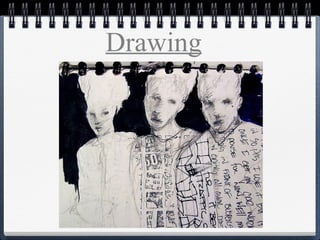
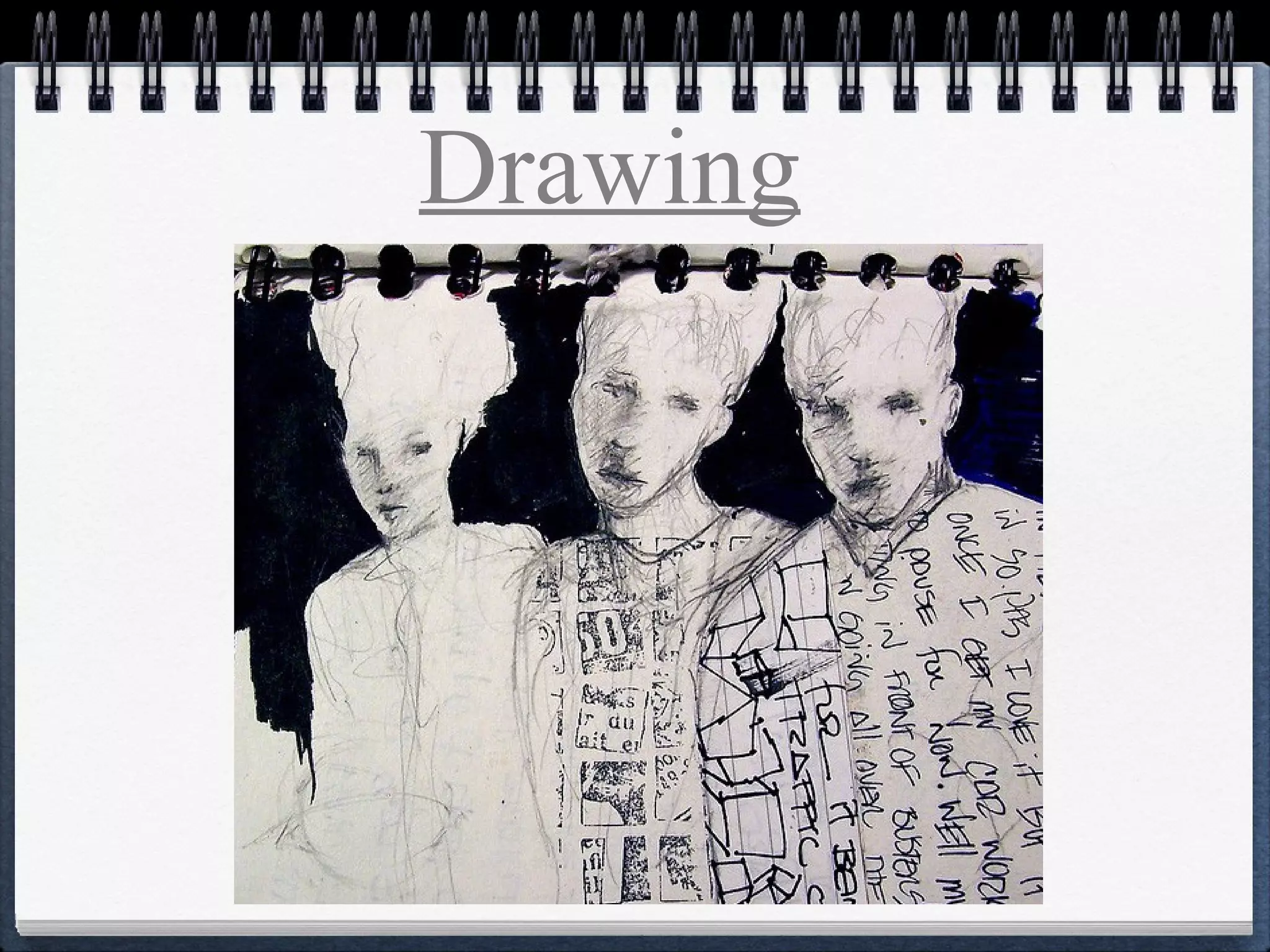
Drawing
Every drawing has something to offer, and no 
drawing, or way of drawing will provide a 
permanent solution to what drawing is or should 
be. 
Drawing is the basis of all artwork. On this course, 
you’ll be challenged to find your own artistic style 
and apply it to your art. We are going to 
experiment with a variety of techniques and 
explore both traditional and non-traditional styles 
of drawing. This will hopefully challenge your 
perception of what drawing is and help you 
understand how to use a variety of materials.
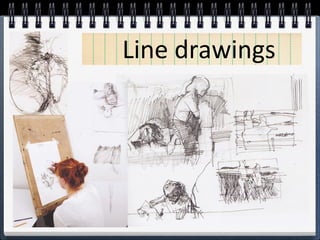
Line drawings
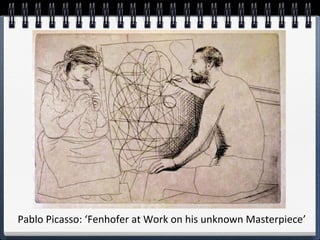
Pablo Picasso: ‘Fenhofer at Work on his unknown Masterpiece’
What to draw? … 
You have been given the broad title ‘Environments’ 
for Unit 1. It is up to you how you interpret this. 
Initially you are exploring different techniques so can 
keep your idea fairly broad. 
‘Nature is the Artists Dictionary’: Eugene Delacroix 
Nature provides the most interesting objects to draw 
when practicing drawing skills. If possible choose 
objects that are flexible, to allow the drawing to be 
freed from inhabiting the need to have it absolutely 
correct … an old shoe, a pepper cut in two to reveal an 
inner world of seeds are two good examples.
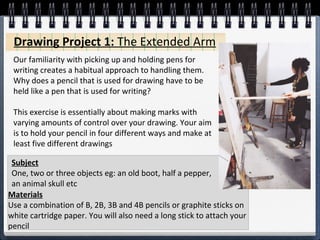
Drawing Project 1: The Extended Arm 
Our familiarity with picking up and holding pens for 
writing creates a habitual approach to handling them. 
Why does a pencil that is used for drawing have to be 
held like a pen that is used for writing? 
This exercise is essentially about making marks with 
varying amounts of control over your drawing. Your aim 
is to hold your pencil in four different ways and make at 
least five different drawings 
Subject 
One, two or three objects eg: an old boot, half a pepper, 
an animal skull etc 
Materials 
Use a combination of B, 2B, 3B and 4B pencils or graphite sticks on 
white cartridge paper. You will also need a long stick to attach your 
pencil
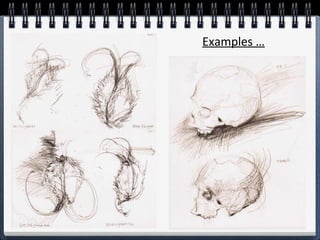
Examples …
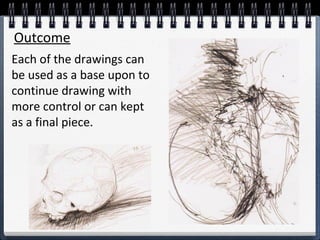
Outcome 
Each of the drawings can 
be used as a base upon to 
continue drawing with 
more control or can kept 
as a final piece.
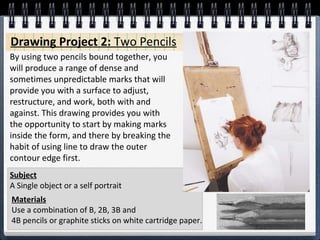
Drawing Project 2: Two Pencils 
By using two pencils bound together, you 
will produce a range of dense and 
sometimes unpredictable marks that will 
provide you with a surface to adjust, 
restructure, and work, both with and 
against. This drawing provides you with 
the opportunity to start by making marks 
inside the form, and there by breaking the 
habit of using line to draw the outer 
contour edge first. 
Subject 
A Single object or a self portrait 
Materials 
Use a combination of B, 2B, 3B and 
4B pencils or graphite sticks on white cartridge paper.
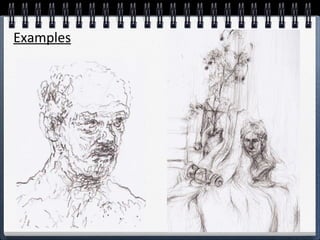
Examples
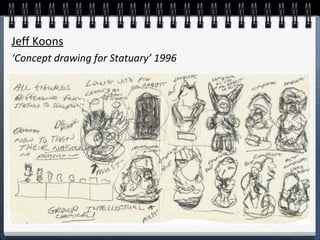
Jeff Koons 
‘Concept drawing for Statuary’ 1996
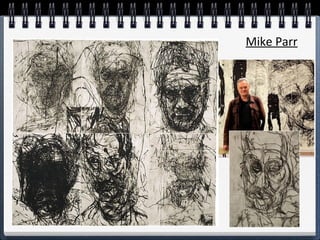
Mike Parr
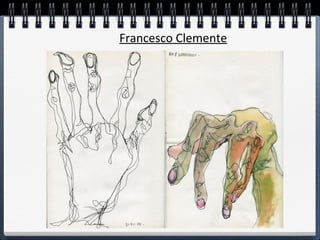
Francesco Clemente
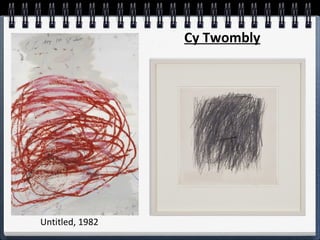
Cy Twombly 
Untitled, 1982
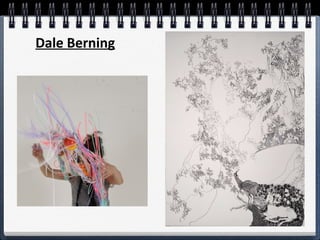
Dale Berning
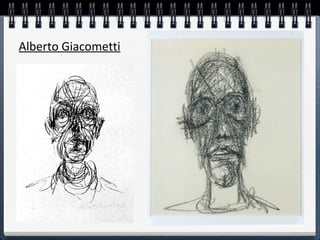
Alberto Giacometti
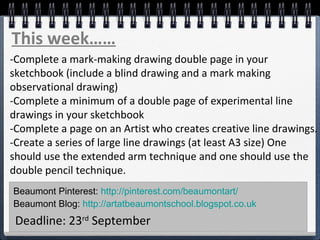
This week…… 
-Complete a mark-making drawing double page in your 
sketchbook (include a blind drawing and a mark making 
observational drawing) 
-Complete a minimum of a double page of experimental line 
drawings in your sketchbook 
-Complete a page on an Artist who creates creative line drawings. 
-Create a series of large line drawings (at least A3 size) One 
should use the extended arm technique and one should use the 
double pencil technique. 
Beaumont Pinterest: http://pinterest.com/beaumontart/ 
Beaumont Blog: http://artatbeaumontschool.blogspot.co.uk 
Deadline: 23rd September

AS Experimental Drawing

  • 1.
  • 2.
    Every drawing hassomething to offer, and no drawing, or way of drawing will provide a permanent solution to what drawing is or should be. Drawing is the basis of all artwork. On this course, you’ll be challenged to find your own artistic style and apply it to your art. We are going to experiment with a variety of techniques and explore both traditional and non-traditional styles of drawing. This will hopefully challenge your perception of what drawing is and help you understand how to use a variety of materials.
  • 3.
  • 4.
    Pablo Picasso: ‘Fenhoferat Work on his unknown Masterpiece’
  • 5.
    What to draw?… You have been given the broad title ‘Environments’ for Unit 1. It is up to you how you interpret this. Initially you are exploring different techniques so can keep your idea fairly broad. ‘Nature is the Artists Dictionary’: Eugene Delacroix Nature provides the most interesting objects to draw when practicing drawing skills. If possible choose objects that are flexible, to allow the drawing to be freed from inhabiting the need to have it absolutely correct … an old shoe, a pepper cut in two to reveal an inner world of seeds are two good examples.
  • 6.
    Drawing Project 1:The Extended Arm Our familiarity with picking up and holding pens for writing creates a habitual approach to handling them. Why does a pencil that is used for drawing have to be held like a pen that is used for writing? This exercise is essentially about making marks with varying amounts of control over your drawing. Your aim is to hold your pencil in four different ways and make at least five different drawings Subject One, two or three objects eg: an old boot, half a pepper, an animal skull etc Materials Use a combination of B, 2B, 3B and 4B pencils or graphite sticks on white cartridge paper. You will also need a long stick to attach your pencil
  • 7.
  • 8.
    Outcome Each ofthe drawings can be used as a base upon to continue drawing with more control or can kept as a final piece.
  • 9.
    Drawing Project 2:Two Pencils By using two pencils bound together, you will produce a range of dense and sometimes unpredictable marks that will provide you with a surface to adjust, restructure, and work, both with and against. This drawing provides you with the opportunity to start by making marks inside the form, and there by breaking the habit of using line to draw the outer contour edge first. Subject A Single object or a self portrait Materials Use a combination of B, 2B, 3B and 4B pencils or graphite sticks on white cartridge paper.
  • 10.
  • 11.
    Jeff Koons ‘Conceptdrawing for Statuary’ 1996
  • 12.
  • 13.
  • 14.
  • 15.
  • 16.
  • 17.
    This week…… -Completea mark-making drawing double page in your sketchbook (include a blind drawing and a mark making observational drawing) -Complete a minimum of a double page of experimental line drawings in your sketchbook -Complete a page on an Artist who creates creative line drawings. -Create a series of large line drawings (at least A3 size) One should use the extended arm technique and one should use the double pencil technique. Beaumont Pinterest: http://pinterest.com/beaumontart/ Beaumont Blog: http://artatbeaumontschool.blogspot.co.uk Deadline: 23rd September