New Media Research Methods
Part 1 – How research
methods relate to the
research question
Part 2- Qualitative and
Quantitative
Part 3 – Data collection
Part 4 – Presentation and
analysis
New Media Research Methods- Part 2
Focus on the qualitative and quantitative methods:
The right tools for the right job.
Gosia Kwiatkowska gosia@uel.ac.uk
Recap from last week
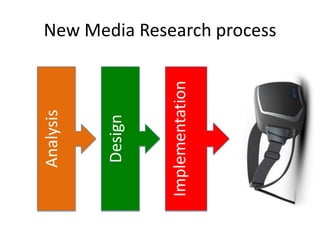
New Media Research process
Analysis
Design
Implementation
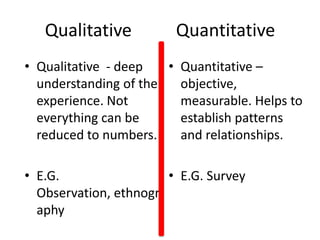
Qualitative Quantitative
• Qualitative - deep
understanding of the
experience. Not
everything can be
reduced to numbers.
• E.G.
Observation, ethnogr
aphy
• Quantitative –
objective,
measurable. Helps to
establish patterns
and relationships.
• E.G. Survey
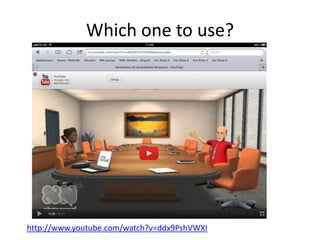
Which one to use?
http://www.youtube.com/watch?v=ddx9PshVWXI
Qualitative Method?
– User perspectives
– Questions: how and why?
– Captures perceptions, judgements, meanings,
processes and reasons
– Open ended questions, checklist of topics
– Hypothesis and follow up questions are generated
during data collection and analysis
– Subjective – not easy to objectively verify
– Interviews allow to probe
– Provides deeper insight
– Broader understanding and explanations, views
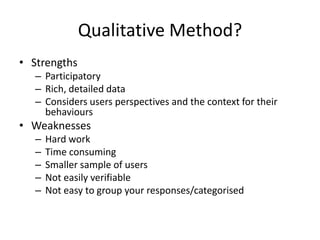
Qualitative Method?
• Strengths
– Participatory
– Rich, detailed data
– Considers users perspectives and the context for their
behaviours
• Weaknesses
– Hard work
– Time consuming
– Smaller sample of users
– Not easily verifiable
– Not easy to group your responses/categorised
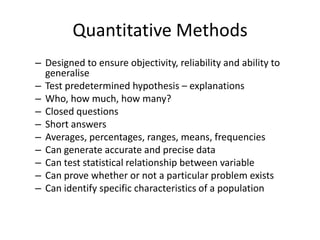
Quantitative Methods
– Designed to ensure objectivity, reliability and ability to
generalise
– Test predetermined hypothesis – explanations
– Who, how much, how many?
– Closed questions
– Short answers
– Averages, percentages, ranges, means, frequencies
– Can generate accurate and precise data
– Can test statistical relationship between variable
– Can prove whether or not a particular problem exists
– Can identify specific characteristics of a population
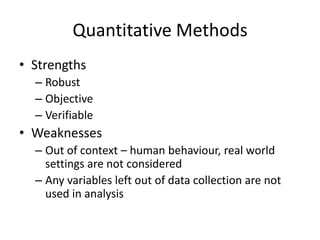
Quantitative Methods
• Strengths
– Robust
– Objective
– Verifiable
• Weaknesses
– Out of context – human behaviour, real world
settings are not considered
– Any variables left out of data collection are not
used in analysis
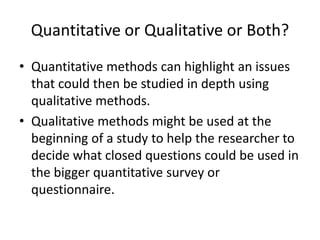
Quantitative or Qualitative or Both?
• Quantitative methods can highlight an issues
that could then be studied in depth using
qualitative methods.
• Qualitative methods might be used at the
beginning of a study to help the researcher to
decide what closed questions could be used in
the bigger quantitative survey or
questionnaire.
New Media Research
Interviews
• Purpose
• Characteristics
• Advantages
• Limitations
• Process/Stages/Questions
Definitions / purposes
“Qualitative research [such as interviewing]
attempts to understand meanings that
people give to their deeds, experiences, or to
other social phenomena”
Silverman D (1997)
‘The purpose of interviewing is to find out what
is in and on someone else’s mind. We find
out from them those things which we cannot
directly observe’
May T (1997)
Advantages / limitations
• Your views …
Advantages
• Rich data - excellent for complex subjects
• Meanings / understandings / perceptions explored
• Powerful when territory unfamiliar
• Unforeseen issues / experiences elicited
• Clarification / Follow up Q&As possible
• Captive subjects
• Certainty over who is responding (unlike surveys)
• Non-verbal communication / Observational opportunities
Disadvantages (1)
Subjects may:
• Conform to expectations – (social desirability)
• try to be rational
Interviewer may:
• Be inconsistent
• (Unwittingly) bias respondents’ answers
• Mis-interpret answers
Disadvantages (2)
• Difficult to get quantitative data
• Data analysis difficult / complicated
• Unrepresentative - reliance on key figures
• Time consuming / costly
• Stressful for interviewer (& interviewee?)
• Low validity / reliability
Reliability and validity
• Validity: "By validity, I mean truth: interpreted as the
extent to which an account accurately represents the
social phenomena to which it refers. " (Hammersley,
1992). Pg. 57. (e.g. does the data-gathering measure
what you want it to measure?)
• Reliability: the degree of consistency with which
instances are assigned to the same category by
different observers or by the same observer on
different occasions". (Hammersley, 1990). Pg. 67 (e.g.
does the data-gathering produce the same results if
repeated?) .
Validating interviews
• Triangulation
• Purposive sampling - focus on specific population
• Choose deviant case
• Member check (refer findings back to subjects)
• Co-researcher re-coding
• Researcher ‘reflexivity’
• ‘Fair dealing’ – ensure all viewpoints mentioned
But don’t forget …
One case may be enough(!):
‘What is wrong with samples of one? Why should
researchers have to apologise for them? Should
Piaget apologise for studying his own children, a
physicist for splitting only one atom?’
Mintzberg H (1973) The nature of managerial work NY:
Harper & Row
Preparing the interview (1)
Getting ethical approval:
“The (UH) Ethics Committee will … carefully evaluate the
following aspects of your application:
• the validity of the research
• the welfare of the research subjects
• the dignity of the research subjects
• the ability of the researcher/team/supervisor to conduct the
research”
[see: http://perseus.herts.ac.uk/uhinfo/library/j34130_13.doc]
Preparing the interview (2)
• Aims/objectives of the interview
• Where these fit with overall research study
• Interview style:
– Structured unstructured
– Formal informal
– Open closed
• Choose physical setting (if possible)
• Atmosphere / environment
Preparing the interview (3)
Individual questions/areas/themes
Fact
• objective information (e.g., age, gender, education, behaviour,
experience)
Opinion / Preference / attitude / feelings
• evaluative (e.g., satisfaction, agreement, likedislike)
Intended Behaviour
• motivation or intention (e.g., likeliness, willingness)
Recording the interview
To tape or not to tape?? Consider:
• Effect on interviewee
• Listening / transcribing time
• Reliability of machine / recording
But also…
• Scribbling whilst listening
• Making sense of notes
Conducting the interview
• Thank interviewee
• Set the scene (why / how / where of study)
• Give idea of question areas
• Give ground rules (can refuse to answer/can
terminate interview, anonymity etc.)
• Start with demographic and ID questions
• (usually) start with general question and then
funnel
Types of question (1)
Open
• Opening stages in line of questioning (funnel)
• Invites opinion, general knowledge.
• Can cover areas where interviewer’s own knowledge
lacking
• No presumption about response
Closed
• Elicit hard facts
• Control pace/direction of interview
Types of question (2)
Probing
• Extracts more depth
• Maintains line of enquiry
Leading
• Confirm interviewee’s answer
• Help interviewee, by rephrasing answer
• Bring a line of questioning to an end (summarising)
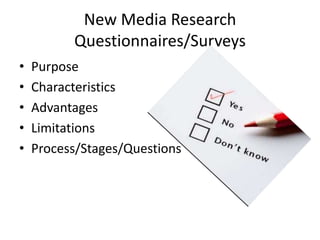
New Media Research
Questionnaires/Surveys
• Purpose
• Characteristics
• Advantages
• Limitations
• Process/Stages/Questions
Purpose of questionnaires
To survey large number of people, to
describe/explain characteristics/opinion of a
population, usually through a representative
sample.
Questionnaires measure generalities / the
extent to which groups of people behave or
think in certain ways.
Characteristics of questionnaires
• Cross-sectional
• Mainly quantitative
• ‘Snapshot’ in time
• Qs and As standardised
Advantages / limitations
Your views …
Advantages
• Reaches large / dispersed populations
• Can generalise results
• Provides quantitative, authoritative (?) data
• Appears easy– work done by respondent
• Relatively cheap and quick (per unit)
• Removes personal influence
• Respondent works in own time
• Provides structure for report
• Replicable
Limitations (1):
Questionnaire construction
• Low response rate (5-25%?)
• Respondents may differ from non-respondents
• No way to adapt add/remove questions
• Little opportunity for respondents to explain
• Can over-simplify issues
• Respondents ‘shoehorned’
Limitations (2):
Respondent issues
Respondents may:
• Take middle position in polar responses
• Lack recall / rely on recent experience
• Want to please researcher by being:
– socially responsible
– compliant
Process/stages
• Formulate study aims
• Identify objectives that address aims
• Decide what information is required, and from whom
• Decide sampling frame (elements making up population)
• Research for similar questionnaires
• Formulate appropriate questions
• Decide distribution method
– Postal; Telephone; Clip board/street; Web/Internet; Email;
f2f
• Pilot (see next slide) and get feedback
• Amend
• Distribute / administer
The pilot
• Use more “open ended” questions than in final
product (often interviews are undertaken first)
• For “Pilot” responses look for:
– Variation in type of answer
– Redundancy – areas of no/limited response
– Evidence of ambiguity etc.
– Acquiesce
• Amend questionnaire as appropriate
Question areas
Fact
• objective information (e.g., age, gender, education,
behaviour)
Opinion / Preference / attitude
• evaluative (e.g., satisfaction, agreement, likedislike)
Intended Behaviour
• motivation or intention (e.g., likeliness, willingness)
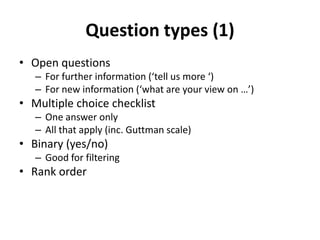
Question types (1)
• Open questions
– For further information (‘tell us more ‘)
– For new information (‘what are your view on …’)
• Multiple choice checklist
– One answer only
– All that apply (inc. Guttman scale)
• Binary (yes/no)
– Good for filtering
• Rank order
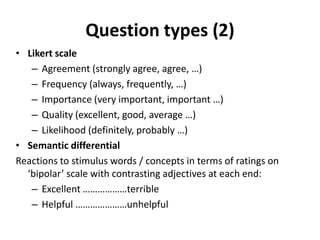
Question types (2)
• Likert scale
– Agreement (strongly agree, agree, …)
– Frequency (always, frequently, …)
– Importance (very important, important …)
– Quality (excellent, good, average …)
– Likelihood (definitely, probably …)
• Semantic differential
Reactions to stimulus words / concepts in terms of ratings on
‘bipolar’ scale with contrasting adjectives at each end:
– Excellent ………………terrible
– Helpful …………………unhelpful
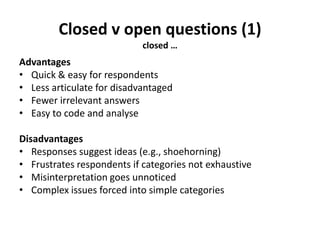
Closed v open questions (1)
closed …
Advantages
• Quick & easy for respondents
• Less articulate for disadvantaged
• Fewer irrelevant answers
• Easy to code and analyse
Disadvantages
• Responses suggest ideas (e.g., shoehorning)
• Frustrates respondents if categories not exhaustive
• Misinterpretation goes unnoticed
• Complex issues forced into simple categories
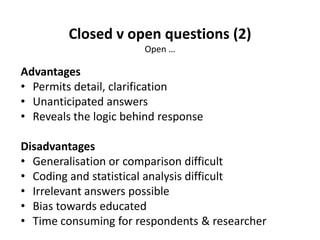
Closed v open questions (2)
Open …
Advantages
• Permits detail, clarification
• Unanticipated answers
• Reveals the logic behind response
Disadvantages
• Generalisation or comparison difficult
• Coding and statistical analysis difficult
• Irrelevant answers possible
• Bias towards educated
• Time consuming for respondents & researcher
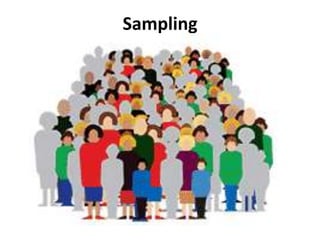
Sampling
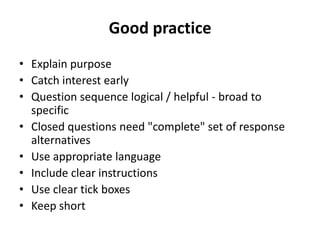
Good practice
• Explain purpose
• Catch interest early
• Question sequence logical / helpful - broad to
specific
• Closed questions need "complete" set of response
alternatives
• Use appropriate language
• Include clear instructions
• Use clear tick boxes
• Keep short
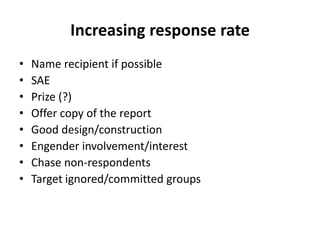
Increasing response rate
• Name recipient if possible
• SAE
• Prize (?)
• Offer copy of the report
• Good design/construction
• Engender involvement/interest
• Chase non-respondents
• Target ignored/committed groups
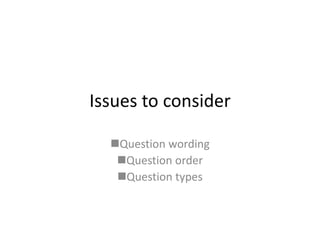
Issues to consider
Question wording
Question order
Question types
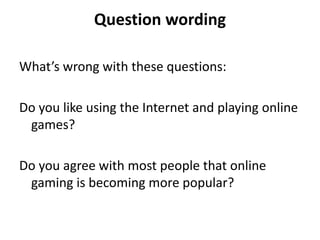
Question wording
What’s wrong with these questions:
Do you like using the Internet and playing online
games?
Do you agree with most people that online
gaming is becoming more popular?
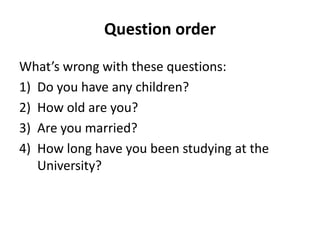
Question order
What’s wrong with these questions:
1) Do you have any children?
2) How old are you?
3) Are you married?
4) How long have you been studying at the
University?
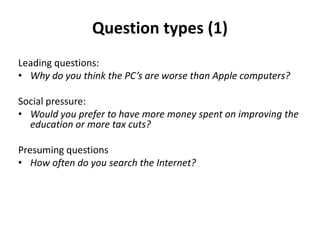
Question types (1)
Leading questions:
• Why do you think the PC’s are worse than Apple computers?
Social pressure:
• Would you prefer to have more money spent on improving the
education or more tax cuts?
Presuming questions
• How often do you search the Internet?
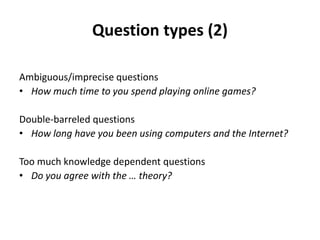
Question types (2)
Ambiguous/imprecise questions
• How much time to you spend playing online games?
Double-barreled questions
• How long have you been using computers and the Internet?
Too much knowledge dependent questions
• Do you agree with the … theory?
Question types (3)
Memory dependent
• How many times have you played a computer game in the last
month?
Wish List/hypothetical questions
• Would you like better computer games to be designed?
Match tools to your questions
• For questions on factual
clarification
• Use polls and surveys
• For questions on opinion
• Use surveys, interviews, focus
groups
• For questions on experience
• Interviews, focus groups,
observations, user testing, and
ethnographies
• For questions on concepts
• surveys, interviews,
ethnographies, and user testing
• For questions on emotions
• Surveys, interviews, focus groups,
and observations
You can mix tools
• You need to map out each step you will take in
your research so that things follow in a logical
order…
• This is your method!
Spend the rest of the time thinking through
your proposed question
• Independent Variable
– What is tested, measured or manipulated
• Dependent Variable
– What is observed – the outcome
References
• Curasi CF (2001) A critical exploration of face-to-face interviewing vs.
computer-mediated interviewing International Journal of Market
Research 43(4)pp361-375
• Hammersley, M. (1992). What’s wrong with Ethnography:
Methodological Exploration, London: Routledge.
• May T (1997) Social research: issues, methods, progress Buckingham:
OUP
• Rugg, D. (1941) Experiments in wording question. II Public Opinion
Quarterly, 5:91-92.
• Silverman D (1997) Qualitative research: theory, method,
practiceLondon: Sage
• Silverman D (2004) Doing Qualitative Research: A Practical Handbook
London: Sage

Session 2 Methods qualitative_quantitative

  • 1.
    New Media ResearchMethods Part 1 – How research methods relate to the research question Part 2- Qualitative and Quantitative Part 3 – Data collection Part 4 – Presentation and analysis
  • 2.
    New Media ResearchMethods- Part 2 Focus on the qualitative and quantitative methods: The right tools for the right job. Gosia Kwiatkowska gosia@uel.ac.uk
  • 3.
  • 4.
    New Media Researchprocess Analysis Design Implementation
  • 5.
    Qualitative Quantitative • Qualitative- deep understanding of the experience. Not everything can be reduced to numbers. • E.G. Observation, ethnogr aphy • Quantitative – objective, measurable. Helps to establish patterns and relationships. • E.G. Survey
  • 6.
    Which one touse? http://www.youtube.com/watch?v=ddx9PshVWXI
  • 7.
    Qualitative Method? – Userperspectives – Questions: how and why? – Captures perceptions, judgements, meanings, processes and reasons – Open ended questions, checklist of topics – Hypothesis and follow up questions are generated during data collection and analysis – Subjective – not easy to objectively verify – Interviews allow to probe – Provides deeper insight – Broader understanding and explanations, views
  • 8.
    Qualitative Method? • Strengths –Participatory – Rich, detailed data – Considers users perspectives and the context for their behaviours • Weaknesses – Hard work – Time consuming – Smaller sample of users – Not easily verifiable – Not easy to group your responses/categorised
  • 9.
    Quantitative Methods – Designedto ensure objectivity, reliability and ability to generalise – Test predetermined hypothesis – explanations – Who, how much, how many? – Closed questions – Short answers – Averages, percentages, ranges, means, frequencies – Can generate accurate and precise data – Can test statistical relationship between variable – Can prove whether or not a particular problem exists – Can identify specific characteristics of a population
  • 10.
    Quantitative Methods • Strengths –Robust – Objective – Verifiable • Weaknesses – Out of context – human behaviour, real world settings are not considered – Any variables left out of data collection are not used in analysis
  • 11.
    Quantitative or Qualitativeor Both? • Quantitative methods can highlight an issues that could then be studied in depth using qualitative methods. • Qualitative methods might be used at the beginning of a study to help the researcher to decide what closed questions could be used in the bigger quantitative survey or questionnaire.
  • 12.
    New Media Research Interviews •Purpose • Characteristics • Advantages • Limitations • Process/Stages/Questions
  • 13.
    Definitions / purposes “Qualitativeresearch [such as interviewing] attempts to understand meanings that people give to their deeds, experiences, or to other social phenomena” Silverman D (1997) ‘The purpose of interviewing is to find out what is in and on someone else’s mind. We find out from them those things which we cannot directly observe’ May T (1997)
  • 14.
  • 15.
    Advantages • Rich data- excellent for complex subjects • Meanings / understandings / perceptions explored • Powerful when territory unfamiliar • Unforeseen issues / experiences elicited • Clarification / Follow up Q&As possible • Captive subjects • Certainty over who is responding (unlike surveys) • Non-verbal communication / Observational opportunities
  • 16.
    Disadvantages (1) Subjects may: •Conform to expectations – (social desirability) • try to be rational Interviewer may: • Be inconsistent • (Unwittingly) bias respondents’ answers • Mis-interpret answers
  • 17.
    Disadvantages (2) • Difficultto get quantitative data • Data analysis difficult / complicated • Unrepresentative - reliance on key figures • Time consuming / costly • Stressful for interviewer (& interviewee?) • Low validity / reliability
  • 18.
    Reliability and validity •Validity: "By validity, I mean truth: interpreted as the extent to which an account accurately represents the social phenomena to which it refers. " (Hammersley, 1992). Pg. 57. (e.g. does the data-gathering measure what you want it to measure?) • Reliability: the degree of consistency with which instances are assigned to the same category by different observers or by the same observer on different occasions". (Hammersley, 1990). Pg. 67 (e.g. does the data-gathering produce the same results if repeated?) .
  • 19.
    Validating interviews • Triangulation •Purposive sampling - focus on specific population • Choose deviant case • Member check (refer findings back to subjects) • Co-researcher re-coding • Researcher ‘reflexivity’ • ‘Fair dealing’ – ensure all viewpoints mentioned
  • 20.
    But don’t forget… One case may be enough(!): ‘What is wrong with samples of one? Why should researchers have to apologise for them? Should Piaget apologise for studying his own children, a physicist for splitting only one atom?’ Mintzberg H (1973) The nature of managerial work NY: Harper & Row
  • 21.
    Preparing the interview(1) Getting ethical approval: “The (UH) Ethics Committee will … carefully evaluate the following aspects of your application: • the validity of the research • the welfare of the research subjects • the dignity of the research subjects • the ability of the researcher/team/supervisor to conduct the research” [see: http://perseus.herts.ac.uk/uhinfo/library/j34130_13.doc]
  • 22.
    Preparing the interview(2) • Aims/objectives of the interview • Where these fit with overall research study • Interview style: – Structured unstructured – Formal informal – Open closed • Choose physical setting (if possible) • Atmosphere / environment
  • 23.
    Preparing the interview(3) Individual questions/areas/themes Fact • objective information (e.g., age, gender, education, behaviour, experience) Opinion / Preference / attitude / feelings • evaluative (e.g., satisfaction, agreement, likedislike) Intended Behaviour • motivation or intention (e.g., likeliness, willingness)
  • 24.
    Recording the interview Totape or not to tape?? Consider: • Effect on interviewee • Listening / transcribing time • Reliability of machine / recording But also… • Scribbling whilst listening • Making sense of notes
  • 25.
    Conducting the interview •Thank interviewee • Set the scene (why / how / where of study) • Give idea of question areas • Give ground rules (can refuse to answer/can terminate interview, anonymity etc.) • Start with demographic and ID questions • (usually) start with general question and then funnel
  • 26.
    Types of question(1) Open • Opening stages in line of questioning (funnel) • Invites opinion, general knowledge. • Can cover areas where interviewer’s own knowledge lacking • No presumption about response Closed • Elicit hard facts • Control pace/direction of interview
  • 27.
    Types of question(2) Probing • Extracts more depth • Maintains line of enquiry Leading • Confirm interviewee’s answer • Help interviewee, by rephrasing answer • Bring a line of questioning to an end (summarising)
  • 28.
    New Media Research Questionnaires/Surveys •Purpose • Characteristics • Advantages • Limitations • Process/Stages/Questions
  • 29.
    Purpose of questionnaires Tosurvey large number of people, to describe/explain characteristics/opinion of a population, usually through a representative sample. Questionnaires measure generalities / the extent to which groups of people behave or think in certain ways.
  • 30.
    Characteristics of questionnaires •Cross-sectional • Mainly quantitative • ‘Snapshot’ in time • Qs and As standardised
  • 31.
  • 32.
    Advantages • Reaches large/ dispersed populations • Can generalise results • Provides quantitative, authoritative (?) data • Appears easy– work done by respondent • Relatively cheap and quick (per unit) • Removes personal influence • Respondent works in own time • Provides structure for report • Replicable
  • 33.
    Limitations (1): Questionnaire construction •Low response rate (5-25%?) • Respondents may differ from non-respondents • No way to adapt add/remove questions • Little opportunity for respondents to explain • Can over-simplify issues • Respondents ‘shoehorned’
  • 34.
    Limitations (2): Respondent issues Respondentsmay: • Take middle position in polar responses • Lack recall / rely on recent experience • Want to please researcher by being: – socially responsible – compliant
  • 35.
    Process/stages • Formulate studyaims • Identify objectives that address aims • Decide what information is required, and from whom • Decide sampling frame (elements making up population) • Research for similar questionnaires • Formulate appropriate questions • Decide distribution method – Postal; Telephone; Clip board/street; Web/Internet; Email; f2f • Pilot (see next slide) and get feedback • Amend • Distribute / administer
  • 36.
    The pilot • Usemore “open ended” questions than in final product (often interviews are undertaken first) • For “Pilot” responses look for: – Variation in type of answer – Redundancy – areas of no/limited response – Evidence of ambiguity etc. – Acquiesce • Amend questionnaire as appropriate
  • 37.
    Question areas Fact • objectiveinformation (e.g., age, gender, education, behaviour) Opinion / Preference / attitude • evaluative (e.g., satisfaction, agreement, likedislike) Intended Behaviour • motivation or intention (e.g., likeliness, willingness)
  • 38.
    Question types (1) •Open questions – For further information (‘tell us more ‘) – For new information (‘what are your view on …’) • Multiple choice checklist – One answer only – All that apply (inc. Guttman scale) • Binary (yes/no) – Good for filtering • Rank order
  • 39.
    Question types (2) •Likert scale – Agreement (strongly agree, agree, …) – Frequency (always, frequently, …) – Importance (very important, important …) – Quality (excellent, good, average …) – Likelihood (definitely, probably …) • Semantic differential Reactions to stimulus words / concepts in terms of ratings on ‘bipolar’ scale with contrasting adjectives at each end: – Excellent ………………terrible – Helpful …………………unhelpful
  • 40.
    Closed v openquestions (1) closed … Advantages • Quick & easy for respondents • Less articulate for disadvantaged • Fewer irrelevant answers • Easy to code and analyse Disadvantages • Responses suggest ideas (e.g., shoehorning) • Frustrates respondents if categories not exhaustive • Misinterpretation goes unnoticed • Complex issues forced into simple categories
  • 41.
    Closed v openquestions (2) Open … Advantages • Permits detail, clarification • Unanticipated answers • Reveals the logic behind response Disadvantages • Generalisation or comparison difficult • Coding and statistical analysis difficult • Irrelevant answers possible • Bias towards educated • Time consuming for respondents & researcher
  • 42.
  • 43.
    Good practice • Explainpurpose • Catch interest early • Question sequence logical / helpful - broad to specific • Closed questions need "complete" set of response alternatives • Use appropriate language • Include clear instructions • Use clear tick boxes • Keep short
  • 44.
    Increasing response rate •Name recipient if possible • SAE • Prize (?) • Offer copy of the report • Good design/construction • Engender involvement/interest • Chase non-respondents • Target ignored/committed groups
  • 45.
    Issues to consider Questionwording Question order Question types
  • 46.
    Question wording What’s wrongwith these questions: Do you like using the Internet and playing online games? Do you agree with most people that online gaming is becoming more popular?
  • 47.
    Question order What’s wrongwith these questions: 1) Do you have any children? 2) How old are you? 3) Are you married? 4) How long have you been studying at the University?
  • 48.
    Question types (1) Leadingquestions: • Why do you think the PC’s are worse than Apple computers? Social pressure: • Would you prefer to have more money spent on improving the education or more tax cuts? Presuming questions • How often do you search the Internet?
  • 49.
    Question types (2) Ambiguous/imprecisequestions • How much time to you spend playing online games? Double-barreled questions • How long have you been using computers and the Internet? Too much knowledge dependent questions • Do you agree with the … theory?
  • 50.
    Question types (3) Memorydependent • How many times have you played a computer game in the last month? Wish List/hypothetical questions • Would you like better computer games to be designed?
  • 51.
    Match tools toyour questions • For questions on factual clarification • Use polls and surveys • For questions on opinion • Use surveys, interviews, focus groups • For questions on experience • Interviews, focus groups, observations, user testing, and ethnographies • For questions on concepts • surveys, interviews, ethnographies, and user testing • For questions on emotions • Surveys, interviews, focus groups, and observations
  • 52.
    You can mixtools • You need to map out each step you will take in your research so that things follow in a logical order… • This is your method!
  • 53.
    Spend the restof the time thinking through your proposed question • Independent Variable – What is tested, measured or manipulated • Dependent Variable – What is observed – the outcome
  • 54.
    References • Curasi CF(2001) A critical exploration of face-to-face interviewing vs. computer-mediated interviewing International Journal of Market Research 43(4)pp361-375 • Hammersley, M. (1992). What’s wrong with Ethnography: Methodological Exploration, London: Routledge. • May T (1997) Social research: issues, methods, progress Buckingham: OUP • Rugg, D. (1941) Experiments in wording question. II Public Opinion Quarterly, 5:91-92. • Silverman D (1997) Qualitative research: theory, method, practiceLondon: Sage • Silverman D (2004) Doing Qualitative Research: A Practical Handbook London: Sage