PRESENTED BY:-
SURESH MOHTA
 The current limiting reactor is an inductive coil having a
large inductive reactances in comparison to their
resistance and is used for limiting short circuit currents
during fault conditions.
 Current-voltage reactors also reduced the voltage
disturbances on the rest of the system.
 It is installed in feeders and ties, in generators leads,
and between bus sections, for reducing the magnitude
of short circuit currents and the effect of the respective
voltage disturbance.
 Current limiting reactor reduces the flow of short circuit
current so as to protect the appliances from mechanical
stress and overheating.
 Current reactor reduced the magnitude of voltage
disturbances which is caused by short circuits.
 It limits the fault current to flow into the healthy feeders
or parts of the system, thereby avoiding the fault from
spreading. This increase the chances of continuity of
supply.
The main drawbacks of the current limiting
reactors are as follows:-
 When the reactor is installed on the network,
the total percentage reactance of the circuit
increases.
 It decreases the power factor and thus the
regulation becomes poorer.
Reactors are located at different location in a
power system for reducing the short circuit
current.
The reactors are connected in series with:
 Generator Reactors
 Feeder Reactors
 Busbar Reactors
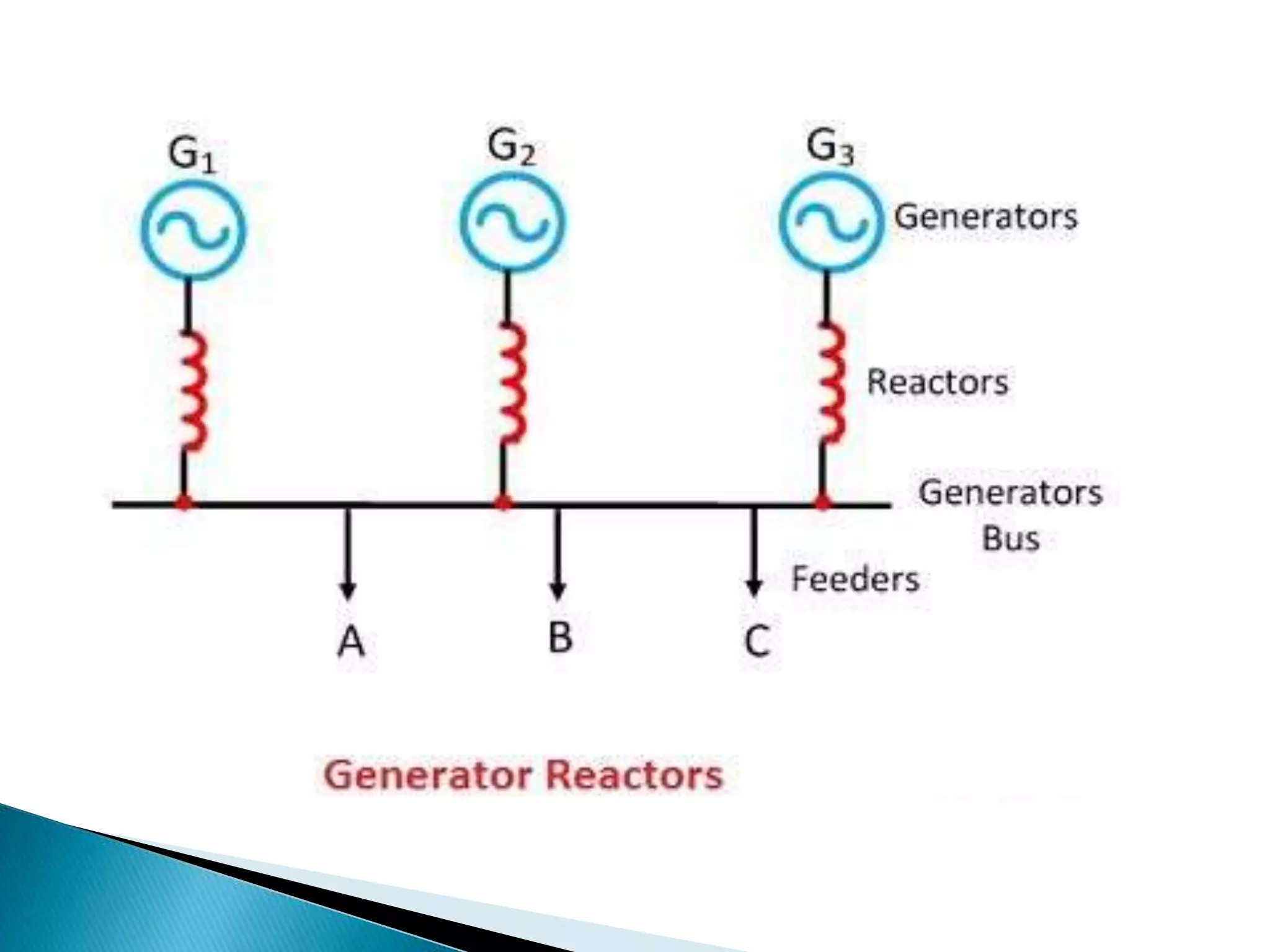
 Generator reactors are inserted between the generator
and the generator bus. Such reactors protect the
machines individually.
 In power station generator, reactors are installed along
with the generators. The magnitude of reactors is
approximately about 0.05 per unit.
 The main disadvantages of such type of reactors are
that if the fault occurs on one feeder, then the whole of
the system will be adversely affected by it.
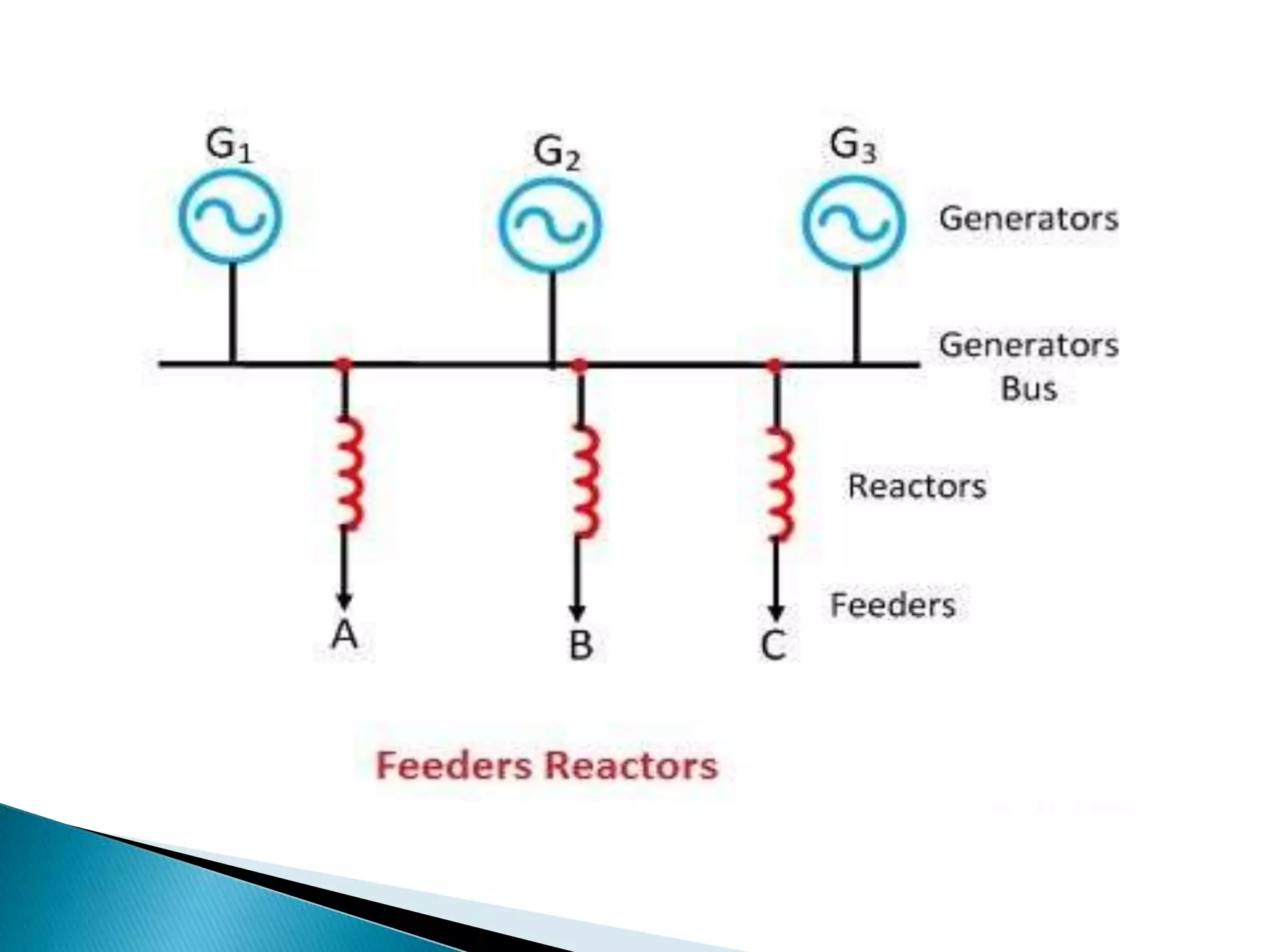
 Reactors, which is connected in series with the
feeder is called feeders reactor.
 When the fault occurs on any one feeder, then the
voltage drops occur only in its reactors and the bus
bar is not affected much. Hence the machines
continue to supply the load.
 The other advantage is that the fault occurs on a
feeder will not affect the others feeders, and thus
the effects of fault are localized.
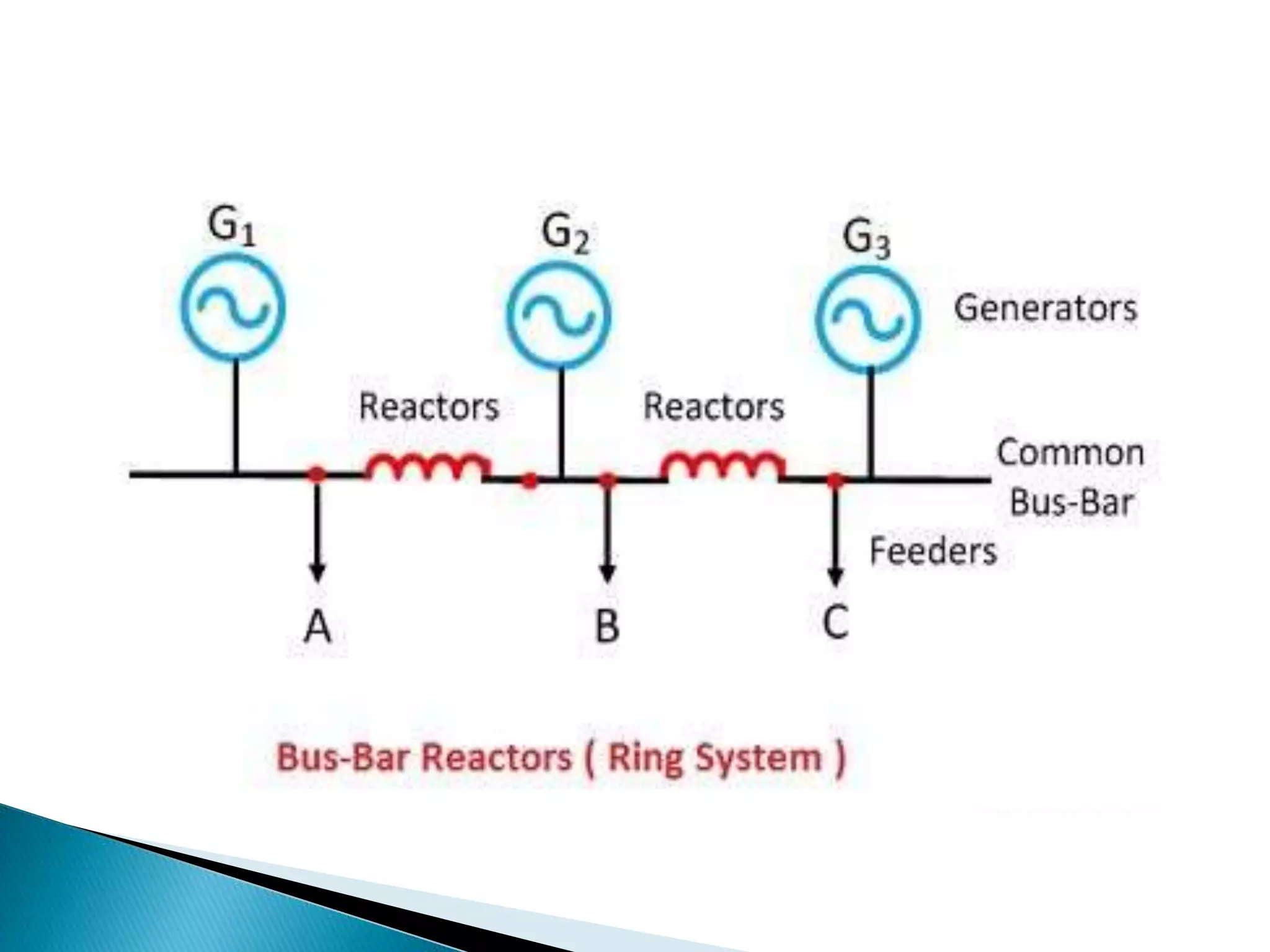
 When the reactors are inserted in the bus bar, then it is
called bus-bar reactors.
 The constant loss in reactor is avoided by inserting the
reactors in busbars. In this system only a small power
flows through the reactors during normal condition.
 During short circuit on the feeder only one generator
feeds the fault directly by passing the reactors.
 sometimes the busbars are sectionalized and the
reactors are included only between the sections of the
bus.
Powerpoint Presentation on Series Reactors

Powerpoint Presentation on Series Reactors

  • 1.
  • 2.
     The currentlimiting reactor is an inductive coil having a large inductive reactances in comparison to their resistance and is used for limiting short circuit currents during fault conditions.  Current-voltage reactors also reduced the voltage disturbances on the rest of the system.  It is installed in feeders and ties, in generators leads, and between bus sections, for reducing the magnitude of short circuit currents and the effect of the respective voltage disturbance.
  • 3.
     Current limitingreactor reduces the flow of short circuit current so as to protect the appliances from mechanical stress and overheating.  Current reactor reduced the magnitude of voltage disturbances which is caused by short circuits.  It limits the fault current to flow into the healthy feeders or parts of the system, thereby avoiding the fault from spreading. This increase the chances of continuity of supply.
  • 4.
    The main drawbacksof the current limiting reactors are as follows:-  When the reactor is installed on the network, the total percentage reactance of the circuit increases.  It decreases the power factor and thus the regulation becomes poorer.
  • 5.
    Reactors are locatedat different location in a power system for reducing the short circuit current. The reactors are connected in series with:  Generator Reactors  Feeder Reactors  Busbar Reactors
  • 6.
     Generator reactorsare inserted between the generator and the generator bus. Such reactors protect the machines individually.  In power station generator, reactors are installed along with the generators. The magnitude of reactors is approximately about 0.05 per unit.  The main disadvantages of such type of reactors are that if the fault occurs on one feeder, then the whole of the system will be adversely affected by it.
  • 8.
     Reactors, whichis connected in series with the feeder is called feeders reactor.  When the fault occurs on any one feeder, then the voltage drops occur only in its reactors and the bus bar is not affected much. Hence the machines continue to supply the load.  The other advantage is that the fault occurs on a feeder will not affect the others feeders, and thus the effects of fault are localized.
  • 10.
     When thereactors are inserted in the bus bar, then it is called bus-bar reactors.  The constant loss in reactor is avoided by inserting the reactors in busbars. In this system only a small power flows through the reactors during normal condition.  During short circuit on the feeder only one generator feeds the fault directly by passing the reactors.  sometimes the busbars are sectionalized and the reactors are included only between the sections of the bus.