Septic Arthritis and its Sequelae
Presenter: Dr Namith
Moderator: Prof. B. Chowdhury
Co-moderator: Dr. Ashish
Infective
Arthritis
Septic arthritis
Tubercular arthritis
lymes arhtritis
Syphllitic arthritis
Gonococcal arthritis
Introduction
WHAT IS SEPTIC ARTHRITIS?
• Inflammation with purulent effusion
• Considered as Orthopaedic
emergency
• Failure to initiate appropriate
antibiotic -permanent joint
dysfunction.
• It can cause septic shock, which can
be fatal.
Anatomy
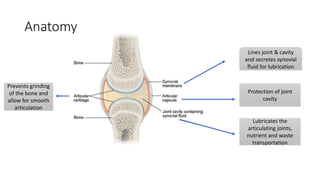
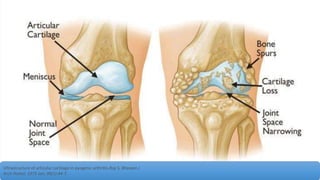
Lines joint & cavity
and secretes synovial
fluid for lubrication
Protection of joint
cavity
Lubricates the
articulating joints,
nutrient and waste
transportation
Prevents grinding
of the bone and
allow for smooth
articulation
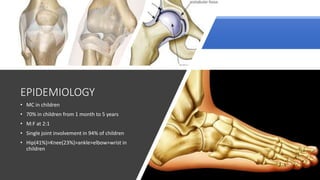
• MC in children
• 70% in children from 1 month to 5 years
• M:F at 2:1
• Single joint involvement in 94% of children
• Hip(41%)>Knee(23%)>ankle>elbow>wrist in
children
EPIDEMIOLOGY
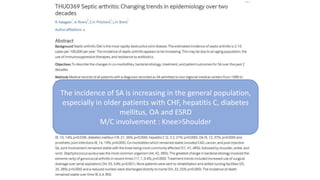
The incidence of SA is increasing in the general population,
especially in older patients with CHF, hepatitis C, diabetes
mellitus, OA and ESRD
M/C involvement : Knee>Shoulder
AETIOPATHOGENESIS
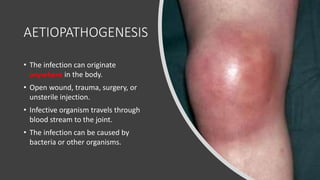
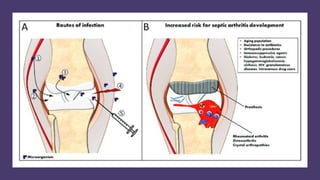
• The infection can originate
anywhere in the body.
• Open wound, trauma, surgery, or
unsterile injection.
• Infective organism travels through
blood stream to the joint.
• The infection can be caused by
bacteria or other organisms.
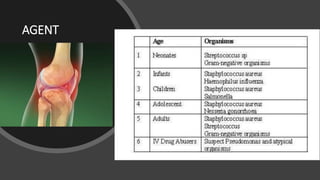
AGENT
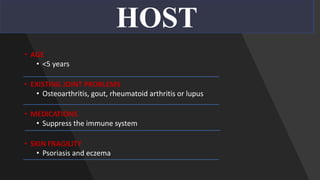
• AGE
• <5 years
• EXISTING JOINT PROBLEMS
• Osteoarthritis, gout, rheumatoid arthritis or lupus
• MEDICATIONS
• Suppress the immune system
• SKIN FRAGILITY
• Psoriasis and eczema
HOSTHOST
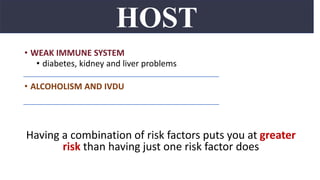
• WEAK IMMUNE SYSTEM
• diabetes, kidney and liver problems
• ALCOHOLISM AND IVDU
Having a combination of risk factors puts you at greater
risk than having just one risk factor does
HOST
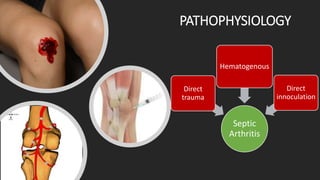
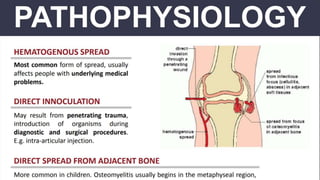
PATHOPHYSIOLOGY
Septic
Arthritis
Direct
trauma
Hematogenous
Direct
innoculation
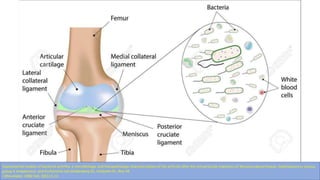
Experimental models of bacterial arthritis: a microbiologic and histopathologic characterization of the arthritis after the intraarticular injections of Neisseria gonorrhoeae, Staphylococcus aureus,
group A streptococci, and Escherichia coli.Goldenberg DL, Chisholm PL, Rice PA
J Rheumatol. 1983 Feb; 10(1):5-11.
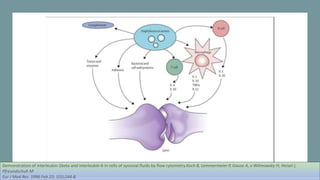
Demonstration of interleukin-1beta and interleukin-6 in cells of synovial fluids by flow cytometry.Koch B, Lemmermeier P, Gause A, v Wilmowsky H, Heisel J,
Pfreundschuh M
Eur J Med Res. 1996 Feb 22; 1(5):244-8.
Ultrastructure of articular cartilage in pyogenic arthritis.Roy S, Bhawan J
Arch Pathol. 1975 Jan; 99(1):44-7.
CLINICAL FEATURE
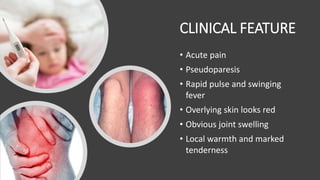
• Acute pain
• Pseudoparesis
• Rapid pulse and swinging
fever
• Overlying skin looks red
• Obvious joint swelling
• Local warmth and marked
tenderness
IN CHILDREN
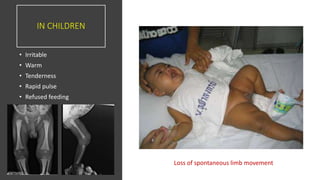
• Irritable
• Warm
• Tenderness
• Rapid pulse
• Refused feeding
Loss of spontaneous limb movement
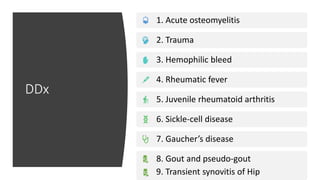
DDx
1. Acute osteomyelitis
2. Trauma
3. Hemophilic bleed
4. Rheumatic fever
5. Juvenile rheumatoid arthritis
6. Sickle-cell disease
7. Gaucher’s disease
8. Gout and pseudo-gout
9. Transient synovitis of Hip
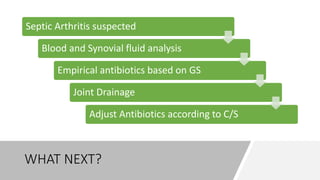
WHAT NEXT?
Septic Arthritis suspected
Blood and Synovial fluid analysis
Empirical antibiotics based on GS
Joint Drainage
Adjust Antibiotics according to C/S
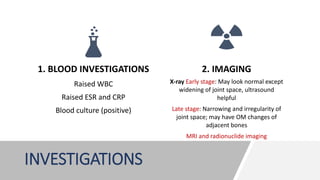
INVESTIGATIONS
1. BLOOD INVESTIGATIONS
Raised WBC
Raised ESR and CRP
Blood culture (positive)
2. IMAGING
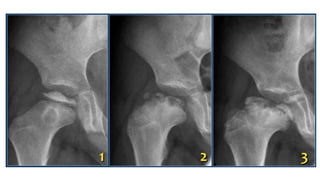
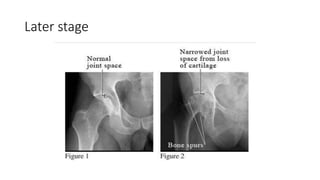
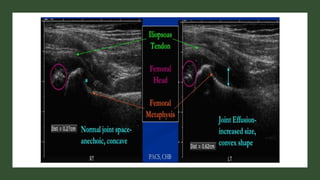
X-ray Early stage: May look normal except
widening of joint space, ultrasound
helpful
Late stage: Narrowing and irregularity of
joint space; may have OM changes of
adjacent bones
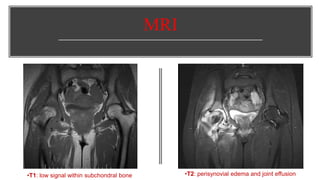
MRI and radionuclide imaging
Later stage
MRI
•T1: low signal within subchondral bone •T2: perisynovial edema and joint effusion
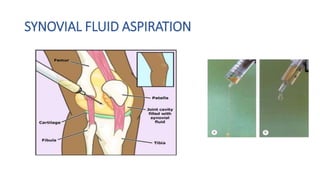
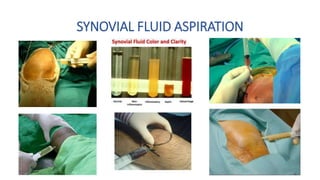
SYNOVIAL FLUID ASPIRATION
n
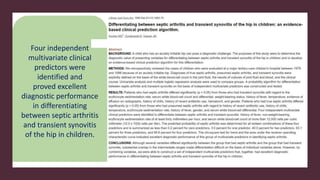
Four independent
multivariate clinical
predictors were
identified and
proved excellent
diagnostic performance
in differentiating
between septic arthritis
and transient synovitis
of the hip in children.
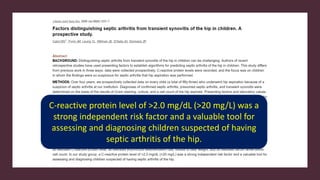
C-reactive protein level of >2.0 mg/dL (>20 mg/L) was a
strong independent risk factor and a valuable tool for
assessing and diagnosing children suspected of having
septic arthritis of the hip.
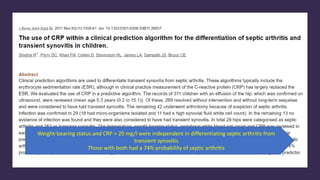
Weight-bearing status and CRP > 20 mg/l were independent in differentiating septic arthritis from
transient synovitis
Those with both had a 74% probability of septic arthritis
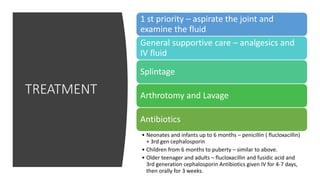
TREATMENT
1 st priority – aspirate the joint and
examine the fluid
General supportive care – analgesics and
IV fluid
Splintage
Arthrotomy and Lavage
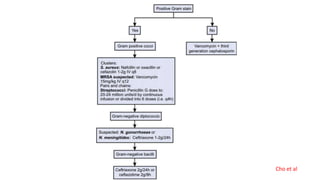
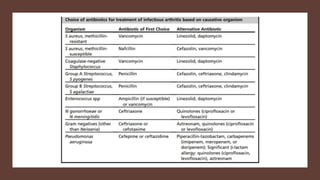
Antibiotics
• Neonates and infants up to 6 months – penicillin ( flucloxacillin)
+ 3rd gen cephalosporin
• Children from 6 months to puberty – similar to above.
• Older teenager and adults – flucloxacillin and fusidic acid and
3rd generation cephalosporin Antibiotics given IV for 4-7 days,
then orally for 3 weeks.
Cho et al
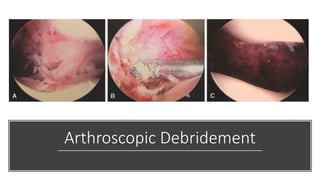
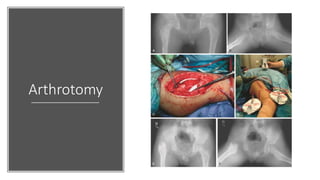
• Remove infective material and debris
from the joint
• Any of the 3 drainage procedures may
be used:
• closed needle aspiration,
• arthroscopic drainage, or
• arthrotomy
Arthroscopic Debridement
Arthrotomy
With healing there may be ?
1. Complete resolution
2. Fibrosis of the joint
3. Bony ankylosis
4. Deformity of the joint
5. Secondary osteoarthritis
6. Growth disturbance
7. Presenting as either localized deformity or shortening of the
bone
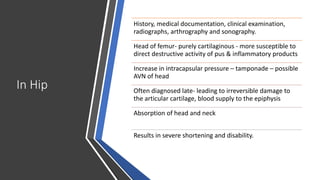
In Hip
History, medical documentation, clinical examination,
radiographs, arthrography and sonography.
Head of femur- purely cartilaginous - more susceptible to
direct destructive activity of pus & inflammatory products
Increase in intracapsular pressure – tamponade – possible
AVN of head
Often diagnosed late- leading to irreversible damage to
the articular cartilage, blood supply to the epiphysis
Absorption of head and neck
Results in severe shortening and disability.
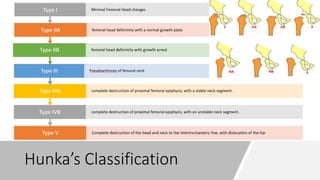
Hunka’s Classification
Type V Complete destruction of the head and neck to the intertrochanteric line, with dislocation of the hip
Type IVB complete destruction of proximal femoral epiphysis, with an unstable neck segment.
Type IVA complete destruction of proximal femoral epiphysis, with a stable neck segment.
Type III Pseudoarthrosis of femoral neck
Type IIB femoral head deformity with growth arrest
Type IIA femoral head deformity with a normal growth plate
Type I Minimal Femoral Head changes
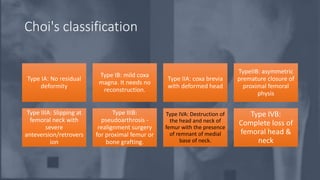
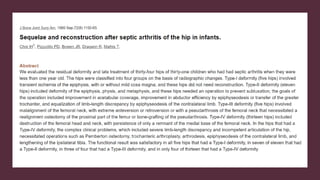
Choi's classification
Type IA: No residual
deformity
Type IB: mild coxa
magna. It needs no
reconstruction.
Type IIA: coxa brevia
with deformed head
TypeIIB: asymmetric
premature closure of
proximal femoral
physis
Type IIIA: Slipping at
femoral neck with
severe
anteversion/retrovers
ion
Type IIIB:
pseudoarthrosis -
realignment surgery
for proximal femur or
bone grafting.
Type IVA: Destruction of
the head and neck of
femur with the presence
of remnant of medial
base of neck.
Type IVB:
Complete loss of
femoral head &
neck
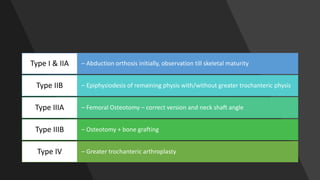
– Abduction orthosis initially, observation till skeletal maturityType I & IIA
– Epiphysiodesis of remaining physis with/without greater trochanteric physisType IIB
– Femoral Osteotomy – correct version and neck shaft angleType IIIA
– Osteotomy + bone graftingType IIIB
– Greater trochanteric arthroplastyType IV
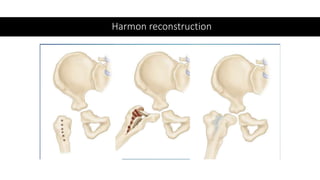
Harmon reconstruction
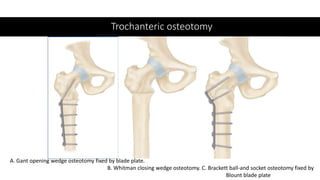
Trochanteric osteotomy
A. Gant opening wedge osteotomy fixed by blade plate.
B. Whitman closing wedge osteotomy. C. Brackett ball-and socket osteotomy fixed by
Blount blade plate
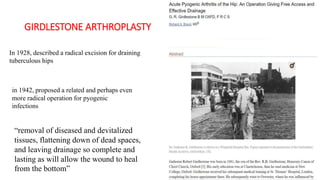
GIRDLESTONE ARTHROPLASTY
“removal of diseased and devitalized
tissues, flattening down of dead spaces,
and leaving drainage so complete and
lasting as will allow the wound to heal
from the bottom”
In 1928, described a radical excision for draining
tuberculous hips
in 1942, proposed a related and perhaps even
more radical operation for pyogenic
infections
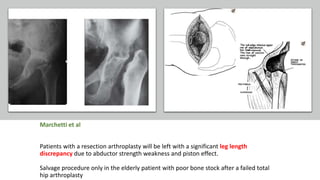
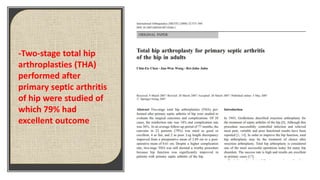
Marchetti et al
Patients with a resection arthroplasty will be left with a significant leg length
discrepancy due to abductor strength weakness and piston effect.
Salvage procedure only in the elderly patient with poor bone stock after a failed total
hip arthroplasty
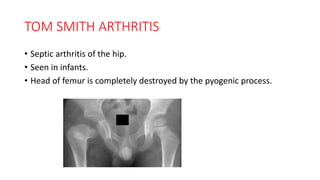
-Two-stage total hip
arthroplasties (THA)
performed after
primary septic arthritis
of hip were studied of
which 79% had
excellent outcome
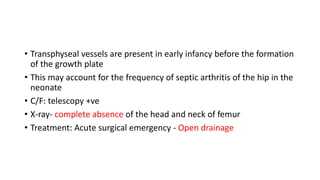
TOM SMITH ARTHRITIS
• Septic arthritis of the hip.
• Seen in infants.
• Head of femur is completely destroyed by the pyogenic process.
• Transphyseal vessels are present in early infancy before the formation
of the growth plate
• This may account for the frequency of septic arthritis of the hip in the
neonate
• C/F: telescopy +ve
• X-ray- complete absence of the head and neck of femur
• Treatment: Acute surgical emergency - Open drainage
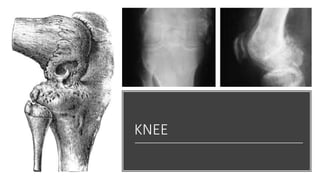
KNEE
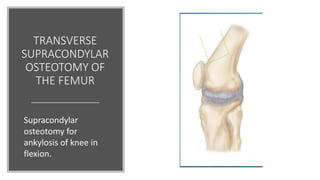
TRANSVERSE
SUPRACONDYLAR
OSTEOTOMY OF
THE FEMUR
Supracondylar
osteotomy for
ankylosis of knee in
flexion.
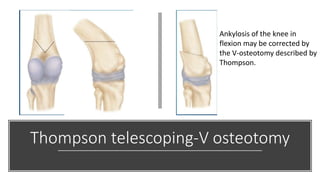
Thompson telescoping-V osteotomy
Ankylosis of the knee in
flexion may be corrected by
the V-osteotomy described by
Thompson.
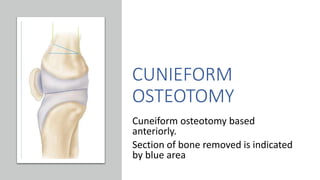
CUNIEFORM
OSTEOTOMY
Cuneiform osteotomy based
anteriorly.
Section of bone removed is indicated
by blue area
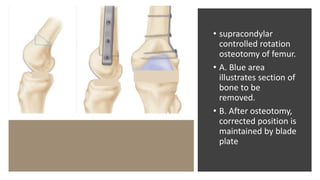
• supracondylar
controlled rotation
osteotomy of femur.
• A. Blue area
illustrates section of
bone to be
removed.
• B. After osteotomy,
corrected position is
maintained by blade
plate
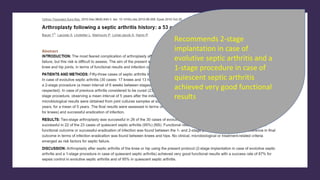
Recommends 2-stage
implantation in case of
evolutive septic arthritis and a
1-stage procedure in case of
quiescent septic arthritis
achieved very good functional
results
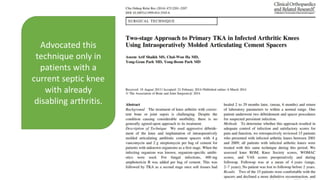
Advocated this
technique only in
patients with a
current septic knee
with already
disabling arthritis.
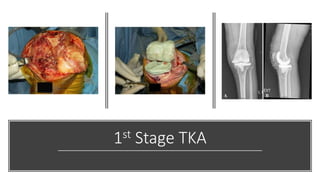
1st Stage TKA
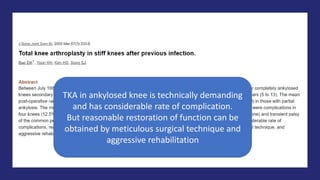
TKA in ankylosed knee is technically demanding
and has considerable rate of complication.
But reasonable restoration of function can be
obtained by meticulous surgical technique and
aggressive rehabilitation
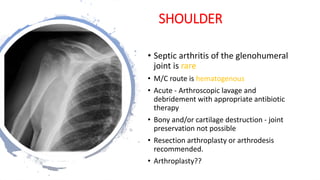
SHOULDER
• Septic arthritis of the glenohumeral
joint is rare
• M/C route is hematogenous
• Acute - Arthroscopic lavage and
debridement with appropriate antibiotic
therapy
• Bony and/or cartilage destruction - joint
preservation not possible
• Resection arthroplasty or arthrodesis
recommended.
• Arthroplasty??
Thank you
EXTRA
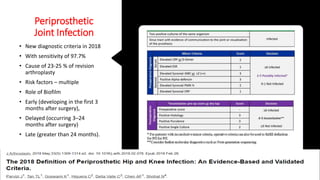
Periprosthetic
Joint Infection
• New diagnostic criteria in 2018
• With sensitivity of 97.7%
• Cause of 23-25 % of revision
arthroplasty
• Risk factors – multiple
• Role of Biofilm
• Early (developing in the first 3
months after surgery),
• Delayed (occurring 3–24
months after surgery)
• Late (greater than 24 months).
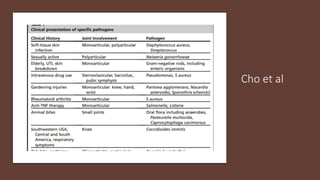
Cho et al
Septic arthritis and sequelae

Septic arthritis and sequelae

  • 1.
    Septic Arthritis andits Sequelae Presenter: Dr Namith Moderator: Prof. B. Chowdhury Co-moderator: Dr. Ashish
  • 2.
    Infective Arthritis Septic arthritis Tubercular arthritis lymesarhtritis Syphllitic arthritis Gonococcal arthritis
  • 3.
    Introduction WHAT IS SEPTICARTHRITIS? • Inflammation with purulent effusion • Considered as Orthopaedic emergency • Failure to initiate appropriate antibiotic -permanent joint dysfunction. • It can cause septic shock, which can be fatal.
  • 4.
    Anatomy Lines joint &cavity and secretes synovial fluid for lubrication Protection of joint cavity Lubricates the articulating joints, nutrient and waste transportation Prevents grinding of the bone and allow for smooth articulation
  • 5.
    • MC inchildren • 70% in children from 1 month to 5 years • M:F at 2:1 • Single joint involvement in 94% of children • Hip(41%)>Knee(23%)>ankle>elbow>wrist in children EPIDEMIOLOGY
  • 6.
    The incidence ofSA is increasing in the general population, especially in older patients with CHF, hepatitis C, diabetes mellitus, OA and ESRD M/C involvement : Knee>Shoulder
  • 7.
    AETIOPATHOGENESIS • The infectioncan originate anywhere in the body. • Open wound, trauma, surgery, or unsterile injection. • Infective organism travels through blood stream to the joint. • The infection can be caused by bacteria or other organisms.
  • 8.
  • 9.
    • AGE • <5years • EXISTING JOINT PROBLEMS • Osteoarthritis, gout, rheumatoid arthritis or lupus • MEDICATIONS • Suppress the immune system • SKIN FRAGILITY • Psoriasis and eczema HOSTHOST
  • 10.
    • WEAK IMMUNESYSTEM • diabetes, kidney and liver problems • ALCOHOLISM AND IVDU Having a combination of risk factors puts you at greater risk than having just one risk factor does HOST
  • 12.
  • 14.
    Experimental models ofbacterial arthritis: a microbiologic and histopathologic characterization of the arthritis after the intraarticular injections of Neisseria gonorrhoeae, Staphylococcus aureus, group A streptococci, and Escherichia coli.Goldenberg DL, Chisholm PL, Rice PA J Rheumatol. 1983 Feb; 10(1):5-11.
  • 15.
    Demonstration of interleukin-1betaand interleukin-6 in cells of synovial fluids by flow cytometry.Koch B, Lemmermeier P, Gause A, v Wilmowsky H, Heisel J, Pfreundschuh M Eur J Med Res. 1996 Feb 22; 1(5):244-8.
  • 16.
    Ultrastructure of articularcartilage in pyogenic arthritis.Roy S, Bhawan J Arch Pathol. 1975 Jan; 99(1):44-7.
  • 17.
    CLINICAL FEATURE • Acutepain • Pseudoparesis • Rapid pulse and swinging fever • Overlying skin looks red • Obvious joint swelling • Local warmth and marked tenderness
  • 18.
    IN CHILDREN • Irritable •Warm • Tenderness • Rapid pulse • Refused feeding Loss of spontaneous limb movement
  • 20.
    DDx 1. Acute osteomyelitis 2.Trauma 3. Hemophilic bleed 4. Rheumatic fever 5. Juvenile rheumatoid arthritis 6. Sickle-cell disease 7. Gaucher’s disease 8. Gout and pseudo-gout 9. Transient synovitis of Hip
  • 21.
    WHAT NEXT? Septic Arthritissuspected Blood and Synovial fluid analysis Empirical antibiotics based on GS Joint Drainage Adjust Antibiotics according to C/S
  • 22.
    INVESTIGATIONS 1. BLOOD INVESTIGATIONS RaisedWBC Raised ESR and CRP Blood culture (positive) 2. IMAGING X-ray Early stage: May look normal except widening of joint space, ultrasound helpful Late stage: Narrowing and irregularity of joint space; may have OM changes of adjacent bones MRI and radionuclide imaging
  • 24.
  • 25.
    MRI •T1: low signalwithin subchondral bone •T2: perisynovial edema and joint effusion
  • 27.
  • 28.
  • 30.
  • 32.
    Four independent multivariate clinical predictorswere identified and proved excellent diagnostic performance in differentiating between septic arthritis and transient synovitis of the hip in children.
  • 33.
    C-reactive protein levelof >2.0 mg/dL (>20 mg/L) was a strong independent risk factor and a valuable tool for assessing and diagnosing children suspected of having septic arthritis of the hip.
  • 34.
    Weight-bearing status andCRP > 20 mg/l were independent in differentiating septic arthritis from transient synovitis Those with both had a 74% probability of septic arthritis
  • 35.
    TREATMENT 1 st priority– aspirate the joint and examine the fluid General supportive care – analgesics and IV fluid Splintage Arthrotomy and Lavage Antibiotics • Neonates and infants up to 6 months – penicillin ( flucloxacillin) + 3rd gen cephalosporin • Children from 6 months to puberty – similar to above. • Older teenager and adults – flucloxacillin and fusidic acid and 3rd generation cephalosporin Antibiotics given IV for 4-7 days, then orally for 3 weeks.
  • 36.
  • 38.
    • Remove infectivematerial and debris from the joint • Any of the 3 drainage procedures may be used: • closed needle aspiration, • arthroscopic drainage, or • arthrotomy
  • 39.
  • 40.
  • 41.
    With healing theremay be ? 1. Complete resolution 2. Fibrosis of the joint 3. Bony ankylosis 4. Deformity of the joint 5. Secondary osteoarthritis 6. Growth disturbance 7. Presenting as either localized deformity or shortening of the bone
  • 42.
    In Hip History, medicaldocumentation, clinical examination, radiographs, arthrography and sonography. Head of femur- purely cartilaginous - more susceptible to direct destructive activity of pus & inflammatory products Increase in intracapsular pressure – tamponade – possible AVN of head Often diagnosed late- leading to irreversible damage to the articular cartilage, blood supply to the epiphysis Absorption of head and neck Results in severe shortening and disability.
  • 43.
    Hunka’s Classification Type VComplete destruction of the head and neck to the intertrochanteric line, with dislocation of the hip Type IVB complete destruction of proximal femoral epiphysis, with an unstable neck segment. Type IVA complete destruction of proximal femoral epiphysis, with a stable neck segment. Type III Pseudoarthrosis of femoral neck Type IIB femoral head deformity with growth arrest Type IIA femoral head deformity with a normal growth plate Type I Minimal Femoral Head changes
  • 44.
    Choi's classification Type IA:No residual deformity Type IB: mild coxa magna. It needs no reconstruction. Type IIA: coxa brevia with deformed head TypeIIB: asymmetric premature closure of proximal femoral physis Type IIIA: Slipping at femoral neck with severe anteversion/retrovers ion Type IIIB: pseudoarthrosis - realignment surgery for proximal femur or bone grafting. Type IVA: Destruction of the head and neck of femur with the presence of remnant of medial base of neck. Type IVB: Complete loss of femoral head & neck
  • 46.
    – Abduction orthosisinitially, observation till skeletal maturityType I & IIA – Epiphysiodesis of remaining physis with/without greater trochanteric physisType IIB – Femoral Osteotomy – correct version and neck shaft angleType IIIA – Osteotomy + bone graftingType IIIB – Greater trochanteric arthroplastyType IV
  • 47.
  • 48.
    Trochanteric osteotomy A. Gantopening wedge osteotomy fixed by blade plate. B. Whitman closing wedge osteotomy. C. Brackett ball-and socket osteotomy fixed by Blount blade plate
  • 49.
    GIRDLESTONE ARTHROPLASTY “removal ofdiseased and devitalized tissues, flattening down of dead spaces, and leaving drainage so complete and lasting as will allow the wound to heal from the bottom” In 1928, described a radical excision for draining tuberculous hips in 1942, proposed a related and perhaps even more radical operation for pyogenic infections
  • 50.
    Marchetti et al Patientswith a resection arthroplasty will be left with a significant leg length discrepancy due to abductor strength weakness and piston effect. Salvage procedure only in the elderly patient with poor bone stock after a failed total hip arthroplasty
  • 51.
    -Two-stage total hip arthroplasties(THA) performed after primary septic arthritis of hip were studied of which 79% had excellent outcome
  • 52.
    TOM SMITH ARTHRITIS •Septic arthritis of the hip. • Seen in infants. • Head of femur is completely destroyed by the pyogenic process.
  • 53.
    • Transphyseal vesselsare present in early infancy before the formation of the growth plate • This may account for the frequency of septic arthritis of the hip in the neonate • C/F: telescopy +ve • X-ray- complete absence of the head and neck of femur • Treatment: Acute surgical emergency - Open drainage
  • 54.
  • 55.
  • 56.
    Thompson telescoping-V osteotomy Ankylosisof the knee in flexion may be corrected by the V-osteotomy described by Thompson.
  • 57.
  • 58.
    • supracondylar controlled rotation osteotomyof femur. • A. Blue area illustrates section of bone to be removed. • B. After osteotomy, corrected position is maintained by blade plate
  • 59.
    Recommends 2-stage implantation incase of evolutive septic arthritis and a 1-stage procedure in case of quiescent septic arthritis achieved very good functional results
  • 60.
    Advocated this technique onlyin patients with a current septic knee with already disabling arthritis.
  • 61.
  • 62.
    TKA in ankylosedknee is technically demanding and has considerable rate of complication. But reasonable restoration of function can be obtained by meticulous surgical technique and aggressive rehabilitation
  • 63.
    SHOULDER • Septic arthritisof the glenohumeral joint is rare • M/C route is hematogenous • Acute - Arthroscopic lavage and debridement with appropriate antibiotic therapy • Bony and/or cartilage destruction - joint preservation not possible • Resection arthroplasty or arthrodesis recommended. • Arthroplasty??
  • 64.
  • 66.
  • 69.
    Periprosthetic Joint Infection • Newdiagnostic criteria in 2018 • With sensitivity of 97.7% • Cause of 23-25 % of revision arthroplasty • Risk factors – multiple • Role of Biofilm • Early (developing in the first 3 months after surgery), • Delayed (occurring 3–24 months after surgery) • Late (greater than 24 months).
  • 71.

Editor's Notes

  • #4 Inflammation of synovial membrane with purulent effusion into the joint capsule Considered as Orthopaedic emergency Failure to initiate appropriate antibiotic therapy within the first 24 to 48 hours of onset - subchondral bone loss - permanent joint dysfunction. It can cause septic shock, which can be fatal.
  • #5 Synovial fluid: synovial fluid is an ultrafiltrate contains proteins derived from the blood plasma and proteins that are produced by cells within the joint tissues The fluid contains hyaluronan - fibroblast-like cells in the synovial membrane, lubricin - chondrocytes  interstitial fluid filtered from the blood plasma
  • #6 Knee is most commonly involved in adults
  • #8 The infection can be caused by bacteria, virus or fungus., although rare : its possible.
  • #14 epiphyseal plate - prevents infection from entering joint in older children not so in infants synovial membrane inserting distally to epiphysis – bacterial spread
  • #15 The synovial membrane - no limiting basement plate - easy hematogenous entry of bacteria. low fluid shear conditions - bacterial adherence and infection. And their Colonization may also be aided in cases where the joint has undergone recent injury. host-derived extracellular matrix proteins - promote bacterial attachment and progression to infection.
  • #16 Once colonized - bacteria rapidly proliferate - activate various acute inflammatory responses. Initially, host inflammatory cytokines, including interleukin 1-β (IL-1β) and interleukin 6 (IL-6), are released These cytokines - release of acute-phase proteins (such as C-reactive protein) from the liver that bind to the bacterial cells. promote opsonization and activation of the complement system  
  • #17 -host mount a protective inflammatory response- contains the invading pathogen - resolves the infection. However, the potent activation of the immune response with the associated high levels of cytokines and reactive oxygen species leads to joint destruction. -joint effusion - increases intra-articular pressure- impeding blood and nutrient supply to the joint.
  • #18 antalgic limp • active and passive range of motion are limited Patient may hold the joint in a position to reduce the intra-articular pressure to minimize pain.
  • #20 Painful limp with limb in flexion/ext rotation/abduction
  • #23 MRI - obscure sites - sacroiliac and sterno-clavicular joint
  • #24 Early x-rays may be normal in the very early stage of the disease -widening of the joint space -in infants - lateral displacement of the proximal femur   this is a sign of significant pus in joint subluxation dislocation Gas may be seen with E. coli infection
  • #25  at Later stages – there is Narrowing and irregularity of joint space, erosion of epiphysis or metaphysis • findings of superimposed osteomyelitis if left untreated, reactive juxta-articular sclerosis - severe cases, ankylosis
  • #26 sensitive and more specific for early cartilaginous damage C+ (Gd): synovial enhancement
  • #27 USS • More reliable • Widening of space between capsule and bone of > 2mm. • Positively echogenic • color Doppler - increased peri-synovial vascularity  • and USG can also be used to guide the joint aspiration
  • #28 SYNOVIAL FLUID ASPIRATION CAN BE both diagnostic and therapeutic potential to injure blood vessels, nerves, and tendons To minimize the risk - the extensor surface of the joint
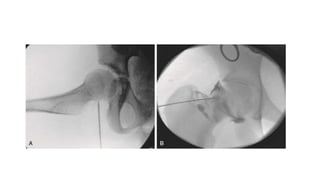
  • #30  Fluoroscopically guided aspiration of a hip joint (A) with an arthrogram (B) to confirm the intraarticular location of the aspiration attempt
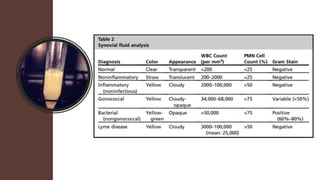
  • #31  A septic joint aspirate will show high WBC count (> 50,000/mm3 with >75% PMNs) glucose 50 mg/dl less than serum levels high lactic acid Blood cultures Often positive, even when local cultures are negative Lumbar puncture consider in a septic joint caused by H. influenzae 
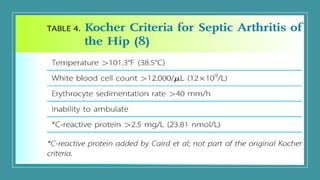
  • #32 when 4/4 -99% 3/4 - 93% 2/4 - 40% 1/4 - 3% chance of septic arthritis
  • #33 Four independent multivariate clinical predictors were identified to differentiate between septic arthritis and transient synovitis: history of fever, non-weight-bearing, erythrocyte sedimentation rate of at least forty millimeters per hour, and serum white blood-cell count of more than 12,000 cells per cubic millimeter (12.0 x 10(9) cells per liter).  
  • #34 Univariate analysis showed that fever, the C-reactive protein level, and the erythrocyte sedimentation rate were strongly associated with the final diagnosis -five predictive factors had a 98% four factors had a 93% chance-
  • #35   (weight-bearing status and CRP > 20 mg/l) were independent in differentiating septic arthritis from transient synovitis.
  • #37 -Few controlled studies -Most antibiotics achieve excellent bactericidal concentrations in synovial fluid following parenteral or oral administration -Intra-articular antimicrobial administration is usually not necessary and may cause a chemical synovitis.
  • #38 Infectious arthritis of native joints. In: Mandell G, Bennett J, Dolin R et al, editors. Mandell, Douglas, and Bennett’s principles and practice of infectious diseases. 7th edition. Philadelphia: Churchill Livingstone; 2010. p. 1443–56;
  • #39  Drainage: Indication of Surgical Drainage: 1- not respond to antimicrobial therapy and daily arthrocentesis 2-. Any joint with limited accessibility, 3-Patients with underlying disease, After initial joint drainage, response to therapy should be monitored with serial synovial fluid or ESR and CRP,
  • #40 Arthroscopic image of a knee joint 3 days after arthrotomy, irrigation, and drainage of septic arthritis, Depiction from Campbell 23rd, chapter 22
  • #41  -arthrotomy is performed to remove all purulent fluid and to irrigate the joint -removal of 1cm by 1cm joint capsule `- minimize chances of re-accumulation -intra-articular drain placed Depiction from Campbell 23rd, chapter 22
  • #43 M/c jointy Head of femur- purely cartilaginous - more susceptible to direct destructive activity of pus & inflammatory products The joint effusion may lead to Increase in intracapsular pressure – tamponade – possible AVN of head
  • #48 Harmon reconstruction for loss of femoral head and neck in child as result of infectious arthritis. trochanteric osteotomy with bone grafting. Period of growth and of weight bearing - produces substantial neck and trochanter
  • #50 emphasized these radical operations - only for severe infections, published in the preantibiotic era, when radical surgery was often required to save a patient’s life
  • #52 The infection that occurs in a previous total hip arthroplasty - involve the medullary canal or external part of the femoral cortex or the pelvis. . Bone loss is less in primary septic hip, and the femoral canal - not been infected as seen in infected total hip arthroplasty. surgical technique after resection arthroplasty may be as difficult as revision total hip arthroplasty because of leg length discrepancy and soft tissue scarring
  • #55 debilitating arthritis or bony ankylosis with flexion deformity primary Aim - allow linear weight bearing.
  • #56 A flexion deformity - corrected indirectly - by a supracondylar osteotomy - causes a compensatory deformity in the opposite direction.
  • #60 No clinical, microbiological or treatment-related criteria emerged as risk factors for septic failure. No significant difference in functional outcome or successful eradication of infection was found between the 1- and 2-stage procedures
  • #64 Studies have shown that Delayed reconstruction with a reverse shoulder prosthesis after successful eradication of infection results in limited improvement in functional outcomes that are far inferior to those observed for primary treatment of cuff tear arthropathy
  • #70 new criteria demonstrated a higher sensitivity of 97.7% compared to the MSIS (79.3%) Risk factors:• Postoperative surgical site infection, • Revision surgery, • Hematoma formation, • Rheumatoid arthritis, exogenous immunosuppressive medications, and malignancy • Longer operative time, • Obesity, diabetes mellitus, smoking. • Perioperative infection at a distant site, including the urinary or respiratory tract • Development of postoperative atrial fibrillation and myocardial infarction. • Use of aggressive anticoagulation • Blood transfusions S. aureus and aerobic Gram-negative bacilli together contributed to 60% of the early-onset infections Imaging: septic loosening, collection in usg, Three-phase bone scintigraphy is one of the most widely utilized imaging techniques in the diagnosis of PJI. Uptake at the prosthesis interfaces at the blood pool and late time points suggests PJI.