Separation of Substances
There are many instances when we
notice a substance being separated
from a mixture of materials.
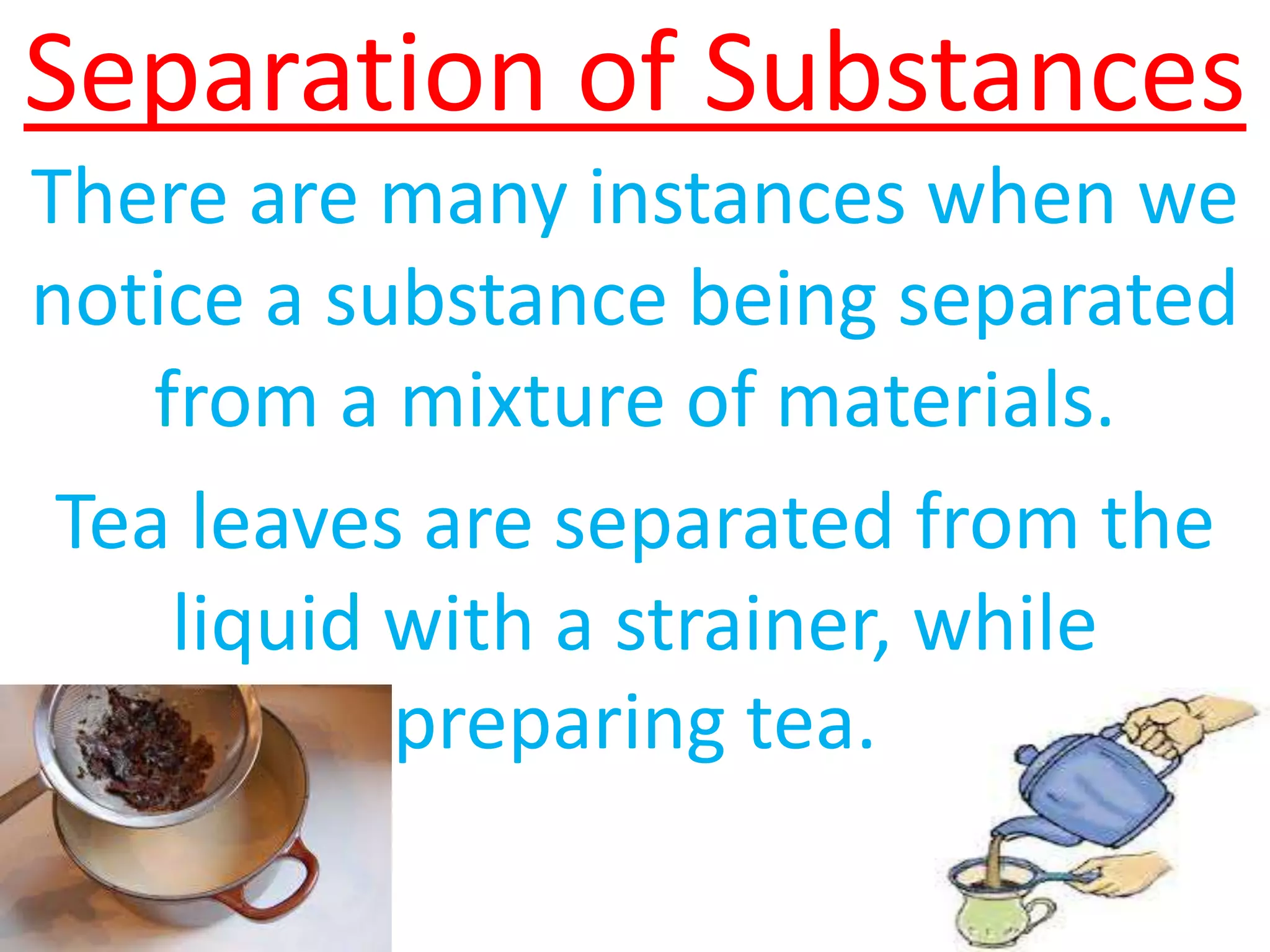
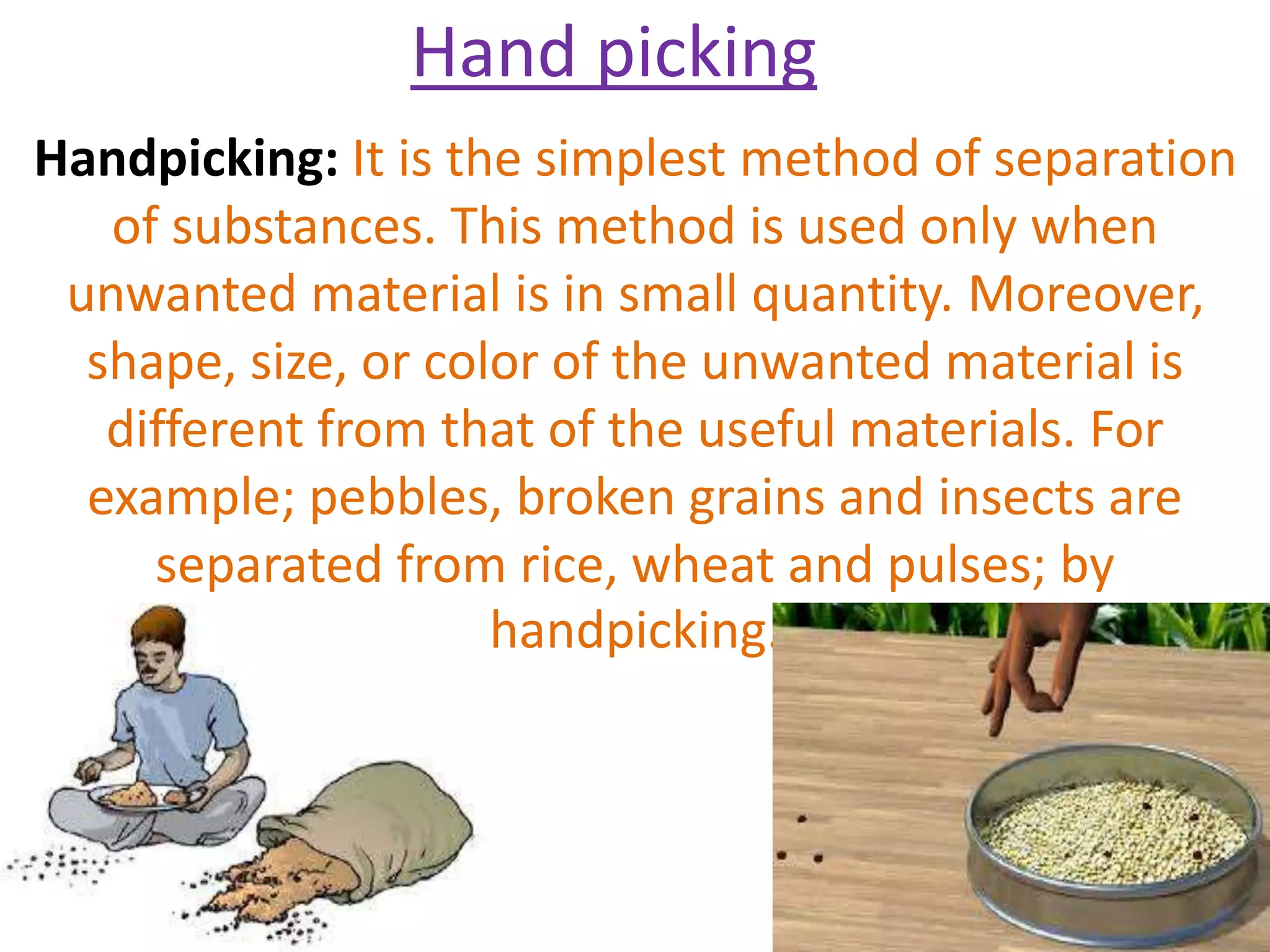
Tea leaves are separated from the
liquid with a strainer, while
preparing tea.
Hand picking
Handpicking: It is the simplest method of separation
of substances. This method is used only when
unwanted material is in small quantity. Moreover,
shape, size, or color of the unwanted material is
different from that of the useful materials. For
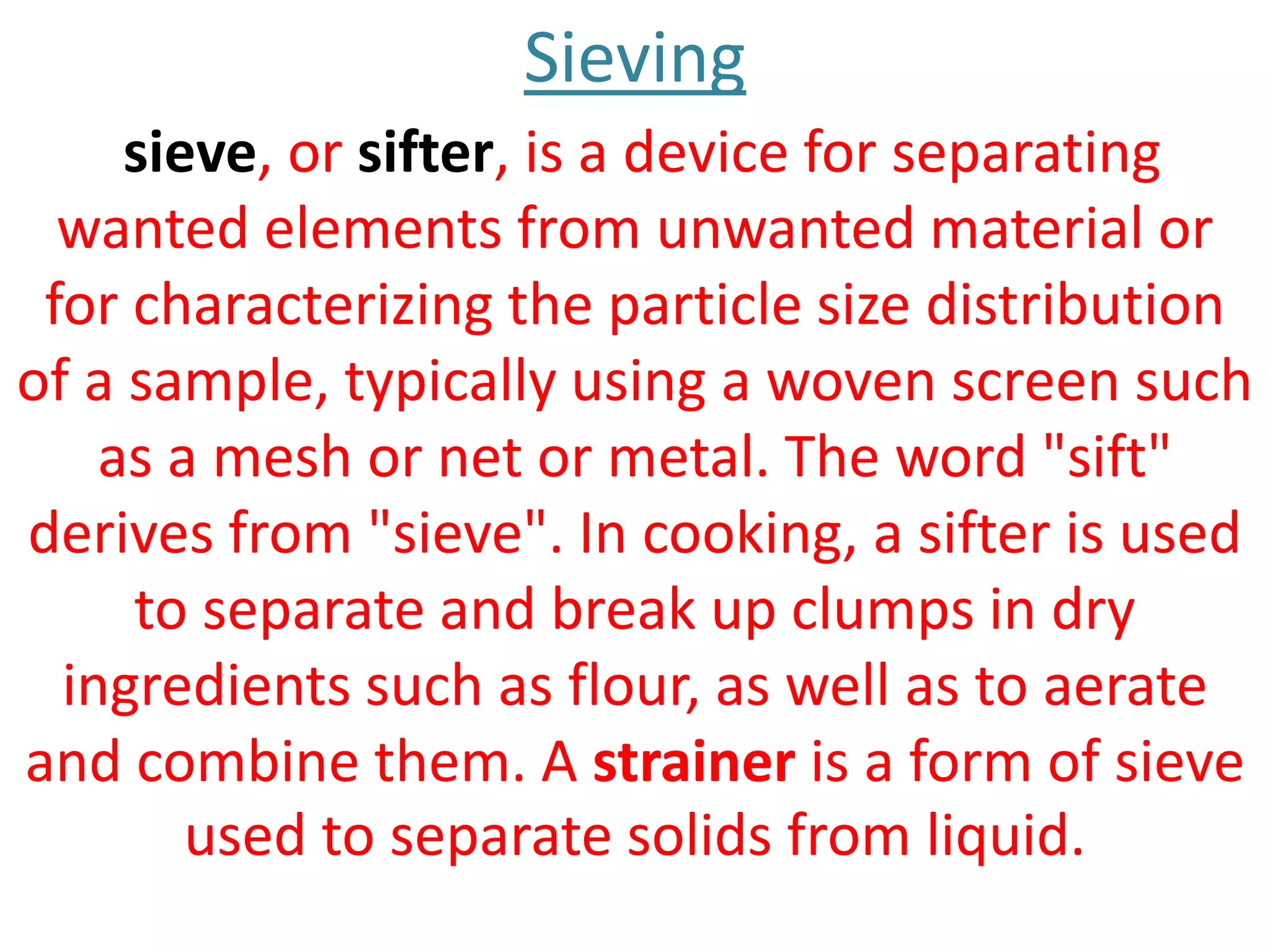
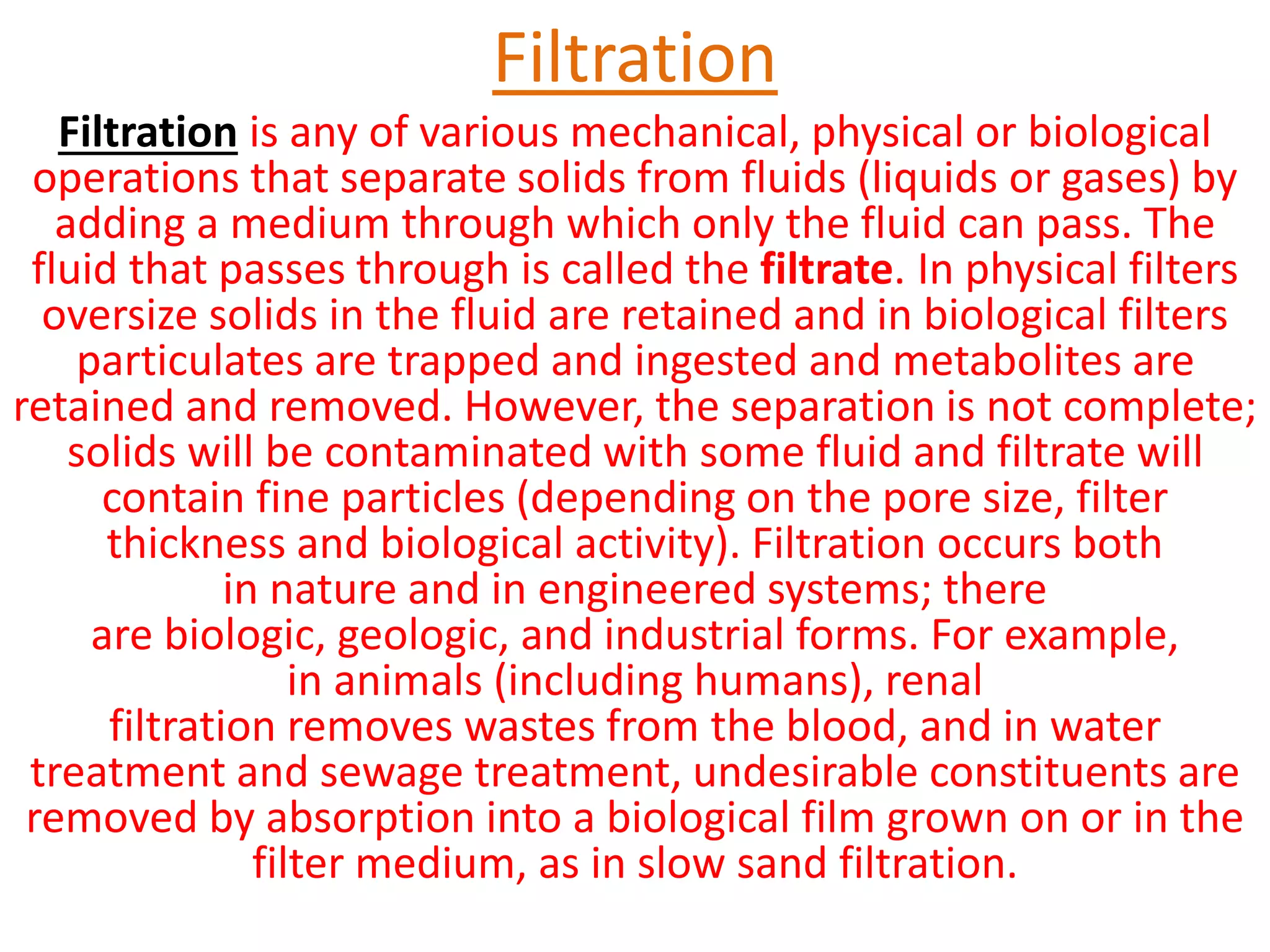
example; pebbles, broken grains and insects are
separated from rice, wheat and pulses; by
handpicking.
Threshing
Threshing: Threshing is used for separating seeds from the
harvested stalks.
Manual Threshing: When the quantity is small, threshing is done
manually. Small bundles of the harvested stalks are thrashed on
a hard surface. This helps in separating the grains.
Threshing by Animals: For larger quantities, threshing is done in
the traditional way; by using animals. For this, stalks are spread
around a pole. Several bullocks are tied to the pole and are
made to walk over the harvested stalks. Trampling by hooves of
the animals helps in separating grains.
Threshing Machine: Now-a-days, threshing machines are used
for the purpose. It can be powered by either a diesel engine or
an electric motor. It helps in saving time and labour.
winnowing
Winnowing is an agricultural method developed by
ancient cultures for separating grain from chaff. It is
also used to remove weevils or other pests from
stored grain. Threshing, the loosening of grain or
seeds from the husks and straw, is the step in the
chaff-removal process that comes before winnowing.
Sieving
sieve, or sifter, is a device for separating
wanted elements from unwanted material or
for characterizing the particle size distribution
of a sample, typically using a woven screen such
as a mesh or net or metal. The word "sift"
derives from "sieve". In cooking, a sifter is used
to separate and break up clumps in dry
ingredients such as flour, as well as to aerate
and combine them. A strainer is a form of sieve
used to separate solids from liquid.
Evaporation
Evaporation is a type of vaporization of a liquid that
occurs from the surface of a liquid into a gaseous
phase that is not saturated with the evaporating
substance. The other type of vaporization is boiling,
which is characterized by bubbles of saturated vapor
forming in the liquid phase. Steam produced in a
boiler is another example of evaporation occurring in
a saturated vapor phase. Evaporation that occurs
directly from the solid phase below the melting point,
as commonly observed with ice at or below freezing
or moth crystals (naphthalene or
paradichlorobenzene), is called sublimation.
Condensation
Condensation is the change of the physical state of
matter from gas phase into liquid phase, and is the
reverse of evaporation. The word most often refers to
the water cycle. It can also be defined as the change
in the state of water vapour to liquid water when in
contact with a liquid or solid surface or cloud
condensation nuclei within the atmosphere. When
the transition happens from the gaseous phase into
the solid phase directly, the change is
called deposition.
Sedimentation
Sedimentation is the tendency
for particles in suspension to settle out of the fluid in
which they are entrained and come to rest against a
barrier. This is due to their motion through the fluid in
response to the forces acting on them: these forces can
be due to gravity, centrifugal acceleration,
or electromagnetism. In geology, sedimentation is often
used as the opposite of erosion, i.e., the terminal end
of sediment transport. In that sense, it includes the
termination of transport by siltation or true bed load
transport. Settling is the falling of suspended particles
through the liquid, whereas sedimentation is the
termination of the settling process.
Decantation
Decantation is a process for the separation of
mixtures, by removing a layer of liquid, generally one
from which a precipitate has settled. The purpose
may be either to produce a clean decant, or to
remove undesired liquid from the precipitate (or
other layers). If the aim is to produce a clean solution,
a small amount of solution must generally be left in
the container, and care must be taken to prevent any
precipitate from flowing with the solution out of the
container.
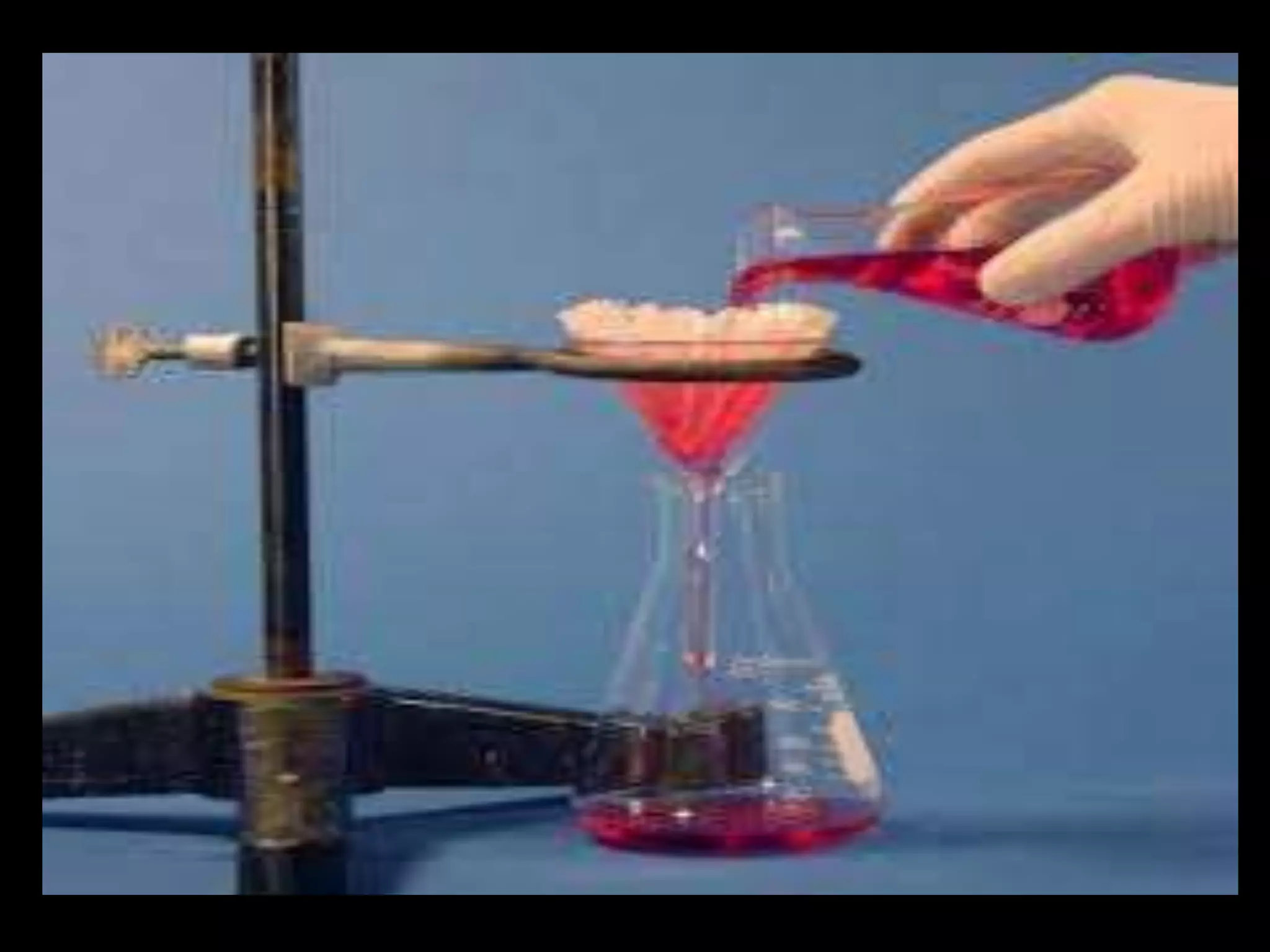
Filtration
Filtration is any of various mechanical, physical or biological
operations that separate solids from fluids (liquids or gases) by
adding a medium through which only the fluid can pass. The
fluid that passes through is called the filtrate. In physical filters
oversize solids in the fluid are retained and in biological filters
particulates are trapped and ingested and metabolites are
retained and removed. However, the separation is not complete;
solids will be contaminated with some fluid and filtrate will
contain fine particles (depending on the pore size, filter
thickness and biological activity). Filtration occurs both
in nature and in engineered systems; there
are biologic, geologic, and industrial forms. For example,
in animals (including humans), renal
filtration removes wastes from the blood, and in water
treatment and sewage treatment, undesirable constituents are
removed by absorption into a biological film grown on or in the
filter medium, as in slow sand filtration.
Separation of substances

Separation of substances

  • 1.
    Separation of Substances Thereare many instances when we notice a substance being separated from a mixture of materials. Tea leaves are separated from the liquid with a strainer, while preparing tea.
  • 2.
    Hand picking Handpicking: Itis the simplest method of separation of substances. This method is used only when unwanted material is in small quantity. Moreover, shape, size, or color of the unwanted material is different from that of the useful materials. For example; pebbles, broken grains and insects are separated from rice, wheat and pulses; by handpicking.
  • 3.
    Threshing Threshing: Threshing isused for separating seeds from the harvested stalks. Manual Threshing: When the quantity is small, threshing is done manually. Small bundles of the harvested stalks are thrashed on a hard surface. This helps in separating the grains. Threshing by Animals: For larger quantities, threshing is done in the traditional way; by using animals. For this, stalks are spread around a pole. Several bullocks are tied to the pole and are made to walk over the harvested stalks. Trampling by hooves of the animals helps in separating grains. Threshing Machine: Now-a-days, threshing machines are used for the purpose. It can be powered by either a diesel engine or an electric motor. It helps in saving time and labour.
  • 5.
    winnowing Winnowing is anagricultural method developed by ancient cultures for separating grain from chaff. It is also used to remove weevils or other pests from stored grain. Threshing, the loosening of grain or seeds from the husks and straw, is the step in the chaff-removal process that comes before winnowing.
  • 6.
    Sieving sieve, or sifter,is a device for separating wanted elements from unwanted material or for characterizing the particle size distribution of a sample, typically using a woven screen such as a mesh or net or metal. The word "sift" derives from "sieve". In cooking, a sifter is used to separate and break up clumps in dry ingredients such as flour, as well as to aerate and combine them. A strainer is a form of sieve used to separate solids from liquid.
  • 8.
    Evaporation Evaporation is atype of vaporization of a liquid that occurs from the surface of a liquid into a gaseous phase that is not saturated with the evaporating substance. The other type of vaporization is boiling, which is characterized by bubbles of saturated vapor forming in the liquid phase. Steam produced in a boiler is another example of evaporation occurring in a saturated vapor phase. Evaporation that occurs directly from the solid phase below the melting point, as commonly observed with ice at or below freezing or moth crystals (naphthalene or paradichlorobenzene), is called sublimation.
  • 10.
    Condensation Condensation is thechange of the physical state of matter from gas phase into liquid phase, and is the reverse of evaporation. The word most often refers to the water cycle. It can also be defined as the change in the state of water vapour to liquid water when in contact with a liquid or solid surface or cloud condensation nuclei within the atmosphere. When the transition happens from the gaseous phase into the solid phase directly, the change is called deposition.
  • 12.
    Sedimentation Sedimentation is thetendency for particles in suspension to settle out of the fluid in which they are entrained and come to rest against a barrier. This is due to their motion through the fluid in response to the forces acting on them: these forces can be due to gravity, centrifugal acceleration, or electromagnetism. In geology, sedimentation is often used as the opposite of erosion, i.e., the terminal end of sediment transport. In that sense, it includes the termination of transport by siltation or true bed load transport. Settling is the falling of suspended particles through the liquid, whereas sedimentation is the termination of the settling process.
  • 14.
    Decantation Decantation is aprocess for the separation of mixtures, by removing a layer of liquid, generally one from which a precipitate has settled. The purpose may be either to produce a clean decant, or to remove undesired liquid from the precipitate (or other layers). If the aim is to produce a clean solution, a small amount of solution must generally be left in the container, and care must be taken to prevent any precipitate from flowing with the solution out of the container.
  • 16.
    Filtration Filtration is anyof various mechanical, physical or biological operations that separate solids from fluids (liquids or gases) by adding a medium through which only the fluid can pass. The fluid that passes through is called the filtrate. In physical filters oversize solids in the fluid are retained and in biological filters particulates are trapped and ingested and metabolites are retained and removed. However, the separation is not complete; solids will be contaminated with some fluid and filtrate will contain fine particles (depending on the pore size, filter thickness and biological activity). Filtration occurs both in nature and in engineered systems; there are biologic, geologic, and industrial forms. For example, in animals (including humans), renal filtration removes wastes from the blood, and in water treatment and sewage treatment, undesirable constituents are removed by absorption into a biological film grown on or in the filter medium, as in slow sand filtration.