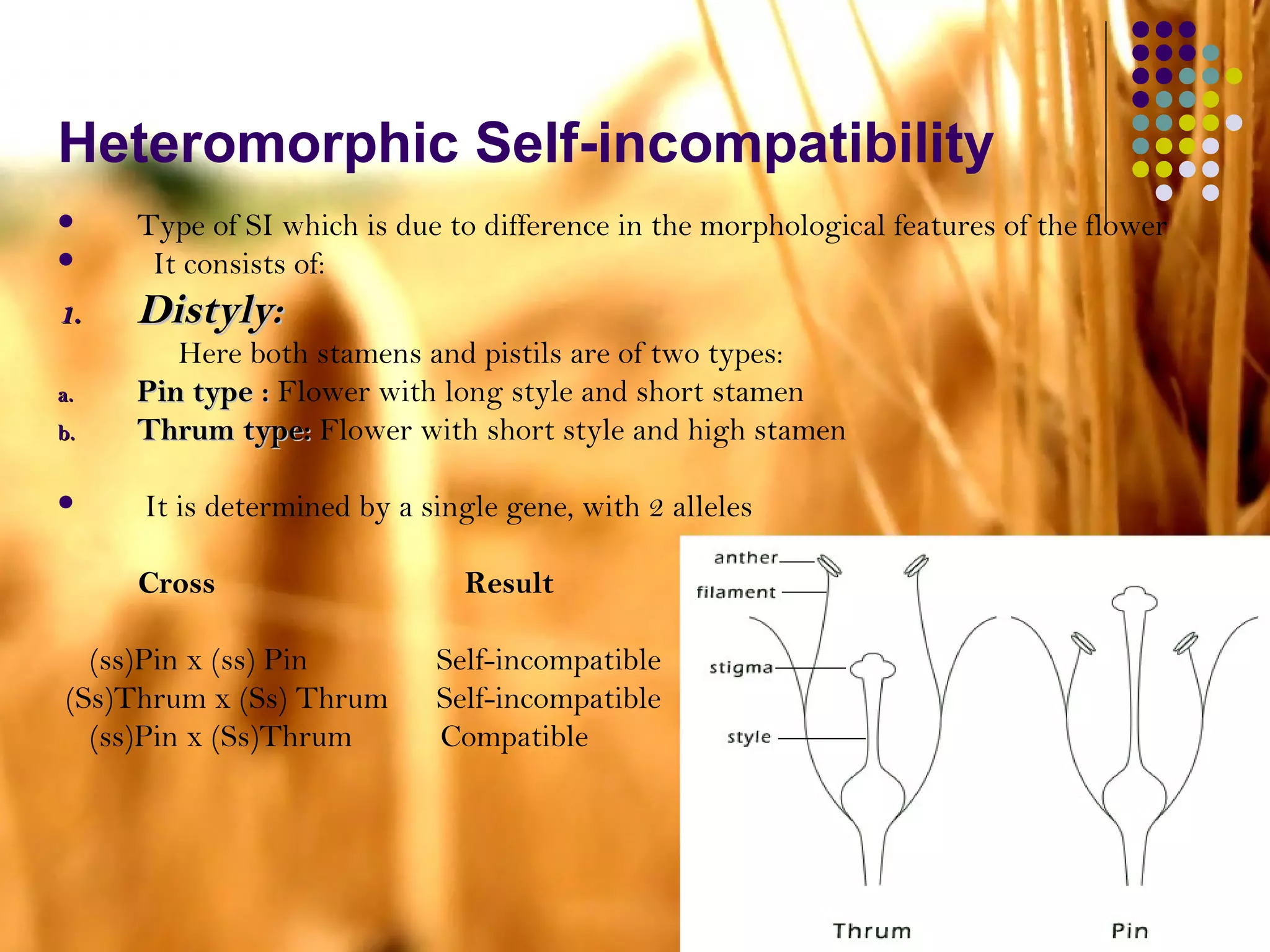
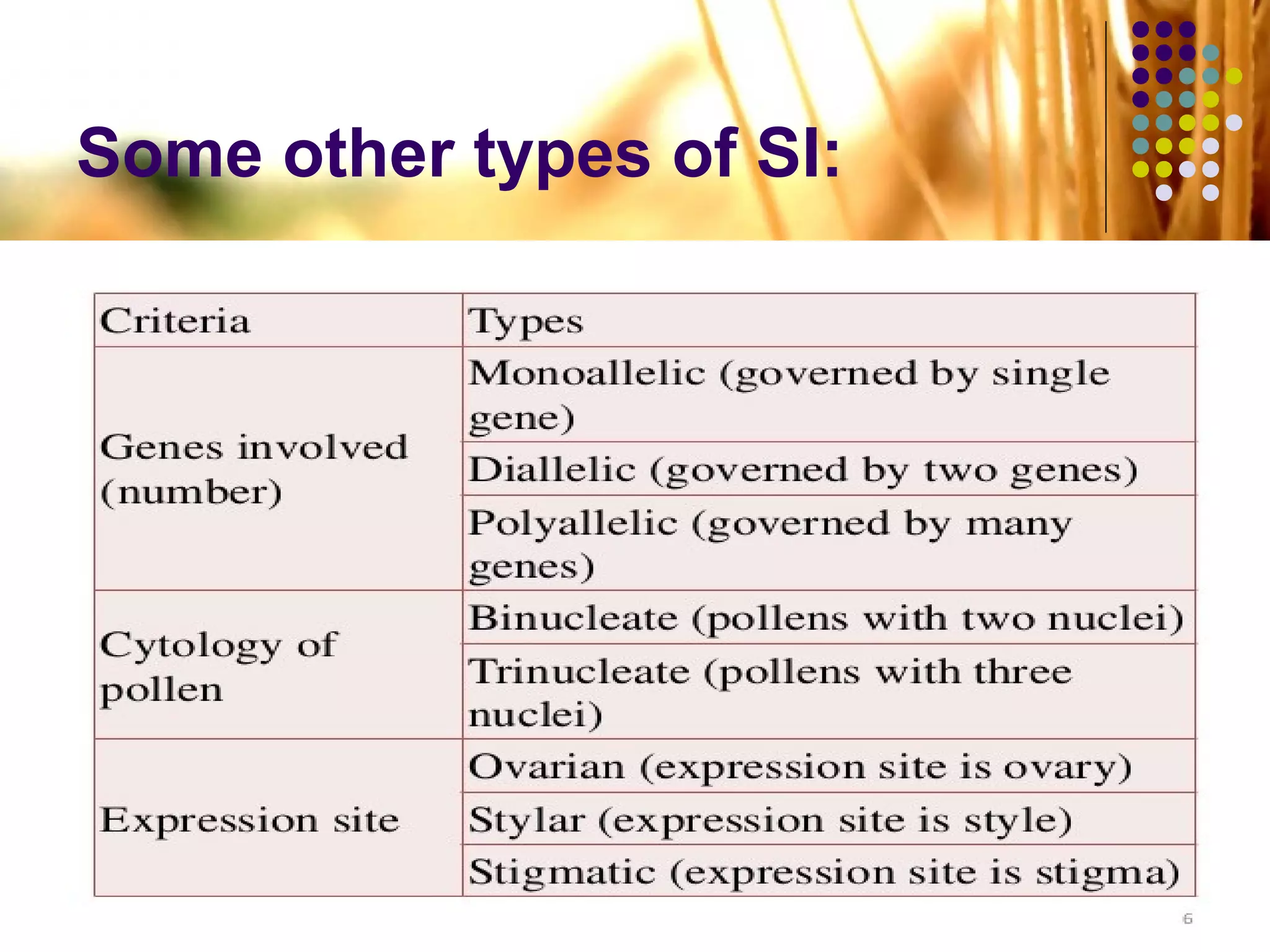
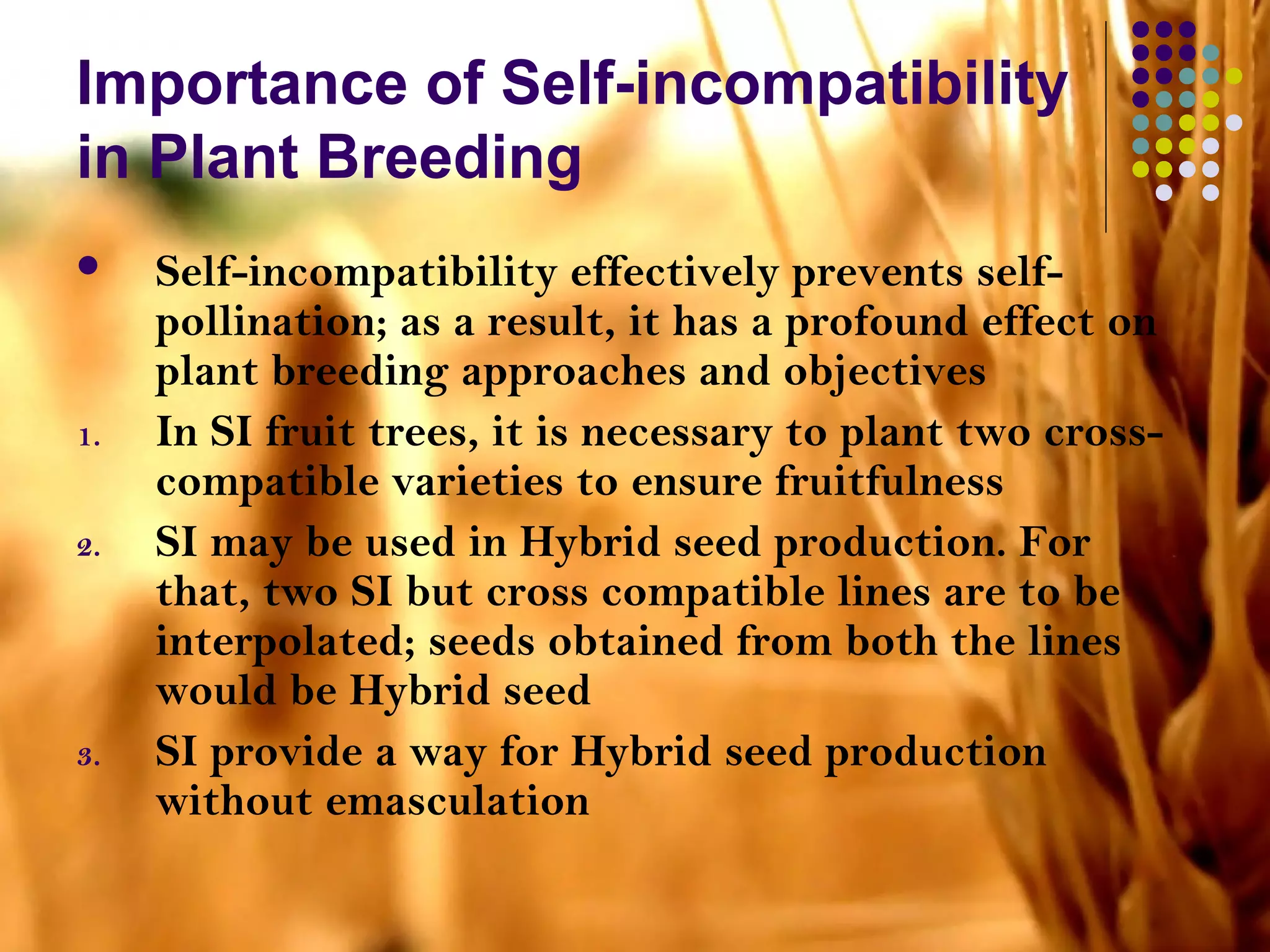
Self-incompatibility refers to a plant's inability to set seeds when self-pollinated. There are several types of self-incompatibility mechanisms in plants including homomorphic and heteromorphic self-incompatibility. Homomorphic self-incompatibility includes gametophytic and sporophytic types, while heteromorphic involves distyly and tristyly where the stamens and pistils exist in two or three distinct forms. Self-incompatibility promotes outbreeding and genetic variation in plant populations. It is important for plant breeding as it requires planting two cross-compatible varieties to ensure fruitfulness and can be used for hybrid seed production. However, self-incompatibility also has limitations like difficulty producing inbred lines and