Downloaded 117 times

The document outlines the design process in mechatronics, dividing it into six major phases, and emphasizes the role of sensors in each phase. It defines key concepts related to sensors and transducers, such as sensitivity, range, precision, and accuracy. Additionally, it discusses various types of sensors and their applications in measurement systems.
Introduction to mechatronics course 'EDE-31206' focusing on sensor selection and instrumentation.
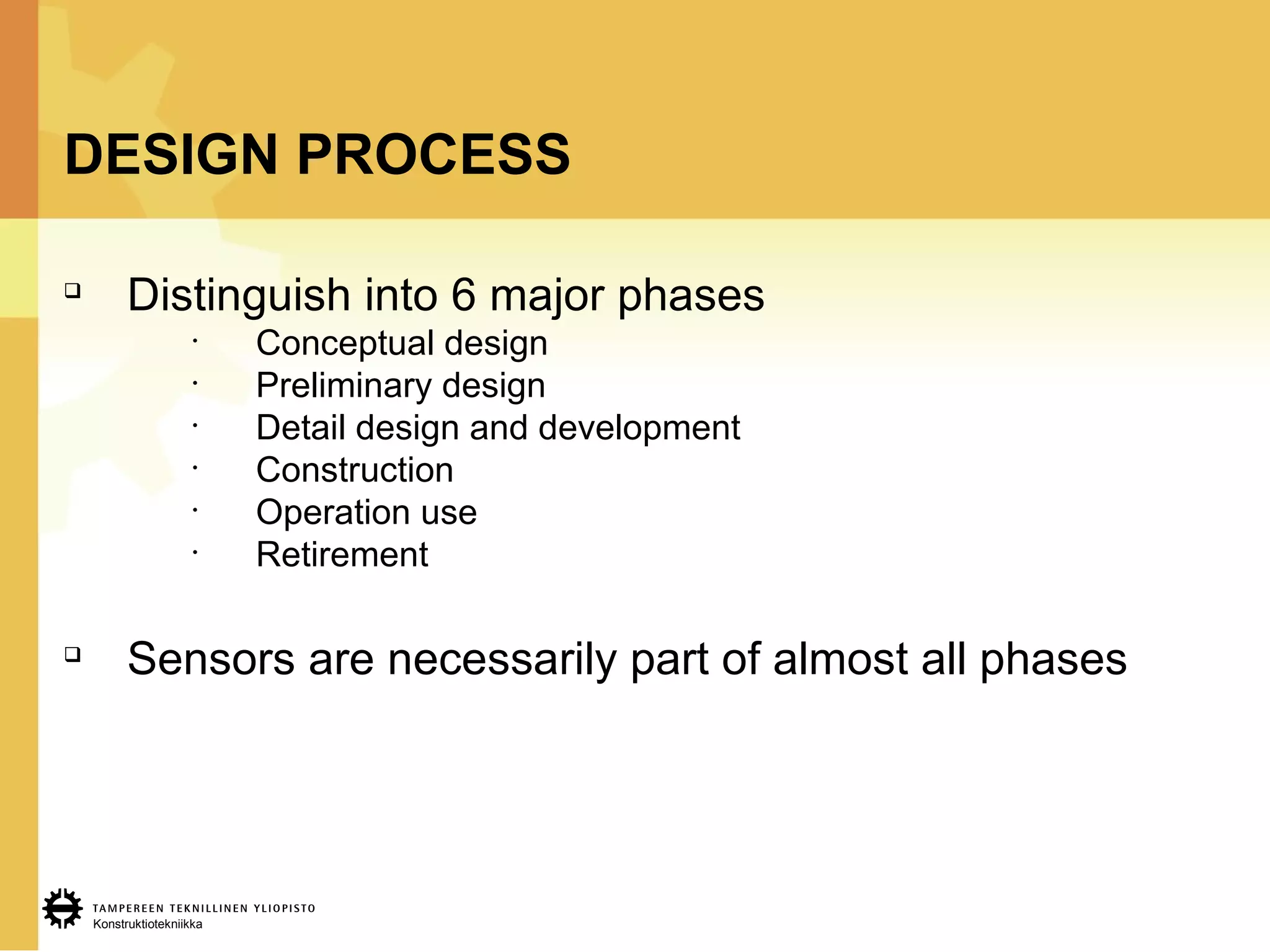
Discussion on the six major phases of the design process in mechatronics and the role of sensors.
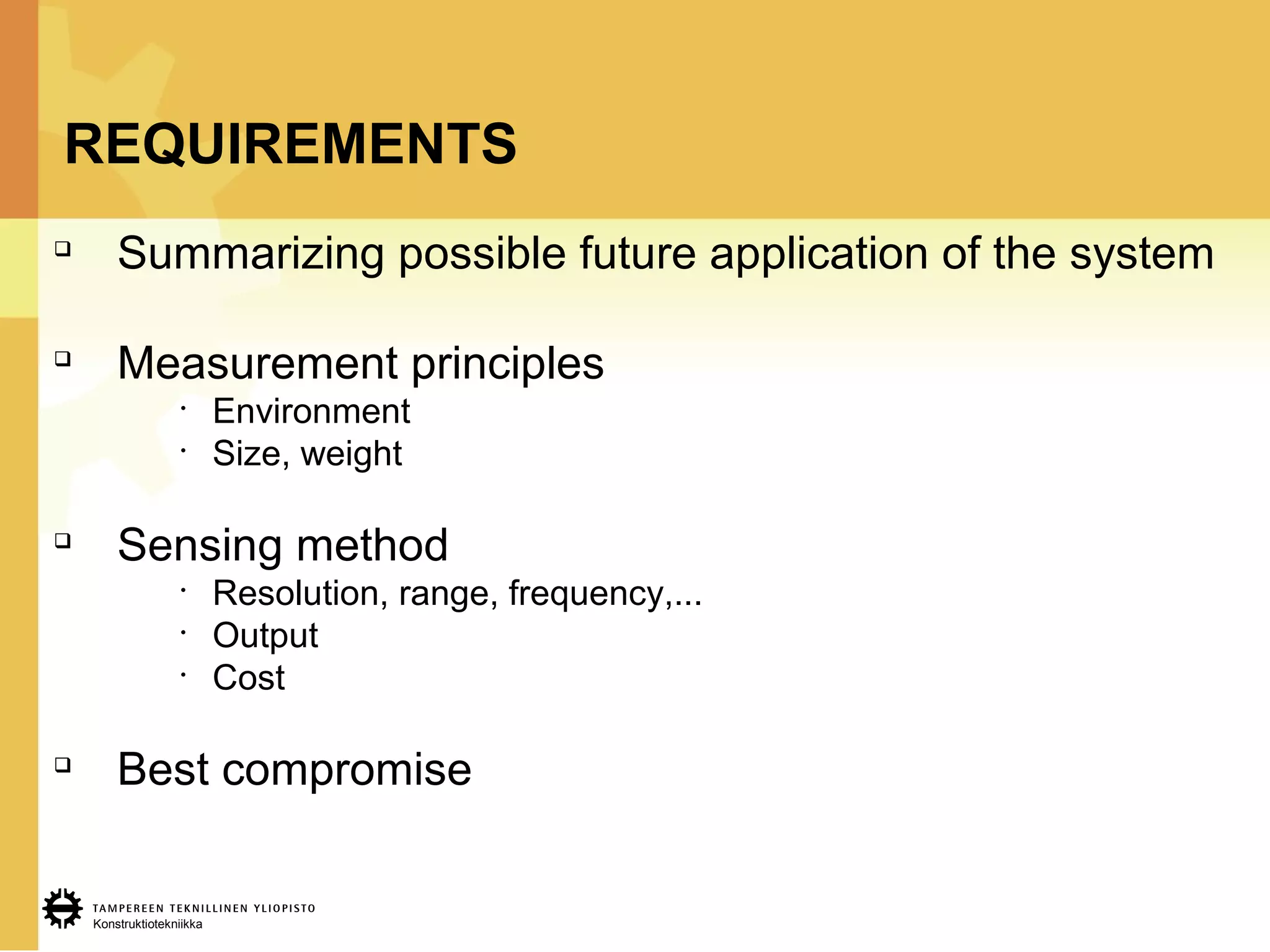
Overview of key requirements for sensor systems including applications, principles, and cost considerations.
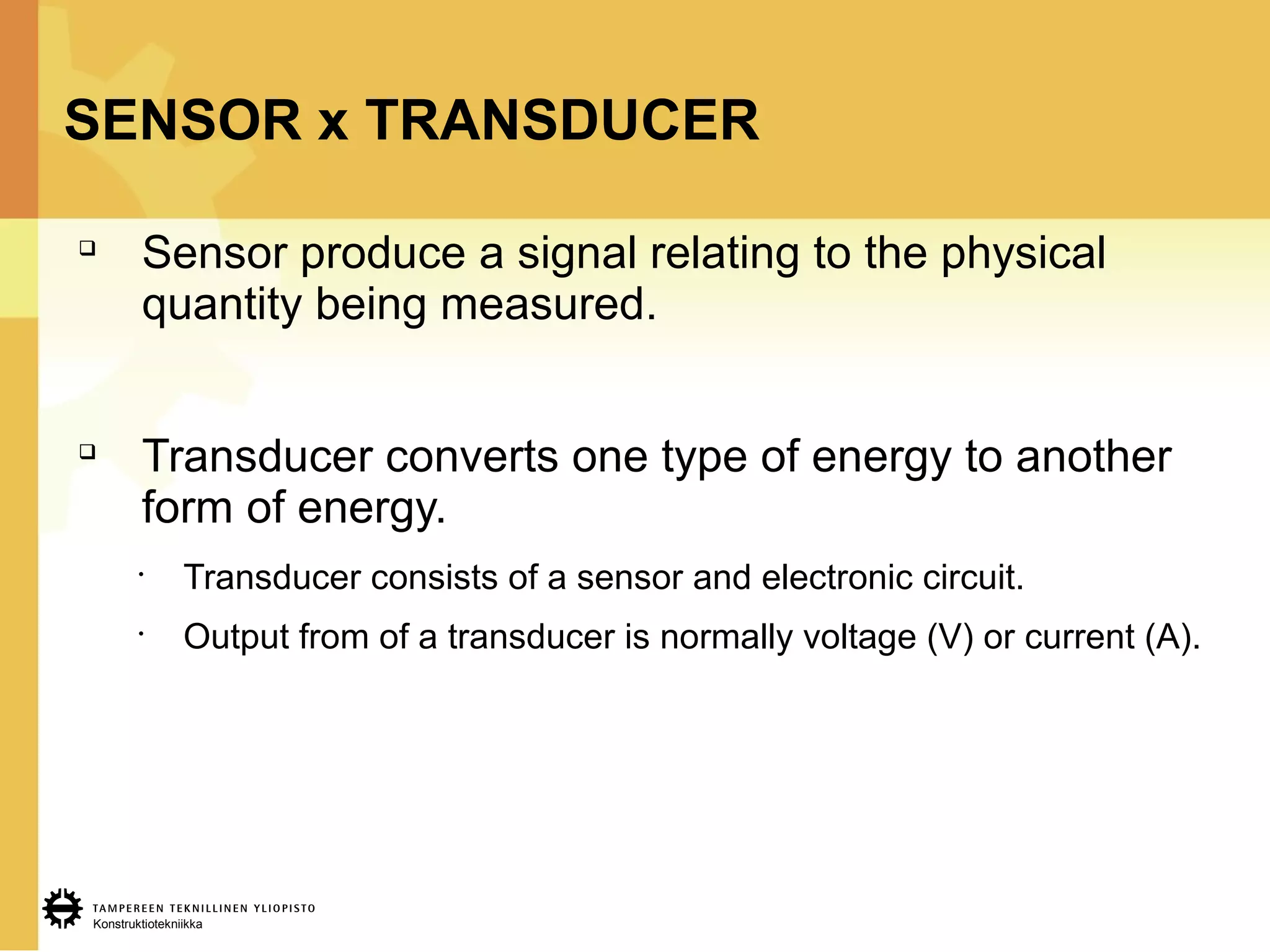
Explanation of the differences between sensors and transducers, including energy conversion.
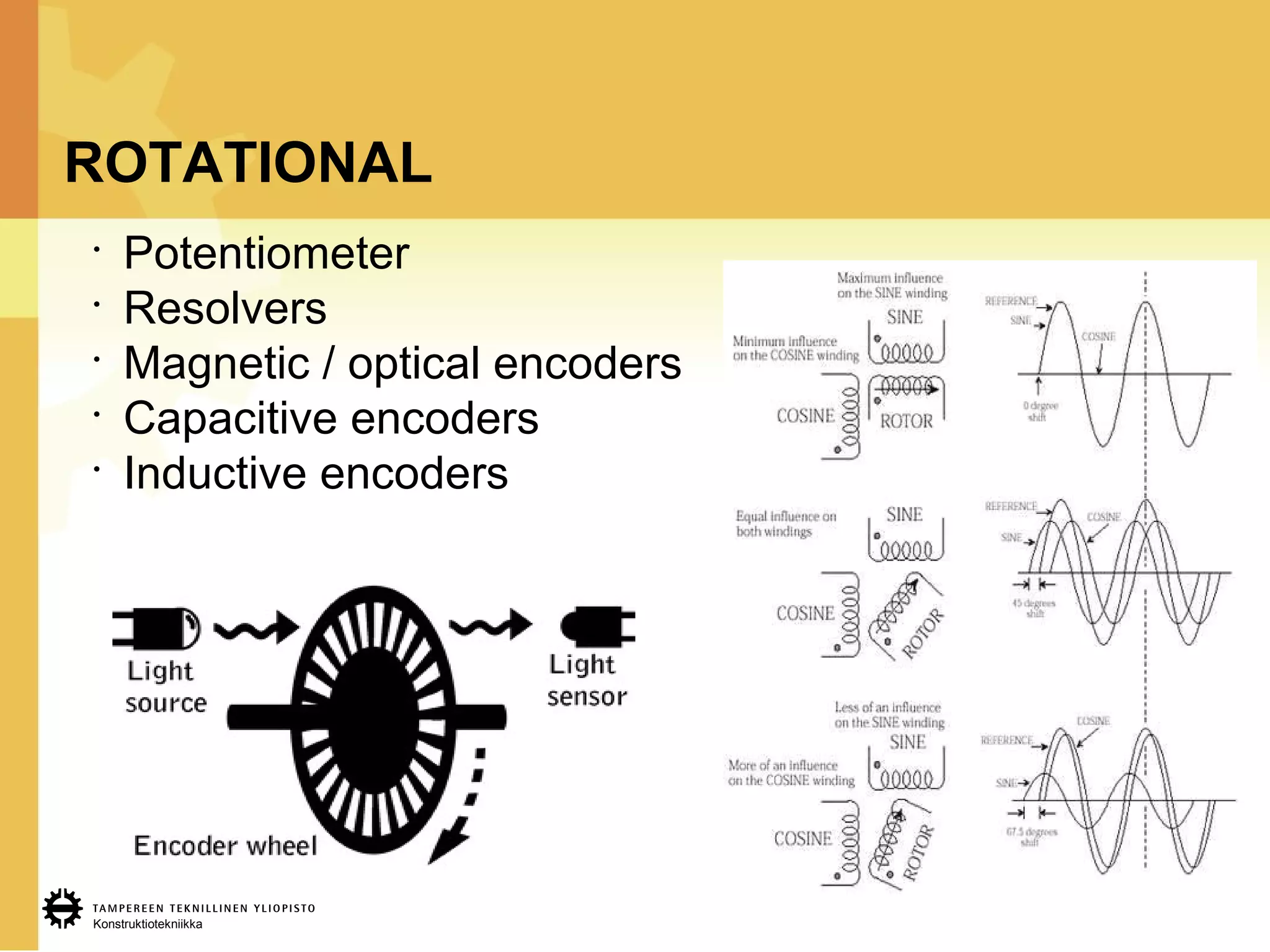
List of various types of rotational sensors such as potentiometers and encoders.
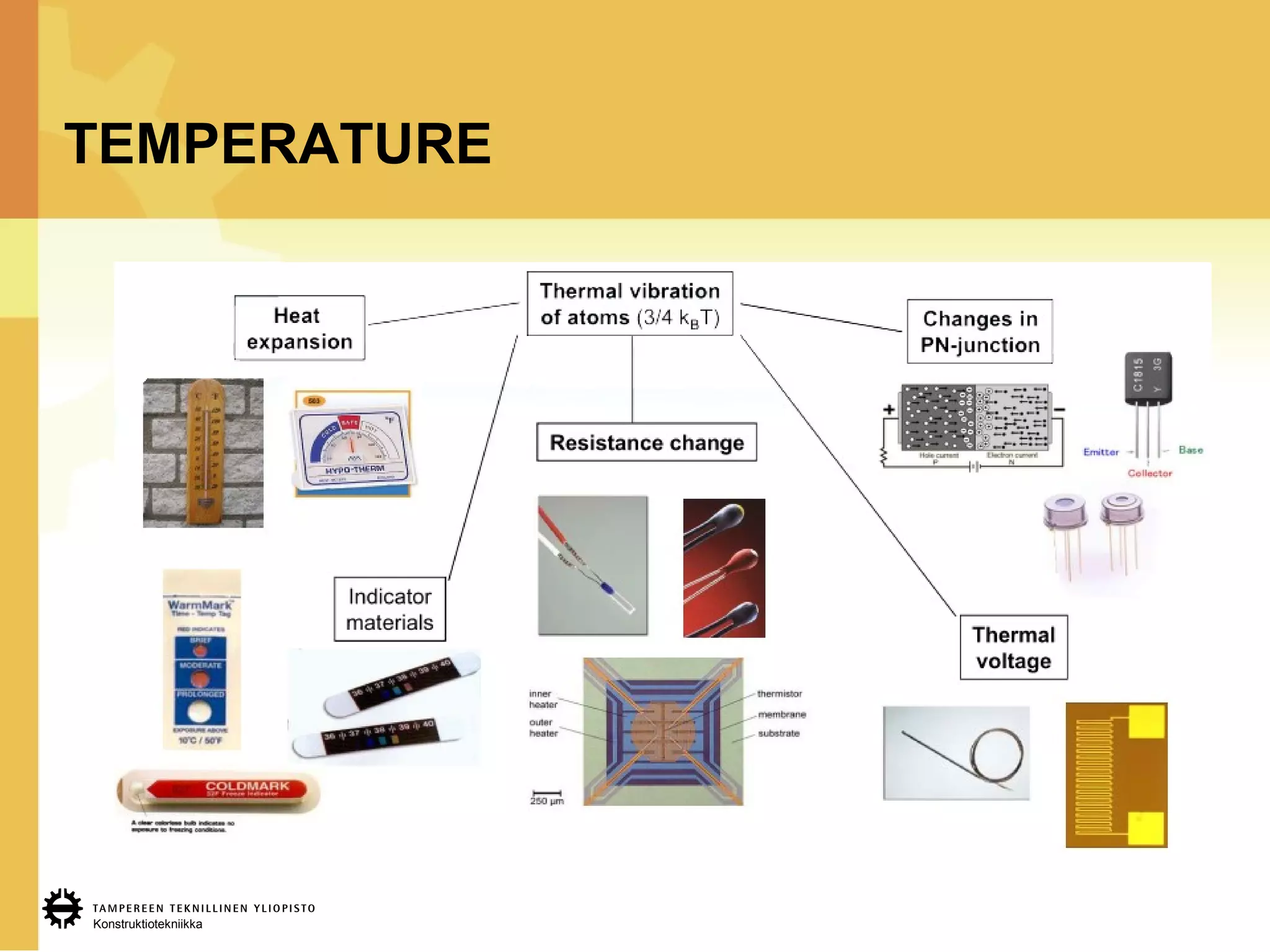
General overview of temperature sensors, no specific content provided.
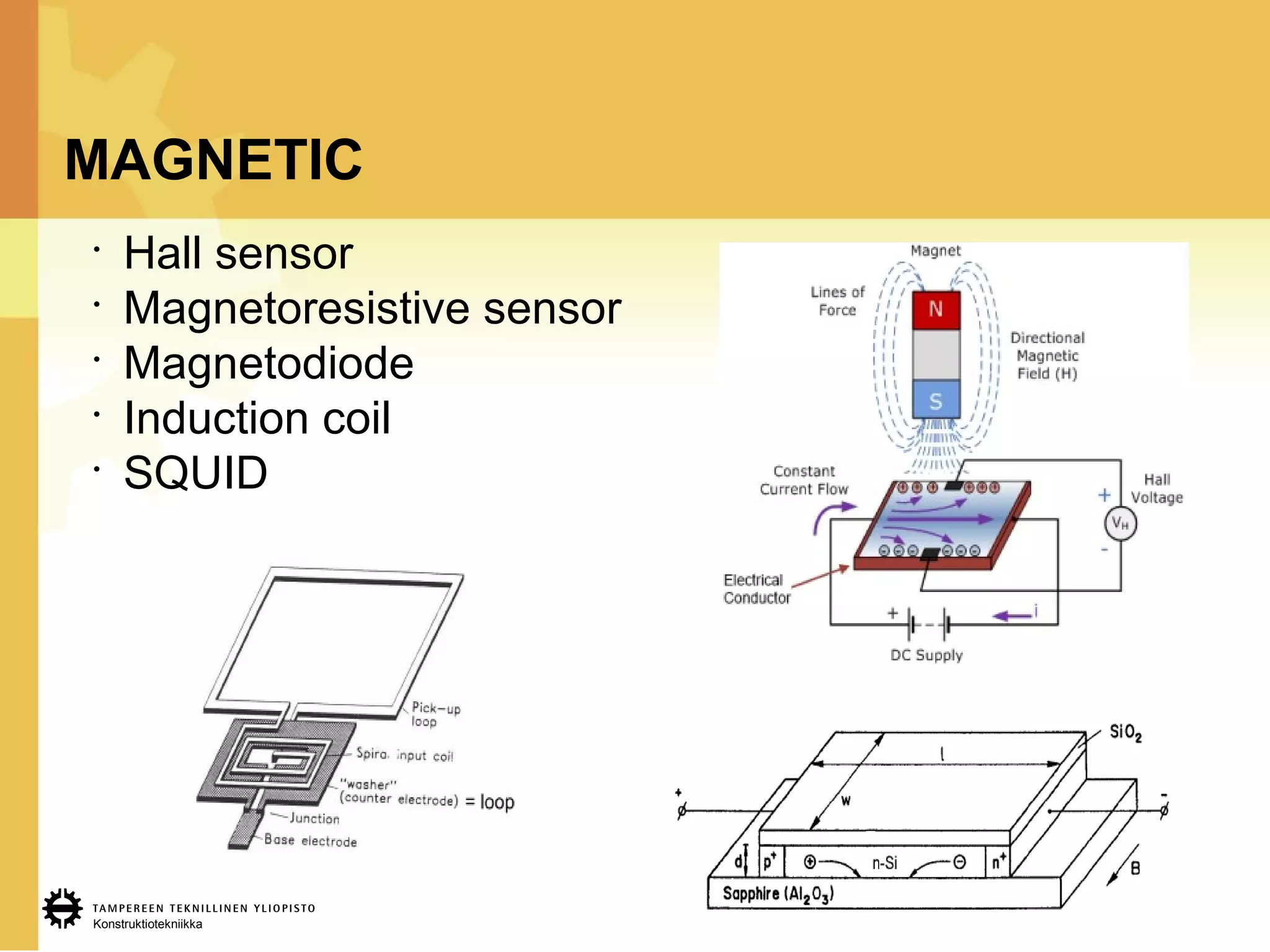
List of magnetic sensors, including Hall sensors and induction coils.
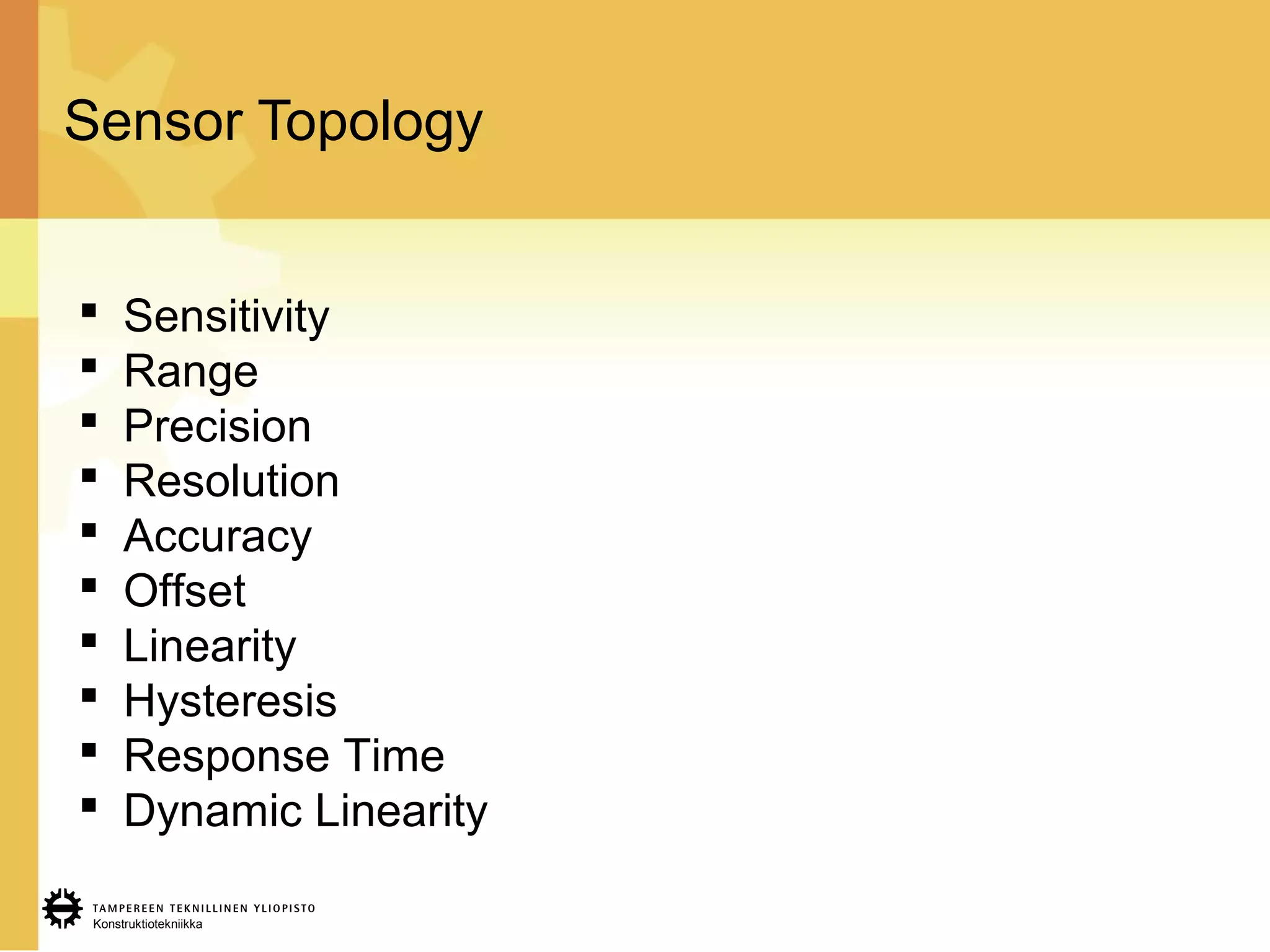
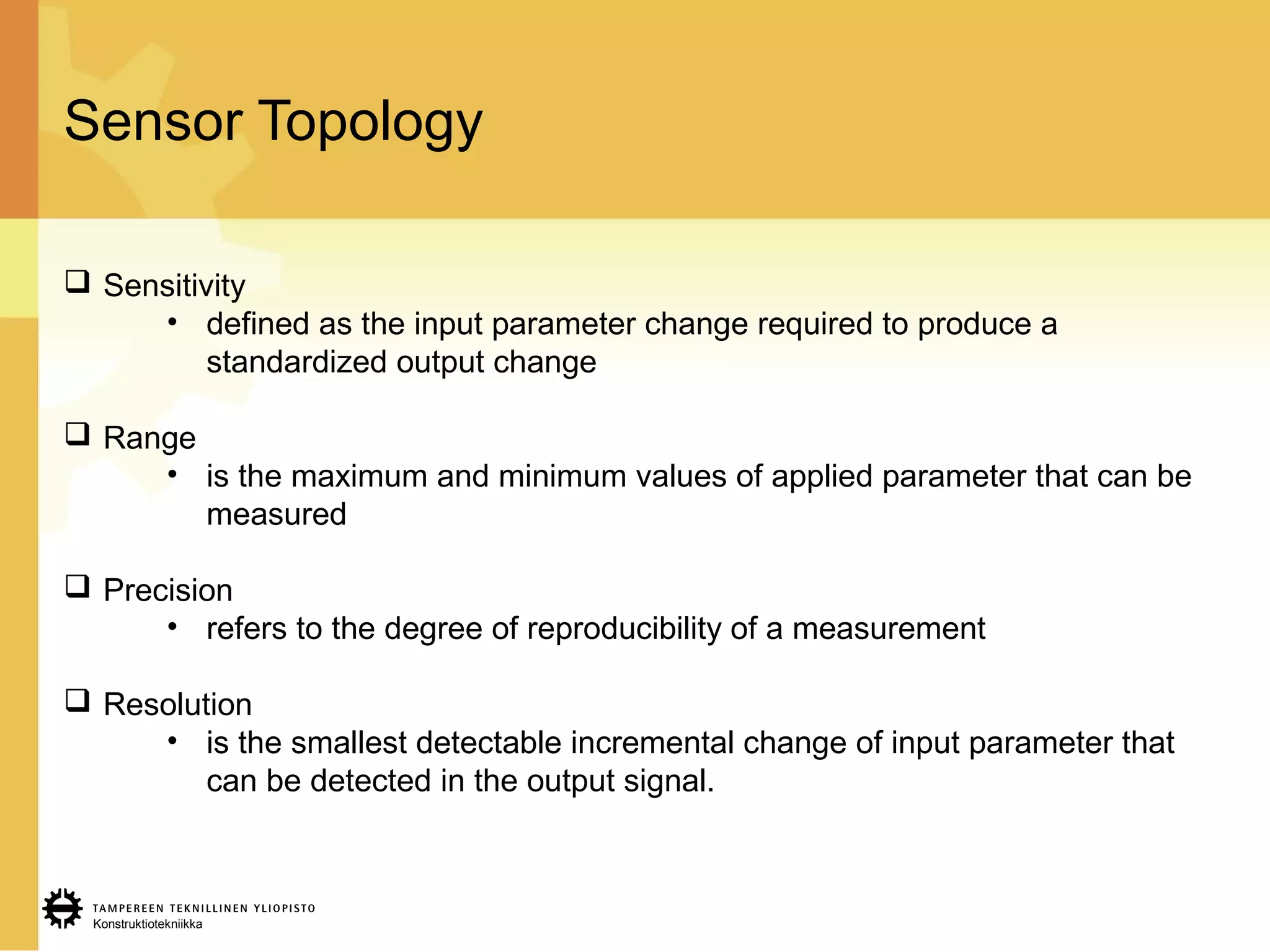
Definitions of key metrics for sensors: sensitivity, range, precision, resolution, accuracy, etc.
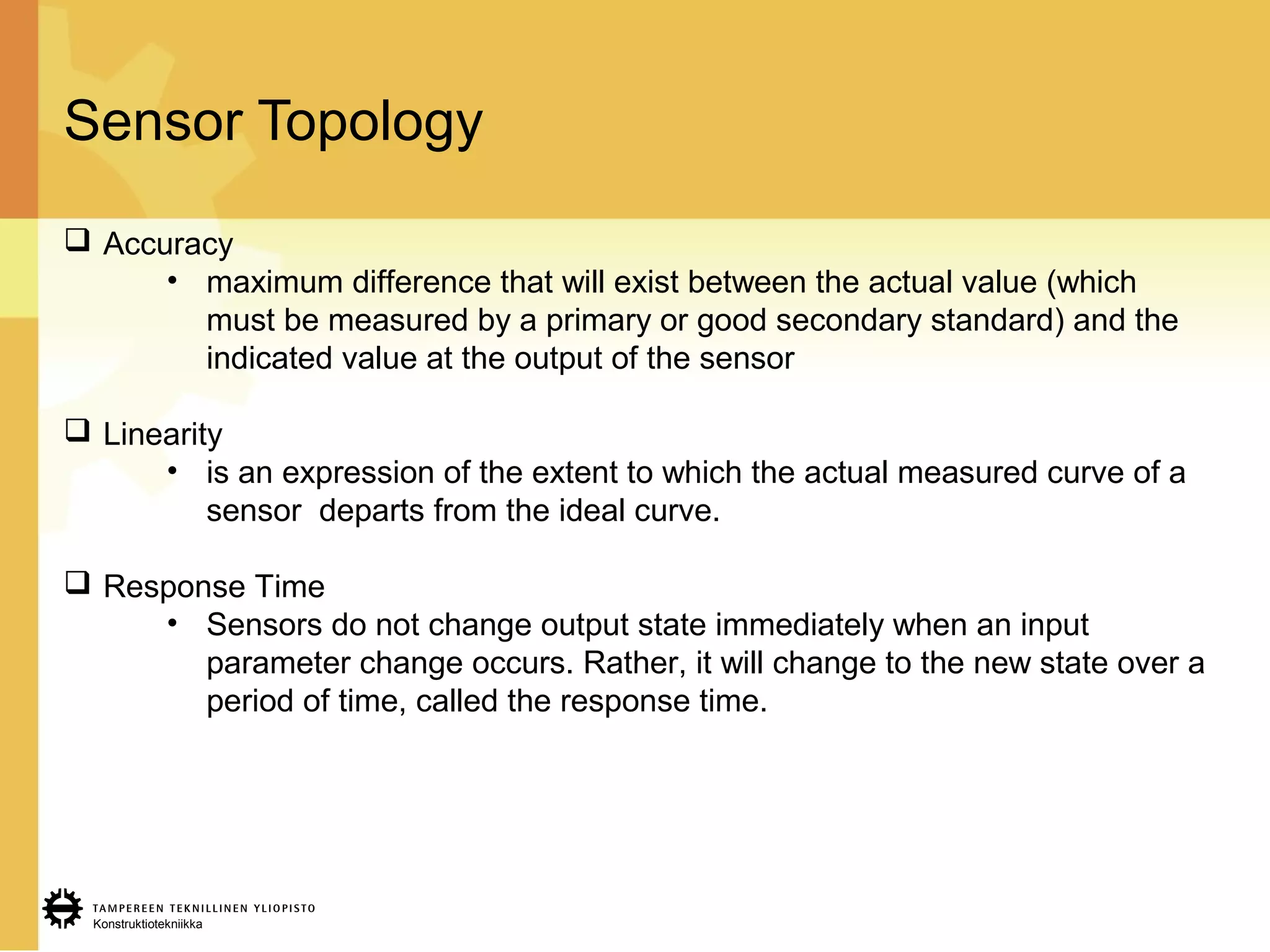
Further exploration of sensor accuracy, linearity, response time, and other critical performance metrics.
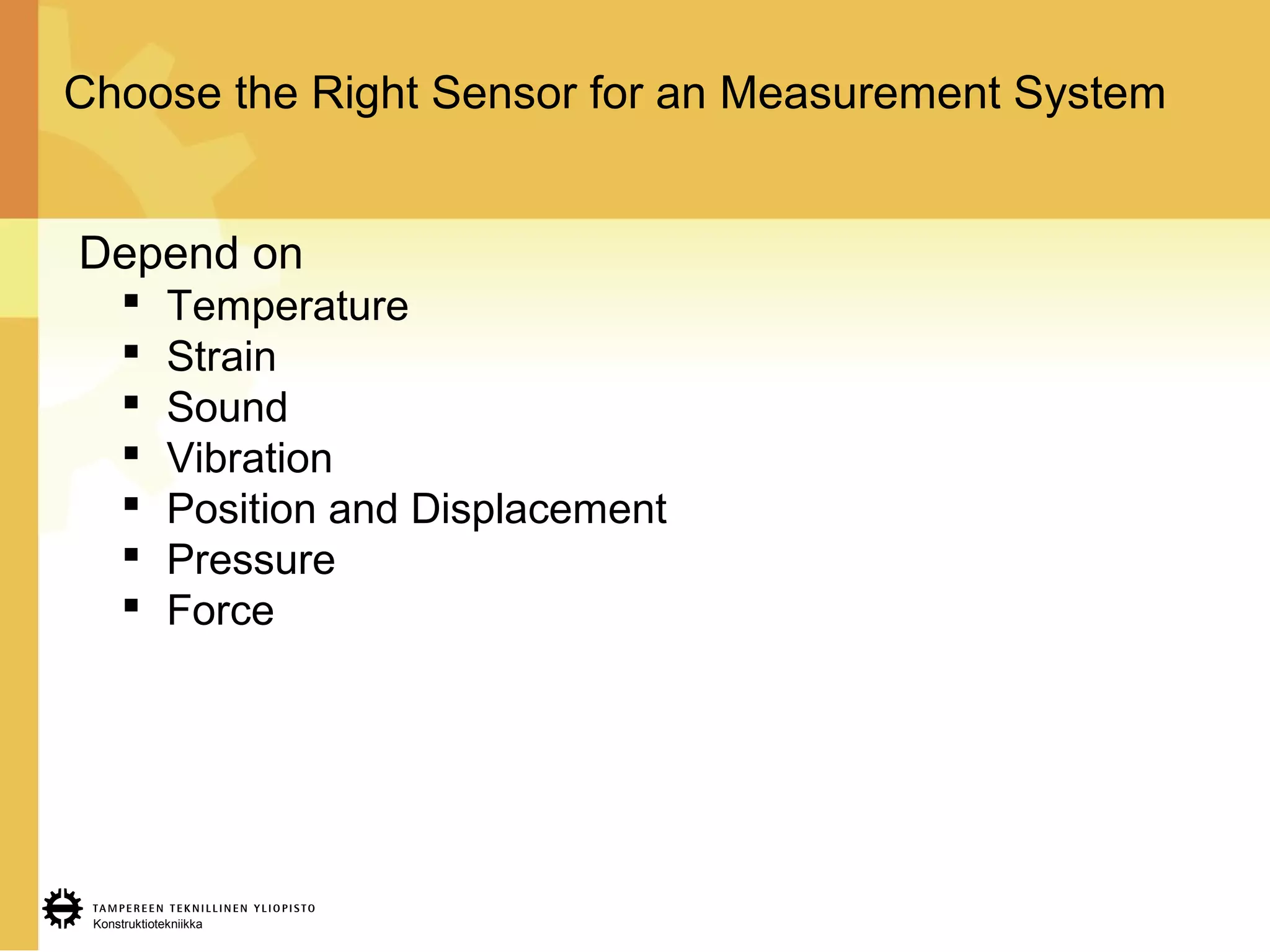
Guidelines for selecting the appropriate sensor based on various measurement systems.
Final slide thanking the audience with presenter names and date.


