Selecting and developing new  essential oil crops - A framework Mohd. Murray Hunter University Malaysia Perlis Kangar, Perlis, Malaysia WORLD AGRI  TRADE CONFERENCE 2009 5 TH  & 6 TH  OCTOBER 2009, MERDEKA HALL, PWTC, KUALA LUMPUR © 2009 Copyright  Murray Hunter
The ability to learn faster than your competitors may be the  Only sustainable competitive advantage  Arie P. de Geus Royal Dutch Shell
A Framework for Essential Oil Development 1 st  Australian New Crops Conference, Gratton, Queensland, 1996. Keith Hyde, Thirty Australian Champions: Shaping the Future for  Rural Australia, Canberra, RIRDC, 2000 Edward Weiss, Essential Oil Crops, New York, CABI, 1997
1. The Commitment
Adapted from Manitoba Agriculture
 
Issue Comments Focus Paradigm Requires focus on concept of product application where current focus is on cultivation This requires research This requires an entrepreneurial approach Concepts not readily understood by conventional farmers Basic Research Needs access to Worldwide data Requires availability of suitable germplasms Requires basic R&D to determine where crop technically suitable Requires R&D to determine whether potential crop is economically feasible Very difficult to get R&D assistance Shortage of skills and expertise in many areas Crop Management and Processing Propagation technologies How to plant, cultivate and manage the crop How to harvest, extract, store and handle How to process How to package Transportation and storage Marketing Infrastructure Require coordination of production with demand (important with new essential oil production) Require correct channels of distribution (critical) Requires a marketing strategy (change of paradigm from producing orientation) Economics and Logistics Requires enough volume to economically transport and distribute (especially in low to medium value oils) Requires a solution to inconsistencies of quality and production Organisation Need committed people with strong leadership and trust Government Need to translate support into action Need funding allocations for research & development Need infrastructure Regulation Need to fund infrastructure to meet EPA & HACCP, etc Need to identify and fulfil the requirements of various regulatory bodies Finance Very difficult to obtain funding for these projects Customers & Consumers Need to identify who are the customers in which part of the value chain Need to work closely with selected customers
 
The Essential Oil Strategic Matrix   An Existing Crop – Product Already Traded This can be seen as an improvement on existing production or setting up new production in an area already producing the crop. Improving cultivation and harvesting methods to improve productivity Finding new customers and channels to increase sales An Existing Crop – Leading to a New Product This may involve moving along the value chain to a new market based on an essential oil already produced or producing an essential oil for some type of value added product. Improving cultivation and harvesting methods to improve productivity Finding out what products potential customers want In a new product Producing a new product according to identified consumer needs Organising the supply chain for the new product to get to market Making the product available to more consumers who are likely to want it A New Crop to a New Geographic Area This involves producing an essential oil already in trade in a new geographical area. Establishing the most efficient way to cultivate, harvest and process the essential oil Matching the newly produced essential oil with customer expectations and requirements Organising the supply chain so the essential oil reaches the market Making the essential oil available to new customers who are likely to require it A New Crop and New Product This involves producing a product higher up the value chain, differentiating it and producing the essential oil. Making informed decisions about new crop choices Establishing the most efficient way to cultivate, harvest and process the essential oil Finding out from potential customers what they want in the new oil Making sure the oil meets the customers needs as closely as possible Organising the supply chain so the essential oil reaches the market


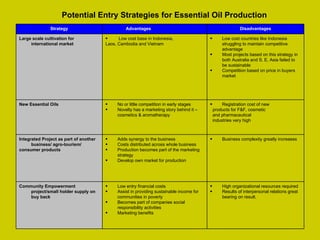
Potential Entry Strategies for Essential Oil Production   Strategy Advantages Disadvantages Large scale cultivation for international market Low cost base in Indonesia,  Laos, Cambodia and Vietnam Low cost countries like Indonesia struggling to maintain competitive advantage Most projects based on this strategy in both Australia and S. E. Asia failed to be sustainable Competition based on price in buyers market New Essential Oils No or little competition in early stages Novelty has a marketing story behind it – cosmetics & aromatherapy Registration cost of new products for F&F, cosmetic  and pharmaceutical  industries very high Integrated Project as part of another business/ agro-tourism/ consumer products Adds synergy to the business Costs distributed across whole business Production becomes part of the marketing strategy Develop own market for production Business complexity greatly increases Community Empowerment project/small holder supply on buy back Low entry financial costs Assist in providing sustainable income for communities in poverty Becomes part of companies social responsibility activities Marketing benefits High organizational resources required Results of interpersonal relations great bearing on result.
 
2. The Screening Process
 
 
Comparison Factors between Potential Cultivation Site and Potential Crop   Actual Conditions Range of Possible Growing Conditions for Potential Crop General climate Range of micro-climates Topography that influences micro-climates Rainfall range (access to irrigation) Temperature ranges Daylight hours Soil types Soil characteristics (pH, humus profile, soil layers, etc) Preferred climate(s) Preferred micro-climates Preferred topography Preferred rainfall levels Preferred temperature ranges Preferred daylight hours Preferred soil types Preferred soil characteristics Latitudes 44° North & South
Bio-Prospecting Desktop Studies
Worksheet for Rough Calculation of  Financial Viability at Initial Screening Stage   1. Costs of Crop Domestication   Can they potential crop be domesticated into field production easily?  If not, will biomass be wild-collected? What method would be most suitable for propagation,  from seed, cuttings, tissue culture, other? Does nursery propagation of the potential crop require any other special care? What staffing will be required? What would be the approximate costs of achieving the above?
2. Field Preparation and Infrastructure   What overall infrastructure will be needed?, nursery, road access, fencing,  outbuildings, farming equipment, etc. What land preparation is needed, land levelling and contouring, drainage, etc. Does the crop require large amounts of water to thrive during growth? Is there adequate water available through rainfall to satisfy this? Will irrigation be required? If so, what method?  Will dams and catchment areas have to be  constructed to ensure a plentiful water supply? What will be the approximate costs of this? Are there any other potential costs?
3. Planting and Maintenance   Approximately how long will the crop take from field planting to harvest maturity? How will the potential crop be planted?, manually/automated?  What will be the costs involved? What would the approximate planting density be? Will nutrients have to be applied? If so, how regularly?,  How much? What method will be used to apply them?  What will be the approximate costs of this? How often are re-plantings required? After each harvest, after a number of seasons,  after how many years, what are the costs involved to prepare for each re-planting?
4. Harvesting, Extraction and Post Extraction   Is harvest timing crucial?, ie, a time of day,  a very short window in a particular month, etc What are the costs involved in achieving this harvest window? What method of harvest will be utilised?  Manual, semi-mechanised, fully mechanised What would be the approximate costs of building the harvest equipment? What method of extraction will be required? Hydro-distillation, steam distillation,  destructive distillation, vacuum distillation, solvent extraction, other What power sources will be utilised? What are their costs? How will spent biomass be dealt with?  Does it have any economic value or can it be used back in the farming process? Is the technology understood for the above processes? If not, what will be the costs of acquiring it? What will be the fabrication costs to build the above? What regulations (ie., EPA) are relevant to the processes?  And how much will development and compliance cost? Will specialist staff be required? What would the approximate cost of energy to oil yield?
5. Estimated (guessed) Project Size and Yields   How many hectares do you anticipate to cultivate? How many years will it take to achieve this? What (based on literature and other knowledge) would be the approximate  biomass per hectare achievable? (min. and max. est.) Does the biomass have to be wilted, stored or  otherwise processed before extraction? What would be the yield as a percentage of biomass after extraction?
6. Estimated Financial Viability   1. Research costs = 2. Costs of crop domestication = 3. Field preparation and infrastructure costs = 4. Propagation, planting and maintenance costs = 5. Harvesting, extraction & post extraction costs = Total Capital Costs (1+3) = Total operational costs (2+4+5) = Total amount of oil yielded = Total oil value = Value – total operational costs = Return/total capital costs x 100 = Return on investment
 
Classes, Characteristics and Uses of Essential Oils Adapted from Naf  (1989) and Petrzilka (1991) in Hunter (1995)
Evaluating the Characteristic Strengths and Weaknesses of Essential Oils The novelty of a new essential oil   The major factor determining the novelty is the perceived uniqueness  of the essential oil’s organoleptic profile. Thus, the degree of novelty  is limited by the closeness of potential substitutes. The concept of novelty extends to essential oils that are more cost effective sources of natural  aroma chemicals. New natural sources of aroma chemicals would also  fit into this criteria of novelty.
The potential uses and applications of a new essential oil   Without perfumers and flavourists perceiving applications potential, a new  essential oil will remain in the realm of curiosity. Time, effort and imagination on the part of perfumers and flavourists is required to discover useful  applications for new essential oils. It is under this criteria that most new  essential oils will struggle to find acceptance as a new aromatic material.
The closeness of any substitutes   It is difficult to find essential oils that cannot be duplicated by reconstitutions. New essential oils with close substitutes are of little value to the flavour and fragrance industry, unless they can offer a significant cost or stability  advantage. The only exception is when a new essential oil is a source of a natural aroma material.
The stability of a new essential oil   One of the major problems associated with essential oils is stability in end products. Many processed food products undergo harsh cooking procedures during manufacture. Cosmetic bases often contain free  fatty acids, even after neutralisation. Essential oils that contain high  levels of terpenes, tend to polymerise on exposure to light and air,  discolour end products or are not stable in alkaline or acidic media. Synthetic aroma chemicals and specialties are generally more  stable than essential oils and used more extensively in  functional perfumery.
The cost price/performance ratio   The cost price/performance ratio is important to the application  potential of a new essential oil. If a new essential oil does not  offer a perceptible odour/flavour at a low concentration, then  its value to the flavour and fragrance industry is greatly diminished  unless it is very cheap. Poor performance under this criteria will  negate the potential of most new essential oils for application  in functional perfumery
The Toxicity   The cost of proving a new material is safe to use in flavours and  fragrances is a major obstacle to the development of new aromatic  materials. The industry has an impeccable reputation for self  regulation and added EU regulations increases the cost of preparing  dossiers on new materials even more. In markets outside the EU, most international flavour and fragrance houses would not consider  using a new essential oil unless it meets IFRA safety and toxicity  recommendations and is included on the GRAS list.
The general consistency of quality and supply   Natural material will vary in quality according to geographic origin, type of soil, level of nutrients in the soil, climate and weather,  rainfall, time of harvest, season, method of extraction, altitude and the incidence of pests and diseases. Likewise there are risks with continual supply of natural materials because of  adverse weather conditions, changes in climate, floods and other natural disasters, wars, political upheavels and the  inexperience of new producers. Launching new consumer products require large investments on the part of the end  product manufacturer. Flavour and fragrance houses do  not want to be placed in a position of being unable to supply a manufacturer with a flavour or fragrance compound because  of the unavailability of a raw material.
The prevailing market/product trends   Market and product trends slowly evolve. Changes in market trends  are the result of complex forces, including technology, which makes new trends possible, advertising, and cultural influences upon  consumer tastes and preferences. A particular essential oil may  become more or less important to the flavour and fragrance industry,  depending upon these trends.
The current level of technology   New technology advances influence the value of existing aromatic  materials to the flavour and fragrance industry. The development  of new essential oil reconstitutions are aimed at eliminating some  of the potential toxicity and solubility problems of existing essential  oils. Reconstitutions are generally more stable and cheaper than  their more expensive natural counterparts. As better and more cost  effective reconstitutions are developed in the future, the use of some  essential oils will decline. Since the advent of more sophisticated  analytical techniques, like GC-MS, headspace analysis, electronic  noses, aroma chemical and specialty product manufacturers have  been better able to isolate powerful aromatic molecules from essential  oils and synthesise these compounds. The discovery of new aroma  chemicals in essential oils due to increased equipment sensitivity  is more likely to lead to synthesis rather than cultivation.
3. The Regulatory Environment
Basic Philosophy
 
Dossier Requirements for REACH Registration  (from 1 Tonne to more than 100 tonnes per annum.)   Greater than 1 Tonne Per Annum Greater than 10 Tonne Per Annum Greater than 100 Tonne Per Annum Melting/freezing point Boiling point Relative density Vapour pressure Surface tension Water solubility (or water extractivity for polymers) n-Octanol-water partition coefficient Flash point or flammability Explosivity Auto-flammability Oxidising properties Granulometry Skin irritation or corrosivity evaluation or  in vitro  tests Eye irritation evaluation or  in vitro  test Skin sensitisation evaluation or local lymph node assay Ames test In vitro  chromosome aberration test Acute  Daphnia  toxicity Algal growth test Ready biodegradation Light-stability for polymers Long-term extractivity for polymers Skin irritation (unless classified from Annex V data) Eye irritation (unless classified from Annex V data) In vitro  gene mutation assay Acute oral toxicity Acute inhalation or dermal toxicity 28-day (or 90-day) repeat-dose study in the rat (normally oral exposure) Developmental toxicity screening study (OECD 421) Developmental toxicity study Toxicokinetics assessment (a prediction based on the available data) Acute fish toxicity Activated sludge respiration inhibition test Hydrolysis test Adsorption/desorption screening test Stability in organic solvents and identification of degradants Dissociation constant Viscosity Reactivity to container material In vitro  Mutagenicity studies 28-day or 90-day repeat-dose study in the rat (if not part of the Annex VI data) Developmental toxicity studies in two species (if not part of the Annex VI data) Two-generation fertility study in the rat (if there are adverse findings from the 28-day or 90-day studies) 21-day  Daphnia  reproduction study  Chronic fish toxicity study Simulation test on the ultimate degradation in surface water Soil simulation test Sediment simulation test Fish bioaccumulation study (unless there is a low predicted bioaccumulation potential, e.g. from Log PoW < 3) Further adsorption/desorption study 14-day earthworm toxicity Study of the effects on soil micro-organisms  Short-term toxicity to plants  Plus requirements from left column (greater than 1 tonne) Plus requirements from left columns (greater than one tonne plus greater than 10 tonnes)
List of Data Required for Biocidal Product Directive Registration 1. General Information Substance identification (CAS, IUPAC, formula etc) Substance information – colour, purity, physical properties Spectra Synonyms and trade names Impurities Additives Quantity used in EU Labelling Hazard classification and labelling Usage pattern – including application, types of use, volume per application, recovery, industry types Manufacturing method Existing exposure restriction and limits Hazards Degradation products 2. Physical and Chemical Properties MP BP VP Viscosity Density Granulometry Partition coefficient Solubility in different media Surface Tension Flash point, flammability, explosivity  Oxidising properties Dissociation constant 3. Environmental  Photodegradation Stability in water and soil Monitoring data Field studies Transport between environmental compartments Actual use degradation model Biodegradation, BOD/COD Bioaccumulation
4. Eco-toxicity Acute toxicity to:- Fish Aquatic invertebrates  Aquatic plants (e.g. algae) Micro-organisms  Chronic toxicity to:- Fish Aquatic invertebrates Toxicity to:- Sediment dwelling organisms Terrestrial plants Soil dwelling organisms Other non mammalian terrestrial species Biotransformation and Kinetics 5. Toxicity Acute oral Acute inhalation Acute dermal Skin irritation Eye irritation Sensitisation Repeat dose toxicity Genetic toxicity in vitro Genetic toxicity in vivo Carcinogenicity  Toxicity to fertility Developmental toxicity/teratogenicity  Exposure experience 6. Effect Against target Organism Function Effects on organisms to be controlled Organisms to be protected User Resistance
Summary of Tests and Protocols Required under Directive 76/768/EEC Data/Test Required Protocol 1. General Nomenclature Purity Physical properties MP BP Density Rel. Vap. Dens VP Log PoW Solubility 2. Acute Toxicity Acute Oral Acute Dermal Acute Inhalation OECD 425 OECD 402 OECD 403 3.  Irritation/Corrosivity Skin Irritation Mucous Membrane Skin Sensitisation Irritation: OECD 404 or OECD 431 (Episkin) Draize OECD 405 Murine Lymph assay OECD 429 or Guinea Pig OECD 406 4. Dermal/Percutaneous Absorption Dermal/Percutaneous Absorption OECD 428
5. Repeat Dose Toxicity Repeat Dose oral/dermal/inhalation (28 day) Subchronic 90 day oral/dermal/inhalation Chronic (>12 months) OECD 410 OECD 411 OECD 452 6. Toxicology and Carinogenicity  Mutagenicity/Genotoxicity Carcinogenicity Reproductive Toxicity -Two Generation Reproduction Toxicity -Teratogenicity Toxicokinetics Photo induced Toxicity Phototoxicity Human Data Ames OECD 453 OECD 416 OECD 414 3T3 NRU
Essential Oils within the top Twenty Produced Worldwide with  Adverse Opinions made by the Expert Committee of the SCCP   Essential Oil Botanical Name Volume (Tonnes) Under Threat from SCCP Opinion Orange Citrus sinensis 26000 X Cornmint Mentha Arvensis 4300 Eucalyptus Euc.  globulus 3728 X Citronella Cym winterianus 2830 X Peppermint Mentha piperita 2367 Lemon Citrus limon 2158 X Euc. Citriodora Eucalyptus citriodora 2092 X Clove Leaf Syzygium aromaticum 1915 X Cedarwood (US) Juniperus virginiana 1640 Litsea cubeba Litsea cubeba 1005 X Sassafras  (Brazil) Ocotea pretiosa 1000 X Lime Citrus aurantifolia 973 X Spearmint Mentha spicata 851 Cedarwood (China) Chamaecyparis funebris 800 Lavandin Lavandula intermedia 768 X Sassafras  (China) Cinnamomum micranthum 750 X Camphor Cinnamomum camphora 725 Coriander Coriandrum sativum 710 Grapefruit Citrus paradis 694 X Patchouli Pogostemom cablin 563 X
 
4. The Planning Process


A Simple Competency Audit   Competency Present Not Present Comments Technical  Botany Plant Physiology Chemistry/Analytical Micro-propagation Nursery Management Environmental Engineering Chemical engineering/thermodynamics/etc Soil Management Agronomy/plant nutrition/field management Entomology Irrigation engineering Agricultural Engineering Regulation knowledge Cosmetic chemistry/food etc Perfume/flavours Packaging & design Consumer product manufacturing Basic Basic Experience Experience Experience Basic Basic Basic Low Low Low Low Low Low Low Low Low Need guidance Need assistance Need guidance  Assistance Available Can design  Need appraisal Use contractor Use institute Replicated experiments With Environment Use contractor Can develop Need assistance Learn from experience Use contractor Opportunity/Entrepreneurial/Commitment Able to screen environment for opportunities Able to evaluate opportunities Commitment level Yes Yes Passionate Need to see realistically Relationship Have relationships in target industries Have relationships in research area Have relationships in finance industry A few A few Some Organising/Management Able to project manage Able to administrate Able to financially manage operation Able to undertake research Able to keep key people motivated Yes Yes Yes Yes Yes Strategic Understand dynamics of market and industry environment Able to plan for a business within this environment Able to implement, evaluate and adjust plans in this environment Yes Yes Yes Believe so but not tested
Strengths Weaknesses Personal and enterprise competencies, knowledge & experience that can be utilised for the benefit of the enterprise Facilities, infrastructure, financial backing & liquidity, long timeframe view Ability to learn through research and experimentation Any network connections with industry and access to the supply chain for both information and marketing Ambition and vision (but not delusional), focus & commitment Ability to innovate technically, market and organisational wise Any factor or group of factors that can assist the enterprise gain competitive advantage over its competitors. Competency gap Short term timeframe, no fall back position if positive results delayed or there are technical or market failures Poor infrastructure that hinders production or marketing Shortage of funds to undertake project to completion Qualified or lack of commitment by any key people within organisation Lack of network, knowledge and access to supply chain Any factor or group of factors that can hinder the enterprise gain competitive advantage over its competitors. Opportunities Threats An identified market where enterprise resources and competencies will be able to exploit The potential opportunity will have a large enough market size to sustain the enterprise The enterprise will be able to take advantage of this opportunity better than any other competitors Outside elements in the supply chain will support the enterprise Any factor or group of factors that will allow the enterprise to grow in a sustainable manner from the market environment.   Competitors identifying the same opportunities and enacting upon them The regulatory environment and potential changes within it Inability to penetrate the existing supply chain and make alternative strategies Dependence on survival from a single or very few customers Depending on a single product for total revenue Adverse acts of God, bad weather, drought, etc. Any factor or group of factors that may potentially hinder enterprise growth in a sustainable manner without any contingencies.
 
Totally New Essential oils
Market analysis Is the essential oil in under or over supply? What is the current supply situation? Do prices fluctuate greatly? What are the maximum and minimum prices over the last 10 years? Are there any current use trends? What are the potential markets for the essential oil? What is the potential market size for the essential oil? Who are the current producers of the essential oil? What strategies do their enterprises pursue? Is the oil a source of potentially valuable aroma chemicals? Are there any substitutes for this oil? Are there any other products that can be produced from the crop as a bi-product?


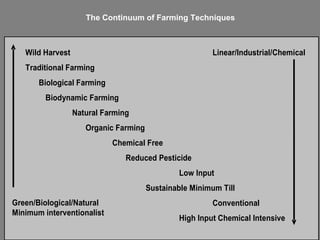
The Continuum of Farming Techniques
 
 
Potential Benefits to Land from Research and Development Matrix.
 
 
Budget Items for an Essential Oil Research Project   Budget Items for an Essential Oil Research Project Capital Equipment and Infrastructure Development Land Preparation Field preparation Fencing Buildings (equipment storage, office, processing equipment, etc) Access roads and internal roads Dams and irrigation equipment Farming Equipment Tractors and accessories Ploughs, etc Basic farming implements Harvesting Equipment Harvester and foliage bins Cart and/or field trays Processing Equipment Field and/or commercial distillery Source for steam generation Laboratory Equipment Laboratory distillation equipment Glassware Scales GC (optional) Regulatory Compliance Any licenses relevant to rural operations
Project Costs Seed and/or other genetic materials Cost from seed supplier/merchant Travel and costs of field procurement Nursery Seed germination housing (pest, sun and weather proof) Potting transfer facility (weather protected) Tissue culture facility (if required) Nursery materials Farm Chemicals and Supplies Fertilisers Pesticides/Herbicides Other agricultural materials General Overhead Costs Electricity, rates and other expenses Insurance & sundries Repairs and maintenance Project Operational Costs Wages & salaries (general workers) Administration costs Consultation, researcher costs and allowances Travel and accommodation Other operating expenses
4. Development Process
 
 
Summary of Plant Responses to Environmental Change Salinity Heat Stress Elevated CO2 Drought Primary Metabolites Slight relationship Varying relationships Unknown Strong relationship Secondary Metabolites Positive relationship Positive relationship Unknown Strong relationship Growth Strong relationship Strong relationship Unknown Strong relationship
 
Essential Oil Technical Development Land Selection - Suitable (Soil, Rainfall, drainage, access) - Climate - Location - Tenure - Future Expansion
Land Preparation Leveling and contouring Drainage


Essential Oil Technical Development Development of Propagation Material - Easy to Domesticate? - Seed Collection (genetic variance) - Other Propagation Methods
Genetic material Chemotype Variances for  Melaleuca cajuputi Geographic Variances within a single chemotype Brophy et al., 1996
Constituent Variations Slee, M., U.,  1995
Yield Variations
Different Major Chemical and Olfactory Profiles of Five Basil Oils   Hunter et al, 1996 Sample Linalool Methylchavical Olfactory Profile India 14.2% 77.5% A grassy herbaceous and mildly spicy predominating note, with a herbaceous subsidiary note; back notes slightly fruity. French 55.3% 10.9% A smmoth fresh and diffusive herbaceous note with harmonized cool anisic and slightly balsamic subsidiary notes and warm woody back notes. Australian 34.3% 34.7% A clean vegetableptype note with a cool herbaceous menthol-like subsidiary note; a green and grassy back note. Seychelles 27.7% 40.2% A sharp diffusive clean grassy herbaceous note, with a fruity anisic subsidiary note and a very slightly camphoraceous back note. Reunion (Australian grown) 3.4% 75.7% A sharp, if not somewhat dry, anisic note; the subsidiary notes were herbaceous with a slight sweet camphoraceous floral back note.
Chemotype Variances within the Genotype  Tanacetum vulgare  L.
A Simplified  Index Selection  Strategy for Genetic Crop Improvement
 
A Simple Gantt Chart Summarizing Each Nursery Activity for Costing Purposes
 
 
Planting & Maintenance Post harvest practices Irrigation  Methods Planting & Harvesting Methods
 
Strategy Guideline for Conventional Crop Maintenance Practice Explanation Example Prevention Using practices and methods to prevent something like weed growth or pest and inhabitation Cleaning tractors and other agricultural equipment before entering a field to prevent the spread of weed seeds or spores.  Cultural Control Choosing the best cultivars and planting materials, engaging in practices that will promote growth and protect crops, etc Selecting high yielding seeds through index selection, use of intercropping to improve soil fertility, select best seasonal planting times to prevent weed competition with crop.  Mechanical Control Mechanical methods to assist with crop maintenance. The use of flaming to control diseases like root rust and control weeds, utilizing no-till approaches to prevent weed seed spreading and maintain soil fertility.  Chemical Control The use of chemicals to assist in crop maintenance. The use of pre-emergence herbicides to prevent weed growth, the use of pesticides, etc.
A Summary of Prevention and Treatment Methods for Plant Diseases Disease Treatment Powdery Mildew Providing adequate sunlight, air circulation and lower relative humidity to prevent powdery mildew. The use of fungicide sprays to treat powdery mildew. Rust Watering early in the day to prevent rust. The application of fungicidal spray to treat rust. Leaf Spot and Blight Use resistant cultivars, maintain plant vigour through adequate fertilizer application, the enhancement of leaf drying through pruning and watering early in the day will help prevent spotting and blighting. Fungicides able to assist in preventing leaf spot and blight but poor in eradicating it.  Root and Crown Rots Prevent through creating a well drained soil environment. Stem and Twig Cankers Prevent through maintaining plant vigour and removing diseased parts. Fungicides of limited use in treating stem and twig cankers. Vascular Wilts Prevention through resistant species, maintaining plant vigour and soil sanitation. No effective fungicides for treatment.  Smuts and Moulds Use of resistant cultivars and fungicides to protect. No effective fungicides for treatment.  Bacteria Protect through the use of disease resistant cultivars and good soil sanitation. Use of sterilization in nursery operations to prevent contamination. Streptomycin and copper sprays help to slow the spread of bacterial disease. Chemical sprays unreliable for treatment of bacterial diseases.  Viruses Control virus carrying insects, animals and humans around crop area. Remove and destroy infected plants.  Nematodes Difficult to control.
Some of the Major Sources of Plant Stress.
 
Overhead Sprinklers Drip Irrigation Capillary Sand Beds Installation cost Moderate Moderate/High High Maintenance Low High High Excellent Low Moderate Labour Low Moderate Low Water Distribution Fair Good Good Water Use Efficiency Poor, wasteful Good Good Pump Requirement Large, high pressure Small, low pressure Small, low pressure Water Volume Requirement Large Small Small Wind Influence Serious None None
Plant Populations Regular plant spacings  maximise biomass Climate, weather, soil fertility and  Plant physiology influence  Plant spacings Selected plant spacings influence Biomass, leaf size, fruit & rhizome Size, stem growth.
Randomised Complete Block Design for a Field Experiment.
A Factorial Arrangement  of Treatments  (Moisture  (A)  and Nitrogen  (B) ) in a Randomised  Complete Block Design   Fertilizer Application Pesticide Application Herbicide Application Irrigation Spacings & plant populations
General Aspects of a Farm System That Can Be Mechanised Activity Areas of Potential Mechanisation Nursery Seedbed planters Some aspects of micro-propagation Irrigation, pesticide and fertilizer delivery Conveyer flow for efficiency  Compost, potting mix and media mixing Tillage General field preparation Laser leveling Moisture conservation Accurate herbicide, pesticide and fertiliser delivery Minimising erosion potential Planting Vegetative and seedling planting Accurate spacing placement  Crop Maintenance Weed control and eradication through roto-cutting and flaming Automated drip or overhead sprinkler systems Sensor array for field moisture and nutrient assessment Harvesting A combined harvest, mulching and boxing process for foliage (applicable to some crops only) Distillation Box distillation system
Harvesting Manual Automated
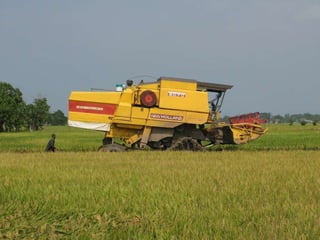
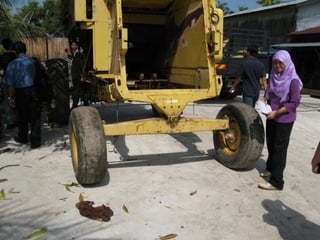
Selected method often restricted by type of crop Most herbaceous crops can be mowed Many flowers must be hand picked Innovative systems can be designed and developed


The Relationship between Increasing Machinery Size and Machinery Costs.
Harvest Timing Critical for Some Crops ( Mentha piperata )
Harvesting Maturity Desired Standard Tea Tree  (Melaleuca alternifolia)
The Harvest Window Applicable to the Victorian and Tasmanian Mint Industries


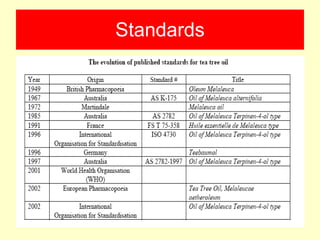
Standards
 
Nursery Cost Estimates
One Hectare Field Cost for Subsequent Year Tea Tree Cultivation in Malaysia   One Hectare Field Cost for First Year Tea Tree Cultivation in Malaysia
Calculated Distillation Cost per kilogram Essential Oil
A Cashflow Projection for A Tea Tree Plantation in Northern Malaysia
 
Published  1 st  October  2009:   Nova Scientific Publishing, New York Thank  You

Selecting and developing new essential oil crops - A framework

  • 1.
    Selecting and developingnew essential oil crops - A framework Mohd. Murray Hunter University Malaysia Perlis Kangar, Perlis, Malaysia WORLD AGRI TRADE CONFERENCE 2009 5 TH & 6 TH OCTOBER 2009, MERDEKA HALL, PWTC, KUALA LUMPUR © 2009 Copyright Murray Hunter
  • 2.
    The ability tolearn faster than your competitors may be the Only sustainable competitive advantage Arie P. de Geus Royal Dutch Shell
  • 3.
    A Framework forEssential Oil Development 1 st Australian New Crops Conference, Gratton, Queensland, 1996. Keith Hyde, Thirty Australian Champions: Shaping the Future for Rural Australia, Canberra, RIRDC, 2000 Edward Weiss, Essential Oil Crops, New York, CABI, 1997
  • 4.
  • 5.
  • 6.
  • 7.
    Issue Comments FocusParadigm Requires focus on concept of product application where current focus is on cultivation This requires research This requires an entrepreneurial approach Concepts not readily understood by conventional farmers Basic Research Needs access to Worldwide data Requires availability of suitable germplasms Requires basic R&D to determine where crop technically suitable Requires R&D to determine whether potential crop is economically feasible Very difficult to get R&D assistance Shortage of skills and expertise in many areas Crop Management and Processing Propagation technologies How to plant, cultivate and manage the crop How to harvest, extract, store and handle How to process How to package Transportation and storage Marketing Infrastructure Require coordination of production with demand (important with new essential oil production) Require correct channels of distribution (critical) Requires a marketing strategy (change of paradigm from producing orientation) Economics and Logistics Requires enough volume to economically transport and distribute (especially in low to medium value oils) Requires a solution to inconsistencies of quality and production Organisation Need committed people with strong leadership and trust Government Need to translate support into action Need funding allocations for research & development Need infrastructure Regulation Need to fund infrastructure to meet EPA & HACCP, etc Need to identify and fulfil the requirements of various regulatory bodies Finance Very difficult to obtain funding for these projects Customers & Consumers Need to identify who are the customers in which part of the value chain Need to work closely with selected customers
  • 8.
  • 9.
    The Essential OilStrategic Matrix An Existing Crop – Product Already Traded This can be seen as an improvement on existing production or setting up new production in an area already producing the crop. Improving cultivation and harvesting methods to improve productivity Finding new customers and channels to increase sales An Existing Crop – Leading to a New Product This may involve moving along the value chain to a new market based on an essential oil already produced or producing an essential oil for some type of value added product. Improving cultivation and harvesting methods to improve productivity Finding out what products potential customers want In a new product Producing a new product according to identified consumer needs Organising the supply chain for the new product to get to market Making the product available to more consumers who are likely to want it A New Crop to a New Geographic Area This involves producing an essential oil already in trade in a new geographical area. Establishing the most efficient way to cultivate, harvest and process the essential oil Matching the newly produced essential oil with customer expectations and requirements Organising the supply chain so the essential oil reaches the market Making the essential oil available to new customers who are likely to require it A New Crop and New Product This involves producing a product higher up the value chain, differentiating it and producing the essential oil. Making informed decisions about new crop choices Establishing the most efficient way to cultivate, harvest and process the essential oil Finding out from potential customers what they want in the new oil Making sure the oil meets the customers needs as closely as possible Organising the supply chain so the essential oil reaches the market
  • 10.
  • 11.
  • 12.
  • 13.
    Potential Entry Strategiesfor Essential Oil Production Strategy Advantages Disadvantages Large scale cultivation for international market Low cost base in Indonesia, Laos, Cambodia and Vietnam Low cost countries like Indonesia struggling to maintain competitive advantage Most projects based on this strategy in both Australia and S. E. Asia failed to be sustainable Competition based on price in buyers market New Essential Oils No or little competition in early stages Novelty has a marketing story behind it – cosmetics & aromatherapy Registration cost of new products for F&F, cosmetic and pharmaceutical industries very high Integrated Project as part of another business/ agro-tourism/ consumer products Adds synergy to the business Costs distributed across whole business Production becomes part of the marketing strategy Develop own market for production Business complexity greatly increases Community Empowerment project/small holder supply on buy back Low entry financial costs Assist in providing sustainable income for communities in poverty Becomes part of companies social responsibility activities Marketing benefits High organizational resources required Results of interpersonal relations great bearing on result.
  • 14.
  • 15.
  • 16.
  • 17.
  • 18.
    Comparison Factors betweenPotential Cultivation Site and Potential Crop Actual Conditions Range of Possible Growing Conditions for Potential Crop General climate Range of micro-climates Topography that influences micro-climates Rainfall range (access to irrigation) Temperature ranges Daylight hours Soil types Soil characteristics (pH, humus profile, soil layers, etc) Preferred climate(s) Preferred micro-climates Preferred topography Preferred rainfall levels Preferred temperature ranges Preferred daylight hours Preferred soil types Preferred soil characteristics Latitudes 44° North & South
  • 19.
  • 20.
    Worksheet for RoughCalculation of Financial Viability at Initial Screening Stage 1. Costs of Crop Domestication Can they potential crop be domesticated into field production easily? If not, will biomass be wild-collected? What method would be most suitable for propagation, from seed, cuttings, tissue culture, other? Does nursery propagation of the potential crop require any other special care? What staffing will be required? What would be the approximate costs of achieving the above?
  • 21.
    2. Field Preparationand Infrastructure What overall infrastructure will be needed?, nursery, road access, fencing, outbuildings, farming equipment, etc. What land preparation is needed, land levelling and contouring, drainage, etc. Does the crop require large amounts of water to thrive during growth? Is there adequate water available through rainfall to satisfy this? Will irrigation be required? If so, what method? Will dams and catchment areas have to be constructed to ensure a plentiful water supply? What will be the approximate costs of this? Are there any other potential costs?
  • 22.
    3. Planting andMaintenance Approximately how long will the crop take from field planting to harvest maturity? How will the potential crop be planted?, manually/automated? What will be the costs involved? What would the approximate planting density be? Will nutrients have to be applied? If so, how regularly?, How much? What method will be used to apply them? What will be the approximate costs of this? How often are re-plantings required? After each harvest, after a number of seasons, after how many years, what are the costs involved to prepare for each re-planting?
  • 23.
    4. Harvesting, Extractionand Post Extraction Is harvest timing crucial?, ie, a time of day, a very short window in a particular month, etc What are the costs involved in achieving this harvest window? What method of harvest will be utilised? Manual, semi-mechanised, fully mechanised What would be the approximate costs of building the harvest equipment? What method of extraction will be required? Hydro-distillation, steam distillation, destructive distillation, vacuum distillation, solvent extraction, other What power sources will be utilised? What are their costs? How will spent biomass be dealt with? Does it have any economic value or can it be used back in the farming process? Is the technology understood for the above processes? If not, what will be the costs of acquiring it? What will be the fabrication costs to build the above? What regulations (ie., EPA) are relevant to the processes? And how much will development and compliance cost? Will specialist staff be required? What would the approximate cost of energy to oil yield?
  • 24.
    5. Estimated (guessed)Project Size and Yields How many hectares do you anticipate to cultivate? How many years will it take to achieve this? What (based on literature and other knowledge) would be the approximate biomass per hectare achievable? (min. and max. est.) Does the biomass have to be wilted, stored or otherwise processed before extraction? What would be the yield as a percentage of biomass after extraction?
  • 25.
    6. Estimated FinancialViability 1. Research costs = 2. Costs of crop domestication = 3. Field preparation and infrastructure costs = 4. Propagation, planting and maintenance costs = 5. Harvesting, extraction & post extraction costs = Total Capital Costs (1+3) = Total operational costs (2+4+5) = Total amount of oil yielded = Total oil value = Value – total operational costs = Return/total capital costs x 100 = Return on investment
  • 26.
  • 27.
    Classes, Characteristics andUses of Essential Oils Adapted from Naf (1989) and Petrzilka (1991) in Hunter (1995)
  • 28.
    Evaluating the CharacteristicStrengths and Weaknesses of Essential Oils The novelty of a new essential oil The major factor determining the novelty is the perceived uniqueness of the essential oil’s organoleptic profile. Thus, the degree of novelty is limited by the closeness of potential substitutes. The concept of novelty extends to essential oils that are more cost effective sources of natural aroma chemicals. New natural sources of aroma chemicals would also fit into this criteria of novelty.
  • 29.
    The potential usesand applications of a new essential oil Without perfumers and flavourists perceiving applications potential, a new essential oil will remain in the realm of curiosity. Time, effort and imagination on the part of perfumers and flavourists is required to discover useful applications for new essential oils. It is under this criteria that most new essential oils will struggle to find acceptance as a new aromatic material.
  • 30.
    The closeness ofany substitutes It is difficult to find essential oils that cannot be duplicated by reconstitutions. New essential oils with close substitutes are of little value to the flavour and fragrance industry, unless they can offer a significant cost or stability advantage. The only exception is when a new essential oil is a source of a natural aroma material.
  • 31.
    The stability ofa new essential oil One of the major problems associated with essential oils is stability in end products. Many processed food products undergo harsh cooking procedures during manufacture. Cosmetic bases often contain free fatty acids, even after neutralisation. Essential oils that contain high levels of terpenes, tend to polymerise on exposure to light and air, discolour end products or are not stable in alkaline or acidic media. Synthetic aroma chemicals and specialties are generally more stable than essential oils and used more extensively in functional perfumery.
  • 32.
    The cost price/performanceratio The cost price/performance ratio is important to the application potential of a new essential oil. If a new essential oil does not offer a perceptible odour/flavour at a low concentration, then its value to the flavour and fragrance industry is greatly diminished unless it is very cheap. Poor performance under this criteria will negate the potential of most new essential oils for application in functional perfumery
  • 33.
    The Toxicity The cost of proving a new material is safe to use in flavours and fragrances is a major obstacle to the development of new aromatic materials. The industry has an impeccable reputation for self regulation and added EU regulations increases the cost of preparing dossiers on new materials even more. In markets outside the EU, most international flavour and fragrance houses would not consider using a new essential oil unless it meets IFRA safety and toxicity recommendations and is included on the GRAS list.
  • 34.
    The general consistencyof quality and supply Natural material will vary in quality according to geographic origin, type of soil, level of nutrients in the soil, climate and weather, rainfall, time of harvest, season, method of extraction, altitude and the incidence of pests and diseases. Likewise there are risks with continual supply of natural materials because of adverse weather conditions, changes in climate, floods and other natural disasters, wars, political upheavels and the inexperience of new producers. Launching new consumer products require large investments on the part of the end product manufacturer. Flavour and fragrance houses do not want to be placed in a position of being unable to supply a manufacturer with a flavour or fragrance compound because of the unavailability of a raw material.
  • 35.
    The prevailing market/producttrends Market and product trends slowly evolve. Changes in market trends are the result of complex forces, including technology, which makes new trends possible, advertising, and cultural influences upon consumer tastes and preferences. A particular essential oil may become more or less important to the flavour and fragrance industry, depending upon these trends.
  • 36.
    The current levelof technology New technology advances influence the value of existing aromatic materials to the flavour and fragrance industry. The development of new essential oil reconstitutions are aimed at eliminating some of the potential toxicity and solubility problems of existing essential oils. Reconstitutions are generally more stable and cheaper than their more expensive natural counterparts. As better and more cost effective reconstitutions are developed in the future, the use of some essential oils will decline. Since the advent of more sophisticated analytical techniques, like GC-MS, headspace analysis, electronic noses, aroma chemical and specialty product manufacturers have been better able to isolate powerful aromatic molecules from essential oils and synthesise these compounds. The discovery of new aroma chemicals in essential oils due to increased equipment sensitivity is more likely to lead to synthesis rather than cultivation.
  • 37.
    3. The RegulatoryEnvironment
  • 38.
  • 39.
  • 40.
    Dossier Requirements forREACH Registration (from 1 Tonne to more than 100 tonnes per annum.) Greater than 1 Tonne Per Annum Greater than 10 Tonne Per Annum Greater than 100 Tonne Per Annum Melting/freezing point Boiling point Relative density Vapour pressure Surface tension Water solubility (or water extractivity for polymers) n-Octanol-water partition coefficient Flash point or flammability Explosivity Auto-flammability Oxidising properties Granulometry Skin irritation or corrosivity evaluation or in vitro tests Eye irritation evaluation or in vitro test Skin sensitisation evaluation or local lymph node assay Ames test In vitro chromosome aberration test Acute Daphnia toxicity Algal growth test Ready biodegradation Light-stability for polymers Long-term extractivity for polymers Skin irritation (unless classified from Annex V data) Eye irritation (unless classified from Annex V data) In vitro gene mutation assay Acute oral toxicity Acute inhalation or dermal toxicity 28-day (or 90-day) repeat-dose study in the rat (normally oral exposure) Developmental toxicity screening study (OECD 421) Developmental toxicity study Toxicokinetics assessment (a prediction based on the available data) Acute fish toxicity Activated sludge respiration inhibition test Hydrolysis test Adsorption/desorption screening test Stability in organic solvents and identification of degradants Dissociation constant Viscosity Reactivity to container material In vitro Mutagenicity studies 28-day or 90-day repeat-dose study in the rat (if not part of the Annex VI data) Developmental toxicity studies in two species (if not part of the Annex VI data) Two-generation fertility study in the rat (if there are adverse findings from the 28-day or 90-day studies) 21-day Daphnia reproduction study Chronic fish toxicity study Simulation test on the ultimate degradation in surface water Soil simulation test Sediment simulation test Fish bioaccumulation study (unless there is a low predicted bioaccumulation potential, e.g. from Log PoW < 3) Further adsorption/desorption study 14-day earthworm toxicity Study of the effects on soil micro-organisms Short-term toxicity to plants Plus requirements from left column (greater than 1 tonne) Plus requirements from left columns (greater than one tonne plus greater than 10 tonnes)
  • 41.
    List of DataRequired for Biocidal Product Directive Registration 1. General Information Substance identification (CAS, IUPAC, formula etc) Substance information – colour, purity, physical properties Spectra Synonyms and trade names Impurities Additives Quantity used in EU Labelling Hazard classification and labelling Usage pattern – including application, types of use, volume per application, recovery, industry types Manufacturing method Existing exposure restriction and limits Hazards Degradation products 2. Physical and Chemical Properties MP BP VP Viscosity Density Granulometry Partition coefficient Solubility in different media Surface Tension Flash point, flammability, explosivity Oxidising properties Dissociation constant 3. Environmental Photodegradation Stability in water and soil Monitoring data Field studies Transport between environmental compartments Actual use degradation model Biodegradation, BOD/COD Bioaccumulation
  • 42.
    4. Eco-toxicity Acutetoxicity to:- Fish Aquatic invertebrates Aquatic plants (e.g. algae) Micro-organisms Chronic toxicity to:- Fish Aquatic invertebrates Toxicity to:- Sediment dwelling organisms Terrestrial plants Soil dwelling organisms Other non mammalian terrestrial species Biotransformation and Kinetics 5. Toxicity Acute oral Acute inhalation Acute dermal Skin irritation Eye irritation Sensitisation Repeat dose toxicity Genetic toxicity in vitro Genetic toxicity in vivo Carcinogenicity Toxicity to fertility Developmental toxicity/teratogenicity Exposure experience 6. Effect Against target Organism Function Effects on organisms to be controlled Organisms to be protected User Resistance
  • 43.
    Summary of Testsand Protocols Required under Directive 76/768/EEC Data/Test Required Protocol 1. General Nomenclature Purity Physical properties MP BP Density Rel. Vap. Dens VP Log PoW Solubility 2. Acute Toxicity Acute Oral Acute Dermal Acute Inhalation OECD 425 OECD 402 OECD 403 3. Irritation/Corrosivity Skin Irritation Mucous Membrane Skin Sensitisation Irritation: OECD 404 or OECD 431 (Episkin) Draize OECD 405 Murine Lymph assay OECD 429 or Guinea Pig OECD 406 4. Dermal/Percutaneous Absorption Dermal/Percutaneous Absorption OECD 428
  • 44.
    5. Repeat DoseToxicity Repeat Dose oral/dermal/inhalation (28 day) Subchronic 90 day oral/dermal/inhalation Chronic (>12 months) OECD 410 OECD 411 OECD 452 6. Toxicology and Carinogenicity Mutagenicity/Genotoxicity Carcinogenicity Reproductive Toxicity -Two Generation Reproduction Toxicity -Teratogenicity Toxicokinetics Photo induced Toxicity Phototoxicity Human Data Ames OECD 453 OECD 416 OECD 414 3T3 NRU
  • 45.
    Essential Oils withinthe top Twenty Produced Worldwide with Adverse Opinions made by the Expert Committee of the SCCP Essential Oil Botanical Name Volume (Tonnes) Under Threat from SCCP Opinion Orange Citrus sinensis 26000 X Cornmint Mentha Arvensis 4300 Eucalyptus Euc. globulus 3728 X Citronella Cym winterianus 2830 X Peppermint Mentha piperita 2367 Lemon Citrus limon 2158 X Euc. Citriodora Eucalyptus citriodora 2092 X Clove Leaf Syzygium aromaticum 1915 X Cedarwood (US) Juniperus virginiana 1640 Litsea cubeba Litsea cubeba 1005 X Sassafras (Brazil) Ocotea pretiosa 1000 X Lime Citrus aurantifolia 973 X Spearmint Mentha spicata 851 Cedarwood (China) Chamaecyparis funebris 800 Lavandin Lavandula intermedia 768 X Sassafras (China) Cinnamomum micranthum 750 X Camphor Cinnamomum camphora 725 Coriander Coriandrum sativum 710 Grapefruit Citrus paradis 694 X Patchouli Pogostemom cablin 563 X
  • 46.
  • 47.
  • 48.
  • 49.
  • 50.
  • 51.
  • 52.
    A Simple CompetencyAudit Competency Present Not Present Comments Technical Botany Plant Physiology Chemistry/Analytical Micro-propagation Nursery Management Environmental Engineering Chemical engineering/thermodynamics/etc Soil Management Agronomy/plant nutrition/field management Entomology Irrigation engineering Agricultural Engineering Regulation knowledge Cosmetic chemistry/food etc Perfume/flavours Packaging & design Consumer product manufacturing Basic Basic Experience Experience Experience Basic Basic Basic Low Low Low Low Low Low Low Low Low Need guidance Need assistance Need guidance Assistance Available Can design Need appraisal Use contractor Use institute Replicated experiments With Environment Use contractor Can develop Need assistance Learn from experience Use contractor Opportunity/Entrepreneurial/Commitment Able to screen environment for opportunities Able to evaluate opportunities Commitment level Yes Yes Passionate Need to see realistically Relationship Have relationships in target industries Have relationships in research area Have relationships in finance industry A few A few Some Organising/Management Able to project manage Able to administrate Able to financially manage operation Able to undertake research Able to keep key people motivated Yes Yes Yes Yes Yes Strategic Understand dynamics of market and industry environment Able to plan for a business within this environment Able to implement, evaluate and adjust plans in this environment Yes Yes Yes Believe so but not tested
  • 53.
    Strengths Weaknesses Personaland enterprise competencies, knowledge & experience that can be utilised for the benefit of the enterprise Facilities, infrastructure, financial backing & liquidity, long timeframe view Ability to learn through research and experimentation Any network connections with industry and access to the supply chain for both information and marketing Ambition and vision (but not delusional), focus & commitment Ability to innovate technically, market and organisational wise Any factor or group of factors that can assist the enterprise gain competitive advantage over its competitors. Competency gap Short term timeframe, no fall back position if positive results delayed or there are technical or market failures Poor infrastructure that hinders production or marketing Shortage of funds to undertake project to completion Qualified or lack of commitment by any key people within organisation Lack of network, knowledge and access to supply chain Any factor or group of factors that can hinder the enterprise gain competitive advantage over its competitors. Opportunities Threats An identified market where enterprise resources and competencies will be able to exploit The potential opportunity will have a large enough market size to sustain the enterprise The enterprise will be able to take advantage of this opportunity better than any other competitors Outside elements in the supply chain will support the enterprise Any factor or group of factors that will allow the enterprise to grow in a sustainable manner from the market environment. Competitors identifying the same opportunities and enacting upon them The regulatory environment and potential changes within it Inability to penetrate the existing supply chain and make alternative strategies Dependence on survival from a single or very few customers Depending on a single product for total revenue Adverse acts of God, bad weather, drought, etc. Any factor or group of factors that may potentially hinder enterprise growth in a sustainable manner without any contingencies.
  • 54.
  • 55.
  • 56.
    Market analysis Isthe essential oil in under or over supply? What is the current supply situation? Do prices fluctuate greatly? What are the maximum and minimum prices over the last 10 years? Are there any current use trends? What are the potential markets for the essential oil? What is the potential market size for the essential oil? Who are the current producers of the essential oil? What strategies do their enterprises pursue? Is the oil a source of potentially valuable aroma chemicals? Are there any substitutes for this oil? Are there any other products that can be produced from the crop as a bi-product?
  • 57.
  • 58.
  • 59.
  • 60.
  • 61.
  • 62.
    The Continuum ofFarming Techniques
  • 63.
  • 64.
  • 65.
    Potential Benefits toLand from Research and Development Matrix.
  • 66.
  • 67.
  • 68.
    Budget Items foran Essential Oil Research Project Budget Items for an Essential Oil Research Project Capital Equipment and Infrastructure Development Land Preparation Field preparation Fencing Buildings (equipment storage, office, processing equipment, etc) Access roads and internal roads Dams and irrigation equipment Farming Equipment Tractors and accessories Ploughs, etc Basic farming implements Harvesting Equipment Harvester and foliage bins Cart and/or field trays Processing Equipment Field and/or commercial distillery Source for steam generation Laboratory Equipment Laboratory distillation equipment Glassware Scales GC (optional) Regulatory Compliance Any licenses relevant to rural operations
  • 69.
    Project Costs Seedand/or other genetic materials Cost from seed supplier/merchant Travel and costs of field procurement Nursery Seed germination housing (pest, sun and weather proof) Potting transfer facility (weather protected) Tissue culture facility (if required) Nursery materials Farm Chemicals and Supplies Fertilisers Pesticides/Herbicides Other agricultural materials General Overhead Costs Electricity, rates and other expenses Insurance & sundries Repairs and maintenance Project Operational Costs Wages & salaries (general workers) Administration costs Consultation, researcher costs and allowances Travel and accommodation Other operating expenses
  • 70.
  • 71.
  • 72.
  • 73.
    Summary of PlantResponses to Environmental Change Salinity Heat Stress Elevated CO2 Drought Primary Metabolites Slight relationship Varying relationships Unknown Strong relationship Secondary Metabolites Positive relationship Positive relationship Unknown Strong relationship Growth Strong relationship Strong relationship Unknown Strong relationship
  • 74.
  • 75.
    Essential Oil TechnicalDevelopment Land Selection - Suitable (Soil, Rainfall, drainage, access) - Climate - Location - Tenure - Future Expansion
  • 76.
    Land Preparation Levelingand contouring Drainage
  • 77.
  • 78.
  • 79.
  • 80.
    Essential Oil TechnicalDevelopment Development of Propagation Material - Easy to Domesticate? - Seed Collection (genetic variance) - Other Propagation Methods
  • 81.
    Genetic material ChemotypeVariances for Melaleuca cajuputi Geographic Variances within a single chemotype Brophy et al., 1996
  • 82.
  • 83.
  • 84.
    Different Major Chemicaland Olfactory Profiles of Five Basil Oils Hunter et al, 1996 Sample Linalool Methylchavical Olfactory Profile India 14.2% 77.5% A grassy herbaceous and mildly spicy predominating note, with a herbaceous subsidiary note; back notes slightly fruity. French 55.3% 10.9% A smmoth fresh and diffusive herbaceous note with harmonized cool anisic and slightly balsamic subsidiary notes and warm woody back notes. Australian 34.3% 34.7% A clean vegetableptype note with a cool herbaceous menthol-like subsidiary note; a green and grassy back note. Seychelles 27.7% 40.2% A sharp diffusive clean grassy herbaceous note, with a fruity anisic subsidiary note and a very slightly camphoraceous back note. Reunion (Australian grown) 3.4% 75.7% A sharp, if not somewhat dry, anisic note; the subsidiary notes were herbaceous with a slight sweet camphoraceous floral back note.
  • 85.
    Chemotype Variances withinthe Genotype Tanacetum vulgare L.
  • 86.
    A Simplified Index Selection Strategy for Genetic Crop Improvement
  • 87.
  • 88.
    A Simple GanttChart Summarizing Each Nursery Activity for Costing Purposes
  • 89.
  • 90.
  • 91.
    Planting & MaintenancePost harvest practices Irrigation Methods Planting & Harvesting Methods
  • 92.
  • 93.
    Strategy Guideline forConventional Crop Maintenance Practice Explanation Example Prevention Using practices and methods to prevent something like weed growth or pest and inhabitation Cleaning tractors and other agricultural equipment before entering a field to prevent the spread of weed seeds or spores. Cultural Control Choosing the best cultivars and planting materials, engaging in practices that will promote growth and protect crops, etc Selecting high yielding seeds through index selection, use of intercropping to improve soil fertility, select best seasonal planting times to prevent weed competition with crop. Mechanical Control Mechanical methods to assist with crop maintenance. The use of flaming to control diseases like root rust and control weeds, utilizing no-till approaches to prevent weed seed spreading and maintain soil fertility. Chemical Control The use of chemicals to assist in crop maintenance. The use of pre-emergence herbicides to prevent weed growth, the use of pesticides, etc.
  • 94.
    A Summary ofPrevention and Treatment Methods for Plant Diseases Disease Treatment Powdery Mildew Providing adequate sunlight, air circulation and lower relative humidity to prevent powdery mildew. The use of fungicide sprays to treat powdery mildew. Rust Watering early in the day to prevent rust. The application of fungicidal spray to treat rust. Leaf Spot and Blight Use resistant cultivars, maintain plant vigour through adequate fertilizer application, the enhancement of leaf drying through pruning and watering early in the day will help prevent spotting and blighting. Fungicides able to assist in preventing leaf spot and blight but poor in eradicating it. Root and Crown Rots Prevent through creating a well drained soil environment. Stem and Twig Cankers Prevent through maintaining plant vigour and removing diseased parts. Fungicides of limited use in treating stem and twig cankers. Vascular Wilts Prevention through resistant species, maintaining plant vigour and soil sanitation. No effective fungicides for treatment. Smuts and Moulds Use of resistant cultivars and fungicides to protect. No effective fungicides for treatment. Bacteria Protect through the use of disease resistant cultivars and good soil sanitation. Use of sterilization in nursery operations to prevent contamination. Streptomycin and copper sprays help to slow the spread of bacterial disease. Chemical sprays unreliable for treatment of bacterial diseases. Viruses Control virus carrying insects, animals and humans around crop area. Remove and destroy infected plants. Nematodes Difficult to control.
  • 95.
    Some of theMajor Sources of Plant Stress.
  • 96.
  • 97.
    Overhead Sprinklers DripIrrigation Capillary Sand Beds Installation cost Moderate Moderate/High High Maintenance Low High High Excellent Low Moderate Labour Low Moderate Low Water Distribution Fair Good Good Water Use Efficiency Poor, wasteful Good Good Pump Requirement Large, high pressure Small, low pressure Small, low pressure Water Volume Requirement Large Small Small Wind Influence Serious None None
  • 98.
    Plant Populations Regularplant spacings maximise biomass Climate, weather, soil fertility and Plant physiology influence Plant spacings Selected plant spacings influence Biomass, leaf size, fruit & rhizome Size, stem growth.
  • 99.
    Randomised Complete BlockDesign for a Field Experiment.
  • 100.
    A Factorial Arrangement of Treatments (Moisture (A) and Nitrogen (B) ) in a Randomised Complete Block Design Fertilizer Application Pesticide Application Herbicide Application Irrigation Spacings & plant populations
  • 101.
    General Aspects ofa Farm System That Can Be Mechanised Activity Areas of Potential Mechanisation Nursery Seedbed planters Some aspects of micro-propagation Irrigation, pesticide and fertilizer delivery Conveyer flow for efficiency Compost, potting mix and media mixing Tillage General field preparation Laser leveling Moisture conservation Accurate herbicide, pesticide and fertiliser delivery Minimising erosion potential Planting Vegetative and seedling planting Accurate spacing placement Crop Maintenance Weed control and eradication through roto-cutting and flaming Automated drip or overhead sprinkler systems Sensor array for field moisture and nutrient assessment Harvesting A combined harvest, mulching and boxing process for foliage (applicable to some crops only) Distillation Box distillation system
  • 102.
  • 103.
    Selected method oftenrestricted by type of crop Most herbaceous crops can be mowed Many flowers must be hand picked Innovative systems can be designed and developed
  • 104.
  • 105.
  • 106.
  • 107.
  • 108.
    The Relationship betweenIncreasing Machinery Size and Machinery Costs.
  • 109.
    Harvest Timing Criticalfor Some Crops ( Mentha piperata )
  • 110.
    Harvesting Maturity DesiredStandard Tea Tree (Melaleuca alternifolia)
  • 111.
    The Harvest WindowApplicable to the Victorian and Tasmanian Mint Industries
  • 112.
  • 113.
  • 114.
  • 115.
  • 116.
  • 117.
  • 118.
  • 119.
  • 120.
  • 121.
    One Hectare FieldCost for Subsequent Year Tea Tree Cultivation in Malaysia One Hectare Field Cost for First Year Tea Tree Cultivation in Malaysia
  • 122.
    Calculated Distillation Costper kilogram Essential Oil
  • 123.
    A Cashflow Projectionfor A Tea Tree Plantation in Northern Malaysia
  • 124.
  • 125.
    Published 1st October 2009: Nova Scientific Publishing, New York Thank You