Securing Single-Page
Applications with OAuth 2.0
Prabath Siriwardena, WSO2
Twitter: @prabath | Email: prabath@wso2.com
● Director of Security Architecture at WSO2.
● Apache Committer.
● Blog: http://blog.facilelogin.com | http://blog.api-security.org
● Authored four books: http://www.amazon.com/author/prabath
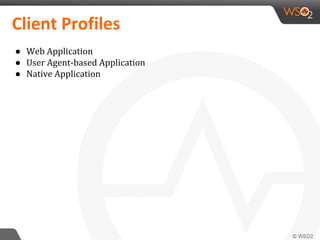
● Web Application
● User Agent-based Application
● Native Application
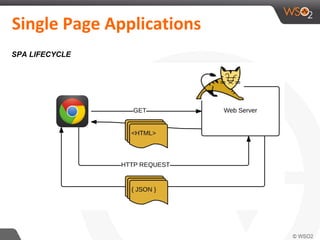
● Single-Page Applications (SPAs) are Web apps that load a single HTML
page and dynamically update that page as the user interacts with the
app.
● An SPA is an application delivered to the browser that doesn’t reload
the page during use.
● SPAs use AJAX and HTML5 to create fluid and responsive Web apps,
without constant page reloads.
● The “page” in SPA is the single web page that the server sends to the
browser when the application starts. It’s the server rendered HTML
that gets everything started. No more, no less. After that initial page
load, all of the presentation logic is on the client.
● Much of the work happens on the client side, in JavaScript.
● User Agent-based Application
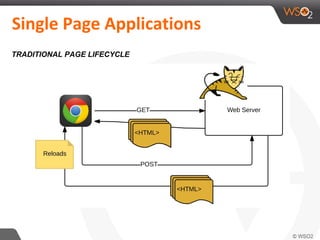
TRADITIONAL PAGE LIFECYCLE
SPA LIFECYCLE
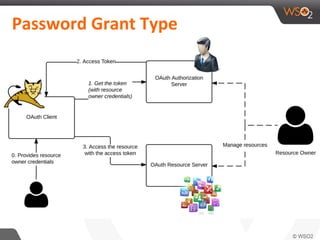
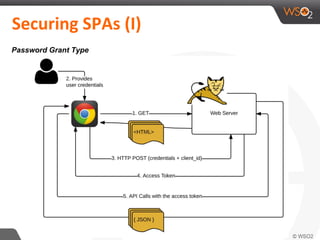
Password Grant Type
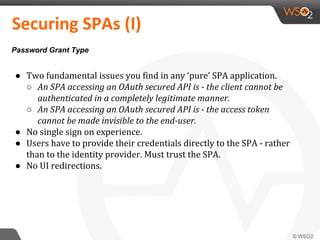
● Two fundamental issues you find in any ‘pure’ SPA application.
○ An SPA accessing an OAuth secured API is - the client cannot be
authenticated in a completely legitimate manner.
○ An SPA accessing an OAuth secured API is - the access token
cannot be made invisible to the end-user.
● No single sign on experience.
● Users have to provide their credentials directly to the SPA - rather
than to the identity provider. Must trust the SPA.
● No UI redirections.
Password Grant Type
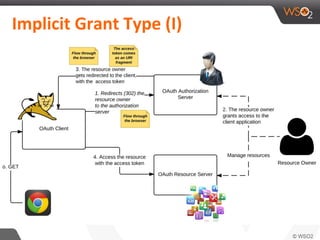
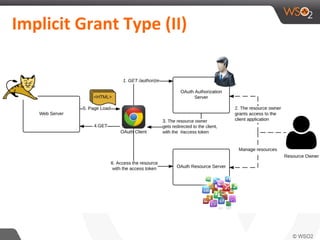
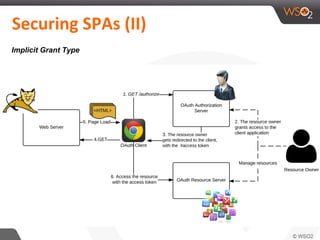
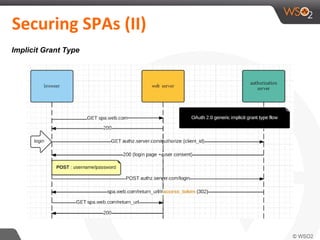
Implicit Grant Type
Implicit Grant Type
● Two fundamental issues you find in any ‘pure’ SPA application.
○ An SPA accessing an OAuth secured API is - the client cannot be
authenticated in a completely legitimate manner.
○ An SPA accessing an OAuth secured API is - the access token
cannot be made invisible to the end-user.
● Single Sign On experience.
● Users do not need to provide credentials to the SPA, rather to the
identity provider.
● UI redirections.
Implicit Grant Type
● An SPA accessing an OAuth secured API is - the client cannot be
authenticated in a completely legitimate manner.
○ Impact
■ Invoke APIs protected with client_credentials grant type.
■ Impersonate a legitimate client application and fool the user
to get his consent to access user resources on behalf of the
legitimate user.
○ Recommendations
■ Reject any tokens used to access APIs, which are issued under
client_credentials grant type.
■ The authorization should do proper validations on the
redirect_url.
● An SPA accessing an OAuth secured API is - the access token cannot
be made invisible to the end-user.
○ Impact
■ Can eat-out throttling limits associated with an API per
application.
■ Access token returned backed from the implicit grant type is
in browser history. Can be used by illegitimate users.
○ Recommendations
■ Enforce per user per application throttling limits.
■ Make the access tokens short-lived.
■ One time access token - discard the access token in its first
use (access token chaining).
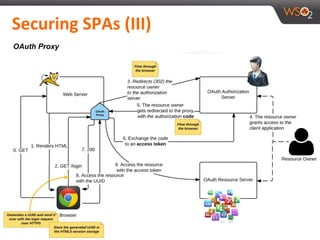
OAuth Proxy
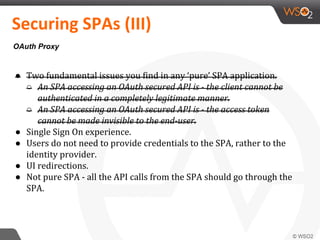
● Two fundamental issues you find in any ‘pure’ SPA application.
○ An SPA accessing an OAuth secured API is - the client cannot be
authenticated in a completely legitimate manner.
○ An SPA accessing an OAuth secured API is - the access token
cannot be made invisible to the end-user.
● Single Sign On experience.
● Users do not need to provide credentials to the SPA, rather to the
identity provider.
● UI redirections.
● Not pure SPA - all the API calls from the SPA should go through the
SPA.
OAuth Proxy
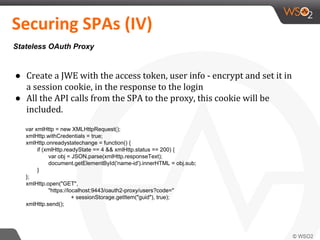
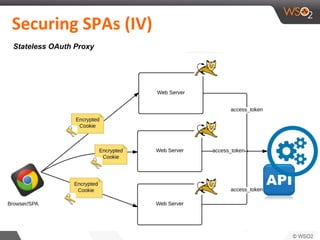
● Create a JWE with the access token, user info - encrypt and set it in
a session cookie, in the response to the login
● All the API calls from the SPA to the proxy, this cookie will be
included.
Stateless OAuth Proxy
var xmlHttp = new XMLHttpRequest();
xmlHttp.withCredentials = true;
xmlHttp.onreadystatechange = function() {
if (xmlHttp.readyState == 4 && xmlHttp.status == 200) {
var obj = JSON.parse(xmlHttp.responseText);
document.getElementById('name-id').innerHTML = obj.sub;
}
};
xmlHttp.open("GET",
"https://localhost:9443/oauth2-proxy/users?code="
+ sessionStorage.getItem("guid"), true);
xmlHttp.send();
Stateless OAuth Proxy
Securing Single-Page Applications with OAuth 2.0

Securing Single-Page Applications with OAuth 2.0

  • 1.
    Securing Single-Page Applications withOAuth 2.0 Prabath Siriwardena, WSO2 Twitter: @prabath | Email: prabath@wso2.com
  • 2.
    ● Director ofSecurity Architecture at WSO2. ● Apache Committer. ● Blog: http://blog.facilelogin.com | http://blog.api-security.org ● Authored four books: http://www.amazon.com/author/prabath
  • 9.
    ● Web Application ●User Agent-based Application ● Native Application
  • 10.
    ● Single-Page Applications(SPAs) are Web apps that load a single HTML page and dynamically update that page as the user interacts with the app. ● An SPA is an application delivered to the browser that doesn’t reload the page during use. ● SPAs use AJAX and HTML5 to create fluid and responsive Web apps, without constant page reloads. ● The “page” in SPA is the single web page that the server sends to the browser when the application starts. It’s the server rendered HTML that gets everything started. No more, no less. After that initial page load, all of the presentation logic is on the client. ● Much of the work happens on the client side, in JavaScript. ● User Agent-based Application
  • 11.
  • 12.
  • 13.
  • 14.
    ● Two fundamentalissues you find in any ‘pure’ SPA application. ○ An SPA accessing an OAuth secured API is - the client cannot be authenticated in a completely legitimate manner. ○ An SPA accessing an OAuth secured API is - the access token cannot be made invisible to the end-user. ● No single sign on experience. ● Users have to provide their credentials directly to the SPA - rather than to the identity provider. Must trust the SPA. ● No UI redirections. Password Grant Type
  • 15.
  • 16.
  • 17.
    ● Two fundamentalissues you find in any ‘pure’ SPA application. ○ An SPA accessing an OAuth secured API is - the client cannot be authenticated in a completely legitimate manner. ○ An SPA accessing an OAuth secured API is - the access token cannot be made invisible to the end-user. ● Single Sign On experience. ● Users do not need to provide credentials to the SPA, rather to the identity provider. ● UI redirections. Implicit Grant Type
  • 18.
    ● An SPAaccessing an OAuth secured API is - the client cannot be authenticated in a completely legitimate manner. ○ Impact ■ Invoke APIs protected with client_credentials grant type. ■ Impersonate a legitimate client application and fool the user to get his consent to access user resources on behalf of the legitimate user. ○ Recommendations ■ Reject any tokens used to access APIs, which are issued under client_credentials grant type. ■ The authorization should do proper validations on the redirect_url.
  • 19.
    ● An SPAaccessing an OAuth secured API is - the access token cannot be made invisible to the end-user. ○ Impact ■ Can eat-out throttling limits associated with an API per application. ■ Access token returned backed from the implicit grant type is in browser history. Can be used by illegitimate users. ○ Recommendations ■ Enforce per user per application throttling limits. ■ Make the access tokens short-lived. ■ One time access token - discard the access token in its first use (access token chaining).
  • 20.
  • 21.
    ● Two fundamentalissues you find in any ‘pure’ SPA application. ○ An SPA accessing an OAuth secured API is - the client cannot be authenticated in a completely legitimate manner. ○ An SPA accessing an OAuth secured API is - the access token cannot be made invisible to the end-user. ● Single Sign On experience. ● Users do not need to provide credentials to the SPA, rather to the identity provider. ● UI redirections. ● Not pure SPA - all the API calls from the SPA should go through the SPA. OAuth Proxy
  • 22.
    ● Create aJWE with the access token, user info - encrypt and set it in a session cookie, in the response to the login ● All the API calls from the SPA to the proxy, this cookie will be included. Stateless OAuth Proxy var xmlHttp = new XMLHttpRequest(); xmlHttp.withCredentials = true; xmlHttp.onreadystatechange = function() { if (xmlHttp.readyState == 4 && xmlHttp.status == 200) { var obj = JSON.parse(xmlHttp.responseText); document.getElementById('name-id').innerHTML = obj.sub; } }; xmlHttp.open("GET", "https://localhost:9443/oauth2-proxy/users?code=" + sessionStorage.getItem("guid"), true); xmlHttp.send();
  • 23.