SUBJECT: Applied Psychology
Semester: VI, BS Zoology
Teacher Name: Dr. Khalid Rasheed Khan
Department of Botany
Government College Mansehra
Lecture # 02
Topic: Secondary motives
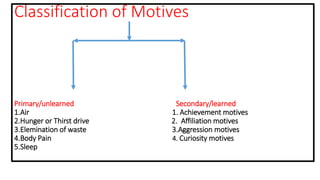
Classification of Motives
Primary/unlearned Secondary/learned
1.Air 1. Achievement motives
2.Hunger or Thirst drive 2. Affiliation motives
3.Elemination of waste 3.Aggression motives
4.Body Pain 4. Curiosity motives
5.Sleep
Secondary Motives/ Learned
These are motives that you don’t need to fulfill for
survival. These are the wants.
Human life has not only just biological aspect but also
social aspect. Hence human behaviour is activated by
the following social motives
1. Achievement motives
They refer to a drive towards some standards of
excellence. People with high-level achievement
motives prefer tasks that would promise success
and are moderately difficult.
High achievers challenge failures and work harder
while low achievers accept failures and go for less
difficult tasks. High achievers prefer personal
responsibility and like to get feedback about their
works.
2. Affiliation motives
Man cannot exist in isolation. The need to be with other
people is known as affiliation need. This need is revealed
through one’s attraction to others through friendship,
sociability or group membership. They make more local
phone calls, visits and seek approvals of others.
3. Aggression motives
Intense frustrations after high expectations, verbal and
nonverbal insults, fear and anxiety can trigger aggression.
Television and cinema depicting violence can make
youngsters model themselves to aggressive behaviour.
4. Power motives
Social power is defined as the ability of an individual to
produce intended effect on the behaviour or emotions of
other people. Persons with power motives will be concerned
with having impact, influence and reputation.
5. Curiosity Motives
Almost all individuals have a desire to have some standing
position among the people of his society or group. Nobody
likes to be considered inferior. Efforts to achieve a rank in the
hierarchy of the group are present not just in human beings,
but even among birds and animals, e.g. ‘pecking order’
among hens.
Thank you

secondary Motive

  • 1.
    SUBJECT: Applied Psychology Semester:VI, BS Zoology Teacher Name: Dr. Khalid Rasheed Khan Department of Botany Government College Mansehra
  • 2.
    Lecture # 02 Topic:Secondary motives
  • 3.
    Classification of Motives Primary/unlearnedSecondary/learned 1.Air 1. Achievement motives 2.Hunger or Thirst drive 2. Affiliation motives 3.Elemination of waste 3.Aggression motives 4.Body Pain 4. Curiosity motives 5.Sleep
  • 4.
    Secondary Motives/ Learned Theseare motives that you don’t need to fulfill for survival. These are the wants. Human life has not only just biological aspect but also social aspect. Hence human behaviour is activated by the following social motives
  • 5.
    1. Achievement motives Theyrefer to a drive towards some standards of excellence. People with high-level achievement motives prefer tasks that would promise success and are moderately difficult. High achievers challenge failures and work harder while low achievers accept failures and go for less difficult tasks. High achievers prefer personal responsibility and like to get feedback about their works.
  • 6.
    2. Affiliation motives Mancannot exist in isolation. The need to be with other people is known as affiliation need. This need is revealed through one’s attraction to others through friendship, sociability or group membership. They make more local phone calls, visits and seek approvals of others.
  • 7.
    3. Aggression motives Intensefrustrations after high expectations, verbal and nonverbal insults, fear and anxiety can trigger aggression. Television and cinema depicting violence can make youngsters model themselves to aggressive behaviour.
  • 8.
    4. Power motives Socialpower is defined as the ability of an individual to produce intended effect on the behaviour or emotions of other people. Persons with power motives will be concerned with having impact, influence and reputation.
  • 9.
    5. Curiosity Motives Almostall individuals have a desire to have some standing position among the people of his society or group. Nobody likes to be considered inferior. Efforts to achieve a rank in the hierarchy of the group are present not just in human beings, but even among birds and animals, e.g. ‘pecking order’ among hens.
  • 10.