Physicochemical Properties of Drugs The Effect of pH and pKa on Drug Action
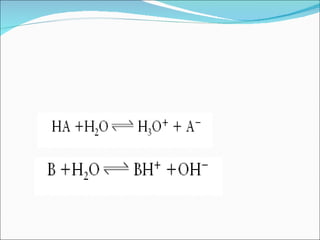
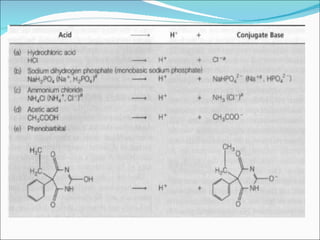
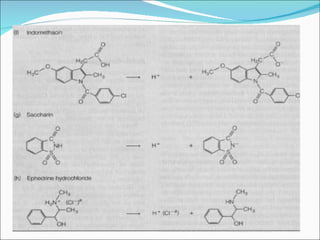
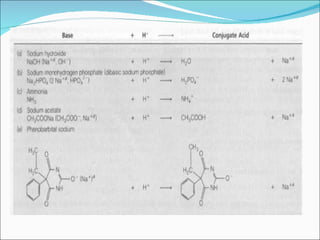
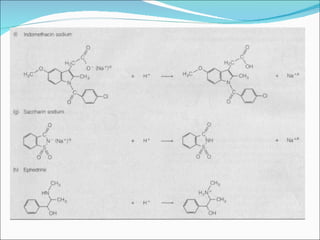
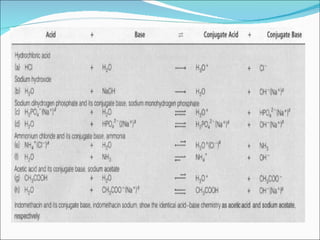
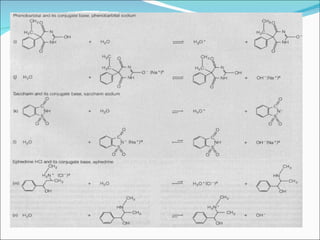
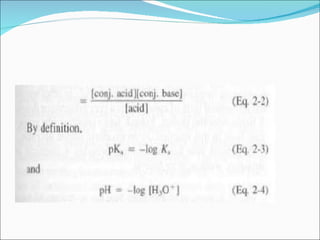
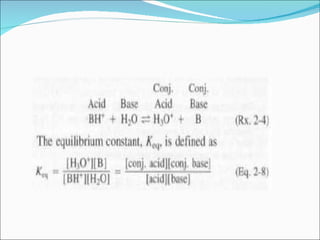
most drugs are small organic molecules that behave in solution as either weak acids or weak bases. Acid-Base properties of drugs greatly influences their biodistribution and partitioning characteristics. What does it mean to say that a certain molecule is an acid or base? Arrhenius definition.


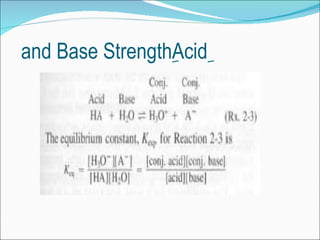
and Base Strength ِ Acid ِ


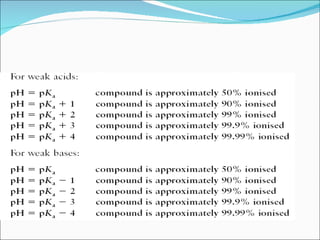
Percentage Ionization
 
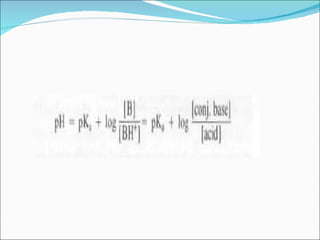
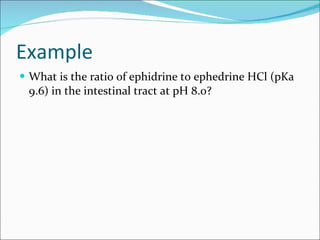
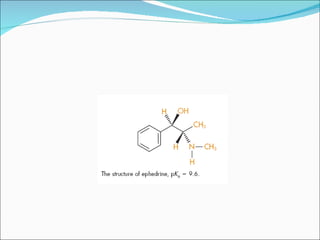
Example What is the ratio of ephidrine to ephedrine HCl (pKa 9.6) in the intestinal tract at pH 8.0?
 
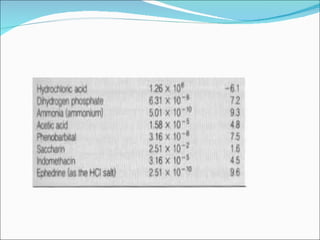
What is the percentage ionization of: 1. ephedrine HCl (pKa  9.6) and 2. indomethacin (pKa 4.5) in an intestinal tract with pH 8?
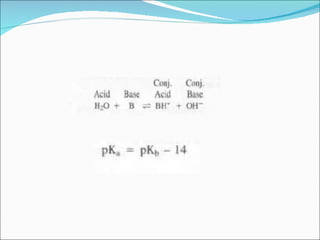
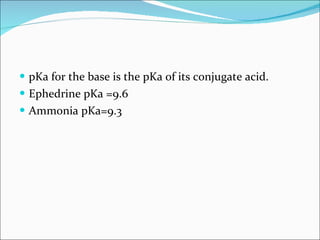
pKa for the base is the pKa of its conjugate acid. Ephedrine pKa =9.6 Ammonia pKa=9.3

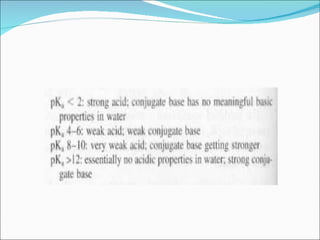
What is the significance of Ka and pKa values?
 
 
How can the drug pKa value be used?
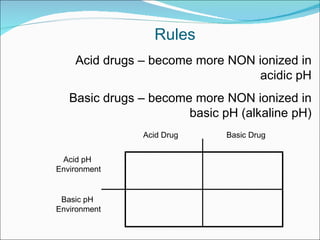
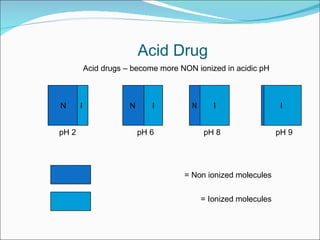
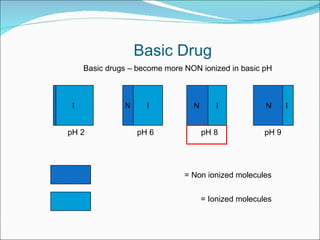
Rules Acid drugs – become more NON ionized in acidic pH Basic drugs – become more NON ionized in basic pH (alkaline pH) Acid Drug Basic Drug Acid pH  Environment Basic pH  Environment
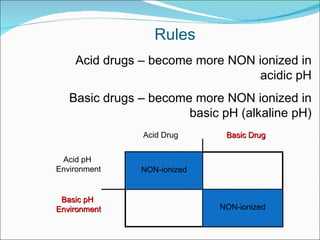
Rules Acid drugs – become more NON ionized in acidic pH Basic drugs – become more NON ionized in basic pH (alkaline pH) Acid Drug Basic Drug Acid pH  Environment Basic pH  Environment NON-ionized NON-ionized
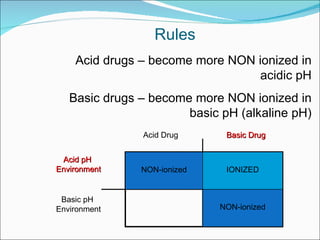
Rules Acid drugs – become more NON ionized in acidic pH Basic drugs – become more NON ionized in basic pH (alkaline pH) Acid Drug Basic Drug Acid pH  Environment Basic pH  Environment NON-ionized NON-ionized IONIZED
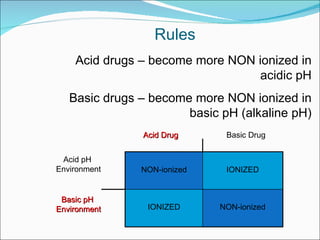
Rules Acid drugs – become more NON ionized in acidic pH Basic drugs – become more NON ionized in basic pH (alkaline pH) Acid Drug Basic Drug Acid pH  Environment Basic pH  Environment NON-ionized NON-ionized IONIZED IONIZED
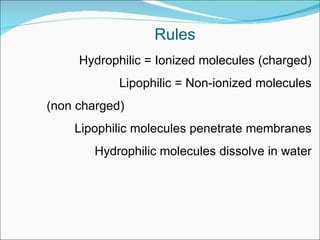
Rules Hydrophilic = Ionized molecules (charged) Lipophilic = Non-ionized molecules (non charged) Lipophilic molecules penetrate membranes Hydrophilic molecules dissolve in water
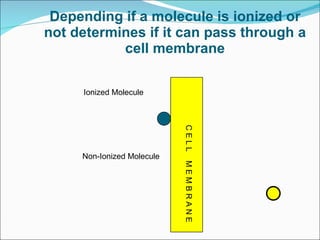
Depending if a molecule is ionized or not determines if it can pass through a cell membrane C E L L  M E M B R A N E Ionized Molecule Non-Ionized Molecule
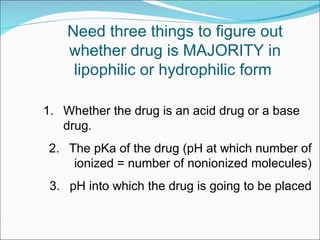
Need three things to figure out whether drug is MAJORITY in lipophilic or hydrophilic form  Whether the drug is an acid drug or a base drug. The pKa of the drug (pH at which number of ionized = number of nonionized molecules) pH into which the drug is going to be placed
Acid Drug  = Non ionized molecules = Ionized molecules Acid drugs – become more NON ionized in acidic pH pH 2 N I pH 6 N I pH 9 I pH 8 I N
Basic Drug  = Non ionized molecules = Ionized molecules Basic drugs – become more NON ionized in basic pH pH 9 N I pH 8 N I pH 2 I pH 6 I N
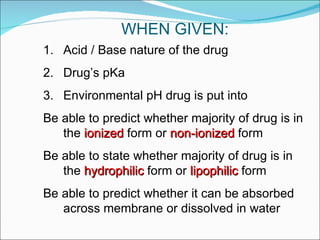
WHEN GIVEN: Acid / Base nature of the drug Drug’s pKa Environmental pH drug is put into Be able to predict whether majority of drug is in the  ionized  form or  non-ionized  form Be able to state whether majority of drug is in the  hydrophilic  form or  lipophilic  form Be able to predict whether it can be absorbed across membrane or dissolved in water
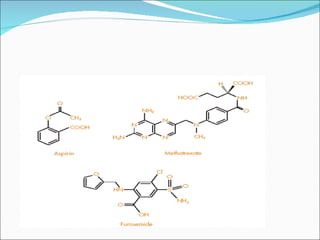
Examples
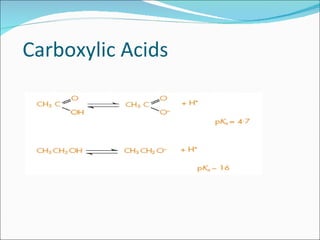
Carboxylic Acids
 
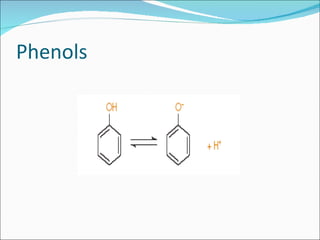
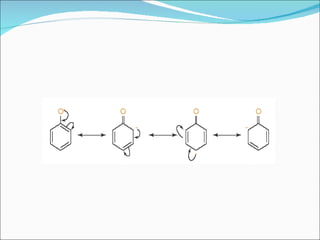
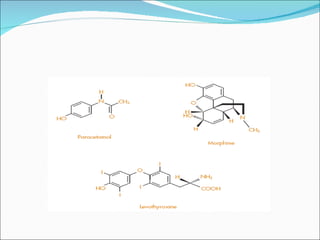
Phenols
 
 
The End

Second lec& 3rd

  • 1.
  • 2.
    Physicochemical Properties ofDrugs The Effect of pH and pKa on Drug Action
  • 3.
    most drugs aresmall organic molecules that behave in solution as either weak acids or weak bases. Acid-Base properties of drugs greatly influences their biodistribution and partitioning characteristics. What does it mean to say that a certain molecule is an acid or base? Arrhenius definition.
  • 4.
  • 5.
  • 6.
  • 7.
  • 8.
  • 9.
  • 10.
  • 11.
  • 12.
  • 13.
  • 14.
  • 15.
  • 16.
  • 17.
  • 18.
  • 19.
    Example What isthe ratio of ephidrine to ephedrine HCl (pKa 9.6) in the intestinal tract at pH 8.0?
  • 20.
  • 21.
    What is thepercentage ionization of: 1. ephedrine HCl (pKa 9.6) and 2. indomethacin (pKa 4.5) in an intestinal tract with pH 8?
  • 22.
    pKa for thebase is the pKa of its conjugate acid. Ephedrine pKa =9.6 Ammonia pKa=9.3
  • 23.
    What is thesignificance of Ka and pKa values?
  • 24.
  • 25.
  • 26.
    How can thedrug pKa value be used?
  • 27.
    Rules Acid drugs– become more NON ionized in acidic pH Basic drugs – become more NON ionized in basic pH (alkaline pH) Acid Drug Basic Drug Acid pH Environment Basic pH Environment
  • 28.
    Rules Acid drugs– become more NON ionized in acidic pH Basic drugs – become more NON ionized in basic pH (alkaline pH) Acid Drug Basic Drug Acid pH Environment Basic pH Environment NON-ionized NON-ionized
  • 29.
    Rules Acid drugs– become more NON ionized in acidic pH Basic drugs – become more NON ionized in basic pH (alkaline pH) Acid Drug Basic Drug Acid pH Environment Basic pH Environment NON-ionized NON-ionized IONIZED
  • 30.
    Rules Acid drugs– become more NON ionized in acidic pH Basic drugs – become more NON ionized in basic pH (alkaline pH) Acid Drug Basic Drug Acid pH Environment Basic pH Environment NON-ionized NON-ionized IONIZED IONIZED
  • 31.
    Rules Hydrophilic =Ionized molecules (charged) Lipophilic = Non-ionized molecules (non charged) Lipophilic molecules penetrate membranes Hydrophilic molecules dissolve in water
  • 32.
    Depending if amolecule is ionized or not determines if it can pass through a cell membrane C E L L M E M B R A N E Ionized Molecule Non-Ionized Molecule
  • 33.
    Need three thingsto figure out whether drug is MAJORITY in lipophilic or hydrophilic form Whether the drug is an acid drug or a base drug. The pKa of the drug (pH at which number of ionized = number of nonionized molecules) pH into which the drug is going to be placed
  • 34.
    Acid Drug = Non ionized molecules = Ionized molecules Acid drugs – become more NON ionized in acidic pH pH 2 N I pH 6 N I pH 9 I pH 8 I N
  • 35.
    Basic Drug = Non ionized molecules = Ionized molecules Basic drugs – become more NON ionized in basic pH pH 9 N I pH 8 N I pH 2 I pH 6 I N
  • 36.
    WHEN GIVEN: Acid/ Base nature of the drug Drug’s pKa Environmental pH drug is put into Be able to predict whether majority of drug is in the ionized form or non-ionized form Be able to state whether majority of drug is in the hydrophilic form or lipophilic form Be able to predict whether it can be absorbed across membrane or dissolved in water
  • 37.
  • 38.
  • 39.
  • 40.
  • 41.
  • 42.
  • 43.