1
‫ر‬َ‫ـد‬ْ‫ق‬‫ِـ‬‫ن‬،،،‫لما‬‫اننا‬ ‫نصدق‬ْْ‫ق‬ِ‫ن‬‫ر‬َ‫د‬
Faculty of Engineering - Helwan University
2
 It’s the 1st Lecture
 Syllabus
3
 Course Information:
 Name : Software Engineering1
• Lecture Hrs: 3
• Tutorial Hrs: 1
• Lab Hrs :2
 Lecture:
 Monday @ 10:30
 Thursday @ 10:30
4
 Instructor Information:
 Assist. Professor: Amr E. Mohamed
 E-mail: dr.amrelsayedm@yahoo.com
 Office Hours:
• Monday: 2:30AM - 4:30PM,
 Teaching Assistant:
 Eng. Walid Ashraf
 Eng. Hadeel El-Adawy
 Eng. Aya Eltokhy
5
 Appreciate Software Engineering:
 Build complex software systems in the context of frequent
change
 Understand how to
 produce a high quality software system within budget and time.
 while dealing with complexity and change
 Acquire technical knowledge
 Understand the Software Lifecycle
 Learn about different software lifecycles
 Requirements Elicitation
 Requirements Analysis
 Learn About Modeling and UML
 Software Project Management
6
 The course is not about becoming a Code Ninja
 so we are not going to learn programming in Scala, Ruby
on Rails, Go!, Java or Thumb
 but we might discuss them
 It is neither about becoming a Project Management Guru
 so we are not going to make Gantt charts and milestones
 but we could talk about priorities, teams and metrics
7
 Software
 is a collection of computer programs and related data
that provide the instructions for telling a computer what
to do and how to do it. (Wikipedia)
 Engineering
 the way that something has been designed and built.
(Cambridge Business English Dictionary)
 Software Engineering
 a collection of methods, techniques and tools that could
be applied to design, build and maintain the “instructions
for telling a computer what to do and how to do it”
8
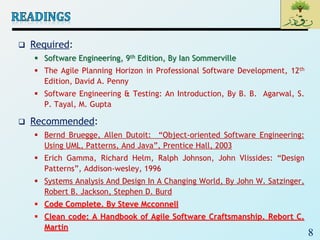
 Required:
 Software Engineering, 9th Edition, By Ian Sommerville
 The Agile Planning Horizon in Professional Software Development, 12th
Edition, David A. Penny
 Software Engineering & Testing: An Introduction, By B. B. Agarwal, S.
P. Tayal, M. Gupta
 Recommended:
 Bernd Bruegge, Allen Dutoit: “Object-oriented Software Engineering:
Using UML, Patterns, And Java”, Prentice Hall, 2003
 Erich Gamma, Richard Helm, Ralph Johnson, John Vlissides: “Design
Patterns”, Addison-wesley, 1996
 Systems Analysis And Design In A Changing World, By John W. Satzinger,
Robert B. Jackson, Stephen D. Burd
 Code Complete, By Steve Mcconnell
 Clean code: A Handbook of Agile Software Craftsmanship, Rebort C.
Martin
9
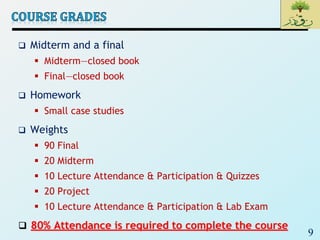
 Midterm and a final
 Midterm—closed book
 Final—closed book
 Homework
 Small case studies
 Weights
 90 Final
 20 Midterm
 10 Lecture Attendance & Participation & Quizzes
 20 Project
 10 Lecture Attendance & Participation & Lab Exam
 80% Attendance is required to complete the course
10
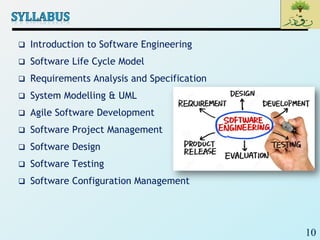
 Introduction to Software Engineering
 Software Life Cycle Model
 Requirements Analysis and Specification
 System Modelling & UML
 Agile Software Development
 Software Project Management
 Software Design
 Software Testing
 Software Configuration Management
11
 80% attendance is compulsory
 No late comers are allowed to enter my class/lab
 Proper attire throughout lecture/lab session
 NO make up quiz & test.
 Quizzes can either be pop-quiz or informed earlier.
12
13

SE18_Lec 00_Course Outline

  • 1.
  • 2.
    2  It’s the1st Lecture  Syllabus
  • 3.
    3  Course Information: Name : Software Engineering1 • Lecture Hrs: 3 • Tutorial Hrs: 1 • Lab Hrs :2  Lecture:  Monday @ 10:30  Thursday @ 10:30
  • 4.
    4  Instructor Information: Assist. Professor: Amr E. Mohamed  E-mail: dr.amrelsayedm@yahoo.com  Office Hours: • Monday: 2:30AM - 4:30PM,  Teaching Assistant:  Eng. Walid Ashraf  Eng. Hadeel El-Adawy  Eng. Aya Eltokhy
  • 5.
    5  Appreciate SoftwareEngineering:  Build complex software systems in the context of frequent change  Understand how to  produce a high quality software system within budget and time.  while dealing with complexity and change  Acquire technical knowledge  Understand the Software Lifecycle  Learn about different software lifecycles  Requirements Elicitation  Requirements Analysis  Learn About Modeling and UML  Software Project Management
  • 6.
    6  The courseis not about becoming a Code Ninja  so we are not going to learn programming in Scala, Ruby on Rails, Go!, Java or Thumb  but we might discuss them  It is neither about becoming a Project Management Guru  so we are not going to make Gantt charts and milestones  but we could talk about priorities, teams and metrics
  • 7.
    7  Software  isa collection of computer programs and related data that provide the instructions for telling a computer what to do and how to do it. (Wikipedia)  Engineering  the way that something has been designed and built. (Cambridge Business English Dictionary)  Software Engineering  a collection of methods, techniques and tools that could be applied to design, build and maintain the “instructions for telling a computer what to do and how to do it”
  • 8.
    8  Required:  SoftwareEngineering, 9th Edition, By Ian Sommerville  The Agile Planning Horizon in Professional Software Development, 12th Edition, David A. Penny  Software Engineering & Testing: An Introduction, By B. B. Agarwal, S. P. Tayal, M. Gupta  Recommended:  Bernd Bruegge, Allen Dutoit: “Object-oriented Software Engineering: Using UML, Patterns, And Java”, Prentice Hall, 2003  Erich Gamma, Richard Helm, Ralph Johnson, John Vlissides: “Design Patterns”, Addison-wesley, 1996  Systems Analysis And Design In A Changing World, By John W. Satzinger, Robert B. Jackson, Stephen D. Burd  Code Complete, By Steve Mcconnell  Clean code: A Handbook of Agile Software Craftsmanship, Rebort C. Martin
  • 9.
    9  Midterm anda final  Midterm—closed book  Final—closed book  Homework  Small case studies  Weights  90 Final  20 Midterm  10 Lecture Attendance & Participation & Quizzes  20 Project  10 Lecture Attendance & Participation & Lab Exam  80% Attendance is required to complete the course
  • 10.
    10  Introduction toSoftware Engineering  Software Life Cycle Model  Requirements Analysis and Specification  System Modelling & UML  Agile Software Development  Software Project Management  Software Design  Software Testing  Software Configuration Management
  • 11.
    11  80% attendanceis compulsory  No late comers are allowed to enter my class/lab  Proper attire throughout lecture/lab session  NO make up quiz & test.  Quizzes can either be pop-quiz or informed earlier.
  • 12.
  • 13.