


Software Defined Network &
Named Data Network – Security
Implications
By:
Anuj Tyagi
http://packetflows.com
Organization:
1. What is Software Defined Networking ?
2. SDN Architecture
3. SDN advantages
4. Attacks and Mitigations on SDN
5. What is NDN ?
6. TCP/IP vs NDN
7. NDN packet types
8. TCP/IP vs NDN – security prospective
9. NDN lookup testbeds
10. Conclusion and future work
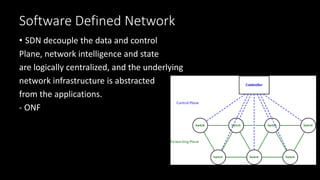
Software Defined Network
• SDN decouple the data and control
Plane, network intelligence and state
are logically centralized, and the underlying
network infrastructure is abstracted
from the applications.
- ONF
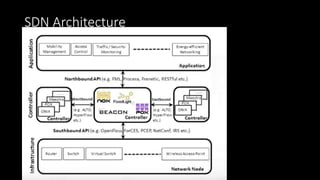
SDN Architecture
OpenFlow Channel
• Used to exchange OpenFlow message between switch and
controller
• Switch can establish single or multiple connections to same or
different controllers
• A controller configures and manages the switch, receives
events from switch, and send packets out the switch via this
interface
• The OpenFlow channel is TLS/TCP connection. Switch and
controller mutually authenticate by exchanging certificates
signed by site-specific private key
Why SDN ?
• Complexity in the Network
- Protocols are defined in isolation
- migration challenges
• Inconsistent policies
- Difficult to apply consistent set of access, security, QOS and other
policies
• Inability to scale
- Scaling challenges based on unpredictable traffic pattern
• Vendor dependence
- Lack of standards and open interfaces
Advantages of SDN
• Centralized network provisioning
• Holistic enterprise management
• More granular security
• Lower operating cost
• Hardware savings and reduced capital expenditures
• Easier Interoperability
Security Advantages of SDN
SDN allows for creative new approaches to security
1. Traffic Filtering and shaping
2. Network slicing/multi-tenancy, isolation, network segmentation
3. DDOS mitigation
4. Network Access Control
5. Security traffic Monitoring
6. Moving Target Defense (MTD)
SDN Attack Surface
• Controller uses protocol like OpenFlow to control switches,
which are now only responsible for handling the data plane
• When OpenFlow packet that doesn’t match forwarding rules,
packet passed to the controller
Attack : The SDN controller’s ability to control an entire
network makes it a high value target. Attack on a vulnerable
controller can have disastrous effect on the network
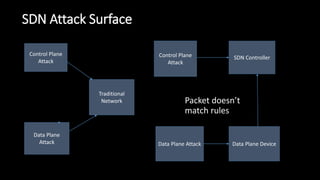
SDN Attack Surface
Packet doesn’t
match rules
Control Plane
Attack
Data Plane
Attack
Traditional
Network
Control Plane
Attack
SDN Controller
Data Plane DeviceData Plane Attack
SDN Attack Surface
• DOS attack by spoofing northbound API messages and southbound
flows
• Attacker can create their own controller and gets network element to
receive flows from that controller – spoofing flows from the
legitimate controller
• Attacking the DCI protocol – NVGRE, STT, VXLAN. These protocols lack
authentication, with no encryption – this is either part of the protocol
design or the way the vendor has implemented the protocol
SDN Vulnerabilities
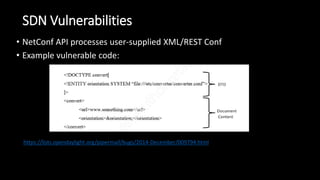
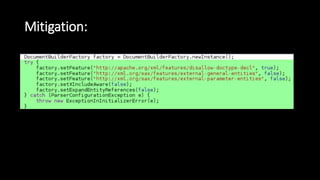
• NetConf API processes user-supplied XML/REST Conf
• Example vulnerable code:
https://lists.opendaylight.org/pipermail/bugs/2014-December/009794.html
Mitigation:
Topology Spoofing via host tracking
• Most SDN controllers include host tracking, allowing hosts to migrate
between different physical locations in the network
• Host tracking is based on monitoring of Packet-In messages, and
doesn’t require validation, authentication or authorization
• An attacker can impersonate a host and make the SDN controller
believe it has migrated to a physical network location controller by
the attacker
• For this, attacker must know the mac-address of the target host.
Attacker need to send malicious message through a switch controlled
by SDN controller.
• Ref: http://www.internetsociety.org/sites/default/files/10_4_2.pdf
Mitigation of Topology Spoofing
• Same research team developed path to mitigate it
• A legitimate host migration involve port down before host migration
finished. It would also mean that host would be unreachable at it’s
old physical location after the migration complete
• Currently, patched in FloodLight controller
DOS attack on ONOS packet deserializer
• When OpenFlow switch encounter a packet that does not
match any forwarding rules, it passes this packet to the
controller for advice
• Packet deserialization in ONOS throw exceptions when
handling malformed, truncated or maliciously crafted
packets
• The exceptions were not caught and handled, which would
result in the relevant switch being disconnected because
exception occur in I/O thread
Security Mode Mitigation
• Vulnerability in ONOS application could not exploited to perform
actions that are not permitted by security mode ONOS. This is similar
to protection SELinux provides for applications running on Linux
System
Other hardening Approach
• Use out of band (OOB) network for controlling traffic and secure
protocol controller management and northbound communications
• Closely monitor controller for suspicious activities
• Use Data Center Interconnect(DCI) protocols that can use
authenticate tunnel end points and secure tunneled traffic
Thank You !
Queries ?
Named Data Network – What is it ?
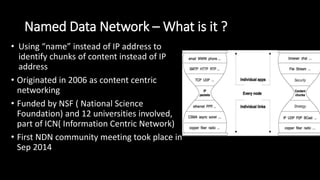
• Using “name” instead of IP address to
identify chunks of content instead of IP
address
• Originated in 2006 as content centric
networking
• Funded by NSF ( National Science
Foundation) and 12 universities involved,
part of ICN( Information Centric Network)
• First NDN community meeting took place in
Sep 2014
Institutes involved ?
NDN Packet Structure
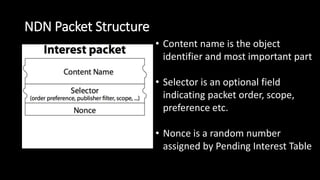
• Content name is the object
identifier and most important part
• Selector is an optional field
indicating packet order, scope,
preference etc.
• Nonce is a random number
assigned by Pending Interest Table
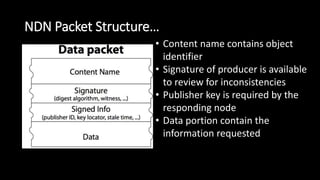
NDN Packet Structure…
• Content name contains object
identifier
• Signature of producer is available
to review for inconsistencies
• Publisher key is required by the
responding node
• Data portion contain the
information requested
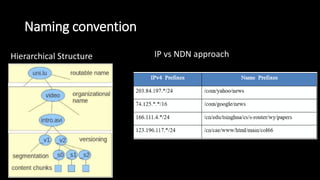
Naming convention
Hierarchical Structure IP vs NDN approach
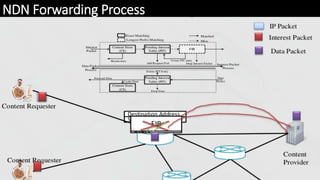
NDN Forwarding Process
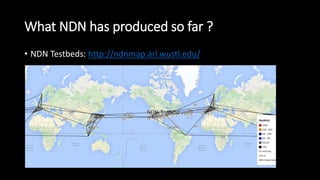
What NDN has produced so far ?
• NDN Testbeds: http://ndnmap.arl.wustl.edu/
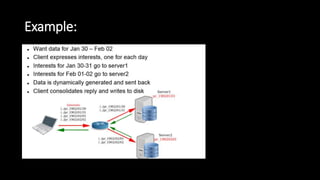
Example:
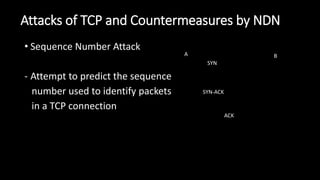
Attacks of TCP and Countermeasures by NDN
• Sequence Number Attack
- Attempt to predict the sequence
number used to identify packets
in a TCP connection
SYN
SYN-ACK
ACK
A B
NDN solution to TCP attack
• No IP address information required
• Object identifier takes its place
• No information gleaned from identifier can be used to
attack system
DNS Servers
• Cache containing hostname IP information, source operating system,
configuration information etc.
• DNS spoofing occurs when IP address associated with trusted sites
are replaced with the third party sources
• Once used, the third party can be granted access to the system
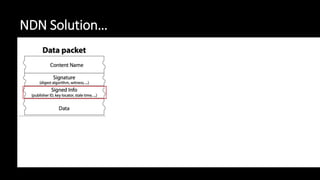
NDN Solution…
- Signature key returned contains
information about the source
- This information can be viewed by the
information recipient to verify validity
- If the information is invalid, it can be
rejected without harming the system
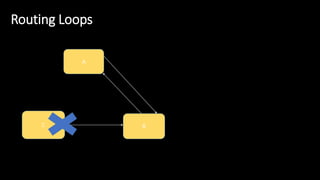
Routing Loops
A
BC
Routing Loops
A
BC
Routing Loops
A
BC
Routing Loops
A
BC
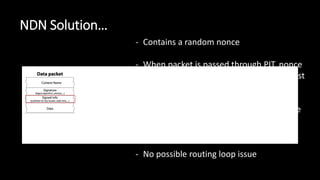
NDN Solution…
- Contains a random nonce
- When packet is passed through PIT, nonce
is cross-referenced against original interest
packet
- If interest packet is returned with a nonce
matching one already in the PIT, it is
discarded
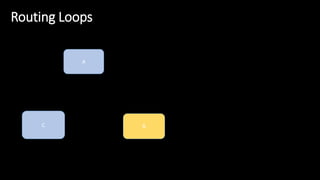
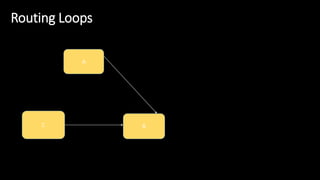
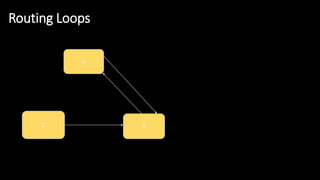
- No possible routing loop issue
Conclusion: A new way to think about security
• Secure the Content, Not the Channel !
- SSL, VPN, SSH tunnel, TOR etc all provide secure channel
- Users don’t really care if channel is secure or not. They care about
data security
• Require Authentication on all content
- Security is not optional but part of architecture
• Encrypt the content if you don’t trust the channel
- Encryption is optional and applied where required
SDN and Named Data Networking Security

SDN and Named Data Networking Security

  • 1.
    Software Defined Network& Named Data Network – Security Implications By: Anuj Tyagi http://packetflows.com
  • 2.
    Organization: 1. What isSoftware Defined Networking ? 2. SDN Architecture 3. SDN advantages 4. Attacks and Mitigations on SDN 5. What is NDN ? 6. TCP/IP vs NDN 7. NDN packet types 8. TCP/IP vs NDN – security prospective 9. NDN lookup testbeds 10. Conclusion and future work
  • 3.
    Software Defined Network •SDN decouple the data and control Plane, network intelligence and state are logically centralized, and the underlying network infrastructure is abstracted from the applications. - ONF
  • 4.
  • 5.
    OpenFlow Channel • Usedto exchange OpenFlow message between switch and controller • Switch can establish single or multiple connections to same or different controllers • A controller configures and manages the switch, receives events from switch, and send packets out the switch via this interface • The OpenFlow channel is TLS/TCP connection. Switch and controller mutually authenticate by exchanging certificates signed by site-specific private key
  • 6.
    Why SDN ? •Complexity in the Network - Protocols are defined in isolation - migration challenges • Inconsistent policies - Difficult to apply consistent set of access, security, QOS and other policies • Inability to scale - Scaling challenges based on unpredictable traffic pattern • Vendor dependence - Lack of standards and open interfaces
  • 7.
    Advantages of SDN •Centralized network provisioning • Holistic enterprise management • More granular security • Lower operating cost • Hardware savings and reduced capital expenditures • Easier Interoperability
  • 8.
    Security Advantages ofSDN SDN allows for creative new approaches to security 1. Traffic Filtering and shaping 2. Network slicing/multi-tenancy, isolation, network segmentation 3. DDOS mitigation 4. Network Access Control 5. Security traffic Monitoring 6. Moving Target Defense (MTD)
  • 9.
    SDN Attack Surface •Controller uses protocol like OpenFlow to control switches, which are now only responsible for handling the data plane • When OpenFlow packet that doesn’t match forwarding rules, packet passed to the controller Attack : The SDN controller’s ability to control an entire network makes it a high value target. Attack on a vulnerable controller can have disastrous effect on the network
  • 10.
    SDN Attack Surface Packetdoesn’t match rules Control Plane Attack Data Plane Attack Traditional Network Control Plane Attack SDN Controller Data Plane DeviceData Plane Attack
  • 11.
    SDN Attack Surface •DOS attack by spoofing northbound API messages and southbound flows • Attacker can create their own controller and gets network element to receive flows from that controller – spoofing flows from the legitimate controller • Attacking the DCI protocol – NVGRE, STT, VXLAN. These protocols lack authentication, with no encryption – this is either part of the protocol design or the way the vendor has implemented the protocol
  • 12.
    SDN Vulnerabilities • NetConfAPI processes user-supplied XML/REST Conf • Example vulnerable code: https://lists.opendaylight.org/pipermail/bugs/2014-December/009794.html
  • 13.
  • 14.
    Topology Spoofing viahost tracking • Most SDN controllers include host tracking, allowing hosts to migrate between different physical locations in the network • Host tracking is based on monitoring of Packet-In messages, and doesn’t require validation, authentication or authorization • An attacker can impersonate a host and make the SDN controller believe it has migrated to a physical network location controller by the attacker • For this, attacker must know the mac-address of the target host. Attacker need to send malicious message through a switch controlled by SDN controller. • Ref: http://www.internetsociety.org/sites/default/files/10_4_2.pdf
  • 15.
    Mitigation of TopologySpoofing • Same research team developed path to mitigate it • A legitimate host migration involve port down before host migration finished. It would also mean that host would be unreachable at it’s old physical location after the migration complete • Currently, patched in FloodLight controller
  • 16.
    DOS attack onONOS packet deserializer • When OpenFlow switch encounter a packet that does not match any forwarding rules, it passes this packet to the controller for advice • Packet deserialization in ONOS throw exceptions when handling malformed, truncated or maliciously crafted packets • The exceptions were not caught and handled, which would result in the relevant switch being disconnected because exception occur in I/O thread
  • 17.
    Security Mode Mitigation •Vulnerability in ONOS application could not exploited to perform actions that are not permitted by security mode ONOS. This is similar to protection SELinux provides for applications running on Linux System
  • 18.
    Other hardening Approach •Use out of band (OOB) network for controlling traffic and secure protocol controller management and northbound communications • Closely monitor controller for suspicious activities • Use Data Center Interconnect(DCI) protocols that can use authenticate tunnel end points and secure tunneled traffic
  • 19.
  • 20.
    Named Data Network– What is it ? • Using “name” instead of IP address to identify chunks of content instead of IP address • Originated in 2006 as content centric networking • Funded by NSF ( National Science Foundation) and 12 universities involved, part of ICN( Information Centric Network) • First NDN community meeting took place in Sep 2014
  • 21.
  • 22.
    NDN Packet Structure •Content name is the object identifier and most important part • Selector is an optional field indicating packet order, scope, preference etc. • Nonce is a random number assigned by Pending Interest Table
  • 23.
    NDN Packet Structure… •Content name contains object identifier • Signature of producer is available to review for inconsistencies • Publisher key is required by the responding node • Data portion contain the information requested
  • 24.
  • 25.
  • 26.
    What NDN hasproduced so far ? • NDN Testbeds: http://ndnmap.arl.wustl.edu/
  • 27.
  • 28.
    Attacks of TCPand Countermeasures by NDN • Sequence Number Attack - Attempt to predict the sequence number used to identify packets in a TCP connection SYN SYN-ACK ACK A B
  • 29.
    NDN solution toTCP attack • No IP address information required • Object identifier takes its place • No information gleaned from identifier can be used to attack system
  • 30.
    DNS Servers • Cachecontaining hostname IP information, source operating system, configuration information etc. • DNS spoofing occurs when IP address associated with trusted sites are replaced with the third party sources • Once used, the third party can be granted access to the system
  • 31.
    NDN Solution… - Signaturekey returned contains information about the source - This information can be viewed by the information recipient to verify validity - If the information is invalid, it can be rejected without harming the system
  • 32.
  • 33.
  • 34.
  • 35.
  • 36.
    NDN Solution… - Containsa random nonce - When packet is passed through PIT, nonce is cross-referenced against original interest packet - If interest packet is returned with a nonce matching one already in the PIT, it is discarded - No possible routing loop issue
  • 37.
    Conclusion: A newway to think about security • Secure the Content, Not the Channel ! - SSL, VPN, SSH tunnel, TOR etc all provide secure channel - Users don’t really care if channel is secure or not. They care about data security • Require Authentication on all content - Security is not optional but part of architecture • Encrypt the content if you don’t trust the channel - Encryption is optional and applied where required