1
Presented by
P. Raga Amrutha
Department Of Pharmacology
Chalapathi Institute Of Pharmaceutical Sciences, Lam,
Guntur.
 Aphrodisiac agents:
 Introduction
 Guidelines
 Drugs
 Mechanism and purpose
 side effects
 Screening models
 Anti fertility agents:
 Introduction
 Benefits
 Screening models
2
 Aphrodisiac is the word derived from Aphrodite , the Greek word
Goodness of Sexual, Love and Beauty .
 An aphrodisiac is defined as agent (food & drug) that arouses
(increase) sexual desire.
 The major drawback (completely opposite action) of this agents
are Erectile dysfunction.
 So, the basic concept of penile erection were obtain from different
in-vivo & in- vitro animals models.
 Before study on animal models Some guidelines must be follow
during experiment which explain as…
3
 Male animals were kept individually but female animals were kept
in groups.
 Training of each male for 15 min. at a time was performed until
sexual behaviour was elicited and when the behaviour was noticed,
males were exposed to receptive females (1male with 5 females ).
 Repeated training to overcome the lack of sexual response in the
presence of observers.
 The study was conducted in a silent room under dim red light.
 Any jerking movements of the mating area was avoided to enable
the rats to chase each other.
 Cleaning of the mating area was performed after each trial, since
the urine trails left by one rat might alter the sexual behaviour of
the next rat.
4
 Sildenafil citrate
 Arginine
 Testosterone
 Crocin
 Phenethylamines
 Amphetamine
 Methamphetamine
5
 These drugs act by enhancing the sex organ sensation
and performance. They improve the blood flow to the
male sex organs, thus improving the male libido. A
similar response in women may also produce an
increased sexual stimulation.
6
 To increase low libido.
 To improve sexual performance.
 In the treatment of impotence
 To treat physiological problems that affect sexual
activity
7
 arrhythmia of the heart
 suicidal tendencies
 mental disorders
 tremors
 headaches
 fainting facial flushing
 upset stomach
 blurred vision
 sensitivity to light usually occur with high doses.
8
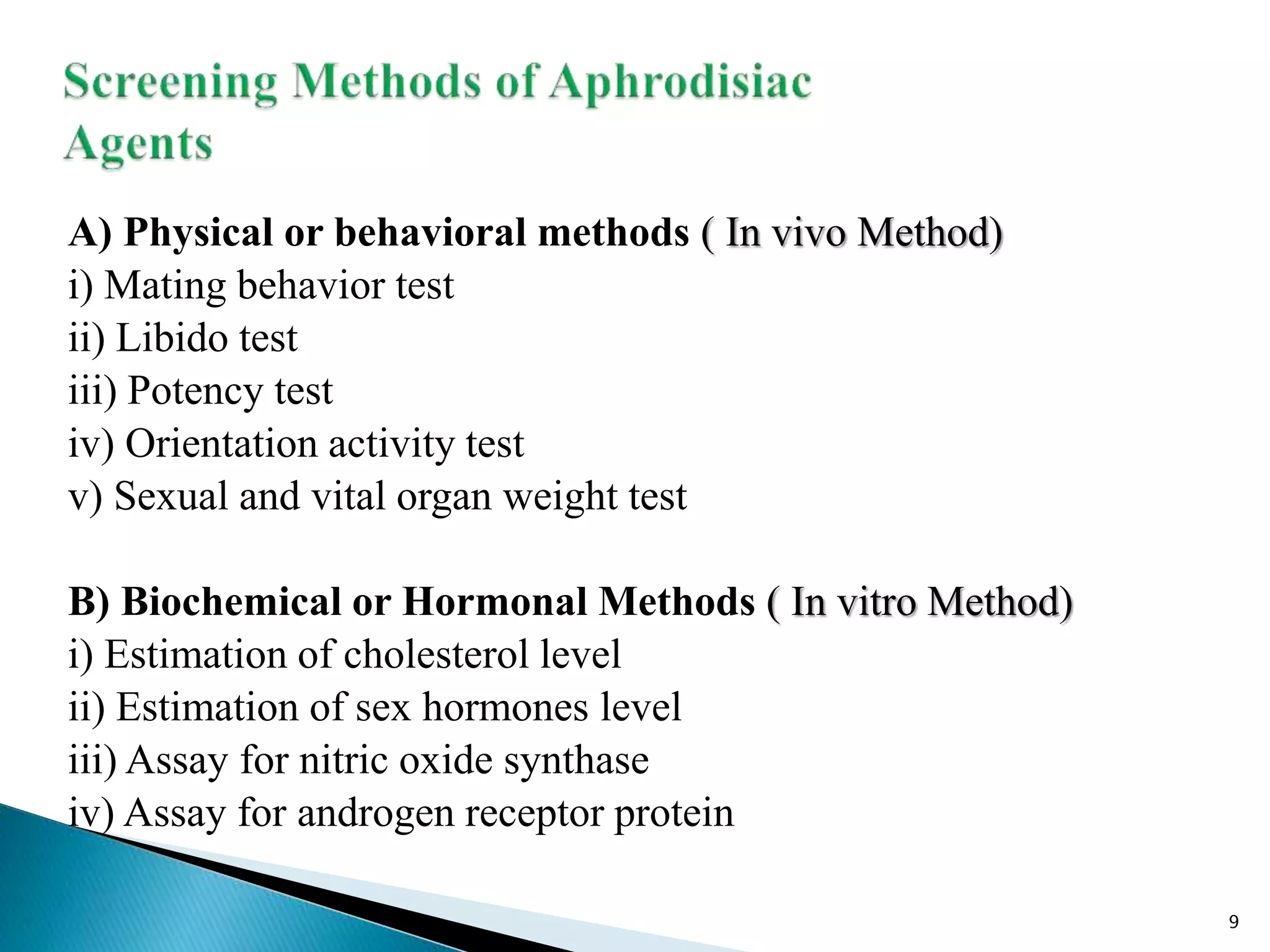
A) Physical or behavioral methods ( In vivo Method)
i) Mating behavior test
ii) Libido test
iii) Potency test
iv) Orientation activity test
v) Sexual and vital organ weight test
B) Biochemical or Hormonal Methods ( In vitro Method)
i) Estimation of cholesterol level
ii) Estimation of sex hormones level
iii) Assay for nitric oxide synthase
iv) Assay for androgen receptor protein
9
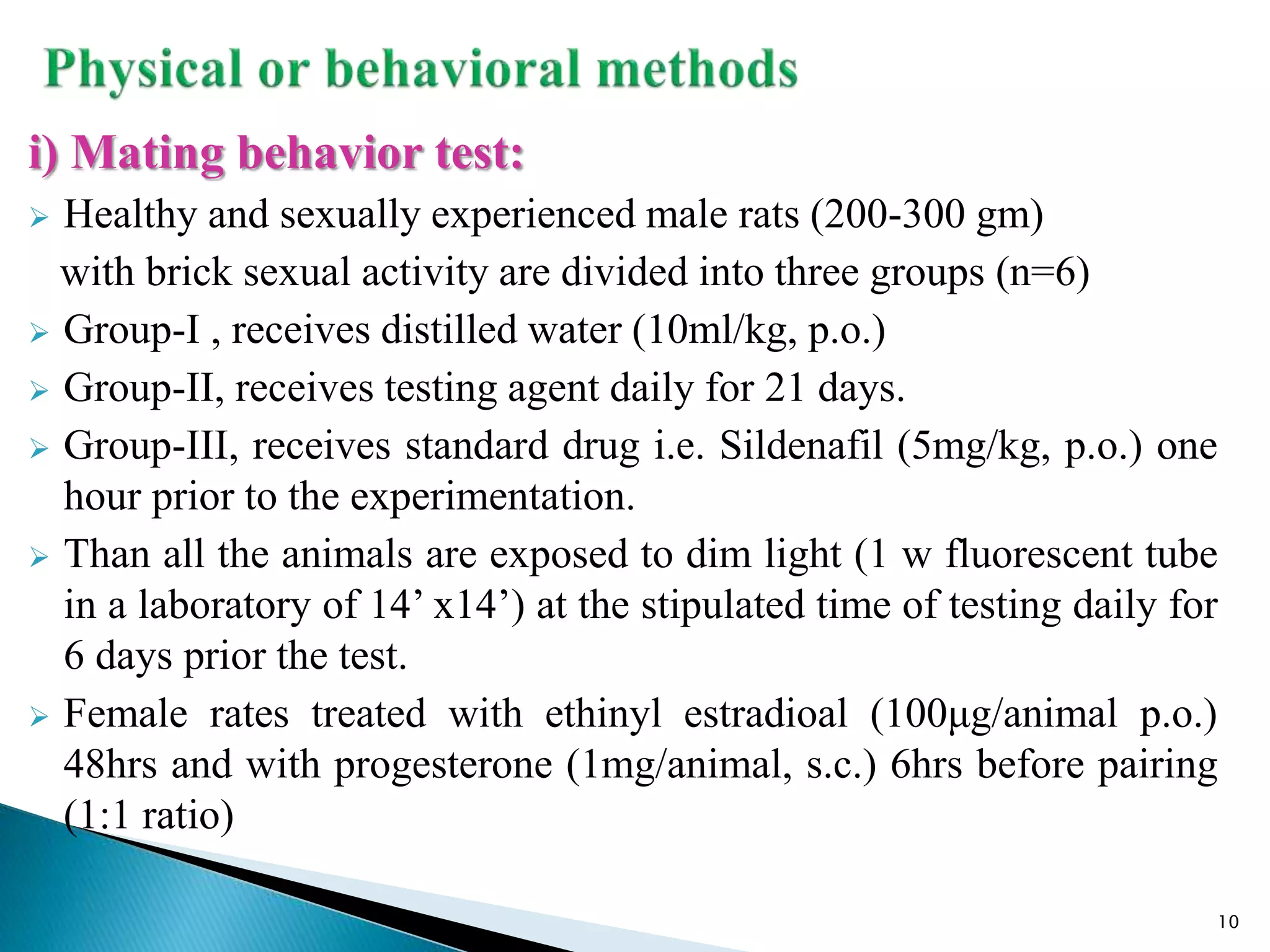
i) Mating behavior test:
 Healthy and sexually experienced male rats (200-300 gm)
with brick sexual activity are divided into three groups (n=6)
 Group-I , receives distilled water (10ml/kg, p.o.)
 Group-II, receives testing agent daily for 21 days.
 Group-III, receives standard drug i.e. Sildenafil (5mg/kg, p.o.) one
hour prior to the experimentation.
 Than all the animals are exposed to dim light (1 w fluorescent tube
in a laboratory of 14’ x14’) at the stipulated time of testing daily for
6 days prior the test.
 Female rates treated with ethinyl estradioal (100μg/animal p.o.)
48hrs and with progesterone (1mg/animal, s.c.) 6hrs before pairing
(1:1 ratio)
10
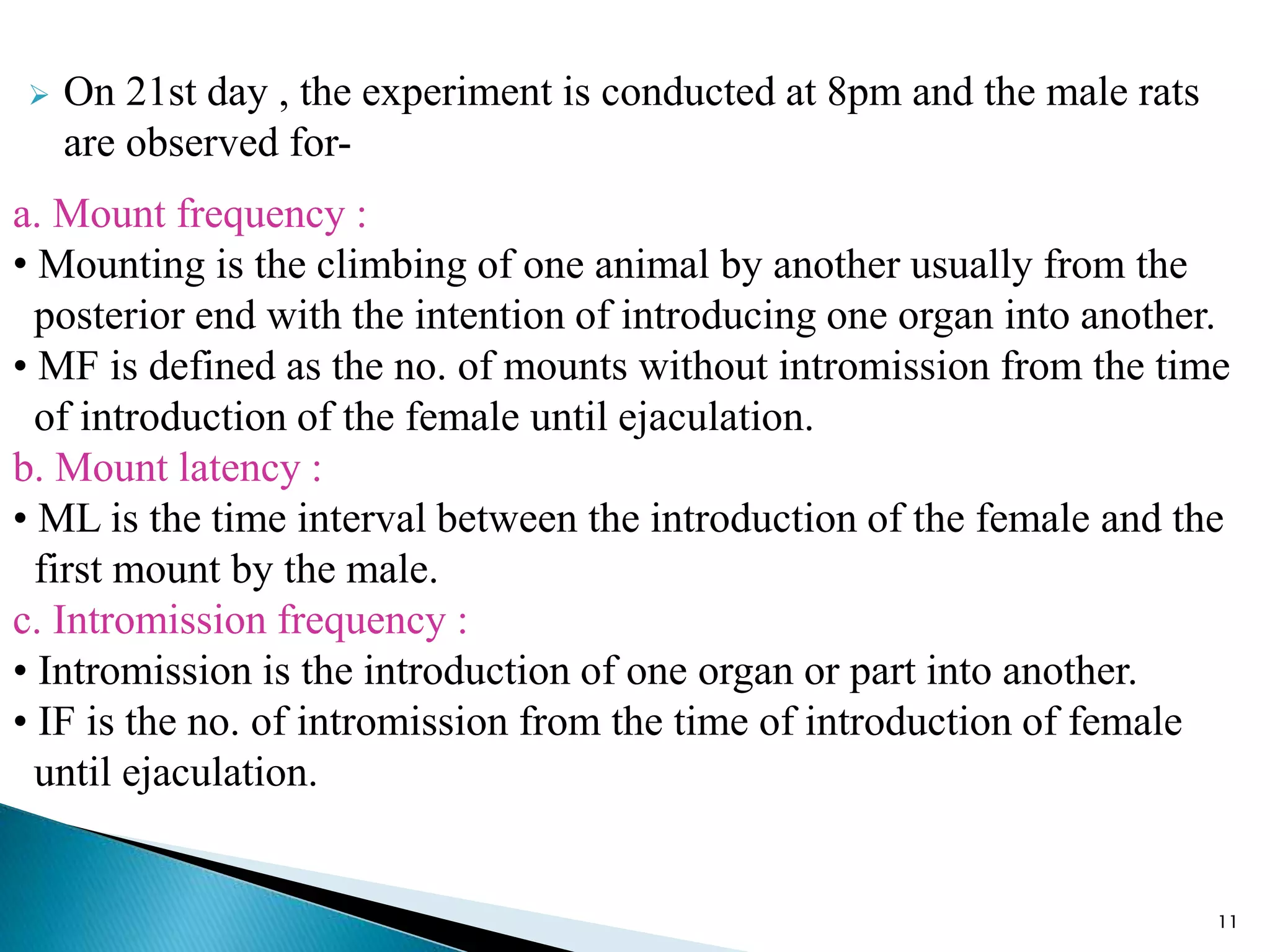
 On 21st day , the experiment is conducted at 8pm and the male rats
are observed for-
a. Mount frequency :
• Mounting is the climbing of one animal by another usually from the
posterior end with the intention of introducing one organ into another.
• MF is defined as the no. of mounts without intromission from the time
of introduction of the female until ejaculation.
b. Mount latency :
• ML is the time interval between the introduction of the female and the
first mount by the male.
c. Intromission frequency :
• Intromission is the introduction of one organ or part into another.
• IF is the no. of intromission from the time of introduction of female
until ejaculation.
11
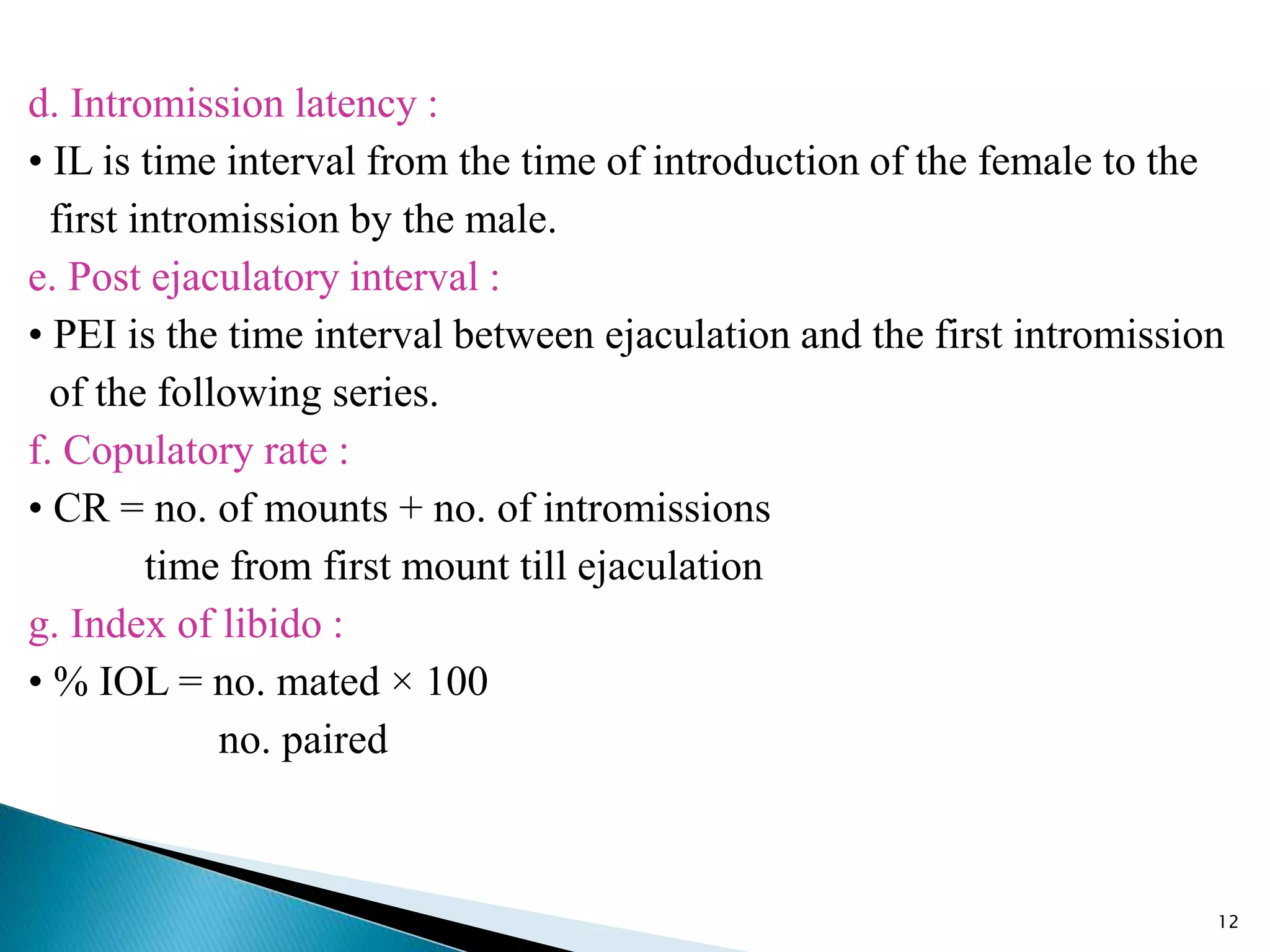
d. Intromission latency :
• IL is time interval from the time of introduction of the female to the
first intromission by the male.
e. Post ejaculatory interval :
• PEI is the time interval between ejaculation and the first intromission
of the following series.
f. Copulatory rate :
• CR = no. of mounts + no. of intromissions
time from first mount till ejaculation
g. Index of libido :
• % IOL = no. mated × 100
no. paired
12
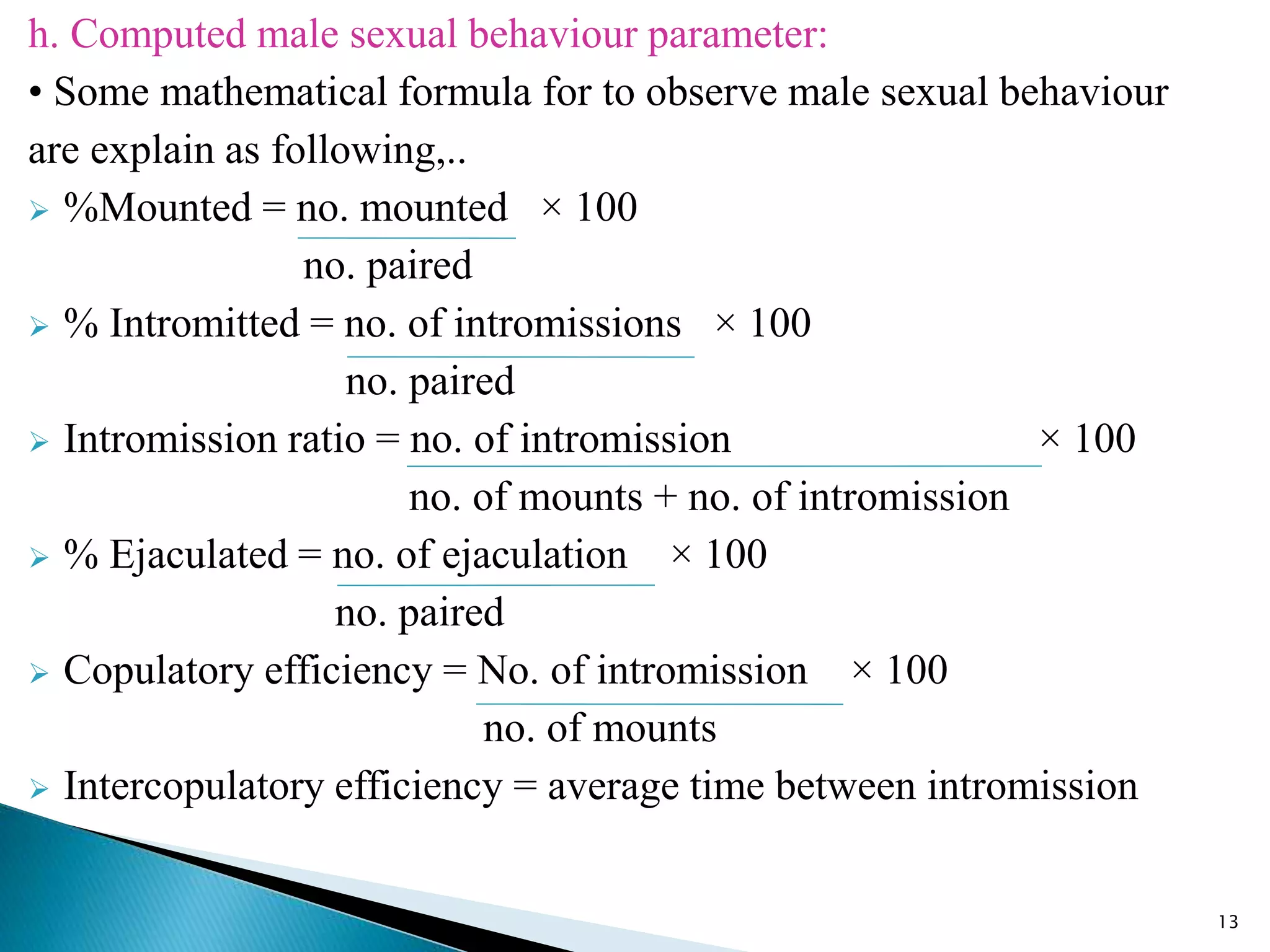
h. Computed male sexual behaviour parameter:
• Some mathematical formula for to observe male sexual behaviour
are explain as following,..
 %Mounted = no. mounted × 100
no. paired
 % Intromitted = no. of intromissions × 100
no. paired
 Intromission ratio = no. of intromission × 100
no. of mounts + no. of intromission
 % Ejaculated = no. of ejaculation × 100
no. paired
 Copulatory efficiency = No. of intromission × 100
no. of mounts
 Intercopulatory efficiency = average time between intromission
13
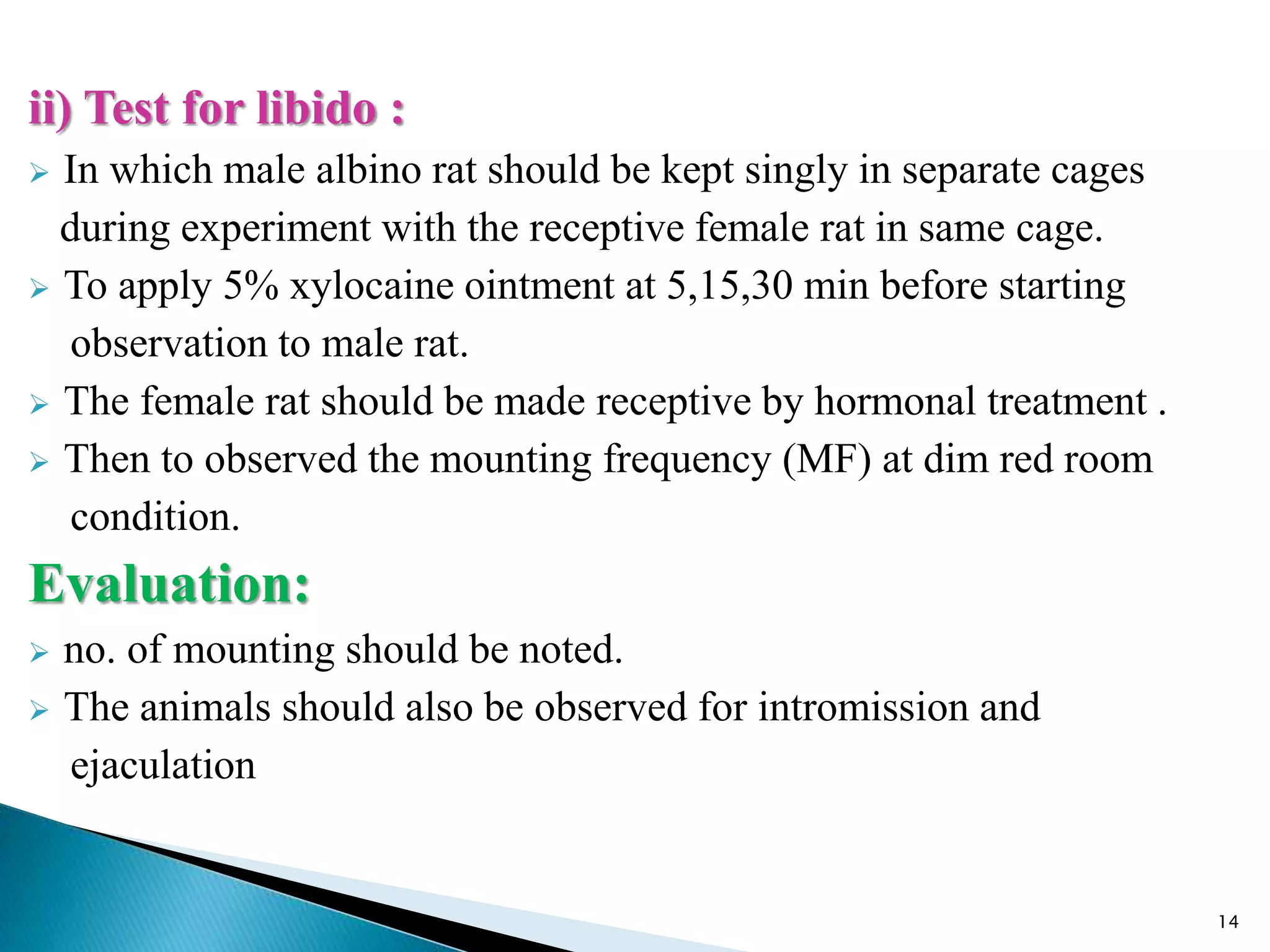
ii) Test for libido :
 In which male albino rat should be kept singly in separate cages
during experiment with the receptive female rat in same cage.
 To apply 5% xylocaine ointment at 5,15,30 min before starting
observation to male rat.
 The female rat should be made receptive by hormonal treatment .
 Then to observed the mounting frequency (MF) at dim red room
condition.
Evaluation:
 no. of mounting should be noted.
 The animals should also be observed for intromission and
ejaculation
14
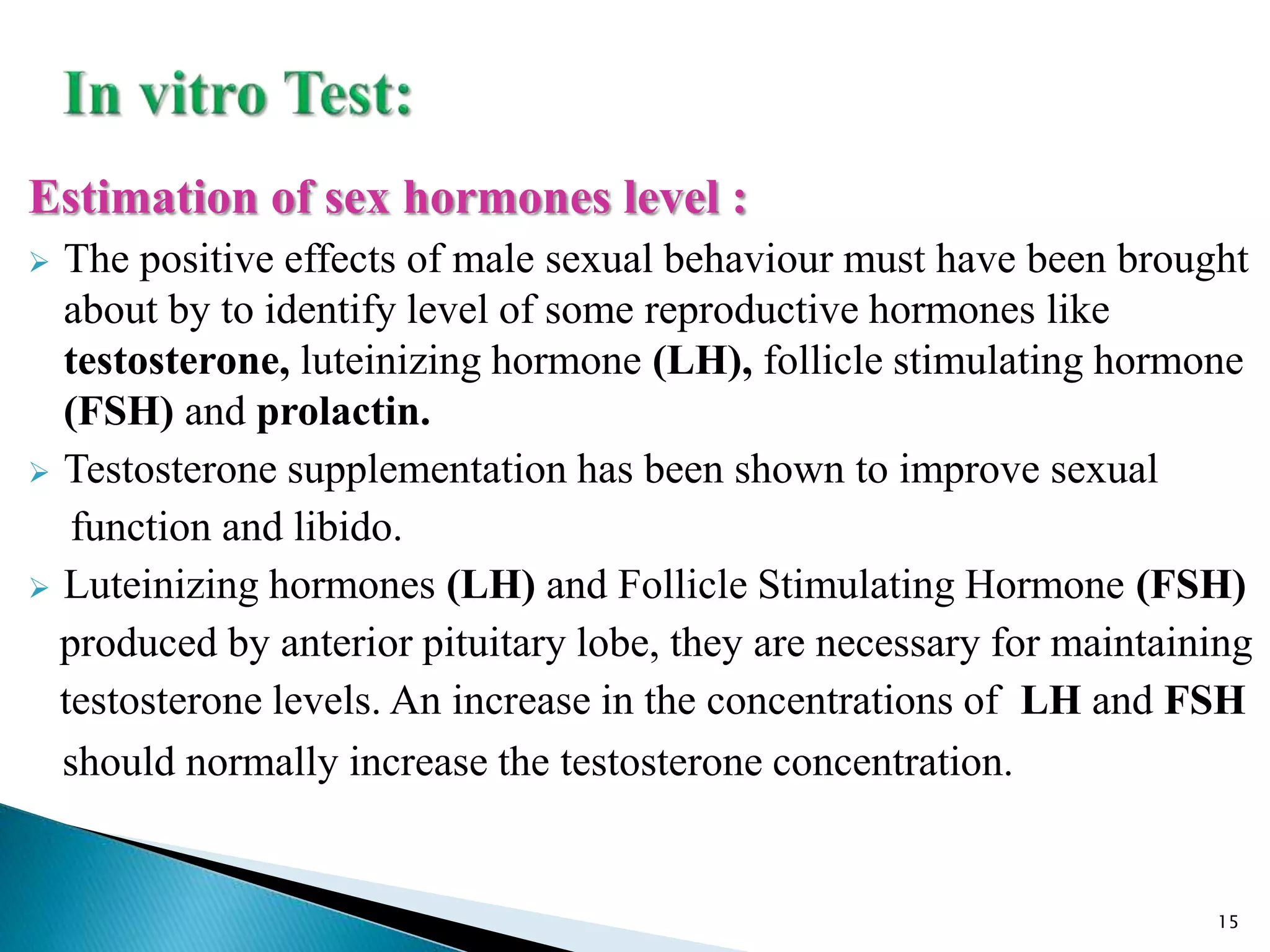
Estimation of sex hormones level :
 The positive effects of male sexual behaviour must have been brought
about by to identify level of some reproductive hormones like
testosterone, luteinizing hormone (LH), follicle stimulating hormone
(FSH) and prolactin.
 Testosterone supplementation has been shown to improve sexual
function and libido.
 Luteinizing hormones (LH) and Follicle Stimulating Hormone (FSH)
produced by anterior pituitary lobe, they are necessary for maintaining
testosterone levels. An increase in the concentrations of LH and FSH
should normally increase the testosterone concentration.
15
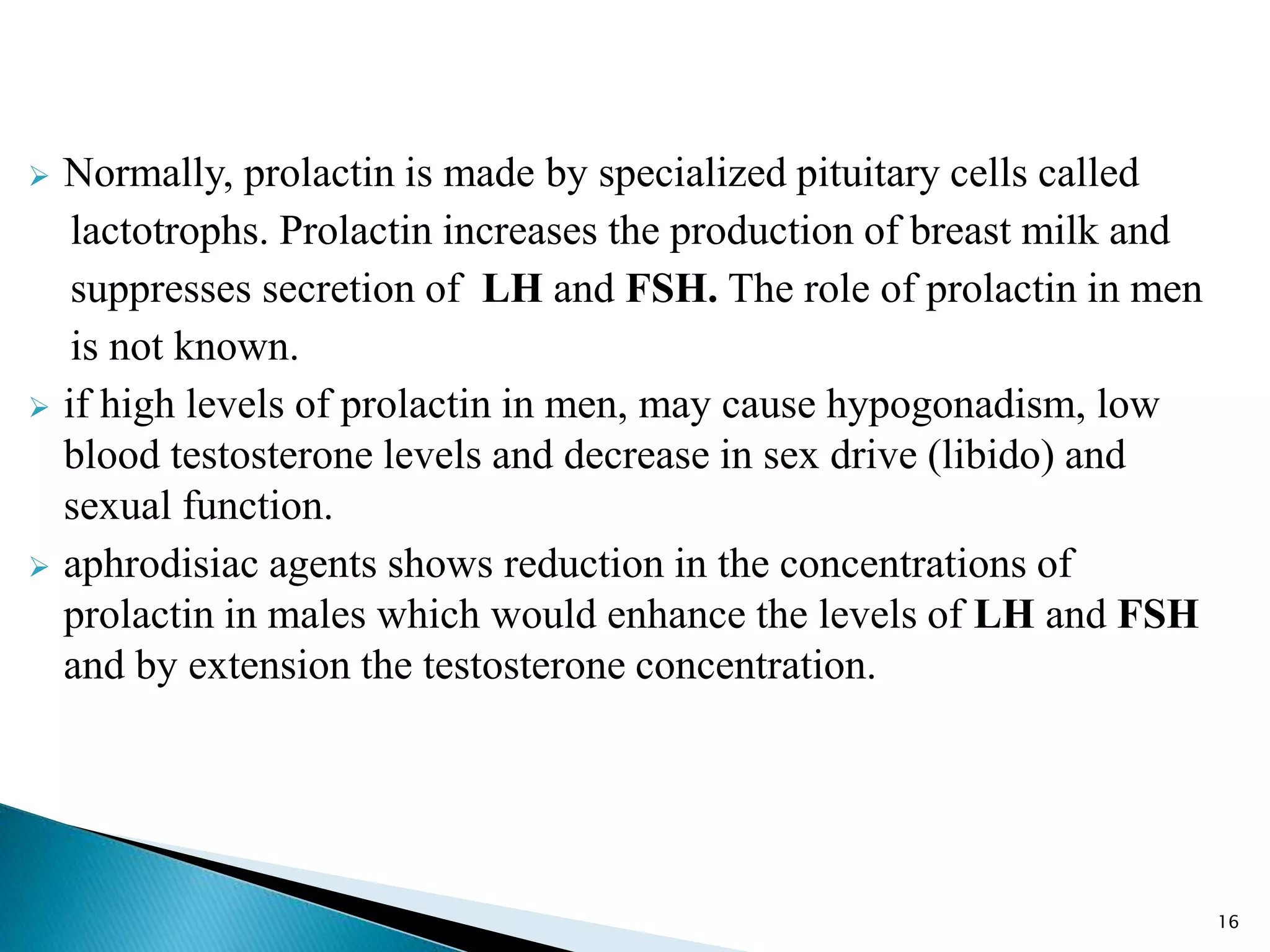
 Normally, prolactin is made by specialized pituitary cells called
lactotrophs. Prolactin increases the production of breast milk and
suppresses secretion of LH and FSH. The role of prolactin in men
is not known.
 if high levels of prolactin in men, may cause hypogonadism, low
blood testosterone levels and decrease in sex drive (libido) and
sexual function.
 aphrodisiac agents shows reduction in the concentrations of
prolactin in males which would enhance the levels of LH and FSH
and by extension the testosterone concentration.
16
Introduction:
 These are the chemical substances used to control the pregnancy.
These are also called oral contraceptives. The basic aim of anti
fertility drugs is to prevent conception or fertilization.
 Oral contraceptives belong to the class of natural products known
as steroids . These control the female menstrual cycle and
ovulation. The birth control pills are essentially a mixture of
esterogen and progesterone derivatives which are more potent than
the natural hormones .
 These common pills are used for a combination of progesterone,
norethindrone and estrogen ethynyl estradiol.
17
 Anti fertility drugs are actually synthetic hormones. When
progesterone pills are taken, the mucus in the cervix gets
thickened. This makes it very difficult for sperm to enter the uterus
and fertilize the egg and hence chances of pregnancy are reduced.
 Progesterone is a hormone which suppresses ovulation in women.
The synthetic progesterone derivatives are more potent as
compared to natural progesterone.
 Norethindrone is an example of synthetic progesterone which is
one of the most commonly used anti fertility drugs.
 Ethynyl estradiol is a combination of derivatives of estrogen and
progesterone.
18
Benefits of anti fertility drugs:
 Anti fertility drugs generally do not have many side effects, weight
gain is the only issue known to be reported. These drugs are very
useful if taken in proper dose, following are its significant benefits:
 They cause no interference in sexual activities and risk of
pregnancy is reduced.
 They might cause reduction in menstrual bleeding.
 They can be taken immediately after childbirth.
19
 1. Estimation of sex hormones
 2. Assessment of sperm viability and morphology
 3. Assessment of sperm motility and count
 4. Mating trial test
 5. Body and sex organ weights
 6. Quantification of fructose in seminal vesicle
 7. Abortifacient activity (Anti-implantation activity)
 8. Post-coital anti-fertility activity (Pre-implantation activity)
 9. Effect on oestrous cycle
 10. Anti-estrogenic activity
20
Estimation of sex hormones :
 Blood samples were collected from rats for estimations of
serum levels of sex hormones.
 Sera were separated into clean bottles, stored frozen and used
within 12 h of preparation for the estimation of testosterone,
estrogens level, prolactin, follicle stimulating hormone (FSH) and
luteinizing hormone (LH).
21
Assessment of Sperm Viability and Morphology:
 A viability study (percentage of live spermatozoa) was done using
eosin/ligroin stain. A drop of semen was squeezed onto a
microscope slide and two drops of the stain were added.
 Thin smears were then prepared and observed under a light
microscope at 100 magnification. Viable sperm remained colourless
while non-viable sperm stained red.
 The stained and the unstained sperm cells were counted using
40/100 microscope objectives and an average value for each was
recorded from which percentage viability was calculated.
 To determine the percentage of morphologically abnormal
spermatozoa, the slides stained with eosin–ligroin (5 slides/rat)
viewed under a light microscope at 100 magnifications.
22
Mating trial test:
 Mating trial test of male rats was done, 5 d before the termination
of the experiment.
 Each male rat was cohabitated overnight with protestors females
in a ratio of 1:2 and housed in a single cage.
 Positive mating was confirmed by presence of sperm and vaginal
plug in the vaginal smear the following morning.
 Each sperm positive female was kept under observation and the
resultant pregnancies were noted, when dam gave birth.
 The following reproductive parameters were then computed:
 Mating success % = number mated/number paired × 10;
 Fertility success % = number pregnant/number paired ×100;
 Fertility index = number pregnant/number mated × 100
23
 Article journal homepage: www.jadweb.org
 National Institutes of Health (NIH). Erectile Dysfunction.
[Online].
Available from: http://kidney.niddk.nih.gov/
kudiseases/pubs/impotence/index.htm
[Accessed on Mar 9th,2004].
 http://www.wikipedia .com
 Article journal homepage : www.jadweb.org
 http://www.wikipedia.com
24
25

Screening models for aphrodisiac agents and anti fertility agents

  • 1.
    1 Presented by P. RagaAmrutha Department Of Pharmacology Chalapathi Institute Of Pharmaceutical Sciences, Lam, Guntur.
  • 2.
     Aphrodisiac agents: Introduction  Guidelines  Drugs  Mechanism and purpose  side effects  Screening models  Anti fertility agents:  Introduction  Benefits  Screening models 2
  • 3.
     Aphrodisiac isthe word derived from Aphrodite , the Greek word Goodness of Sexual, Love and Beauty .  An aphrodisiac is defined as agent (food & drug) that arouses (increase) sexual desire.  The major drawback (completely opposite action) of this agents are Erectile dysfunction.  So, the basic concept of penile erection were obtain from different in-vivo & in- vitro animals models.  Before study on animal models Some guidelines must be follow during experiment which explain as… 3
  • 4.
     Male animalswere kept individually but female animals were kept in groups.  Training of each male for 15 min. at a time was performed until sexual behaviour was elicited and when the behaviour was noticed, males were exposed to receptive females (1male with 5 females ).  Repeated training to overcome the lack of sexual response in the presence of observers.  The study was conducted in a silent room under dim red light.  Any jerking movements of the mating area was avoided to enable the rats to chase each other.  Cleaning of the mating area was performed after each trial, since the urine trails left by one rat might alter the sexual behaviour of the next rat. 4
  • 5.
     Sildenafil citrate Arginine  Testosterone  Crocin  Phenethylamines  Amphetamine  Methamphetamine 5
  • 6.
     These drugsact by enhancing the sex organ sensation and performance. They improve the blood flow to the male sex organs, thus improving the male libido. A similar response in women may also produce an increased sexual stimulation. 6
  • 7.
     To increaselow libido.  To improve sexual performance.  In the treatment of impotence  To treat physiological problems that affect sexual activity 7
  • 8.
     arrhythmia ofthe heart  suicidal tendencies  mental disorders  tremors  headaches  fainting facial flushing  upset stomach  blurred vision  sensitivity to light usually occur with high doses. 8
  • 9.
    A) Physical orbehavioral methods ( In vivo Method) i) Mating behavior test ii) Libido test iii) Potency test iv) Orientation activity test v) Sexual and vital organ weight test B) Biochemical or Hormonal Methods ( In vitro Method) i) Estimation of cholesterol level ii) Estimation of sex hormones level iii) Assay for nitric oxide synthase iv) Assay for androgen receptor protein 9
  • 10.
    i) Mating behaviortest:  Healthy and sexually experienced male rats (200-300 gm) with brick sexual activity are divided into three groups (n=6)  Group-I , receives distilled water (10ml/kg, p.o.)  Group-II, receives testing agent daily for 21 days.  Group-III, receives standard drug i.e. Sildenafil (5mg/kg, p.o.) one hour prior to the experimentation.  Than all the animals are exposed to dim light (1 w fluorescent tube in a laboratory of 14’ x14’) at the stipulated time of testing daily for 6 days prior the test.  Female rates treated with ethinyl estradioal (100μg/animal p.o.) 48hrs and with progesterone (1mg/animal, s.c.) 6hrs before pairing (1:1 ratio) 10
  • 11.
     On 21stday , the experiment is conducted at 8pm and the male rats are observed for- a. Mount frequency : • Mounting is the climbing of one animal by another usually from the posterior end with the intention of introducing one organ into another. • MF is defined as the no. of mounts without intromission from the time of introduction of the female until ejaculation. b. Mount latency : • ML is the time interval between the introduction of the female and the first mount by the male. c. Intromission frequency : • Intromission is the introduction of one organ or part into another. • IF is the no. of intromission from the time of introduction of female until ejaculation. 11
  • 12.
    d. Intromission latency: • IL is time interval from the time of introduction of the female to the first intromission by the male. e. Post ejaculatory interval : • PEI is the time interval between ejaculation and the first intromission of the following series. f. Copulatory rate : • CR = no. of mounts + no. of intromissions time from first mount till ejaculation g. Index of libido : • % IOL = no. mated × 100 no. paired 12
  • 13.
    h. Computed malesexual behaviour parameter: • Some mathematical formula for to observe male sexual behaviour are explain as following,..  %Mounted = no. mounted × 100 no. paired  % Intromitted = no. of intromissions × 100 no. paired  Intromission ratio = no. of intromission × 100 no. of mounts + no. of intromission  % Ejaculated = no. of ejaculation × 100 no. paired  Copulatory efficiency = No. of intromission × 100 no. of mounts  Intercopulatory efficiency = average time between intromission 13
  • 14.
    ii) Test forlibido :  In which male albino rat should be kept singly in separate cages during experiment with the receptive female rat in same cage.  To apply 5% xylocaine ointment at 5,15,30 min before starting observation to male rat.  The female rat should be made receptive by hormonal treatment .  Then to observed the mounting frequency (MF) at dim red room condition. Evaluation:  no. of mounting should be noted.  The animals should also be observed for intromission and ejaculation 14
  • 15.
    Estimation of sexhormones level :  The positive effects of male sexual behaviour must have been brought about by to identify level of some reproductive hormones like testosterone, luteinizing hormone (LH), follicle stimulating hormone (FSH) and prolactin.  Testosterone supplementation has been shown to improve sexual function and libido.  Luteinizing hormones (LH) and Follicle Stimulating Hormone (FSH) produced by anterior pituitary lobe, they are necessary for maintaining testosterone levels. An increase in the concentrations of LH and FSH should normally increase the testosterone concentration. 15
  • 16.
     Normally, prolactinis made by specialized pituitary cells called lactotrophs. Prolactin increases the production of breast milk and suppresses secretion of LH and FSH. The role of prolactin in men is not known.  if high levels of prolactin in men, may cause hypogonadism, low blood testosterone levels and decrease in sex drive (libido) and sexual function.  aphrodisiac agents shows reduction in the concentrations of prolactin in males which would enhance the levels of LH and FSH and by extension the testosterone concentration. 16
  • 17.
    Introduction:  These arethe chemical substances used to control the pregnancy. These are also called oral contraceptives. The basic aim of anti fertility drugs is to prevent conception or fertilization.  Oral contraceptives belong to the class of natural products known as steroids . These control the female menstrual cycle and ovulation. The birth control pills are essentially a mixture of esterogen and progesterone derivatives which are more potent than the natural hormones .  These common pills are used for a combination of progesterone, norethindrone and estrogen ethynyl estradiol. 17
  • 18.
     Anti fertilitydrugs are actually synthetic hormones. When progesterone pills are taken, the mucus in the cervix gets thickened. This makes it very difficult for sperm to enter the uterus and fertilize the egg and hence chances of pregnancy are reduced.  Progesterone is a hormone which suppresses ovulation in women. The synthetic progesterone derivatives are more potent as compared to natural progesterone.  Norethindrone is an example of synthetic progesterone which is one of the most commonly used anti fertility drugs.  Ethynyl estradiol is a combination of derivatives of estrogen and progesterone. 18
  • 19.
    Benefits of antifertility drugs:  Anti fertility drugs generally do not have many side effects, weight gain is the only issue known to be reported. These drugs are very useful if taken in proper dose, following are its significant benefits:  They cause no interference in sexual activities and risk of pregnancy is reduced.  They might cause reduction in menstrual bleeding.  They can be taken immediately after childbirth. 19
  • 20.
     1. Estimationof sex hormones  2. Assessment of sperm viability and morphology  3. Assessment of sperm motility and count  4. Mating trial test  5. Body and sex organ weights  6. Quantification of fructose in seminal vesicle  7. Abortifacient activity (Anti-implantation activity)  8. Post-coital anti-fertility activity (Pre-implantation activity)  9. Effect on oestrous cycle  10. Anti-estrogenic activity 20
  • 21.
    Estimation of sexhormones :  Blood samples were collected from rats for estimations of serum levels of sex hormones.  Sera were separated into clean bottles, stored frozen and used within 12 h of preparation for the estimation of testosterone, estrogens level, prolactin, follicle stimulating hormone (FSH) and luteinizing hormone (LH). 21
  • 22.
    Assessment of SpermViability and Morphology:  A viability study (percentage of live spermatozoa) was done using eosin/ligroin stain. A drop of semen was squeezed onto a microscope slide and two drops of the stain were added.  Thin smears were then prepared and observed under a light microscope at 100 magnification. Viable sperm remained colourless while non-viable sperm stained red.  The stained and the unstained sperm cells were counted using 40/100 microscope objectives and an average value for each was recorded from which percentage viability was calculated.  To determine the percentage of morphologically abnormal spermatozoa, the slides stained with eosin–ligroin (5 slides/rat) viewed under a light microscope at 100 magnifications. 22
  • 23.
    Mating trial test: Mating trial test of male rats was done, 5 d before the termination of the experiment.  Each male rat was cohabitated overnight with protestors females in a ratio of 1:2 and housed in a single cage.  Positive mating was confirmed by presence of sperm and vaginal plug in the vaginal smear the following morning.  Each sperm positive female was kept under observation and the resultant pregnancies were noted, when dam gave birth.  The following reproductive parameters were then computed:  Mating success % = number mated/number paired × 10;  Fertility success % = number pregnant/number paired ×100;  Fertility index = number pregnant/number mated × 100 23
  • 24.
     Article journalhomepage: www.jadweb.org  National Institutes of Health (NIH). Erectile Dysfunction. [Online]. Available from: http://kidney.niddk.nih.gov/ kudiseases/pubs/impotence/index.htm [Accessed on Mar 9th,2004].  http://www.wikipedia .com  Article journal homepage : www.jadweb.org  http://www.wikipedia.com 24
  • 25.