
SPINAL CORD ISCHEMIA IN AORTIC
INTERVENTION
F2 Parach Sirisriro
30th Oct 2018
OUTLINE
• Introduction
• Anatomy and spinal cord collateral network
• Pathophysiology of spinal cord injury
• Prevention of spinal cord injury
Minimize spinal cord ischemia time
Increase tolerance to ischemia
Augmentation of spinal cord
perfusion
Early detection of spinal cord
ischemia
• Management of Spinal cord ischemia
• Conclusion
REFERENCE
JOURNAL
• Uchino, G., et al. (2017). "Spinal cord protection during thoracoabdominal aortic replacement:
spinal cord perfusion maintenance." Interactive cardiovascular and thoracic surgery 24(5): 708-
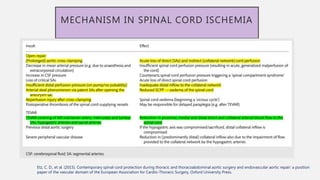
713.
• Drinkwater, S., et al. (2010). "The incidence of spinal cord ischaemia following thoracic and
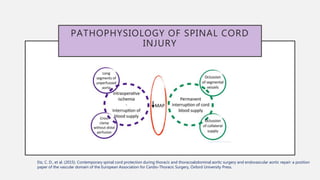
thoracoabdominal aortic endovascular intervention." European Journal of Vascular and
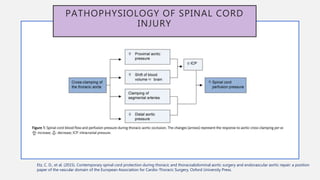
Endovascular Surgery 40(6): 729-735.
• Etz, C. D., et al. (2015). Contemporary spinal cord protection during thoracic and
thoracoabdominal aortic surgery and endovascular aortic repair: a position paper of the vascular
domain of the European Association for Cardio-Thoracic Surgery, Oxford University Press.
• Bisdas, T., et al. (2015). "Risk factors for spinal cord ischemia after endovascular repair of
thoracoabdominal aortic aneurysms." Journal of vascular surgery 61(6): 1408-1416.
• Scott, D. and M. Denton (2016). "Spinal cord protection in aortic endovascular surgery." BJA: British Journal
of Anaesthesia 117(suppl_2): ii26-ii31.
• Ullery, B. W., et al. (2011). "Risk factors, outcomes, and clinical manifestations of spinal cord ischemia
following thoracic endovascular aortic repair." Journal of vascular surgery 54(3): 677-684.
• Scali, S. T., et al. (2018). "Implementation of a bundled protocol significantly reduces risk of spinal cord
ischemia after branched or fenestrated endovascular aortic repair." Journal of vascular surgery 67(2): 409-
423. e404.
• Fedorow, C. A., Moon, M. C., Mutch, W. A. C., & Grocott, H. P. (2010). Lumbar cerebrospinal fluid drainage for
thoracoabdominal aortic surgery: Rationale and practical considerations for management. Anesthesia and
Analgesia, 111(1), 46. 10.1213/ANE.0b013e3181ddddd
• Youngblood, S. C., et al. (2013). "Complications of cerebrospinal fluid drainage after thoracic aortic surgery:
a review of 504 patients over 5 years. " The Journal of thoracic and cardiovascular surgery 146(1): 166-171.
• Rong, L., et al. (2018). "Cerebrospinal-fluid drain-related complications in patients undergoing open and
endovascular repairs of thoracic and thoraco-abdominal aortic pathologies: a systematic review and meta-
analysis." British journal of anaesthesia
JOURNAL
ANATOMY OF SPINAL CORD BLOOD SUPPLY
The spinal cord receives blood from
spinal arteries derived from branches of
larger arteries
These major arteries include the
following:
• Vertebral arteries: arising from the
subclavian arteries in the neck.
• Ascending cervical arteries: arising
from a branch of the subclavian arteries.
• Posterior intercostal arteries: arising
from the thoracic aorta.
• Lumbar arteries: arising from the
abdominal aorta.
• Lateral sacral arteries: arising from
pelvic internal iliac arteries.
Gustavo S.(2017). Endovascular Aortic Repair [electronic resource] : Current Techniques with
Fenestrated, Branched and Parallel Stent-Grafts. Chapter 47
ANATOMY OF SPINAL
CORD BLOOD SUPPLY
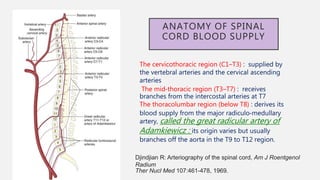
The cervicothoracic region (C1–T3) : supplied by
the vertebral arteries and the cervical ascending
arteries
The mid‐thoracic region (T3–T7) : receives
branches from the intercostal arteries at T7
The thoracolumbar region (below T8) : derives its
blood supply from the major radiculo‐medullary
artery, called the great radicular artery of
Adamkiewicz : its origin varies but usually
branches off the aorta in the T9 to T12 region.
Djindjian R: Arteriography of the spinal cord, Am J Roentgenol
Radium
Ther Nucl Med 107:461-478, 1969.
ARTERY OF ADAMKIEWICZ
• Watershed region- Thoraco
lumbar segment.
Blood supply derived from large
radicular arteries called
ARM (Artery of Adamkiewicz)
Origin
T9-T12 – in 75%
T8-L3 – in 15%
L1-L2 – in 10% of patients.
Gustavo S.(2017). Endovascular Aortic Repair [electronic resource] : Current Techniques with
Fenestrated, Branched and Parallel Stent-Grafts. Chapter 47
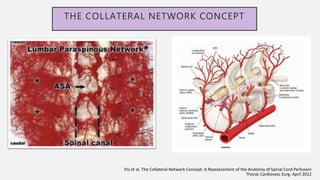
THE COLLATERAL NETWORK CONCEPT
Etz et al. The Collateral Network Concept: A Reassessment of the Anatomy of Spinal Cord Perfusion
Thorac Cardiovasc Surg. April 2012
SPINAL CORD
ISCHEMIA
Gustavo S.(2017). Endovascular Aortic Repair [electronic resource] : Current Techniques with
Fenestrated, Branched and Parallel Stent-Grafts. Chapter 47
SPINAL CORD ISCHEMIA
• Uncommon condition
• Sudden onset of paralysis,
sensory loss,
urinary and bowel dysfunction
•Monophasic attack
•Severe prognosis with permanent and disabling sequelae
Salvador de la Barrera et al. Spinal Cord 2001
Bisdas T et al. J Vasc Surg 2015
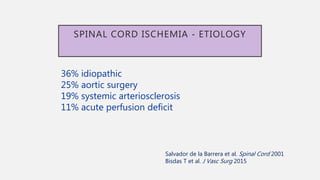
SPINAL CORD ISCHEMIA ‐ ETIOLOGY
36% idiopathic
25% aortic surgery
19% systemic arteriosclerosis
11% acute perfusion deficit
Salvador de la Barrera et al. Spinal Cord 2001
Bisdas T et al. J Vasc Surg 2015
SPINAL CORD ISCHEMIA IN
AORTIC INTERVENTION
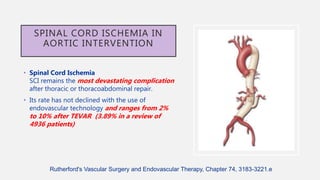
• Spinal Cord Ischemia
SCI remains the most devastating complication
after thoracic or thoracoabdominal repair.
• Its rate has not declined with the use of
endovascular technology and ranges from 2%
to 10% after TEVAR (3.89% in a review of
4936 patients)
Rutherford's Vascular Surgery and Endovascular Therapy, Chapter 74, 3183-3221.e
• Immediate-direct result of hypo-perfusion and secondary
hypoxic damage.
• Delayed complications can develop between 1 & 21 days
following surgery.
• Results from reperfusion hyperemia and free radical
generation – edema of the cord –regional hypoperfusion
SPINAL CORD ISCHEMIA
Wan IYP, Angelini GD, Bryan AJ, Ryder I, Underwood MJ. prevention of spinal cord ischemia during descending thoracic and
thoracoabdominal surgery. Eur J Cardio-thorac Surg 2001;19:203-13.
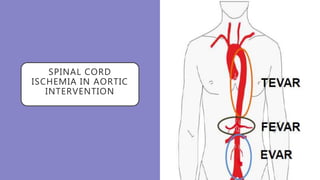
SPINAL CORD
ISCHEMIA IN AORTIC
INTERVENTION
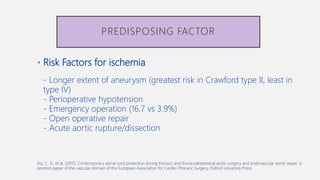
• Risk Factors for ischemia
- Longer extent of aneurysm (greatest risk in Crawford type II, least in
type IV)
- Perioperative hypotension
- Emergency operation (16.7 vs 3.9%)
- Open operative repair
- Acute aortic rupture/dissection
PREDISPOSING FACTOR
Etz, C. D., et al. (2015). Contemporary spinal cord protection during thoracic and thoracoabdominal aortic surgery and endovascular aortic repair: a
position paper of the vascular domain of the European Association for Cardio-Thoracic Surgery, Oxford University Press.
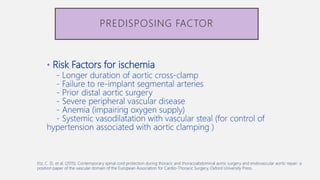
• Risk Factors for ischemia
- Longer duration of aortic cross-clamp
- Failure to re-implant segmental arteries
- Prior distal aortic surgery
- Severe peripheral vascular disease
- Anemia (impairing oxygen supply)
- Systemic vasodilatation with vascular steal (for control of
hypertension associated with aortic clamping )
PREDISPOSING FACTOR
Etz, C. D., et al. (2015). Contemporary spinal cord protection during thoracic and thoracoabdominal aortic surgery and endovascular aortic repair: a
position paper of the vascular domain of the European Association for Cardio-Thoracic Surgery, Oxford University Press.
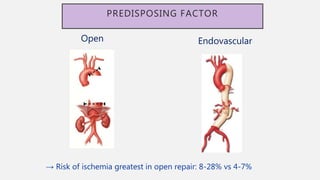
PREDISPOSING FACTOR
→ Risk of ischemia greatest in open repair: 8-28% vs 4-7%
Open Endovascular
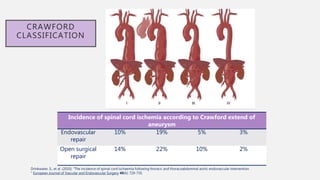
CRAWFORD
CLASSIFICATION
Drinkwater, S., et al. (2010). "The incidence of spinal cord ischaemia following thoracic and thoracoabdominal aortic endovascular intervention.
" European Journal of Vascular and Endovascular Surgery 40(6): 729-735.
Incidence of spinal cord ischemia according to Crawford extend of
aneurysm
Endovascular
repair
10% 19% 5% 3%
Open surgical
repair
14% 22% 10% 2%
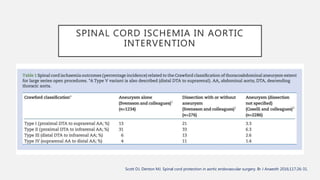
SPINAL CORD ISCHEMIA IN AORTIC
INTERVENTION
Scott DJ, Denton MJ. Spinal cord protection in aortic endovascular surgery. Br J Anaesth 2016;117:26-31.
MECHANISM IN SPINAL CORD ISCHEMIA
Etz, C. D., et al. (2015). Contemporary spinal cord protection during thoracic and thoracoabdominal aortic surgery and endovascular aortic repair: a position
paper of the vascular domain of the European Association for Cardio-Thoracic Surgery, Oxford University Press.
TEVAR
- Large profile femoral
sheath
- The use of femoral
conduits For sheath
access
Gustavo S.(2017). Endovascular Aortic Repair [electronic resource] : Current Techniques with
Fenestrated, Branched and Parallel Stent-Grafts. Chapter 47
PATHOPHYSIOLOGY OF SPINAL CORD
INJURY
Etz, C. D., et al. (2015). Contemporary spinal cord protection during thoracic and thoracoabdominal aortic surgery and endovascular aortic repair: a position
paper of the vascular domain of the European Association for Cardio-Thoracic Surgery, Oxford University Press.
PATHOPHYSIOLOGY OF SPINAL CORD
INJURY
Etz, C. D., et al. (2015). Contemporary spinal cord protection during thoracic and thoracoabdominal aortic surgery and endovascular aortic repair: a position
paper of the vascular domain of the European Association for Cardio-Thoracic Surgery, Oxford University Press.
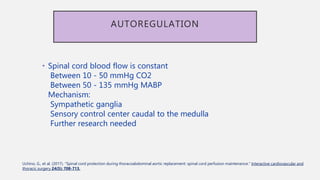
AUTOREGULATION
• Spinal cord blood flow is constant
Between 10 - 50 mmHg CO2
Between 50 - 135 mmHg MABP
Mechanism:
Sympathetic ganglia
Sensory control center caudal to the medulla
Further research needed
Uchino, G., et al. (2017). "Spinal cord protection during thoracoabdominal aortic replacement: spinal cord perfusion maintenance." Interactive cardiovascular and
thoracic surgery 24(5): 708-713.
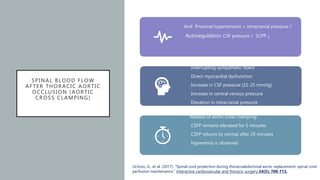
SPINAL BLOOD FLOW AFTER THORACIC AORTIC
OCCLUSION (AORTIC CROSS CLAMPING)
Spinal cord perfusion pressure (SCPP )=
MABP – CSF pressure
> 50 – 60 mmHg to protect spinal cord
from ischemia
Normal CSF pressure = 13 – 15 mmHg
Temporary aortic cross-clamping decreases
SCBF and distal organ perfusion
Distal hypotension
Proximal hypertension
Increase in left ventricle afterload
Gustavo S.(2017). Endovascular Aortic Repair [electronic resource] : Current Techniques with Fenestrated, Branched and Parallel Stent-Grafts. Chapter 47
SPINAL BLOOD FLOW
AFTER THORACIC AORTIC
OCCLUSION (AORTIC
CROSS CLAMPING)
AoX Proximal hypertension + intracranial pressure ↑
Autoregulation: CSF pressure ↑ SCPP ↓
Spinal cord injury hypotension
Interrupting sympathetic fibers
Direct myocardial dysfunction
Increase in CSF pressure (21-25 mmHg)
Increase in central venous pressure
Elevation in intracranial pressure
Release of aortic cross-clamping:
CSFP remains elevated for 5 minutes
CSFP returns to normal after 25 minutes
Hyperemia is observed
Uchino, G., et al. (2017). "Spinal cord protection during thoracoabdominal aortic replacement: spinal cord
perfusion maintenance." Interactive cardiovascular and thoracic surgery 24(5): 708-713.
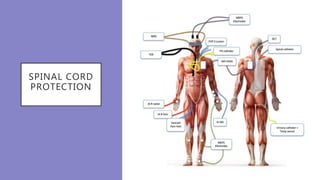
SPINAL CORD
PROTECTION
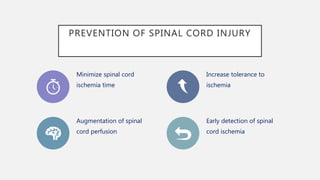
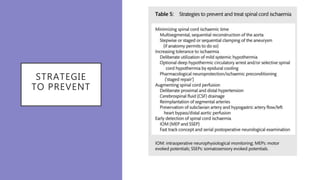
PREVENTION OF SPINAL CORD INJURY
Minimize spinal cord
ischemia time
Increase tolerance to
ischemia
Augmentation of spinal
cord perfusion
Early detection of spinal
cord ischemia
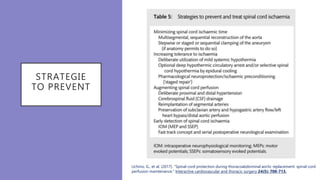
STRATEGIE
TO PREVENT
Uchino, G., et al. (2017). "Spinal cord protection during thoracoabdominal aortic replacement: spinal cord
perfusion maintenance." Interactive cardiovascular and thoracic surgery 24(5): 708-713.
MINIMIZE SPINAL CORD ISCHEMIA TIME
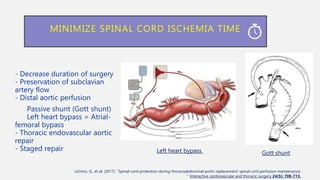
- Decrease duration of surgery
- Preservation of subclavian
artery flow
- Distal aortic perfusion
Passive shunt (Gott shunt)
Left heart bypass = Atrial-
femoral bypass
- Thoracic endovascular aortic
repair
- Staged repair
Gott shuntLeft heart bypass
Uchino, G., et al. (2017). "Spinal cord protection during thoracoabdominal aortic replacement: spinal cord perfusion maintenance.
" Interactive cardiovascular and thoracic surgery 24(5): 708-713.
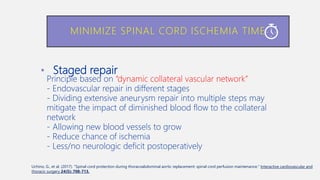
• Staged repair
Principle based on “dynamic collateral vascular network”
- Endovascular repair in different stages
- Dividing extensive aneurysm repair into multiple steps may
mitigate the impact of diminished blood flow to the collateral
network
- Allowing new blood vessels to grow
- Reduce chance of ischemia
- Less/no neurologic deficit postoperatively
MINIMIZE SPINAL CORD ISCHEMIA TIME
Uchino, G., et al. (2017). "Spinal cord protection during thoracoabdominal aortic replacement: spinal cord perfusion maintenance." Interactive cardiovascular and
thoracic surgery 24(5): 708-713.
INCREASE TOLERANCE TO ISCHEMIA
- Deliberate mild systemic hypothermia
- Deep hypothermic circulatory arrest
- Selective spinal cord hypothermia by
epidural cooling
Pharmacologic neuroprotection
CSF drainage
Uchino, G., et al. (2017). "Spinal cord protection during thoracoabdominal aortic replacement: spinal cord perfusion maintenance.
" Interactive cardiovascular and thoracic surgery 24(5): 708-713.
• Deliberate mild systemic hypothermia
= 32-34°C : * Hypothermia is the only intervention in humans
has been proven consistently to be effective for protecting the
CNS
Disadvantage : arrythmias, coagulation abnormalities
* Allowing body core temperature to decrease after induction
→ Re-warming after reperfusion: gradually, avoid systemic
hyperthermia
INCREASE TOLERANCE TO ISCHEMIA
Uchino, G., et al. (2017). "Spinal cord protection during thoracoabdominal aortic replacement: spinal cord perfusion maintenance.
" Interactive cardiovascular and thoracic surgery 24(5): 708-713.
• Deep hypothermic circulatory arrest
= 10-18°C → requires Cardiopulmonary bypass
* For TAAA that extends into the aortic branch requiring temporary
temporary interruption of cerebral blood flow
* Risks associated :
→ stroke caused by cerebral atheroembolism
→ postoperative encephalopathy
→ cerebral hyperthermia during re-warming
INCREASE TOLERANCE TO ISCHEMIA
Uchino, G., et al. (2017). "Spinal cord protection during thoracoabdominal aortic replacement: spinal cord perfusion maintenance.
" Interactive cardiovascular and thoracic surgery 24(5): 708-713.
INCREASE TOLERANCE TO ISCHEMIA
Gustavo S.(2017). Endovascular Aortic Repair [electronic resource] : Current Techniques with Fenestrated, Branched and Parallel Stent-Grafts. Chapter 47
AUGMENTATION OF SPINAL CORD PERFUSION
• Deliberate hypertension
- MAP 80-100 mmHg
- CVD < CSF pressure
- For at least 24h-48h postoperatively
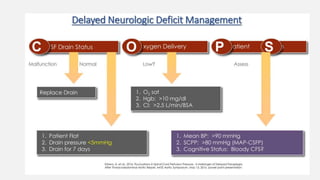
• Lumbar cerebrospinal fluid (CSF) drainage
- CSF pressure < 10 -15mmHg
- CSF drainage < 25 ml/hr to avoid complications
(intracranial/subdural
hematoma)
• Re-implantation of intercostals and lumbar segmental
arteries
Uchino, G., et al. (2017). "Spinal cord protection during thoracoabdominal aortic replacement: spinal cord perfusion maintenance.
" Interactive cardiovascular and thoracic surgery 24(5): 708-713.
LUMBAR CEREBROSPINAL FLUID (CSF)
DRAINAGE
Gustavo S.(2017). Endovascular Aortic Repair [electronic resource] : Current Techniques with
Fenestrated, Branched and Parallel Stent-Grafts. Chapter 47
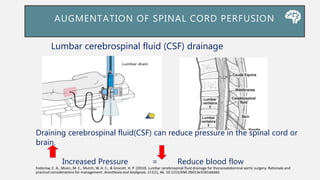
Draining cerebrospinal fluid(CSF) can reduce pressure in the spinal cord or
brain.
Increased Pressure = Reduce blood flow
Lumbar cerebrospinal fluid (CSF) drainage
AUGMENTATION OF SPINAL CORD PERFUSION
Fedorow, C. A., Moon, M. C., Mutch, W. A. C., & Grocott, H. P. (2010). Lumbar cerebrospinal fluid drainage for thoracoabdominal aortic surgery: Rationale and
practical considerations for management. Anesthesia and Analgesia, 111(1), 46. 10.1213/ANE.0b013e3181ddddd
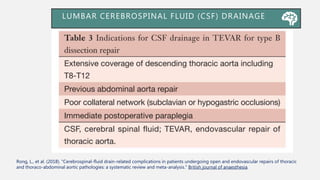
LUMBAR CEREBROSPINAL FLUID (CSF) DRAINAGE
Rong, L., et al. (2018). "Cerebrospinal-fluid drain-related complications in patients undergoing open and endovascular repairs of thoracic
and thoraco-abdominal aortic pathologies: a systematic review and meta-analysis." British journal of anaesthesia.
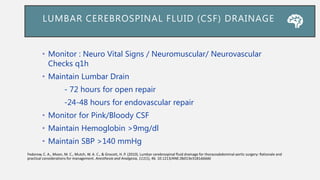
• Monitor : Neuro Vital Signs / Neuromuscular/ Neurovascular
Checks q1h
• Maintain Lumbar Drain
- 72 hours for open repair
-24-48 hours for endovascular repair
• Monitor for Pink/Bloody CSF
• Maintain Hemoglobin >9mg/dl
• Maintain SBP >140 mmHg
LUMBAR CEREBROSPINAL FLUID (CSF) DRAINAGE
Fedorow, C. A., Moon, M. C., Mutch, W. A. C., & Grocott, H. P. (2010). Lumbar cerebrospinal fluid drainage for thoracoabdominal aortic surgery: Rationale and
practical considerations for management. Anesthesia and Analgesia, 111(1), 46. 10.1213/ANE.0b013e3181ddddd
LUMBAR CEREBROSPINAL FLUID (CSF) DRAINAGE
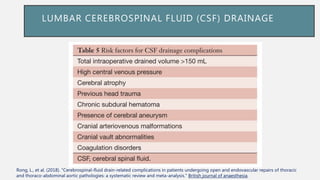
Rong, L., et al. (2018). "Cerebrospinal-fluid drain-related complications in patients undergoing open and endovascular repairs of thoracic
and thoraco-abdominal aortic pathologies: a systematic review and meta-analysis." British journal of anaesthesia.
LUMBAR CEREBROSPINAL FLUID (CSF) DRAINAGE
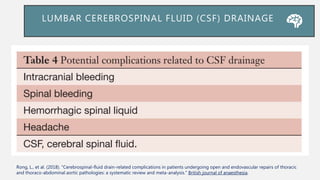
Rong, L., et al. (2018). "Cerebrospinal-fluid drain-related complications in patients undergoing open and endovascular repairs of thoracic
and thoraco-abdominal aortic pathologies: a systematic review and meta-analysis." British journal of anaesthesia.
COMPLICATION OF SPINAL DRAINAGE
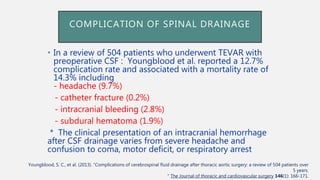
• In a review of 504 patients who underwent TEVAR with
preoperative CSF : Youngblood et al. reported a 12.7%
complication rate and associated with a mortality rate of
14.3% including
- headache (9.7%)
- catheter fracture (0.2%)
- intracranial bleeding (2.8%)
- subdural hematoma (1.9%)
* The clinical presentation of an intracranial hemorrhage
after CSF drainage varies from severe headache and
confusion to coma, motor deficit, or respiratory arrest
Youngblood, S. C., et al. (2013). "Complications of cerebrospinal fluid drainage after thoracic aortic surgery: a review of 504 patients over
5 years.
" The Journal of thoracic and cardiovascular surgery 146(1): 166-171.
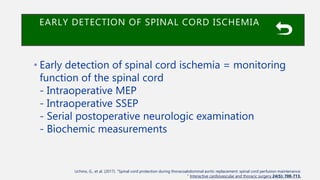
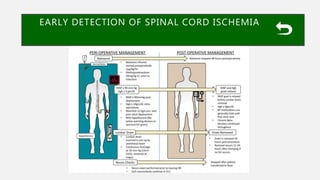
EARLY DETECTION OF SPINAL CORD ISCHEMIA
• Early detection of spinal cord ischemia = monitoring
function of the spinal cord
- Intraoperative MEP
- Intraoperative SSEP
- Serial postoperative neurologic examination
- Biochemic measurements
Uchino, G., et al. (2017). "Spinal cord protection during thoracoabdominal aortic replacement: spinal cord perfusion maintenance.
" Interactive cardiovascular and thoracic surgery 24(5): 708-713.
EARLY DETECTION OF SPINAL CORD ISCHEMIA
SPINAL CORD ISCHEMIA AFTER AORTIC
SURGERY
• Overall 30-day and 36-month survivals in those
developing SCI were 92 % and 45%, respectively.
• In those patients that did not have resolution of their
symptoms, 3-month survival was reduced from 92 to
36 %.
• This highlights the devastating long-term outcomes of
patients suffering from profound SCI with paraplegia
Gustavo S.(2017). Endovascular Aortic Repair [electronic resource] : Current Techniques with
Fenestrated, Branched and Parallel Stent-Grafts. Chapter 47
STRATEGIE
TO PREVENT
BENEFIT OF CSF DRAINAGE
• CSF drainage is the only method aimed at mitigating SCI during
TAAA/DTA repair supported by randomised evidence.
• Class IB indication in the US guidelines
• Strong recommendation in high-risk patients in the European
guidelines.
• Spinal perfusion pressure = MAP - CSF pressure : a reduction in
CSF pressure should increasespinal blood flow
Gustavo S.(2017). Endovascular Aortic Repair [electronic resource] : Current Techniques with
Fenestrated, Branched and Parallel Stent-Grafts. Chapter 47
THANK YOU

Sci

  • 1.
    SPINAL CORD ISCHEMIAIN AORTIC INTERVENTION F2 Parach Sirisriro 30th Oct 2018
  • 2.
    OUTLINE • Introduction • Anatomyand spinal cord collateral network • Pathophysiology of spinal cord injury • Prevention of spinal cord injury Minimize spinal cord ischemia time Increase tolerance to ischemia Augmentation of spinal cord perfusion Early detection of spinal cord ischemia • Management of Spinal cord ischemia • Conclusion
  • 3.
  • 4.
    JOURNAL • Uchino, G.,et al. (2017). "Spinal cord protection during thoracoabdominal aortic replacement: spinal cord perfusion maintenance." Interactive cardiovascular and thoracic surgery 24(5): 708- 713. • Drinkwater, S., et al. (2010). "The incidence of spinal cord ischaemia following thoracic and thoracoabdominal aortic endovascular intervention." European Journal of Vascular and Endovascular Surgery 40(6): 729-735. • Etz, C. D., et al. (2015). Contemporary spinal cord protection during thoracic and thoracoabdominal aortic surgery and endovascular aortic repair: a position paper of the vascular domain of the European Association for Cardio-Thoracic Surgery, Oxford University Press. • Bisdas, T., et al. (2015). "Risk factors for spinal cord ischemia after endovascular repair of thoracoabdominal aortic aneurysms." Journal of vascular surgery 61(6): 1408-1416.
  • 5.
    • Scott, D.and M. Denton (2016). "Spinal cord protection in aortic endovascular surgery." BJA: British Journal of Anaesthesia 117(suppl_2): ii26-ii31. • Ullery, B. W., et al. (2011). "Risk factors, outcomes, and clinical manifestations of spinal cord ischemia following thoracic endovascular aortic repair." Journal of vascular surgery 54(3): 677-684. • Scali, S. T., et al. (2018). "Implementation of a bundled protocol significantly reduces risk of spinal cord ischemia after branched or fenestrated endovascular aortic repair." Journal of vascular surgery 67(2): 409- 423. e404. • Fedorow, C. A., Moon, M. C., Mutch, W. A. C., & Grocott, H. P. (2010). Lumbar cerebrospinal fluid drainage for thoracoabdominal aortic surgery: Rationale and practical considerations for management. Anesthesia and Analgesia, 111(1), 46. 10.1213/ANE.0b013e3181ddddd • Youngblood, S. C., et al. (2013). "Complications of cerebrospinal fluid drainage after thoracic aortic surgery: a review of 504 patients over 5 years. " The Journal of thoracic and cardiovascular surgery 146(1): 166-171. • Rong, L., et al. (2018). "Cerebrospinal-fluid drain-related complications in patients undergoing open and endovascular repairs of thoracic and thoraco-abdominal aortic pathologies: a systematic review and meta- analysis." British journal of anaesthesia JOURNAL
  • 6.
    ANATOMY OF SPINALCORD BLOOD SUPPLY The spinal cord receives blood from spinal arteries derived from branches of larger arteries These major arteries include the following: • Vertebral arteries: arising from the subclavian arteries in the neck. • Ascending cervical arteries: arising from a branch of the subclavian arteries. • Posterior intercostal arteries: arising from the thoracic aorta. • Lumbar arteries: arising from the abdominal aorta. • Lateral sacral arteries: arising from pelvic internal iliac arteries. Gustavo S.(2017). Endovascular Aortic Repair [electronic resource] : Current Techniques with Fenestrated, Branched and Parallel Stent-Grafts. Chapter 47
  • 7.
    ANATOMY OF SPINAL CORDBLOOD SUPPLY The cervicothoracic region (C1–T3) : supplied by the vertebral arteries and the cervical ascending arteries The mid‐thoracic region (T3–T7) : receives branches from the intercostal arteries at T7 The thoracolumbar region (below T8) : derives its blood supply from the major radiculo‐medullary artery, called the great radicular artery of Adamkiewicz : its origin varies but usually branches off the aorta in the T9 to T12 region. Djindjian R: Arteriography of the spinal cord, Am J Roentgenol Radium Ther Nucl Med 107:461-478, 1969.
  • 8.
    ARTERY OF ADAMKIEWICZ •Watershed region- Thoraco lumbar segment. Blood supply derived from large radicular arteries called ARM (Artery of Adamkiewicz) Origin T9-T12 – in 75% T8-L3 – in 15% L1-L2 – in 10% of patients. Gustavo S.(2017). Endovascular Aortic Repair [electronic resource] : Current Techniques with Fenestrated, Branched and Parallel Stent-Grafts. Chapter 47
  • 9.
    THE COLLATERAL NETWORKCONCEPT Etz et al. The Collateral Network Concept: A Reassessment of the Anatomy of Spinal Cord Perfusion Thorac Cardiovasc Surg. April 2012
  • 10.
    SPINAL CORD ISCHEMIA Gustavo S.(2017).Endovascular Aortic Repair [electronic resource] : Current Techniques with Fenestrated, Branched and Parallel Stent-Grafts. Chapter 47
  • 11.
    SPINAL CORD ISCHEMIA •Uncommon condition • Sudden onset of paralysis, sensory loss, urinary and bowel dysfunction •Monophasic attack •Severe prognosis with permanent and disabling sequelae Salvador de la Barrera et al. Spinal Cord 2001 Bisdas T et al. J Vasc Surg 2015
  • 12.
    SPINAL CORD ISCHEMIA‐ ETIOLOGY 36% idiopathic 25% aortic surgery 19% systemic arteriosclerosis 11% acute perfusion deficit Salvador de la Barrera et al. Spinal Cord 2001 Bisdas T et al. J Vasc Surg 2015
  • 13.
    SPINAL CORD ISCHEMIAIN AORTIC INTERVENTION • Spinal Cord Ischemia SCI remains the most devastating complication after thoracic or thoracoabdominal repair. • Its rate has not declined with the use of endovascular technology and ranges from 2% to 10% after TEVAR (3.89% in a review of 4936 patients) Rutherford's Vascular Surgery and Endovascular Therapy, Chapter 74, 3183-3221.e
  • 14.
    • Immediate-direct resultof hypo-perfusion and secondary hypoxic damage. • Delayed complications can develop between 1 & 21 days following surgery. • Results from reperfusion hyperemia and free radical generation – edema of the cord –regional hypoperfusion SPINAL CORD ISCHEMIA Wan IYP, Angelini GD, Bryan AJ, Ryder I, Underwood MJ. prevention of spinal cord ischemia during descending thoracic and thoracoabdominal surgery. Eur J Cardio-thorac Surg 2001;19:203-13.
  • 15.
    SPINAL CORD ISCHEMIA INAORTIC INTERVENTION
  • 16.
    • Risk Factorsfor ischemia - Longer extent of aneurysm (greatest risk in Crawford type II, least in type IV) - Perioperative hypotension - Emergency operation (16.7 vs 3.9%) - Open operative repair - Acute aortic rupture/dissection PREDISPOSING FACTOR Etz, C. D., et al. (2015). Contemporary spinal cord protection during thoracic and thoracoabdominal aortic surgery and endovascular aortic repair: a position paper of the vascular domain of the European Association for Cardio-Thoracic Surgery, Oxford University Press.
  • 17.
    • Risk Factorsfor ischemia - Longer duration of aortic cross-clamp - Failure to re-implant segmental arteries - Prior distal aortic surgery - Severe peripheral vascular disease - Anemia (impairing oxygen supply) - Systemic vasodilatation with vascular steal (for control of hypertension associated with aortic clamping ) PREDISPOSING FACTOR Etz, C. D., et al. (2015). Contemporary spinal cord protection during thoracic and thoracoabdominal aortic surgery and endovascular aortic repair: a position paper of the vascular domain of the European Association for Cardio-Thoracic Surgery, Oxford University Press.
  • 18.
    PREDISPOSING FACTOR → Riskof ischemia greatest in open repair: 8-28% vs 4-7% Open Endovascular
  • 19.
    CRAWFORD CLASSIFICATION Drinkwater, S., etal. (2010). "The incidence of spinal cord ischaemia following thoracic and thoracoabdominal aortic endovascular intervention. " European Journal of Vascular and Endovascular Surgery 40(6): 729-735. Incidence of spinal cord ischemia according to Crawford extend of aneurysm Endovascular repair 10% 19% 5% 3% Open surgical repair 14% 22% 10% 2%
  • 20.
    SPINAL CORD ISCHEMIAIN AORTIC INTERVENTION Scott DJ, Denton MJ. Spinal cord protection in aortic endovascular surgery. Br J Anaesth 2016;117:26-31.
  • 21.
    MECHANISM IN SPINALCORD ISCHEMIA Etz, C. D., et al. (2015). Contemporary spinal cord protection during thoracic and thoracoabdominal aortic surgery and endovascular aortic repair: a position paper of the vascular domain of the European Association for Cardio-Thoracic Surgery, Oxford University Press.
  • 22.
    TEVAR - Large profilefemoral sheath - The use of femoral conduits For sheath access Gustavo S.(2017). Endovascular Aortic Repair [electronic resource] : Current Techniques with Fenestrated, Branched and Parallel Stent-Grafts. Chapter 47
  • 23.
    PATHOPHYSIOLOGY OF SPINALCORD INJURY Etz, C. D., et al. (2015). Contemporary spinal cord protection during thoracic and thoracoabdominal aortic surgery and endovascular aortic repair: a position paper of the vascular domain of the European Association for Cardio-Thoracic Surgery, Oxford University Press.
  • 24.
    PATHOPHYSIOLOGY OF SPINALCORD INJURY Etz, C. D., et al. (2015). Contemporary spinal cord protection during thoracic and thoracoabdominal aortic surgery and endovascular aortic repair: a position paper of the vascular domain of the European Association for Cardio-Thoracic Surgery, Oxford University Press.
  • 25.
    AUTOREGULATION • Spinal cordblood flow is constant Between 10 - 50 mmHg CO2 Between 50 - 135 mmHg MABP Mechanism: Sympathetic ganglia Sensory control center caudal to the medulla Further research needed Uchino, G., et al. (2017). "Spinal cord protection during thoracoabdominal aortic replacement: spinal cord perfusion maintenance." Interactive cardiovascular and thoracic surgery 24(5): 708-713.
  • 26.
    SPINAL BLOOD FLOWAFTER THORACIC AORTIC OCCLUSION (AORTIC CROSS CLAMPING) Spinal cord perfusion pressure (SCPP )= MABP – CSF pressure > 50 – 60 mmHg to protect spinal cord from ischemia Normal CSF pressure = 13 – 15 mmHg Temporary aortic cross-clamping decreases SCBF and distal organ perfusion Distal hypotension Proximal hypertension Increase in left ventricle afterload Gustavo S.(2017). Endovascular Aortic Repair [electronic resource] : Current Techniques with Fenestrated, Branched and Parallel Stent-Grafts. Chapter 47
  • 27.
    SPINAL BLOOD FLOW AFTERTHORACIC AORTIC OCCLUSION (AORTIC CROSS CLAMPING) AoX Proximal hypertension + intracranial pressure ↑ Autoregulation: CSF pressure ↑ SCPP ↓ Spinal cord injury hypotension Interrupting sympathetic fibers Direct myocardial dysfunction Increase in CSF pressure (21-25 mmHg) Increase in central venous pressure Elevation in intracranial pressure Release of aortic cross-clamping: CSFP remains elevated for 5 minutes CSFP returns to normal after 25 minutes Hyperemia is observed Uchino, G., et al. (2017). "Spinal cord protection during thoracoabdominal aortic replacement: spinal cord perfusion maintenance." Interactive cardiovascular and thoracic surgery 24(5): 708-713.
  • 28.
  • 29.
    PREVENTION OF SPINALCORD INJURY Minimize spinal cord ischemia time Increase tolerance to ischemia Augmentation of spinal cord perfusion Early detection of spinal cord ischemia
  • 30.
    STRATEGIE TO PREVENT Uchino, G.,et al. (2017). "Spinal cord protection during thoracoabdominal aortic replacement: spinal cord perfusion maintenance." Interactive cardiovascular and thoracic surgery 24(5): 708-713.
  • 31.
    MINIMIZE SPINAL CORDISCHEMIA TIME - Decrease duration of surgery - Preservation of subclavian artery flow - Distal aortic perfusion Passive shunt (Gott shunt) Left heart bypass = Atrial- femoral bypass - Thoracic endovascular aortic repair - Staged repair Gott shuntLeft heart bypass Uchino, G., et al. (2017). "Spinal cord protection during thoracoabdominal aortic replacement: spinal cord perfusion maintenance. " Interactive cardiovascular and thoracic surgery 24(5): 708-713.
  • 32.
    • Staged repair Principlebased on “dynamic collateral vascular network” - Endovascular repair in different stages - Dividing extensive aneurysm repair into multiple steps may mitigate the impact of diminished blood flow to the collateral network - Allowing new blood vessels to grow - Reduce chance of ischemia - Less/no neurologic deficit postoperatively MINIMIZE SPINAL CORD ISCHEMIA TIME Uchino, G., et al. (2017). "Spinal cord protection during thoracoabdominal aortic replacement: spinal cord perfusion maintenance." Interactive cardiovascular and thoracic surgery 24(5): 708-713.
  • 33.
    INCREASE TOLERANCE TOISCHEMIA - Deliberate mild systemic hypothermia - Deep hypothermic circulatory arrest - Selective spinal cord hypothermia by epidural cooling Pharmacologic neuroprotection CSF drainage Uchino, G., et al. (2017). "Spinal cord protection during thoracoabdominal aortic replacement: spinal cord perfusion maintenance. " Interactive cardiovascular and thoracic surgery 24(5): 708-713.
  • 34.
    • Deliberate mildsystemic hypothermia = 32-34°C : * Hypothermia is the only intervention in humans has been proven consistently to be effective for protecting the CNS Disadvantage : arrythmias, coagulation abnormalities * Allowing body core temperature to decrease after induction → Re-warming after reperfusion: gradually, avoid systemic hyperthermia INCREASE TOLERANCE TO ISCHEMIA Uchino, G., et al. (2017). "Spinal cord protection during thoracoabdominal aortic replacement: spinal cord perfusion maintenance. " Interactive cardiovascular and thoracic surgery 24(5): 708-713.
  • 35.
    • Deep hypothermiccirculatory arrest = 10-18°C → requires Cardiopulmonary bypass * For TAAA that extends into the aortic branch requiring temporary temporary interruption of cerebral blood flow * Risks associated : → stroke caused by cerebral atheroembolism → postoperative encephalopathy → cerebral hyperthermia during re-warming INCREASE TOLERANCE TO ISCHEMIA Uchino, G., et al. (2017). "Spinal cord protection during thoracoabdominal aortic replacement: spinal cord perfusion maintenance. " Interactive cardiovascular and thoracic surgery 24(5): 708-713.
  • 36.
    INCREASE TOLERANCE TOISCHEMIA Gustavo S.(2017). Endovascular Aortic Repair [electronic resource] : Current Techniques with Fenestrated, Branched and Parallel Stent-Grafts. Chapter 47
  • 37.
    AUGMENTATION OF SPINALCORD PERFUSION • Deliberate hypertension - MAP 80-100 mmHg - CVD < CSF pressure - For at least 24h-48h postoperatively • Lumbar cerebrospinal fluid (CSF) drainage - CSF pressure < 10 -15mmHg - CSF drainage < 25 ml/hr to avoid complications (intracranial/subdural hematoma) • Re-implantation of intercostals and lumbar segmental arteries Uchino, G., et al. (2017). "Spinal cord protection during thoracoabdominal aortic replacement: spinal cord perfusion maintenance. " Interactive cardiovascular and thoracic surgery 24(5): 708-713.
  • 38.
    LUMBAR CEREBROSPINAL FLUID(CSF) DRAINAGE Gustavo S.(2017). Endovascular Aortic Repair [electronic resource] : Current Techniques with Fenestrated, Branched and Parallel Stent-Grafts. Chapter 47
  • 39.
    Draining cerebrospinal fluid(CSF)can reduce pressure in the spinal cord or brain. Increased Pressure = Reduce blood flow Lumbar cerebrospinal fluid (CSF) drainage AUGMENTATION OF SPINAL CORD PERFUSION Fedorow, C. A., Moon, M. C., Mutch, W. A. C., & Grocott, H. P. (2010). Lumbar cerebrospinal fluid drainage for thoracoabdominal aortic surgery: Rationale and practical considerations for management. Anesthesia and Analgesia, 111(1), 46. 10.1213/ANE.0b013e3181ddddd
  • 40.
    LUMBAR CEREBROSPINAL FLUID(CSF) DRAINAGE Rong, L., et al. (2018). "Cerebrospinal-fluid drain-related complications in patients undergoing open and endovascular repairs of thoracic and thoraco-abdominal aortic pathologies: a systematic review and meta-analysis." British journal of anaesthesia.
  • 41.
    • Monitor :Neuro Vital Signs / Neuromuscular/ Neurovascular Checks q1h • Maintain Lumbar Drain - 72 hours for open repair -24-48 hours for endovascular repair • Monitor for Pink/Bloody CSF • Maintain Hemoglobin >9mg/dl • Maintain SBP >140 mmHg LUMBAR CEREBROSPINAL FLUID (CSF) DRAINAGE Fedorow, C. A., Moon, M. C., Mutch, W. A. C., & Grocott, H. P. (2010). Lumbar cerebrospinal fluid drainage for thoracoabdominal aortic surgery: Rationale and practical considerations for management. Anesthesia and Analgesia, 111(1), 46. 10.1213/ANE.0b013e3181ddddd
  • 42.
    LUMBAR CEREBROSPINAL FLUID(CSF) DRAINAGE Rong, L., et al. (2018). "Cerebrospinal-fluid drain-related complications in patients undergoing open and endovascular repairs of thoracic and thoraco-abdominal aortic pathologies: a systematic review and meta-analysis." British journal of anaesthesia.
  • 43.
    LUMBAR CEREBROSPINAL FLUID(CSF) DRAINAGE Rong, L., et al. (2018). "Cerebrospinal-fluid drain-related complications in patients undergoing open and endovascular repairs of thoracic and thoraco-abdominal aortic pathologies: a systematic review and meta-analysis." British journal of anaesthesia.
  • 44.
    COMPLICATION OF SPINALDRAINAGE • In a review of 504 patients who underwent TEVAR with preoperative CSF : Youngblood et al. reported a 12.7% complication rate and associated with a mortality rate of 14.3% including - headache (9.7%) - catheter fracture (0.2%) - intracranial bleeding (2.8%) - subdural hematoma (1.9%) * The clinical presentation of an intracranial hemorrhage after CSF drainage varies from severe headache and confusion to coma, motor deficit, or respiratory arrest Youngblood, S. C., et al. (2013). "Complications of cerebrospinal fluid drainage after thoracic aortic surgery: a review of 504 patients over 5 years. " The Journal of thoracic and cardiovascular surgery 146(1): 166-171.
  • 45.
    EARLY DETECTION OFSPINAL CORD ISCHEMIA • Early detection of spinal cord ischemia = monitoring function of the spinal cord - Intraoperative MEP - Intraoperative SSEP - Serial postoperative neurologic examination - Biochemic measurements Uchino, G., et al. (2017). "Spinal cord protection during thoracoabdominal aortic replacement: spinal cord perfusion maintenance. " Interactive cardiovascular and thoracic surgery 24(5): 708-713.
  • 46.
    EARLY DETECTION OFSPINAL CORD ISCHEMIA
  • 48.
    SPINAL CORD ISCHEMIAAFTER AORTIC SURGERY • Overall 30-day and 36-month survivals in those developing SCI were 92 % and 45%, respectively. • In those patients that did not have resolution of their symptoms, 3-month survival was reduced from 92 to 36 %. • This highlights the devastating long-term outcomes of patients suffering from profound SCI with paraplegia Gustavo S.(2017). Endovascular Aortic Repair [electronic resource] : Current Techniques with Fenestrated, Branched and Parallel Stent-Grafts. Chapter 47
  • 49.
  • 50.
    BENEFIT OF CSFDRAINAGE • CSF drainage is the only method aimed at mitigating SCI during TAAA/DTA repair supported by randomised evidence. • Class IB indication in the US guidelines • Strong recommendation in high-risk patients in the European guidelines. • Spinal perfusion pressure = MAP - CSF pressure : a reduction in CSF pressure should increasespinal blood flow Gustavo S.(2017). Endovascular Aortic Repair [electronic resource] : Current Techniques with Fenestrated, Branched and Parallel Stent-Grafts. Chapter 47
  • 51.

Editor's Notes

  • #8 The spinal cord receives blood from spinal arteries derived from branches of larger arteries These major arteries include the following: • Vertebral arteries: arising from the subclavian arteries in the neck. • Ascending cervical arteries: arising from a branch of the subclavian arteries. • Posterior intercostal arteries: arising from the thoracic aorta. • Lumbar arteries: arising from the abdominal aorta. • Lateral sacral arteries: arising from pelvic internal iliac arteries.
  • #10 The anterior spinal artery is only one component of an extensive paraspinous and intraspinal collateral vascular network. • the collateral system involves - extensive axial arterial network in the spinal canal, the paravertebral tissues, and the paraspinous muscles, in which vessels anastomose with one another and with the nutrient arteries of the spinal cord.
  • #19 Open: replace diseased segments with a prosthetic vascular interposition graft vs Endovascular (=TEVAR): exclude diseased segments with an endovascular stent graft (fenestrated or branched) -> beneficial effects on the spinal collateral arterial network
  • #20 Type I aneurysms involve all or most of the descending thoracic aorta and the upper abdominal aorta; type II aneurysms involve all or most of the descending thoracic aorta and all or most of the abdominal aorta; type III aneurysms involve the lower portion of the descending thoracic aorta and most of the abdominal aorta; and type IV aneurysms involve all or most of the abdominal aorta, including the visceral segment
  • #23 A : Large profile femoral sheaths : associated with pelvic and lower extremity ischemia B : Technique of antegrade femoral sheath does not relieve the ischemia caused by occlusion of the internal iliac and profunda femoris artery C : The use of femoral conduits For sheath access allow early restoration of perfusion to the pelvis and lower extremity, as depicted in the graph
  • #32 Studies demonstrated that the duration aortic cross clamping is a major determinant. • < 15min -0% to 25-100% if exceeds 60min
  • #35 → decreased metabolic demands → cell membrane stabilization → attenuating the inflammatory and excitotoxic responses to ischemia during reperfusion
  • #36 when TAAA involves distal aortic arch Needed TEE for monitoring Most cardiac surgical procedures can be accomplished using cardioplegia-induced cardiac arrest and cardiopulmonary bypass (CPB) to maintain perfusion of other organs * Risks associated : → stroke caused by cerebral atheroembolism from retrograde blood flow during Cardiopulmonary bypass → postoperative encephalopathy → cerebral hyperthermia during re-warming
  • #37 neuroprotective modalities include the use of pharmacologic agents. Some study demonstrated that the use of intrathecal papaverine reduced SCI after open TAAA repair from 7.5 to 3.6 % [3]. Intrathecal papaverine is known to induce vasodilation, which may increase peri-spinal blood flow and promote preservation of myelin integrity. Other agents that are under evaluation include the use of systemic and intrathecal propofol, naloxone, and a variety of antiinflammatory agents. However, the majority of these agents have not been evaluated in the endovascular setting
  • #40 A small, flexible, soft plastic tube placed in the lower back (lumbar area) to remove cerebrospinal fluid (CSF) Used to drain some of the cerebrospinal fluid that fills the ventricles of the brain and surrounds the brain and spinal cord