
Business-to-Business
Activities: Improving
Efficiency and Reducing
Costs
CHAPTER 5
© 2017 Cengage Learning®. May not be scanned, copied or duplicated, or posted to a publicly accessible website, in whole or in part, except for use as permitted in a
license distributed with a certain product or service or otherwise on a password-protected website or school-approved learning management system for classroom use.
.
Learning Objectives
In this chapter, you will learn:
• How businesses use the Internet to improve
purchasing, logistics, and other support activities
• How the Internet facilitates implementation of
outsourcing and offshoring business strategies
• How electronic data interchange works and how it
has evolved using Internet technologies
© 2017 Cengage Learning®. May not be scanned, copied or duplicated, or posted to a publicly accessible website, in whole or in part, except for use as permitted in a
license distributed with a certain product or service or otherwise on a password-protected website or school-approved learning management system for classroom use. 2
3
Learning Objectives (cont’d.)
• What supply chain management is and how
businesses are using Internet technologies to
improve it
• How the various types of online business
marketplaces operate to make B2B transactions
easier and more efficient
© 2017 Cengage Learning®. May not be scanned, copied or duplicated, or posted to a publicly accessible website, in whole or in part, except for use as permitted in a
license distributed with a certain product or service or otherwise on a password-protected website or school-approved learning management system for classroom use. 3
Introduction
• After a year of working in Ghana teaching English,
Leila Janah started Samasource in 2008
– Links workers in developing countries with companies
who need work done
– Has lifted more than 6,500 African, Asian and Haitian
workers above the poverty line
– Cost-effective for businesses
– Builds worker knowledge and skills in less developed
countries and gives low-income workers in developed
countries similar opportunities
– Use of the Internet to do good around the world
© 2017 Cengage Learning®. May not be scanned, copied or duplicated, or posted to a publicly accessible website, in whole or in part, except for use as permitted in a
license distributed with a certain product or service or otherwise on a password-protected website or school-approved learning management system for classroom use. 4
Outsourcing and Offshoring
• Outsourcing is using other organizations to perform
specific activities
– Typically used for manufacturing
• Offshoring is outsourcing done by organizations in
other countries
– Business process offshoring includes purchasing,
research and development, record keeping,
information management
– Impact sourcing (smart sourcing) is offshoring done
by or through not-for-profit organizations
© 2017 Cengage Learning®. May not be scanned, copied or duplicated, or posted to a publicly accessible website, in whole or in part, except for use as permitted in a
license distributed with a certain product or service or otherwise on a password-protected website or school-approved learning management system for classroom use.
5
Purchasing Activities
• Identify and evaluate vendors, select specific
products, place orders, resolve any issues after
receipt of goods or services
• Supply chain is the part of industry value chain
preceding a particular strategic business unit
– Includes all activities undertaken by every
predecessor in the value chain to design, produce,
promote, market, deliver, support each individual
component of a product or service
• Traditionally purchasing department buys
components at lowest price possible via bidding
© 2017 Cengage Learning®. May not be scanned, copied or duplicated, or posted to a publicly accessible website, in whole or in part, except for use as permitted in a
license distributed with a certain product or service or otherwise on a password-protected website or school-approved learning management system for classroom use. 6
• Procurement includes all purchasing activities,
monitoring all purchase transaction elements and
managing and developing supplier relationships
– Also called supply chain management
• Procurement staff have high product knowledge to
identify and evaluate appropriate suppliers
– Sourcing is identifying suppliers and determining
qualifications
– e-sourcing is the use of Internet technologies in
sourcing activities
© 2017 Cengage Learning®. May not be scanned, copied or duplicated, or posted to a publicly accessible website, in whole or in part, except for use as permitted in a
license distributed with a certain product or service or otherwise on a password-protected website or school-approved learning management system for classroom use. 7
Purchasing Activities (cont’d.)
• Business purchasing process is more complex than
most consumer purchasing processes
• Spend is the total yearly dollar amount for goods
and services purchased
– Managing spend is an important function and can be
a key component in overall profitability
• Institute for Supply Management (ISM) is the main
organization for procurement professionals
© 2017 Cengage Learning®. May not be scanned, copied or duplicated, or posted to a publicly accessible website, in whole or in part, except for use as permitted in a
license distributed with a certain product or service or otherwise on a password-protected website or school-approved learning management system for classroom use. 8
Purchasing Activities (cont’d.)
© 2017 Cengage Learning®. May not be scanned, copied or duplicated, or posted to a publicly accessible website, in whole or in part, except for use as permitted in a
license distributed with a certain product or service or otherwise on a password-protected website or school-approved learning management system for classroom use. 9
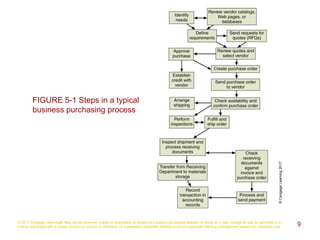
FIGURE 5-1 Steps in a typical
business purchasing process
©CengageLearning2017
Direct vs. Indirect Materials Purchasing
• Direct materials become part of finished product
• Direct materials purchasing
– Replenishment purchasing (contract purchasing)
• Company negotiates long-term material contracts
– Spot purchasing
• Purchases made in loosely organized (spot) market
• If demand exceeds contract purchasing estimates
• Indirect materials are all other materials company
purchases
– Includes factory supplies and replacement parts for
machinery
© 2017 Cengage Learning®. May not be scanned, copied or duplicated, or posted to a publicly accessible website, in whole or in part, except for use as permitted in a
license distributed with a certain product or service or otherwise on a password-protected website or school-approved learning management system for classroom use. 10
Direct vs. Indirect Materials Purchasing
(cont’d.)
• Maintenance, repair, and operating (MRO) supplies
are indirect materials purchased on a recurring basis
– Standard items (commodities) with price as main
criterion
• Purchasing cards (p-cards) allow managers to make
multiple small purchases with cost-tracking
information sent to procurement
• Leading suppliers
– MRO: McMaster-Carr, W.W. Grainger,
– Office Depot, Staples, Digi-Key, Newark.com
© 2017 Cengage Learning®. May not be scanned, copied or duplicated, or posted to a publicly accessible website, in whole or in part, except for use as permitted in a
license distributed with a certain product or service or otherwise on a password-protected website or school-approved learning management system for classroom use. 11
Logistics Activities
• Classic objective is to provide the right goods in the
right quantities in the right place at the right time
• Managing materials, supplies and finished goods
– Web and the Internet providing increasing number of
opportunities to better manage activities
– Third-party logistics (3PL) provider operates a
customer’s materials movement activities
• Marriage of GPS and portable computing with the
Internet is an example of second-wave e-commerce
• Third-wave e-commerce supported by smart phones
© 2017 Cengage Learning®. May not be scanned, copied or duplicated, or posted to a publicly accessible website, in whole or in part, except for use as permitted in a
license distributed with a certain product or service or otherwise on a password-protected website or school-approved learning management system for classroom use.
12
13
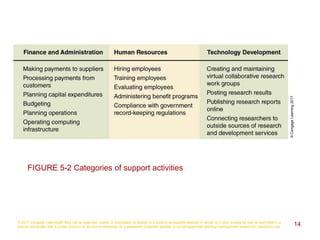
• Finance and administration, human resources (HR),
technology development
– Human resources, payroll, retirement plan servicing
often outsourced by small/midsized companies
• Common support activity is training
– May be handled by HR or individual departments
• Knowledge management is the intentional collection
and classification; dissemination of information
about a company and its products and processes
© 2017 Cengage Learning®. May not be scanned, copied or duplicated, or posted to a publicly accessible website, in whole or in part, except for use as permitted in a
license distributed with a certain product or service or otherwise on a password-protected website or school-approved learning management system for classroom use. 13
Business Process Support Activities
© 2017 Cengage Learning®. May not be scanned, copied or duplicated, or posted to a publicly accessible website, in whole or in part, except for use as permitted in a
license distributed with a certain product or service or otherwise on a password-protected website or school-approved learning management system for classroom use. 14
©CengageLearning2017
FIGURE 5-2 Categories of support activities
E-Government
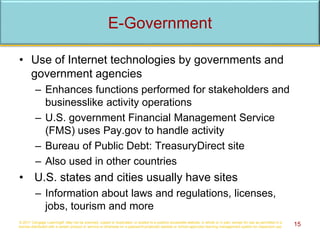
• Use of Internet technologies by governments and
government agencies
– Enhances functions performed for stakeholders and
businesslike activity operations
– U.S. government Financial Management Service
(FMS) uses Pay.gov to handle activity
– Bureau of Public Debt: TreasuryDirect site
– Also used in other countries
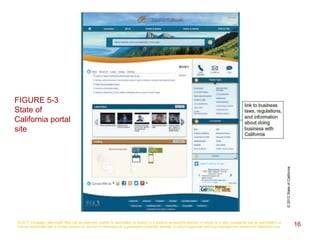
• U.S. states and cities usually have sites
– Information about laws and regulations, licenses,
jobs, tourism and more
© 2017 Cengage Learning®. May not be scanned, copied or duplicated, or posted to a publicly accessible website, in whole or in part, except for use as permitted in a
license distributed with a certain product or service or otherwise on a password-protected website or school-approved learning management system for classroom use. 15
© 2017 Cengage Learning®. May not be scanned, copied or duplicated, or posted to a publicly accessible website, in whole or in part, except for use as permitted in a
license distributed with a certain product or service or otherwise on a password-protected website or school-approved learning management system for classroom use. 16
©2012StateofCalifornia
FIGURE 5-3
State of
California portal
site
Network Model of Economic Organization in
Purchasing: Supply Webs
• Trend in purchasing, logistics, and support activities
is the shift from hierarchical structures toward
network structures
– Procurement departments being given new tools to
negotiate and possibly form strategic alliances
• Supply Web is replacing the term “supply chain”
– Parallel lines interconnect to form a Web or network
configuration
• Roots of Web technology for B2B transactions lie in
a hierarchically structured approach to inter-firm
information transfer: electronic data exchange
© 2017 Cengage Learning®. May not be scanned, copied or duplicated, or posted to a publicly accessible website, in whole or in part, except for use as permitted in a
license distributed with a certain product or service or otherwise on a password-protected website or school-approved learning management system for classroom use. 17
Electronic Data Interchange
• Computer-to-computer business information transfer
using a standard format
– Businesses exchanging info are trading partners
• EDI compatible firms exchange data in specific
standard formats
– Often transaction data but can include other
information related to transactions
• Most B2B e-commerce adapted from EDI or based
on EDI principles
• Dominant technology for electronic B2B transactions
© 2017 Cengage Learning®. May not be scanned, copied or duplicated, or posted to a publicly accessible website, in whole or in part, except for use as permitted in a
license distributed with a certain product or service or otherwise on a password-protected website or school-approved learning management system for classroom use. 18
Early Business Information
Interchange Efforts
• The need to create formal business transaction
records began in the late 1800s and early 1900s
• Companies were using computers for recording
internal transactions by the 1950s
– Information flows between companies on paper which
was slow, inefficient, redundant and unreliable
• In the 1960s businesses with volume transactions
exchanged info on punched cards or magnetic tape
– In the 1960s and 1970s technologies improved and
intercompany information could be transferred over
telephone lines
© 2017 Cengage Learning®. May not be scanned, copied or duplicated, or posted to a publicly accessible website, in whole or in part, except for use as permitted in a
license distributed with a certain product or service or otherwise on a password-protected website or school-approved learning management system for classroom use. 19
Early Business Information
Interchange Efforts (cont’d.)
• Information transfer agreements between trading
partners increased efficiency but not ideal
– Incompatible data translation limited participation
• Freight and shipping companies joined together in
1968 to create a standardized information set
– Used a computer file transmittable to any freight
company adopting the standard
– Benefits limited to members of industries that created
standard-setting groups
• Full realization of EDI economies and efficiencies
required standards for all companies in all industries
© 2017 Cengage Learning®. May not be scanned, copied or duplicated, or posted to a publicly accessible website, in whole or in part, except for use as permitted in a
license distributed with a certain product or service or otherwise on a password-protected website or school-approved learning management system for classroom use. 20
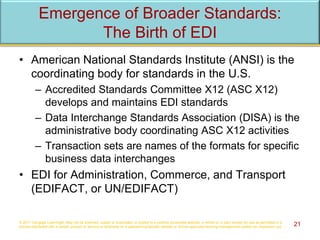
Emergence of Broader Standards:
The Birth of EDI
• American National Standards Institute (ANSI) is the
coordinating body for standards in the U.S.
– Accredited Standards Committee X12 (ASC X12)
develops and maintains EDI standards
– Data Interchange Standards Association (DISA) is the
administrative body coordinating ASC X12 activities
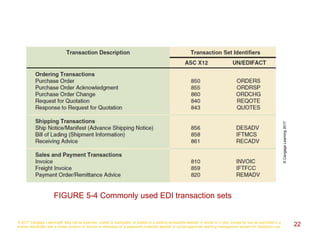
– Transaction sets are names of the formats for specific
business data interchanges
• EDI for Administration, Commerce, and Transport
(EDIFACT, or UN/EDIFACT)
© 2017 Cengage Learning®. May not be scanned, copied or duplicated, or posted to a publicly accessible website, in whole or in part, except for use as permitted in a
license distributed with a certain product or service or otherwise on a password-protected website or school-approved learning management system for classroom use. 21
© 2017 Cengage Learning®. May not be scanned, copied or duplicated, or posted to a publicly accessible website, in whole or in part, except for use as permitted in a
license distributed with a certain product or service or otherwise on a password-protected website or school-approved learning management system for classroom use. 22
FIGURE 5-4 Commonly used EDI transaction sets
©CengageLearning2017
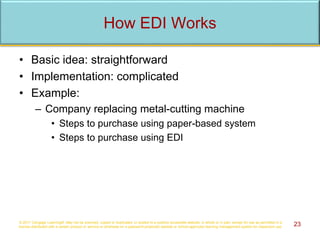
How EDI Works
• Basic idea: straightforward
• Implementation: complicated
• Example:
– Company replacing metal-cutting machine
• Steps to purchase using paper-based system
• Steps to purchase using EDI
© 2017 Cengage Learning®. May not be scanned, copied or duplicated, or posted to a publicly accessible website, in whole or in part, except for use as permitted in a
license distributed with a certain product or service or otherwise on a password-protected website or school-approved learning management system for classroom use. 23
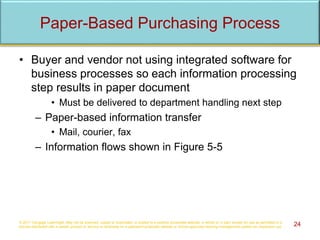
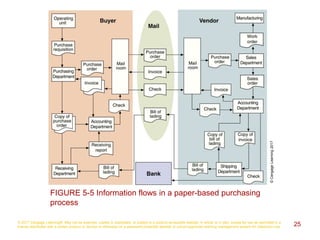
Paper-Based Purchasing Process
• Buyer and vendor not using integrated software for
business processes so each information processing
step results in paper document
• Must be delivered to department handling next step
– Paper-based information transfer
• Mail, courier, fax
– Information flows shown in Figure 5-5
© 2017 Cengage Learning®. May not be scanned, copied or duplicated, or posted to a publicly accessible website, in whole or in part, except for use as permitted in a
license distributed with a certain product or service or otherwise on a password-protected website or school-approved learning management system for classroom use. 24
© 2017 Cengage Learning®. May not be scanned, copied or duplicated, or posted to a publicly accessible website, in whole or in part, except for use as permitted in a
license distributed with a certain product or service or otherwise on a password-protected website or school-approved learning management system for classroom use. 25
FIGURE 5-5 Information flows in a paper-based purchasing
process
©CengageLearning2017
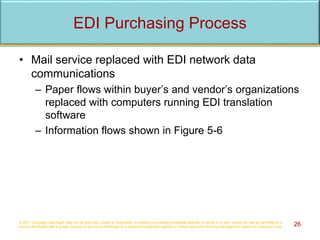
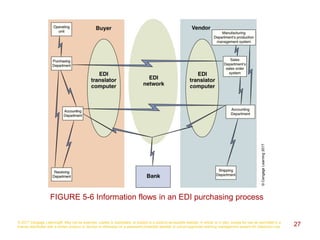
• Mail service replaced with EDI network data
communications
– Paper flows within buyer’s and vendor’s organizations
replaced with computers running EDI translation
software
– Information flows shown in Figure 5-6
© 2017 Cengage Learning®. May not be scanned, copied or duplicated, or posted to a publicly accessible website, in whole or in part, except for use as permitted in a
license distributed with a certain product or service or otherwise on a password-protected website or school-approved learning management system for classroom use. 26
EDI Purchasing Process
© 2017 Cengage Learning®. May not be scanned, copied or duplicated, or posted to a publicly accessible website, in whole or in part, except for use as permitted in a
license distributed with a certain product or service or otherwise on a password-protected website or school-approved learning management system for classroom use. 27
FIGURE 5-6 Information flows in an EDI purchasing process
©CengageLearning2017
Value-Added Networks
• Trading partners can implement the EDI network
and EDI translation processes in several ways
• Each way uses one of two basic approaches
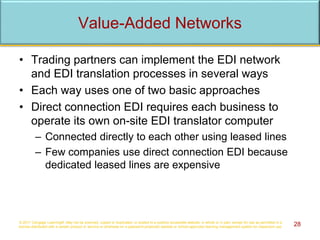
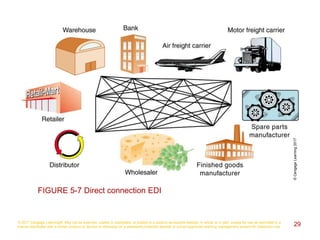
• Direct connection EDI requires each business to
operate its own on-site EDI translator computer
– Connected directly to each other using leased lines
– Few companies use direct connection EDI because
dedicated leased lines are expensive
© 2017 Cengage Learning®. May not be scanned, copied or duplicated, or posted to a publicly accessible website, in whole or in part, except for use as permitted in a
license distributed with a certain product or service or otherwise on a password-protected website or school-approved learning management system for classroom use. 28
© 2017 Cengage Learning®. May not be scanned, copied or duplicated, or posted to a publicly accessible website, in whole or in part, except for use as permitted in a
license distributed with a certain product or service or otherwise on a password-protected website or school-approved learning management system for classroom use. 29
FIGURE 5-7 Direct connection EDI
©CengageLearning2017
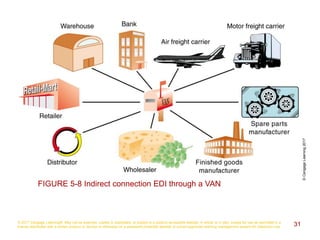
• Company may use a value-added network (VAN)
– Receives, stores, forwards electronic messages
containing EDI transaction sets
• With indirect connection EDI trading partners use
VAN to retrieve EDI-formatted messages
– Must install compatible EDI translator software
– Trading partners pass messages through the VAN
instead of directly connecting computers
© 2017 Cengage Learning®. May not be scanned, copied or duplicated, or posted to a publicly accessible website, in whole or in part, except for use as permitted in a
license distributed with a certain product or service or otherwise on a password-protected website or school-approved learning management system for classroom use. 3030
Value-Added Networks (cont’d.)
31
FIGURE 5-8 Indirect connection EDI through a VAN
© 2017 Cengage Learning®. May not be scanned, copied or duplicated, or posted to a publicly accessible website, in whole or in part, except for use as permitted in a
license distributed with a certain product or service or otherwise on a password-protected website or school-approved learning management system for classroom use. 31
©CengageLearning2017
• Advantages of a VAN
– Need to support one communications protocol and
the VAN provides translation between different
transaction sets
– VAN performs automatic compliance checking and
records message activity in an audit log
• Helps establish nonrepudiation: ability to establish that
a particular transaction actually occurred
• Cost used to be a disadvantage, now much lower
– Internet presents low-cost communications medium
used by VAN services
© 2017 Cengage Learning®. May not be scanned, copied or duplicated, or posted to a publicly accessible website, in whole or in part, except for use as permitted in a
license distributed with a certain product or service or otherwise on a password-protected website or school-approved learning management system for classroom use. 32
Value-Added Networks (cont’d.)
• EDI on the Internet called Internet EDI, Web EDI, or
open EDI
– Internet is open architect network
• EDIINT (Electronic Data Interchange-Internet
Integration, EDI-INT) is the most common protocol
for Internet EDI transaction sets
• EDI exchanges encoded using AS2 (Applicability
Statement 2) or AS3 (Applicability Statement 3)
– Secure electronic receipts returned to senders for
every transaction which helps establish repudiation
© 2017 Cengage Learning®. May not be scanned, copied or duplicated, or posted to a publicly accessible website, in whole or in part, except for use as permitted in a
license distributed with a certain product or service or otherwise on a password-protected website or school-approved learning management system for classroom use. 33
Value-Added Networks (cont’d.)
EDI Payments
• EDI transaction sets provide instructions to trading
partner’s bank
• Negotiable instruments, the electronic equivalent of
checks
• Electronic funds transfers (EFTs) is the movement
of money from one bank account to another
– Executed using an Automated clearing house (ACH)
system which is used by service banks to manage
accounts with each other
• Operated by U.S. Federal Reserve Banks, private
ACHs
© 2017 Cengage Learning®. May not be scanned, copied or duplicated, or posted to a publicly accessible website, in whole or in part, except for use as permitted in a
license distributed with a certain product or service or otherwise on a password-protected website or school-approved learning management system for classroom use.
34
Supply Chain Management Using Internet
Technologies
• Supply chain management is the job of managing
integration of company supply management and
logistics activities
– Across multiple participants in a particular product’s
supply chain
– Ultimate goal is to achieve higher-quality or lower-
cost product at the end of the chain
© 2017 Cengage Learning®. May not be scanned, copied or duplicated, or posted to a publicly accessible website, in whole or in part, except for use as permitted in a
license distributed with a certain product or service or otherwise on a password-protected website or school-approved learning management system for classroom use. 35
Value Creation in the Supply Chain
• Engaging suppliers in cooperative relationships can
lead to better, faster, cheaper service to customers
– Company goes beyond its limits and creates a new
network form among members of the supply chain
• Use of technology to improve operational efficiency
is supply chain competition
– Can help implement management techniques
• Just-in-time reduces inventory and lean production
focus on eliminating waste and unnecessary processes
• Originally developed as a way to reduce cost
– Now adds benefits to the ultimate consumer
© 2017 Cengage Learning®. May not be scanned, copied or duplicated, or posted to a publicly accessible website, in whole or in part, except for use as permitted in a
license distributed with a certain product or service or otherwise on a password-protected website or school-approved learning management system for classroom use. 36
• Requires establishment of long-term relationship
with a small number of capable tier-one suppliers
– Tier-one suppliers develop relationships with tier-two
suppliers who provide components and raw materials
– Tier-three suppliers provide components and raw
materials to tier-two suppliers
• Key element is trust among the supply alliance
• Buyers expect annual price reductions, quality
improvements from suppliers at each stage
• Ideally each level of supplier can share the benefits of
reduced cost and more efficient operations
© 2017 Cengage Learning®. May not be scanned, copied or duplicated, or posted to a publicly accessible website, in whole or in part, except for use as permitted in a
license distributed with a certain product or service or otherwise on a password-protected website or school-approved learning management system for classroom use. 37
Value Creation in the Supply Chain (cont’d.)
• Key coordination effort is a consistent production
strategy adopted by all supply chain participants
– How competitive advantage is achieved, such as
efficient processing or market-responsive flexibility
• Clear communications and quick response are key
elements of successful supply chain management
• Adaptive supply chain exists when company uses
technology to quick respond to change in market
demand and supplier conditions
– Leads to higher efficiency, lower costs and greater
profits
© 2017 Cengage Learning®. May not be scanned, copied or duplicated, or posted to a publicly accessible website, in whole or in part, except for use as permitted in a
license distributed with a certain product or service or otherwise on a password-protected website or school-approved learning management system for classroom use. 38
Value Creation in the Supply Chain (cont’d.)
© 2017 Cengage Learning®. May not be scanned, copied or duplicated, or posted to a publicly accessible website, in whole or in part, except for use as permitted in a
license distributed with a certain product or service or otherwise on a password-protected website or school-approved learning management system for classroom use. 39
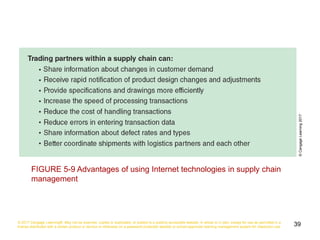
FIGURE 5-9 Advantages of using Internet technologies in supply chain
management
©CengageLearning2017
Increasing Supply Chain Efficiency and
Cooperation
• Using Internet and Web technologies to manage
supply chains can yield increases in efficiency and
cooperation throughout the chain
– Increase process speed, reduce costs, coordinate
design effort and increase manufacturing flexibility
– Allows response to changes in quantity and nature of
ultimate consumer demand
• Using Internet technologies, as Boeing and other
firms do, to integrate the design, development,
construction, testing, and refinement of products is
called collaborative commerce
© 2017 Cengage Learning®. May not be scanned, copied or duplicated, or posted to a publicly accessible website, in whole or in part, except for use as permitted in a
license distributed with a certain product or service or otherwise on a password-protected website or school-approved learning management system for classroom use. 40
Materials-Tracking Technologies
• Challenging task to track materials as they move
from one company to another or within a company
• Optical scanners and bar codes track movement of
materials and integration with EDI is now prevalent
– Manages inventory flows and forecasts materials
needs across the supply chain
– Real-time location systems (RTLS) are bar code
tracking system used by fulfillment centers
• Second wave of electronic commerce includes new
types of tracking integrated with Internet-based
materials-tracking systems
© © 2017 Cengage Learning®. May not be scanned, copied or duplicated, or posted to a publicly accessible website, in whole or in part, except for use as permitted in a
license distributed with a certain product or service or otherwise on a password-protected website or school-approved learning management system for classroom use. 41
© 2017 Cengage Learning®. May not be scanned, copied or duplicated, or posted to a publicly accessible website, in whole or in part, except for use as permitted in a
license distributed with a certain product or service or otherwise on a password-protected website or school-approved learning management system for classroom use. 42
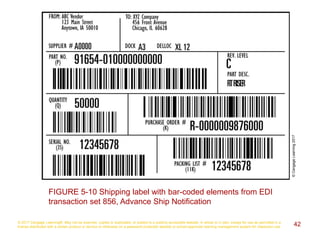
FIGURE 5-10 Shipping label with bar-coded elements from EDI
transaction set 856, Advance Ship Notification
©CengageLearning2017
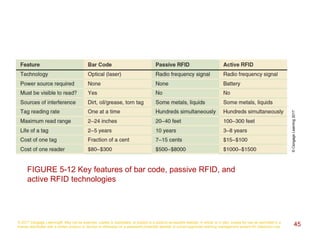
• Radio Frequency Identification Devices (RFIDs)
– Small chips using radio transmissions track inventory
quicker and more accurately than bar codes
– Active RFIDs have their own power supply
– Passive RFID tags are inexpensive and small and do
not need a power source
– Goal is to help reduce lost sales from stockouts
• Industry observers believe RFID tagging in retail will
become widespread starting in 2017 when many
retailers plans to have them in all locations
© 2017 Cengage Learning®. May not be scanned, copied or duplicated, or posted to a publicly accessible website, in whole or in part, except for use as permitted in a
license distributed with a certain product or service or otherwise on a password-protected website or school-approved learning management system for classroom use. 43
Materials-Tracking Technologies (cont’d.)
© 2017 Cengage Learning®. May not be scanned, copied or duplicated, or posted to a publicly accessible website, in whole or in part, except for use as permitted in a
license distributed with a certain product or service or otherwise on a password-protected website or school-approved learning management system for classroom use. 44
FIGURE 5-11 Passive RFID Tag
©AlbertLozano/Shutterstock.com
© 2017 Cengage Learning®. May not be scanned, copied or duplicated, or posted to a publicly accessible website, in whole or in part, except for use as permitted in a
license distributed with a certain product or service or otherwise on a password-protected website or school-approved learning management system for classroom use. 45
FIGURE 5-12 Key features of bar code, passive RFID, and
active RFID technologies
©CengageLearning2017
Creating an Ultimate Consumer Orientation
in the Supply Chain
• One main goal of supply chain management is to
help each company focus on meeting needs of
consumer at the end of the supply chain
– Ultimate consumer orientation difficult to maintain
• Michelin North America pioneered use of Internet
technology to go beyond next step in its value chain
– 1995: launched online business initiative BIB NET
– Allowed dealer access to tire specifications, inventory
status, and promotional information
• Saved money for Michelin and gave dealers better
service making them more likely to recommend tires
© 2017 Cengage Learning®. May not be scanned, copied or duplicated, or posted to a publicly accessible website, in whole or in part, except for use as permitted in a
license distributed with a certain product or service or otherwise on a password-protected website or school-approved learning management system for classroom use. 46
Building and Maintaining Trust in
the Supply Chain
• Major issue in forming supply chain alliances is
developing trust
• Key elements are continual communication and
information sharing
• Internet and the Web provide excellent ways to
communicate and share information and offer new
avenues for building trust
– Provides easy, inexpensive contact with customers
– Gives buyers instant access to sales representatives
– Provides comprehensive information quickly
© 2017 Cengage Learning®. May not be scanned, copied or duplicated, or posted to a publicly accessible website, in whole or in part, except for use as permitted in a
license distributed with a certain product or service or otherwise on a password-protected website or school-approved learning management system for classroom use. 47
Online Business Marketplaces and Portals
• Vertical portals are industry-focused hubs
– Offer marketplaces and auctions for contact and
business transactions
– Doorway (or portal) to the Internet for industry
members
– Vertically integrated: each hub services just one
industry
© 2017 Cengage Learning®. May not be scanned, copied or duplicated, or posted to a publicly accessible website, in whole or in part, except for use as permitted in a
license distributed with a certain product or service or otherwise on a password-protected website or school-approved learning management system for classroom use. 48
Independent Industry Marketplaces
• First vertical portals were trading exchanges
focused on a particular industry
• Independent industry marketplaces
– Industry marketplaces: focused on a single industry
– Independent exchanges: not controlled by established
buyer or seller in the industry
– Public marketplaces: open to new buyers and sellers
just entering the industry
• Ventro opened industry marketplace Chemdex
– Trade in bulk chemicals
© 2017 Cengage Learning®. May not be scanned, copied or duplicated, or posted to a publicly accessible website, in whole or in part, except for use as permitted in a
license distributed with a certain product or service or otherwise on a password-protected website or school-approved learning management system for classroom use. 49
Independent Industry Marketplaces (cont’d.)
• By mid-2000s, more than 2200 independent
exchanges
– Today fewer than 100 industry marketplaces still
operating due to lack of profitability
• By 2010, various forms of B2B marketplace models
gradually replaced independent marketplaces
• In 2012 Amazon.com launched AmazonSupply that
is now part of Amazon Business Marketplace
• Google followed with Google Shopping for
Suppliers, which was later folded into its Google
Shopping site
© 2017 Cengage Learning®. May not be scanned, copied or duplicated, or posted to a publicly accessible website, in whole or in part, except for use as permitted in a
license distributed with a certain product or service or otherwise on a password-protected website or school-approved learning management system for classroom use. 50
Private Stores and Customer Portals
• Large established sellers feared industry
marketplaces would dilute their negotiating power
• Many had already invested heavily in Web sites they
believed would meet customer needs better
– Password protected private stores for major
customers with price reductions on some products
– Customer portal sites offer private stores along with
other services that would be needlessly duplicated in
sellers participated in industry marketplaces
© 2017 Cengage Learning®. May not be scanned, copied or duplicated, or posted to a publicly accessible website, in whole or in part, except for use as permitted in a
license distributed with a certain product or service or otherwise on a password-protected website or school-approved learning management system for classroom use. 51
Private Company Marketplaces
• Large companies purchasing from relatively small
vendors exert power in purchasing negotiations
• E-procurement software allows companies to
manage purchasing function through Web interface
– Automates authorizations, other steps and usually
includes marketplace functions
• When industry marketplaces opened for business,
these large companies were reluctant to abandon
their e-procurement software investment
– Force suppliers to deal with them on their terms
rather than negotiate with industry marketplace
© 2017 Cengage Learning®. May not be scanned, copied or duplicated, or posted to a publicly accessible website, in whole or in part, except for use as permitted in a
license distributed with a certain product or service or otherwise on a password-protected website or school-approved learning management system for classroom use. 52
Private Company Marketplaces (cont’d.)
• Private company marketplace is a marketplace
providing auctions, request for quote postings, other
features similar to those of e-procurement software
– Many have expanded to include functions allowing
supply chain participants to manage multiple
functions
• Manufacturing, tier-one and tier-two suppliers,
distribution centers, transportation, orders, invoicing
and payment
– Expanded arrangements are called private industrial
networks or private trading exchanges
© 2017 Cengage Learning®. May not be scanned, copied or duplicated, or posted to a publicly accessible website, in whole or in part, except for use as permitted in a
license distributed with a certain product or service or otherwise on a password-protected website or school-approved learning management system for classroom use. 53
Industry Consortia-Sponsored Marketplaces
• Some companies have strong negotiating positions
but not enough power to force suppliers to deal with
them through a private company marketplace
• Industry consortia-sponsored marketplace is a
marketplace formed by several large buyers in a
particular industry
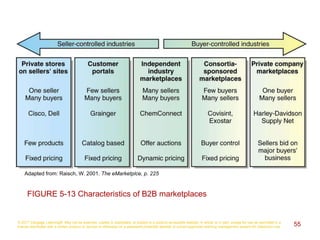
• Characteristics of five general marketplace forms in
B2B electronic commerce today
– Shown in Figure 5-13
© 2017 Cengage Learning®. May not be scanned, copied or duplicated, or posted to a publicly accessible website, in whole or in part, except for use as permitted in a
license distributed with a certain product or service or otherwise on a password-protected website or school-approved learning management system for classroom use. 54
© 2017 Cengage Learning®. May not be scanned, copied or duplicated, or posted to a publicly accessible website, in whole or in part, except for use as permitted in a
license distributed with a certain product or service or otherwise on a password-protected website or school-approved learning management system for classroom use. 55
FIGURE 5-13 Characteristics of B2B marketplaces
Adapted from: Raisch, W. 2001. The eMarketplce, p. 225

BSAD 372 SPRING 2017 CH 5

  • 1.
    Business-to-Business Activities: Improving Efficiency andReducing Costs CHAPTER 5 © 2017 Cengage Learning®. May not be scanned, copied or duplicated, or posted to a publicly accessible website, in whole or in part, except for use as permitted in a license distributed with a certain product or service or otherwise on a password-protected website or school-approved learning management system for classroom use. .
  • 2.
    Learning Objectives In thischapter, you will learn: • How businesses use the Internet to improve purchasing, logistics, and other support activities • How the Internet facilitates implementation of outsourcing and offshoring business strategies • How electronic data interchange works and how it has evolved using Internet technologies © 2017 Cengage Learning®. May not be scanned, copied or duplicated, or posted to a publicly accessible website, in whole or in part, except for use as permitted in a license distributed with a certain product or service or otherwise on a password-protected website or school-approved learning management system for classroom use. 2
  • 3.
    3 Learning Objectives (cont’d.) •What supply chain management is and how businesses are using Internet technologies to improve it • How the various types of online business marketplaces operate to make B2B transactions easier and more efficient © 2017 Cengage Learning®. May not be scanned, copied or duplicated, or posted to a publicly accessible website, in whole or in part, except for use as permitted in a license distributed with a certain product or service or otherwise on a password-protected website or school-approved learning management system for classroom use. 3
  • 4.
    Introduction • After ayear of working in Ghana teaching English, Leila Janah started Samasource in 2008 – Links workers in developing countries with companies who need work done – Has lifted more than 6,500 African, Asian and Haitian workers above the poverty line – Cost-effective for businesses – Builds worker knowledge and skills in less developed countries and gives low-income workers in developed countries similar opportunities – Use of the Internet to do good around the world © 2017 Cengage Learning®. May not be scanned, copied or duplicated, or posted to a publicly accessible website, in whole or in part, except for use as permitted in a license distributed with a certain product or service or otherwise on a password-protected website or school-approved learning management system for classroom use. 4
  • 5.
    Outsourcing and Offshoring •Outsourcing is using other organizations to perform specific activities – Typically used for manufacturing • Offshoring is outsourcing done by organizations in other countries – Business process offshoring includes purchasing, research and development, record keeping, information management – Impact sourcing (smart sourcing) is offshoring done by or through not-for-profit organizations © 2017 Cengage Learning®. May not be scanned, copied or duplicated, or posted to a publicly accessible website, in whole or in part, except for use as permitted in a license distributed with a certain product or service or otherwise on a password-protected website or school-approved learning management system for classroom use. 5
  • 6.
    Purchasing Activities • Identifyand evaluate vendors, select specific products, place orders, resolve any issues after receipt of goods or services • Supply chain is the part of industry value chain preceding a particular strategic business unit – Includes all activities undertaken by every predecessor in the value chain to design, produce, promote, market, deliver, support each individual component of a product or service • Traditionally purchasing department buys components at lowest price possible via bidding © 2017 Cengage Learning®. May not be scanned, copied or duplicated, or posted to a publicly accessible website, in whole or in part, except for use as permitted in a license distributed with a certain product or service or otherwise on a password-protected website or school-approved learning management system for classroom use. 6
  • 7.
    • Procurement includesall purchasing activities, monitoring all purchase transaction elements and managing and developing supplier relationships – Also called supply chain management • Procurement staff have high product knowledge to identify and evaluate appropriate suppliers – Sourcing is identifying suppliers and determining qualifications – e-sourcing is the use of Internet technologies in sourcing activities © 2017 Cengage Learning®. May not be scanned, copied or duplicated, or posted to a publicly accessible website, in whole or in part, except for use as permitted in a license distributed with a certain product or service or otherwise on a password-protected website or school-approved learning management system for classroom use. 7 Purchasing Activities (cont’d.)
  • 8.
    • Business purchasingprocess is more complex than most consumer purchasing processes • Spend is the total yearly dollar amount for goods and services purchased – Managing spend is an important function and can be a key component in overall profitability • Institute for Supply Management (ISM) is the main organization for procurement professionals © 2017 Cengage Learning®. May not be scanned, copied or duplicated, or posted to a publicly accessible website, in whole or in part, except for use as permitted in a license distributed with a certain product or service or otherwise on a password-protected website or school-approved learning management system for classroom use. 8 Purchasing Activities (cont’d.)
  • 9.
    © 2017 CengageLearning®. May not be scanned, copied or duplicated, or posted to a publicly accessible website, in whole or in part, except for use as permitted in a license distributed with a certain product or service or otherwise on a password-protected website or school-approved learning management system for classroom use. 9 FIGURE 5-1 Steps in a typical business purchasing process ©CengageLearning2017
  • 10.
    Direct vs. IndirectMaterials Purchasing • Direct materials become part of finished product • Direct materials purchasing – Replenishment purchasing (contract purchasing) • Company negotiates long-term material contracts – Spot purchasing • Purchases made in loosely organized (spot) market • If demand exceeds contract purchasing estimates • Indirect materials are all other materials company purchases – Includes factory supplies and replacement parts for machinery © 2017 Cengage Learning®. May not be scanned, copied or duplicated, or posted to a publicly accessible website, in whole or in part, except for use as permitted in a license distributed with a certain product or service or otherwise on a password-protected website or school-approved learning management system for classroom use. 10
  • 11.
    Direct vs. IndirectMaterials Purchasing (cont’d.) • Maintenance, repair, and operating (MRO) supplies are indirect materials purchased on a recurring basis – Standard items (commodities) with price as main criterion • Purchasing cards (p-cards) allow managers to make multiple small purchases with cost-tracking information sent to procurement • Leading suppliers – MRO: McMaster-Carr, W.W. Grainger, – Office Depot, Staples, Digi-Key, Newark.com © 2017 Cengage Learning®. May not be scanned, copied or duplicated, or posted to a publicly accessible website, in whole or in part, except for use as permitted in a license distributed with a certain product or service or otherwise on a password-protected website or school-approved learning management system for classroom use. 11
  • 12.
    Logistics Activities • Classicobjective is to provide the right goods in the right quantities in the right place at the right time • Managing materials, supplies and finished goods – Web and the Internet providing increasing number of opportunities to better manage activities – Third-party logistics (3PL) provider operates a customer’s materials movement activities • Marriage of GPS and portable computing with the Internet is an example of second-wave e-commerce • Third-wave e-commerce supported by smart phones © 2017 Cengage Learning®. May not be scanned, copied or duplicated, or posted to a publicly accessible website, in whole or in part, except for use as permitted in a license distributed with a certain product or service or otherwise on a password-protected website or school-approved learning management system for classroom use. 12
  • 13.
    13 • Finance andadministration, human resources (HR), technology development – Human resources, payroll, retirement plan servicing often outsourced by small/midsized companies • Common support activity is training – May be handled by HR or individual departments • Knowledge management is the intentional collection and classification; dissemination of information about a company and its products and processes © 2017 Cengage Learning®. May not be scanned, copied or duplicated, or posted to a publicly accessible website, in whole or in part, except for use as permitted in a license distributed with a certain product or service or otherwise on a password-protected website or school-approved learning management system for classroom use. 13 Business Process Support Activities
  • 14.
    © 2017 CengageLearning®. May not be scanned, copied or duplicated, or posted to a publicly accessible website, in whole or in part, except for use as permitted in a license distributed with a certain product or service or otherwise on a password-protected website or school-approved learning management system for classroom use. 14 ©CengageLearning2017 FIGURE 5-2 Categories of support activities
  • 15.
    E-Government • Use ofInternet technologies by governments and government agencies – Enhances functions performed for stakeholders and businesslike activity operations – U.S. government Financial Management Service (FMS) uses Pay.gov to handle activity – Bureau of Public Debt: TreasuryDirect site – Also used in other countries • U.S. states and cities usually have sites – Information about laws and regulations, licenses, jobs, tourism and more © 2017 Cengage Learning®. May not be scanned, copied or duplicated, or posted to a publicly accessible website, in whole or in part, except for use as permitted in a license distributed with a certain product or service or otherwise on a password-protected website or school-approved learning management system for classroom use. 15
  • 16.
    © 2017 CengageLearning®. May not be scanned, copied or duplicated, or posted to a publicly accessible website, in whole or in part, except for use as permitted in a license distributed with a certain product or service or otherwise on a password-protected website or school-approved learning management system for classroom use. 16 ©2012StateofCalifornia FIGURE 5-3 State of California portal site
  • 17.
    Network Model ofEconomic Organization in Purchasing: Supply Webs • Trend in purchasing, logistics, and support activities is the shift from hierarchical structures toward network structures – Procurement departments being given new tools to negotiate and possibly form strategic alliances • Supply Web is replacing the term “supply chain” – Parallel lines interconnect to form a Web or network configuration • Roots of Web technology for B2B transactions lie in a hierarchically structured approach to inter-firm information transfer: electronic data exchange © 2017 Cengage Learning®. May not be scanned, copied or duplicated, or posted to a publicly accessible website, in whole or in part, except for use as permitted in a license distributed with a certain product or service or otherwise on a password-protected website or school-approved learning management system for classroom use. 17
  • 18.
    Electronic Data Interchange •Computer-to-computer business information transfer using a standard format – Businesses exchanging info are trading partners • EDI compatible firms exchange data in specific standard formats – Often transaction data but can include other information related to transactions • Most B2B e-commerce adapted from EDI or based on EDI principles • Dominant technology for electronic B2B transactions © 2017 Cengage Learning®. May not be scanned, copied or duplicated, or posted to a publicly accessible website, in whole or in part, except for use as permitted in a license distributed with a certain product or service or otherwise on a password-protected website or school-approved learning management system for classroom use. 18
  • 19.
    Early Business Information InterchangeEfforts • The need to create formal business transaction records began in the late 1800s and early 1900s • Companies were using computers for recording internal transactions by the 1950s – Information flows between companies on paper which was slow, inefficient, redundant and unreliable • In the 1960s businesses with volume transactions exchanged info on punched cards or magnetic tape – In the 1960s and 1970s technologies improved and intercompany information could be transferred over telephone lines © 2017 Cengage Learning®. May not be scanned, copied or duplicated, or posted to a publicly accessible website, in whole or in part, except for use as permitted in a license distributed with a certain product or service or otherwise on a password-protected website or school-approved learning management system for classroom use. 19
  • 20.
    Early Business Information InterchangeEfforts (cont’d.) • Information transfer agreements between trading partners increased efficiency but not ideal – Incompatible data translation limited participation • Freight and shipping companies joined together in 1968 to create a standardized information set – Used a computer file transmittable to any freight company adopting the standard – Benefits limited to members of industries that created standard-setting groups • Full realization of EDI economies and efficiencies required standards for all companies in all industries © 2017 Cengage Learning®. May not be scanned, copied or duplicated, or posted to a publicly accessible website, in whole or in part, except for use as permitted in a license distributed with a certain product or service or otherwise on a password-protected website or school-approved learning management system for classroom use. 20
  • 21.
    Emergence of BroaderStandards: The Birth of EDI • American National Standards Institute (ANSI) is the coordinating body for standards in the U.S. – Accredited Standards Committee X12 (ASC X12) develops and maintains EDI standards – Data Interchange Standards Association (DISA) is the administrative body coordinating ASC X12 activities – Transaction sets are names of the formats for specific business data interchanges • EDI for Administration, Commerce, and Transport (EDIFACT, or UN/EDIFACT) © 2017 Cengage Learning®. May not be scanned, copied or duplicated, or posted to a publicly accessible website, in whole or in part, except for use as permitted in a license distributed with a certain product or service or otherwise on a password-protected website or school-approved learning management system for classroom use. 21
  • 22.
    © 2017 CengageLearning®. May not be scanned, copied or duplicated, or posted to a publicly accessible website, in whole or in part, except for use as permitted in a license distributed with a certain product or service or otherwise on a password-protected website or school-approved learning management system for classroom use. 22 FIGURE 5-4 Commonly used EDI transaction sets ©CengageLearning2017
  • 23.
    How EDI Works •Basic idea: straightforward • Implementation: complicated • Example: – Company replacing metal-cutting machine • Steps to purchase using paper-based system • Steps to purchase using EDI © 2017 Cengage Learning®. May not be scanned, copied or duplicated, or posted to a publicly accessible website, in whole or in part, except for use as permitted in a license distributed with a certain product or service or otherwise on a password-protected website or school-approved learning management system for classroom use. 23
  • 24.
    Paper-Based Purchasing Process •Buyer and vendor not using integrated software for business processes so each information processing step results in paper document • Must be delivered to department handling next step – Paper-based information transfer • Mail, courier, fax – Information flows shown in Figure 5-5 © 2017 Cengage Learning®. May not be scanned, copied or duplicated, or posted to a publicly accessible website, in whole or in part, except for use as permitted in a license distributed with a certain product or service or otherwise on a password-protected website or school-approved learning management system for classroom use. 24
  • 25.
    © 2017 CengageLearning®. May not be scanned, copied or duplicated, or posted to a publicly accessible website, in whole or in part, except for use as permitted in a license distributed with a certain product or service or otherwise on a password-protected website or school-approved learning management system for classroom use. 25 FIGURE 5-5 Information flows in a paper-based purchasing process ©CengageLearning2017
  • 26.
    • Mail servicereplaced with EDI network data communications – Paper flows within buyer’s and vendor’s organizations replaced with computers running EDI translation software – Information flows shown in Figure 5-6 © 2017 Cengage Learning®. May not be scanned, copied or duplicated, or posted to a publicly accessible website, in whole or in part, except for use as permitted in a license distributed with a certain product or service or otherwise on a password-protected website or school-approved learning management system for classroom use. 26 EDI Purchasing Process
  • 27.
    © 2017 CengageLearning®. May not be scanned, copied or duplicated, or posted to a publicly accessible website, in whole or in part, except for use as permitted in a license distributed with a certain product or service or otherwise on a password-protected website or school-approved learning management system for classroom use. 27 FIGURE 5-6 Information flows in an EDI purchasing process ©CengageLearning2017
  • 28.
    Value-Added Networks • Tradingpartners can implement the EDI network and EDI translation processes in several ways • Each way uses one of two basic approaches • Direct connection EDI requires each business to operate its own on-site EDI translator computer – Connected directly to each other using leased lines – Few companies use direct connection EDI because dedicated leased lines are expensive © 2017 Cengage Learning®. May not be scanned, copied or duplicated, or posted to a publicly accessible website, in whole or in part, except for use as permitted in a license distributed with a certain product or service or otherwise on a password-protected website or school-approved learning management system for classroom use. 28
  • 29.
    © 2017 CengageLearning®. May not be scanned, copied or duplicated, or posted to a publicly accessible website, in whole or in part, except for use as permitted in a license distributed with a certain product or service or otherwise on a password-protected website or school-approved learning management system for classroom use. 29 FIGURE 5-7 Direct connection EDI ©CengageLearning2017
  • 30.
    • Company mayuse a value-added network (VAN) – Receives, stores, forwards electronic messages containing EDI transaction sets • With indirect connection EDI trading partners use VAN to retrieve EDI-formatted messages – Must install compatible EDI translator software – Trading partners pass messages through the VAN instead of directly connecting computers © 2017 Cengage Learning®. May not be scanned, copied or duplicated, or posted to a publicly accessible website, in whole or in part, except for use as permitted in a license distributed with a certain product or service or otherwise on a password-protected website or school-approved learning management system for classroom use. 3030 Value-Added Networks (cont’d.)
  • 31.
    31 FIGURE 5-8 Indirectconnection EDI through a VAN © 2017 Cengage Learning®. May not be scanned, copied or duplicated, or posted to a publicly accessible website, in whole or in part, except for use as permitted in a license distributed with a certain product or service or otherwise on a password-protected website or school-approved learning management system for classroom use. 31 ©CengageLearning2017
  • 32.
    • Advantages ofa VAN – Need to support one communications protocol and the VAN provides translation between different transaction sets – VAN performs automatic compliance checking and records message activity in an audit log • Helps establish nonrepudiation: ability to establish that a particular transaction actually occurred • Cost used to be a disadvantage, now much lower – Internet presents low-cost communications medium used by VAN services © 2017 Cengage Learning®. May not be scanned, copied or duplicated, or posted to a publicly accessible website, in whole or in part, except for use as permitted in a license distributed with a certain product or service or otherwise on a password-protected website or school-approved learning management system for classroom use. 32 Value-Added Networks (cont’d.)
  • 33.
    • EDI onthe Internet called Internet EDI, Web EDI, or open EDI – Internet is open architect network • EDIINT (Electronic Data Interchange-Internet Integration, EDI-INT) is the most common protocol for Internet EDI transaction sets • EDI exchanges encoded using AS2 (Applicability Statement 2) or AS3 (Applicability Statement 3) – Secure electronic receipts returned to senders for every transaction which helps establish repudiation © 2017 Cengage Learning®. May not be scanned, copied or duplicated, or posted to a publicly accessible website, in whole or in part, except for use as permitted in a license distributed with a certain product or service or otherwise on a password-protected website or school-approved learning management system for classroom use. 33 Value-Added Networks (cont’d.)
  • 34.
    EDI Payments • EDItransaction sets provide instructions to trading partner’s bank • Negotiable instruments, the electronic equivalent of checks • Electronic funds transfers (EFTs) is the movement of money from one bank account to another – Executed using an Automated clearing house (ACH) system which is used by service banks to manage accounts with each other • Operated by U.S. Federal Reserve Banks, private ACHs © 2017 Cengage Learning®. May not be scanned, copied or duplicated, or posted to a publicly accessible website, in whole or in part, except for use as permitted in a license distributed with a certain product or service or otherwise on a password-protected website or school-approved learning management system for classroom use. 34
  • 35.
    Supply Chain ManagementUsing Internet Technologies • Supply chain management is the job of managing integration of company supply management and logistics activities – Across multiple participants in a particular product’s supply chain – Ultimate goal is to achieve higher-quality or lower- cost product at the end of the chain © 2017 Cengage Learning®. May not be scanned, copied or duplicated, or posted to a publicly accessible website, in whole or in part, except for use as permitted in a license distributed with a certain product or service or otherwise on a password-protected website or school-approved learning management system for classroom use. 35
  • 36.
    Value Creation inthe Supply Chain • Engaging suppliers in cooperative relationships can lead to better, faster, cheaper service to customers – Company goes beyond its limits and creates a new network form among members of the supply chain • Use of technology to improve operational efficiency is supply chain competition – Can help implement management techniques • Just-in-time reduces inventory and lean production focus on eliminating waste and unnecessary processes • Originally developed as a way to reduce cost – Now adds benefits to the ultimate consumer © 2017 Cengage Learning®. May not be scanned, copied or duplicated, or posted to a publicly accessible website, in whole or in part, except for use as permitted in a license distributed with a certain product or service or otherwise on a password-protected website or school-approved learning management system for classroom use. 36
  • 37.
    • Requires establishmentof long-term relationship with a small number of capable tier-one suppliers – Tier-one suppliers develop relationships with tier-two suppliers who provide components and raw materials – Tier-three suppliers provide components and raw materials to tier-two suppliers • Key element is trust among the supply alliance • Buyers expect annual price reductions, quality improvements from suppliers at each stage • Ideally each level of supplier can share the benefits of reduced cost and more efficient operations © 2017 Cengage Learning®. May not be scanned, copied or duplicated, or posted to a publicly accessible website, in whole or in part, except for use as permitted in a license distributed with a certain product or service or otherwise on a password-protected website or school-approved learning management system for classroom use. 37 Value Creation in the Supply Chain (cont’d.)
  • 38.
    • Key coordinationeffort is a consistent production strategy adopted by all supply chain participants – How competitive advantage is achieved, such as efficient processing or market-responsive flexibility • Clear communications and quick response are key elements of successful supply chain management • Adaptive supply chain exists when company uses technology to quick respond to change in market demand and supplier conditions – Leads to higher efficiency, lower costs and greater profits © 2017 Cengage Learning®. May not be scanned, copied or duplicated, or posted to a publicly accessible website, in whole or in part, except for use as permitted in a license distributed with a certain product or service or otherwise on a password-protected website or school-approved learning management system for classroom use. 38 Value Creation in the Supply Chain (cont’d.)
  • 39.
    © 2017 CengageLearning®. May not be scanned, copied or duplicated, or posted to a publicly accessible website, in whole or in part, except for use as permitted in a license distributed with a certain product or service or otherwise on a password-protected website or school-approved learning management system for classroom use. 39 FIGURE 5-9 Advantages of using Internet technologies in supply chain management ©CengageLearning2017
  • 40.
    Increasing Supply ChainEfficiency and Cooperation • Using Internet and Web technologies to manage supply chains can yield increases in efficiency and cooperation throughout the chain – Increase process speed, reduce costs, coordinate design effort and increase manufacturing flexibility – Allows response to changes in quantity and nature of ultimate consumer demand • Using Internet technologies, as Boeing and other firms do, to integrate the design, development, construction, testing, and refinement of products is called collaborative commerce © 2017 Cengage Learning®. May not be scanned, copied or duplicated, or posted to a publicly accessible website, in whole or in part, except for use as permitted in a license distributed with a certain product or service or otherwise on a password-protected website or school-approved learning management system for classroom use. 40
  • 41.
    Materials-Tracking Technologies • Challengingtask to track materials as they move from one company to another or within a company • Optical scanners and bar codes track movement of materials and integration with EDI is now prevalent – Manages inventory flows and forecasts materials needs across the supply chain – Real-time location systems (RTLS) are bar code tracking system used by fulfillment centers • Second wave of electronic commerce includes new types of tracking integrated with Internet-based materials-tracking systems © © 2017 Cengage Learning®. May not be scanned, copied or duplicated, or posted to a publicly accessible website, in whole or in part, except for use as permitted in a license distributed with a certain product or service or otherwise on a password-protected website or school-approved learning management system for classroom use. 41
  • 42.
    © 2017 CengageLearning®. May not be scanned, copied or duplicated, or posted to a publicly accessible website, in whole or in part, except for use as permitted in a license distributed with a certain product or service or otherwise on a password-protected website or school-approved learning management system for classroom use. 42 FIGURE 5-10 Shipping label with bar-coded elements from EDI transaction set 856, Advance Ship Notification ©CengageLearning2017
  • 43.
    • Radio FrequencyIdentification Devices (RFIDs) – Small chips using radio transmissions track inventory quicker and more accurately than bar codes – Active RFIDs have their own power supply – Passive RFID tags are inexpensive and small and do not need a power source – Goal is to help reduce lost sales from stockouts • Industry observers believe RFID tagging in retail will become widespread starting in 2017 when many retailers plans to have them in all locations © 2017 Cengage Learning®. May not be scanned, copied or duplicated, or posted to a publicly accessible website, in whole or in part, except for use as permitted in a license distributed with a certain product or service or otherwise on a password-protected website or school-approved learning management system for classroom use. 43 Materials-Tracking Technologies (cont’d.)
  • 44.
    © 2017 CengageLearning®. May not be scanned, copied or duplicated, or posted to a publicly accessible website, in whole or in part, except for use as permitted in a license distributed with a certain product or service or otherwise on a password-protected website or school-approved learning management system for classroom use. 44 FIGURE 5-11 Passive RFID Tag ©AlbertLozano/Shutterstock.com
  • 45.
    © 2017 CengageLearning®. May not be scanned, copied or duplicated, or posted to a publicly accessible website, in whole or in part, except for use as permitted in a license distributed with a certain product or service or otherwise on a password-protected website or school-approved learning management system for classroom use. 45 FIGURE 5-12 Key features of bar code, passive RFID, and active RFID technologies ©CengageLearning2017
  • 46.
    Creating an UltimateConsumer Orientation in the Supply Chain • One main goal of supply chain management is to help each company focus on meeting needs of consumer at the end of the supply chain – Ultimate consumer orientation difficult to maintain • Michelin North America pioneered use of Internet technology to go beyond next step in its value chain – 1995: launched online business initiative BIB NET – Allowed dealer access to tire specifications, inventory status, and promotional information • Saved money for Michelin and gave dealers better service making them more likely to recommend tires © 2017 Cengage Learning®. May not be scanned, copied or duplicated, or posted to a publicly accessible website, in whole or in part, except for use as permitted in a license distributed with a certain product or service or otherwise on a password-protected website or school-approved learning management system for classroom use. 46
  • 47.
    Building and MaintainingTrust in the Supply Chain • Major issue in forming supply chain alliances is developing trust • Key elements are continual communication and information sharing • Internet and the Web provide excellent ways to communicate and share information and offer new avenues for building trust – Provides easy, inexpensive contact with customers – Gives buyers instant access to sales representatives – Provides comprehensive information quickly © 2017 Cengage Learning®. May not be scanned, copied or duplicated, or posted to a publicly accessible website, in whole or in part, except for use as permitted in a license distributed with a certain product or service or otherwise on a password-protected website or school-approved learning management system for classroom use. 47
  • 48.
    Online Business Marketplacesand Portals • Vertical portals are industry-focused hubs – Offer marketplaces and auctions for contact and business transactions – Doorway (or portal) to the Internet for industry members – Vertically integrated: each hub services just one industry © 2017 Cengage Learning®. May not be scanned, copied or duplicated, or posted to a publicly accessible website, in whole or in part, except for use as permitted in a license distributed with a certain product or service or otherwise on a password-protected website or school-approved learning management system for classroom use. 48
  • 49.
    Independent Industry Marketplaces •First vertical portals were trading exchanges focused on a particular industry • Independent industry marketplaces – Industry marketplaces: focused on a single industry – Independent exchanges: not controlled by established buyer or seller in the industry – Public marketplaces: open to new buyers and sellers just entering the industry • Ventro opened industry marketplace Chemdex – Trade in bulk chemicals © 2017 Cengage Learning®. May not be scanned, copied or duplicated, or posted to a publicly accessible website, in whole or in part, except for use as permitted in a license distributed with a certain product or service or otherwise on a password-protected website or school-approved learning management system for classroom use. 49
  • 50.
    Independent Industry Marketplaces(cont’d.) • By mid-2000s, more than 2200 independent exchanges – Today fewer than 100 industry marketplaces still operating due to lack of profitability • By 2010, various forms of B2B marketplace models gradually replaced independent marketplaces • In 2012 Amazon.com launched AmazonSupply that is now part of Amazon Business Marketplace • Google followed with Google Shopping for Suppliers, which was later folded into its Google Shopping site © 2017 Cengage Learning®. May not be scanned, copied or duplicated, or posted to a publicly accessible website, in whole or in part, except for use as permitted in a license distributed with a certain product or service or otherwise on a password-protected website or school-approved learning management system for classroom use. 50
  • 51.
    Private Stores andCustomer Portals • Large established sellers feared industry marketplaces would dilute their negotiating power • Many had already invested heavily in Web sites they believed would meet customer needs better – Password protected private stores for major customers with price reductions on some products – Customer portal sites offer private stores along with other services that would be needlessly duplicated in sellers participated in industry marketplaces © 2017 Cengage Learning®. May not be scanned, copied or duplicated, or posted to a publicly accessible website, in whole or in part, except for use as permitted in a license distributed with a certain product or service or otherwise on a password-protected website or school-approved learning management system for classroom use. 51
  • 52.
    Private Company Marketplaces •Large companies purchasing from relatively small vendors exert power in purchasing negotiations • E-procurement software allows companies to manage purchasing function through Web interface – Automates authorizations, other steps and usually includes marketplace functions • When industry marketplaces opened for business, these large companies were reluctant to abandon their e-procurement software investment – Force suppliers to deal with them on their terms rather than negotiate with industry marketplace © 2017 Cengage Learning®. May not be scanned, copied or duplicated, or posted to a publicly accessible website, in whole or in part, except for use as permitted in a license distributed with a certain product or service or otherwise on a password-protected website or school-approved learning management system for classroom use. 52
  • 53.
    Private Company Marketplaces(cont’d.) • Private company marketplace is a marketplace providing auctions, request for quote postings, other features similar to those of e-procurement software – Many have expanded to include functions allowing supply chain participants to manage multiple functions • Manufacturing, tier-one and tier-two suppliers, distribution centers, transportation, orders, invoicing and payment – Expanded arrangements are called private industrial networks or private trading exchanges © 2017 Cengage Learning®. May not be scanned, copied or duplicated, or posted to a publicly accessible website, in whole or in part, except for use as permitted in a license distributed with a certain product or service or otherwise on a password-protected website or school-approved learning management system for classroom use. 53
  • 54.
    Industry Consortia-Sponsored Marketplaces •Some companies have strong negotiating positions but not enough power to force suppliers to deal with them through a private company marketplace • Industry consortia-sponsored marketplace is a marketplace formed by several large buyers in a particular industry • Characteristics of five general marketplace forms in B2B electronic commerce today – Shown in Figure 5-13 © 2017 Cengage Learning®. May not be scanned, copied or duplicated, or posted to a publicly accessible website, in whole or in part, except for use as permitted in a license distributed with a certain product or service or otherwise on a password-protected website or school-approved learning management system for classroom use. 54
  • 55.
    © 2017 CengageLearning®. May not be scanned, copied or duplicated, or posted to a publicly accessible website, in whole or in part, except for use as permitted in a license distributed with a certain product or service or otherwise on a password-protected website or school-approved learning management system for classroom use. 55 FIGURE 5-13 Characteristics of B2B marketplaces Adapted from: Raisch, W. 2001. The eMarketplce, p. 225

Editor's Notes