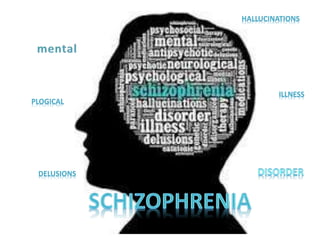
PLOGICAL 
HALLUCINATIONS 
ILLNESS 
DELUSIONS
• Schizophrenia is a chronic disease which affects 
the way a person thinks, sees the world as well as 
their actions. People with schizophrenia have a 
changing recognition of the real world often a 
crucial loss of connection of the real world. 
Schizophrenia causes illusionary seeing and 
hearing as well as strange and confusing ways of 
speaking.
WHAT IS SCHIZOPHRENIA 
• They believe that others are trying to hurt them or 
that they are always being observed. Schizophrenia 
makes it strenuous even panic to interact with daily 
life tasks, people with extract from the outside world 
or react out of hesitation and agitation (What is 
schizophrenia?, (n.d).
• Symptoms of schizophrenia can appear immediately without 
caution as but most of the time the symptoms come slowly 
with small warnings and a moderate rejection in functioning 
appears. People with schizophrenia tend to become anti-social 
and show no signs of wanting to communicate. A lack of 
motivation is also one of the symptoms causing the sufferer to 
have no interferes or desire for anything (Samuel b. 
guze,1970).
SYMPTOMS AND SIGNS 
• Thought disorder is one of symptoms of 
schizophrenia which causes the person to think and 
have illogical conversations as well as lack in order 
and may be delusional satisfied. The person suffering 
from this illness develops a failure in expressing their 
emotions and feelings. A decline in impaired 
memory and thinking skills are also one of the 
symptoms causing poor focus, slow thinking and 
fuzzy memory.
• Hallucinations and delusions are psychotic symptoms. Hallucinations 
are when a person might hear smell or see something that doesn’t exist 
but the sufferer thinks is legitimate. Delusions are beliefs that are 
deceptive for example mistreatment, nobility, disgrace that seem 
completely real to the person having delusions. 
• A few common early warnings are being unable to cry or express 
happiness, laughing or crying inappropriately. Over sleeping or 
insomnia are also very common as well as having a loss of 
concentration and using weird words or ways of speaking. (Signs and 
symptoms of schizophrenia,(n.d).
• Hereditary is one of strong causes of schizophrenia. It 
is affected by genetics not driven by it, whilst it runs in 
families about 60% of sufferers have no family with the 
disorder. Furthermore people who are genetically 
inclined to schizophrenia don’t always develop the 
disease which goes to show that biology is not destiny.
CAUSES AND EFFECTS 
• Complications during pregnancy or labour that causes 
structural damage to the brain may as well be one of 
the causes of schizophrenia. People who are sensitive 
to any family tensions which for them may be 
associated with frequent experiences any may as well 
cause them to become schizophrenic.
CAUSES AND EFFECTS 
• Stressful incidents are another cause of 
schizophrenia causing the sufferer to often become 
anxious, annoyed and unable to concentrate causing 
problems with work study and relationships (causes 
and effects of schizophrenia, 2014).
CAUSES AND EFFECTS 
• Harmful drug use and alcohol especially 
cannabis and amphetamine may trigger 
psychosis and people who exposed to 
developing schizophrenia.
• Full psychiatric progression, physical exam, medical history and lab tests 
are all ways that schizophrenia can be diagnosed. Psychiatric progression-the 
doctor or psychiatrist will ask a number of questions about any 
symptoms, psychiatric history and family history of mental health issues. 
Medical history and exams require answers regarding your family or 
personal health history asked by your doctor. 
• Your doctor will also perform an entire physically examination to check for 
medicinal issues which may be the cause of the problem. Simply blood or 
urine tests are also ways of diagnosing schizophrenia as they can rule out 
other medical causes of symptoms. The doctor may also order brain 
imaging such as an MRI or a CT scan in or to look for abnormalities in the 
brain associating with schizophrenia.
• (Diseases and conditions of schizophrenia,(n.d) 
http://www.mayoclinic.org/diseases-conditions/schizophrenia/basics/tests-diagnosis/con- 
20021077 
• (What causes schizophrenia?, (n.d) 
http://www.health.gov.au/internet/publications/publishing.nsf/Content/mental-pubs-w-whatschiz- 
toc~mental-pubs-w-whatschiz-cau 
• (Signs and symptoms of schizophrenia,(n.d). 
• http://www.nami.org/Content/NavigationMenu/Mental_Illnesses/Schizophrenia9/Causes.htm 
• (causes and effects of schizophrenia, 2014) ihttp://www.sane.org/information/factsheets-podcasts/ 
187-schizophrenia 
• (What is schizophrenia?, (n.d). http://www.helpguide.org/mental/schizophrenia_symptom.htm 
• (Samuel b. guze,1970). http://journals.psychiatryonline.org/article.aspx?articleid=151746

Schizophrenia

  • 1.
  • 2.
    • Schizophrenia isa chronic disease which affects the way a person thinks, sees the world as well as their actions. People with schizophrenia have a changing recognition of the real world often a crucial loss of connection of the real world. Schizophrenia causes illusionary seeing and hearing as well as strange and confusing ways of speaking.
  • 3.
    WHAT IS SCHIZOPHRENIA • They believe that others are trying to hurt them or that they are always being observed. Schizophrenia makes it strenuous even panic to interact with daily life tasks, people with extract from the outside world or react out of hesitation and agitation (What is schizophrenia?, (n.d).
  • 4.
    • Symptoms ofschizophrenia can appear immediately without caution as but most of the time the symptoms come slowly with small warnings and a moderate rejection in functioning appears. People with schizophrenia tend to become anti-social and show no signs of wanting to communicate. A lack of motivation is also one of the symptoms causing the sufferer to have no interferes or desire for anything (Samuel b. guze,1970).
  • 5.
    SYMPTOMS AND SIGNS • Thought disorder is one of symptoms of schizophrenia which causes the person to think and have illogical conversations as well as lack in order and may be delusional satisfied. The person suffering from this illness develops a failure in expressing their emotions and feelings. A decline in impaired memory and thinking skills are also one of the symptoms causing poor focus, slow thinking and fuzzy memory.
  • 6.
    • Hallucinations anddelusions are psychotic symptoms. Hallucinations are when a person might hear smell or see something that doesn’t exist but the sufferer thinks is legitimate. Delusions are beliefs that are deceptive for example mistreatment, nobility, disgrace that seem completely real to the person having delusions. • A few common early warnings are being unable to cry or express happiness, laughing or crying inappropriately. Over sleeping or insomnia are also very common as well as having a loss of concentration and using weird words or ways of speaking. (Signs and symptoms of schizophrenia,(n.d).
  • 7.
    • Hereditary isone of strong causes of schizophrenia. It is affected by genetics not driven by it, whilst it runs in families about 60% of sufferers have no family with the disorder. Furthermore people who are genetically inclined to schizophrenia don’t always develop the disease which goes to show that biology is not destiny.
  • 8.
    CAUSES AND EFFECTS • Complications during pregnancy or labour that causes structural damage to the brain may as well be one of the causes of schizophrenia. People who are sensitive to any family tensions which for them may be associated with frequent experiences any may as well cause them to become schizophrenic.
  • 9.
    CAUSES AND EFFECTS • Stressful incidents are another cause of schizophrenia causing the sufferer to often become anxious, annoyed and unable to concentrate causing problems with work study and relationships (causes and effects of schizophrenia, 2014).
  • 10.
    CAUSES AND EFFECTS • Harmful drug use and alcohol especially cannabis and amphetamine may trigger psychosis and people who exposed to developing schizophrenia.
  • 11.
    • Full psychiatricprogression, physical exam, medical history and lab tests are all ways that schizophrenia can be diagnosed. Psychiatric progression-the doctor or psychiatrist will ask a number of questions about any symptoms, psychiatric history and family history of mental health issues. Medical history and exams require answers regarding your family or personal health history asked by your doctor. • Your doctor will also perform an entire physically examination to check for medicinal issues which may be the cause of the problem. Simply blood or urine tests are also ways of diagnosing schizophrenia as they can rule out other medical causes of symptoms. The doctor may also order brain imaging such as an MRI or a CT scan in or to look for abnormalities in the brain associating with schizophrenia.
  • 12.
    • (Diseases andconditions of schizophrenia,(n.d) http://www.mayoclinic.org/diseases-conditions/schizophrenia/basics/tests-diagnosis/con- 20021077 • (What causes schizophrenia?, (n.d) http://www.health.gov.au/internet/publications/publishing.nsf/Content/mental-pubs-w-whatschiz- toc~mental-pubs-w-whatschiz-cau • (Signs and symptoms of schizophrenia,(n.d). • http://www.nami.org/Content/NavigationMenu/Mental_Illnesses/Schizophrenia9/Causes.htm • (causes and effects of schizophrenia, 2014) ihttp://www.sane.org/information/factsheets-podcasts/ 187-schizophrenia • (What is schizophrenia?, (n.d). http://www.helpguide.org/mental/schizophrenia_symptom.htm • (Samuel b. guze,1970). http://journals.psychiatryonline.org/article.aspx?articleid=151746