SCALE UP AND POST APPROVAL CHANGES
(SUPAC).
POST MARKETING SURVEILLANCE.
PRESENTED BY:
SHEHNAZ KHATOON
M.PHARM(PHARMACEUTICS)
SCALE UP AND POST APPROVAL
CHANGES (SUPAC).
DEFINITION:
 The scale up process and the changes made after
approval in the composition, manufacturing ,
equipment and change of site have known as scale
up and post approval changes or SUPAC.
 There can be changes in raw materials, process,
equipment or manufacturing site, and batch size.
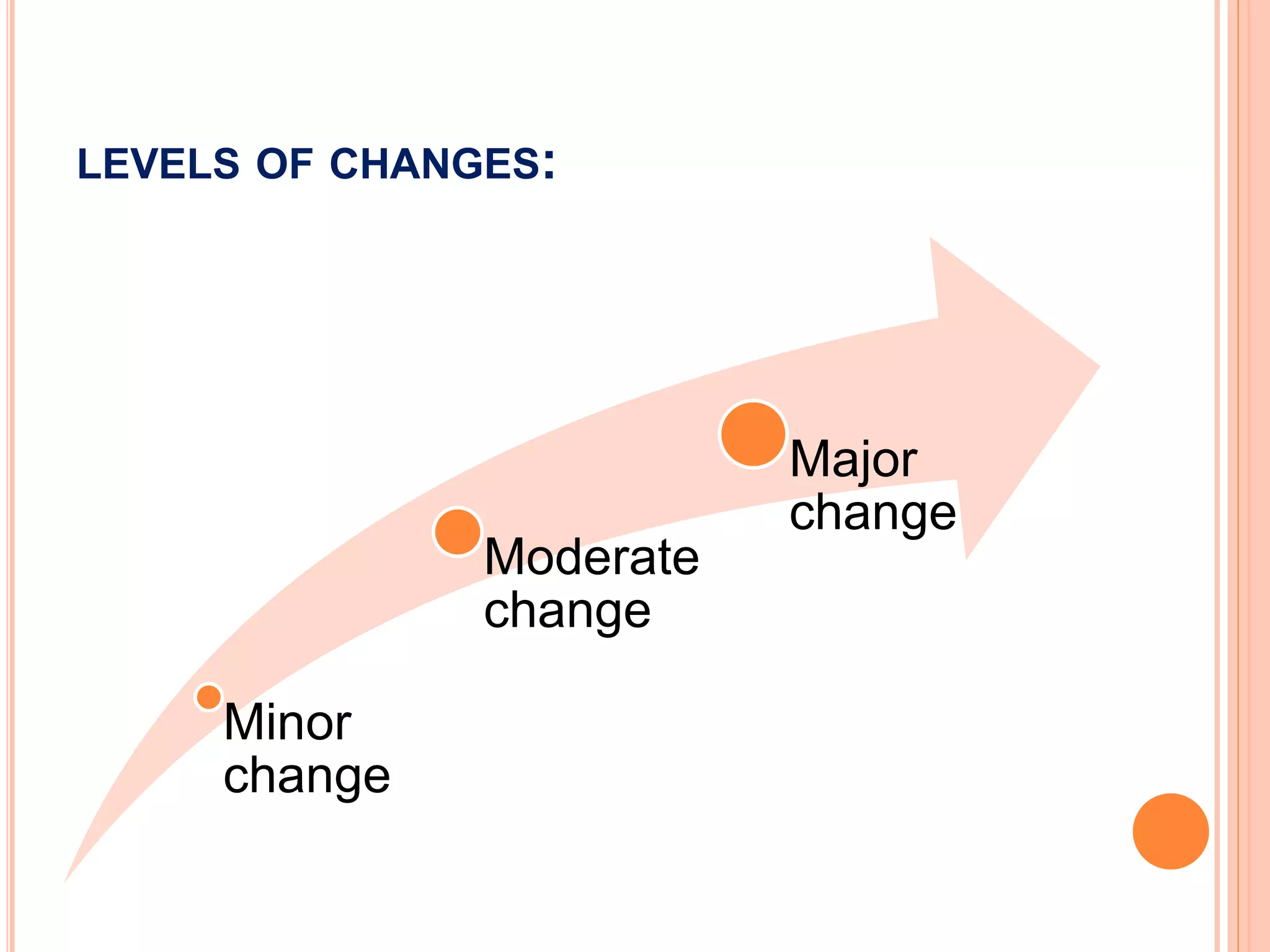
LEVELS OF CHANGES:
Minor
change
Moderate
change
Major
change
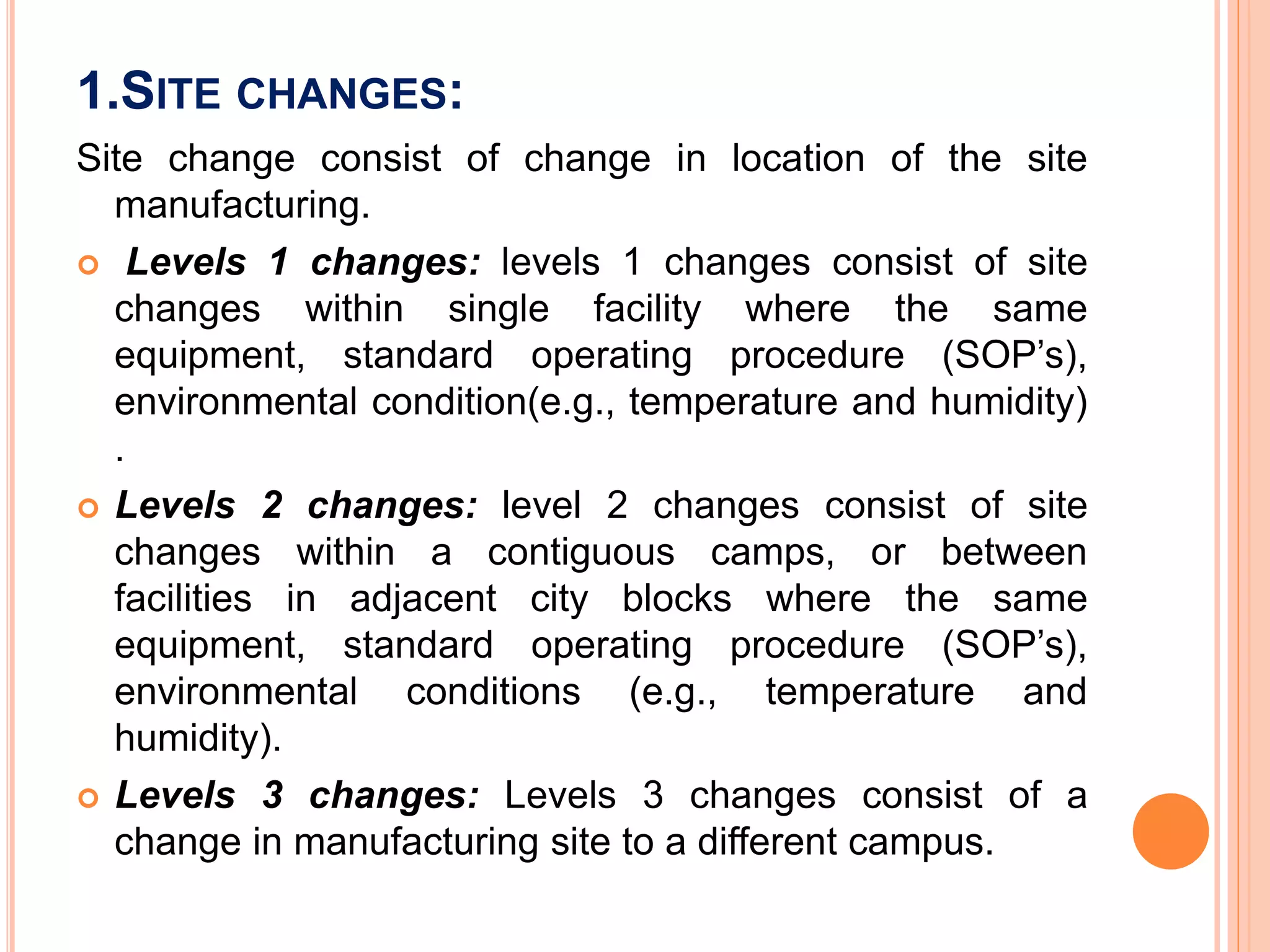
1.SITE CHANGES:
Site change consist of change in location of the site
manufacturing.
 Levels 1 changes: levels 1 changes consist of site
changes within single facility where the same
equipment, standard operating procedure (SOP’s),
environmental condition(e.g., temperature and humidity)
.
 Levels 2 changes: level 2 changes consist of site
changes within a contiguous camps, or between
facilities in adjacent city blocks where the same
equipment, standard operating procedure (SOP’s),
environmental conditions (e.g., temperature and
humidity).
 Levels 3 changes: Levels 3 changes consist of a
change in manufacturing site to a different campus.
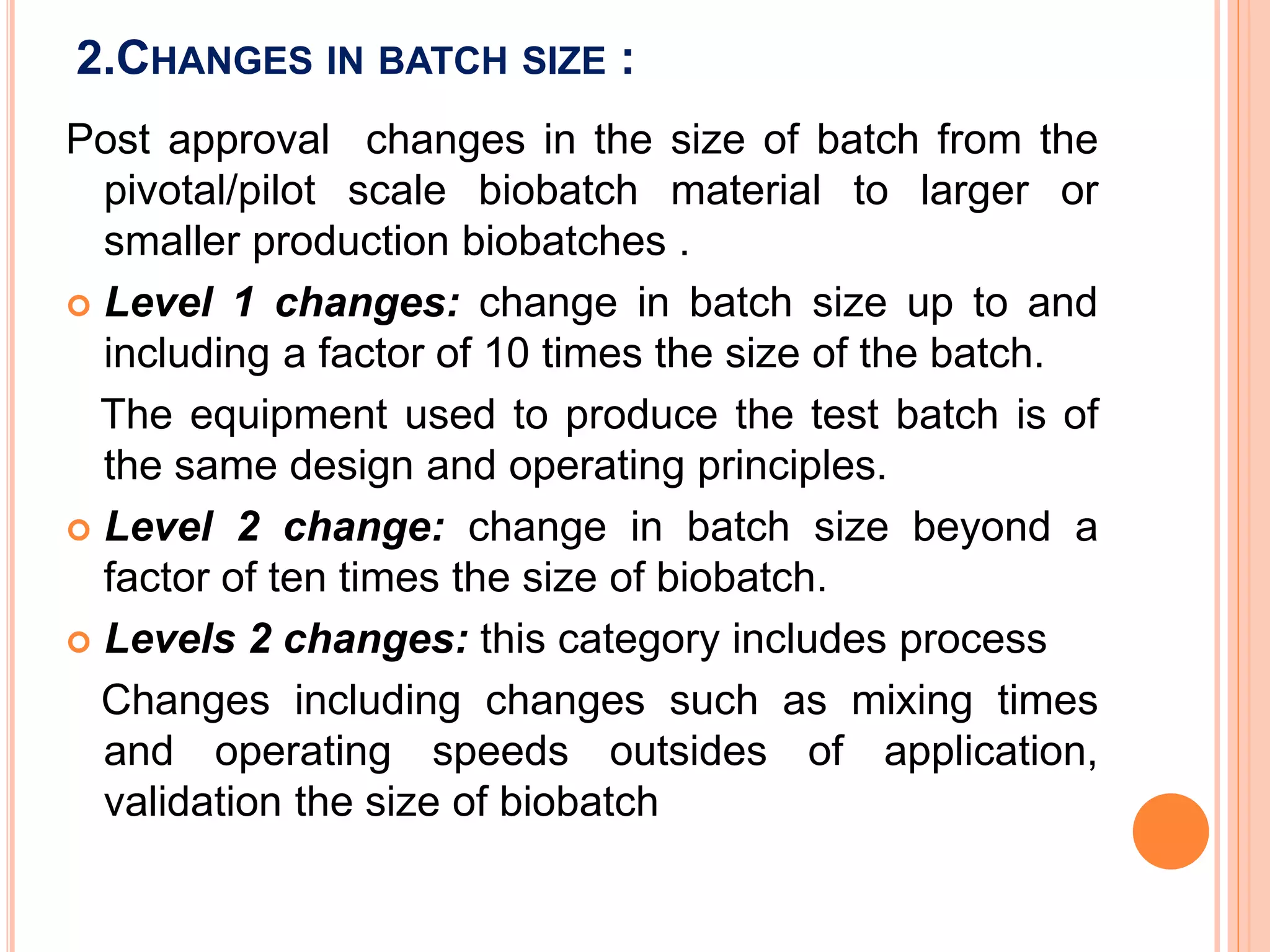
2.CHANGES IN BATCH SIZE :
Post approval changes in the size of batch from the
pivotal/pilot scale biobatch material to larger or
smaller production biobatches .
 Level 1 changes: change in batch size up to and
including a factor of 10 times the size of the batch.
The equipment used to produce the test batch is of
the same design and operating principles.
 Level 2 change: change in batch size beyond a
factor of ten times the size of biobatch.
 Levels 2 changes: this category includes process
Changes including changes such as mixing times
and operating speeds outsides of application,
validation the size of biobatch
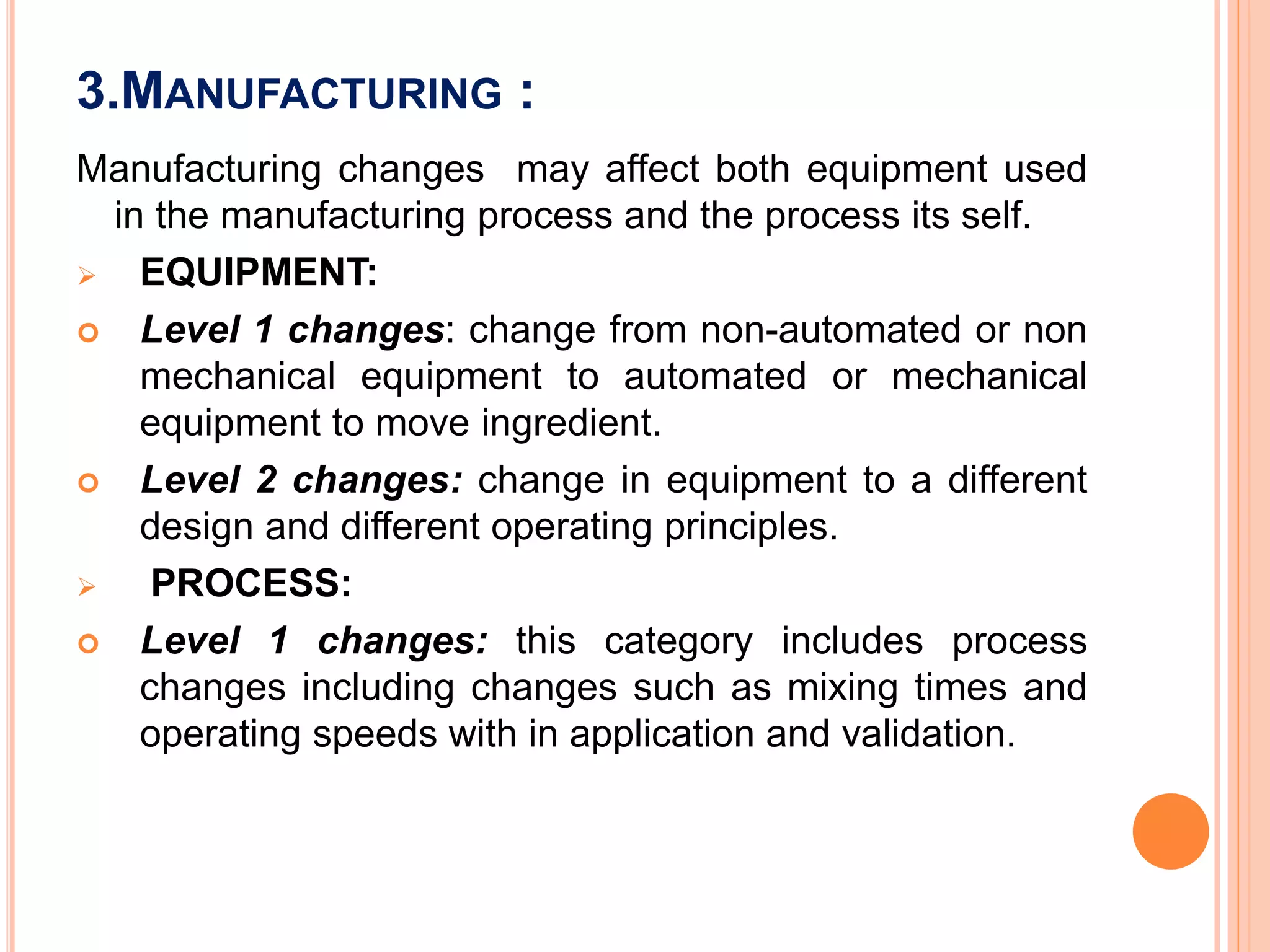
3.MANUFACTURING :
Manufacturing changes may affect both equipment used
in the manufacturing process and the process its self.
 EQUIPMENT:
 Level 1 changes: change from non-automated or non
mechanical equipment to automated or mechanical
equipment to move ingredient.
 Level 2 changes: change in equipment to a different
design and different operating principles.
 PROCESS:
 Level 1 changes: this category includes process
changes including changes such as mixing times and
operating speeds with in application and validation.
POST MARKETING
SURVEILLANCE
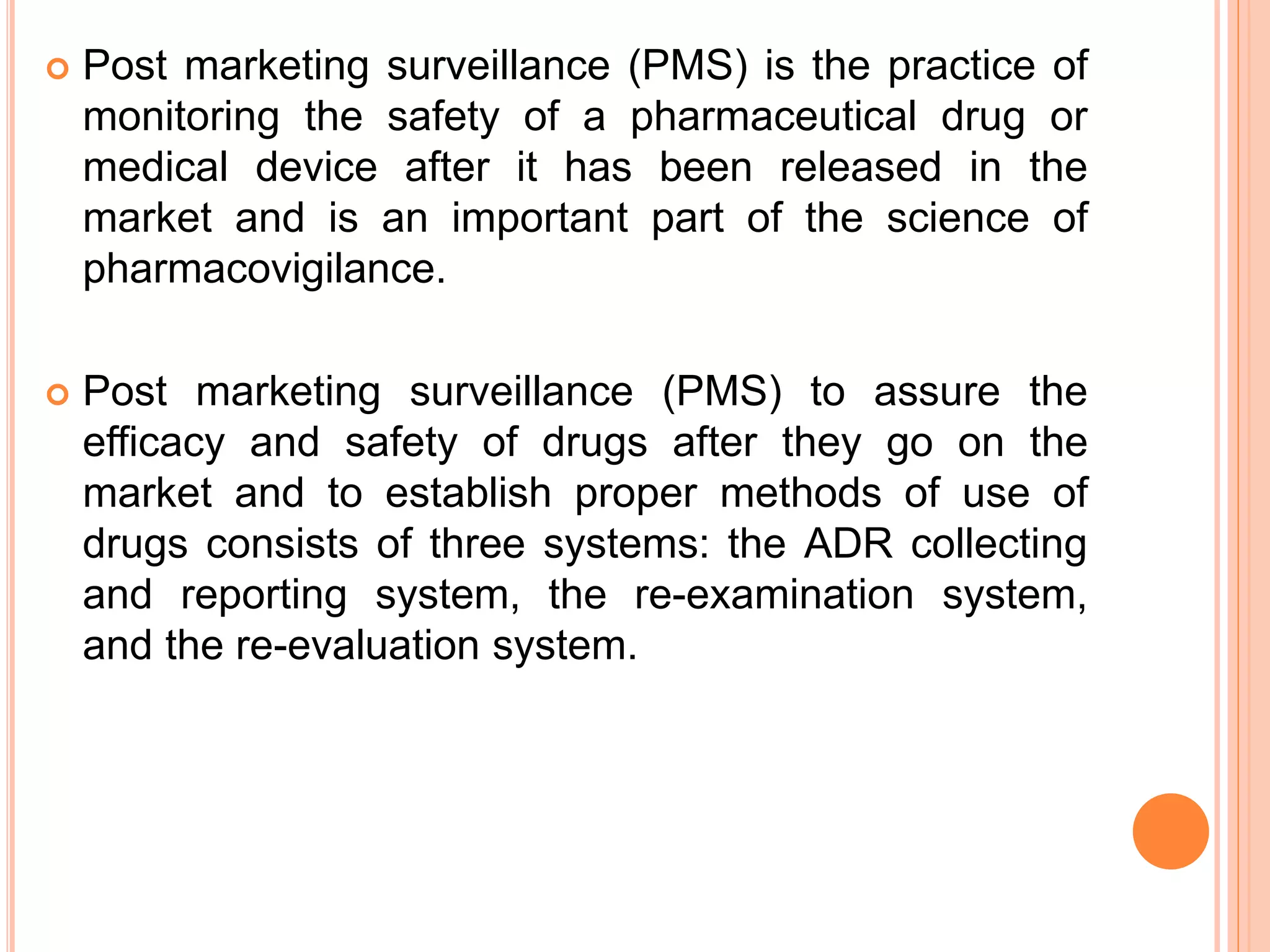
 Post marketing surveillance (PMS) is the practice of
monitoring the safety of a pharmaceutical drug or
medical device after it has been released in the
market and is an important part of the science of
pharmacovigilance.
 Post marketing surveillance (PMS) to assure the
efficacy and safety of drugs after they go on the
market and to establish proper methods of use of
drugs consists of three systems: the ADR collecting
and reporting system, the re-examination system,
and the re-evaluation system.
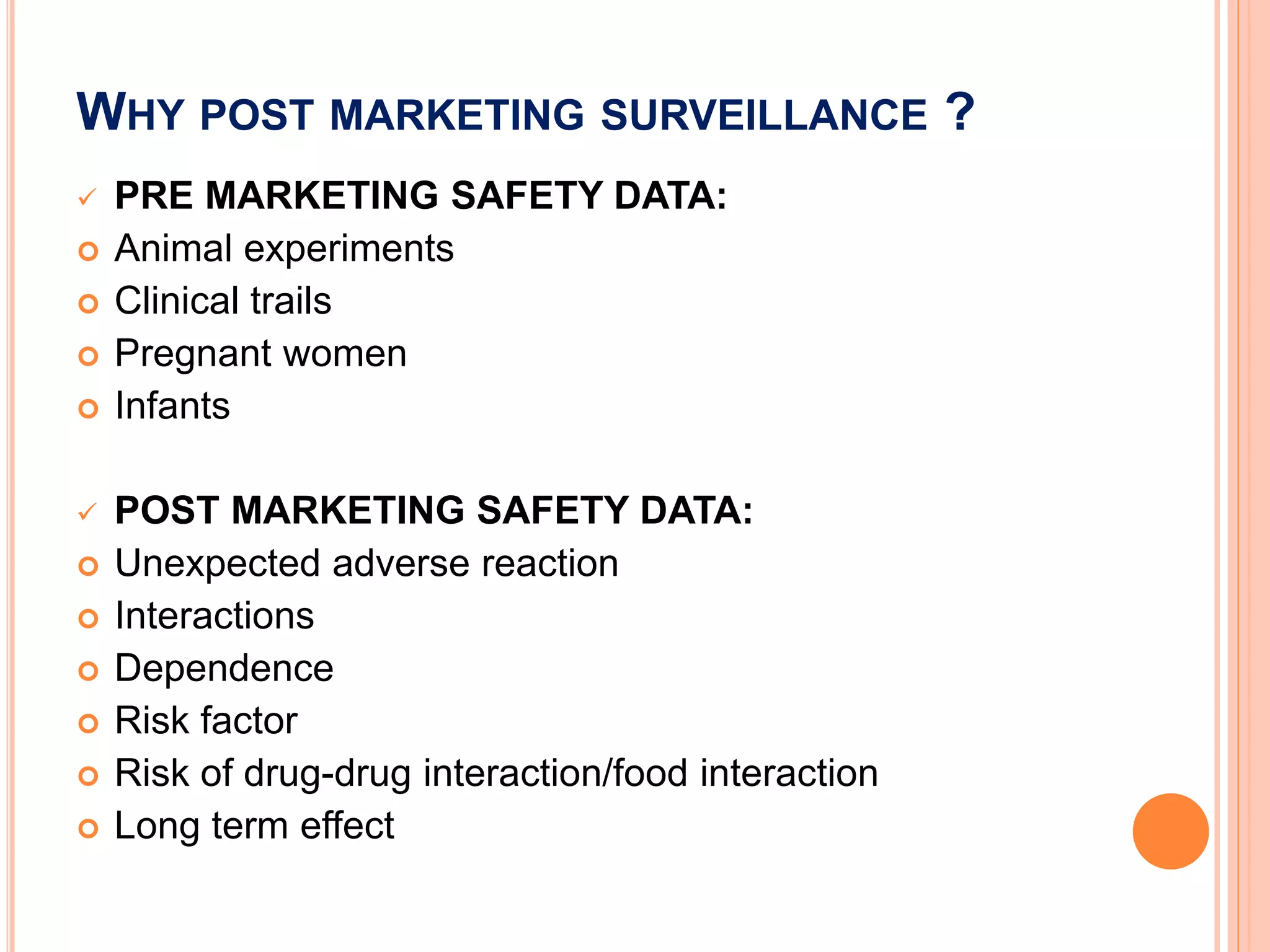
WHY POST MARKETING SURVEILLANCE ?
 PRE MARKETING SAFETY DATA:
 Animal experiments
 Clinical trails
 Pregnant women
 Infants
 POST MARKETING SAFETY DATA:
 Unexpected adverse reaction
 Interactions
 Dependence
 Risk factor
 Risk of drug-drug interaction/food interaction
 Long term effect
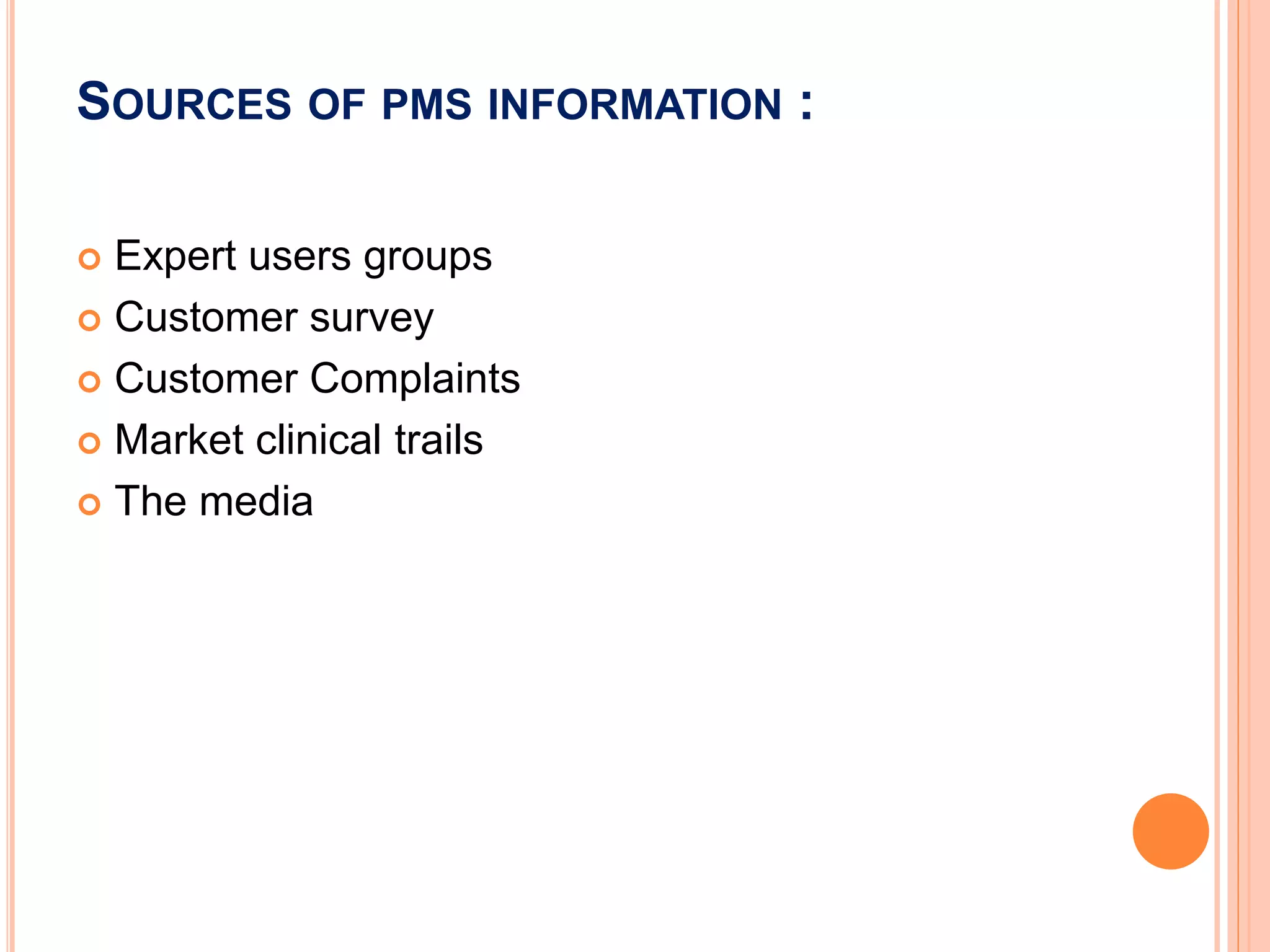
SOURCES OF PMS INFORMATION :
 Expert users groups
 Customer survey
 Customer Complaints
 Market clinical trails
 The media
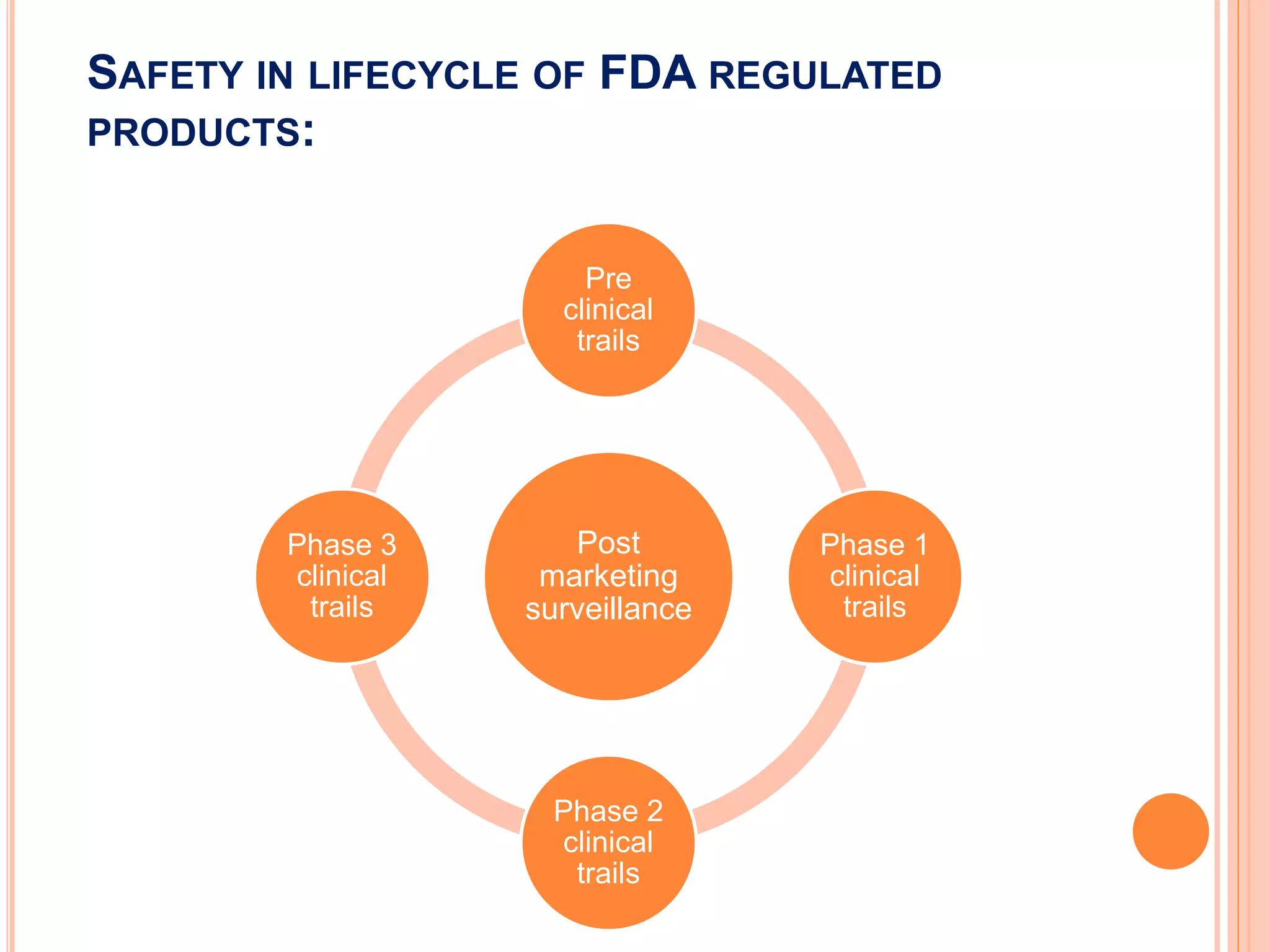
SAFETY IN LIFECYCLE OF FDA REGULATED
PRODUCTS:
Post
marketing
surveillance
Pre
clinical
trails
Phase 1
clinical
trails
Phase 2
clinical
trails
Phase 3
clinical
trails
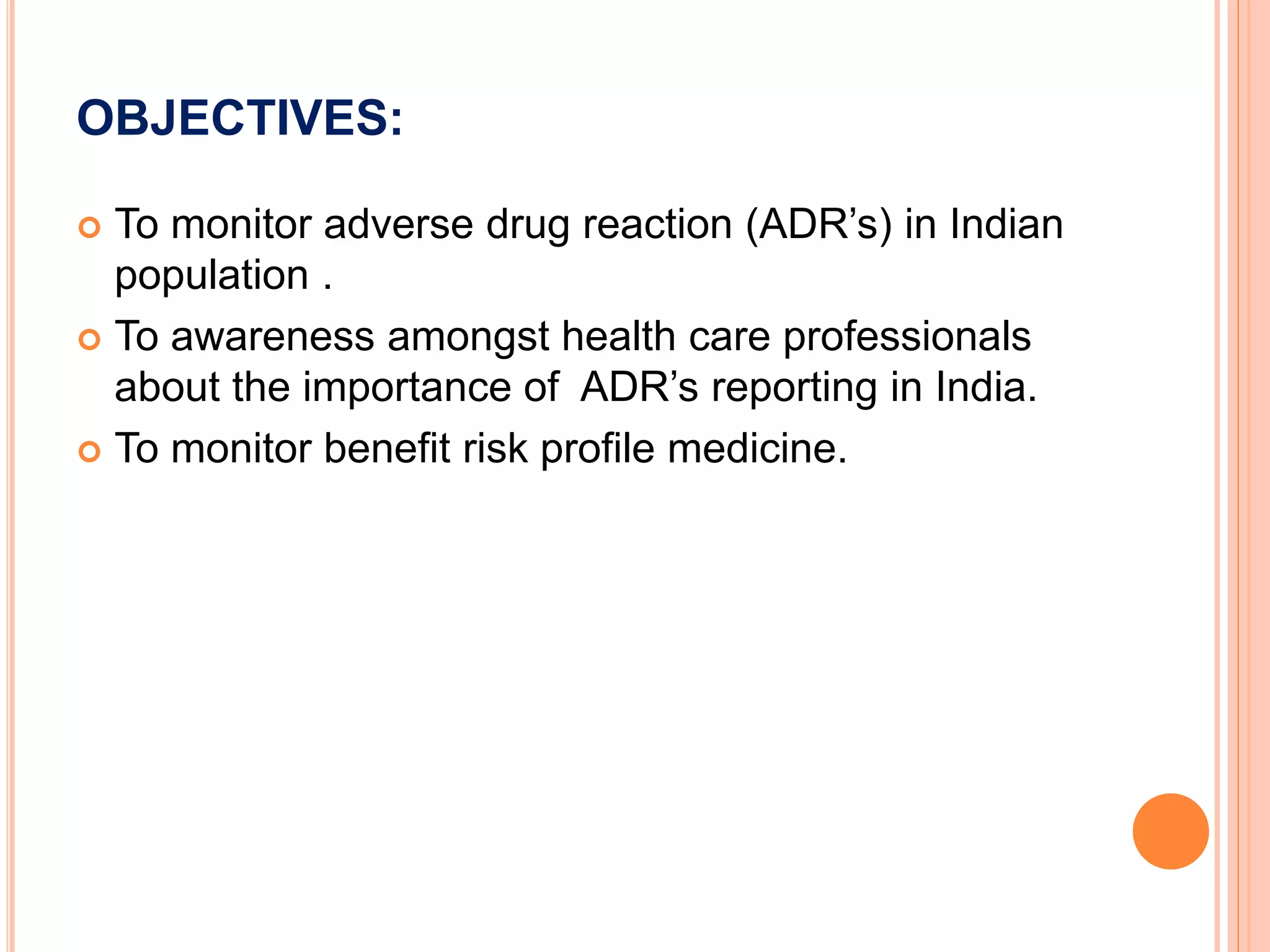
OBJECTIVES:
 To monitor adverse drug reaction (ADR’s) in Indian
population .
 To awareness amongst health care professionals
about the importance of ADR’s reporting in India.
 To monitor benefit risk profile medicine.
THANK YOU

Scale up and post approval changes (supac)

  • 1.
    SCALE UP ANDPOST APPROVAL CHANGES (SUPAC). POST MARKETING SURVEILLANCE. PRESENTED BY: SHEHNAZ KHATOON M.PHARM(PHARMACEUTICS)
  • 2.
    SCALE UP ANDPOST APPROVAL CHANGES (SUPAC).
  • 3.
    DEFINITION:  The scaleup process and the changes made after approval in the composition, manufacturing , equipment and change of site have known as scale up and post approval changes or SUPAC.  There can be changes in raw materials, process, equipment or manufacturing site, and batch size.
  • 4.
  • 5.
    1.SITE CHANGES: Site changeconsist of change in location of the site manufacturing.  Levels 1 changes: levels 1 changes consist of site changes within single facility where the same equipment, standard operating procedure (SOP’s), environmental condition(e.g., temperature and humidity) .  Levels 2 changes: level 2 changes consist of site changes within a contiguous camps, or between facilities in adjacent city blocks where the same equipment, standard operating procedure (SOP’s), environmental conditions (e.g., temperature and humidity).  Levels 3 changes: Levels 3 changes consist of a change in manufacturing site to a different campus.
  • 6.
    2.CHANGES IN BATCHSIZE : Post approval changes in the size of batch from the pivotal/pilot scale biobatch material to larger or smaller production biobatches .  Level 1 changes: change in batch size up to and including a factor of 10 times the size of the batch. The equipment used to produce the test batch is of the same design and operating principles.  Level 2 change: change in batch size beyond a factor of ten times the size of biobatch.  Levels 2 changes: this category includes process Changes including changes such as mixing times and operating speeds outsides of application, validation the size of biobatch
  • 7.
    3.MANUFACTURING : Manufacturing changesmay affect both equipment used in the manufacturing process and the process its self.  EQUIPMENT:  Level 1 changes: change from non-automated or non mechanical equipment to automated or mechanical equipment to move ingredient.  Level 2 changes: change in equipment to a different design and different operating principles.  PROCESS:  Level 1 changes: this category includes process changes including changes such as mixing times and operating speeds with in application and validation.
  • 8.
  • 9.
     Post marketingsurveillance (PMS) is the practice of monitoring the safety of a pharmaceutical drug or medical device after it has been released in the market and is an important part of the science of pharmacovigilance.  Post marketing surveillance (PMS) to assure the efficacy and safety of drugs after they go on the market and to establish proper methods of use of drugs consists of three systems: the ADR collecting and reporting system, the re-examination system, and the re-evaluation system.
  • 10.
    WHY POST MARKETINGSURVEILLANCE ?  PRE MARKETING SAFETY DATA:  Animal experiments  Clinical trails  Pregnant women  Infants  POST MARKETING SAFETY DATA:  Unexpected adverse reaction  Interactions  Dependence  Risk factor  Risk of drug-drug interaction/food interaction  Long term effect
  • 11.
    SOURCES OF PMSINFORMATION :  Expert users groups  Customer survey  Customer Complaints  Market clinical trails  The media
  • 12.
    SAFETY IN LIFECYCLEOF FDA REGULATED PRODUCTS: Post marketing surveillance Pre clinical trails Phase 1 clinical trails Phase 2 clinical trails Phase 3 clinical trails
  • 13.
    OBJECTIVES:  To monitoradverse drug reaction (ADR’s) in Indian population .  To awareness amongst health care professionals about the importance of ADR’s reporting in India.  To monitor benefit risk profile medicine.
  • 14.