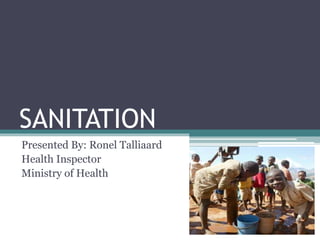
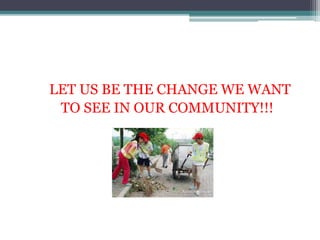
Sanitation involves keeping places clean and free from disease by proper removal of waste and garbage as well as cleaning streets and practicing good hygiene.
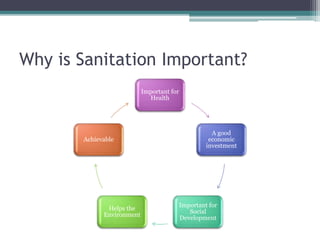
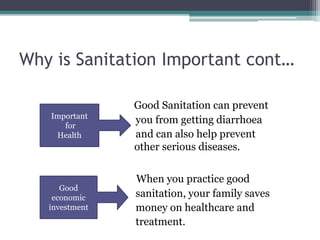
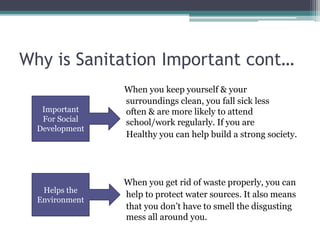
Sanitation is important for health, economic investment, and social development. Good sanitation prevents diseases like diarrhea and helps communities stay healthy and productive. It also benefits the environment by protecting water sources.
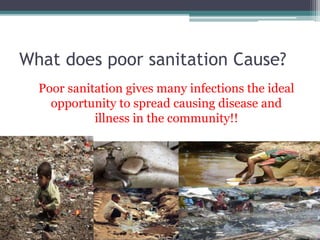
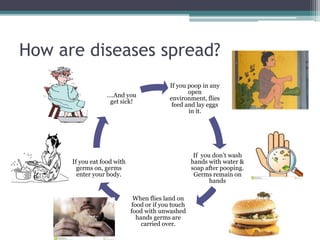
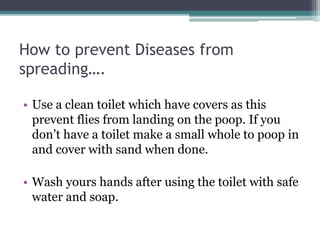
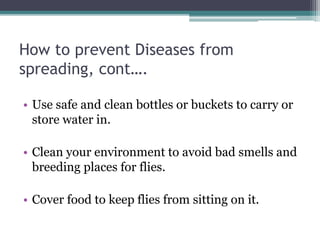
Poor sanitation allows diseases to easily spread through flies breeding in waste and people not washing hands. It can cause illnesses like cholera, typhoid, hepatitis, polio, and trachoma which is a leading cause of blindness. Diseases spread when flies land on feces and food or when people touch food with unwashed hands after going to the bathroom. Pro