
SANITATION PROBLEMS IN
INDIA
Presented by – Navneet Singh
PGDM 1ST Year
Sunstone adversity INJ campus
TOPIC
1. Sanitation :The Concept
2. Sanitation in India
3. How can we help?
4. Conclusion
SANITATION :THE CONCEPT
 Sanitation conditions relating to public health, especially the provision of clean drinking water and adequate
sewage disposal.
 Hazards can be physical, microbiological, biological or chemical agents of disease.
 Wastes that can cause health problems are human and animal feces, solid wastes, domestic wastewater
(sewage, greywater), industrial wastes and agricultural wastes.
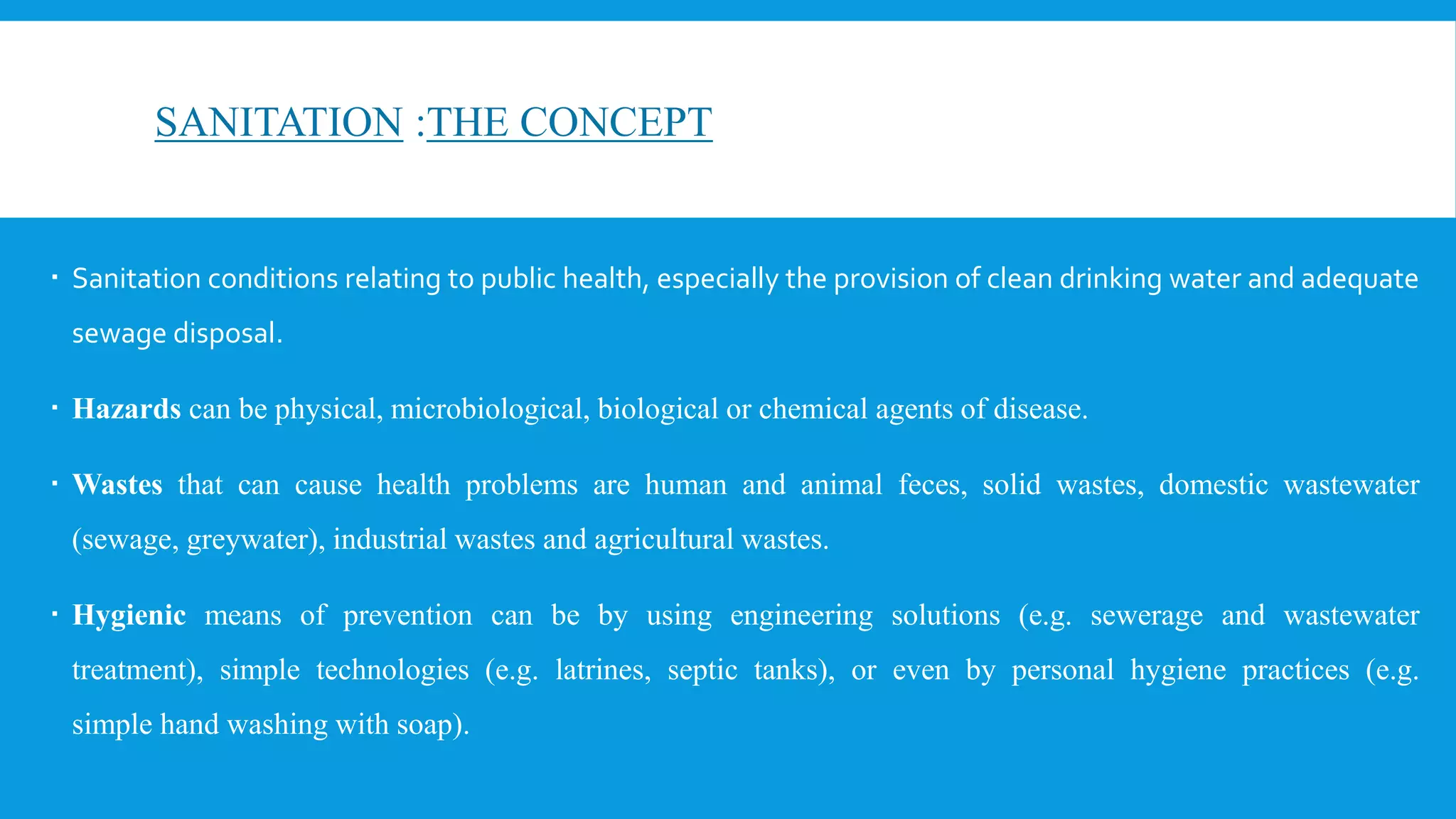
 Hygienic means of prevention can be by using engineering solutions (e.g. sewerage and wastewater
treatment), simple technologies (e.g. latrines, septic tanks), or even by personal hygiene practices (e.g.
simple hand washing with soap).
SANITATION IN INDIA
Rural
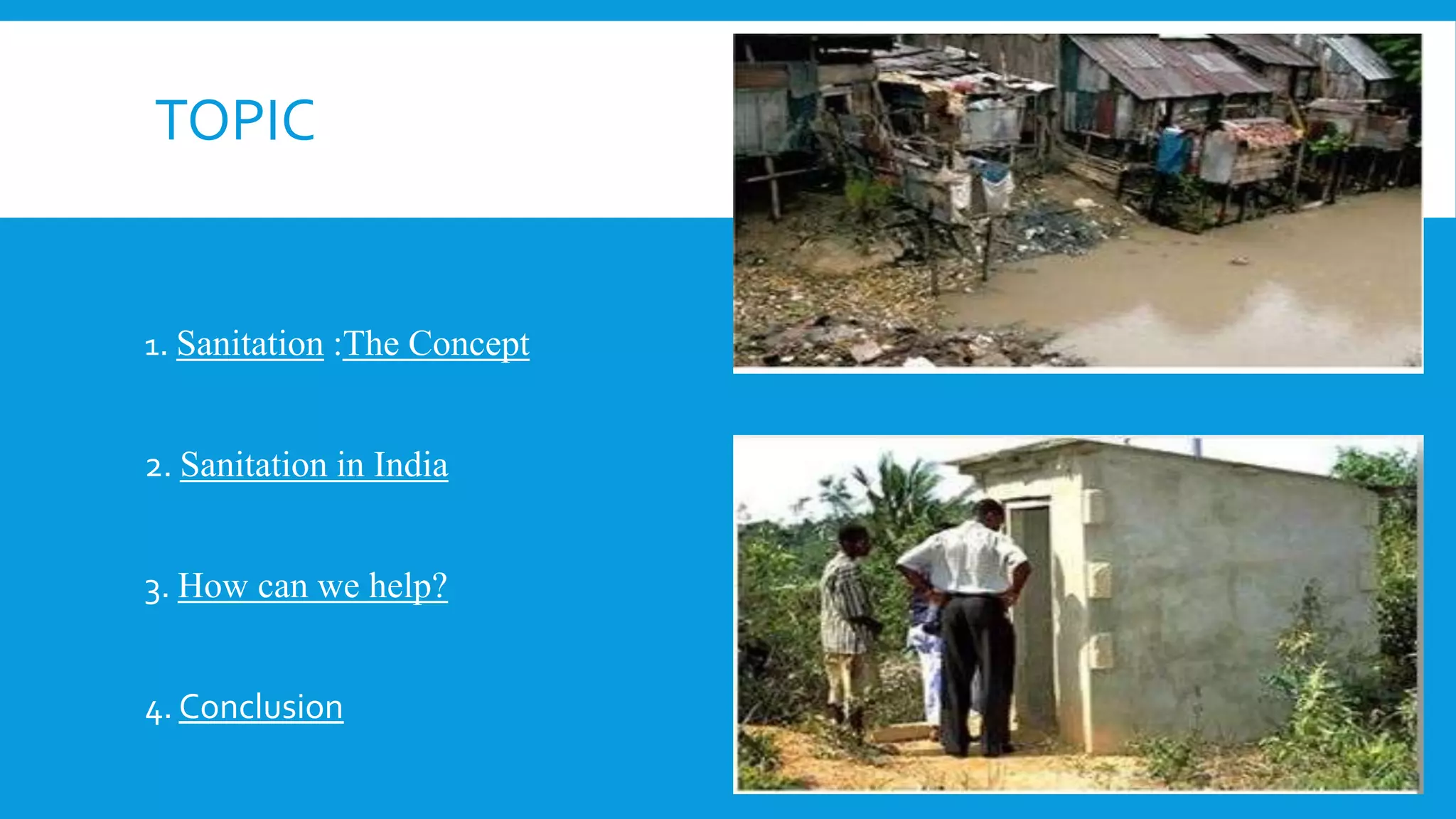
 Open Defecation is a huge problem in rural areas.
 Though it has reduced but the practice has not completely vanished.
 Lack of priority to safe confinement and disposal of human excreta poses significant health
risks manifest in the sanitation challenge facing the nation today.
 It is estimated that 1 in every 10 death in India in villages, is linked to poor sanitation and
hygiene.
 Diarrhea, a preventable disease, is the largest killer and accounts for every 20th death.
Urban
 The JMP 2010 revised estimates for 2008 were 18% urban Indian population defecating in the open and 7%
using unimproved toilets i.e. about 75% population having access to sanitation – 51% individual toilets and
24% sharing toilets.
 The National Sample Survey (NSS, 65th Round, Govt. of India, July 2008-June 2009) estimated that 77%
households have septic tank/flush latrines, 8% pit latrines, 1.6% service latrines, 1% other latrines, and
11% without any latrines.
 About 58% households have latrines for own exclusive use (individual), 24% households use shared, and
6.5% use community/public latrines (balance 11% without any access).
HOW CAN WE HELP?
 Proper education should be provided to people, especially the illiterate and poor people.
 People should be encouraged to keep the city clean.
 Media should be used as a medium to encourage people.
 Government should be questioned.
 Donation towards the betterment of the society.
CONCLUSION
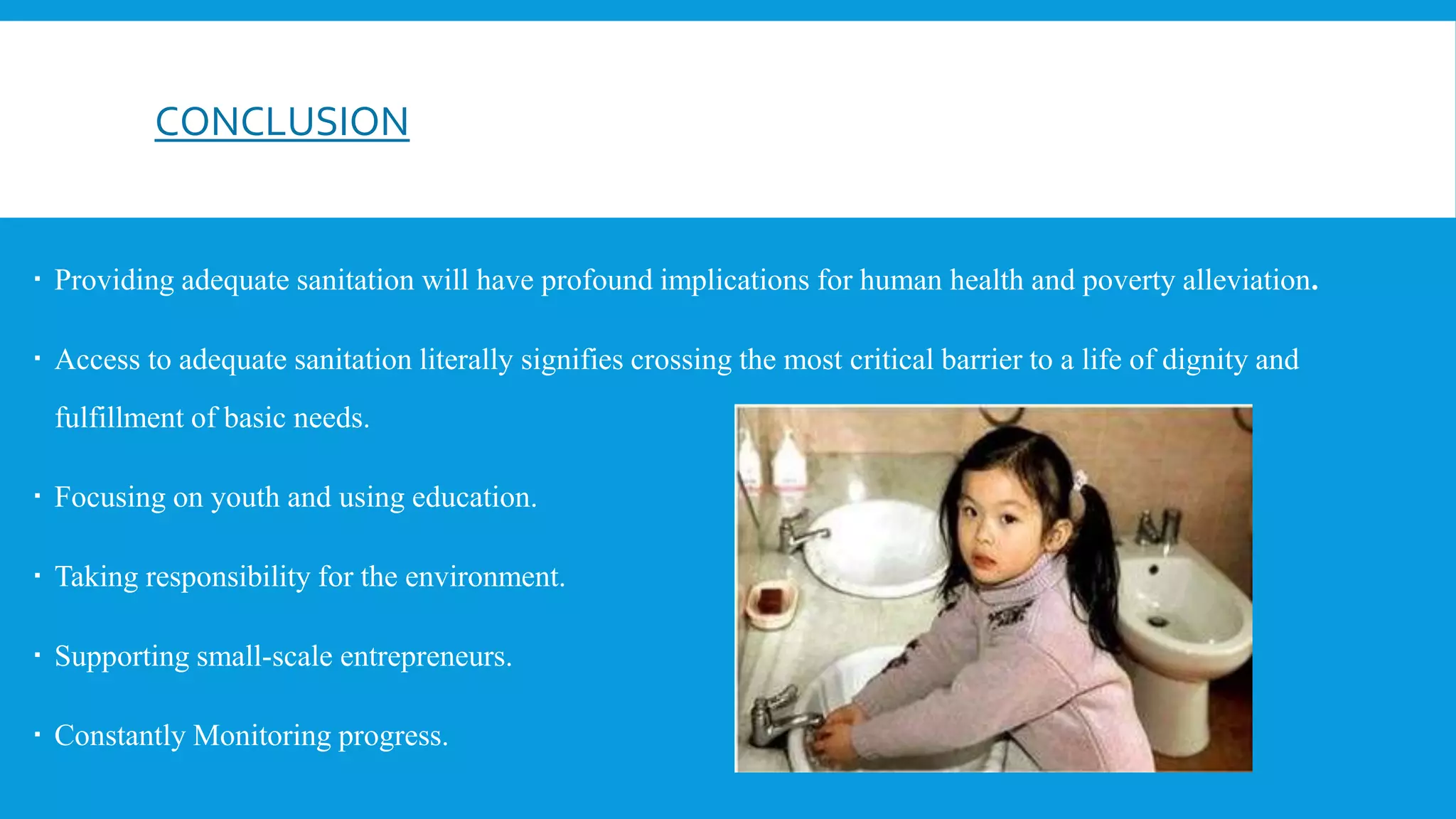
 Providing adequate sanitation will have profound implications for human health and poverty alleviation.
 Access to adequate sanitation literally signifies crossing the most critical barrier to a life of dignity and
fulfillment of basic needs.
 Focusing on youth and using education.
 Taking responsibility for the environment.
 Supporting small-scale entrepreneurs.
 Constantly Monitoring progress.
THANKYOU

Sanitation problems in india by navneet

  • 1.
    SANITATION PROBLEMS IN INDIA Presentedby – Navneet Singh PGDM 1ST Year Sunstone adversity INJ campus
  • 2.
    TOPIC 1. Sanitation :TheConcept 2. Sanitation in India 3. How can we help? 4. Conclusion
  • 3.
    SANITATION :THE CONCEPT Sanitation conditions relating to public health, especially the provision of clean drinking water and adequate sewage disposal.  Hazards can be physical, microbiological, biological or chemical agents of disease.  Wastes that can cause health problems are human and animal feces, solid wastes, domestic wastewater (sewage, greywater), industrial wastes and agricultural wastes.  Hygienic means of prevention can be by using engineering solutions (e.g. sewerage and wastewater treatment), simple technologies (e.g. latrines, septic tanks), or even by personal hygiene practices (e.g. simple hand washing with soap).
  • 4.
    SANITATION IN INDIA Rural Open Defecation is a huge problem in rural areas.  Though it has reduced but the practice has not completely vanished.  Lack of priority to safe confinement and disposal of human excreta poses significant health risks manifest in the sanitation challenge facing the nation today.  It is estimated that 1 in every 10 death in India in villages, is linked to poor sanitation and hygiene.  Diarrhea, a preventable disease, is the largest killer and accounts for every 20th death.
  • 5.
    Urban  The JMP2010 revised estimates for 2008 were 18% urban Indian population defecating in the open and 7% using unimproved toilets i.e. about 75% population having access to sanitation – 51% individual toilets and 24% sharing toilets.  The National Sample Survey (NSS, 65th Round, Govt. of India, July 2008-June 2009) estimated that 77% households have septic tank/flush latrines, 8% pit latrines, 1.6% service latrines, 1% other latrines, and 11% without any latrines.  About 58% households have latrines for own exclusive use (individual), 24% households use shared, and 6.5% use community/public latrines (balance 11% without any access).
  • 6.
    HOW CAN WEHELP?  Proper education should be provided to people, especially the illiterate and poor people.  People should be encouraged to keep the city clean.  Media should be used as a medium to encourage people.  Government should be questioned.  Donation towards the betterment of the society.
  • 7.
    CONCLUSION  Providing adequatesanitation will have profound implications for human health and poverty alleviation.  Access to adequate sanitation literally signifies crossing the most critical barrier to a life of dignity and fulfillment of basic needs.  Focusing on youth and using education.  Taking responsibility for the environment.  Supporting small-scale entrepreneurs.  Constantly Monitoring progress.
  • 8.