ch-13   Sample   (Typeset by TYINDEX, Delhi)   1 of 4   May 31, 2009   18:1


             13
     SIGNIFICANT TESTS


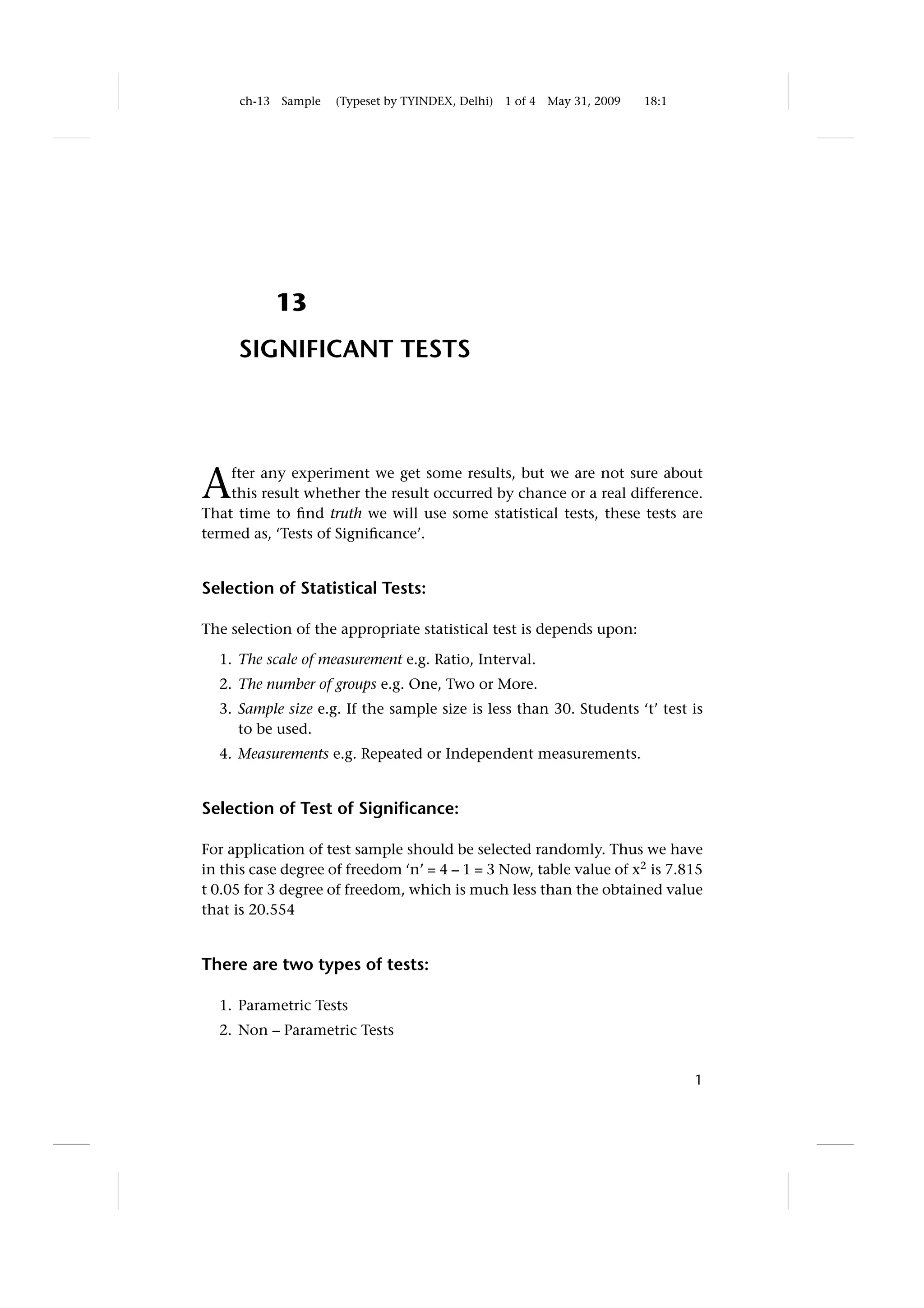
A   fter any experiment we get some results, but we are not sure about
    this result whether the result occurred by chance or a real difference.
That time to find truth we will use some statistical tests, these tests are
termed as, ‘Tests of Significance’.


Selection of Statistical Tests:

The selection of the appropriate statistical test is depends upon:

  1. The scale of measurement e.g. Ratio, Interval.
  2. The number of groups e.g. One, Two or More.
  3. Sample size e.g. If the sample size is less than 30. Students ‘t’ test is
     to be used.
  4. Measurements e.g. Repeated or Independent measurements.


Selection of Test of Significance:

For application of test sample should be selected randomly. Thus we have
in this case degree of freedom ‘n’ = 4 – 1 = 3 Now, table value of x2 is 7.815
t 0.05 for 3 degree of freedom, which is much less than the obtained value
that is 20.554


There are two types of tests:

  1. Parametric Tests
  2. Non – Parametric Tests


                                                                                   1
ch-13   Sample   (Typeset by TYINDEX, Delhi)   2 of 4   May 31, 2009      18:1


SIGNIFICANT TESTS

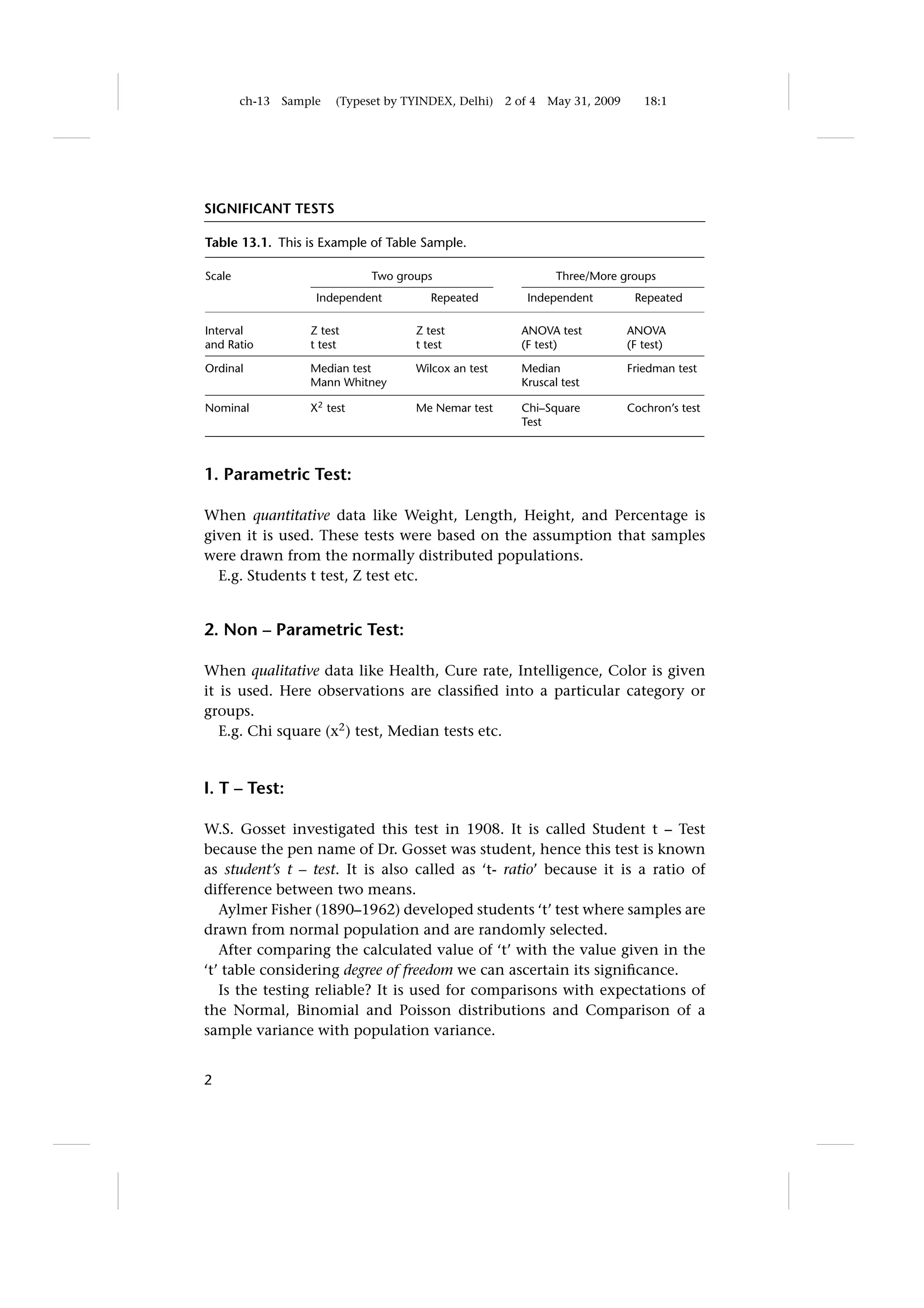
Table 13.1. This is Example of Table Sample.

Scale                          Two groups                        Three/More groups
                     Independent         Repeated          Independent          Repeated

Interval            Z test            Z test              ANOVA test           ANOVA
and Ratio           t test            t test              (F test)             (F test)

Ordinal             Median test       Wilcox an test      Median               Friedman test
                    Mann Whitney                          Kruscal test

Nominal             X2 test           Me Nemar test       Chi–Square           Cochron’s test
                                                          Test


1. Parametric Test:

When quantitative data like Weight, Length, Height, and Percentage is
given it is used. These tests were based on the assumption that samples
were drawn from the normally distributed populations.
  E.g. Students t test, Z test etc.


2. Non – Parametric Test:

When qualitative data like Health, Cure rate, Intelligence, Color is given
it is used. Here observations are classified into a particular category or
groups.
   E.g. Chi square (x2 ) test, Median tests etc.


I. T – Test:

W.S. Gosset investigated this test in 1908. It is called Student t – Test
because the pen name of Dr. Gosset was student, hence this test is known
as student’s t – test. It is also called as ‘t- ratio’ because it is a ratio of
difference between two means.
   Aylmer Fisher (1890–1962) developed students ‘t’ test where samples are
drawn from normal population and are randomly selected.
   After comparing the calculated value of ‘t’ with the value given in the
‘t’ table considering degree of freedom we can ascertain its significance.
   Is the testing reliable? It is used for comparisons with expectations of
the Normal, Binomial and Poisson distributions and Comparison of a
sample variance with population variance.


2
ch-13   Sample       (Typeset by TYINDEX, Delhi)     3 of 4   May 31, 2009   18:1


                                                                          SIGNIFICANT TESTS

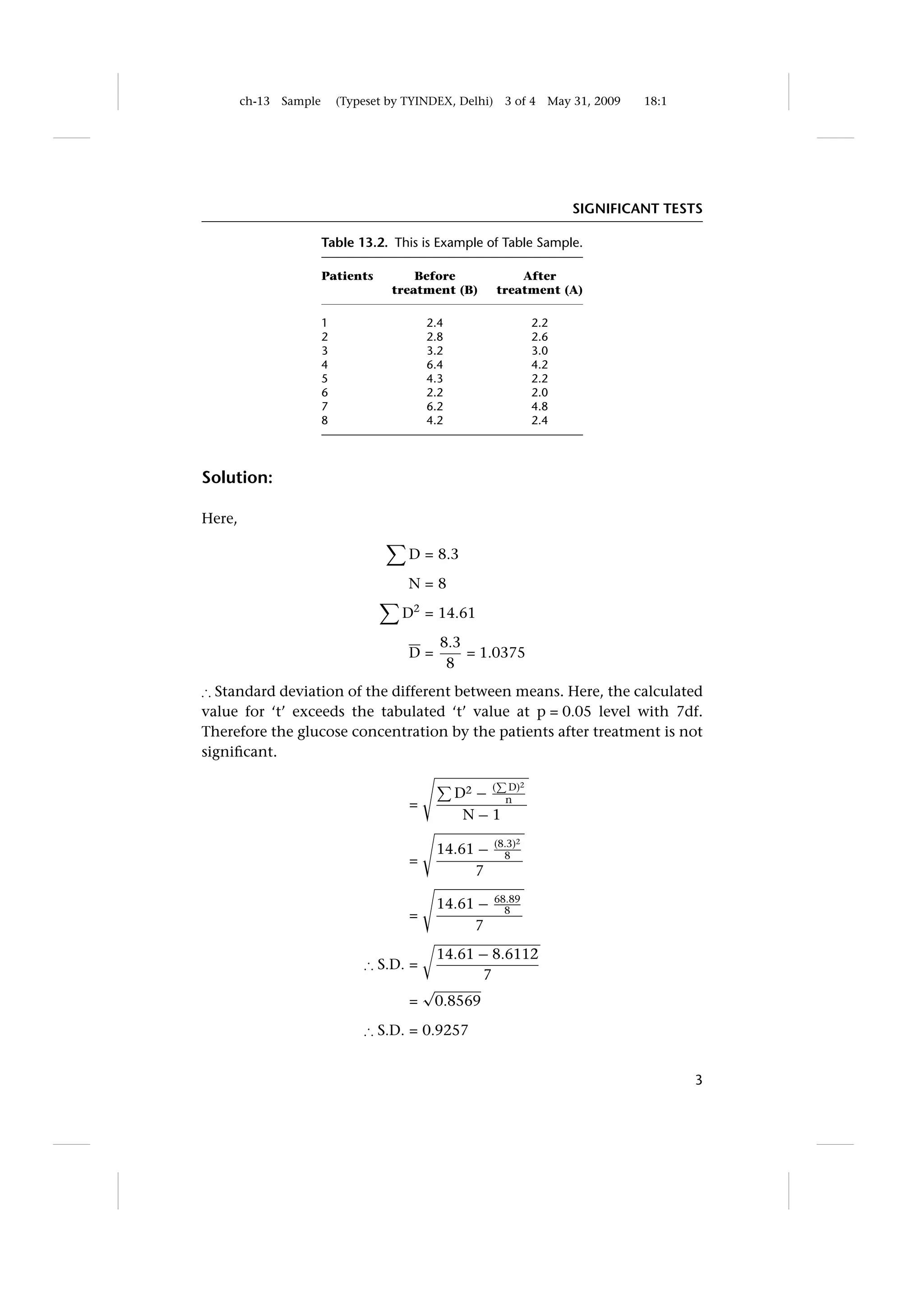
                         Table 13.2. This is Example of Table Sample.

                         Patients         Before               After
                                      treatment (B)        treatment (A)

                         1                   2.4                    2.2
                         2                   2.8                    2.6
                         3                   3.2                    3.0
                         4                   6.4                    4.2
                         5                   4.3                    2.2
                         6                   2.2                    2.0
                         7                   6.2                    4.8
                         8                   4.2                    2.4


Solution:

Here,

                                         D = 8.3

                                         N=8
                                        D2 = 14.61
                                               8.3
                                         D=        = 1.0375
                                                8
∴ Standard deviation of the different between means. Here, the calculated
value for ‘t’ exceeds the tabulated ‘t’ value at p = 0.05 level with 7df.
Therefore the glucose concentration by the patients after treatment is not
significant.

                                                             D)2
                                                   D2 − (    n
                                         =
                                                    N−1
                                                           (8.3)2
                                              14.61 −        8
                                         =
                                                   7

                                              14.61 −      68.89
                                                             8
                                         =
                                                   7
                                              14.61 − 8.6112
                                 ∴ S.D. =
                                                    7
                                             √
                                         =    0.8569
                                 ∴ S.D. = 0.9257


                                                                                            3
ch-13   Sample   (Typeset by TYINDEX, Delhi)   4 of 4   May 31, 2009   18:1


SIGNIFICANT TESTS

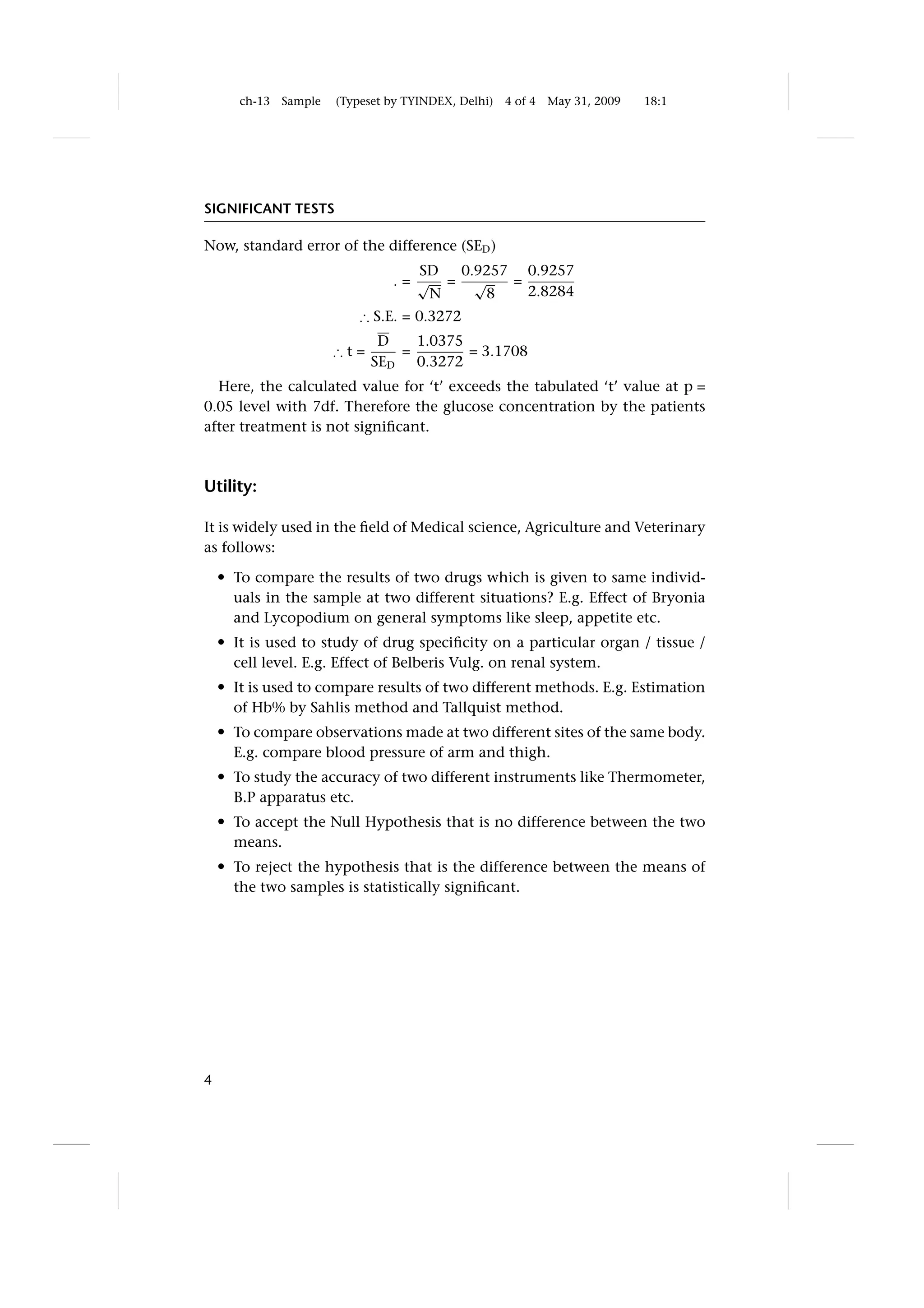
Now, standard error of the difference (SED )
                                     SD 0.9257 0.9257
                                  .= √ = √    =
                                      N    8    2.8284
                             ∴ S.E. = 0.3272
                                D    1.0375
                         ∴t=       =        = 3.1708
                               SED   0.3272
  Here, the calculated value for ‘t’ exceeds the tabulated ‘t’ value at p =
0.05 level with 7df. Therefore the glucose concentration by the patients
after treatment is not significant.


Utility:

It is widely used in the field of Medical science, Agriculture and Veterinary
as follows:
    r   To compare the results of two drugs which is given to same individ-
        uals in the sample at two different situations? E.g. Effect of Bryonia
        and Lycopodium on general symptoms like sleep, appetite etc.
    r   It is used to study of drug specificity on a particular organ / tissue /
        cell level. E.g. Effect of Belberis Vulg. on renal system.
    r   It is used to compare results of two different methods. E.g. Estimation
        of Hb% by Sahlis method and Tallquist method.
    r   To compare observations made at two different sites of the same body.
        E.g. compare blood pressure of arm and thigh.
    r   To study the accuracy of two different instruments like Thermometer,
        B.P apparatus etc.
    r   To accept the Null Hypothesis that is no difference between the two
        means.
    r   To reject the hypothesis that is the difference between the means of
        the two samples is statistically significant.


4

Sample A_Book Typesetting

  • 1.
    ch-13 Sample (Typeset by TYINDEX, Delhi) 1 of 4 May 31, 2009 18:1 13 SIGNIFICANT TESTS A fter any experiment we get some results, but we are not sure about this result whether the result occurred by chance or a real difference. That time to find truth we will use some statistical tests, these tests are termed as, ‘Tests of Significance’. Selection of Statistical Tests: The selection of the appropriate statistical test is depends upon: 1. The scale of measurement e.g. Ratio, Interval. 2. The number of groups e.g. One, Two or More. 3. Sample size e.g. If the sample size is less than 30. Students ‘t’ test is to be used. 4. Measurements e.g. Repeated or Independent measurements. Selection of Test of Significance: For application of test sample should be selected randomly. Thus we have in this case degree of freedom ‘n’ = 4 – 1 = 3 Now, table value of x2 is 7.815 t 0.05 for 3 degree of freedom, which is much less than the obtained value that is 20.554 There are two types of tests: 1. Parametric Tests 2. Non – Parametric Tests 1
  • 2.
    ch-13 Sample (Typeset by TYINDEX, Delhi) 2 of 4 May 31, 2009 18:1 SIGNIFICANT TESTS Table 13.1. This is Example of Table Sample. Scale Two groups Three/More groups Independent Repeated Independent Repeated Interval Z test Z test ANOVA test ANOVA and Ratio t test t test (F test) (F test) Ordinal Median test Wilcox an test Median Friedman test Mann Whitney Kruscal test Nominal X2 test Me Nemar test Chi–Square Cochron’s test Test 1. Parametric Test: When quantitative data like Weight, Length, Height, and Percentage is given it is used. These tests were based on the assumption that samples were drawn from the normally distributed populations. E.g. Students t test, Z test etc. 2. Non – Parametric Test: When qualitative data like Health, Cure rate, Intelligence, Color is given it is used. Here observations are classified into a particular category or groups. E.g. Chi square (x2 ) test, Median tests etc. I. T – Test: W.S. Gosset investigated this test in 1908. It is called Student t – Test because the pen name of Dr. Gosset was student, hence this test is known as student’s t – test. It is also called as ‘t- ratio’ because it is a ratio of difference between two means. Aylmer Fisher (1890–1962) developed students ‘t’ test where samples are drawn from normal population and are randomly selected. After comparing the calculated value of ‘t’ with the value given in the ‘t’ table considering degree of freedom we can ascertain its significance. Is the testing reliable? It is used for comparisons with expectations of the Normal, Binomial and Poisson distributions and Comparison of a sample variance with population variance. 2
  • 3.
    ch-13 Sample (Typeset by TYINDEX, Delhi) 3 of 4 May 31, 2009 18:1 SIGNIFICANT TESTS Table 13.2. This is Example of Table Sample. Patients Before After treatment (B) treatment (A) 1 2.4 2.2 2 2.8 2.6 3 3.2 3.0 4 6.4 4.2 5 4.3 2.2 6 2.2 2.0 7 6.2 4.8 8 4.2 2.4 Solution: Here, D = 8.3 N=8 D2 = 14.61 8.3 D= = 1.0375 8 ∴ Standard deviation of the different between means. Here, the calculated value for ‘t’ exceeds the tabulated ‘t’ value at p = 0.05 level with 7df. Therefore the glucose concentration by the patients after treatment is not significant. D)2 D2 − ( n = N−1 (8.3)2 14.61 − 8 = 7 14.61 − 68.89 8 = 7 14.61 − 8.6112 ∴ S.D. = 7 √ = 0.8569 ∴ S.D. = 0.9257 3
  • 4.
    ch-13 Sample (Typeset by TYINDEX, Delhi) 4 of 4 May 31, 2009 18:1 SIGNIFICANT TESTS Now, standard error of the difference (SED ) SD 0.9257 0.9257 .= √ = √ = N 8 2.8284 ∴ S.E. = 0.3272 D 1.0375 ∴t= = = 3.1708 SED 0.3272 Here, the calculated value for ‘t’ exceeds the tabulated ‘t’ value at p = 0.05 level with 7df. Therefore the glucose concentration by the patients after treatment is not significant. Utility: It is widely used in the field of Medical science, Agriculture and Veterinary as follows: r To compare the results of two drugs which is given to same individ- uals in the sample at two different situations? E.g. Effect of Bryonia and Lycopodium on general symptoms like sleep, appetite etc. r It is used to study of drug specificity on a particular organ / tissue / cell level. E.g. Effect of Belberis Vulg. on renal system. r It is used to compare results of two different methods. E.g. Estimation of Hb% by Sahlis method and Tallquist method. r To compare observations made at two different sites of the same body. E.g. compare blood pressure of arm and thigh. r To study the accuracy of two different instruments like Thermometer, B.P apparatus etc. r To accept the Null Hypothesis that is no difference between the two means. r To reject the hypothesis that is the difference between the means of the two samples is statistically significant. 4