SAML Protocol Overview
 Security Assertion Markup Language

            Brought to You By:
What is SAML?
A series of XML-based messages that detail:
 ● Whether users are authenticated.
 ● What rights, roles, and access they have.
 ● How they can use data and resources based
   on those rights and roles.
What is SAML Used For?

 ●   Single Sign On (SSO)
 ●   Single Logout
 ●   Attribute Sharing
 ●   Account Linking
Why SAML?

The newest version, SAML 2.0, uses
intellectual property and protocols from
secure frameworks to standardize SSO
across all enterprise cloud applications.
Existing Standards
    used by SAML 2.0:
● Extensible Markup Language (XML)
    ○ XML Schema
    ○ XML Signature
    ○ XML Encryption
●   Hypertext Transfer Protocol (HTTP)
●   Simple Object Access Protocol (SOAP)
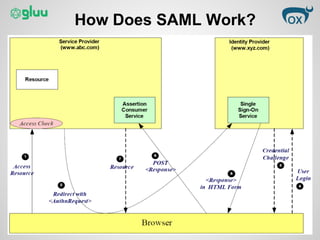
How Does SAML Work?

3 Main Protocols:
● Assertions
   a. Authentication statements
   b. Attribute statements
   c. Authorization decision statements
● Protocol - the way SAML asks for and gets
   assertions, for example, using SOAP over HTTP.
● Bindings - how SAML message exchanges are
   mapped into SOAP exchanges.
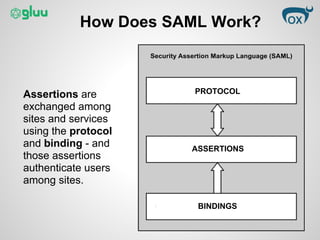
How Does SAML Work?


Assertions are         PROTOCOL

exchanged among
sites and services
using the protocol
and binding - and     ASSERTIONS
those assertions
authenticate users
among sites.

                       BINDINGS
How Does SAML Work?
Benefits of SAML
● User passwords never cross the firewall
● Web applications with no passwords are virtually
    impossible to hack
●   “SP-initiated” SAML SSO provides access to Web apps
    for users outside the firewall.
●   Enterprise-wide, architecturally sound Internet SSO
Centralized Federation
        with SAML Provides:

● One single point of web app access
● Identity control and auditing
● Security, risk aversion, and compliance
For more SAML related
     Information...

 visit us at http://gluu.org

SAML Protocol Overview

  • 1.
    SAML Protocol Overview Security Assertion Markup Language Brought to You By:
  • 2.
    What is SAML? Aseries of XML-based messages that detail: ● Whether users are authenticated. ● What rights, roles, and access they have. ● How they can use data and resources based on those rights and roles.
  • 3.
    What is SAMLUsed For? ● Single Sign On (SSO) ● Single Logout ● Attribute Sharing ● Account Linking
  • 4.
    Why SAML? The newestversion, SAML 2.0, uses intellectual property and protocols from secure frameworks to standardize SSO across all enterprise cloud applications.
  • 5.
    Existing Standards used by SAML 2.0: ● Extensible Markup Language (XML) ○ XML Schema ○ XML Signature ○ XML Encryption ● Hypertext Transfer Protocol (HTTP) ● Simple Object Access Protocol (SOAP)
  • 6.
    How Does SAMLWork? 3 Main Protocols: ● Assertions a. Authentication statements b. Attribute statements c. Authorization decision statements ● Protocol - the way SAML asks for and gets assertions, for example, using SOAP over HTTP. ● Bindings - how SAML message exchanges are mapped into SOAP exchanges.
  • 7.
    How Does SAMLWork? Assertions are PROTOCOL exchanged among sites and services using the protocol and binding - and ASSERTIONS those assertions authenticate users among sites. BINDINGS
  • 8.
  • 9.
    Benefits of SAML ●User passwords never cross the firewall ● Web applications with no passwords are virtually impossible to hack ● “SP-initiated” SAML SSO provides access to Web apps for users outside the firewall. ● Enterprise-wide, architecturally sound Internet SSO
  • 10.
    Centralized Federation with SAML Provides: ● One single point of web app access ● Identity control and auditing ● Security, risk aversion, and compliance
  • 11.
    For more SAMLrelated Information... visit us at http://gluu.org