Attacking SSO/SAML :
Breaking into
the front door of
authentication
# whoami
Amit Kumar
Security Engineer @ HappyFox | OSCP
Introduction to SAML
1. Security Assertion Markup Language is an open standard for exchanging authentication and
authorization data between parties, in particular, between an identity provider and a service
provider.
2. SAML is an XML-based markup language for security assertions (statements that service
providers use to make access-control decisions)
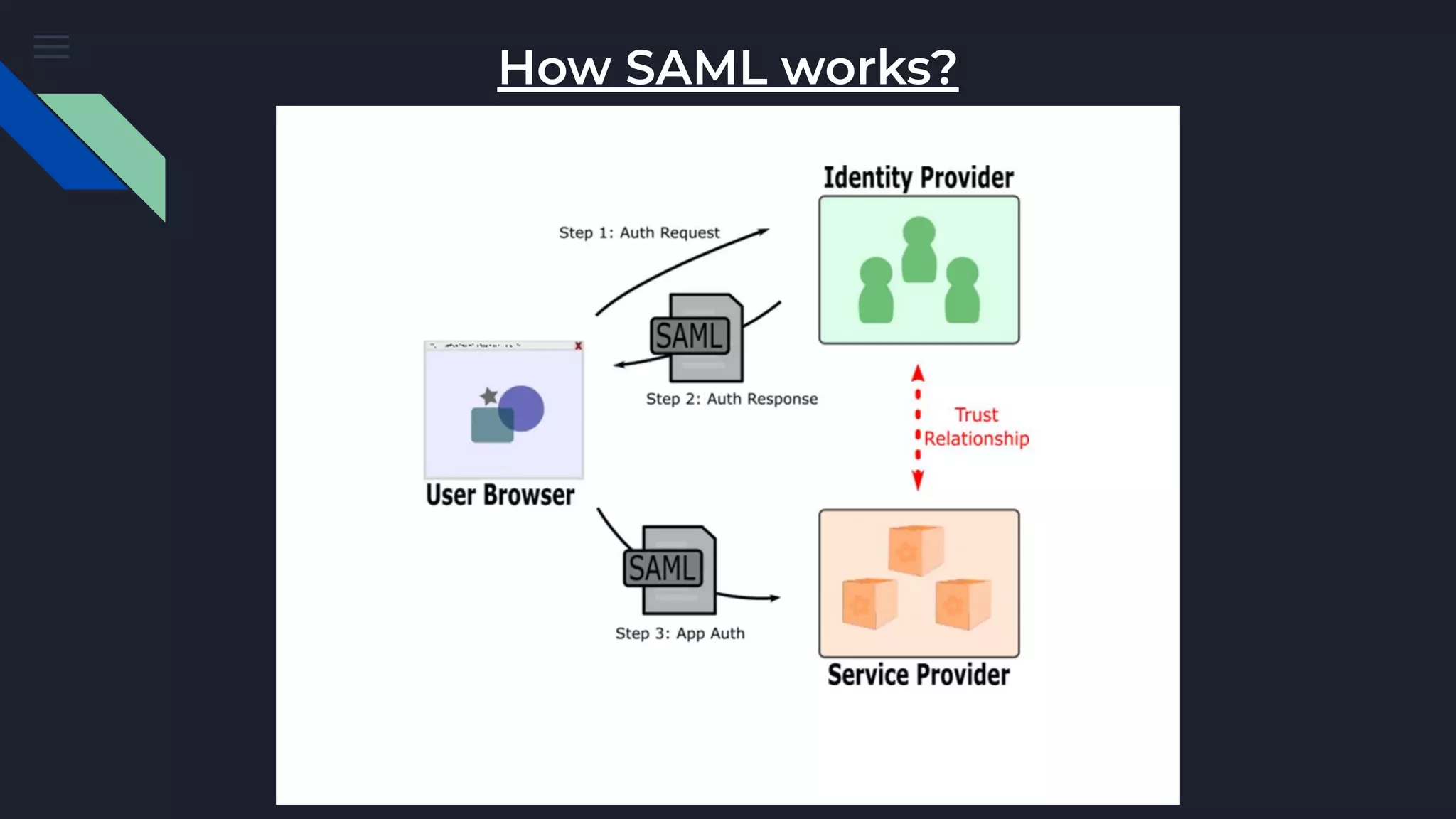
3. There are three main entities in SAML authentication process.
a. User
b. Identity Provider (IdP)
c. Service Provider (SP)
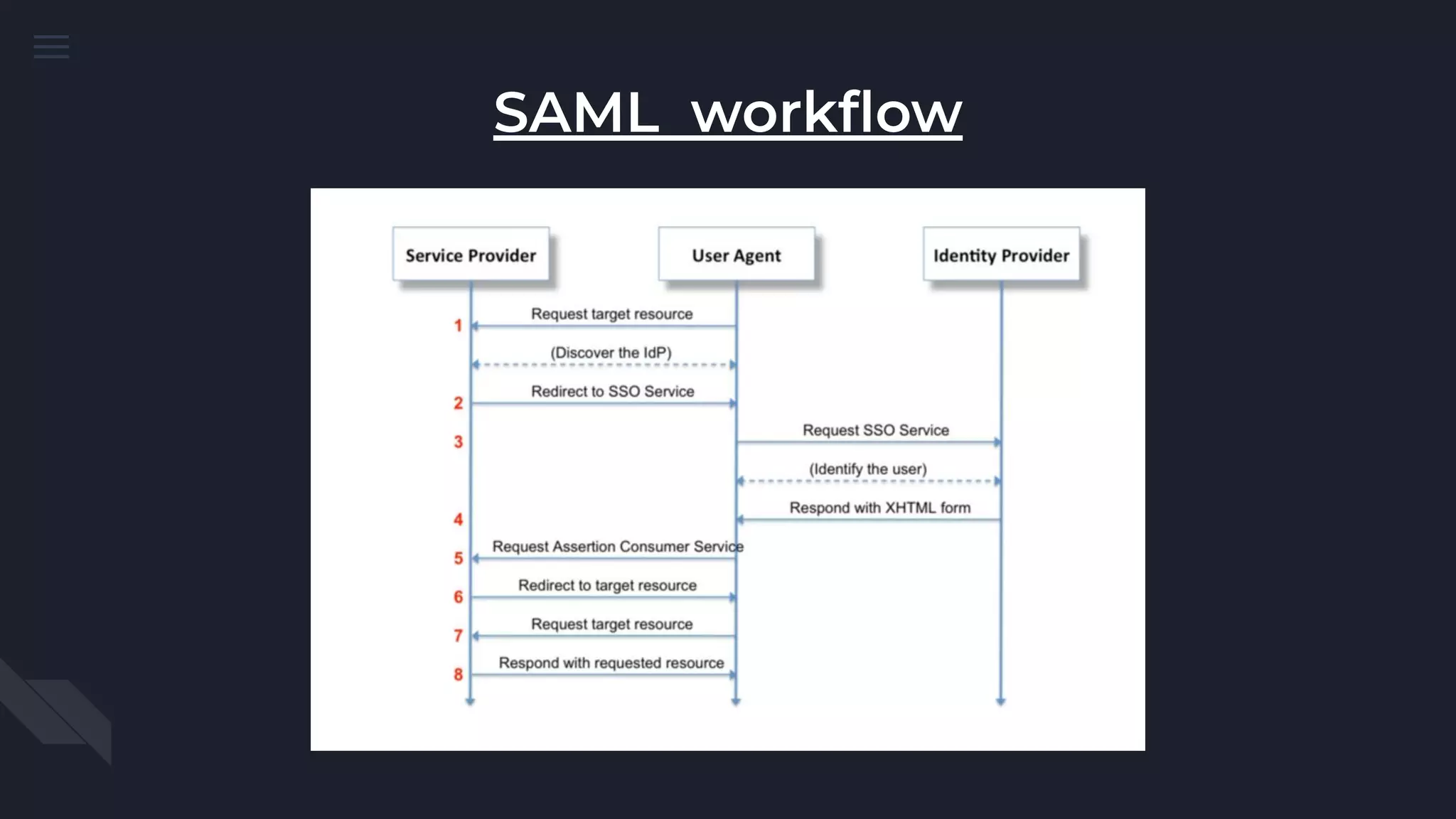
SAML workflow
How SAML works?
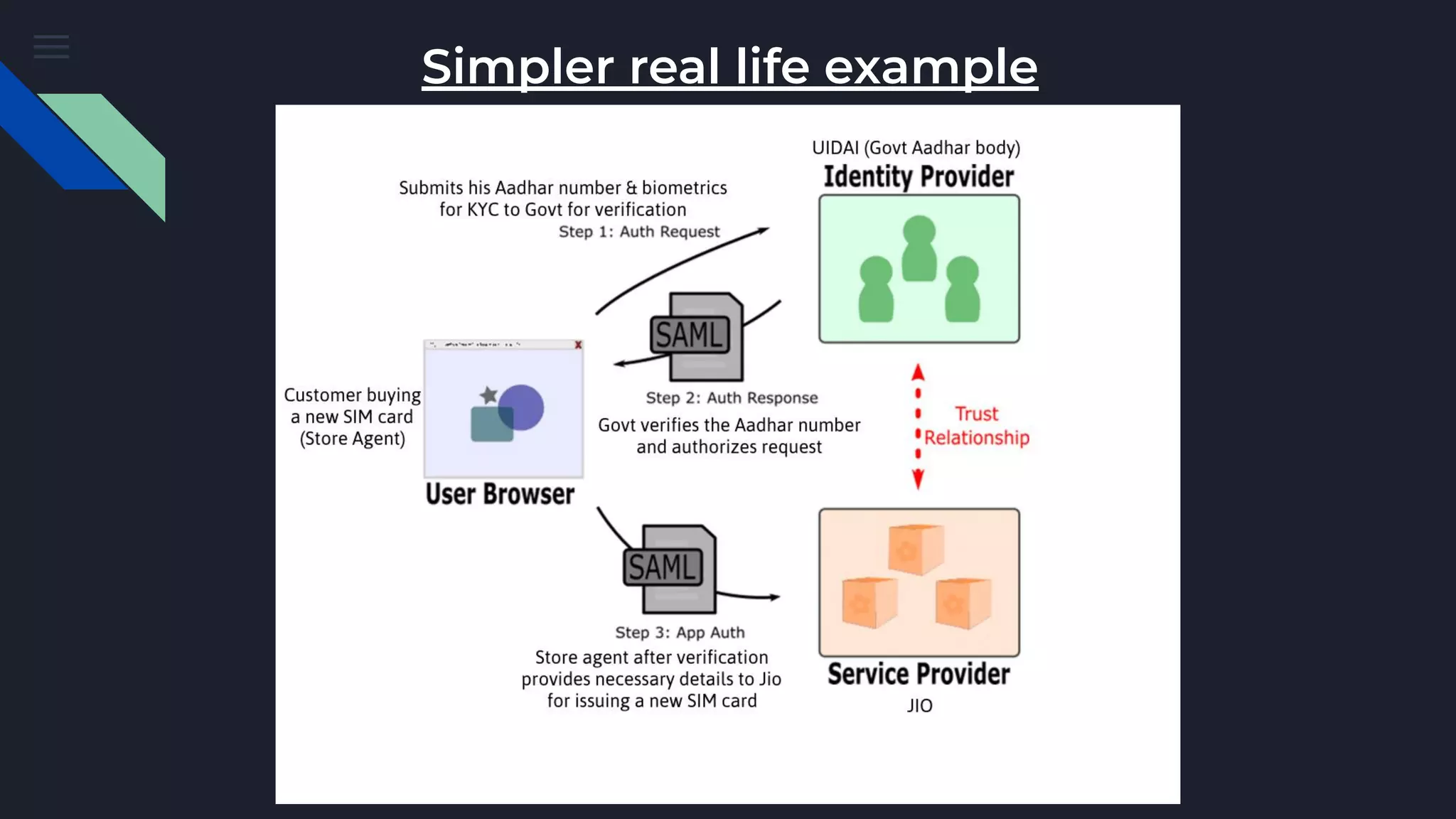
Simpler real life example
Why SAML matters?
● 90% of companies rely on Active Directory Federation Services
(ADFS) & a large number of them will be using Single Sign On for
authorization
● More & more companies are moving from regular
username/password combinations to centralized authentication
& authorization
● SSO implementations are often overlooked and assumed that it
is safe by default for use
● A small misconfiguration can lead to large vulnerabilities
● Often with SSO, there is no need for 2FA/MFA
Implications of broken SAML
● Account takeover - ability to login as anyone
● Privilege escalation - lateral movement towards high privileged
users
● Data dump from application
● Arbitrary File Read abilities with XML External Entity (XXE)
injection & in worst case, Remote Code Execution (RCE)
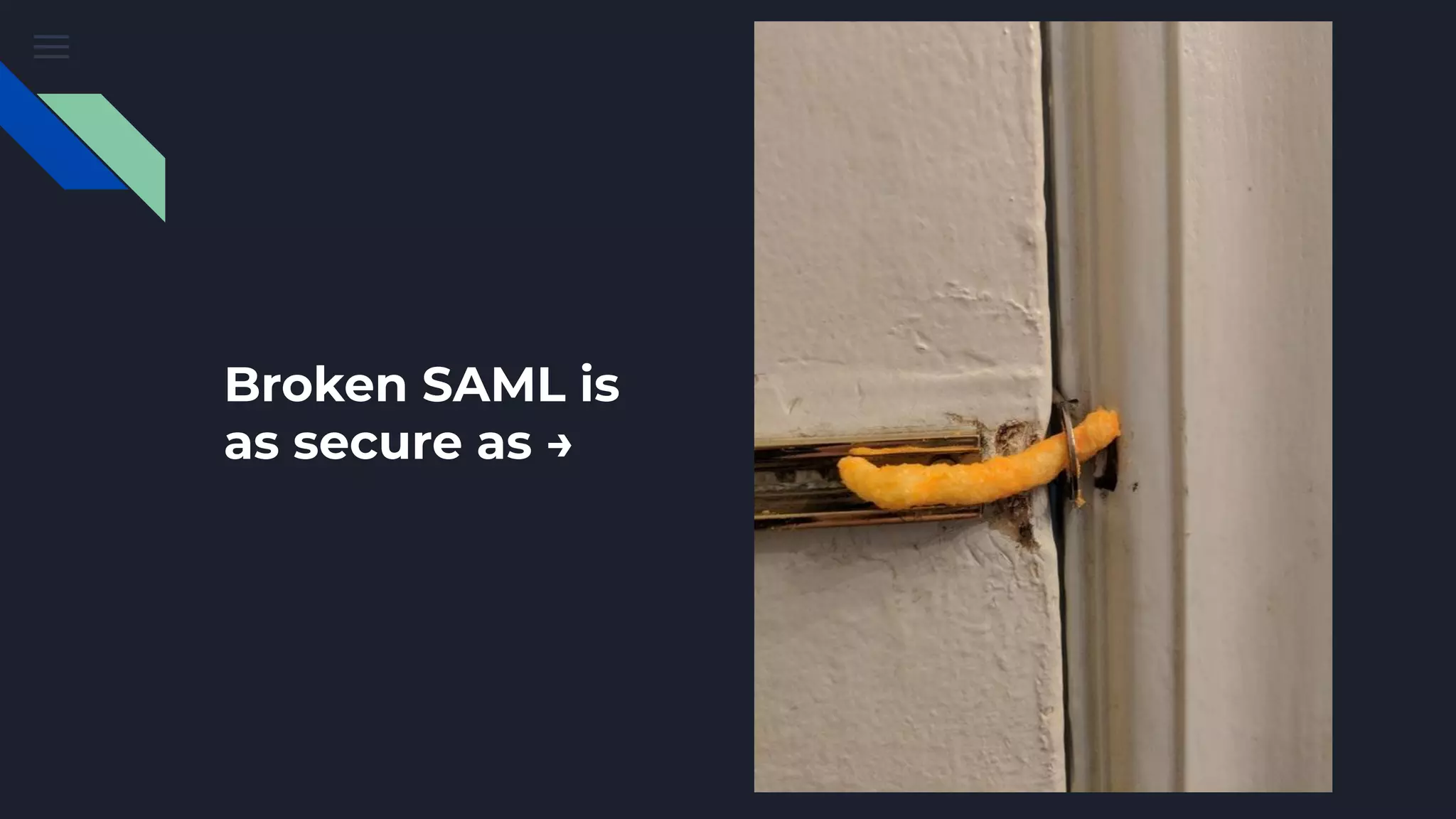
Broken SAML is
as secure as →
SAML workflow
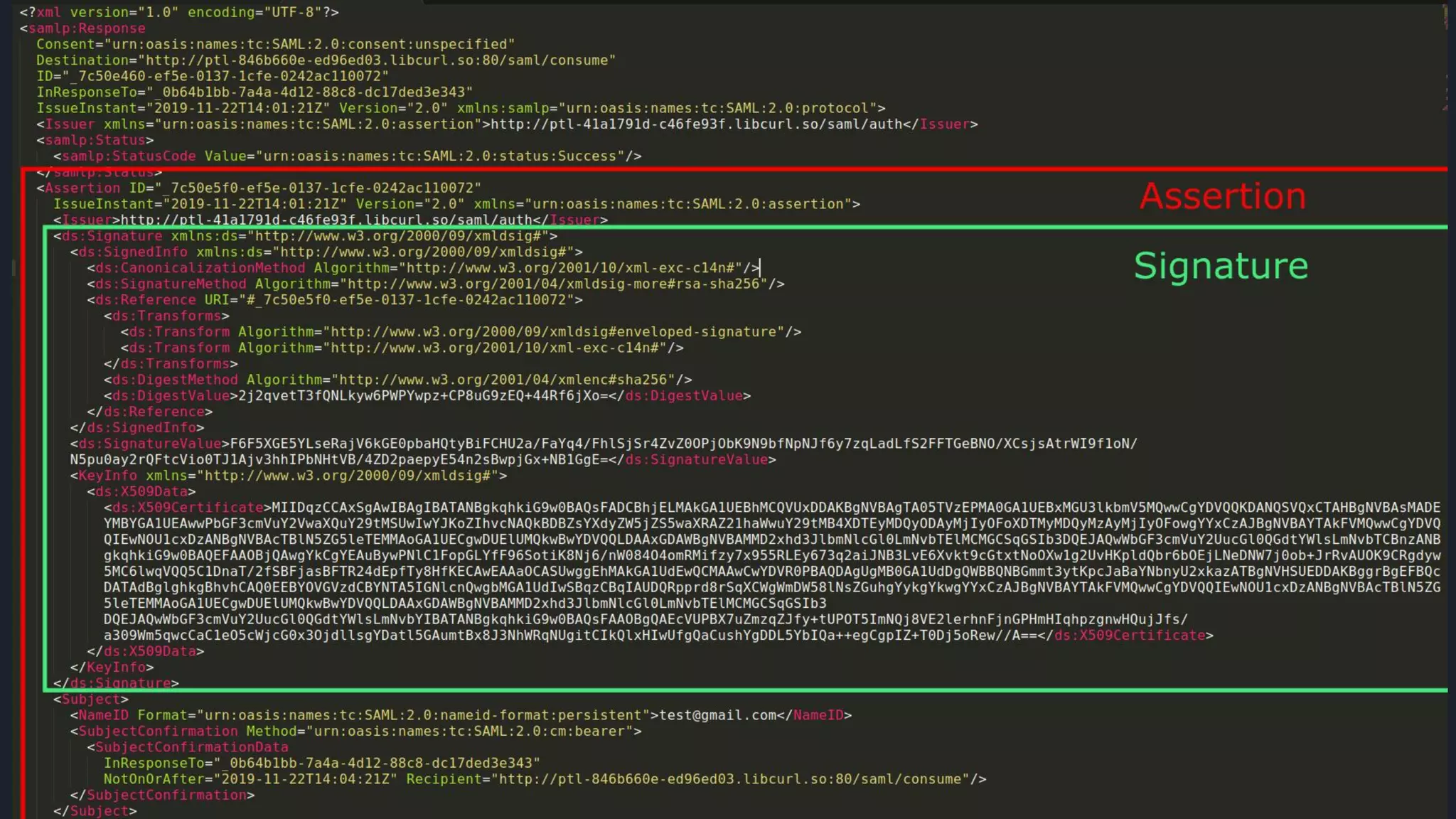
● SAML response are base64 encoded
● SAML is implemented in XML, hence decoded response contains XML
payload
● Assertion - contains information about user such as name, email,
username, permissions, privileges or any relevant identifier used by
application
● Signature enforces the trust between Service Provider & Identity
Provider through MetaData
● One thing to keep in mind - SAML response from IdP contains NotBefore
and NotOnOrAfter which by default is limited to 60 seconds. This
implies that a SAML response is only valid for next 60 seconds from the
time it got issued.
Common misconfigurations / mistakes
● Message Expiration
● Message Replay
● Missing Signature
● Invalid Signature
● SAML response from different IdP
● XML External Entity (XXE)
● Signature Wrapping
○ XSW1 - XSW8 (XML Signature Wrapping)
Demo

Attacking SSO (SAML) - Breaking into the front door of Authentication

  • 1.
    Attacking SSO/SAML : Breakinginto the front door of authentication
  • 2.
    # whoami Amit Kumar SecurityEngineer @ HappyFox | OSCP
  • 3.
    Introduction to SAML 1.Security Assertion Markup Language is an open standard for exchanging authentication and authorization data between parties, in particular, between an identity provider and a service provider. 2. SAML is an XML-based markup language for security assertions (statements that service providers use to make access-control decisions) 3. There are three main entities in SAML authentication process. a. User b. Identity Provider (IdP) c. Service Provider (SP)
  • 4.
  • 5.
  • 6.
  • 7.
    Why SAML matters? ●90% of companies rely on Active Directory Federation Services (ADFS) & a large number of them will be using Single Sign On for authorization ● More & more companies are moving from regular username/password combinations to centralized authentication & authorization ● SSO implementations are often overlooked and assumed that it is safe by default for use ● A small misconfiguration can lead to large vulnerabilities ● Often with SSO, there is no need for 2FA/MFA
  • 8.
    Implications of brokenSAML ● Account takeover - ability to login as anyone ● Privilege escalation - lateral movement towards high privileged users ● Data dump from application ● Arbitrary File Read abilities with XML External Entity (XXE) injection & in worst case, Remote Code Execution (RCE)
  • 9.
    Broken SAML is assecure as →
  • 10.
    SAML workflow ● SAMLresponse are base64 encoded ● SAML is implemented in XML, hence decoded response contains XML payload ● Assertion - contains information about user such as name, email, username, permissions, privileges or any relevant identifier used by application ● Signature enforces the trust between Service Provider & Identity Provider through MetaData ● One thing to keep in mind - SAML response from IdP contains NotBefore and NotOnOrAfter which by default is limited to 60 seconds. This implies that a SAML response is only valid for next 60 seconds from the time it got issued.
  • 12.
    Common misconfigurations /mistakes ● Message Expiration ● Message Replay ● Missing Signature ● Invalid Signature ● SAML response from different IdP ● XML External Entity (XXE) ● Signature Wrapping ○ XSW1 - XSW8 (XML Signature Wrapping)
  • 13.