George Adams 
OHSIG 
12th September 2014
Introduction 
 Occupational Health Advisory Group 
 Independent Forestry Safety Review
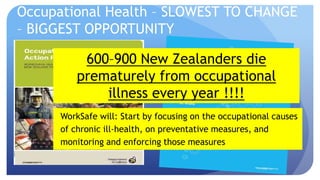
Occupational Health – SLOWEST TO CHANGE 
– BIGGEST OPPORTUNITY 
600–900 New Zealanders die 
prematurely from occupational 
illness every year !!!! 
WorkSafe will: Start by focusing on the occupational causes 
of chronic ill-health, on preventative measures, and 
monitoring and enforcing those measures
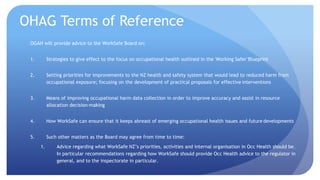
OHAG Terms of Reference 
OGAH will provide advice to the WorkSafe Board on: 
1. Strategies to give effect to the focus on occupational health outlined in the 'Working Safer' Blueprint 
2. Setting priorities for improvements to the NZ health and safety system that would lead to reduced harm from 
occupational exposure; focusing on the development of practical proposals for effective interventions 
3. Means of improving occupational harm data collection in order to improve accuracy and assist in resource 
allocation decision-making 
4. How WorkSafe can ensure that it keeps abreast of emerging occupational health issues and future developments 
5. Such other matters as the Board may agree from time to time: 
1. Advice regarding what WorkSafe NZ’s priorities, activities and internal organisation in Occ Health should be. 
In particular recommendations regarding how WorkSafe should provide Occ Health advice to the regulator in 
general, and to the inspectorate in particular.
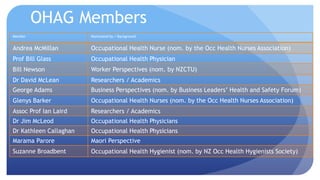
OHAG Members 
Member Nominated by / Background 
Andrea McMillan Occupational Health Nurse (nom. by the Occ Health Nurses Association) 
Prof Bill Glass Occupational Health Physician 
Bill Newson Worker Perspectives (nom. by NZCTU) 
Dr David McLean Researchers / Academics 
George Adams Business Perspectives (nom. by Business Leaders’ Health and Safety Forum) 
Glenys Barker Occupational Health Nurses (nom. by the Occ Health Nurses Association) 
Assoc Prof Ian Laird Researchers / Academics 
Dr Jim McLeod Occupational Health Physicians 
Dr Kathleen Callaghan Occupational Health Physicians 
Marama Parore Maori Perspective 
Suzanne Broadbent Occupational Health Hygienist (nom. by NZ Occ Health Hygienists Society)
We agree on everything
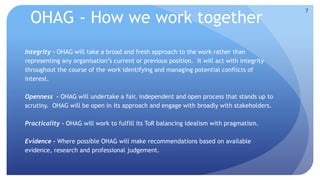
OHAG - How we work together 
Integrity - OHAG will take a broad and fresh approach to the work rather than 
representing any organisation’s current or previous position. It will act with integrity 
throughout the course of the work identifying and managing potential conflicts of 
interest. 
Openness - OHAG will undertake a fair, independent and open process that stands up to 
scrutiny. OHAG will be open in its approach and engage with broadly with stakeholders. 
Practicality - OHAG will work to fulfill its ToR balancing idealism with pragmatism. 
Evidence - Where possible OHAG will make recommendations based on available 
evidence, research and professional judgement. 
7
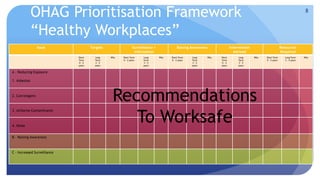
OHAG Prioritisation Framework 
“Healthy Workplaces” 
Issue Targets Surveillance + 
Information 
Raising Awareness Intervention 
Advised 
Resources 
Required 
Short 
Term 
0 – 2 
years 
Long 
Term 
3 – 5 
years 
Why Short Term 
0 – 2 years 
Long 
Term 
3 – 5 
years 
Why Short Term 
0 – 2 years 
Long 
Term 
3 – 5 
years 
Why Short 
Term 
0 – 2 
years 
Long 
Term 
3 – 5 
years 
Why Short Term 
0 – 2 years 
Long Term 
3 – 5 years 
Why 
A - Reducing Exposure 
1. Asbestos 
2. Carcinogens 
3. Airborne Contaminants 
4. Noise 
B - Raising Awareness 
C - Increased Surveillance 
Recommendations 
To Worksafe 
8
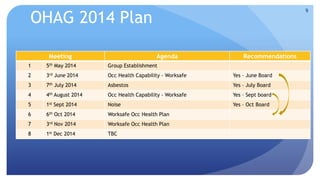
OHAG 2014 Plan 
Meeting Agenda Recommendations 
1 5th May 2014 Group Establishment 
2 3rd June 2014 Occ Health Capability - Worksafe Yes – June Board 
3 7th July 2014 Asbestos Yes – July Board 
4 4th August 2014 Occ Health Capability - Worksafe Yes – Sept board 
5 1st Sept 2014 Noise Yes – Oct Board 
6 6th Oct 2014 Worksafe Occ Health Plan 
7 3rd Nov 2014 Worksafe Occ Health Plan 
8 1st Dec 2014 TBC 
9
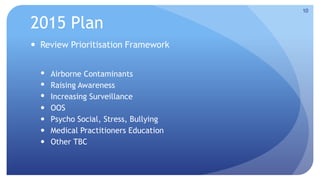
2015 Plan 
 Review Prioritisation Framework 
 Airborne Contaminants 
 Raising Awareness 
 Increasing Surveillance 
 OOS 
 Psycho Social, Stress, Bullying 
 Medical Practitioners Education 
 Other TBC 
10
Independent Forestry Safety Review
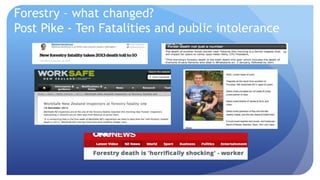
Forestry – what changed? 
Post Pike - Ten Fatalities and public intolerance
Independent Forestry Safety Review 
Review established by Industry Sponsors, they are the Forest Owners Association, 
Forest Industry Contractor Association and Farm Forestry Association. 
Independent Panel 
 Mike Cosman - H&S Expert 
 Hazel Armstrong - Lawyer, H&S focus 
 George Adams - business leader 
Objective – “a package of practical measures that will improve safety performance” 
Timeframe – Report concluded and published by October 2014
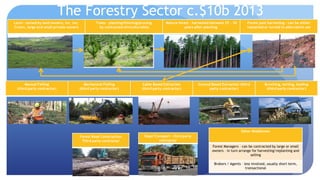
The Forestry Sector c.$10b 2013 
Land – owned by land owners, inc. Iwi, 
Crown, large and small private owners 
Trees – planting/thinning/pruning 
by contracted silviculturalists 
Mature forest – harvested between 25 – 30 
years after planting. 
Forest post harvesting – can be either 
replanted or turned to alternative use 
Manual Felling 
(third party contractor) 
Mechanical Felling 
(third party contractor) 
Cable Based Extraction 
(third party contractor) 
Ground Based Extraction (third 
party contractor) 
Bunching, sorting, loading 
(third party contractor) 
Road Transport – third party 
contractor 
Other Middlemen 
Forest Managers – can be contracted by large or small 
owners – in turn arrange for harvesting/replanting and 
selling 
Brokers / Agents – less involved, usually short term, 
transactional 
Forest Road Construction 
Third party contractor
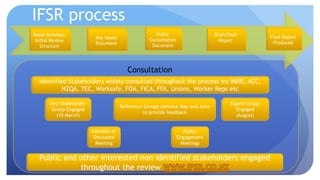
IFSR process 
Consultation 
Identified Stakeholders widely consulted throughout the process inc MBIE, ACC, 
NZQA, TEC, Worksafe, FOA, FICA, FFA, Unions, Worker Reps etc 
Reference Groups convene May and June 
to provide feedback 
Public 
Engagement 
Meetings 
Expert Group 
Engaged 
(August) 
Panel Develops 
Initial Review 
Structure 
Key Issues 
Document 
Public 
Consultation 
Document 
Draft Final 
Report 
Families of 
Deceased 
Meeting 
Final Report 
Produced 
Key Stakeholder 
Group Engaged 
(10 March) 
Public and other interested non identified stakeholders engaged 
throughout the review
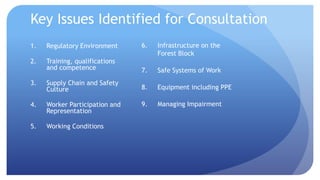
Key Issues Identified for Consultation 
1. Regulatory Environment 
2. Training, qualifications 
and competence 
3. Supply Chain and Safety 
Culture 
4. Worker Participation and 
Representation 
5. Working Conditions 
6. Infrastructure on the 
Forest Block 
7. Safe Systems of Work 
8. Equipment including PPE 
9. Managing Impairment
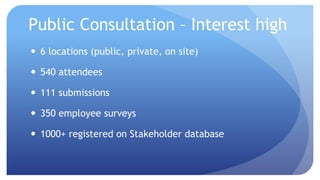
Public Consultation – Interest high 
 6 locations (public, private, on site) 
 540 attendees 
 111 submissions 
 350 employee surveys 
 1000+ registered on Stakeholder database
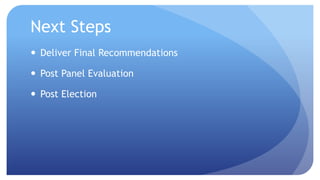
Next Steps 
 Deliver Final Recommendations 
 Post Panel Evaluation 
 Post Election
 Thank you

Occupational Health Advisory Group update

  • 1.
    George Adams OHSIG 12th September 2014
  • 2.
    Introduction  OccupationalHealth Advisory Group  Independent Forestry Safety Review
  • 3.
    Occupational Health –SLOWEST TO CHANGE – BIGGEST OPPORTUNITY 600–900 New Zealanders die prematurely from occupational illness every year !!!! WorkSafe will: Start by focusing on the occupational causes of chronic ill-health, on preventative measures, and monitoring and enforcing those measures
  • 4.
    OHAG Terms ofReference OGAH will provide advice to the WorkSafe Board on: 1. Strategies to give effect to the focus on occupational health outlined in the 'Working Safer' Blueprint 2. Setting priorities for improvements to the NZ health and safety system that would lead to reduced harm from occupational exposure; focusing on the development of practical proposals for effective interventions 3. Means of improving occupational harm data collection in order to improve accuracy and assist in resource allocation decision-making 4. How WorkSafe can ensure that it keeps abreast of emerging occupational health issues and future developments 5. Such other matters as the Board may agree from time to time: 1. Advice regarding what WorkSafe NZ’s priorities, activities and internal organisation in Occ Health should be. In particular recommendations regarding how WorkSafe should provide Occ Health advice to the regulator in general, and to the inspectorate in particular.
  • 5.
    OHAG Members MemberNominated by / Background Andrea McMillan Occupational Health Nurse (nom. by the Occ Health Nurses Association) Prof Bill Glass Occupational Health Physician Bill Newson Worker Perspectives (nom. by NZCTU) Dr David McLean Researchers / Academics George Adams Business Perspectives (nom. by Business Leaders’ Health and Safety Forum) Glenys Barker Occupational Health Nurses (nom. by the Occ Health Nurses Association) Assoc Prof Ian Laird Researchers / Academics Dr Jim McLeod Occupational Health Physicians Dr Kathleen Callaghan Occupational Health Physicians Marama Parore Maori Perspective Suzanne Broadbent Occupational Health Hygienist (nom. by NZ Occ Health Hygienists Society)
  • 6.
    We agree oneverything
  • 7.
    OHAG - Howwe work together Integrity - OHAG will take a broad and fresh approach to the work rather than representing any organisation’s current or previous position. It will act with integrity throughout the course of the work identifying and managing potential conflicts of interest. Openness - OHAG will undertake a fair, independent and open process that stands up to scrutiny. OHAG will be open in its approach and engage with broadly with stakeholders. Practicality - OHAG will work to fulfill its ToR balancing idealism with pragmatism. Evidence - Where possible OHAG will make recommendations based on available evidence, research and professional judgement. 7
  • 8.
    OHAG Prioritisation Framework “Healthy Workplaces” Issue Targets Surveillance + Information Raising Awareness Intervention Advised Resources Required Short Term 0 – 2 years Long Term 3 – 5 years Why Short Term 0 – 2 years Long Term 3 – 5 years Why Short Term 0 – 2 years Long Term 3 – 5 years Why Short Term 0 – 2 years Long Term 3 – 5 years Why Short Term 0 – 2 years Long Term 3 – 5 years Why A - Reducing Exposure 1. Asbestos 2. Carcinogens 3. Airborne Contaminants 4. Noise B - Raising Awareness C - Increased Surveillance Recommendations To Worksafe 8
  • 9.
    OHAG 2014 Plan Meeting Agenda Recommendations 1 5th May 2014 Group Establishment 2 3rd June 2014 Occ Health Capability - Worksafe Yes – June Board 3 7th July 2014 Asbestos Yes – July Board 4 4th August 2014 Occ Health Capability - Worksafe Yes – Sept board 5 1st Sept 2014 Noise Yes – Oct Board 6 6th Oct 2014 Worksafe Occ Health Plan 7 3rd Nov 2014 Worksafe Occ Health Plan 8 1st Dec 2014 TBC 9
  • 10.
    2015 Plan Review Prioritisation Framework  Airborne Contaminants  Raising Awareness  Increasing Surveillance  OOS  Psycho Social, Stress, Bullying  Medical Practitioners Education  Other TBC 10
  • 11.
  • 12.
    Forestry – whatchanged? Post Pike - Ten Fatalities and public intolerance
  • 13.
    Independent Forestry SafetyReview Review established by Industry Sponsors, they are the Forest Owners Association, Forest Industry Contractor Association and Farm Forestry Association. Independent Panel  Mike Cosman - H&S Expert  Hazel Armstrong - Lawyer, H&S focus  George Adams - business leader Objective – “a package of practical measures that will improve safety performance” Timeframe – Report concluded and published by October 2014
  • 14.
    The Forestry Sectorc.$10b 2013 Land – owned by land owners, inc. Iwi, Crown, large and small private owners Trees – planting/thinning/pruning by contracted silviculturalists Mature forest – harvested between 25 – 30 years after planting. Forest post harvesting – can be either replanted or turned to alternative use Manual Felling (third party contractor) Mechanical Felling (third party contractor) Cable Based Extraction (third party contractor) Ground Based Extraction (third party contractor) Bunching, sorting, loading (third party contractor) Road Transport – third party contractor Other Middlemen Forest Managers – can be contracted by large or small owners – in turn arrange for harvesting/replanting and selling Brokers / Agents – less involved, usually short term, transactional Forest Road Construction Third party contractor
  • 15.
    IFSR process Consultation Identified Stakeholders widely consulted throughout the process inc MBIE, ACC, NZQA, TEC, Worksafe, FOA, FICA, FFA, Unions, Worker Reps etc Reference Groups convene May and June to provide feedback Public Engagement Meetings Expert Group Engaged (August) Panel Develops Initial Review Structure Key Issues Document Public Consultation Document Draft Final Report Families of Deceased Meeting Final Report Produced Key Stakeholder Group Engaged (10 March) Public and other interested non identified stakeholders engaged throughout the review
  • 16.
    Key Issues Identifiedfor Consultation 1. Regulatory Environment 2. Training, qualifications and competence 3. Supply Chain and Safety Culture 4. Worker Participation and Representation 5. Working Conditions 6. Infrastructure on the Forest Block 7. Safe Systems of Work 8. Equipment including PPE 9. Managing Impairment
  • 17.
    Public Consultation –Interest high  6 locations (public, private, on site)  540 attendees  111 submissions  350 employee surveys  1000+ registered on Stakeholder database
  • 18.
    Next Steps Deliver Final Recommendations  Post Panel Evaluation  Post Election
  • 19.

Editor's Notes

  • #5 Working Safer – A Blueprint for Health and Safety at Work – recommendation #7 The functions related to improving occupational illness and disease will be integrated within WorkSafe’s operations. We believe that integration with other workplace safety actions is preferable and will ensure that occupational health is considered throughout the system with the appropriate expertise. WorkSafe will: start by focusing on the occupational causes of chronic ill-health, on preventative measures, and monitoring and enforcing those measures set goals and develop programmes for reducing exposure, preventing workplace illness, and removing disease hazards issue accessible guidelines for employers and workers to help them manage identified occupational health hazards address occupational health in national programmes and harm prevention programmes it undertakes with business and workers work with other agencies, including ACC, to identify emerging trends and issues relating to occupational health and compensation claims, and apply information on trends and compensation claims throughout its functions for example through guidance material, compliance and enforcement focus and consider how to integrate occupational health into new incentive programmes. What this means WorkSafe will focus on chronic occupational harm, and businesses and workers will have a better understanding of occupational health hazards and what they need to do to manage them as part of their total workplace health and safety management through guidance, education, enforcement, and targeted prevention campaigns.