Goal : To provide our customer with a safe and healthy eating experience. How to achieve:  By providing safe and secure environment, not only for our customer but also for our Team Members. Food & Hygiene
Prevention of Contamination and Food Poisoning Receiving and Storage Preparation, Cooking and  Serving Personal Hygiene Method of Preservation  Premises and equipment Pest control Cleaning and Sanitation Legislation Conclusion Food Hygiene Hygienic people + Hygienic Practice + Hygienic Premises Protect you, your customers and your co-workers. Is required by law Is required in long run
Fines and closure of food establishment Illness Death Loss of employment Loss of reputation Loss of customers Food handlers have both legal and moral responsibilities Any violation could lead to
Is an illness that follows the consumption of food containing certain bacteria their toxin or other poisonous substances? The illness can occur between 1-48 hrs following the consumption of the food. Symptoms Fever Nausea Vomiting Abdominal pain Diarrhoea Food Poisoning
Microorganism: Bacteria, Virus, Parasites or Fungi. Chemicals: Cleaning supplies or poisonous metal- lead, mercury, cadmium. Physical objects: Broken glass, crockery or packaging material. Reason for Contamination Fail to cook properly: to reheat of finish half cooked product Infected employee Raw product mixed with cooked food Food preparation area not sanitized Food in danger zone Kinds of contamination
Humans Raw foods Refuse (garbage) Dust and soil. Rodents Insects Birds Animals Sources
Receiving Avoid danger zone. Preparation: Time should be less than 2hrs. Cooking: <65  C, reheat immediately and >65  C Serving: Sanitize all the food contact areas Store: Cling wrap and store at 1-5  C. DELIVERY OF GOODS Quality Quantity and weight Dates on packed food Temperatures of chilled and frozen foods Signs of damage: dented cans, sign of pest infection. Expiry dates and dates left to be expired. Appearance of the person delivering the goods FOOD FLOW
Use a cleaned and sanitized thermometer to measure the temperature. Reject if not correct. Reject if past use by date. Look in for any sign of damage, dent, bulge, etc. Limit the time food is in danger zone. Keep receiving area clean, well lit and free of pests. Do not receive deliveries if you do not have time to immediately. Basic of Receiving
Date, rotate, and eliminate. Raw products below cooked No over loading Discard expired food material Keep food in cling wrap on closed container. Keep storage area, transporting carts and trays clean and dry. Never leave trash or garbage in the store. Basic of Storage
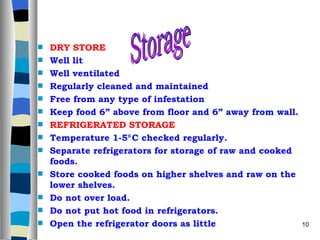
DRY STORE Well lit Well ventilated Regularly cleaned and maintained Free from any type of infestation Keep food 6” above from floor and 6” away from wall. REFRIGERATED STORAGE Temperature 1-5  C checked regularly. Separate refrigerators for storage of raw and cooked foods. Store cooked foods on higher shelves and raw on the lower shelves. Do not over load. Do not put hot food in refrigerators. Open the refrigerator doors as little  Storage
FREEZER STORAGE Temperature –12  C to -23  C Separate freezer for storage of raw and cooked foods. Do not over load. Package is fully labeled. Open the freezer doors as little as possible Storage
Thawing of food In refrigerators: store below cooked and ready to eat at 1  C-5  C. Microwave oven, if food is to be cooked immediately. Never thaw food at room temperature. Ensure the food is completely de-frosted Discard any thawed liquid, as they may be dangerous, ESP. liquid of meat and raw poultry. Once thawed keep in refrigeration or use it. Defrosting is a part of cooking process so allow time  Cooking and Processing Cooking at right temperature to kill bacteria Cooked food must be chilled immediately and refrigerated within 1hr 30-min maximum. Preparation, Cooking and Serving
Serving Personal hygiene Not feeling well, stay home. If you have a cut or a wound, wash, clean, use bright color bandage and wear disposable gloves Hands bacteria free, minimum food handling, nails short and clean. Dedicated sink for hand wash, use anti bacterial soap, hot air dry, use paper towel.
An animal which live in or on man’s food They spread disease Cause wastage Damage to building and equipment There presence breaks the law Conditions in which they prevail Moisture Food Shelter Prevention is the only answer by controlling the conditions in which they prevail. Food Pest
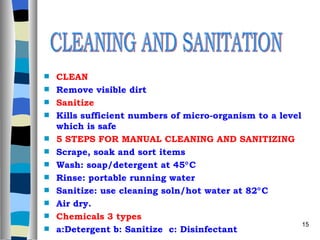
CLEAN Remove visible dirt Sanitize Kills sufficient numbers of micro-organism to a level which is safe  5 STEPS FOR MANUAL CLEANING AND SANITIZING Scrape, soak and sort items Wash: soap/detergent at 45  C Rinse: portable running water Sanitize: use cleaning soln/hot water at 82  C Air dry. Chemicals 3 types a:Detergent b: Sanitize  c: Disinfectant CLEANING AND SANITATION
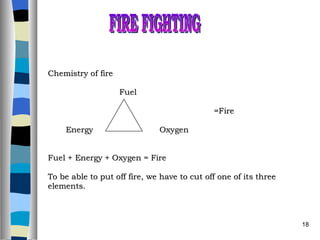
FIRE FIGHTING
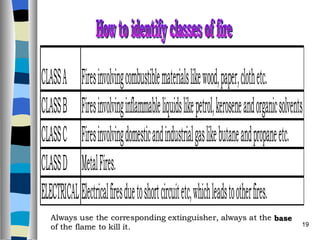
How to identify classes of fire
General fire safety points Do’s Stack the material properly and away from power lines/inflammable material. Always extinguish matchstick/cigarette before disposal Always switch off the appliance after use Always obey signs and instructions Always keep emergency exists clear Always know the location of fire extinguishers Always inform the manager if you suspect any sign of fire SECURITY GUIDELINES
Don’ts Do not smoke in production area, storage area, restrooms, near the gas bank or genset area. Do not leave dusters to dry over the hot equipment Do not overheat oil of fat Do not put wet food into hot oil Do not leave ant equipment unattended when they are ON. Do not keep dusters, paper near electrical panel Do not operate electrical equipment without proper plug top Do not throw lighted cigarettes. Use ashtrays. Do not go near machinery with loose clothes, Synthetics. Do not overload electrical circuits. SECURITY GUIDELINES
Know the location and contents of your Unit’s First aid kit First aid for fire injuries Serious Burns Move patient from the heat of fire Move patient in fresh air Do not allow crowding around the patient Remove/cut away clothes from the effected parts of the body Wash the effected parts with cold water Apply any antiseptic cream (Burnol) Take the patient to the doctor, preferably the one approved for your Unit, otherwise to the closest doctor you find. FIRST AID
For Minor Burns Immediately wash the effected area with cold water Apply the antiseptic cream Always inform the Unit Manager Electrical Shock Make sure the electrical source is disconnected first If patient perspires, body is cold/clammy and has low pulse: Cover with warm cloth(do not touch the burnt part) Take the patient to hospital immediately FIRST AID
INCASE OF FIRE Do not panic, if the fire is of minor nature, reach for the fire extinguisher and aim towards base of the fire. Understand the usage of the fire extinguisher as soon you join the unit. Shut off the gas supply If it’s a gas leak do not touch the electrical switches. Without creating panic, abandon the area, inform manager. Evacuate guests immediately, the manager on duty will take the call on what has to be done in terms of evacuation. FIRST AID

Safety And Hygiene

  • 1.
    Goal : Toprovide our customer with a safe and healthy eating experience. How to achieve: By providing safe and secure environment, not only for our customer but also for our Team Members. Food & Hygiene
  • 2.
    Prevention of Contaminationand Food Poisoning Receiving and Storage Preparation, Cooking and Serving Personal Hygiene Method of Preservation Premises and equipment Pest control Cleaning and Sanitation Legislation Conclusion Food Hygiene Hygienic people + Hygienic Practice + Hygienic Premises Protect you, your customers and your co-workers. Is required by law Is required in long run
  • 3.
    Fines and closureof food establishment Illness Death Loss of employment Loss of reputation Loss of customers Food handlers have both legal and moral responsibilities Any violation could lead to
  • 4.
    Is an illnessthat follows the consumption of food containing certain bacteria their toxin or other poisonous substances? The illness can occur between 1-48 hrs following the consumption of the food. Symptoms Fever Nausea Vomiting Abdominal pain Diarrhoea Food Poisoning
  • 5.
    Microorganism: Bacteria, Virus,Parasites or Fungi. Chemicals: Cleaning supplies or poisonous metal- lead, mercury, cadmium. Physical objects: Broken glass, crockery or packaging material. Reason for Contamination Fail to cook properly: to reheat of finish half cooked product Infected employee Raw product mixed with cooked food Food preparation area not sanitized Food in danger zone Kinds of contamination
  • 6.
    Humans Raw foodsRefuse (garbage) Dust and soil. Rodents Insects Birds Animals Sources
  • 7.
    Receiving Avoid dangerzone. Preparation: Time should be less than 2hrs. Cooking: <65  C, reheat immediately and >65  C Serving: Sanitize all the food contact areas Store: Cling wrap and store at 1-5  C. DELIVERY OF GOODS Quality Quantity and weight Dates on packed food Temperatures of chilled and frozen foods Signs of damage: dented cans, sign of pest infection. Expiry dates and dates left to be expired. Appearance of the person delivering the goods FOOD FLOW
  • 8.
    Use a cleanedand sanitized thermometer to measure the temperature. Reject if not correct. Reject if past use by date. Look in for any sign of damage, dent, bulge, etc. Limit the time food is in danger zone. Keep receiving area clean, well lit and free of pests. Do not receive deliveries if you do not have time to immediately. Basic of Receiving
  • 9.
    Date, rotate, andeliminate. Raw products below cooked No over loading Discard expired food material Keep food in cling wrap on closed container. Keep storage area, transporting carts and trays clean and dry. Never leave trash or garbage in the store. Basic of Storage
  • 10.
    DRY STORE Welllit Well ventilated Regularly cleaned and maintained Free from any type of infestation Keep food 6” above from floor and 6” away from wall. REFRIGERATED STORAGE Temperature 1-5  C checked regularly. Separate refrigerators for storage of raw and cooked foods. Store cooked foods on higher shelves and raw on the lower shelves. Do not over load. Do not put hot food in refrigerators. Open the refrigerator doors as little Storage
  • 11.
    FREEZER STORAGE Temperature–12  C to -23  C Separate freezer for storage of raw and cooked foods. Do not over load. Package is fully labeled. Open the freezer doors as little as possible Storage
  • 12.
    Thawing of foodIn refrigerators: store below cooked and ready to eat at 1  C-5  C. Microwave oven, if food is to be cooked immediately. Never thaw food at room temperature. Ensure the food is completely de-frosted Discard any thawed liquid, as they may be dangerous, ESP. liquid of meat and raw poultry. Once thawed keep in refrigeration or use it. Defrosting is a part of cooking process so allow time Cooking and Processing Cooking at right temperature to kill bacteria Cooked food must be chilled immediately and refrigerated within 1hr 30-min maximum. Preparation, Cooking and Serving
  • 13.
    Serving Personal hygieneNot feeling well, stay home. If you have a cut or a wound, wash, clean, use bright color bandage and wear disposable gloves Hands bacteria free, minimum food handling, nails short and clean. Dedicated sink for hand wash, use anti bacterial soap, hot air dry, use paper towel.
  • 14.
    An animal whichlive in or on man’s food They spread disease Cause wastage Damage to building and equipment There presence breaks the law Conditions in which they prevail Moisture Food Shelter Prevention is the only answer by controlling the conditions in which they prevail. Food Pest
  • 15.
    CLEAN Remove visibledirt Sanitize Kills sufficient numbers of micro-organism to a level which is safe 5 STEPS FOR MANUAL CLEANING AND SANITIZING Scrape, soak and sort items Wash: soap/detergent at 45  C Rinse: portable running water Sanitize: use cleaning soln/hot water at 82  C Air dry. Chemicals 3 types a:Detergent b: Sanitize c: Disinfectant CLEANING AND SANITATION
  • 18.
  • 19.
    How to identifyclasses of fire
  • 20.
    General fire safetypoints Do’s Stack the material properly and away from power lines/inflammable material. Always extinguish matchstick/cigarette before disposal Always switch off the appliance after use Always obey signs and instructions Always keep emergency exists clear Always know the location of fire extinguishers Always inform the manager if you suspect any sign of fire SECURITY GUIDELINES
  • 21.
    Don’ts Do notsmoke in production area, storage area, restrooms, near the gas bank or genset area. Do not leave dusters to dry over the hot equipment Do not overheat oil of fat Do not put wet food into hot oil Do not leave ant equipment unattended when they are ON. Do not keep dusters, paper near electrical panel Do not operate electrical equipment without proper plug top Do not throw lighted cigarettes. Use ashtrays. Do not go near machinery with loose clothes, Synthetics. Do not overload electrical circuits. SECURITY GUIDELINES
  • 22.
    Know the locationand contents of your Unit’s First aid kit First aid for fire injuries Serious Burns Move patient from the heat of fire Move patient in fresh air Do not allow crowding around the patient Remove/cut away clothes from the effected parts of the body Wash the effected parts with cold water Apply any antiseptic cream (Burnol) Take the patient to the doctor, preferably the one approved for your Unit, otherwise to the closest doctor you find. FIRST AID
  • 23.
    For Minor BurnsImmediately wash the effected area with cold water Apply the antiseptic cream Always inform the Unit Manager Electrical Shock Make sure the electrical source is disconnected first If patient perspires, body is cold/clammy and has low pulse: Cover with warm cloth(do not touch the burnt part) Take the patient to hospital immediately FIRST AID
  • 24.
    INCASE OF FIREDo not panic, if the fire is of minor nature, reach for the fire extinguisher and aim towards base of the fire. Understand the usage of the fire extinguisher as soon you join the unit. Shut off the gas supply If it’s a gas leak do not touch the electrical switches. Without creating panic, abandon the area, inform manager. Evacuate guests immediately, the manager on duty will take the call on what has to be done in terms of evacuation. FIRST AID