Restaurant Training
When working in a restaurant you are expected
to know key principles in order to keep
customers safe. This means being aware of
culinary techniques, sanitation principles and
how to use kitchen equipment
Basics to workplace safety
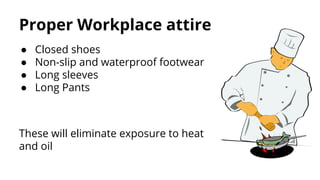
Proper Workplace attire
● Closed shoes
● Non-slip and waterproof footwear
● Long sleeves
● Long Pants
These will eliminate exposure to heat
and oil
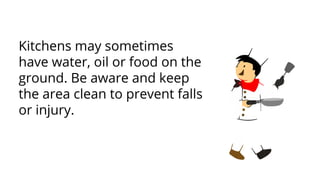
Kitchens may sometimes
have water, oil or food on the
ground. Be aware and keep
the area clean to prevent falls
or injury.
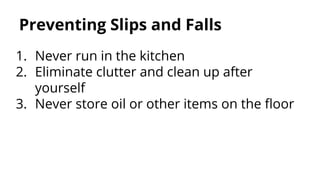
Preventing Slips and Falls
1. Never run in the kitchen
2. Eliminate clutter and clean up after
yourself
3. Never store oil or other items on the floor
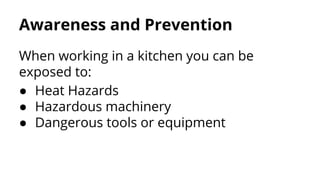
Awareness and Prevention
When working in a kitchen you can be
exposed to:
● Heat Hazards
● Hazardous machinery
● Dangerous tools or equipment
Burn Prevention
Burn Prevention - Using Equipment
● Using proper equipment such as
tongs and oven mitts to remove hot
items from pasta boilers or steamers
● Use a tray to carry items across a
kitchen that may drip, preventing
Burn Prevention - Opening Equipment
● When opening an oven or dishwasher step to the
side
● Do not reach or stand above steaming items
● Do not open cookers that are under pressure.
● Uncover pots or hot items by opening away from you
Burn Prevention - Additional Pointers
● Assume that anything, such as pots and pans, on a
stove is hot and should be handled with oven mitts
or gloves.
● Keep burners at a level so that the flame is covered
by the pan
● Clean vents in the morning before a grill gets hot
Burn Prevention - Additional Pointers
● Keep handles out of the way in the kitchen
● Avoid overfilling any pans
● Do not leave hot oil unattended
● Do not use wet clothes to lift lids or hot pots
● Do not lean pots or pans over when they have boiling
Grease Fire
Can be prevented by emptying grease traps, cleaning
grill surfaces and not using appliances that have frayed
cords or keeping flammable equipment near open
flames.
- Extinguish with a class K fire extinguisher
- NEVER carry oil that is on fire
- NEVER throw water on a grease fire
Electrical Hazards
There are a lot of electrical kitchen
equipment. Electrical sources near water
should be properly grounded.
Hazardous Machinery
● Machine guarding is important to
remember to eliminate or control hazards.
● Machine parts have the potential to cause
several workplace injuries including
crushed hands.
Clean up Safety
● Do not attempt to unload dishes from a dishwasher
until they have cooled
● Avoid steam
● Test water temperature before submerging your
hand.
● Be careful of and guard continuous feed dishwashers
to prevent scal
Food Prep Safety
● Handle and store knives safely
● Cut away from you and keep hand and fingers out of
the way
● Do not attempt to catch a knife if it is falling
● Don’t leave knives near a countertop edge
FDA
The Food and Drug Administration makes
recommendations for regulations in the food
service industry.
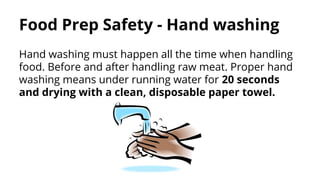
Food Prep Safety - Hand washing
Hand washing must happen all the time when handling
food. Before and after handling raw meat. Proper hand
washing means under running water for 20 seconds
and drying with a clean, disposable paper towel.
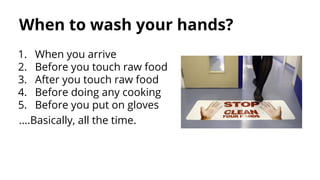
When to wash your hands?
1. When you arrive
2. Before you touch raw food
3. After you touch raw food
4. Before doing any cooking
5. Before you put on gloves
….Basically, all the time.
Perishable Food
● Perishable food is defined as anything such as meat,
poultry and seafood that will spoil if not refrigerated
properly
● The food has to go through a “kill stage” of cooking
where any harmful bacteria present is killed off to
make the food safe to eat.
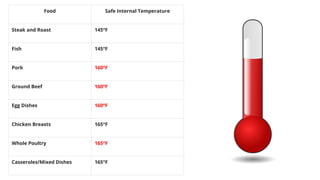
Food Safe Internal Temperature
Steak and Roast 145°F
Fish 145°F
Pork 160°F
Ground Beef 160°F
Egg Dishes 160°F
Chicken Breasts 165°F
Whole Poultry 165°F
Casseroles/Mixed Dishes 165°F
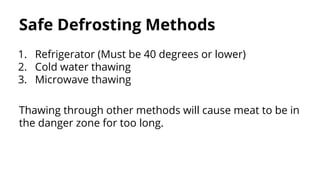
Safe Defrosting Methods
1. Refrigerator (Must be 40 degrees or lower)
2. Cold water thawing
3. Microwave thawing
Thawing through other methods will cause meat to be in
the danger zone for too long.
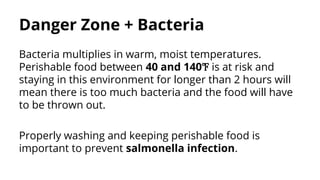
Danger Zone + Bacteria
Bacteria multiplies in warm, moist temperatures.
Perishable food between 40 and 140℉ is at risk and
staying in this environment for longer than 2 hours will
mean there is too much bacteria and the food will have
to be thrown out.
Properly washing and keeping perishable food is
important to prevent salmonella infection.
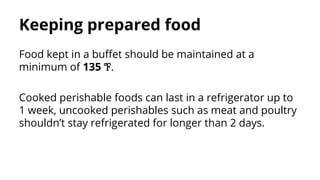
Keeping prepared food
Food kept in a buffet should be maintained at a
minimum of 135 ℉.
Cooked perishable foods can last in a refrigerator up to
1 week, uncooked perishables such as meat and poultry
shouldn’t stay refrigerated for longer than 2 days.
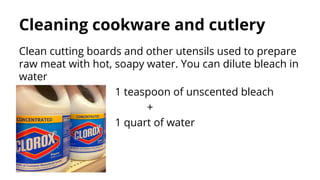
Cleaning cookware and cutlery
Clean cutting boards and other utensils used to prepare
raw meat with hot, soapy water. You can dilute bleach in
water
1 teaspoon of unscented bleach
+
1 quart of water

Food Handling and Restaurant Workplace Safety

  • 1.
  • 2.
    When working ina restaurant you are expected to know key principles in order to keep customers safe. This means being aware of culinary techniques, sanitation principles and how to use kitchen equipment
  • 3.
  • 4.
    Proper Workplace attire ●Closed shoes ● Non-slip and waterproof footwear ● Long sleeves ● Long Pants These will eliminate exposure to heat and oil
  • 5.
    Kitchens may sometimes havewater, oil or food on the ground. Be aware and keep the area clean to prevent falls or injury.
  • 6.
    Preventing Slips andFalls 1. Never run in the kitchen 2. Eliminate clutter and clean up after yourself 3. Never store oil or other items on the floor
  • 7.
    Awareness and Prevention Whenworking in a kitchen you can be exposed to: ● Heat Hazards ● Hazardous machinery ● Dangerous tools or equipment
  • 8.
  • 9.
    Burn Prevention -Using Equipment ● Using proper equipment such as tongs and oven mitts to remove hot items from pasta boilers or steamers ● Use a tray to carry items across a kitchen that may drip, preventing
  • 10.
    Burn Prevention -Opening Equipment ● When opening an oven or dishwasher step to the side ● Do not reach or stand above steaming items ● Do not open cookers that are under pressure. ● Uncover pots or hot items by opening away from you
  • 11.
    Burn Prevention -Additional Pointers ● Assume that anything, such as pots and pans, on a stove is hot and should be handled with oven mitts or gloves. ● Keep burners at a level so that the flame is covered by the pan ● Clean vents in the morning before a grill gets hot
  • 12.
    Burn Prevention -Additional Pointers ● Keep handles out of the way in the kitchen ● Avoid overfilling any pans ● Do not leave hot oil unattended ● Do not use wet clothes to lift lids or hot pots ● Do not lean pots or pans over when they have boiling
  • 13.
    Grease Fire Can beprevented by emptying grease traps, cleaning grill surfaces and not using appliances that have frayed cords or keeping flammable equipment near open flames. - Extinguish with a class K fire extinguisher - NEVER carry oil that is on fire - NEVER throw water on a grease fire
  • 14.
    Electrical Hazards There area lot of electrical kitchen equipment. Electrical sources near water should be properly grounded.
  • 15.
    Hazardous Machinery ● Machineguarding is important to remember to eliminate or control hazards. ● Machine parts have the potential to cause several workplace injuries including crushed hands.
  • 16.
    Clean up Safety ●Do not attempt to unload dishes from a dishwasher until they have cooled ● Avoid steam ● Test water temperature before submerging your hand. ● Be careful of and guard continuous feed dishwashers to prevent scal
  • 17.
    Food Prep Safety ●Handle and store knives safely ● Cut away from you and keep hand and fingers out of the way ● Do not attempt to catch a knife if it is falling ● Don’t leave knives near a countertop edge
  • 18.
    FDA The Food andDrug Administration makes recommendations for regulations in the food service industry.
  • 19.
    Food Prep Safety- Hand washing Hand washing must happen all the time when handling food. Before and after handling raw meat. Proper hand washing means under running water for 20 seconds and drying with a clean, disposable paper towel.
  • 20.
    When to washyour hands? 1. When you arrive 2. Before you touch raw food 3. After you touch raw food 4. Before doing any cooking 5. Before you put on gloves ….Basically, all the time.
  • 21.
    Perishable Food ● Perishablefood is defined as anything such as meat, poultry and seafood that will spoil if not refrigerated properly ● The food has to go through a “kill stage” of cooking where any harmful bacteria present is killed off to make the food safe to eat.
  • 22.
    Food Safe InternalTemperature Steak and Roast 145°F Fish 145°F Pork 160°F Ground Beef 160°F Egg Dishes 160°F Chicken Breasts 165°F Whole Poultry 165°F Casseroles/Mixed Dishes 165°F
  • 23.
    Safe Defrosting Methods 1.Refrigerator (Must be 40 degrees or lower) 2. Cold water thawing 3. Microwave thawing Thawing through other methods will cause meat to be in the danger zone for too long.
  • 24.
    Danger Zone +Bacteria Bacteria multiplies in warm, moist temperatures. Perishable food between 40 and 140℉ is at risk and staying in this environment for longer than 2 hours will mean there is too much bacteria and the food will have to be thrown out. Properly washing and keeping perishable food is important to prevent salmonella infection.
  • 25.
    Keeping prepared food Foodkept in a buffet should be maintained at a minimum of 135 ℉. Cooked perishable foods can last in a refrigerator up to 1 week, uncooked perishables such as meat and poultry shouldn’t stay refrigerated for longer than 2 days.
  • 26.
    Cleaning cookware andcutlery Clean cutting boards and other utensils used to prepare raw meat with hot, soapy water. You can dilute bleach in water 1 teaspoon of unscented bleach + 1 quart of water