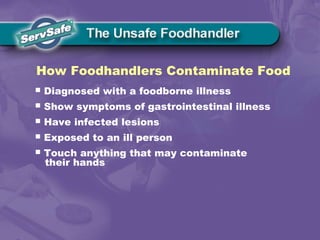







 Diagnosed with a foodborne illness
 Show symptoms of gastrointestinal illness
 Have infected lesions
 Exposed to an ill person
 Touch anything that may contaminate
their hands
How Foodhandlers Contaminate Food
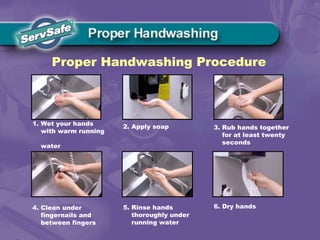
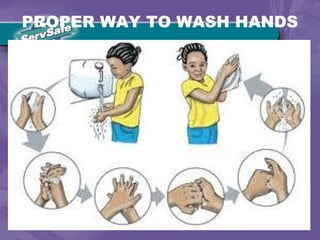
Proper Handwashing Procedure
1. Wet your hands
with warm running
water
2. Apply soap 3. Rub hands together
for at least twenty
seconds
4. Clean under
fingernails and
between fingers
5. Rinse hands
thoroughly under
running water
6. Dry hands
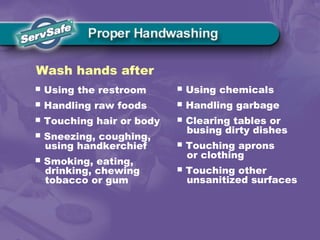
 Using the restroom
 Handling raw foods
 Touching hair or body
 Sneezing, coughing,
using handkerchief
 Smoking, eating,
drinking, chewing
tobacco or gum
Wash hands after
 Using chemicals
 Handling garbage
 Clearing tables or
busing dirty dishes
 Touching aprons
or clothing
 Touching other
unsanitized surfaces
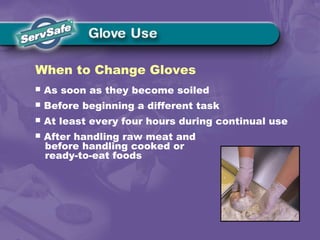
When to Change Gloves
 As soon as they become soiled
 Before beginning a different task
 At least every four hours during continual use
 After handling raw meat and
before handling cooked or
ready-to-eat foods
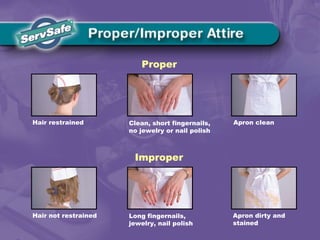
Hair restrained Clean, short fingernails,
no jewelry or nail polish
Apron clean
Hair not restrained Long fingernails,
jewelry, nail polish
Apron dirty and
stained
Improper
Proper
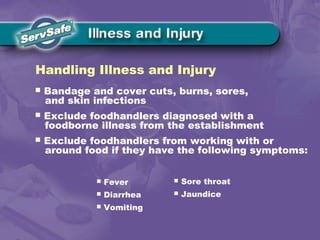
 Bandage and cover cuts, burns, sores,
and skin infections
 Exclude foodhandlers diagnosed with a
foodborne illness from the establishment
 Exclude foodhandlers from working with or
around food if they have the following symptoms:
Handling Illness and Injury
 Fever
 Diarrhea
 Vomiting
 Sore throat
 Jaundice
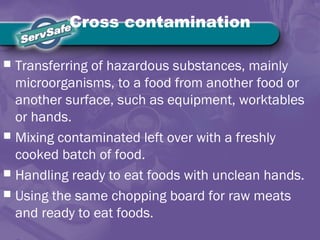
Cross contamination
 Transferring of hazardous substances, mainly
microorganisms, to a food from another food or
another surface, such as equipment, worktables
or hands.
 Mixing contaminated left over with a freshly
cooked batch of food.
 Handling ready to eat foods with unclean hands.
 Using the same chopping board for raw meats
and ready to eat foods.
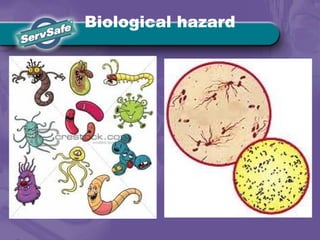
Biological hazard
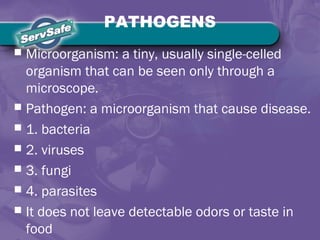
PATHOGENS
 Microorganism: a tiny, usually single-celled
organism that can be seen only through a
microscope.
 Pathogen: a microorganism that cause disease.
 1. bacteria
 2. viruses
 3. fungi
 4. parasites
 It does not leave detectable odors or taste in
food
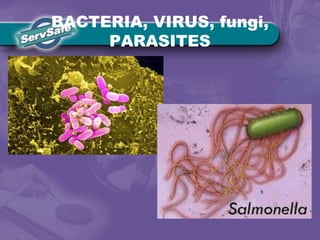
BACTERIA, VIRUS, fungi,
PARASITES
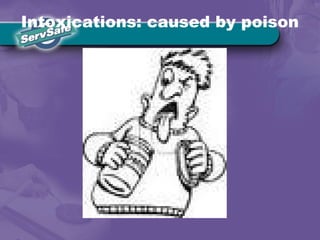
Intoxications: caused by poison
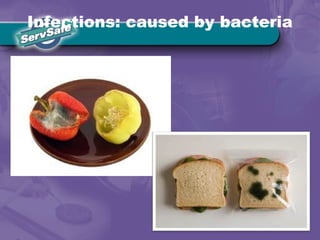
Infections: caused by bacteria
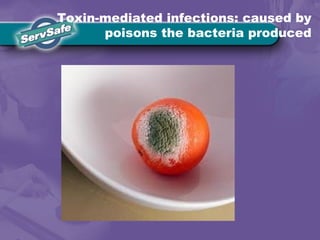
Toxin-mediated infections: caused by
poisons the bacteria produced
Locomotion of bacteria
 Hands
 Air
 Coughs and sneezes
 Water
 Equipment and utensils
 Rats and mice
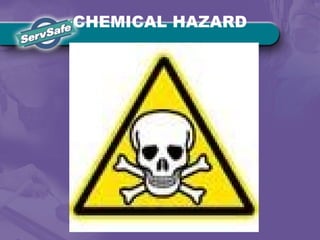
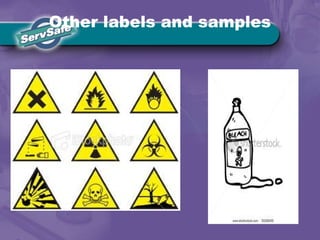
CHEMICAL HAZARD
Exposure of food to chemicals
 Cleaning compounds
 Polishing compounds
 Insectisides
Other labels and samples
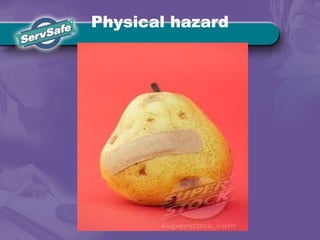
Physical hazard
Proper food handling
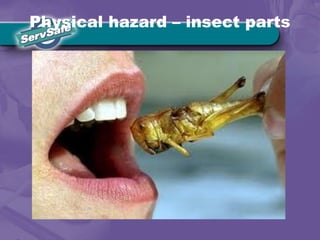
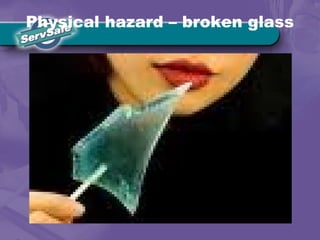
 Contamination of food with objects that
may not be toxic but may cause injury or
discomfort.
 Proper food handling is necessary to
avoid physical contamination.
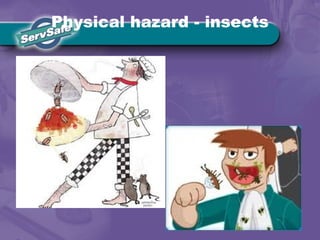
Physical hazard - insects
Physical hazard – insect parts
Physical hazard – broken glass
Allergen hazard
 Substances that causes an allergic
reaction. Reactions to food may occur as
soon as the food is eaten or touched.
 Itching
 Rash or hives
 Shortness of breath
 Tightness in the throat
 Swelling of the eyes and face
Food allergens
 Wheat products
 Soy products
 Peanuts and tree nuts
 Eggs, milk and dairy products
 Fish and shellfish
 Chicken and other poultry
 Nitrites
 Monosodium glutamate
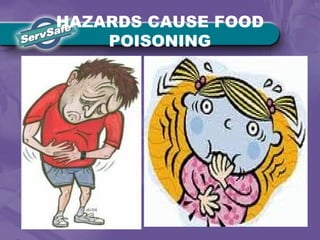
HAZARDS CAUSE FOOD
POISONING
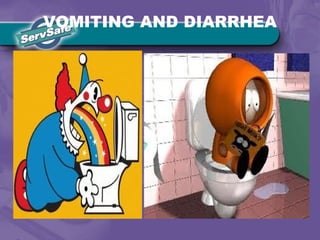
VOMITING AND DIARRHEA
WHEN IN DOUBT, THROW IT
OUT!
Personal hygiene
FIRST STEP
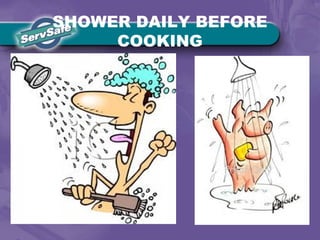
SHOWER DAILY BEFORE
COOKING
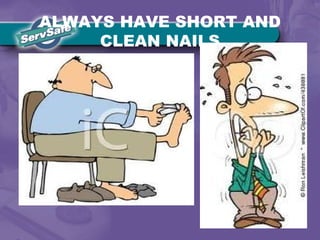
NO LONG OR MANICURED
NAILS
ALWAYS HAVE SHORT AND
CLEAN NAILS
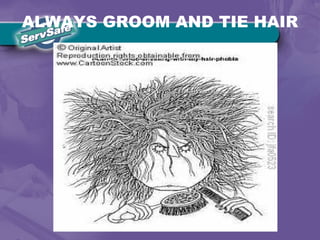
ALWAYS GROOM AND TIE HAIR
BE A CLEAN CHEF!
PROPER HAND WASHING
BEFORE, DURING AND AFTER
COOKING
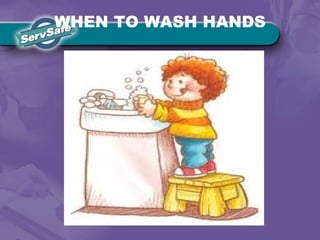
WHEN TO WASH HANDS
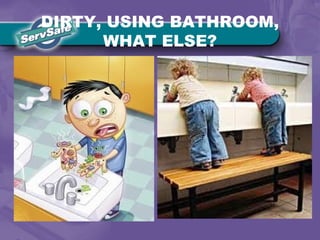
DIRTY, USING BATHROOM,
WHAT ELSE?
PROPER WAY TO WASH HANDS
EVERYONE WILL BE HAPPY!
KITCHEN SAFETY
IT’S BETTER TO BE SAFE THAN
SORRY…
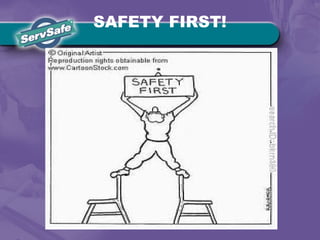
SAFETY FIRST!
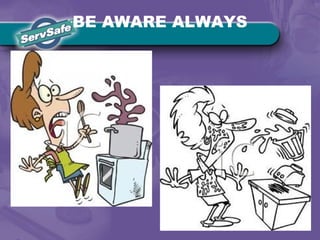
BE AWARE ALWAYS
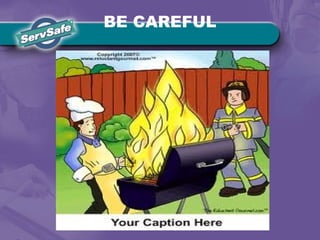
BE CAREFUL
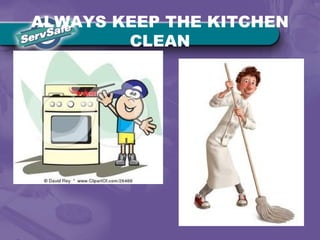
ALWAYS KEEP THE KITCHEN
CLEAN
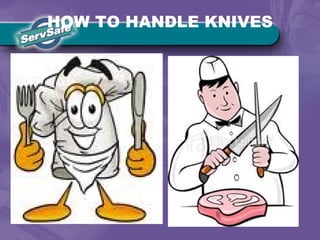
HOW TO HANDLE KNIVES
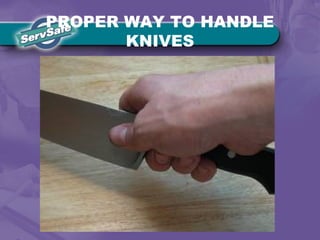
PROPER WAY TO HANDLE
KNIVES
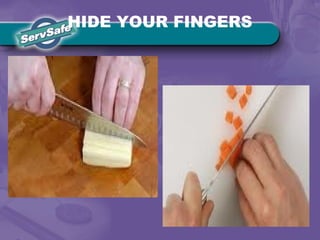
HIDE YOUR FINGERS
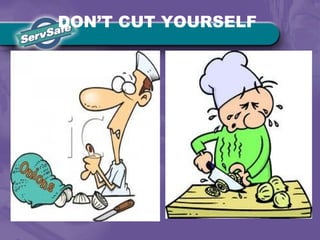
DON’T CUT YOURSELF
Conditions for bacterial
growth
How to keep food safe
Food – perishable and non
perishable items
Bacteria require some kind of food
in order to grow. Foods with
sufficient amount of proteins are
best for bacterial growth.
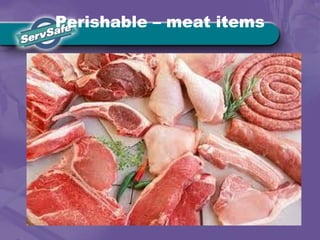
Perishable – meat items
Perishable – dairy products
Perishable – eggs
Perishable – seafood
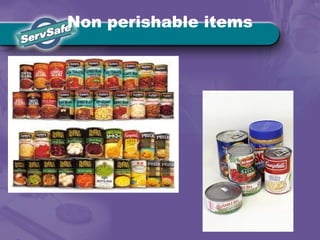
Non perishable items
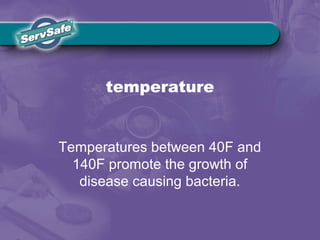
temperature
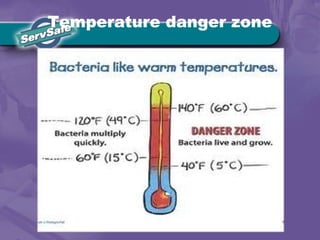
Temperatures between 40F and
140F promote the growth of
disease causing bacteria.
Temperature danger zone
Time
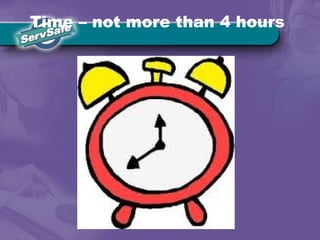
Perishable items shouldn‘t be
inside the temperature danger
zone for more than 4 hours.
Time – not more than 4 hours
Oxygen and moisture
Bacteria require water and oxygen
in order to grow and absorb food.
Oxygen and moisture
Protecting against bacteria
 Keep bacteria from spreading
 Stop bacteria from growing
 Kill bacteria
Importance of safe food
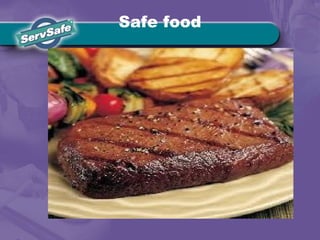
Safe food
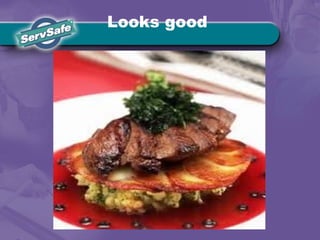
Looks good
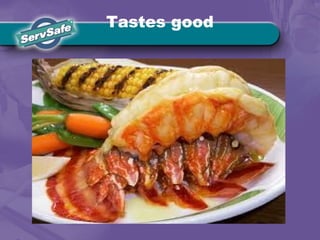
Tastes good
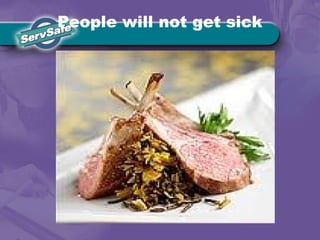
People will not get sick
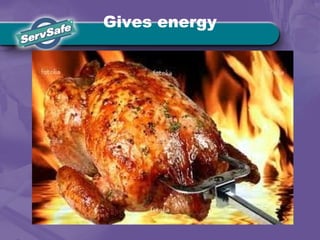
Gives energy
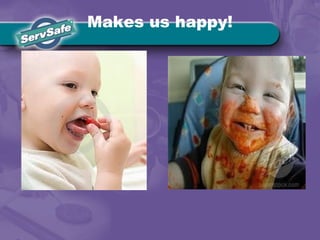
Makes us happy!
Let’s all be safe!
Credits
 ServSafe
 Chef Gerhad Baur

HACCP Presentation

Editor's Notes

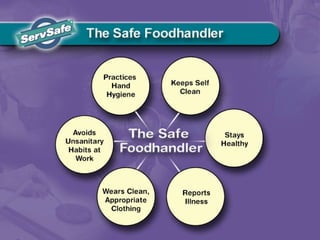
  • #5 Talking Points: Introduce the safe foodhandler’s key practices as identified in the slide.
  • #6 Talking Points: Discuss the manager’s role in ensuring that employees follow policies on personal hygiene and reporting illness. Explain that carriers may not exhibit signs of an illness. Discuss personal behaviors that contribute to food contamination as identified in the text.
  • #7 Talking Points: Ask participants to role-play a demonstration of proper handwashing. Remind participants that the simple act of proper handwashing can helpprevent foodborne illness.
  • #8 Talking Points: Review the slide list and ask participants to evaluate handwashing practicesat their establishment. Reinforce the manager’s need to set examples for others to follow.
  • #9 Talking Points: Explain to participants that gloves help create a barrier betweenhands and food. Discuss proper glove usage. Explain that gloves must never replace handwashing. Remind participants that gloves do not protect food if they are not replaced when necessary.
  • #10 Talking Points: Have participants look at the pictures portraying an employee in improper attire. Ask them to explain the potential hazard that each situation poses. Tie responses to foodborne illness and cross-contamination concepts. Discuss other work attire guidelines.
  • #11 Talking Points: Discuss the use of finger cots and gloves in response to hand injuries. Discuss reporting requirements for employees diagnosed with a foodborne illness.