Downloaded 22 times
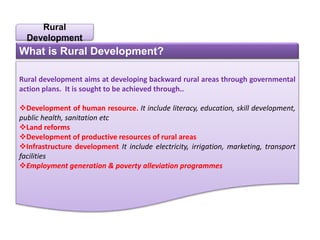
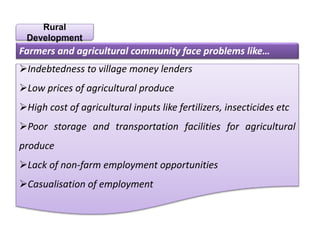


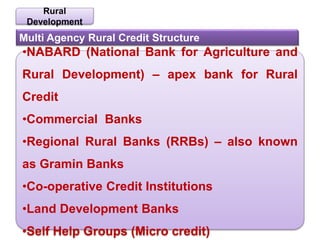


Rural development aims to develop backward rural areas through government action plans focused on human resource development, land reforms, developing rural resources and infrastructure, employment generation, and poverty alleviation. Farmers face problems like indebtedness, low prices for agricultural produce, high input costs, poor storage and transportation, and lack of non-farm jobs. The government has taken initiatives to improve credit facilities for farmers such as nationalizing banks in 1969, establishing NABARD in 1982, expanding cooperative credit systems, and priority sector lending for production-oriented green revolution projects. The multi-agency rural credit structure includes NABARD, commercial banks, regional rural banks, cooperative institutions, land development banks, and self-help groups.


