RCA – Root Cause Analysis
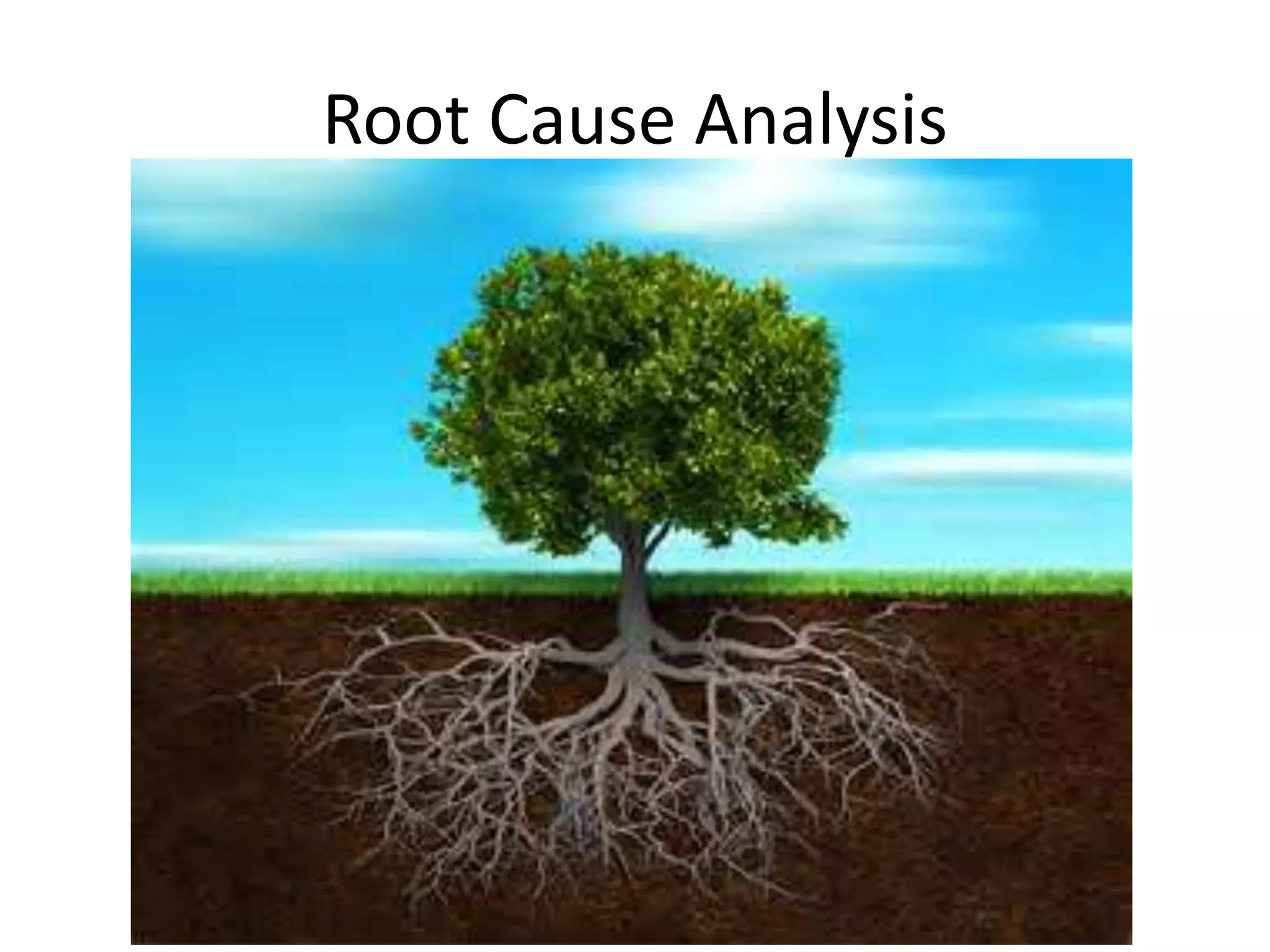
Root Cause Analysis
RCA
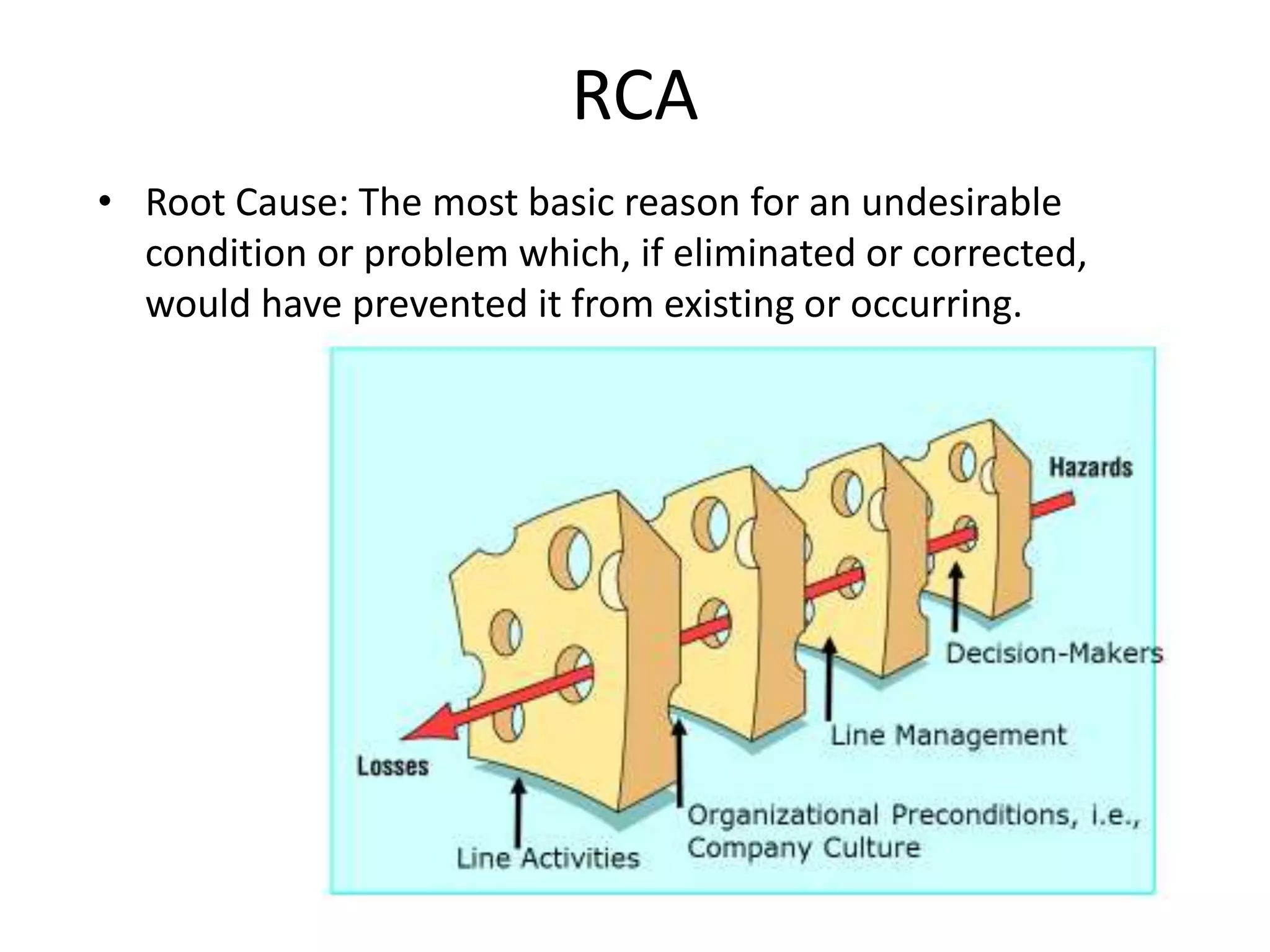
• Root Cause: The most basic reason for an undesirable
condition or problem which, if eliminated or corrected,
would have prevented it from existing or occurring.
Definition
• Root cause analysis (RCA) is a class of problem
solving methods aimed at identifying the root
causes of problems or events.
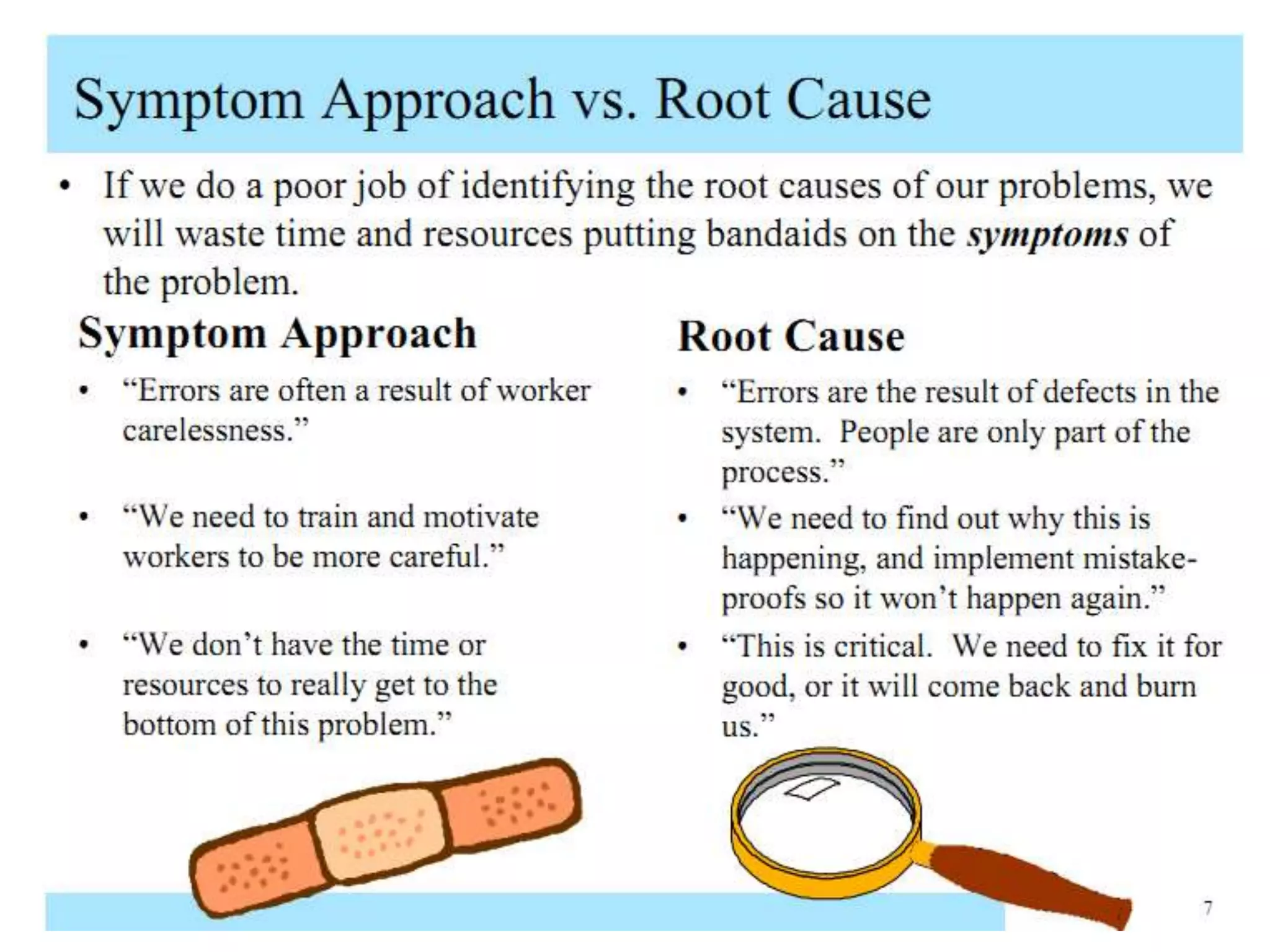
• RCA is based on the belief that problems are
best solved by attempting to correct or
eliminate root causes, as opposed to merely
addressing the immediately obvious
symptoms.
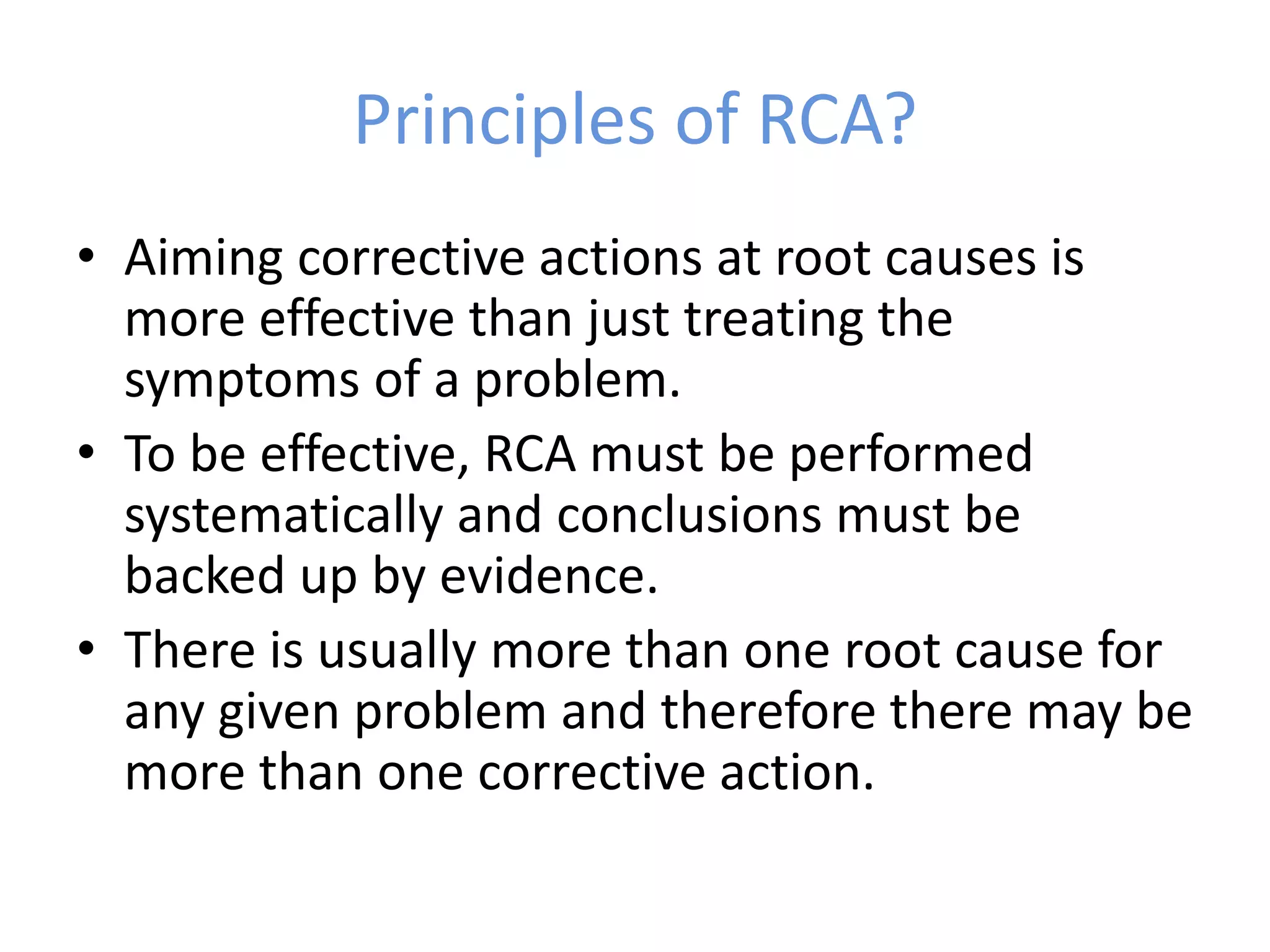
Principles of RCA?
• Aiming corrective actions at root causes is
more effective than just treating the
symptoms of a problem.
• To be effective, RCA must be performed
systematically and conclusions must be
backed up by evidence.
• There is usually more than one root cause for
any given problem and therefore there may be
more than one corrective action.
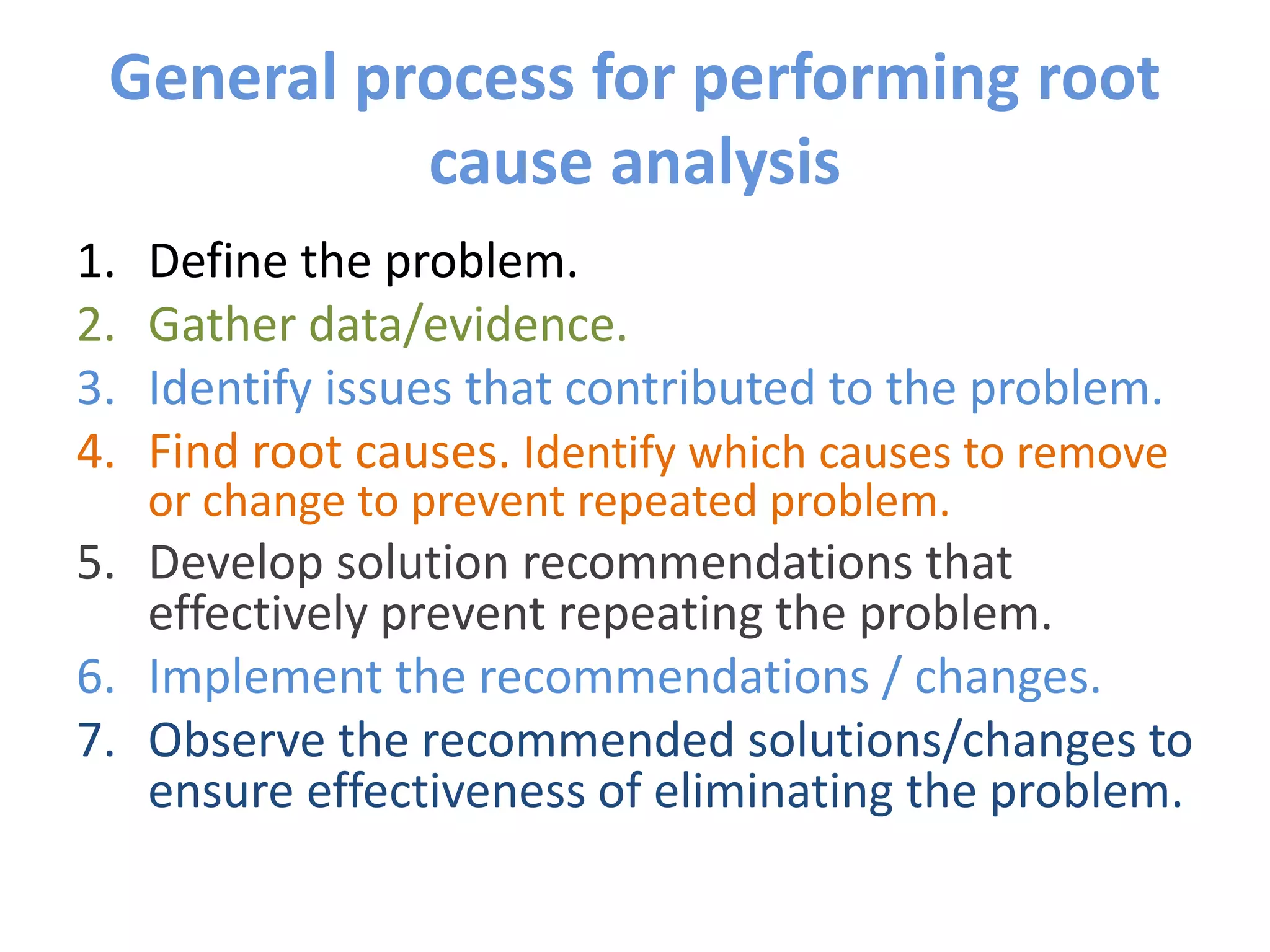
General process for performing root
cause analysis
1. Define the problem.
2. Gather data/evidence.
3. Identify issues that contributed to the problem.
4. Find root causes. Identify which causes to remove
or change to prevent repeated problem.
5. Develop solution recommendations that
effectively prevent repeating the problem.
6. Implement the recommendations / changes.
7. Observe the recommended solutions/changes to
ensure effectiveness of eliminating the problem.
Cause Mapping of Root Cause Analysis
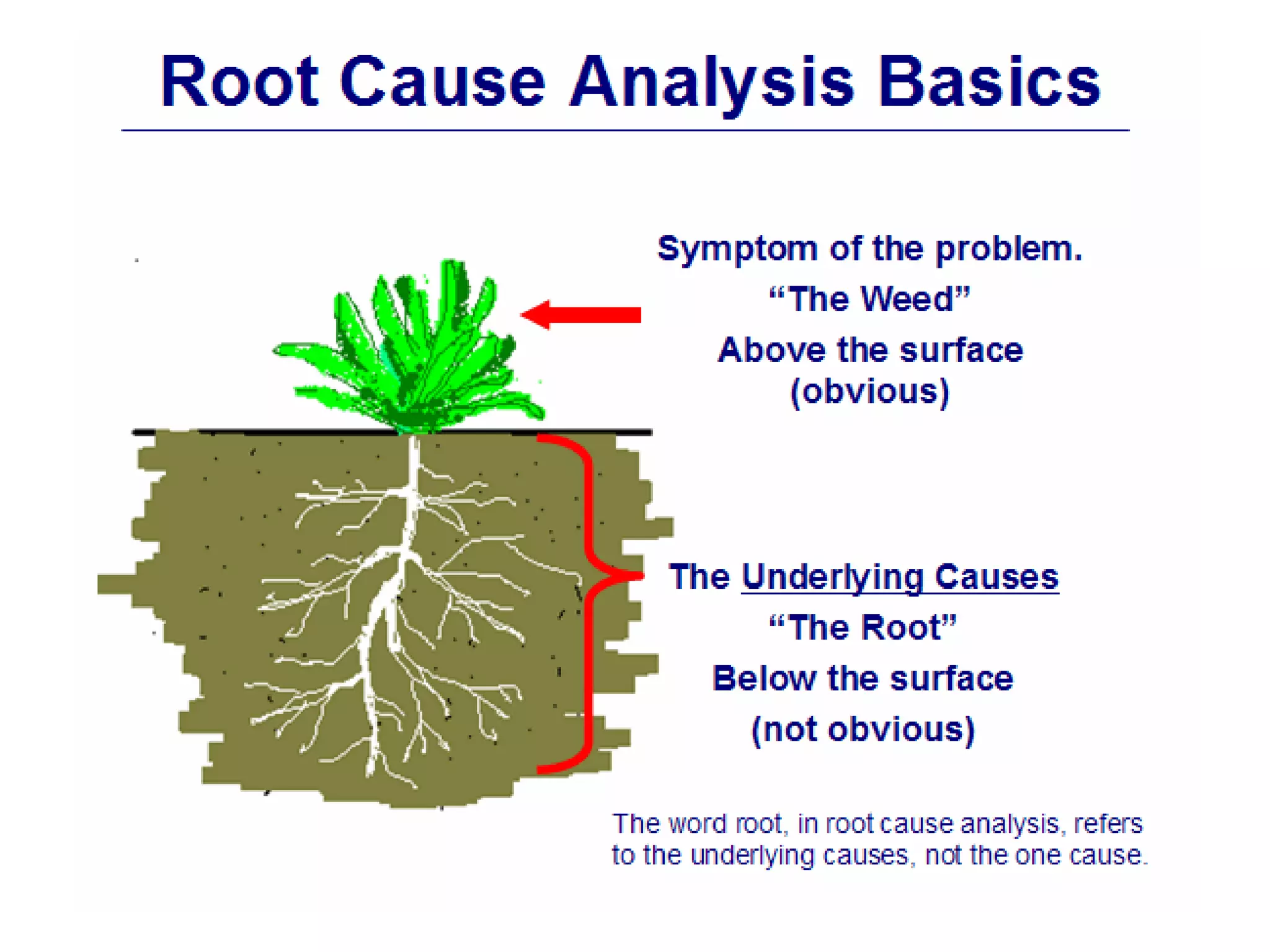
• “ROOT” refers to the causes beneath the
surface. It is the system of causes that shows
all the options for solutions.
• Do not focus on a single cause as this can limit
the solutions set resulting in missing a better
solution.
• A Cause Map provides a simple visual look at
all the elements that produced the problem.
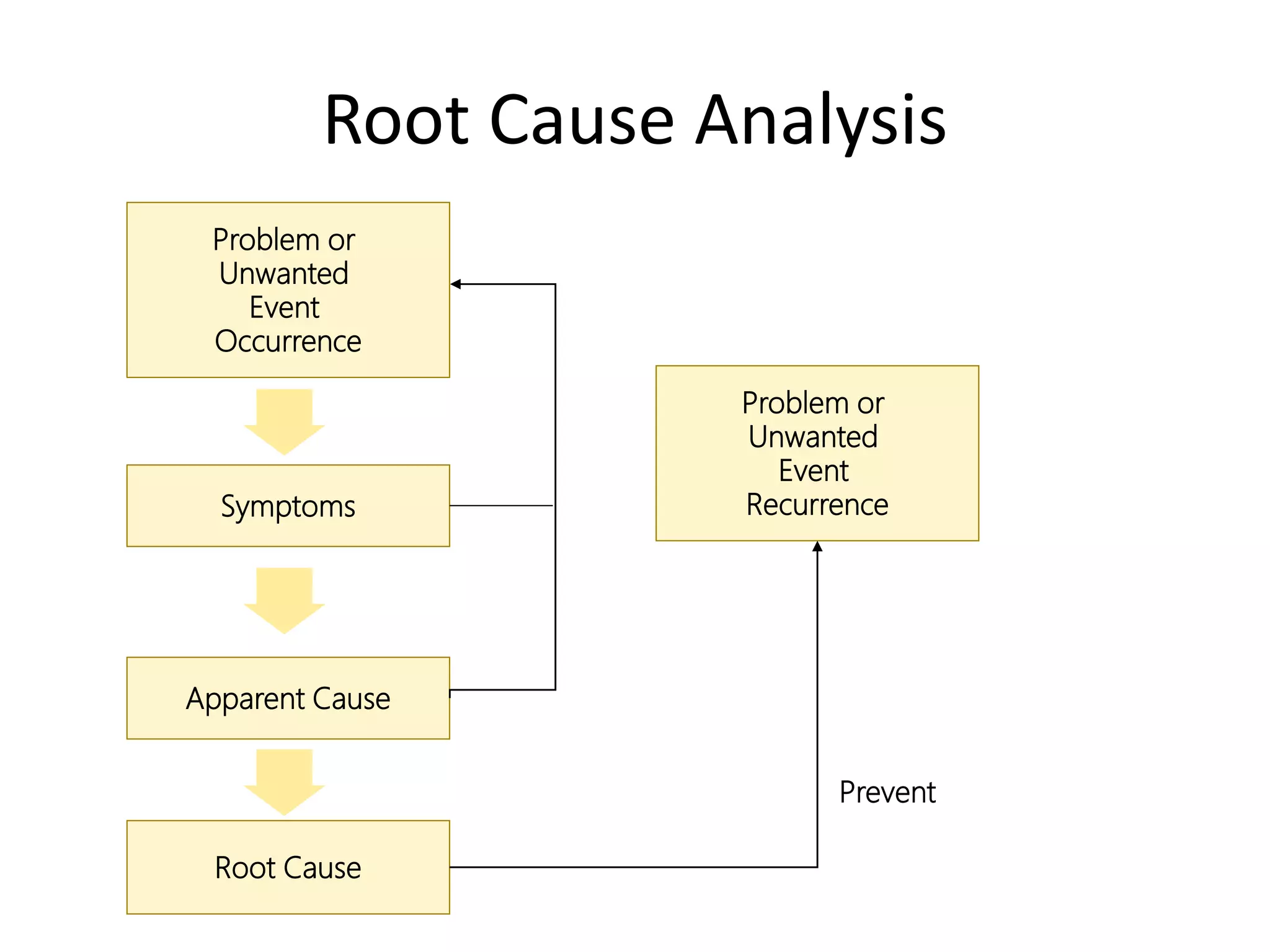
Root Cause Analysis
Problem or
Unwanted
Event
Occurrence
Symptoms
Apparent Cause
Root Cause
Problem or
Unwanted
Event
Recurrence
Prevent
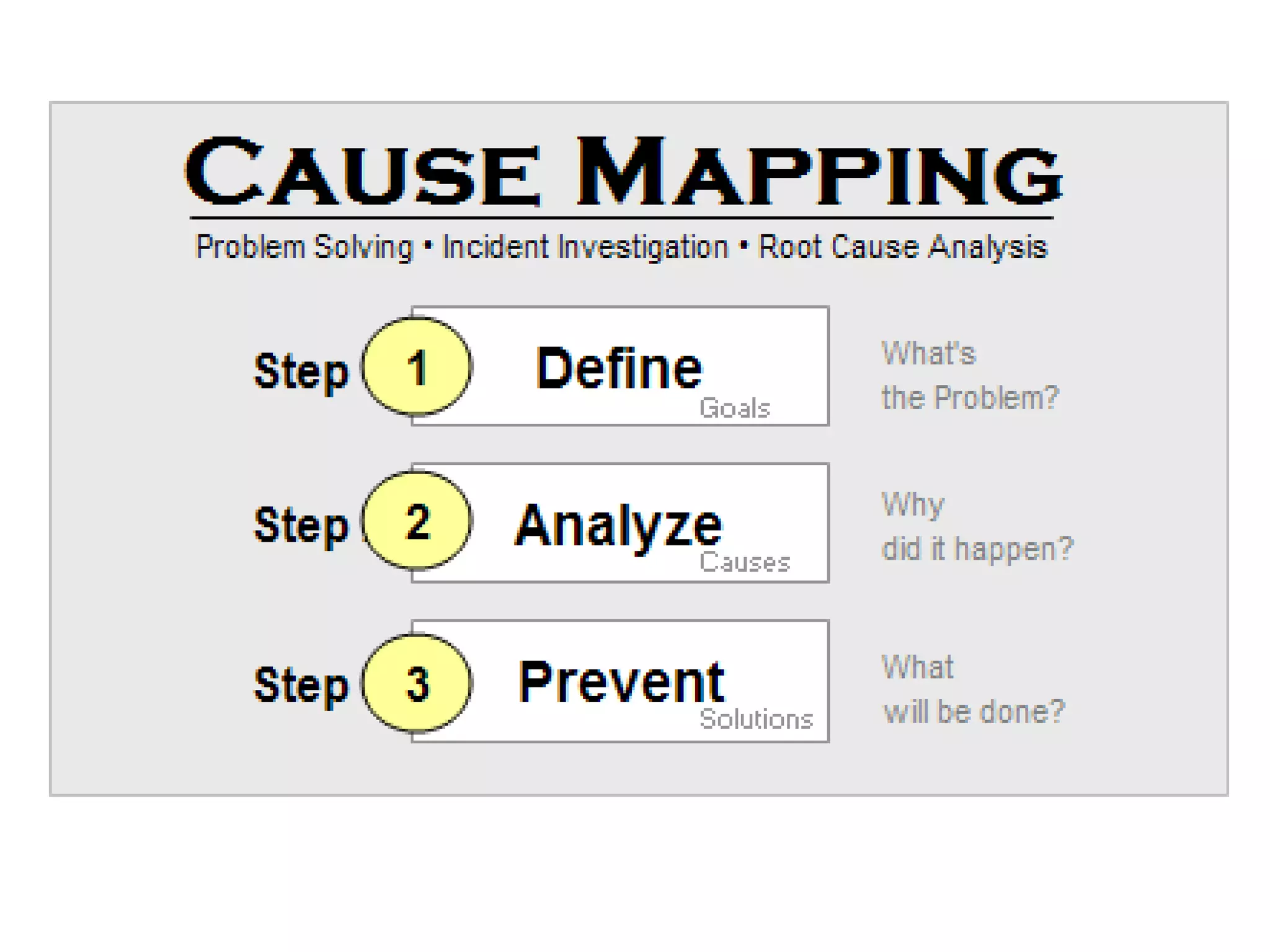
Three Basis Steps of Cause Mapping
1. Define the issue by its impact to overall goals
2. Analyze the cause in a visual map.
3. Prevent or mitigate any negative impact of
the goals by selecting the most effective
solutions.
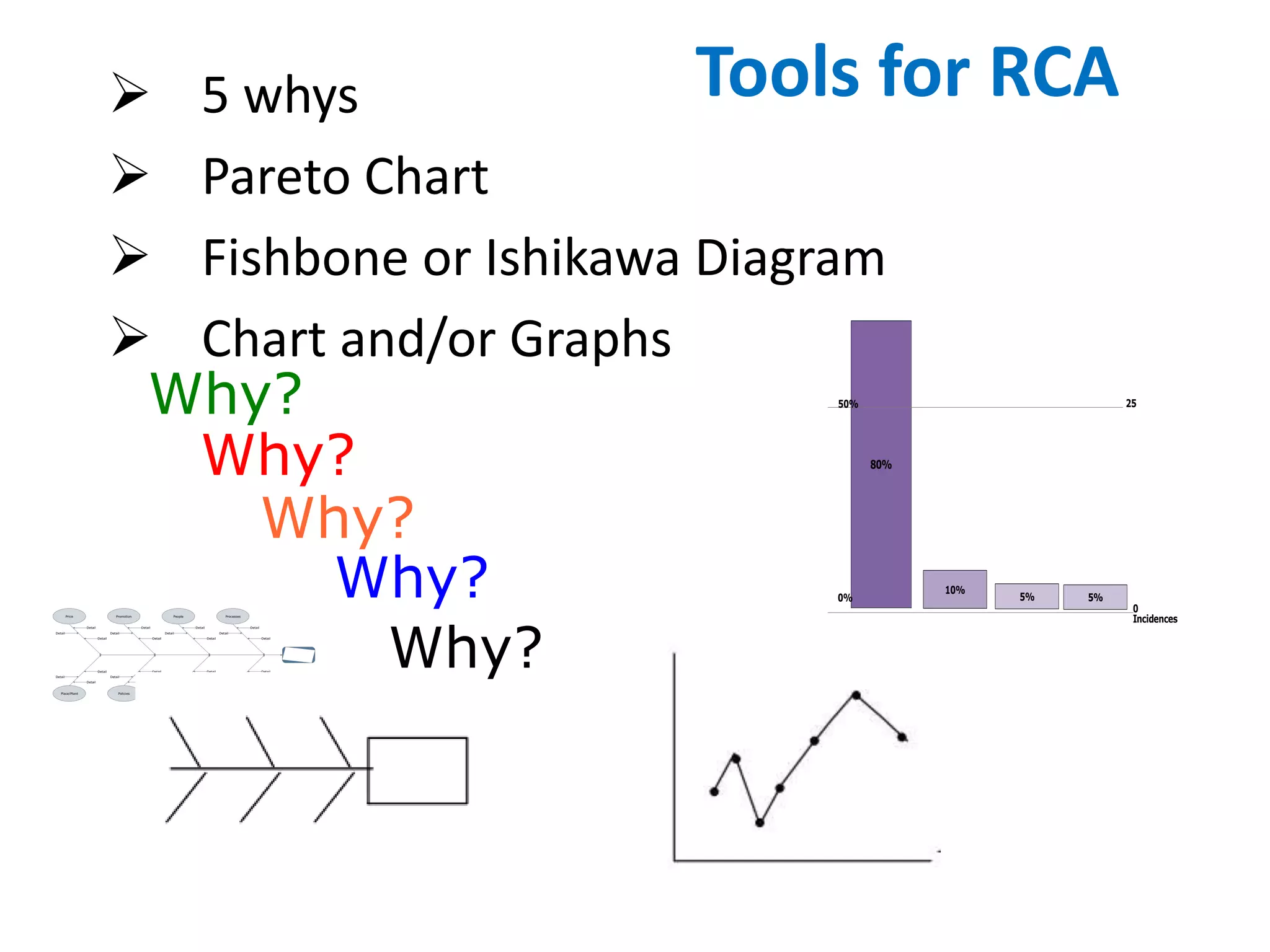
 5 whys
 Pareto Chart
 Fishbone or Ishikawa Diagram
 Chart and/or Graphs
Why?
Why?
Why?
Why?
Why?
Detail
Detail
Detail
Detail
Detail
Detail
Detail
Detail
Detail
Detail
Detail
Detail
Product
Processes
Procedures
People
The Problem
Promotion
Detail
Detail
Detail
Policies
Detail
Detail
Detail
Price
Detail
Detail
Detail
Place/Plant
Detail
Detail
Detail
80%
10%
5%
5%
50% 25
0
0%
Incidences
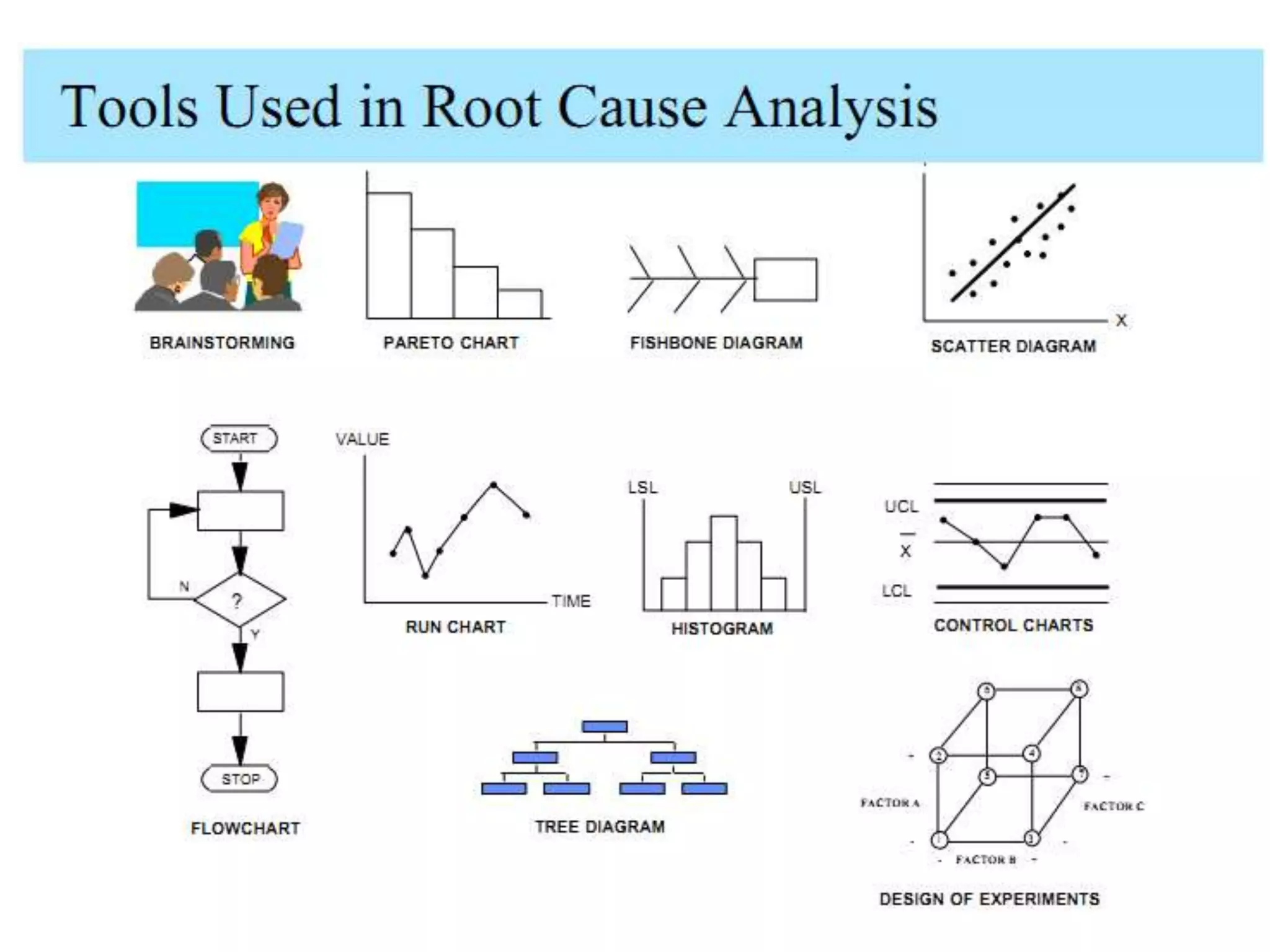
Tools for RCA
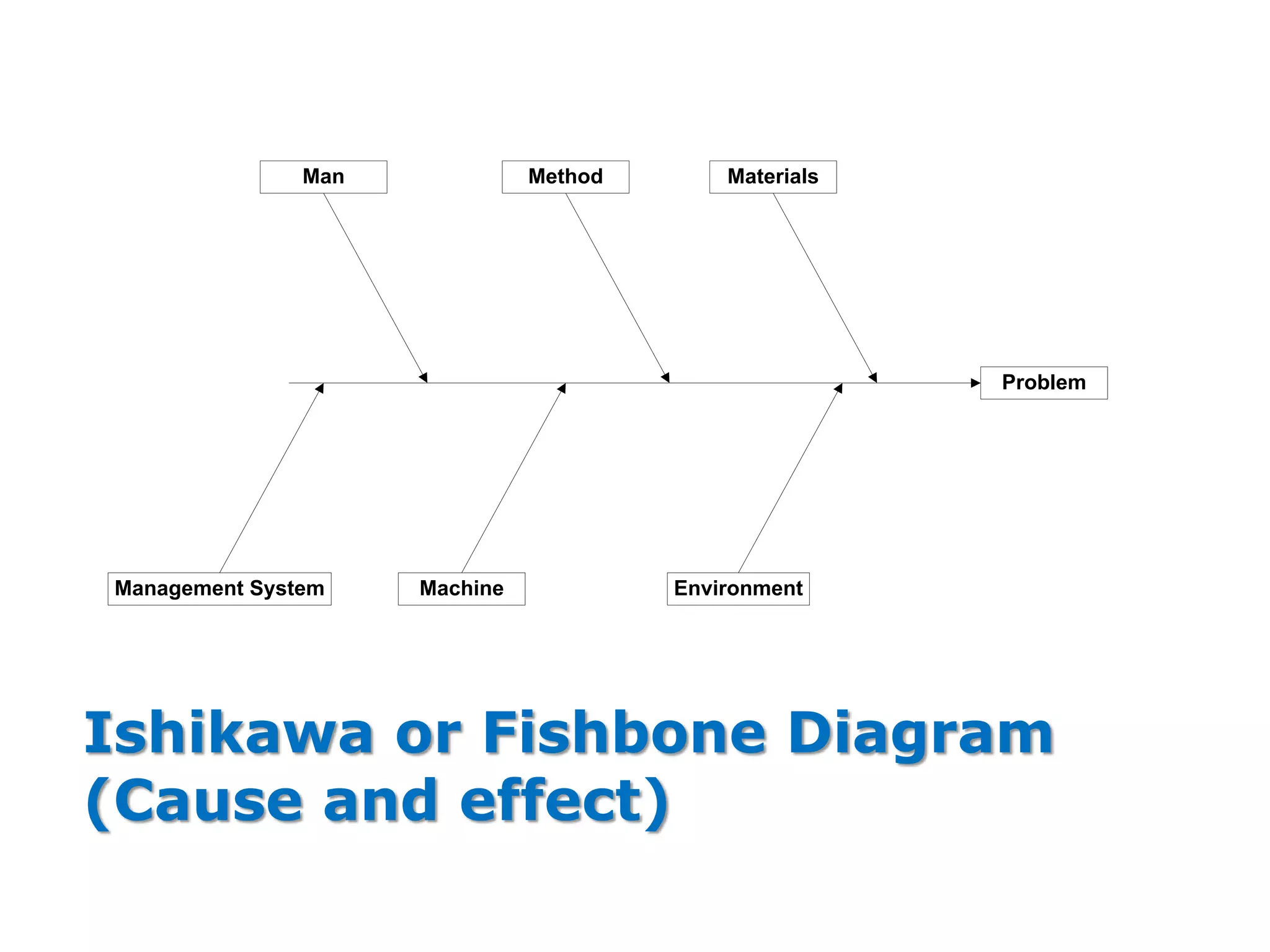
Ishikawa or Fishbone Diagram
(Cause and effect)
Problem
Method
Machine
Materials
Environment
Management System
Man
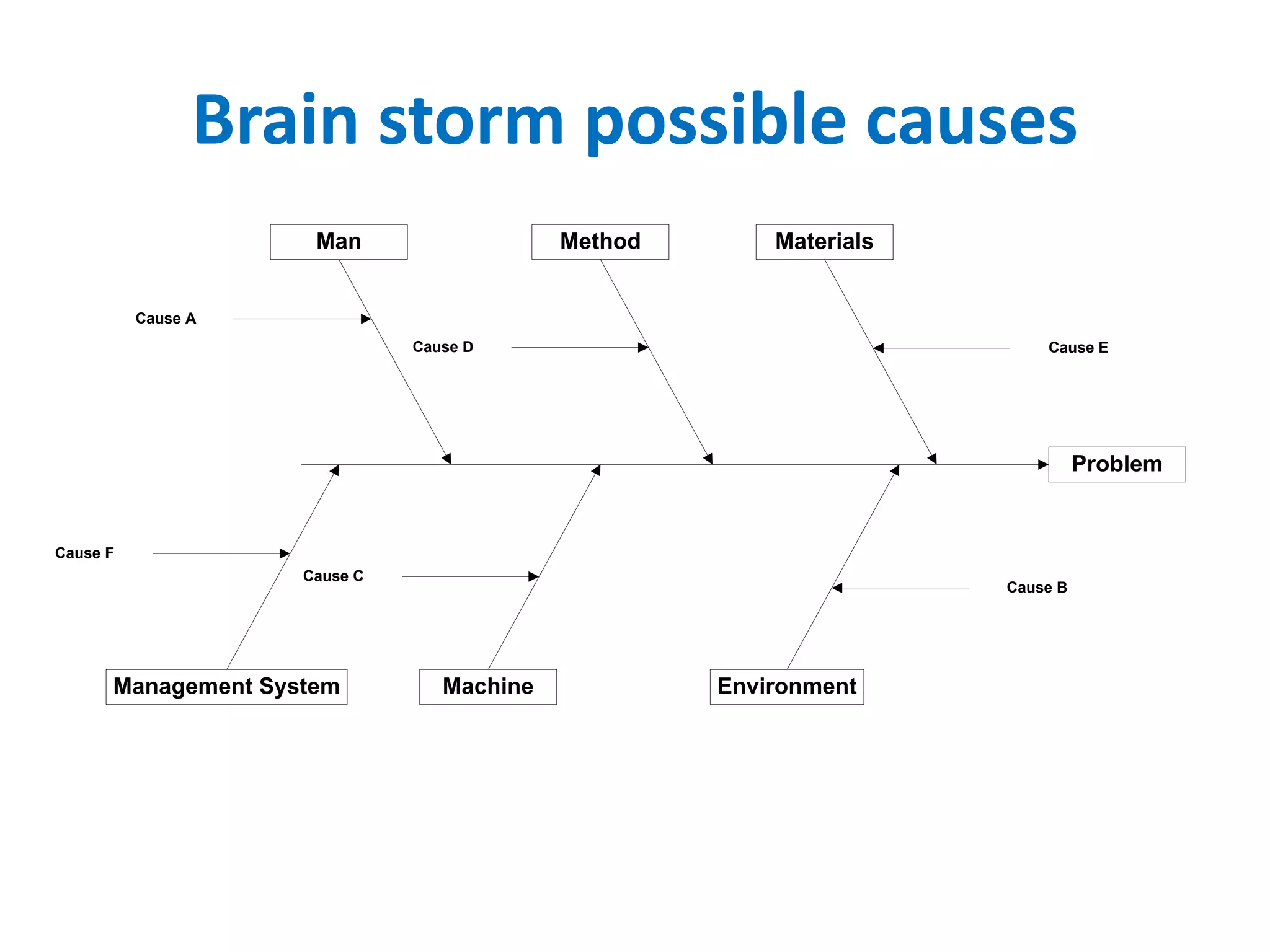
Brain storm possible causes
Problem
Method
Machine
Materials
Environment
Management System
Man
Cause A
Cause B
Cause C
Cause D Cause E
Cause F
5 Whys
• Why
• Why
• Why
• Why
• Why
• Basis for even the 20 million questions
Five Whys
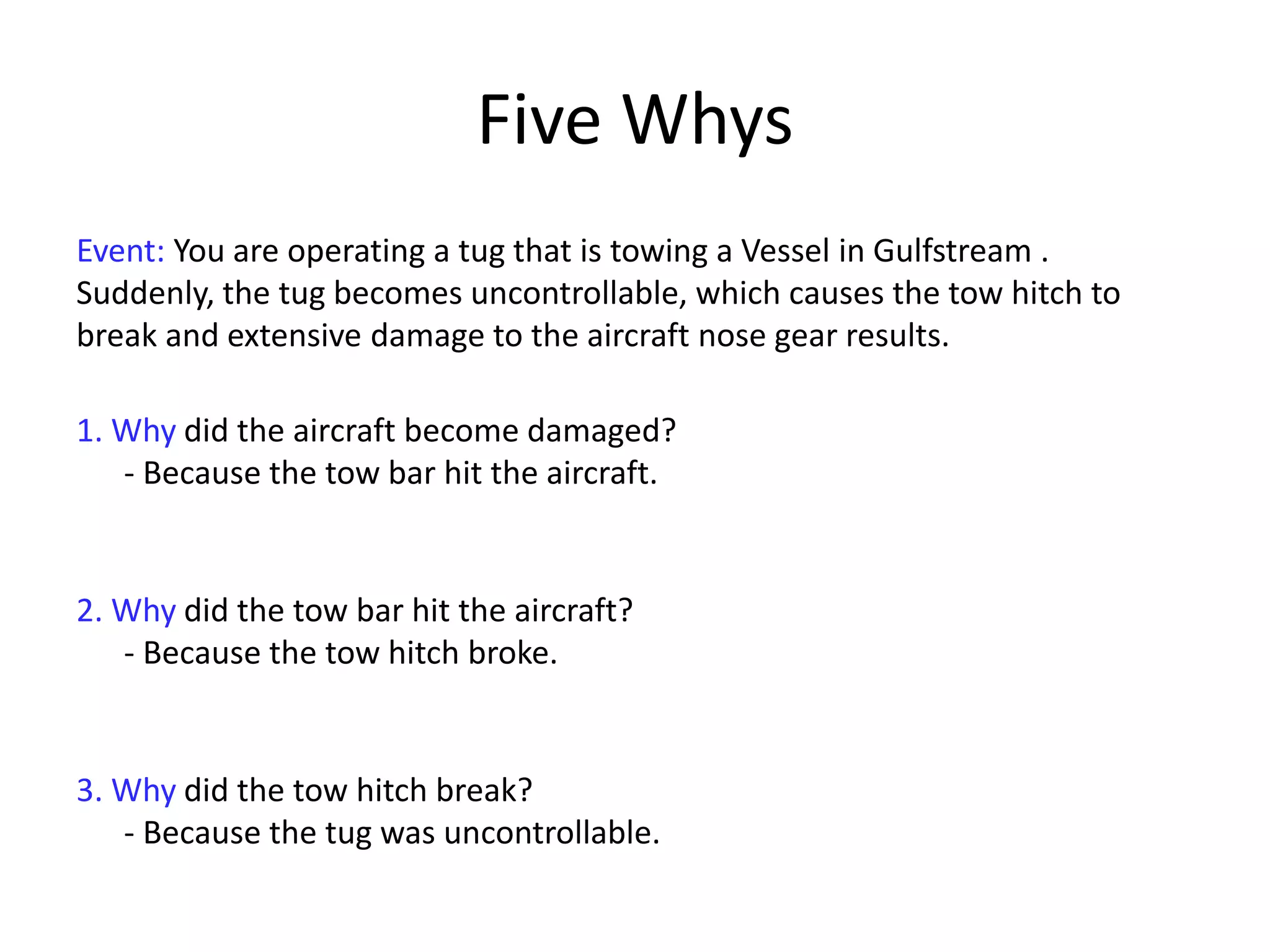
Event: You are operating a tug that is towing a Vessel in Gulfstream .
Suddenly, the tug becomes uncontrollable, which causes the tow hitch to
break and extensive damage to the aircraft nose gear results.
1. Why did the aircraft become damaged?
- Because the tow bar hit the aircraft.
2. Why did the tow bar hit the aircraft?
- Because the tow hitch broke.
3. Why did the tow hitch break?
- Because the tug was uncontrollable.
Five Whys
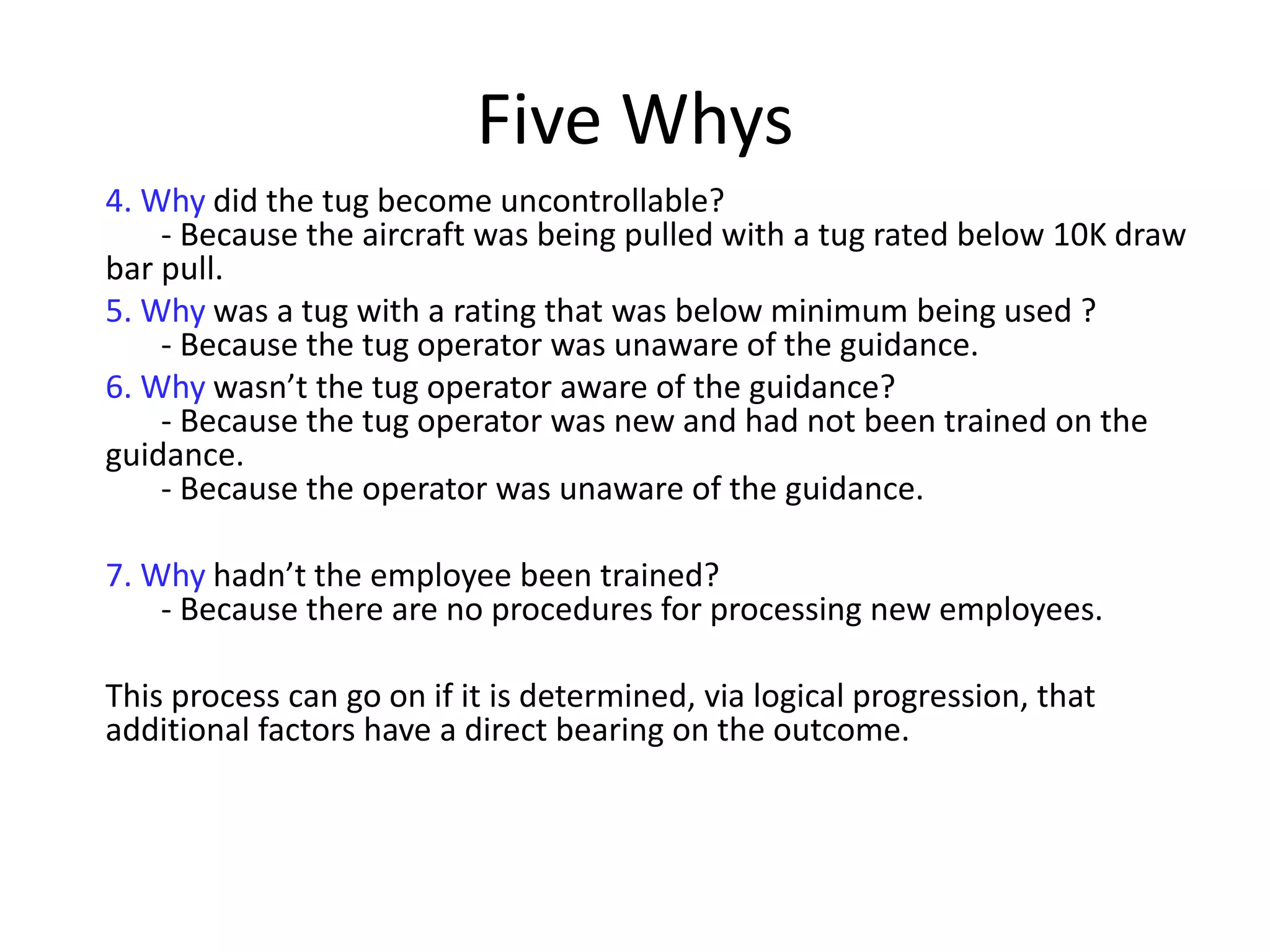
4. Why did the tug become uncontrollable?
- Because the aircraft was being pulled with a tug rated below 10K draw
bar pull.
5. Why was a tug with a rating that was below minimum being used ?
- Because the tug operator was unaware of the guidance.
6. Why wasn’t the tug operator aware of the guidance?
- Because the tug operator was new and had not been trained on the
guidance.
- Because the operator was unaware of the guidance.
7. Why hadn’t the employee been trained?
- Because there are no procedures for processing new employees.
This process can go on if it is determined, via logical progression, that
additional factors have a direct bearing on the outcome.
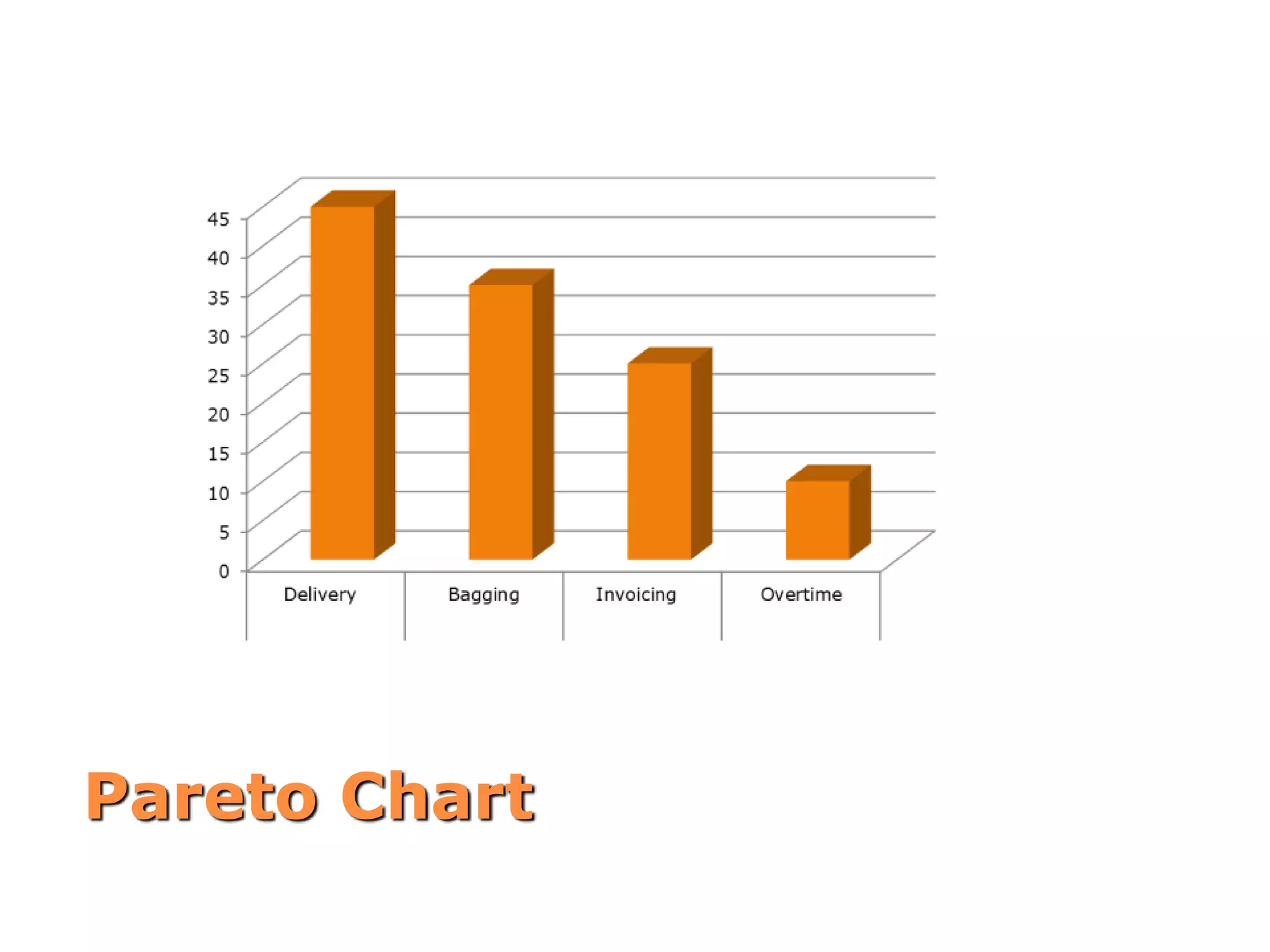
Pareto Chart
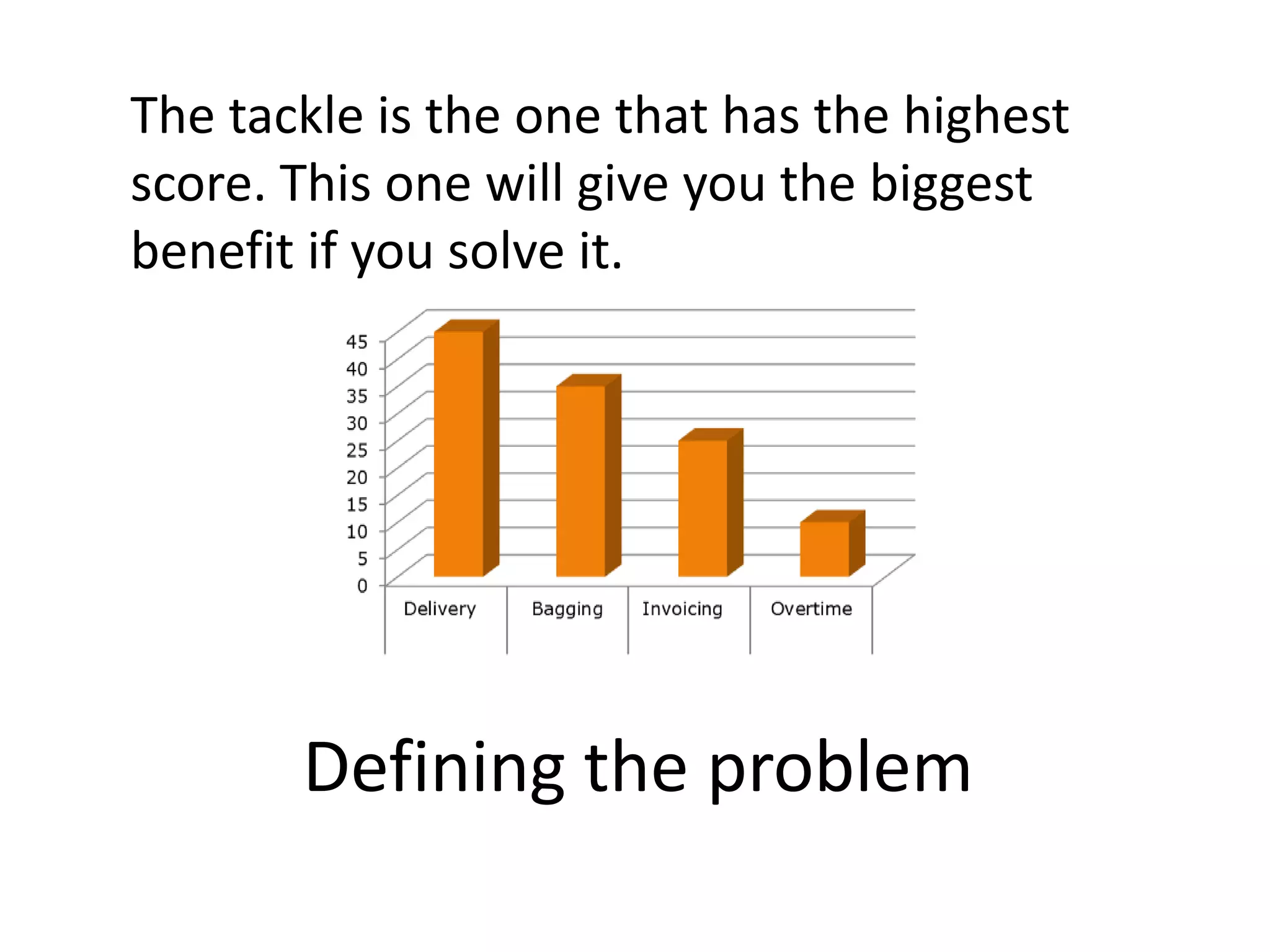
Defining the problem
The tackle is the one that has the highest
score. This one will give you the biggest
benefit if you solve it.
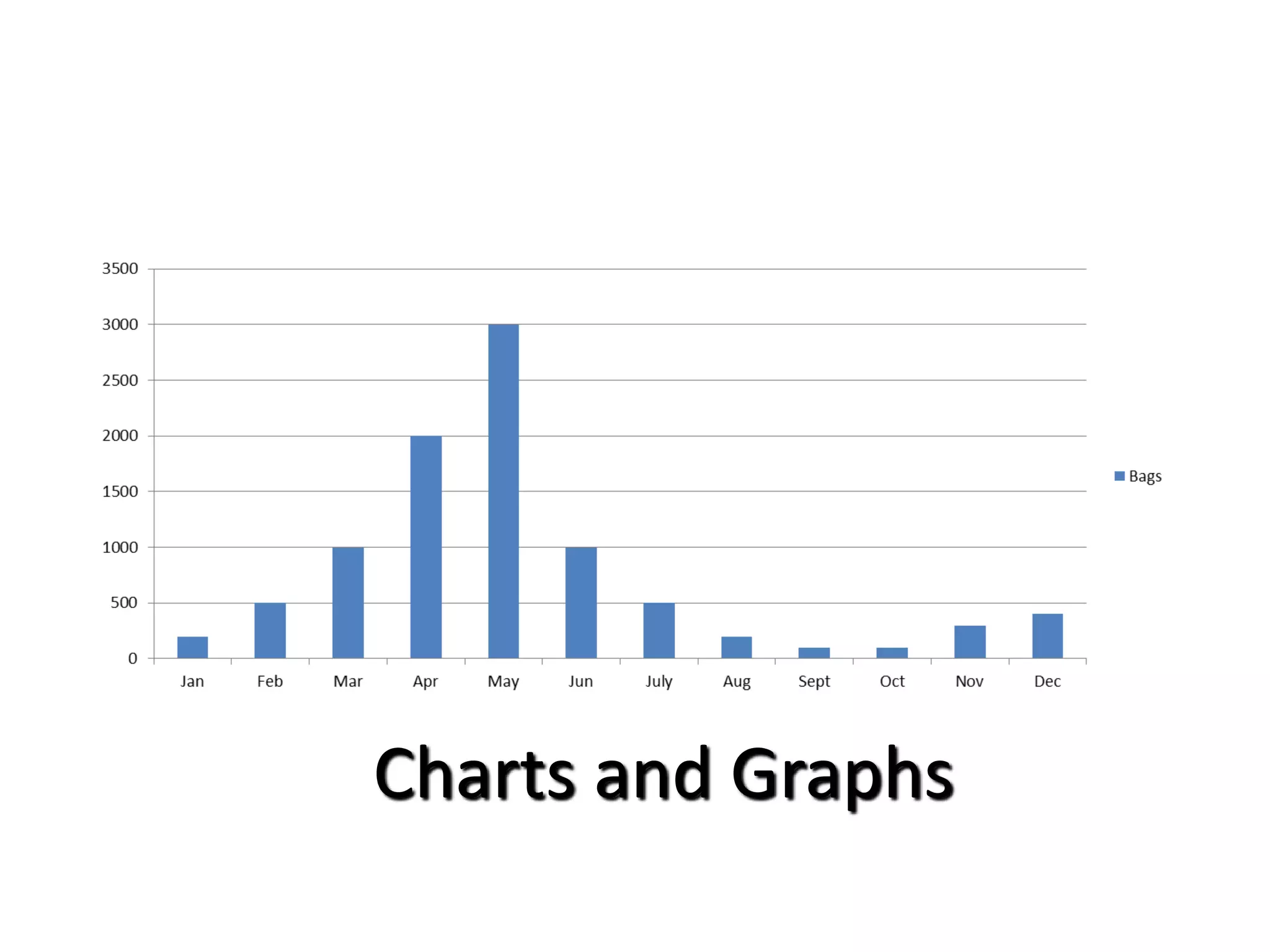
Charts and Graphs
7 Best Practices to Remember
1. Your root cause analysis is only as good as the info
you collect.
2. Your knowledge (or lack of it) can get in the way of a
good root cause analysis.
3. You have to understand what happened before you
can understand why it happened.
4. Interviews are not about asking questions.
5. You can’t solve all human performance problems with
discipline, training, and procedures.
6. Often people can’t see effective corrective actions
even if they can find the root cause.
7. All investigations do not need to be equal (but some
steps can’t be skipped).
Root-Cause-Analysis.pptx

Root-Cause-Analysis.pptx

  • 1.
    RCA – RootCause Analysis
  • 2.
  • 3.
    RCA • Root Cause:The most basic reason for an undesirable condition or problem which, if eliminated or corrected, would have prevented it from existing or occurring.
  • 4.
    Definition • Root causeanalysis (RCA) is a class of problem solving methods aimed at identifying the root causes of problems or events. • RCA is based on the belief that problems are best solved by attempting to correct or eliminate root causes, as opposed to merely addressing the immediately obvious symptoms.
  • 5.
    Principles of RCA? •Aiming corrective actions at root causes is more effective than just treating the symptoms of a problem. • To be effective, RCA must be performed systematically and conclusions must be backed up by evidence. • There is usually more than one root cause for any given problem and therefore there may be more than one corrective action.
  • 6.
    General process forperforming root cause analysis 1. Define the problem. 2. Gather data/evidence. 3. Identify issues that contributed to the problem. 4. Find root causes. Identify which causes to remove or change to prevent repeated problem. 5. Develop solution recommendations that effectively prevent repeating the problem. 6. Implement the recommendations / changes. 7. Observe the recommended solutions/changes to ensure effectiveness of eliminating the problem.
  • 9.
    Cause Mapping ofRoot Cause Analysis • “ROOT” refers to the causes beneath the surface. It is the system of causes that shows all the options for solutions. • Do not focus on a single cause as this can limit the solutions set resulting in missing a better solution. • A Cause Map provides a simple visual look at all the elements that produced the problem.
  • 10.
    Root Cause Analysis Problemor Unwanted Event Occurrence Symptoms Apparent Cause Root Cause Problem or Unwanted Event Recurrence Prevent
  • 11.
    Three Basis Stepsof Cause Mapping 1. Define the issue by its impact to overall goals 2. Analyze the cause in a visual map. 3. Prevent or mitigate any negative impact of the goals by selecting the most effective solutions.
  • 13.
     5 whys Pareto Chart  Fishbone or Ishikawa Diagram  Chart and/or Graphs Why? Why? Why? Why? Why? Detail Detail Detail Detail Detail Detail Detail Detail Detail Detail Detail Detail Product Processes Procedures People The Problem Promotion Detail Detail Detail Policies Detail Detail Detail Price Detail Detail Detail Place/Plant Detail Detail Detail 80% 10% 5% 5% 50% 25 0 0% Incidences Tools for RCA
  • 15.
    Ishikawa or FishboneDiagram (Cause and effect) Problem Method Machine Materials Environment Management System Man
  • 16.
    Brain storm possiblecauses Problem Method Machine Materials Environment Management System Man Cause A Cause B Cause C Cause D Cause E Cause F
  • 17.
    5 Whys • Why •Why • Why • Why • Why • Basis for even the 20 million questions
  • 18.
    Five Whys Event: Youare operating a tug that is towing a Vessel in Gulfstream . Suddenly, the tug becomes uncontrollable, which causes the tow hitch to break and extensive damage to the aircraft nose gear results. 1. Why did the aircraft become damaged? - Because the tow bar hit the aircraft. 2. Why did the tow bar hit the aircraft? - Because the tow hitch broke. 3. Why did the tow hitch break? - Because the tug was uncontrollable.
  • 19.
    Five Whys 4. Whydid the tug become uncontrollable? - Because the aircraft was being pulled with a tug rated below 10K draw bar pull. 5. Why was a tug with a rating that was below minimum being used ? - Because the tug operator was unaware of the guidance. 6. Why wasn’t the tug operator aware of the guidance? - Because the tug operator was new and had not been trained on the guidance. - Because the operator was unaware of the guidance. 7. Why hadn’t the employee been trained? - Because there are no procedures for processing new employees. This process can go on if it is determined, via logical progression, that additional factors have a direct bearing on the outcome.
  • 20.
  • 21.
    Defining the problem Thetackle is the one that has the highest score. This one will give you the biggest benefit if you solve it.
  • 22.
  • 23.
    7 Best Practicesto Remember 1. Your root cause analysis is only as good as the info you collect. 2. Your knowledge (or lack of it) can get in the way of a good root cause analysis. 3. You have to understand what happened before you can understand why it happened. 4. Interviews are not about asking questions. 5. You can’t solve all human performance problems with discipline, training, and procedures. 6. Often people can’t see effective corrective actions even if they can find the root cause. 7. All investigations do not need to be equal (but some steps can’t be skipped).

Editor's Notes

  • #14 Root Cause Analysis is critical to eliminating non-conformance and non-compliance. In this portion of the training, I'll give you some tools to use. First, I'd like to give you and example of why root cause analysis is critical. I once did an audit on a plant that had a delivery dock. The delivery dock was located so that every time it rained, the dock became wet and very slippery. One of the workers fell and hurt himself while running across the slippery dock. The immediate response was to send him to training about safety precautions. In other words, “Don't run on the dock. Take your time.” The dock was also coated with a non-slip material. Six months later the man fell and was very seriously injured. He sued the company. Problem: The root cause was not discovered the first time. When finally asked why he was always in such a hurry, the man explained that his boss was always “ragging” him for being slow. He had been afraid of repercussions when injured the first time. Since no one asked him the first time, he decided to take the training and keep his mouth shut. It was also discovered that the anti-slip material had worn away. No preventive-action had been taken.
  • #16 This is yet more detailed with 6 bones.