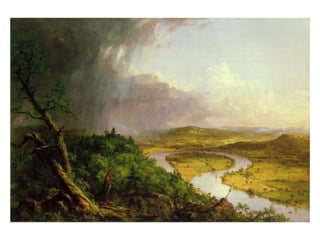
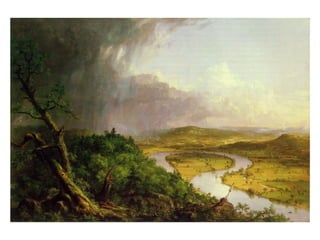
Romanticism in America Cole,  The Oxbow Founder of the Hudson River School of landscape painting Painted as reply to Captain Basil Hall’s book  Travels in North America , 1829, in which he alleged that America was indifferent to its natural blessings Also alleged that American painters were incompetent and could not capture American scenery To Cole, America possesses the sublime and the beautiful in its landscape Wildness of landscape on left compared to the domesticated landscape on right Cole is seated with an easel between both landscapes, looking at us Left: contorted trunk, receding storm, wild mountains, impenetrable forest Right: cultivated, orderly, man taming nature, but remaining in harmony with her Oxbow  as a counterstatement to Hall’s book
 
Romanticism in America Church,  Twilight in the Wilderness Cole’s only pupil and his successor  Awe-inspiring view of the sun setting over a majestic landscape No trace of humanity Idealistic and comforting view Affirmation of the divine in nature Strong horizontals interrupted by verticals and diagonals Color used as spectacle Great detail in leaves of trees and feathery clouds Is it a symbol of the oncoming Civil War?
 
Romantic Architecture John Nash (1752-1835) Sir Charles Barry (1795-1860) Charles Garnier (1825-98)
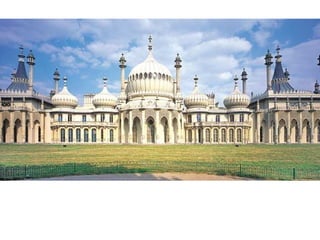
Revival Architecture Nash, Royal Pavilion, Brighton Seaside resort for prince regent, later King George IV Islamic domes, minarets and screens Onion domes and finials Underlying the exotic façade is a cast iron skeleton Interior: palm-tree columns in cast iron
Royal Pavilion at Brighton, John Nash, 1815


Revival Architecture Barry and Pugin, Houses of Parliament, London Old Houses of Parliament burned to the ground in 1834 Competition held in 1835 to rebuild the Houses Only styles allowed in the competition were Elizabethan Tudor and Gothic 97 entries, this was the winning entry Ground plan is cruciform Two main axes meet in an octagonal central lobby: House of Commons meets the House of Lords Barry was a classicist, a regularity of the rhythms of the façade Pugin was a medievalist: towers and decorative elements Vast office complex: 1,100 rooms, 100 staircases, 2 miles of corridors, 8 acres Harmonized with other medieval buildings nearby, like Westminster Abbey Big Ben, the clock tower, is like a medieval village clock Placement of a detached tower is Italian in inspiration
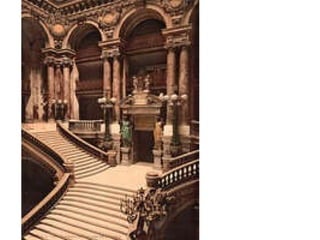
Revival Architecture Garnier, The Opera, Paris Exterior: Rich polychrome façade of colored marbles Domed auditorium Huge fly space for stage behind that Elaborate side entrance for the Emperor Subscribers had a pendant entrance General ticket holders entered front Interior: Iron used, but not in exposed places Mirrors on columns flicker with gas light, allowing ladies to check their hair before entering the great staircase Auditorium made for the staircase, rather than the staircase for the auditorium Auditorium as anti-climax Garnier said the staircase  IS  the opera Lower steps swell gently outward Porch of the caryatids frames the finest seats


Beginnings of Modern Architecture Labrouste, Sainte-Genevieve Library, Paris Combination of load bearing masonry and iron construction Arches and columns support roof independent of masonry walls Iron construction balanced by itself Substitute a cast-iron shaft for a column of granite Narrow, rectangular ground plan wedged onto a long constricted site 1838, first library in Paris to be opened at night, illuminated with gas lamps Had to be constructed of fire-proof materials Exterior: Continuous range of arches on tall, narrow piers Exterior can be thought of as a cover for a book First consistently exposed iron skeleton in a monumental public building Arches on interior reflect arches on exterior Repetitive and mechanical decoration on surface Façade composed of 810 names of authors in chronological order from Moses to Berzelous, 1848, a Swedish chemist
Beginnings of Modern Architecture  Labrouste, Sainte-Genevieve Library, Paris (continued) Central name is Byzantine writer Psellus symbolizing the meeting of East and West Façade as a monumental card catalogue, or Table of Contents Main portal: two flat Tuscan columns, surmounted by lamps that symbolize opening at night for the convenience of students and workers Lamps around door look like bookmarks Interior: Single spine of cast iron down center Spatially open, evenly lit in daytime and well-ventilated Interior and exterior compliment each other
 
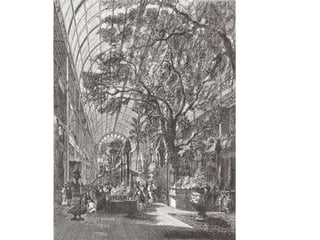
Beginnings of Modern Architecture Paxton, Crystal Palace, London Competition to build a World’s Fair in London to be held in 1851 Buildings to be temporary, economical, simple, and capable of rapid construction 245 designs submitted, none suitable Paxton formulated this design in eight days, fulfilling all requirements Built in 39 weeks of prefabricated materials 1851 feet long, 18 acres Free of internal walls 7,200 cast iron and wrought iron columns 900,000 square feet of sheet glass Hollow cast iron columns act as drain pipes Glass curtain walls Portal bracing to counteract lateral forces of the wind Paxton’s experience in greenhouses inspired the design Burned in 1936


Romantic Architecture

  • 1.
  • 2.
    Romanticism in AmericaCole, The Oxbow Founder of the Hudson River School of landscape painting Painted as reply to Captain Basil Hall’s book Travels in North America , 1829, in which he alleged that America was indifferent to its natural blessings Also alleged that American painters were incompetent and could not capture American scenery To Cole, America possesses the sublime and the beautiful in its landscape Wildness of landscape on left compared to the domesticated landscape on right Cole is seated with an easel between both landscapes, looking at us Left: contorted trunk, receding storm, wild mountains, impenetrable forest Right: cultivated, orderly, man taming nature, but remaining in harmony with her Oxbow as a counterstatement to Hall’s book
  • 3.
  • 4.
    Romanticism in AmericaChurch, Twilight in the Wilderness Cole’s only pupil and his successor Awe-inspiring view of the sun setting over a majestic landscape No trace of humanity Idealistic and comforting view Affirmation of the divine in nature Strong horizontals interrupted by verticals and diagonals Color used as spectacle Great detail in leaves of trees and feathery clouds Is it a symbol of the oncoming Civil War?
  • 5.
  • 6.
    Romantic Architecture JohnNash (1752-1835) Sir Charles Barry (1795-1860) Charles Garnier (1825-98)
  • 7.
    Revival Architecture Nash,Royal Pavilion, Brighton Seaside resort for prince regent, later King George IV Islamic domes, minarets and screens Onion domes and finials Underlying the exotic façade is a cast iron skeleton Interior: palm-tree columns in cast iron
  • 8.
    Royal Pavilion atBrighton, John Nash, 1815
  • 9.
  • 10.
  • 11.
  • 12.
  • 13.
    Revival Architecture Barryand Pugin, Houses of Parliament, London Old Houses of Parliament burned to the ground in 1834 Competition held in 1835 to rebuild the Houses Only styles allowed in the competition were Elizabethan Tudor and Gothic 97 entries, this was the winning entry Ground plan is cruciform Two main axes meet in an octagonal central lobby: House of Commons meets the House of Lords Barry was a classicist, a regularity of the rhythms of the façade Pugin was a medievalist: towers and decorative elements Vast office complex: 1,100 rooms, 100 staircases, 2 miles of corridors, 8 acres Harmonized with other medieval buildings nearby, like Westminster Abbey Big Ben, the clock tower, is like a medieval village clock Placement of a detached tower is Italian in inspiration
  • 14.
    Revival Architecture Garnier,The Opera, Paris Exterior: Rich polychrome façade of colored marbles Domed auditorium Huge fly space for stage behind that Elaborate side entrance for the Emperor Subscribers had a pendant entrance General ticket holders entered front Interior: Iron used, but not in exposed places Mirrors on columns flicker with gas light, allowing ladies to check their hair before entering the great staircase Auditorium made for the staircase, rather than the staircase for the auditorium Auditorium as anti-climax Garnier said the staircase IS the opera Lower steps swell gently outward Porch of the caryatids frames the finest seats
  • 15.
  • 16.
  • 17.
  • 18.
    Beginnings of ModernArchitecture Labrouste, Sainte-Genevieve Library, Paris Combination of load bearing masonry and iron construction Arches and columns support roof independent of masonry walls Iron construction balanced by itself Substitute a cast-iron shaft for a column of granite Narrow, rectangular ground plan wedged onto a long constricted site 1838, first library in Paris to be opened at night, illuminated with gas lamps Had to be constructed of fire-proof materials Exterior: Continuous range of arches on tall, narrow piers Exterior can be thought of as a cover for a book First consistently exposed iron skeleton in a monumental public building Arches on interior reflect arches on exterior Repetitive and mechanical decoration on surface Façade composed of 810 names of authors in chronological order from Moses to Berzelous, 1848, a Swedish chemist
  • 19.
    Beginnings of ModernArchitecture Labrouste, Sainte-Genevieve Library, Paris (continued) Central name is Byzantine writer Psellus symbolizing the meeting of East and West Façade as a monumental card catalogue, or Table of Contents Main portal: two flat Tuscan columns, surmounted by lamps that symbolize opening at night for the convenience of students and workers Lamps around door look like bookmarks Interior: Single spine of cast iron down center Spatially open, evenly lit in daytime and well-ventilated Interior and exterior compliment each other
  • 20.
  • 21.
    Beginnings of ModernArchitecture Paxton, Crystal Palace, London Competition to build a World’s Fair in London to be held in 1851 Buildings to be temporary, economical, simple, and capable of rapid construction 245 designs submitted, none suitable Paxton formulated this design in eight days, fulfilling all requirements Built in 39 weeks of prefabricated materials 1851 feet long, 18 acres Free of internal walls 7,200 cast iron and wrought iron columns 900,000 square feet of sheet glass Hollow cast iron columns act as drain pipes Glass curtain walls Portal bracing to counteract lateral forces of the wind Paxton’s experience in greenhouses inspired the design Burned in 1936
  • 22.
  • 23.
  • 24.