Theory of ArchitectureI
By
Dr. Mohammed Shabander
(B.Sc.Arch.,M.Sc.U.D.,Ph.D.C.P.)
Lecture 3
(19th Century Architecture)
3rd Year Architecture
2015/2016 Second Semester
2.
19th Century
Europe andAmerica replayed
Classical architecture in churches,
universities, and civic buildings.
Copy cat era, no originality.
Despite scientific triumphs, industrial
revolution, transportation,
communication, building technology,
cast and wrought iron, plate glass,
rivets, steel, reinforced concrete.
3.
London grew from1 million in 1800
to 3 million in 1900
New York from 63,800 to 2.8 million
New functions required new building
designs for factories, railroad
stations, department stores, office
buildings.
Economies boomed
Progress surged
4.
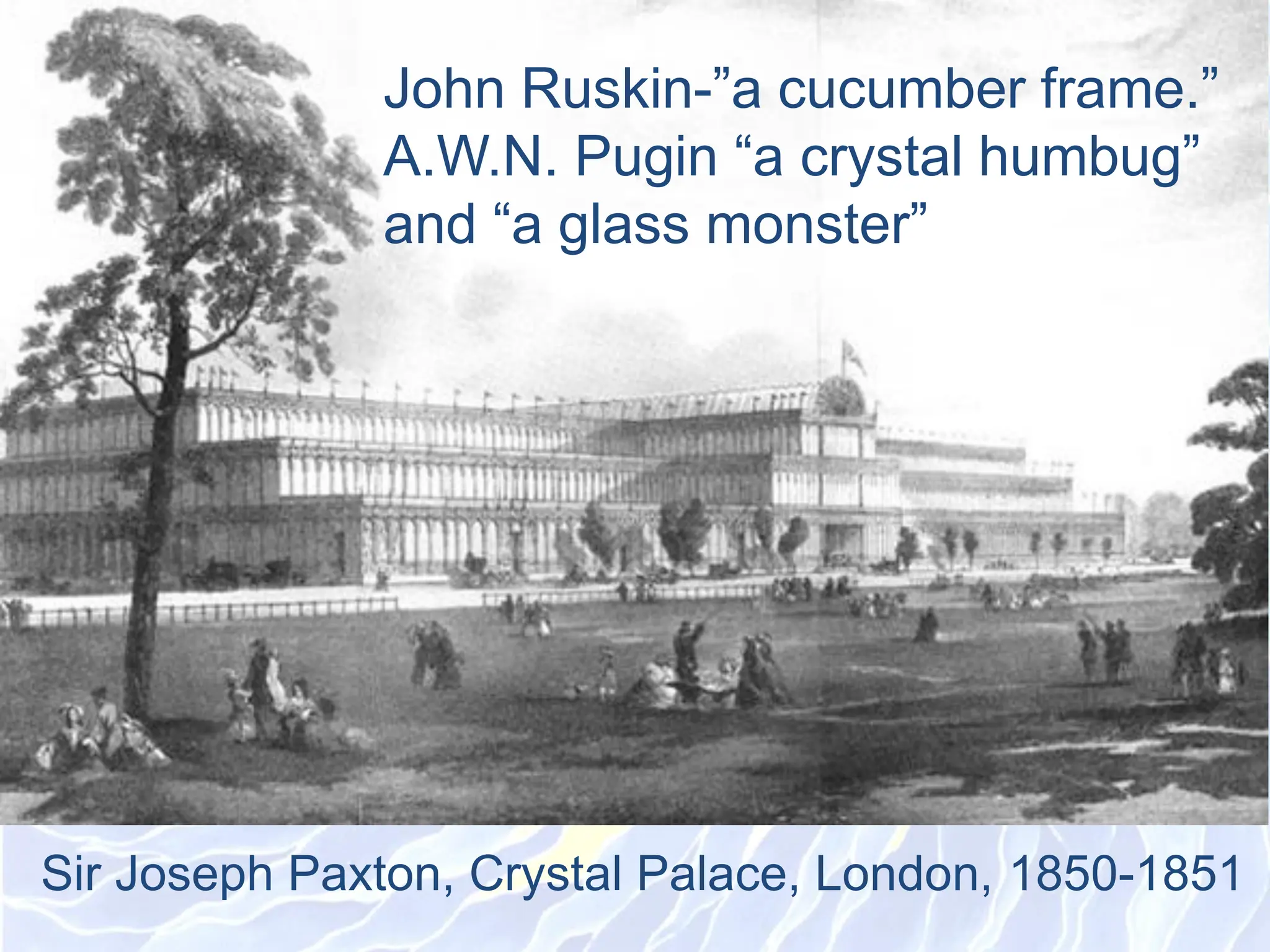
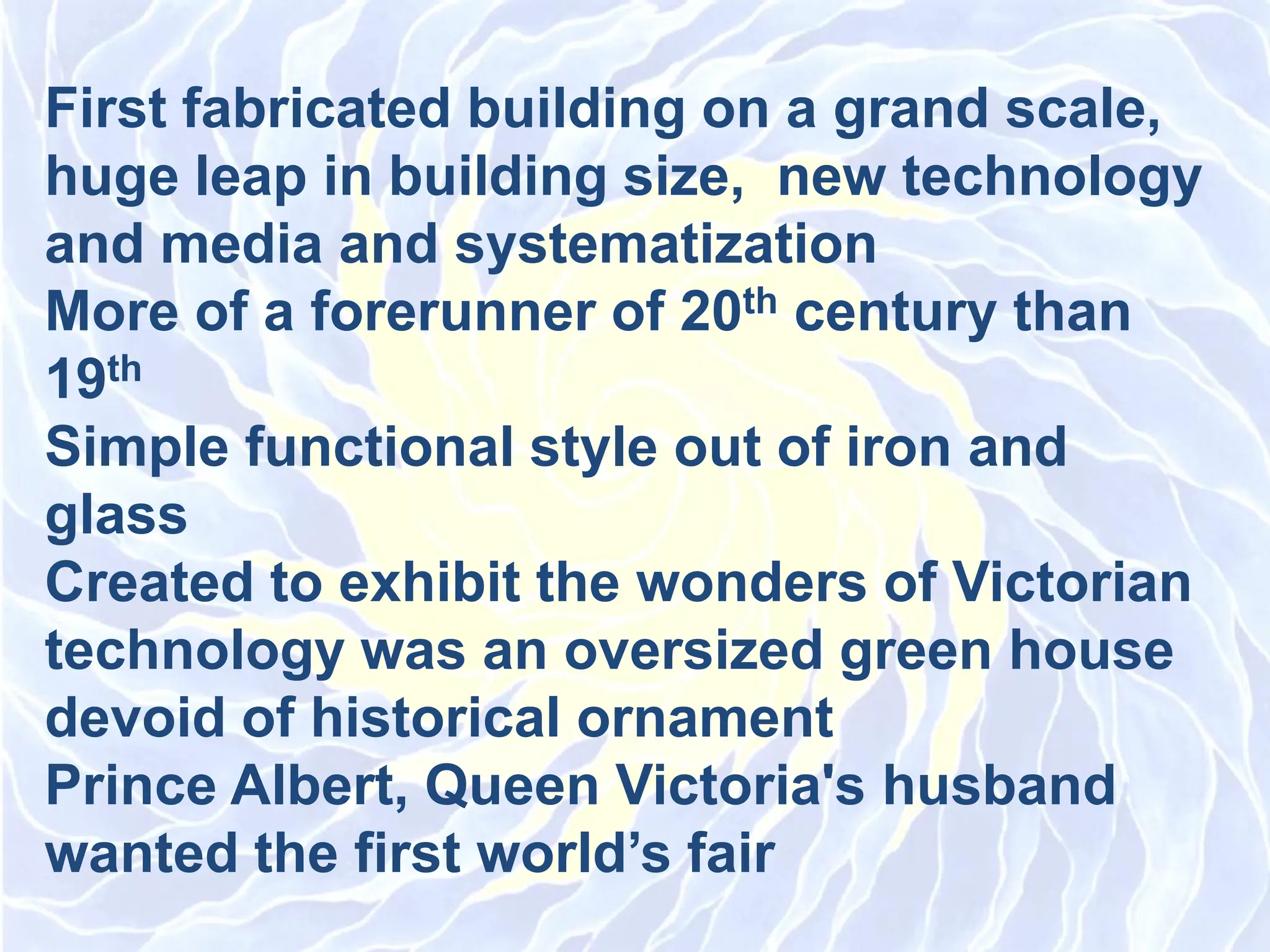
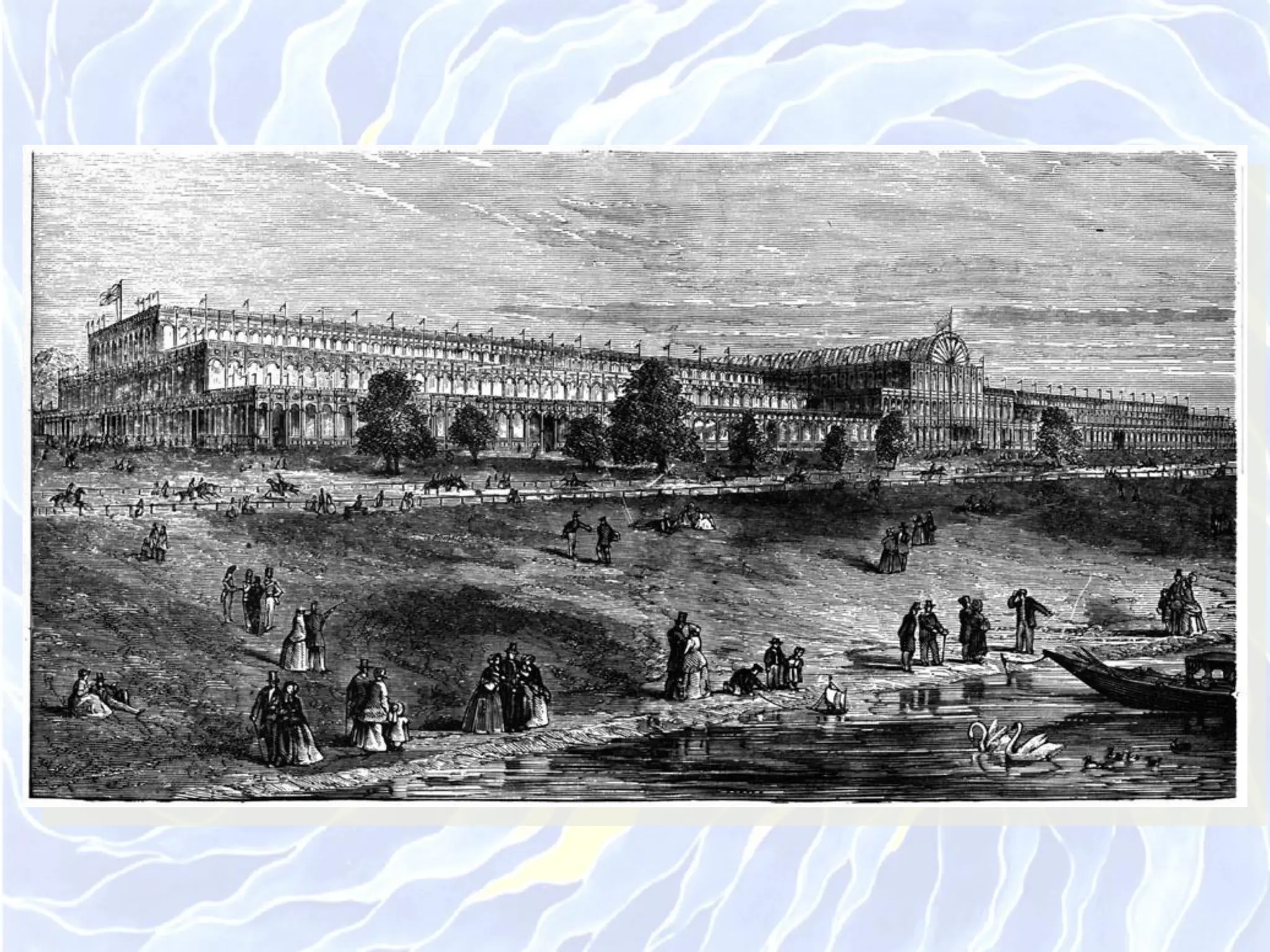
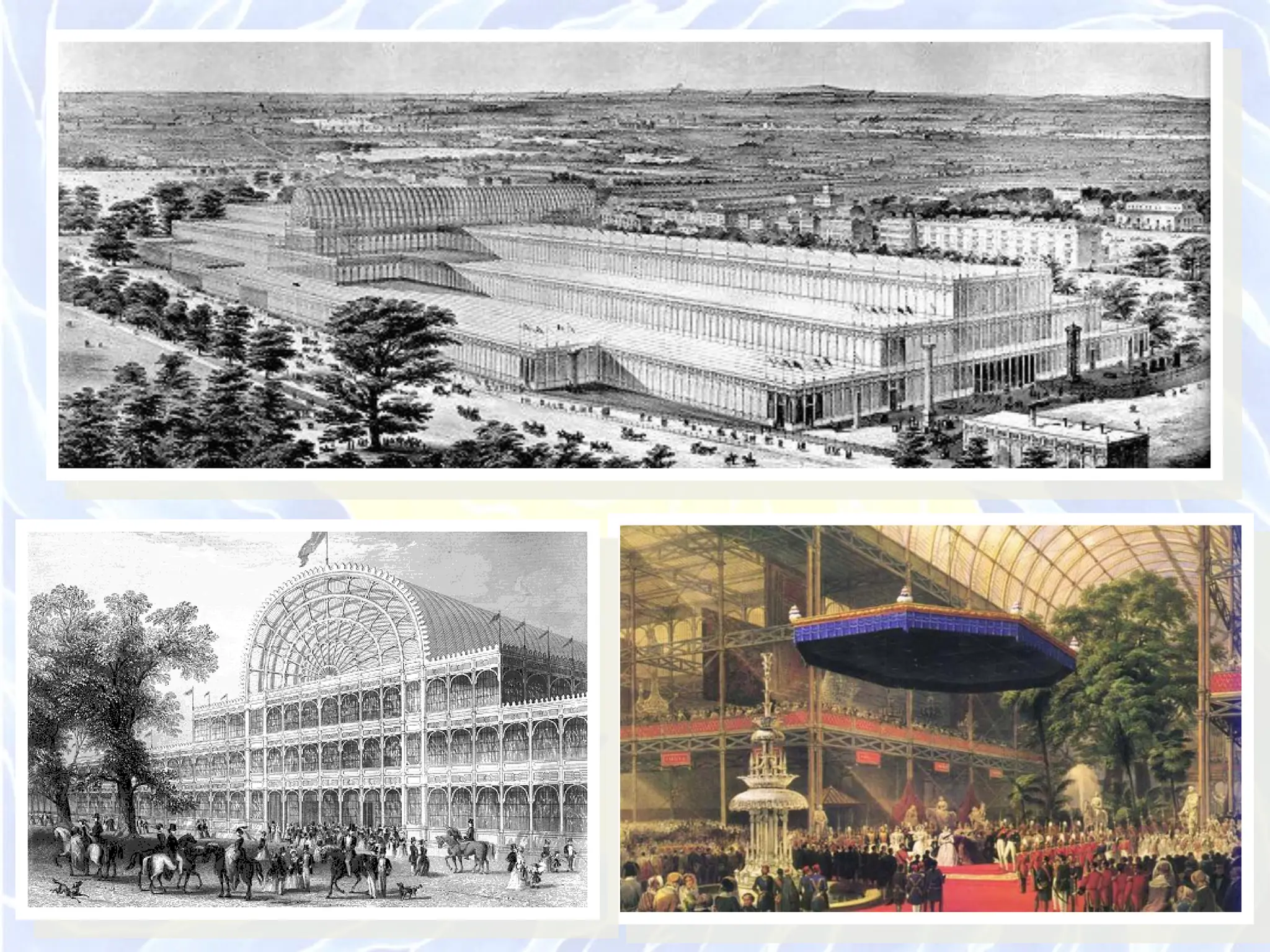
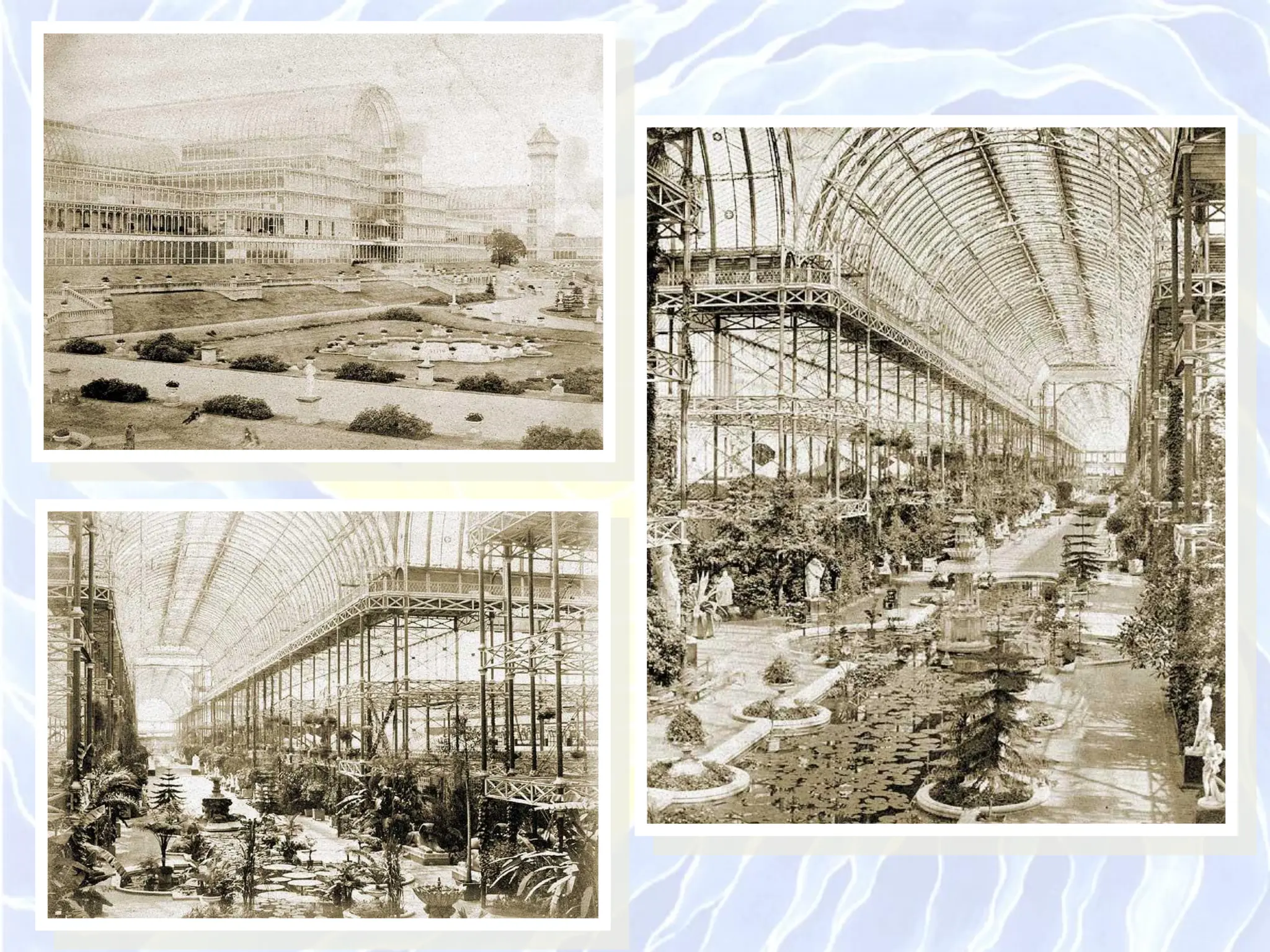
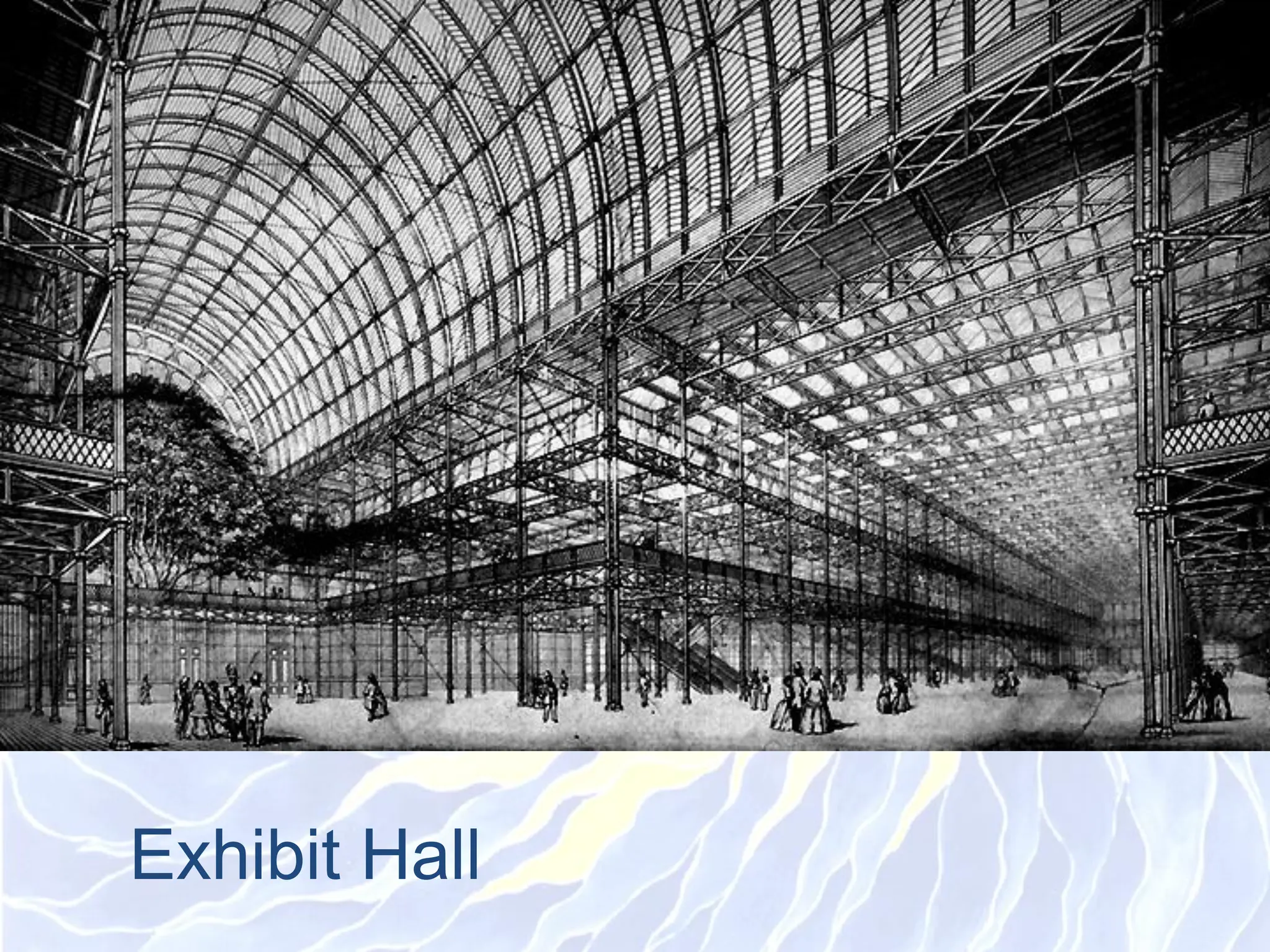
Sir Joseph Paxton,Crystal Palace, London, 1850-1851
John Ruskin-”a cucumber frame.”
A.W.N. Pugin “a crystal humbug”
and “a glass monster”
5.
First fabricated buildingon a grand scale,
huge leap in building size, new technology
and media and systematization
More of a forerunner of 20th century than
19th
Simple functional style out of iron and
glass
Created to exhibit the wonders of Victorian
technology was an oversized green house
devoid of historical ornament
Prince Albert, Queen Victoria's husband
wanted the first world’s fair
9.
In six months,identical modular
cast iron columns and beams
were shipped to Hyde Park and
mounted with standardized
panes
Covered 18 hectare
18000 four foot panes of glass
3300 iron pillars spaced
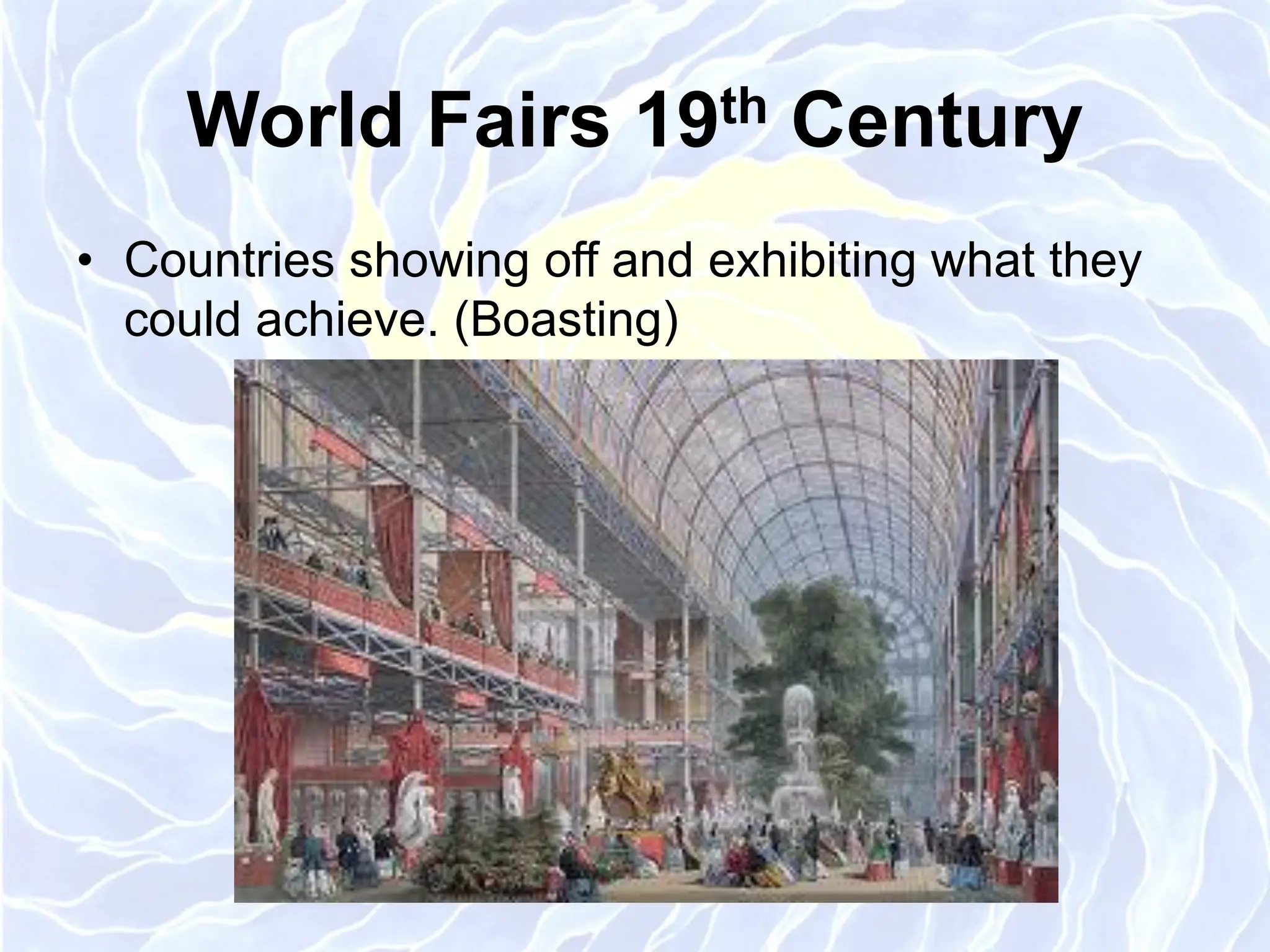
World Fairs 19thCentury
• Countries showing off and exhibiting what they
could achieve. (Boasting)
12.
19th Century Architecture
“Isthis epoch, so fertile in discoveries, so
abounding in vital force, to transmit to
posterity nothing better in art than
imitations?”
“Although it is difficult for man to learn, it
is much more difficult for him to forget.”
Architect Eugène Viollet-le-Duc.
Only in Chicago, where there were not
links to the past did architects produce
innovative structures
Their ideas andconceptions of good
taste made the rounds in this world
at the end of the 19th century in the
form of wallpaper, furniture covers
and "useful embroideries.
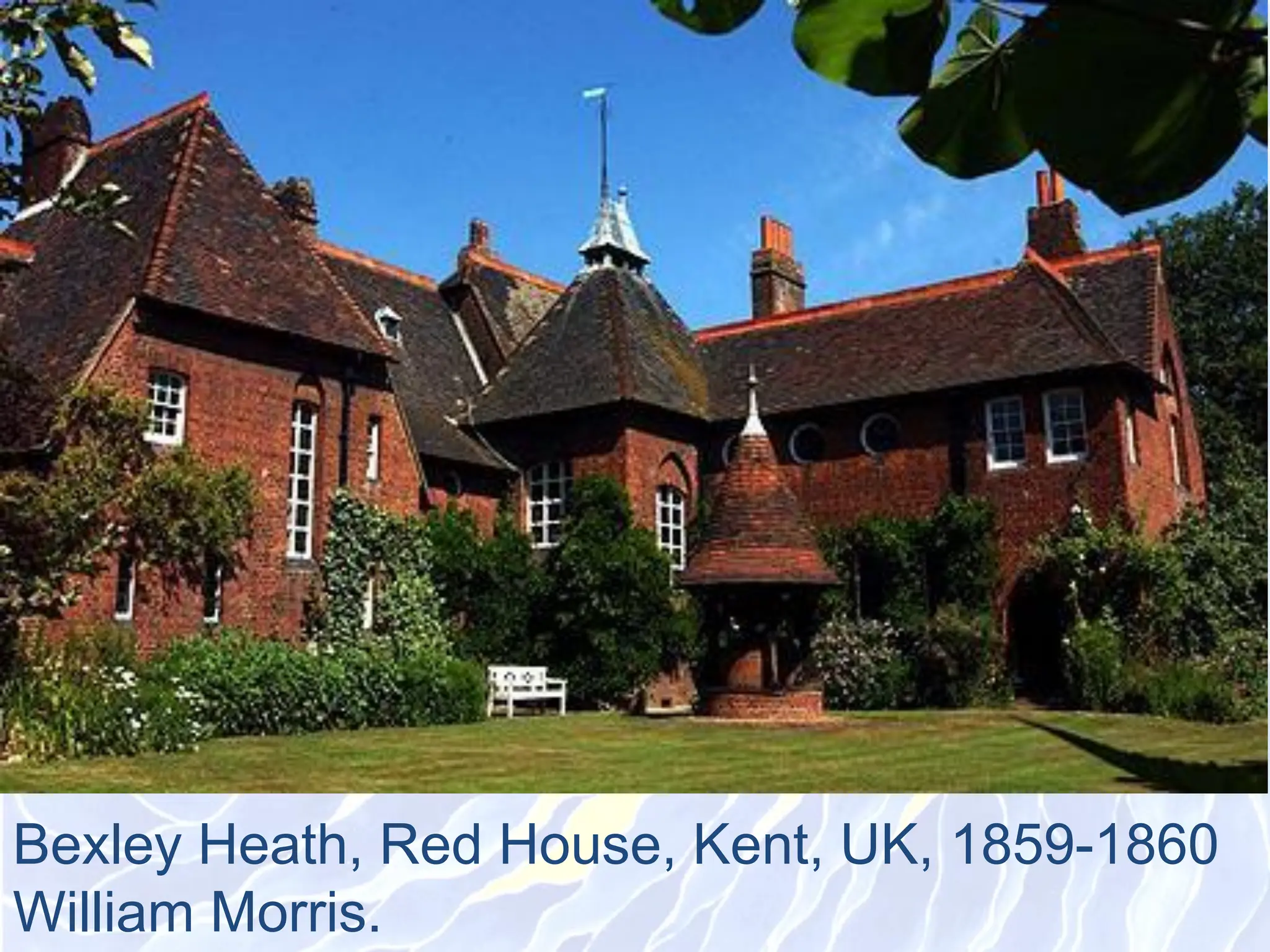
18.
Morris felt embroideryshould
resemble embroidery and not try to
precisely imitate nature.
His work was largely inspired by
plants and gardens, herbals that he
collected, and Medieval crewel work
embroideries.
His work was definitely two
dimensional.
19.
Some others whowere associated
with Morris, were John Ruskin, the
first professor of art history at
Oxford, Thomas Wardle, Morris' chief
dyer, C.F.A. Voysey, an architect
interested in interior design, Frank
Lloyd Wright, William De Morgan,
Tiffany, painter Edward Burns-Jones,
Philip Webb, and others
20.
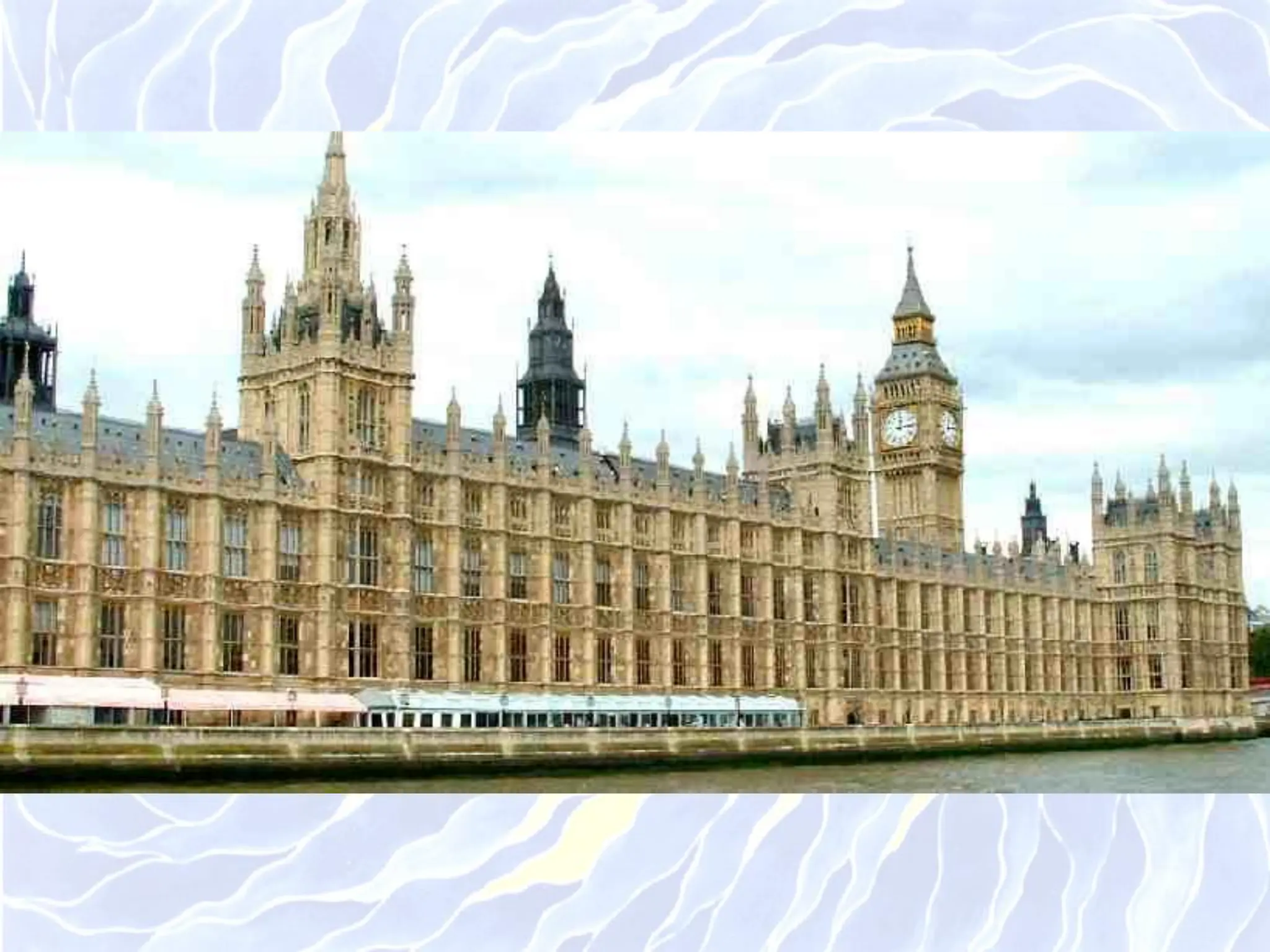
Gothic Revival
The magnificentGothic Revival
masterpiece you see today was built
between 1840 and 1888, this was the
work of Charles Barry who designed
the buildings to blend with nearby
Westminster Abbey.
22.
The two imposingtowers, well known
landmarks in London, are the clock
tower, named after it’s thirteen ton bell
called Big Ben, and Victoria tower, on
who’s flag pole the Union Jack flies
when parliament is sitting. Much of
the Victorian detail of the interior was
the work of Barry’s assistant
Augustus Pugin.
23.
Entrance to WestminsterHall is
permitted only as part of a guided
tour, otherwise it can be viewed from
St. Stephen’s porch above. The hall
measuring 240 feet by 60 feet has an
impressive hammer beam roof of oak
and is one of the most imposing
medieval halls in Europe. In this noble
setting coronation banquets were
held until 1821.




![unit 1_Modernity&Architecture_251116_104341[1].pdf](https://cdn.slidesharecdn.com/ss_thumbnails/unit1modernityarchitecture2511161043411-251125083522-0646fcef-thumbnail.jpg?width=640&height=640&fit=bounds)


![PowerISO 9.2 Mac Crack + Serial Key Free Download 2026 [Latest] Software.pptx](https://cdn.slidesharecdn.com/ss_thumbnails/software-251207185653-5d5700e6-thumbnail.jpg?width=640&height=640&fit=bounds)

![CleanMyMac X v5.2.8 Crack for MacOS Full Version [Latest] pptx](https://cdn.slidesharecdn.com/ss_thumbnails/softwareoverview-251207194121-a81f0142-thumbnail.jpg?width=640&height=640&fit=bounds)

![Driver Easy Pro Key 7.1.0.2641 Full Mac Crack Free Activated Download [2026]....](https://cdn.slidesharecdn.com/ss_thumbnails/software-251207185324-b2fb71b4-thumbnail.jpg?width=640&height=640&fit=bounds)
![iStat Menus 7.20 Crack for MacOS 2026 Full Version [Latest] pptx](https://cdn.slidesharecdn.com/ss_thumbnails/softwareoverview-251207191544-22b737dc-thumbnail.jpg?width=640&height=640&fit=bounds)


![Chapter4_Initiation_of_Sediment_Motion_v2[1].pptx](https://cdn.slidesharecdn.com/ss_thumbnails/chapter4initiationofsedimentmotionv21-251208223747-f94ef163-thumbnail.jpg?width=640&height=640&fit=bounds)


![Soundtoys Mac v5.5.5.0 Crack for MacOS Full Version [Latest] pptx](https://cdn.slidesharecdn.com/ss_thumbnails/softwareoverview-251207193711-91d8ae6b-thumbnail.jpg?width=640&height=640&fit=bounds)