Literature of Ancient Rome
Why is it important?The empireThe language The Influences
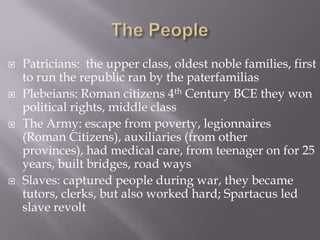
The People Patricians:  the upper class, oldest noble families, first to run the republic ran by the paterfamilias Plebeians: Roman citizens 4th Century BCE they won political rights, middle classThe Army: escape from poverty, legionnaires (Roman Citizens), auxiliaries (from other provinces), had medical care, from teenager on for 25 years, built bridges, road waysSlaves: captured people during war, they became tutors, clerks, but also worked hard; Spartacus led slave revolt
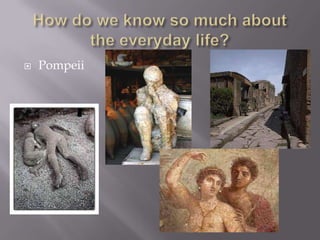
How do we know so much about the everyday life?Pompeii
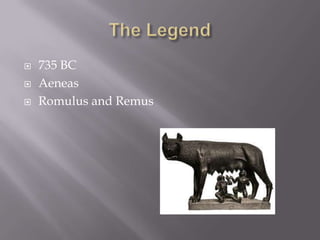
The Legend 735 BCAeneas Romulus and Remus
The Republic 509-27 BCPunic Wars: Gained control over the Mediterranean.  By 60 BC Rome ruled: Greece, Macedonia, Asia Minor, Syria, and JudeaJulius Caesar: 46 BC stopped the civil wars
Roman Empire: GrowthAugustus: “exalted one,” grandnephew of Julia Caesar, defeated Marc Antony and Cleopatra His Rule marked 200 years of stability called Pax Roman was the Golden or Augustan Age
The Decline and FallAD 200-476Marcus Aurelius: Last wise emperor, 180 ADGermanic TribesLike Troy
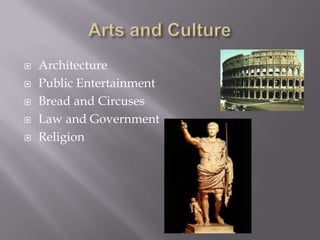
Arts and Culture Architecture Public EntertainmentBread and CircusesLaw and GovernmentReligion
Literature CiceroVirgilHoraceLivy and TacitusPlautusTerence
Elements of Roman Literature Greek influencedHigh ProseIdea of freedomPolitical ideals
The Aeneid1. What Aeneas a epic hero?  Explain.  Make sure you think about the elements of the epic hero.  (The main character is a hero, who has supernatural qualities (their strength is unexplainable, these are not superpowers,), the hero is charged with a quest, the hero is tested, often to prove the worthiness of himself and his quest, the presence of numerous mythical beings, magical and helpful animals, and human helpers and companions, The hero’s travels take him to a supernatural world, often one that normal human beings are barred from entering, the cycle must reach a low point where the hero nearly gives up his quest or appears defeated, a resurrection, Restitution. Often this takes the form of the hero regaining his rightful place on the throne.)
2. How are the Greek Heroes depicted compared to The Iliad?3. A culture hero is a larger than life figure who reflects the values of a people.  To the Ancient Romans Aeneas was a culture hero.  What values did he represent to their culture?  (Hint: look at his foil, Pyrrhus).
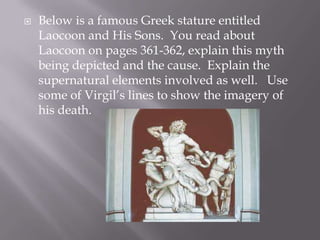
Below is a famous Greek stature entitled Laocoon and His Sons.  You read about Laocoon on pages 361-362, explain this myth being depicted and the cause.  Explain the supernatural elements involved as well.   Use some of Virgil’s lines to show the imagery of his death.
5.  What can you infer about the Roman’s form their reaction to Laocoon’s death?6. How is dramatic irony used with the wooden horse?7. Read lines 126-130, rephrase these words.  Why is this noted?  8.  What qualities does Aeneas show in lines 160-171?9. What is the external conflict in The Aeneid?  (Go beyond war.)10. This is an epic, make a list of the elements of an epic and then identify as many as you can with specific examples.  11.How does Aeneas escape and help others?
12.Look at the simile in lines 265-266, what does this say abut Hecuba?13. What happens to King Priam?14.What is Aeneas’ internal conflict?  How does he deal with it?15. What is Aeneas’ feelings towards Helen?16.  Look at the epic simile in lines 400-408 what is being compared here and why?
17. What is Venus’ (the Greek god Aphrodite) role in the Aeneid?18. What is the relationship between Aenas and his mother like?  Explain. 19. What is Aeneas’ divine mission?  20.  What elements show that this was written for the audience?  21. Create a venn-diagram comparing and contrasting Achilles and Aenas.  Create a thesis statement comparing the two heroes.

Roman literature kidsversion

  • 1.
  • 2.
    Why is itimportant?The empireThe language The Influences
  • 3.
    The People Patricians: the upper class, oldest noble families, first to run the republic ran by the paterfamilias Plebeians: Roman citizens 4th Century BCE they won political rights, middle classThe Army: escape from poverty, legionnaires (Roman Citizens), auxiliaries (from other provinces), had medical care, from teenager on for 25 years, built bridges, road waysSlaves: captured people during war, they became tutors, clerks, but also worked hard; Spartacus led slave revolt
  • 4.
    How do weknow so much about the everyday life?Pompeii
  • 5.
    The Legend 735BCAeneas Romulus and Remus
  • 6.
    The Republic 509-27BCPunic Wars: Gained control over the Mediterranean. By 60 BC Rome ruled: Greece, Macedonia, Asia Minor, Syria, and JudeaJulius Caesar: 46 BC stopped the civil wars
  • 7.
    Roman Empire: GrowthAugustus:“exalted one,” grandnephew of Julia Caesar, defeated Marc Antony and Cleopatra His Rule marked 200 years of stability called Pax Roman was the Golden or Augustan Age
  • 8.
    The Decline andFallAD 200-476Marcus Aurelius: Last wise emperor, 180 ADGermanic TribesLike Troy
  • 9.
    Arts and CultureArchitecture Public EntertainmentBread and CircusesLaw and GovernmentReligion
  • 10.
  • 11.
    Elements of RomanLiterature Greek influencedHigh ProseIdea of freedomPolitical ideals
  • 12.
    The Aeneid1. WhatAeneas a epic hero? Explain. Make sure you think about the elements of the epic hero. (The main character is a hero, who has supernatural qualities (their strength is unexplainable, these are not superpowers,), the hero is charged with a quest, the hero is tested, often to prove the worthiness of himself and his quest, the presence of numerous mythical beings, magical and helpful animals, and human helpers and companions, The hero’s travels take him to a supernatural world, often one that normal human beings are barred from entering, the cycle must reach a low point where the hero nearly gives up his quest or appears defeated, a resurrection, Restitution. Often this takes the form of the hero regaining his rightful place on the throne.)
  • 13.
    2. How arethe Greek Heroes depicted compared to The Iliad?3. A culture hero is a larger than life figure who reflects the values of a people. To the Ancient Romans Aeneas was a culture hero. What values did he represent to their culture? (Hint: look at his foil, Pyrrhus).
  • 14.
    Below is afamous Greek stature entitled Laocoon and His Sons. You read about Laocoon on pages 361-362, explain this myth being depicted and the cause. Explain the supernatural elements involved as well. Use some of Virgil’s lines to show the imagery of his death.
  • 15.
    5. Whatcan you infer about the Roman’s form their reaction to Laocoon’s death?6. How is dramatic irony used with the wooden horse?7. Read lines 126-130, rephrase these words. Why is this noted? 8. What qualities does Aeneas show in lines 160-171?9. What is the external conflict in The Aeneid? (Go beyond war.)10. This is an epic, make a list of the elements of an epic and then identify as many as you can with specific examples. 11.How does Aeneas escape and help others?
  • 16.
    12.Look at thesimile in lines 265-266, what does this say abut Hecuba?13. What happens to King Priam?14.What is Aeneas’ internal conflict? How does he deal with it?15. What is Aeneas’ feelings towards Helen?16. Look at the epic simile in lines 400-408 what is being compared here and why?
  • 17.
    17. What isVenus’ (the Greek god Aphrodite) role in the Aeneid?18. What is the relationship between Aenas and his mother like? Explain. 19. What is Aeneas’ divine mission? 20. What elements show that this was written for the audience? 21. Create a venn-diagram comparing and contrasting Achilles and Aenas. Create a thesis statement comparing the two heroes.