Role of Electronics in
DEFENCE
Guided By:
Mrs S.V. CHARHATE
Presented By:
Aman Deep
Neetesh Patel
OVERVIEW
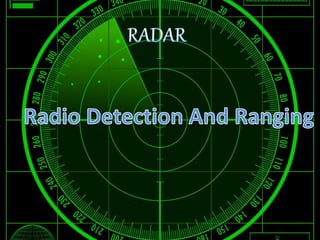
Radar
Electronic Warfare
Undersea
warfare
Conclusion
Referenc
es
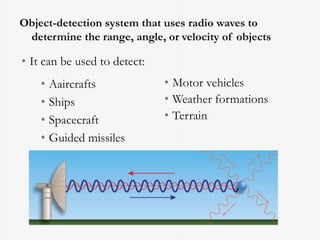
Object-detection system that uses radio waves to
determine the range, angle, or velocity of objects
• Aaircrafts
• Ships
• Spacecraft
• Guided missiles
• Motor vehicles
• Weather formations
• Terrain
• It can be used to detect:
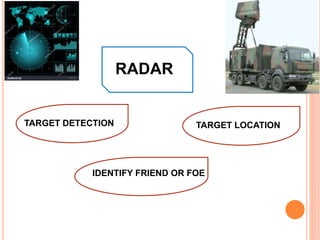
RADAR
TARGET DETECTION TARGET LOCATION
IDENTIFY FRIEND OR FOE
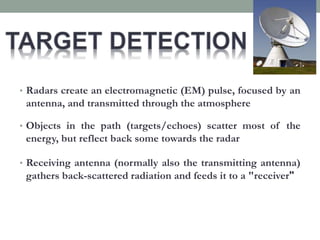
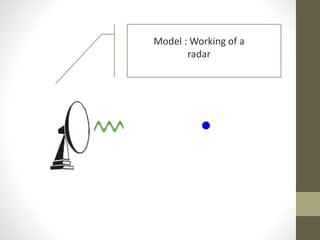
• Radars create an electromagnetic (EM) pulse, focused by an
antenna, and transmitted through the atmosphere
• Objects in the path (targets/echoes) scatter most of the
energy, but reflect back some towards the radar
• Receiving antenna (normally also the transmitting antenna)
gathers back-scattered radiation and feeds it to a "receiver"
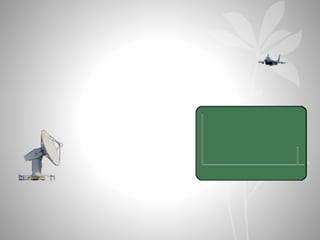
Model : Working of a
radar
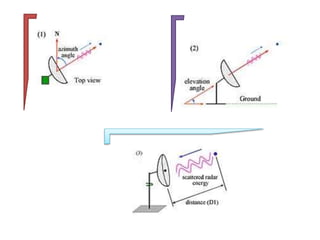
 3 pieces of information are required for target
location
 Azimuth angle : The angle of the radar beam with
respect to north
 Elevation angle: The angle of the radar beam with
respect to the ground
 The distance (D) from radar to target
 Distance = Time it takes for the EM pulse to make a round
trip from the radar to the target and back using the relation:
 distance = time (t) * velocity
 The pulse travels at the speed of light (c).
 Since the pulse travels to and from the target, the total
distance is 2D.
 If ‘t’ is the time it takes, then 2D = c*t 0 or D = (c*t)/2.
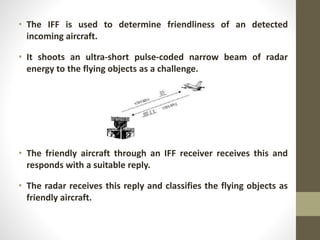
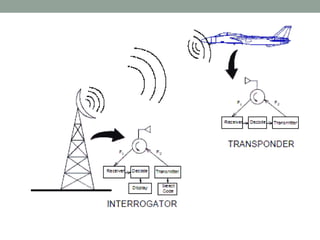
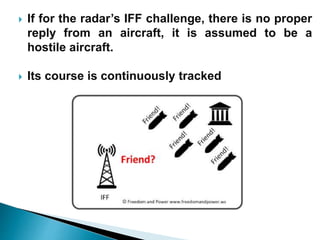
• The IFF is used to determine friendliness of an detected
incoming aircraft.
• It shoots an ultra-short pulse-coded narrow beam of radar
energy to the flying objects as a challenge.
• The friendly aircraft through an IFF receiver receives this and
responds with a suitable reply.
• The radar receives this reply and classifies the flying objects as
friendly aircraft.
 If for the radar’s IFF challenge, there is no proper
reply from an aircraft, it is assumed to be a
hostile aircraft.
 Its course is continuously tracked
RADAR : A DOUBLE EDGED SWORD
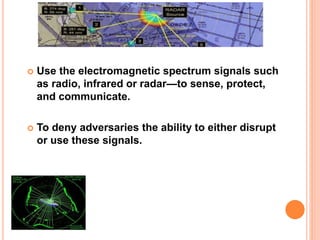
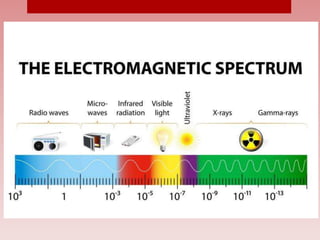
 Use the electromagnetic spectrum signals such
as radio, infrared or radar—to sense, protect,
and communicate.
 To deny adversaries the ability to either disrupt
or use these signals.
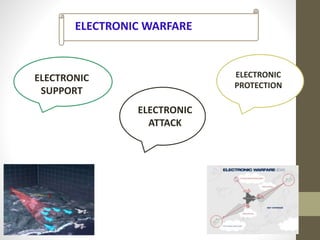
ELECTRONIC WARFARE
ELECTRONIC
SUPPORT
ELECTRONIC
ATTACK
ELECTRONIC
PROTECTION
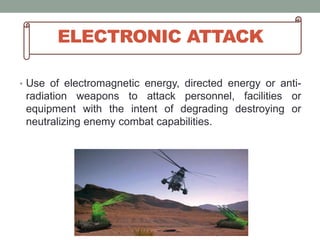
ELECTRONIC ATTACK
• Use of electromagnetic energy, directed energy or anti-
radiation weapons to attack personnel, facilities or
equipment with the intent of degrading destroying or
neutralizing enemy combat capabilities.
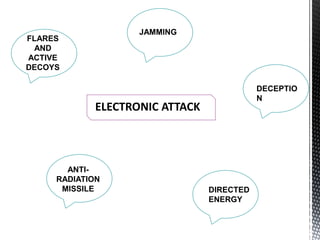
ELECTRONIC ATTACK
JAMMING
DECEPTIO
N
DIRECTED
ENERGY
ANTI-
RADIATION
MISSILE
FLARES
AND
ACTIVE
DECOYS
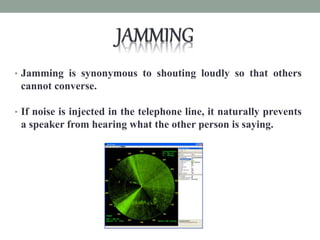
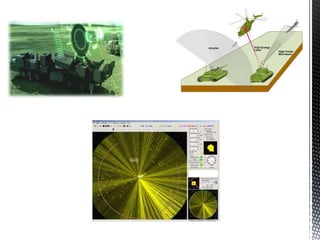
• Jamming is synonymous to shouting loudly so that others
cannot converse.
• If noise is injected in the telephone line, it naturally prevents
a speaker from hearing what the other person is saying.
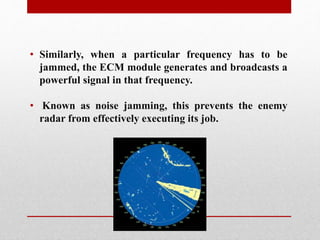
• Similarly, when a particular frequency has to be
jammed, the ECM module generates and broadcasts a
powerful signal in that frequency.
• Known as noise jamming, this prevents the enemy
radar from effectively executing its job.
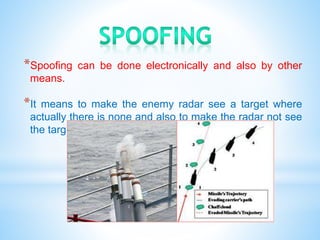
*Spoofing can be done electronically and also by other
means.
*It means to make the enemy radar see a target where
actually there is none and also to make the radar not see
the target where it actually is.
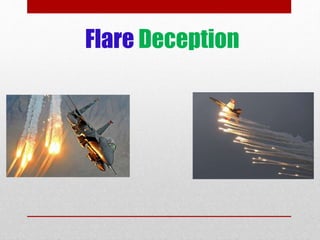
Flare Deception
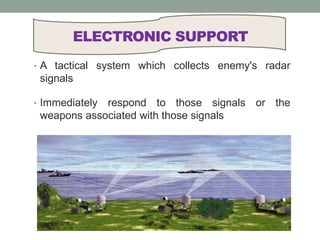
ELECTRONIC SUPPORT
• A tactical system which collects enemy's radar
signals
• Immediately respond to those signals or the
weapons associated with those signals
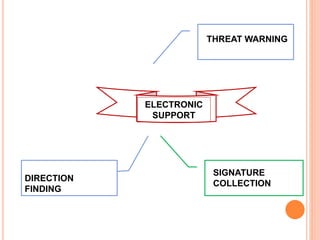
ELECTRONIC
SUPPORT
THREAT WARNING
SIGNATURE
COLLECTION
DIRECTION
FINDING
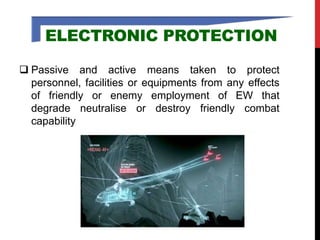
ELECTRONIC PROTECTION
 Passive and active means taken to protect
personnel, facilities or equipments from any effects
of friendly or enemy employment of EW that
degrade neutralise or destroy friendly combat
capability
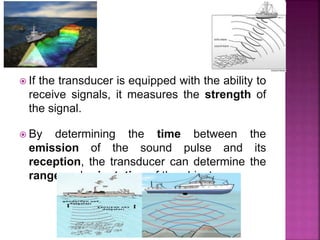
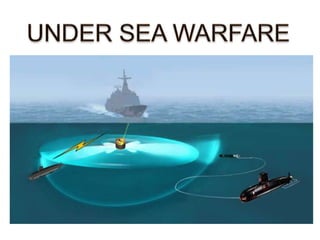
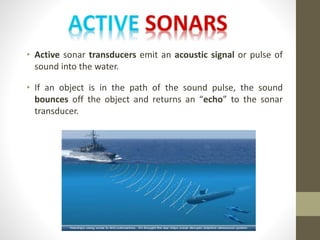
• Active sonar transducers emit an acoustic signal or pulse of
sound into the water.
• If an object is in the path of the sound pulse, the sound
bounces off the object and returns an “echo” to the sonar
transducer.
 If the transducer is equipped with the ability to
receive signals, it measures the strength of
the signal.
 By determining the time between the
emission of the sound pulse and its
reception, the transducer can determine the
range and orientation of the object.
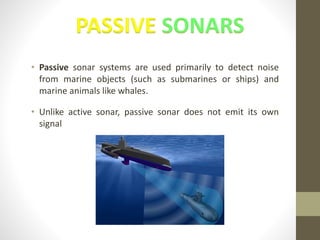
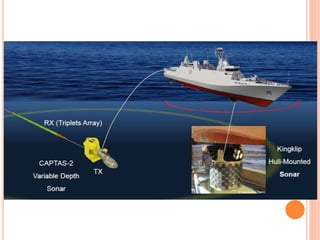
• Passive sonar systems are used primarily to detect noise
from marine objects (such as submarines or ships) and
marine animals like whales.
• Unlike active sonar, passive sonar does not emit its own
signal
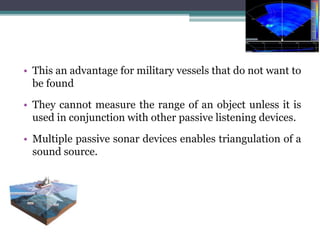
• This an advantage for military vessels that do not want to
be found
• They cannot measure the range of an object unless it is
used in conjunction with other passive listening devices.
• Multiple passive sonar devices enables triangulation of a
sound source.
Finding the Enemy
SUBMARINE
• Forward Looking Infrared (FLIR) is a night vision
enhancement system.
• Typically used on military and civilian aircraft, and
uses an imaging technology that senses infrared
radiation.
• FLIR technology helps detect warm objects
against a cold background when it is completely
dark
• This is a high-power night-vision device used to detect
surfaced submarines even in pitch darkness.
• The system senses the heat emitted by the submarines
and is useful only when the enemy submarine has
surfaced to get fresh air.
• In an FLIR, the surfaced submarine will stand out like a
black spot on a plain, white paper.
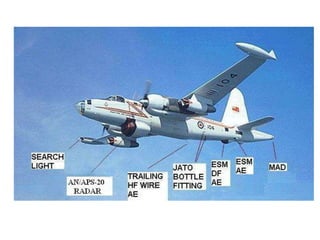
 A submarine is a colossal mass of metal sailing underwater.
 Magnetic field disturbances are created by the metallic
mass’s interaction with the water’s different temperature
gradients.
 MAD picks up these disturbances and detects submarine
activity.
 Then, it transmits the location of the submarine to the
destroyer through data links.
MAGNETIC ANOMALY DETECTOR.
• There is vast application of electronics principles and theory in
defence.
• Gaining superiority in electric countermeasure techniques has
the capacity to turn the tide of a war.
REFERENCES
 Wikipedia
 Radartutorials
 Electronics for you magzine
 Lockheed Martin
 Defence updates
 BAE Systems
 Defence Video Imagery Distribution System

Role of Electronics in Defence

  • 1.
    Role of Electronicsin DEFENCE Guided By: Mrs S.V. CHARHATE Presented By: Aman Deep Neetesh Patel
  • 3.
  • 5.
    Object-detection system thatuses radio waves to determine the range, angle, or velocity of objects • Aaircrafts • Ships • Spacecraft • Guided missiles • Motor vehicles • Weather formations • Terrain • It can be used to detect:
  • 7.
    RADAR TARGET DETECTION TARGETLOCATION IDENTIFY FRIEND OR FOE
  • 8.
    • Radars createan electromagnetic (EM) pulse, focused by an antenna, and transmitted through the atmosphere • Objects in the path (targets/echoes) scatter most of the energy, but reflect back some towards the radar • Receiving antenna (normally also the transmitting antenna) gathers back-scattered radiation and feeds it to a "receiver"
  • 9.
    Model : Workingof a radar
  • 10.
     3 piecesof information are required for target location  Azimuth angle : The angle of the radar beam with respect to north  Elevation angle: The angle of the radar beam with respect to the ground  The distance (D) from radar to target
  • 12.
     Distance =Time it takes for the EM pulse to make a round trip from the radar to the target and back using the relation:  distance = time (t) * velocity  The pulse travels at the speed of light (c).  Since the pulse travels to and from the target, the total distance is 2D.  If ‘t’ is the time it takes, then 2D = c*t 0 or D = (c*t)/2.
  • 15.
    • The IFFis used to determine friendliness of an detected incoming aircraft. • It shoots an ultra-short pulse-coded narrow beam of radar energy to the flying objects as a challenge. • The friendly aircraft through an IFF receiver receives this and responds with a suitable reply. • The radar receives this reply and classifies the flying objects as friendly aircraft.
  • 17.
     If forthe radar’s IFF challenge, there is no proper reply from an aircraft, it is assumed to be a hostile aircraft.  Its course is continuously tracked
  • 18.
    RADAR : ADOUBLE EDGED SWORD
  • 21.
     Use theelectromagnetic spectrum signals such as radio, infrared or radar—to sense, protect, and communicate.  To deny adversaries the ability to either disrupt or use these signals.
  • 23.
  • 24.
    ELECTRONIC ATTACK • Useof electromagnetic energy, directed energy or anti- radiation weapons to attack personnel, facilities or equipment with the intent of degrading destroying or neutralizing enemy combat capabilities.
  • 25.
  • 26.
    • Jamming issynonymous to shouting loudly so that others cannot converse. • If noise is injected in the telephone line, it naturally prevents a speaker from hearing what the other person is saying.
  • 27.
    • Similarly, whena particular frequency has to be jammed, the ECM module generates and broadcasts a powerful signal in that frequency. • Known as noise jamming, this prevents the enemy radar from effectively executing its job.
  • 29.
    *Spoofing can bedone electronically and also by other means. *It means to make the enemy radar see a target where actually there is none and also to make the radar not see the target where it actually is.
  • 30.
  • 31.
    ELECTRONIC SUPPORT • Atactical system which collects enemy's radar signals • Immediately respond to those signals or the weapons associated with those signals
  • 32.
  • 33.
    ELECTRONIC PROTECTION  Passiveand active means taken to protect personnel, facilities or equipments from any effects of friendly or enemy employment of EW that degrade neutralise or destroy friendly combat capability
  • 38.
    • Active sonartransducers emit an acoustic signal or pulse of sound into the water. • If an object is in the path of the sound pulse, the sound bounces off the object and returns an “echo” to the sonar transducer.
  • 39.
     If thetransducer is equipped with the ability to receive signals, it measures the strength of the signal.  By determining the time between the emission of the sound pulse and its reception, the transducer can determine the range and orientation of the object.
  • 40.
    • Passive sonarsystems are used primarily to detect noise from marine objects (such as submarines or ships) and marine animals like whales. • Unlike active sonar, passive sonar does not emit its own signal
  • 41.
    • This anadvantage for military vessels that do not want to be found • They cannot measure the range of an object unless it is used in conjunction with other passive listening devices. • Multiple passive sonar devices enables triangulation of a sound source.
  • 44.
  • 46.
    • Forward LookingInfrared (FLIR) is a night vision enhancement system. • Typically used on military and civilian aircraft, and uses an imaging technology that senses infrared radiation. • FLIR technology helps detect warm objects against a cold background when it is completely dark
  • 47.
    • This isa high-power night-vision device used to detect surfaced submarines even in pitch darkness. • The system senses the heat emitted by the submarines and is useful only when the enemy submarine has surfaced to get fresh air. • In an FLIR, the surfaced submarine will stand out like a black spot on a plain, white paper.
  • 49.
     A submarineis a colossal mass of metal sailing underwater.  Magnetic field disturbances are created by the metallic mass’s interaction with the water’s different temperature gradients.  MAD picks up these disturbances and detects submarine activity.  Then, it transmits the location of the submarine to the destroyer through data links. MAGNETIC ANOMALY DETECTOR.
  • 51.
    • There isvast application of electronics principles and theory in defence. • Gaining superiority in electric countermeasure techniques has the capacity to turn the tide of a war.
  • 52.
    REFERENCES  Wikipedia  Radartutorials Electronics for you magzine  Lockheed Martin  Defence updates  BAE Systems  Defence Video Imagery Distribution System