Training as an Effective Measure to
           Increase ROI

       Example: „Intercultural
      Communication Trainings“
Case Study: Intercultural
   Communication Trainings

Current Situation:
o A large number of IT projects fail, because of
  missing intercultural skills
o The potential of multicultural IT projects cannot
  be exploited at a percentage larger than 50%


Benefit of intercultural Seminars:
Participants learn how to,
o …recognise and structure intercultural
  differences and experiences
o …overcome challenges in intercultural contexts
Why Trainings in Intercultural
      Communication?

Improvement of communication skills
in an international context:

According to studies, 70% of all errors
in IT Projects are based on failure in
communication
.
Intercultural Trainings lead
            to…..


• … decrease of Losses
Caused by intercultural
misunderstandings
Intercultural Trainings lead
            to…..


…faster success in project
execution due to improved
collaboration
Intercultural Trainings lead
            to…..

…..better team spirit in project
teams and higher chances to build a
„High Performance Team“
Intercultural Trainings lead also
              to…..

 • ….. A significant competitive edge


 • …...more   effective communication

 • ……decrease of misunderstandings and its costs


 • ……improved mutual understanding
How Effects of Trainings can be
   Measured in Numbers?

•   Isolation of training effects in a control
    group
•   Monitoring of visible results
•   Estimation and statements of the
    participants
•   Estimation of the project team leader
    („Supervisor Assessments“)

->Conversion of data in solid numbers and results
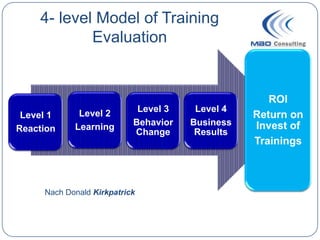
4- level Model of Training
            Evaluation


                                                    ROI
             Level 2        Level 3    Level 4
 Level 1                                         Return on
            Learning       Behavior   Business   Invest of
Reaction                   Change      Results
                                                 Trainings


     Nach Donald Kirkpatrick
„Intercultural Communication
Trainings“ – Impacts on the Business

  Which results are achieved in the context of
  intercultural communication?

  • Higher level of cultural awareness, understanding
    of the functions, what means „culture“?
  • Negotiation skills in an intercultural context, focus
    on Sales Presentations
  • Awareness of the meaning of time in different
    cultures
  • Ability of effective virtual communication/video
    conferences
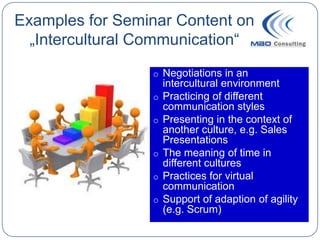
Examples for Seminar Content on
  „Intercultural Communication“
                 o Negotiations in an
                     intercultural environment
                 o   Practicing of different
                     communication styles
                 o   Presenting in the context of
                     another culture, e.g. Sales
                     Presentations
                 o   The meaning of time in
                     different cultures
                 o   Practices for virtual
                     communication
                 o   Support of adaption of agility
                     (e.g. Scrum)
Evaluation of Trainings
- Guidelines-
          o Compare with a seperated control
            group
          o Concede sufficient time for visible
            results in behavior change
          o Implement measures before and
            after the program
          o Evaluation questionnaires:
          Questioning of the
          participants, supervisors, co-
          workers, etc.
Performance Indicators and Measurable
  Improvements (after the Training):

       Hard Facts                Soft Facts
    Duration of the project     Effective communication
    % of Unproductive           Employee satisfaction
     working time
                                 Quality in decision
    Customer satisfaction        making
    Need of extension of
                                 Lower stress level
     project time
    Error in the project        Higher level of agility
    Number of units with re-
     working
Significant Cost Cuttings due to..
         o Shorter project duration
          Projects can be realised within an
         ->

         average of 2 months quicker

         o Significant reduction of ineffective
              communication

         o Improvements of communication in
           video conferences
         -> Costs for travel and face-to-face
         meetings can be lowered

         -> Effective Working in Offshore
         Situations
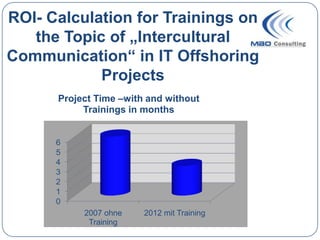
ROI- Calculation for Trainings on
   the Topic of „Intercultural
Communication“ in IT Offshoring
            Projects
      Project Time –with and without
           Trainings in months


      6
      5
      4
      3
      2
      1
      0
           2007 ohne    2012 mit Training
            Training
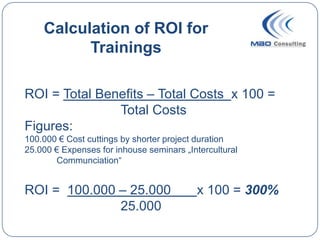
Calculation of ROI for
          Trainings

ROI = Total Benefits – Total Costs x 100 =
               Total Costs
Figures:
100.000 € Cost cuttings by shorter project duration
25.000 € Expenses for inhouse seminars „Intercultural
       Communciation“


ROI = 100.000 – 25.000                    x 100 = 300%
              25.000
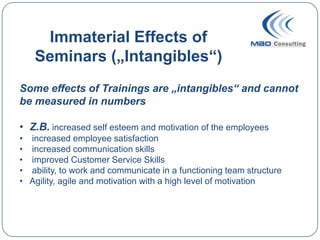
Immaterial Effects of
   Seminars („Intangibles“)
Some effects of Trainings are „intangibles“ and cannot
be measured in numbers

• Z.B. increased self esteem and motivation of the employees
• increased employee satisfaction
• increased communication skills
• improved Customer Service Skills
• ability, to work and communicate in a functioning team structure
• Agility, agile and motivation with a high level of motivation
Thank you for your attention!
Should you have further questions, please
      don´t hestiate to contact us!


MBO Consulting

Sonja Uhl
Manager Trainings & Events
Sonja.uhl@mbo-consulting.eu
www.mbo-consulting.eu

ROI of Trainings

  • 1.
    Training as anEffective Measure to Increase ROI Example: „Intercultural Communication Trainings“
  • 2.
    Case Study: Intercultural Communication Trainings Current Situation: o A large number of IT projects fail, because of missing intercultural skills o The potential of multicultural IT projects cannot be exploited at a percentage larger than 50% Benefit of intercultural Seminars: Participants learn how to, o …recognise and structure intercultural differences and experiences o …overcome challenges in intercultural contexts
  • 3.
    Why Trainings inIntercultural Communication? Improvement of communication skills in an international context: According to studies, 70% of all errors in IT Projects are based on failure in communication .
  • 4.
    Intercultural Trainings lead to….. • … decrease of Losses Caused by intercultural misunderstandings
  • 5.
    Intercultural Trainings lead to….. …faster success in project execution due to improved collaboration
  • 6.
    Intercultural Trainings lead to….. …..better team spirit in project teams and higher chances to build a „High Performance Team“
  • 7.
    Intercultural Trainings leadalso to….. • ….. A significant competitive edge • …...more effective communication • ……decrease of misunderstandings and its costs • ……improved mutual understanding
  • 8.
    How Effects ofTrainings can be Measured in Numbers? • Isolation of training effects in a control group • Monitoring of visible results • Estimation and statements of the participants • Estimation of the project team leader („Supervisor Assessments“) ->Conversion of data in solid numbers and results
  • 9.
    4- level Modelof Training Evaluation ROI Level 2 Level 3 Level 4 Level 1 Return on Learning Behavior Business Invest of Reaction Change Results Trainings Nach Donald Kirkpatrick
  • 10.
    „Intercultural Communication Trainings“ –Impacts on the Business Which results are achieved in the context of intercultural communication? • Higher level of cultural awareness, understanding of the functions, what means „culture“? • Negotiation skills in an intercultural context, focus on Sales Presentations • Awareness of the meaning of time in different cultures • Ability of effective virtual communication/video conferences
  • 11.
    Examples for SeminarContent on „Intercultural Communication“ o Negotiations in an intercultural environment o Practicing of different communication styles o Presenting in the context of another culture, e.g. Sales Presentations o The meaning of time in different cultures o Practices for virtual communication o Support of adaption of agility (e.g. Scrum)
  • 12.
    Evaluation of Trainings -Guidelines- o Compare with a seperated control group o Concede sufficient time for visible results in behavior change o Implement measures before and after the program o Evaluation questionnaires: Questioning of the participants, supervisors, co- workers, etc.
  • 13.
    Performance Indicators andMeasurable Improvements (after the Training): Hard Facts Soft Facts  Duration of the project  Effective communication  % of Unproductive  Employee satisfaction working time  Quality in decision  Customer satisfaction making  Need of extension of  Lower stress level project time  Error in the project  Higher level of agility  Number of units with re- working
  • 14.
    Significant Cost Cuttingsdue to.. o Shorter project duration Projects can be realised within an -> average of 2 months quicker o Significant reduction of ineffective communication o Improvements of communication in video conferences -> Costs for travel and face-to-face meetings can be lowered -> Effective Working in Offshore Situations
  • 15.
    ROI- Calculation forTrainings on the Topic of „Intercultural Communication“ in IT Offshoring Projects Project Time –with and without Trainings in months 6 5 4 3 2 1 0 2007 ohne 2012 mit Training Training
  • 16.
    Calculation of ROIfor Trainings ROI = Total Benefits – Total Costs x 100 = Total Costs Figures: 100.000 € Cost cuttings by shorter project duration 25.000 € Expenses for inhouse seminars „Intercultural Communciation“ ROI = 100.000 – 25.000 x 100 = 300% 25.000
  • 17.
    Immaterial Effects of Seminars („Intangibles“) Some effects of Trainings are „intangibles“ and cannot be measured in numbers • Z.B. increased self esteem and motivation of the employees • increased employee satisfaction • increased communication skills • improved Customer Service Skills • ability, to work and communicate in a functioning team structure • Agility, agile and motivation with a high level of motivation
  • 18.
    Thank you foryour attention! Should you have further questions, please don´t hestiate to contact us! MBO Consulting Sonja Uhl Manager Trainings & Events Sonja.uhl@mbo-consulting.eu www.mbo-consulting.eu