Private Risks


Trust and Communication
Introduction

  Many challenges may affect the
  outcome of a project
  Unexpressed Risks can endanger any
  effort
  Risks that are personal or private are
  just as important as traditional risks
Private Risks Lead Project Failure

  “28% of respondents reply that lack of
  communication is the main cause of
  project failure” -CompTIA
  57% of project failure due to a
  breakdown in communication - Bull
  Study (1998)
Topics of Discussion

 What Are Private Risks?
 What is Trust?
 How Can Communication Affect Private
 Risk Reporting?
 How Do We Manage Private Risks?
 What Can You Do If Trust is Lost?
What are Private Risks?

 Private Risks are project risks that relate
 to personal or confidential issues
 Private Risks could damage morale if
 they were widely known
 Private Risks could damage customer
 and sponsor relationships if they were
 widely known
Examples of Private Risks

 Two team members have a personal dispute
 A project member is not well compensated
 A project member is having a life event
   A marriage
   A child
   A divorce
   The death of a loved one
   A terminal disease
 A supplier shares confidential company
 information in an NDA
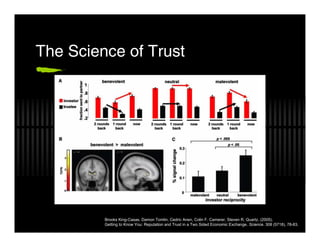
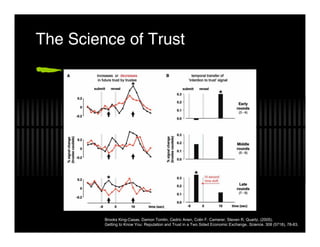
The Science of Trust
 FMRI studies have been exploring the brain’s
 behavior in trust relationships
 Neural responses drive behavior
 The Investor-Trustee Relationship
    Malevolent Behavior
    Neutral Behavior
    Benevolent Behavior
 Looking for “Intention to Trust” signals
    Delayed in early rounds
    Anticipatory in late rounds
 People build a model of trust
    Accuracy at predicting responses increases
The Science of Trust


         Brooks King-Casas, Damon Tomlin, Cedric Anen, Colin F. Camerer, Steven R. Quartz. (2005).
         Getting to Know You: Reputation and Trust in a Two Sided Economic Exchange. Science. 308 (5718), 78-83.
The Science of Trust


         Brooks King-Casas, Damon Tomlin, Cedric Anen, Colin F. Camerer, Steven R. Quartz. (2005).
         Getting to Know You: Reputation and Trust in a Two Sided Economic Exchange. Science. 308 (5718), 78-83.
Trust

 Without trust, private risks cannot be
 expressed
 Trust is hard to measure, but it’s
 absence is easy to detect
 Internal critics, dutiful silence, lack of
 debate, and schadenfreude are all signs
 of lost trust
Building Trust

  Learn personal details and remember them
  (lessons from sales techniques)
  Demonstrate your track record (change it if
  necessary)
  Reward the behavior of reporting risks (The
  carrot principle)
  Repeat, Repeat, Repeat: Consistent behavior
  builds trust
Communication

 Focused communication can be used to
 increase trust
 Private risks are not communicated,
 except in general terms
 Communicate risks down, as well as up
 Communicating issues down can help to
 establish better trust relationships
Communication Strategy

 Communicate Goals
   Frame the Work
   Define Goals Clearly
 Define Rewards that are aligned to the
 communicated Goals
 Poll for risks that interfere with achieving
 those communicated goals
Communication Tactics

 Project Management does not happen behind
 a desk.
 MBWA - Skip Level face to face
 Weekly Face to Face Status
 Monthly All-Hands, management, stakeholder
 meetings
 Quarterly Strategic Planning
 All Meeting Minutes taken in detail, all
 comments attributed, available to everyone
Maximizing Private Risk Reporting

 Understand the Current Environment
 Communicate Goals
 Establish Your Responses, Aligned to
 Goals, for Desired Behavior
 Establish Trust Through Consistency
Gathering Private Risks

 Gathering private risks involves building trust
 A safe environment must be created at each
 management level
 An expectation of rewards for behaviors must
 be established
 Remember that everyone’s behavior makes
 sense to them
Protecting Private Risks

  Private Risks cannot be shared outside of the
  relationship between project manager and the
  reporter of the risk
  If held in an electronic format, it should be
  encrypted and have restricted access
  They cannot be used for lessons learned,
  unless very sanitized (separating from the
  project and reporter)
Managing Private Risks

 A private risk register
 Populated with source, impact and
 likelihood
 Aggregated to determine contingency
 budgets
 Let’s examine an example Risk Tracker
What If Trust is Already Lost?

 Expose and face the situation honestly
 Communicate the new direction
 Prepare for resistance
 Be consistent
 Reward positive change in tangible ways
 Be patient
And if that doesn’t work?

  Mix it up
     Reform small teams and groups
     Find those that exhibit the behavior you want and
     use them to evangelize
  Identify informal leaders
     Engage them in project issues and concerns
     Recognize their influence
     Focus them on the project goals
  Form Triads (groups of three to wield
  influence)
And if that doesn’t work?

  Bad Reputations can be unfair
  Bad Attitudes can be contagious
  New Faces Have No Baggage
  Try Again Somewhere Else
    Start Fresh with a new project or
    organization
    Apply all of the lessons from inception
Questions?

Ask Me Anything…

  Robert.A.Hanna@jpl.nasa.gov
References
Brooks King-Casas, Damon Tomlin, Cedric Anen, Colin F. Camerer,
Steven R. Quartz. (2005). Getting to Know You: Reputation and Trust
in a Two Sided Economic Exchange. Science. 308 (5718), 78-83.
Aubrey C. Daniels (2000). Bringing Out The Best in People. New
York: McGraw-Hill.
Marcus Buckingham and Curt Coffman (1999). First Break All the
Rules: What the World’s Greatest Managers Do Differently. New York:
Simon & Schuster
Patrick M. Lencioni (2002). The Five Dysfunctions of a Team: A
Leadership Fable. San Francisco: Jossey-Bass
Adrian Gostick and Chester Elton (2007). The Carrot Principle: How
the Best Managers Use Recognition to Engage Their Employees,
Retain Talent and Drive Performance. New York: Free Press

Robert.hanna

  • 1.
  • 2.
    Introduction Manychallenges may affect the outcome of a project Unexpressed Risks can endanger any effort Risks that are personal or private are just as important as traditional risks
  • 3.
    Private Risks LeadProject Failure “28% of respondents reply that lack of communication is the main cause of project failure” -CompTIA 57% of project failure due to a breakdown in communication - Bull Study (1998)
  • 4.
    Topics of Discussion What Are Private Risks? What is Trust? How Can Communication Affect Private Risk Reporting? How Do We Manage Private Risks? What Can You Do If Trust is Lost?
  • 5.
    What are PrivateRisks? Private Risks are project risks that relate to personal or confidential issues Private Risks could damage morale if they were widely known Private Risks could damage customer and sponsor relationships if they were widely known
  • 6.
    Examples of PrivateRisks Two team members have a personal dispute A project member is not well compensated A project member is having a life event A marriage A child A divorce The death of a loved one A terminal disease A supplier shares confidential company information in an NDA
  • 7.
    The Science ofTrust FMRI studies have been exploring the brain’s behavior in trust relationships Neural responses drive behavior The Investor-Trustee Relationship Malevolent Behavior Neutral Behavior Benevolent Behavior Looking for “Intention to Trust” signals Delayed in early rounds Anticipatory in late rounds People build a model of trust Accuracy at predicting responses increases
  • 8.
    The Science ofTrust Brooks King-Casas, Damon Tomlin, Cedric Anen, Colin F. Camerer, Steven R. Quartz. (2005). Getting to Know You: Reputation and Trust in a Two Sided Economic Exchange. Science. 308 (5718), 78-83.
  • 9.
    The Science ofTrust Brooks King-Casas, Damon Tomlin, Cedric Anen, Colin F. Camerer, Steven R. Quartz. (2005). Getting to Know You: Reputation and Trust in a Two Sided Economic Exchange. Science. 308 (5718), 78-83.
  • 10.
    Trust Without trust,private risks cannot be expressed Trust is hard to measure, but it’s absence is easy to detect Internal critics, dutiful silence, lack of debate, and schadenfreude are all signs of lost trust
  • 11.
    Building Trust Learn personal details and remember them (lessons from sales techniques) Demonstrate your track record (change it if necessary) Reward the behavior of reporting risks (The carrot principle) Repeat, Repeat, Repeat: Consistent behavior builds trust
  • 12.
    Communication Focused communicationcan be used to increase trust Private risks are not communicated, except in general terms Communicate risks down, as well as up Communicating issues down can help to establish better trust relationships
  • 13.
    Communication Strategy CommunicateGoals Frame the Work Define Goals Clearly Define Rewards that are aligned to the communicated Goals Poll for risks that interfere with achieving those communicated goals
  • 14.
    Communication Tactics ProjectManagement does not happen behind a desk. MBWA - Skip Level face to face Weekly Face to Face Status Monthly All-Hands, management, stakeholder meetings Quarterly Strategic Planning All Meeting Minutes taken in detail, all comments attributed, available to everyone
  • 15.
    Maximizing Private RiskReporting Understand the Current Environment Communicate Goals Establish Your Responses, Aligned to Goals, for Desired Behavior Establish Trust Through Consistency
  • 16.
    Gathering Private Risks Gathering private risks involves building trust A safe environment must be created at each management level An expectation of rewards for behaviors must be established Remember that everyone’s behavior makes sense to them
  • 17.
    Protecting Private Risks Private Risks cannot be shared outside of the relationship between project manager and the reporter of the risk If held in an electronic format, it should be encrypted and have restricted access They cannot be used for lessons learned, unless very sanitized (separating from the project and reporter)
  • 18.
    Managing Private Risks A private risk register Populated with source, impact and likelihood Aggregated to determine contingency budgets Let’s examine an example Risk Tracker
  • 19.
    What If Trustis Already Lost? Expose and face the situation honestly Communicate the new direction Prepare for resistance Be consistent Reward positive change in tangible ways Be patient
  • 20.
    And if thatdoesn’t work? Mix it up Reform small teams and groups Find those that exhibit the behavior you want and use them to evangelize Identify informal leaders Engage them in project issues and concerns Recognize their influence Focus them on the project goals Form Triads (groups of three to wield influence)
  • 21.
    And if thatdoesn’t work? Bad Reputations can be unfair Bad Attitudes can be contagious New Faces Have No Baggage Try Again Somewhere Else Start Fresh with a new project or organization Apply all of the lessons from inception
  • 22.
    Questions? Ask Me Anything… Robert.A.Hanna@jpl.nasa.gov
  • 23.
    References Brooks King-Casas, DamonTomlin, Cedric Anen, Colin F. Camerer, Steven R. Quartz. (2005). Getting to Know You: Reputation and Trust in a Two Sided Economic Exchange. Science. 308 (5718), 78-83. Aubrey C. Daniels (2000). Bringing Out The Best in People. New York: McGraw-Hill. Marcus Buckingham and Curt Coffman (1999). First Break All the Rules: What the World’s Greatest Managers Do Differently. New York: Simon & Schuster Patrick M. Lencioni (2002). The Five Dysfunctions of a Team: A Leadership Fable. San Francisco: Jossey-Bass Adrian Gostick and Chester Elton (2007). The Carrot Principle: How the Best Managers Use Recognition to Engage Their Employees, Retain Talent and Drive Performance. New York: Free Press