Design for Operations
Space Shuttle vs. Sea Launch

         Bo Bejmuk
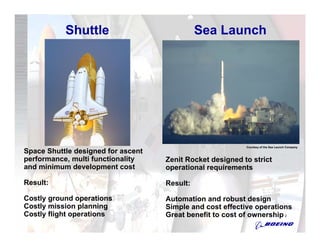
Shuttle                            Sea Launch


                                                           Courtesy of the Sea Launch Company
Space Shuttle designed for ascent
performance, multi functionality    Zenit Rocket designed to strict
and minimum development cost        operational requirements

Result:                             Result:

Costly ground operations            Automation and robust design
Costly mission planning             Simple and cost effective operations
Costly flight operations            Great benefit to cost of ownership 2
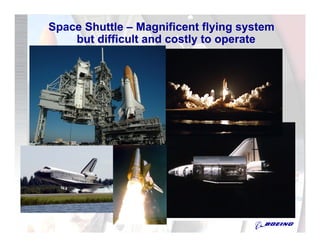
Space Shuttle – Magnificent flying system
    but difficult and costly to operate


                                            3
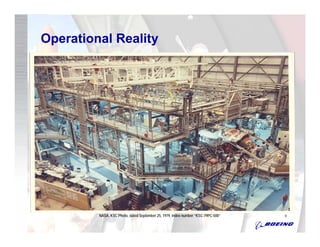
Initial Naive Concept of Ground Operations


                                             4
Operational Reality


         NASA, KSC Photo, dated September 25, 1979, index number “KSC-79PC-500”   5
Lack of Robustness and Design Margins
  Complicated flight Planning and Increased Cost
Problem
• The launch probability predictions for early Shuttle flights was less than
  50%
   – More than half of the measured winds aloft violated the vehicle’s certified
     boundaries
Corrective Actions
• System Integration led the evolution from a single ascent I-load, through
  seasonal I-loads, alternate I-loads, and finally arriving at DOLILU
• This process extended over a 10+ year period
• Concurrently the Program executed 3 load cycles (Integrated Vehicle
  Baseline Characterization - IVBC) combined with hardware modifications
  to expand vehicle certified envelopes
• Current launch probability is well in excess of 95%
Lesson
• Commit to a DOLILU approach during early development
   – Significantly improves margins
• Use additional margins on not well understood environments
                                                                                   6
• Will enhance robustness and simplify operations
Ascent Design Operations Evolution
                                          100                                                                                     High
                                                                       Lesson Learned:   Reliance on Operations Process
Percent of Winds Violating Certification (%)


                                                                                         to Maintain Margin is Expensive


                                                                                                                                         Operations Overhead
                                                                                                Ascent Operations
                                                                                                Overhead
                                               50                                                                                 Med


                                                                                            Certification Violations

                                               0                                                                                  Low

                                                   1975                  1985                      1995                    2005
                                                            Seasonal              Alternate
                                               Annual                   Monthly           Day-of-Launch                            7
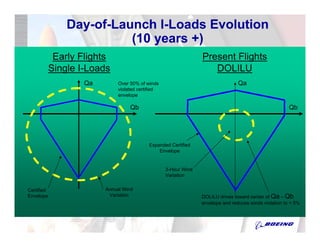
Day-of-Launch I-Loads Evolution
                          (10 years +)
             Early Flights                                       Present Flights
            Single I-Loads                                          DOLILU
                    Qa        Over 50% of winds                                  Qa
                              violated certified
                              envelope

                                   Qb                                                                     Qb


                                           Expanded Certified
                                               Envelope


                                                   3-Hour Wind
                                                   Variation


Certified                Annual Wind
Envelope                  Variation                              DOLILU drives toward center of Qa – Qb
                                                                 envelope and reduces winds violation to < 5%

                                                                                                      8
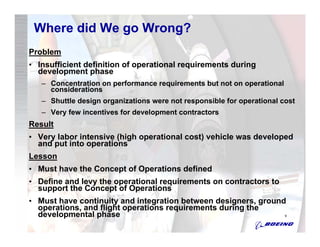
Where did We go Wrong?
Problem
• Insufficient definition of operational requirements during
  development phase
   – Concentration on performance requirements but not on operational
     considerations
   – Shuttle design organizations were not responsible for operational cost
   – Very few incentives for development contractors
Result
• Very labor intensive (high operational cost) vehicle was developed
  and put into operations
Lesson
• Must have the Concept of Operations defined
• Define and levy the operational requirements on contractors to
  support the Concept of Operations
• Must have continuity and integration between designers, ground
  operations, and flight operations requirements during the
  developmental phase                                                   9
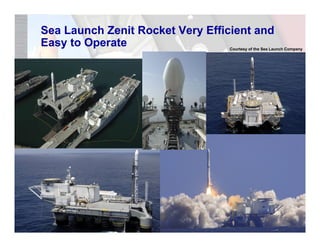
Sea Launch Zenit Rocket Very Efficient and
Easy to Operate                  Courtesy of the Sea Launch Company


                                                         10
Launch Platform


                  Courtesy of the Sea Launch Company   11
Assembly and Command Ship


                        Courtesy of the Sea Launch Company
                                                  12
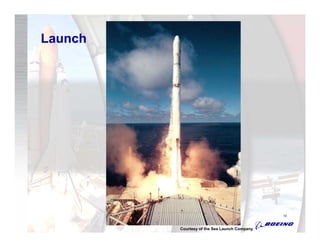
Launch


                                              13


         Courtesy of the Sea Launch Company
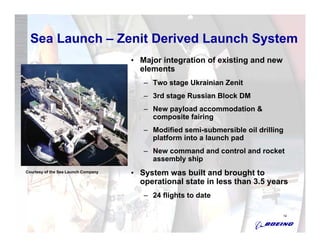
Sea Launch – Zenit Derived Launch System
                                     • Major integration of existing and new
                                       elements
                                        – Two stage Ukrainian Zenit
                                        – 3rd stage Russian Block DM
                                        – New payload accommodation &
                                          composite fairing
                                        – Modified semi-submersible oil drilling
                                          platform into a launch pad
                                        – New command and control and rocket
                                          assembly ship
Courtesy of the Sea Launch Company   • System was built and brought to
                                       operational state in less than 3.5 years
                                        – 24 flights to date

                                                                               14
Sea Launch Operations
                                          • Integration of rocket stages
                                            and payload at home port in
                                            Long Beach, CA
                                          • Launches performed from the
                                            Equator, 154 degrees west
                                            (south of Hawaii)
Courtesy of the Sea Launch Company

                       Small Team performs ground checkout and launch
                                      Ground Processing            Launch
                                            Team                   Team*
                     Americans                 80                    40
                     Russians                  200                   140
                     Ukrainians                50                    50
                     Norwegians                75                    70
                     Totals                    405                   300

          * Launch Team is a subset of the Ground Processing Team; Ground
          Processing team members that are not required to participate in launch at
                                                                                      15
          sea are sent back to their companies and are off the Sea Launch payroll
Lessons Learned from Sea Launch

• Zenit extremely automated launch vehicle
   – Very little interaction with crew during checkout, pre-launch, and
     flight
• Single string accountability, no duplications of effort (to
  some extent driven by export compliance restrictions)
• Low operational cost benefited from original design criteria
  of Zenit
   – Rollout to pad, fuel and launch in 90 minutes
   – Allows very little time for ground or flight crew involvement
   – Imposes requirements for automatic processes


                                                                     16
The Big Lesson

• If we want simple and cost effective
  operations we must design for operations
  – Shuttle designed for performance and minimum
    development cost
  – Sea Launch Zenit Rocket designed to strict
    operational requirements
• NASA is in control of operations destiny of
  new programs
  – Narrow window of opportunity


                                                   17

Bejmuk bo

  • 1.
    Design for Operations SpaceShuttle vs. Sea Launch Bo Bejmuk
  • 2.
    Shuttle Sea Launch Courtesy of the Sea Launch Company Space Shuttle designed for ascent performance, multi functionality Zenit Rocket designed to strict and minimum development cost operational requirements Result: Result: Costly ground operations Automation and robust design Costly mission planning Simple and cost effective operations Costly flight operations Great benefit to cost of ownership 2
  • 3.
    Space Shuttle –Magnificent flying system but difficult and costly to operate 3
  • 4.
    Initial Naive Conceptof Ground Operations 4
  • 5.
    Operational Reality NASA, KSC Photo, dated September 25, 1979, index number “KSC-79PC-500” 5
  • 6.
    Lack of Robustnessand Design Margins Complicated flight Planning and Increased Cost Problem • The launch probability predictions for early Shuttle flights was less than 50% – More than half of the measured winds aloft violated the vehicle’s certified boundaries Corrective Actions • System Integration led the evolution from a single ascent I-load, through seasonal I-loads, alternate I-loads, and finally arriving at DOLILU • This process extended over a 10+ year period • Concurrently the Program executed 3 load cycles (Integrated Vehicle Baseline Characterization - IVBC) combined with hardware modifications to expand vehicle certified envelopes • Current launch probability is well in excess of 95% Lesson • Commit to a DOLILU approach during early development – Significantly improves margins • Use additional margins on not well understood environments 6 • Will enhance robustness and simplify operations
  • 7.
    Ascent Design OperationsEvolution 100 High Lesson Learned: Reliance on Operations Process Percent of Winds Violating Certification (%) to Maintain Margin is Expensive Operations Overhead Ascent Operations Overhead 50 Med Certification Violations 0 Low 1975 1985 1995 2005 Seasonal Alternate Annual Monthly Day-of-Launch 7
  • 8.
    Day-of-Launch I-Loads Evolution (10 years +) Early Flights Present Flights Single I-Loads DOLILU Qa Over 50% of winds Qa violated certified envelope Qb Qb Expanded Certified Envelope 3-Hour Wind Variation Certified Annual Wind Envelope Variation DOLILU drives toward center of Qa – Qb envelope and reduces winds violation to < 5% 8
  • 9.
    Where did Wego Wrong? Problem • Insufficient definition of operational requirements during development phase – Concentration on performance requirements but not on operational considerations – Shuttle design organizations were not responsible for operational cost – Very few incentives for development contractors Result • Very labor intensive (high operational cost) vehicle was developed and put into operations Lesson • Must have the Concept of Operations defined • Define and levy the operational requirements on contractors to support the Concept of Operations • Must have continuity and integration between designers, ground operations, and flight operations requirements during the developmental phase 9
  • 10.
    Sea Launch ZenitRocket Very Efficient and Easy to Operate Courtesy of the Sea Launch Company 10
  • 11.
    Launch Platform Courtesy of the Sea Launch Company 11
  • 12.
    Assembly and CommandShip Courtesy of the Sea Launch Company 12
  • 13.
    Launch 13 Courtesy of the Sea Launch Company
  • 14.
    Sea Launch –Zenit Derived Launch System • Major integration of existing and new elements – Two stage Ukrainian Zenit – 3rd stage Russian Block DM – New payload accommodation & composite fairing – Modified semi-submersible oil drilling platform into a launch pad – New command and control and rocket assembly ship Courtesy of the Sea Launch Company • System was built and brought to operational state in less than 3.5 years – 24 flights to date 14
  • 15.
    Sea Launch Operations • Integration of rocket stages and payload at home port in Long Beach, CA • Launches performed from the Equator, 154 degrees west (south of Hawaii) Courtesy of the Sea Launch Company Small Team performs ground checkout and launch Ground Processing Launch Team Team* Americans 80 40 Russians 200 140 Ukrainians 50 50 Norwegians 75 70 Totals 405 300 * Launch Team is a subset of the Ground Processing Team; Ground Processing team members that are not required to participate in launch at 15 sea are sent back to their companies and are off the Sea Launch payroll
  • 16.
    Lessons Learned fromSea Launch • Zenit extremely automated launch vehicle – Very little interaction with crew during checkout, pre-launch, and flight • Single string accountability, no duplications of effort (to some extent driven by export compliance restrictions) • Low operational cost benefited from original design criteria of Zenit – Rollout to pad, fuel and launch in 90 minutes – Allows very little time for ground or flight crew involvement – Imposes requirements for automatic processes 16
  • 17.
    The Big Lesson •If we want simple and cost effective operations we must design for operations – Shuttle designed for performance and minimum development cost – Sea Launch Zenit Rocket designed to strict operational requirements • NASA is in control of operations destiny of new programs – Narrow window of opportunity 17