European Science Education
Academy
Sofoklis Sotiriou
Ellinogermaniki Agogi
European Physical Society
1
MOTIVATION, PURPOSE
European Science Education Academy
 Place EPS squarely in the shaping of physics
teaching approaches
 Document the innovation process in science
education (focusing on teachers PD) in Europe
 Collect, organise and provide easy access best
practices in science education
 Produce data about science education in Europe
 Policy advice and input
 Coordinate the actions of the National Societies
2
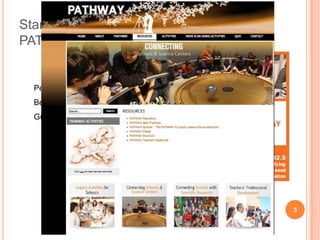
Starting Point: Presentation of the Main
PATHWAY Documentation
3
Pedagogical Framework
Best Practices
Guidelines for Teachers
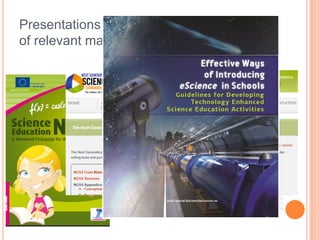
Presentations of Experts Views – Reviews
of relevant materials - Surveys
Recommendations
Documentation Center for the Modernization of Science
Education
Publications, Research Work, Conferences and Workshops
Developing Effective Training Programmes
- Guidelines, Resources, Best Practices
Supporting Communities of Practice
- Organising Resources, Motivating Practitioners
Dissemination and Networking
- Supporting National Physical Societies, Collaboration with EC,
ESERA, GIREP
Development of the ESEA Repository
 For policy makers
 For science education experts
 For teachers
 For museum educators and outreach groups
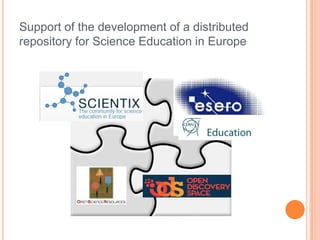
Support of the development of a distributed
repository for Science Education in Europe
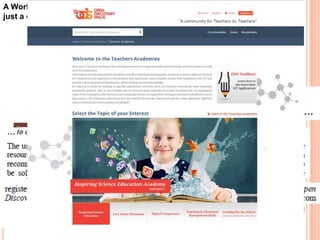
A World of eLearning tools and resources for Scientific Disciplines
just a click away…
o For teachers who can’t
participate in a workshop
o For teachers in addition to a
workshop
o For all interested parties
ESEA MOOCS (USING ONLINE LABS)
 Training in the use of online
labs and the Portal
 Theoretical background
 About 16 hours work load
9
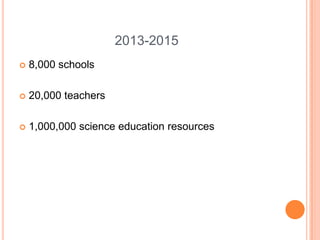
2013-2015
 8,000 schools
 20,000 teachers
 1,000,000 science education resources
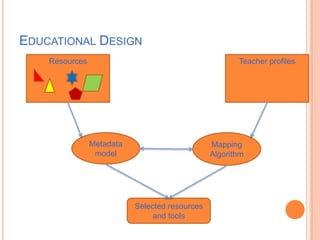
EDUCATIONAL DESIGN
Selected resources
and tools
Resources
Metadata
model
Mapping
Algorithm
Teacher profiles
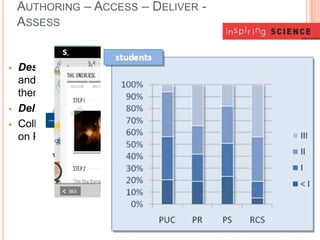
 Design Lessons/Scenarios by using existing resources
and tools (such as online labs, AR/VR tools) and store
them on the cloud
 Deliver Lessons/Scenarios to students.
 Collect Educational Data for student assessment based
on PISA Framework
AUTHORING – ACCESS – DELIVER -
ASSESS
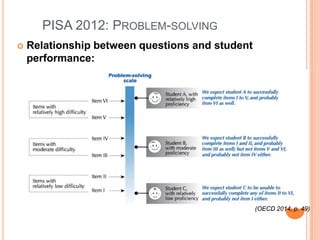
PISA 2012: PROBLEM-SOLVING
 Relationship between questions and student
performance:
(OECD 2014, p. 49)
Financial Support
 Conceptual Framework (Funded by PATHWAY)
 Initial Selection of Best Practices (Funded by
PATHWAY)
 Initial Version of the Repository (Funded by PATHWAY)
 Development of advanced users interface (To be
supported by INSPIRING SCIENCE EDUCATION –
2013-2016)
 Continuous support of teachers communities (To be
supported by Open Discovery Space – 2012-2015)
 Coordination and support actions (meetings workshops)
(To be supported by INSPIRING SCIENCE
EDUCATION – 2013-2016)
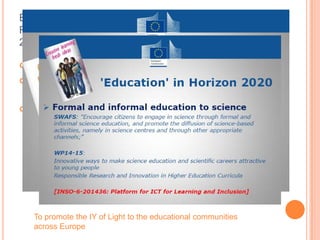
European Science Education Academy and
Responsible Research and Innovation in HORIZON
2020
 Main vehicle for active involvement in RRI actions
 Deepen the relationship between science and
society and reinforcing public confidence in science
 Promoting science education, by making scientific
knowledge more accessible, by developing
responsible research and innovation agendas that
meet citizens' and civil society's concerns.
To promote the IY of Light to the educational communities
across Europe
ACTION PLAN
 Setting up the ESEA working group
 Actions in 2014-2015 (Website, Communication
Strategy, Portal population, workshops, hangouts,
virtual visits, contests)
 To coordinate the implementation of the Action Plan
 To safeguard funding for the realization of the
Action Plan
 To organise three ESEA workshops (2014, 2015,
2016)
17
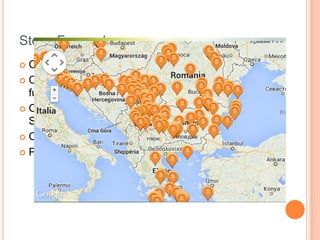
Steps Forward
 Cooperation with National Science Societies
 Organisation of workshops in different countries to
further develop the proposed framework
 Organisation and Support of Teachers and
Students Contests
 Cooperation with UNESCO in Balkan Countries
 Presentations in Conferences and Workshops

"Roadmap of ESEA" - SofoklisSotiriou

  • 1.
    European Science Education Academy SofoklisSotiriou Ellinogermaniki Agogi European Physical Society 1
  • 2.
    MOTIVATION, PURPOSE European ScienceEducation Academy  Place EPS squarely in the shaping of physics teaching approaches  Document the innovation process in science education (focusing on teachers PD) in Europe  Collect, organise and provide easy access best practices in science education  Produce data about science education in Europe  Policy advice and input  Coordinate the actions of the National Societies 2
  • 3.
    Starting Point: Presentationof the Main PATHWAY Documentation 3 Pedagogical Framework Best Practices Guidelines for Teachers
  • 4.
    Presentations of ExpertsViews – Reviews of relevant materials - Surveys
  • 5.
    Recommendations Documentation Center forthe Modernization of Science Education Publications, Research Work, Conferences and Workshops Developing Effective Training Programmes - Guidelines, Resources, Best Practices Supporting Communities of Practice - Organising Resources, Motivating Practitioners Dissemination and Networking - Supporting National Physical Societies, Collaboration with EC, ESERA, GIREP
  • 6.
    Development of theESEA Repository  For policy makers  For science education experts  For teachers  For museum educators and outreach groups
  • 7.
    Support of thedevelopment of a distributed repository for Science Education in Europe
  • 8.
    A World ofeLearning tools and resources for Scientific Disciplines just a click away…
  • 9.
    o For teacherswho can’t participate in a workshop o For teachers in addition to a workshop o For all interested parties ESEA MOOCS (USING ONLINE LABS)  Training in the use of online labs and the Portal  Theoretical background  About 16 hours work load 9
  • 10.
    2013-2015  8,000 schools 20,000 teachers  1,000,000 science education resources
  • 12.
    EDUCATIONAL DESIGN Selected resources andtools Resources Metadata model Mapping Algorithm Teacher profiles
  • 13.
     Design Lessons/Scenariosby using existing resources and tools (such as online labs, AR/VR tools) and store them on the cloud  Deliver Lessons/Scenarios to students.  Collect Educational Data for student assessment based on PISA Framework AUTHORING – ACCESS – DELIVER - ASSESS
  • 14.
    PISA 2012: PROBLEM-SOLVING Relationship between questions and student performance: (OECD 2014, p. 49)
  • 15.
    Financial Support  ConceptualFramework (Funded by PATHWAY)  Initial Selection of Best Practices (Funded by PATHWAY)  Initial Version of the Repository (Funded by PATHWAY)  Development of advanced users interface (To be supported by INSPIRING SCIENCE EDUCATION – 2013-2016)  Continuous support of teachers communities (To be supported by Open Discovery Space – 2012-2015)  Coordination and support actions (meetings workshops) (To be supported by INSPIRING SCIENCE EDUCATION – 2013-2016)
  • 16.
    European Science EducationAcademy and Responsible Research and Innovation in HORIZON 2020  Main vehicle for active involvement in RRI actions  Deepen the relationship between science and society and reinforcing public confidence in science  Promoting science education, by making scientific knowledge more accessible, by developing responsible research and innovation agendas that meet citizens' and civil society's concerns. To promote the IY of Light to the educational communities across Europe
  • 17.
    ACTION PLAN  Settingup the ESEA working group  Actions in 2014-2015 (Website, Communication Strategy, Portal population, workshops, hangouts, virtual visits, contests)  To coordinate the implementation of the Action Plan  To safeguard funding for the realization of the Action Plan  To organise three ESEA workshops (2014, 2015, 2016) 17
  • 18.
    Steps Forward  Cooperationwith National Science Societies  Organisation of workshops in different countries to further develop the proposed framework  Organisation and Support of Teachers and Students Contests  Cooperation with UNESCO in Balkan Countries  Presentations in Conferences and Workshops