NAN HUA HIGH SCHOOL
                                   Secondary 3 GEOGRAPHY
                                   Chapter 12 – RIVERS

Name: ___________________________________ (               )         Worksheet: 5
Class: ________________                                             Date: _________________
__________________________________________________________________________


Answer the following questions:


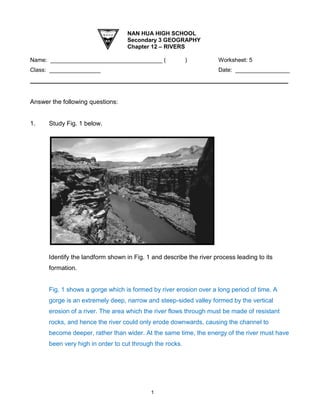
1.    Study Fig. 1 below.


      Identify the landform shown in Fig. 1 and describe the river process leading to its
      formation.


      Fig. 1 shows a gorge which is formed by river erosion over a long period of time. A
      gorge is an extremely deep, narrow and steep-sided valley formed by the vertical
      erosion of a river. The area which the river flows through must be made of resistant
      rocks, and hence the river could only erode downwards, causing the channel to
      become deeper, rather than wider. At the same time, the energy of the river must have
      been very high in order to cut through the rocks.


                                           1
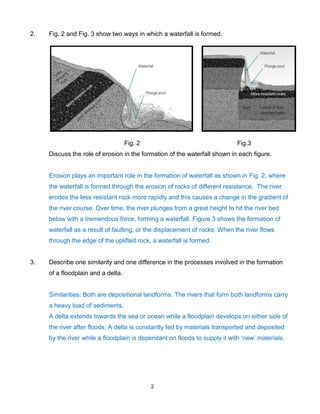
2.   Fig. 2 and Fig. 3 show two ways in which a waterfall is formed.


                                    Fig. 2                                  Fig.3
     Discuss the role of erosion in the formation of the waterfall shown in each figure.


     Erosion plays an important role in the formation of waterfall as shown in Fig. 2, where
     the waterfall is formed through the erosion of rocks of different resistance. The river
     erodes the less resistant rock more rapidly and this causes a change in the gradient of
     the river course. Over time, the river plunges from a great height to hit the river bed
     below with a tremendous force, forming a waterfall. Figure 3 shows the formation of
     waterfall as a result of faulting, or the displacement of rocks. When the river flows
     through the edge of the uplifted rock, a waterfall is formed.


3.   Describe one similarity and one difference in the processes involved in the formation
     of a floodplain and a delta.


     Similarities: Both are depositional landforms. The rivers that form both landforms carry
     a heavy load of sediments.
     A delta extends towards the sea or ocean while a floodplain develops on either side of
     the river after floods. A delta is constantly fed by materials transported and deposited
     by the river while a floodplain is dependant on floods to supply it with ‘new’ materials.


                                             2

Rivers Worksheet 5 Answers

  • 1.
    NAN HUA HIGHSCHOOL Secondary 3 GEOGRAPHY Chapter 12 – RIVERS Name: ___________________________________ ( ) Worksheet: 5 Class: ________________ Date: _________________ __________________________________________________________________________ Answer the following questions: 1. Study Fig. 1 below. Identify the landform shown in Fig. 1 and describe the river process leading to its formation. Fig. 1 shows a gorge which is formed by river erosion over a long period of time. A gorge is an extremely deep, narrow and steep-sided valley formed by the vertical erosion of a river. The area which the river flows through must be made of resistant rocks, and hence the river could only erode downwards, causing the channel to become deeper, rather than wider. At the same time, the energy of the river must have been very high in order to cut through the rocks. 1
  • 2.
    2. Fig. 2 and Fig. 3 show two ways in which a waterfall is formed. Fig. 2 Fig.3 Discuss the role of erosion in the formation of the waterfall shown in each figure. Erosion plays an important role in the formation of waterfall as shown in Fig. 2, where the waterfall is formed through the erosion of rocks of different resistance. The river erodes the less resistant rock more rapidly and this causes a change in the gradient of the river course. Over time, the river plunges from a great height to hit the river bed below with a tremendous force, forming a waterfall. Figure 3 shows the formation of waterfall as a result of faulting, or the displacement of rocks. When the river flows through the edge of the uplifted rock, a waterfall is formed. 3. Describe one similarity and one difference in the processes involved in the formation of a floodplain and a delta. Similarities: Both are depositional landforms. The rivers that form both landforms carry a heavy load of sediments. A delta extends towards the sea or ocean while a floodplain develops on either side of the river after floods. A delta is constantly fed by materials transported and deposited by the river while a floodplain is dependant on floods to supply it with ‘new’ materials. 2