RISK ASSESSMENT
AND
RISK COMMUNIATION
1
Hazard Analysis
Risk Assessment
Risk Control &
communication
HAZARD IDENTIFICATION AND RISK ASSESSMENT
(HIRA)
2
Hazard-The inherent capability of a natural or man-made agent or process to
adversely affect human life, health, property, or activity, with the potential to cause a
disease, epidemic, accident, or disaster1
Hazard assessment is the identification of a hazard (or number of potential
hazards) causing the event and the associated adverse effects.
1. Asante-Duah K. Public Health Risk Assessment for Human Exposure to Chemicals. Dordrecht: Kluwer; 2002.
3
SCOPE OF HIRA
• Industries/Occupational Health
• Food safety
• Natural disasters
• Environment
4
• Occupational Health and Safety Assessment Series (OHSAS) Project Group are
regarded as the basic documents available on the subject published in 1999
• The series consisted of two specifications viz. OHSAS 18001 and OHSAS 18002
The OHSAS 18001 provide requirements for an OHS management systems and
OHSAS 18002 gave implementation guidelines
• As of 2005, around 16,000 organizations in more than 80 countries are using the
OHSAS 18001 specification
• BSI Group adopted OHSAS 18001 and OHSAS 18002 as a British Standard and
published as BS OHSAS 18001 and BS OHSAS 18002 in 2008
HAZARD IDENTIFICATION AND RISK ASSESSMENT (HIRA)
5
• OHSAS 18001 has been designed to be compatible with ISO 14001:2004
(Environmental) management strategy.
• ISO 14001 focuses on managing an organization’s impact on the external
environment, to reduce pollution and comply with regulations
• OHSAS 18001 focuses on managing an organization’s internal environment to
ensure a safe and healthy workplace.
• A new Health and Safety Management System standard called ISO 45001 is
expected to be published – this will then supersede OHSAS 18001
6
7
8
RISK ASSESSMENT IN FOOD SAFETY
• Codex Alimentarius (Latin for "Food Code") is a collection of internationally
recognized standards, codes of practice, guidelines, and other
recommendations relating to foods, food production, and food safety.
• These are developed and maintained by the Codex Alimentarius Commission, a
body that was established in 1961 by the Food and Agriculture Organization of
the United Nations (FAO), was joined by the World Health Organization (WHO)
in 1962
9
10
HIRA in INDIA
• Amendment of the Indian Factories Act (1948) in 1987, incorporated the
Section 41A, the risk assessment study has become necessary for all hazardous
process industries
• The Manufacture, Storage, and Import of Hazardous Chemicals Rules, 1989,
framed under the Environment (Protection) Act--- identify the hazards and
carry out a risk assessment by using suitable techniques.
• Bureau of Indian Standards -with the same number as of OHSAS
i.e.18001:2007. The Indian Standard, IS 18001 (2007) is pertaining to
Occupational Health and Safety Management Systems Requirements with
Guidance for Use.
11
RISK ASSESSMENT
It is the process of evaluating the risk arising from hazard
Risk Probability Severity
12
RISK MATRIX
3 x 3 Matrix Model
5 x 5 Matrix Model
6 x 6 Matrix Model
7 x 4 Matrix Model
and so on……
13
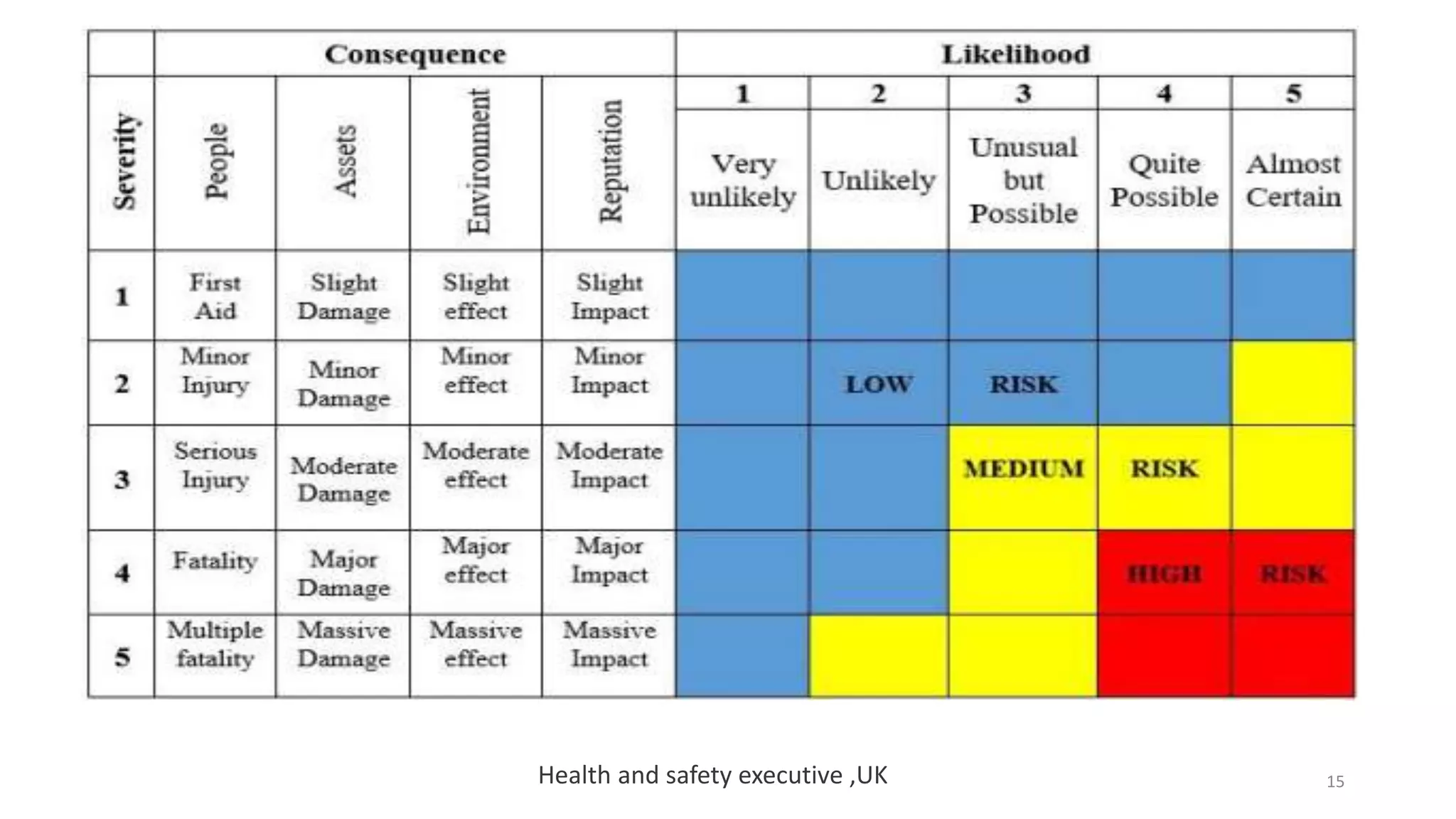
Qualitative matrix
14
Health and safety executive ,UK 15
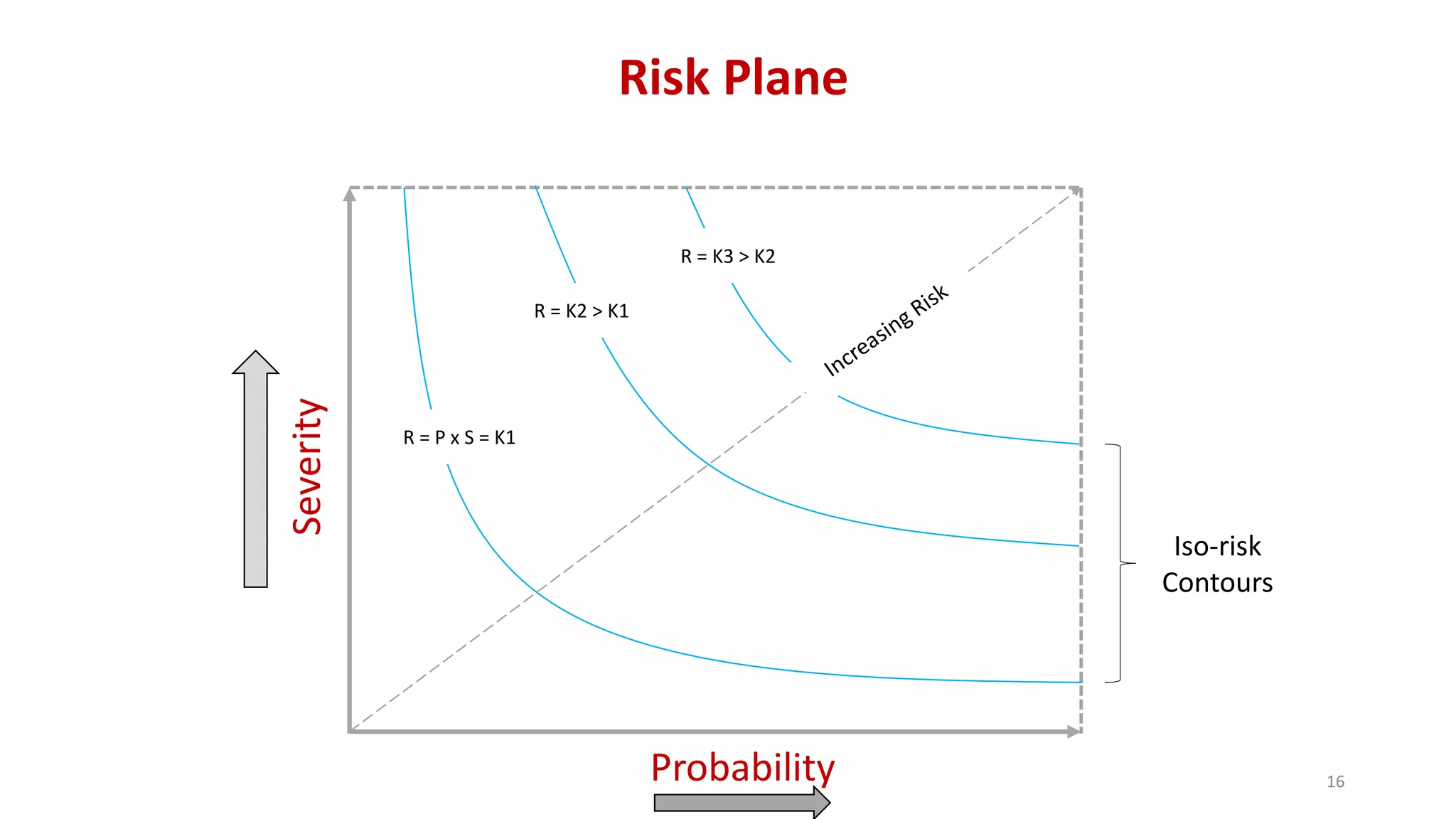
Severity
Probability
R = P x S = K1
R = K2 > K1
R = K3 > K2
Iso-risk
Contours
Risk Plane
16
Severity
Probability
R = P x S = K1
R = K2 > K1
R = K3 > K2
Risk rejection
Risk control
Risk acceptance
Risk Plane
17
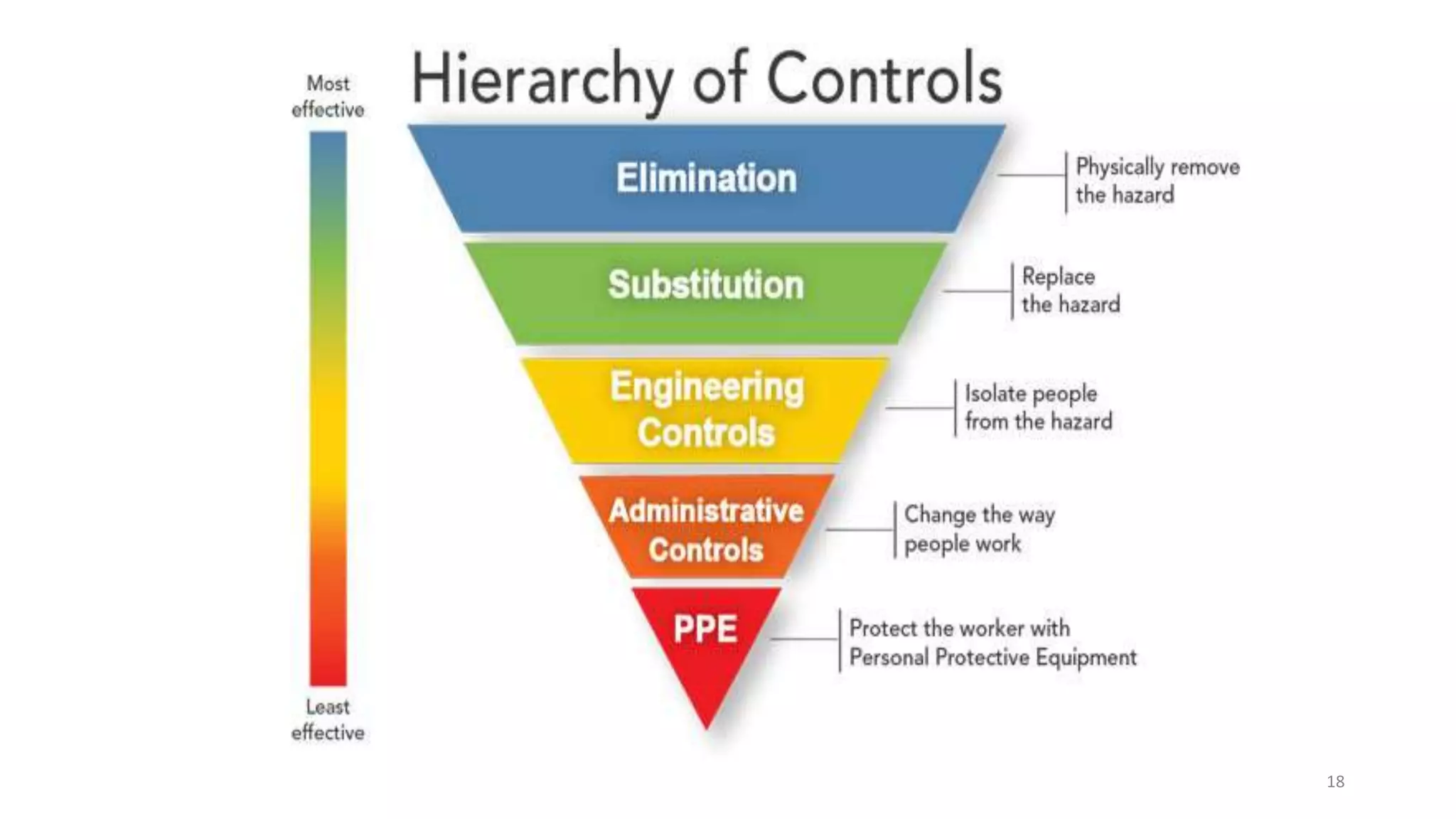
18
19
RISK COMMUNICATION
20
RISK COMMUNICATION
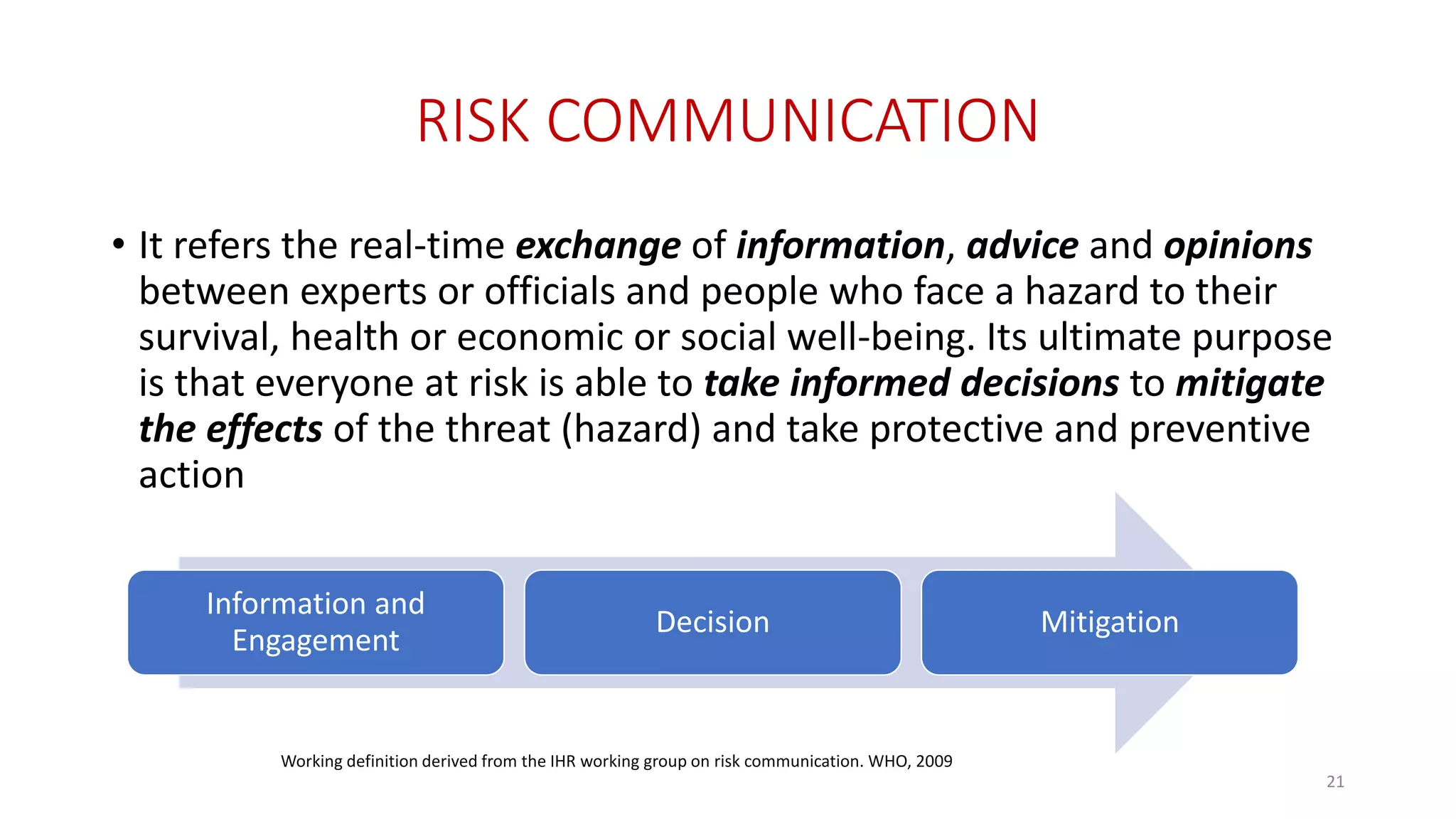
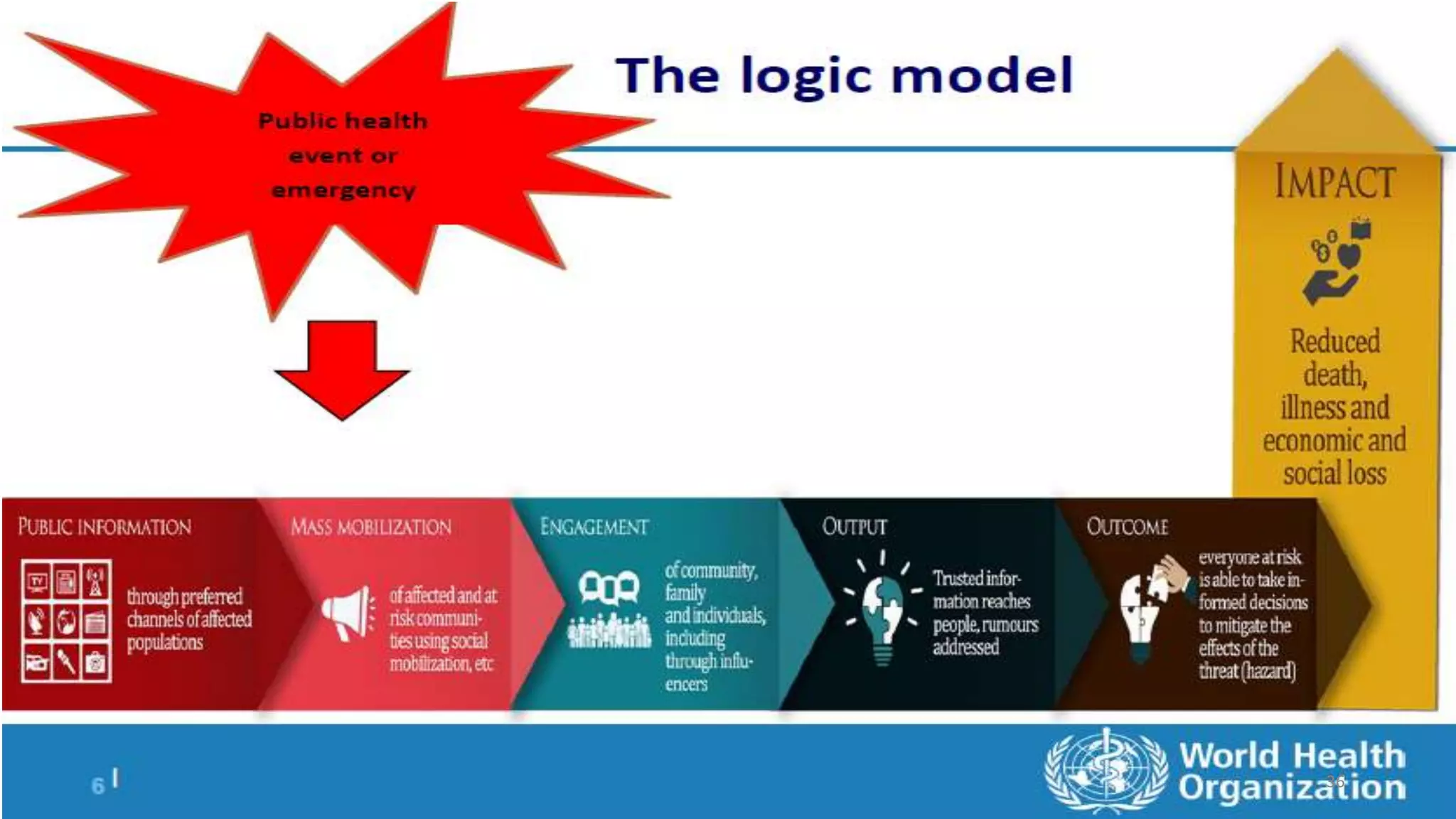
• It refers the real-time exchange of information, advice and opinions
between experts or officials and people who face a hazard to their
survival, health or economic or social well-being. Its ultimate purpose
is that everyone at risk is able to take informed decisions to mitigate
the effects of the threat (hazard) and take protective and preventive
action
Information and
Engagement
Decision Mitigation
21
Working definition derived from the IHR working group on risk communication. WHO, 2009
• Risk communication is the act of conveying or transmitting
information between interested parties about
levels of health or environmental risks
the significance or meaning of health or environmental risks
decisions, action, or policies aimed at controlling health or
environmental risks
22Cavello, 1987
Information and education
Behaviour change and protective action
Disaster warnings and emergency information
Joint problem solving and conflict resolution
• Risk communication can be broken into four
areas:
23Cavello, 1988.
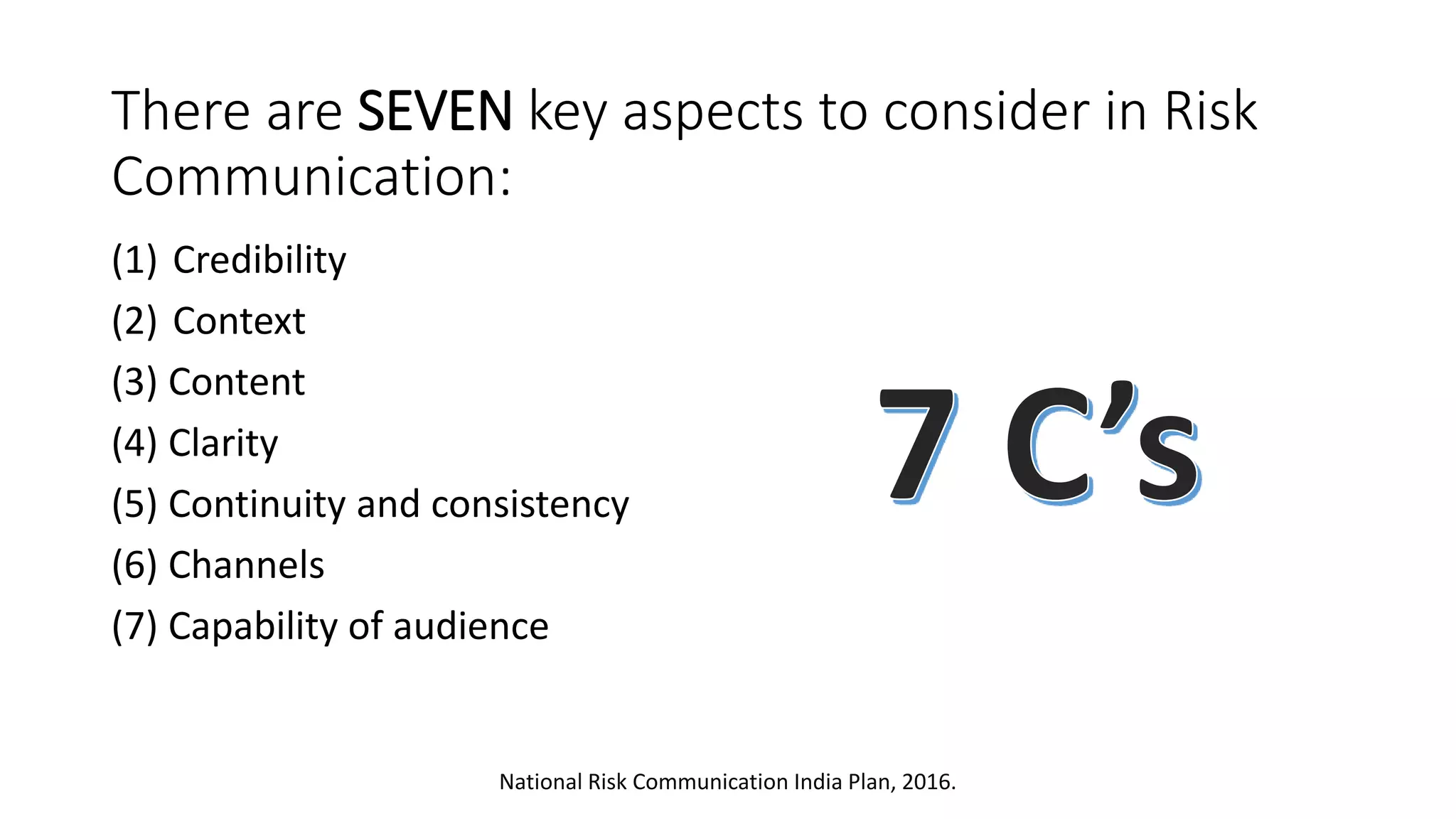
There are SEVEN key aspects to consider in Risk
Communication:
(1) Credibility
(2) Context
(3) Content
(4) Clarity
(5) Continuity and consistency
(6) Channels
(7) Capability of audience
National Risk Communication India Plan, 2016.
Principles of Risk Communication
• Timing
• Transparent
• Trust
• Empathy
• Accurate
• Invalidate rumors
• Media monitoring Evidence
based
Information
Values
Expression of
care
Credibility
25
Accuracy of
information
+
Speed of release
Empathy
+
Openness
Credibility
Trust
Successful
communication
26
Benefits of Risk Communication:
• Promote informed decision making among public
• Improves behavior for preventive actions, promotes transparency and
accountability
• Builds trust with individuals, community leaders, health workers and
policy makers
27
“People are disturbed, not by things, but by the view they take
of them.”
-Epictetus
Risk communication comprises two facets: “scaring people” and “calming people
down” . Risk communication tries to create a level of “outrage ” appropriate to the
level of hazard.
28
Real Risk Is it the same? Perceived Risk
29
RISK PERCEPTION
People’s understanding and response to the risk in terms of change in behavior for tackling
the situation, which may or may not be appropriate to the risk they are exposed to.
National Risk Communication Plan 2016 30
Real Risk Is it the same? Perceived Risk
Probability x Severity Hazard + Outrage
31
• “Outrage” refers to the level of public anger and anxiety about an
environmental risk issue
• Outrage can have a greater influence on citizens' reactions to a hazard
than the scientifically calculated risk
• When people become outraged, they may overreact
• If people are not outraged, they may under-react
OUTRAGE
32
33
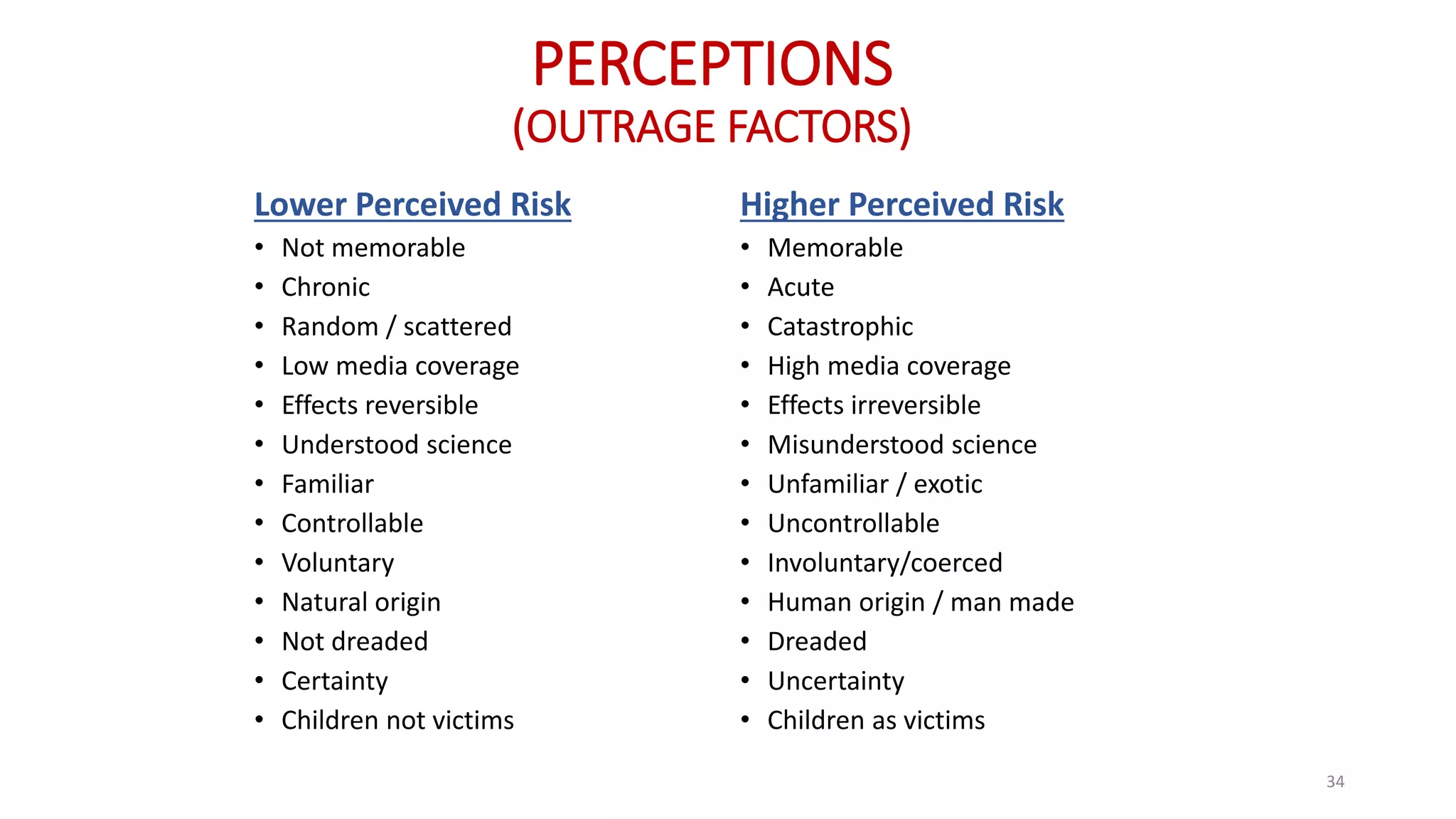
PERCEPTIONS
(OUTRAGE FACTORS)
Lower Perceived Risk
• Not memorable
• Chronic
• Random / scattered
• Low media coverage
• Effects reversible
• Understood science
• Familiar
• Controllable
• Voluntary
• Natural origin
• Not dreaded
• Certainty
• Children not victims
Higher Perceived Risk
• Memorable
• Acute
• Catastrophic
• High media coverage
• Effects irreversible
• Misunderstood science
• Unfamiliar / exotic
• Uncontrollable
• Involuntary/coerced
• Human origin / man made
• Dreaded
• Uncertainty
• Children as victims
34
Sandman (1993) draws seven conclusions about hazard and outrage:
• The public responds more to outrage than to hazard
• Activists and media may amplify the outrage but they do not create it
• Outraged people do not pay much attention to hazard data
• Outrage is not just a distraction from considering the real hazard - both are legitimate
and must be addressed
• When the hazard is high, risk communicators try to induce more outrage
• Conversely, when the hazard is low, risk communicators try to reduce the outrage
• Companies and agencies cannot do much about outrage until their own organizations
are changed. 35
36
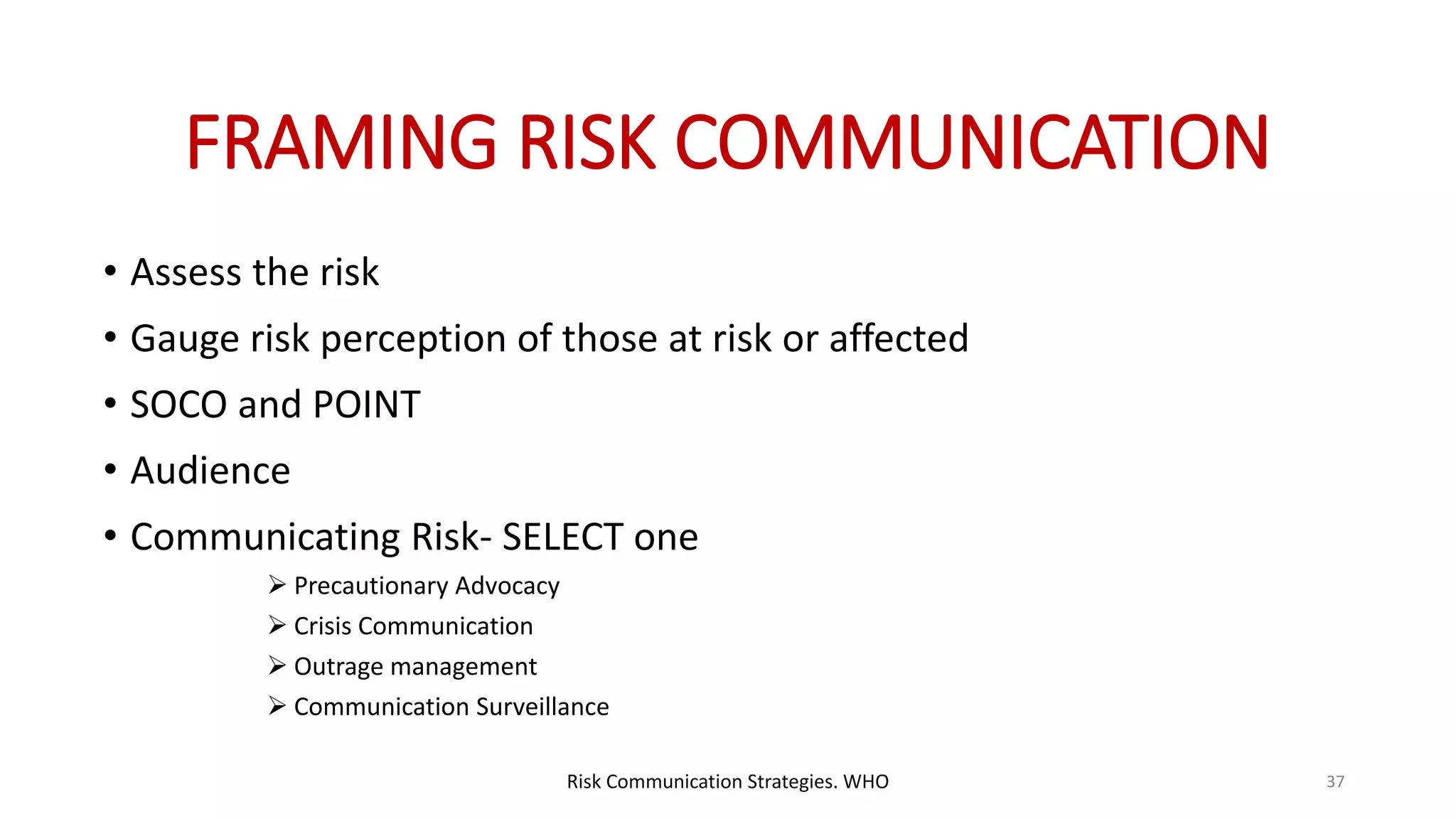
FRAMING RISK COMMUNICATION
• Assess the risk
• Gauge risk perception of those at risk or affected
• SOCO and POINT
• Audience
• Communicating Risk- SELECT one
 Precautionary Advocacy
 Crisis Communication
 Outrage management
 Communication Surveillance
37Risk Communication Strategies. WHO
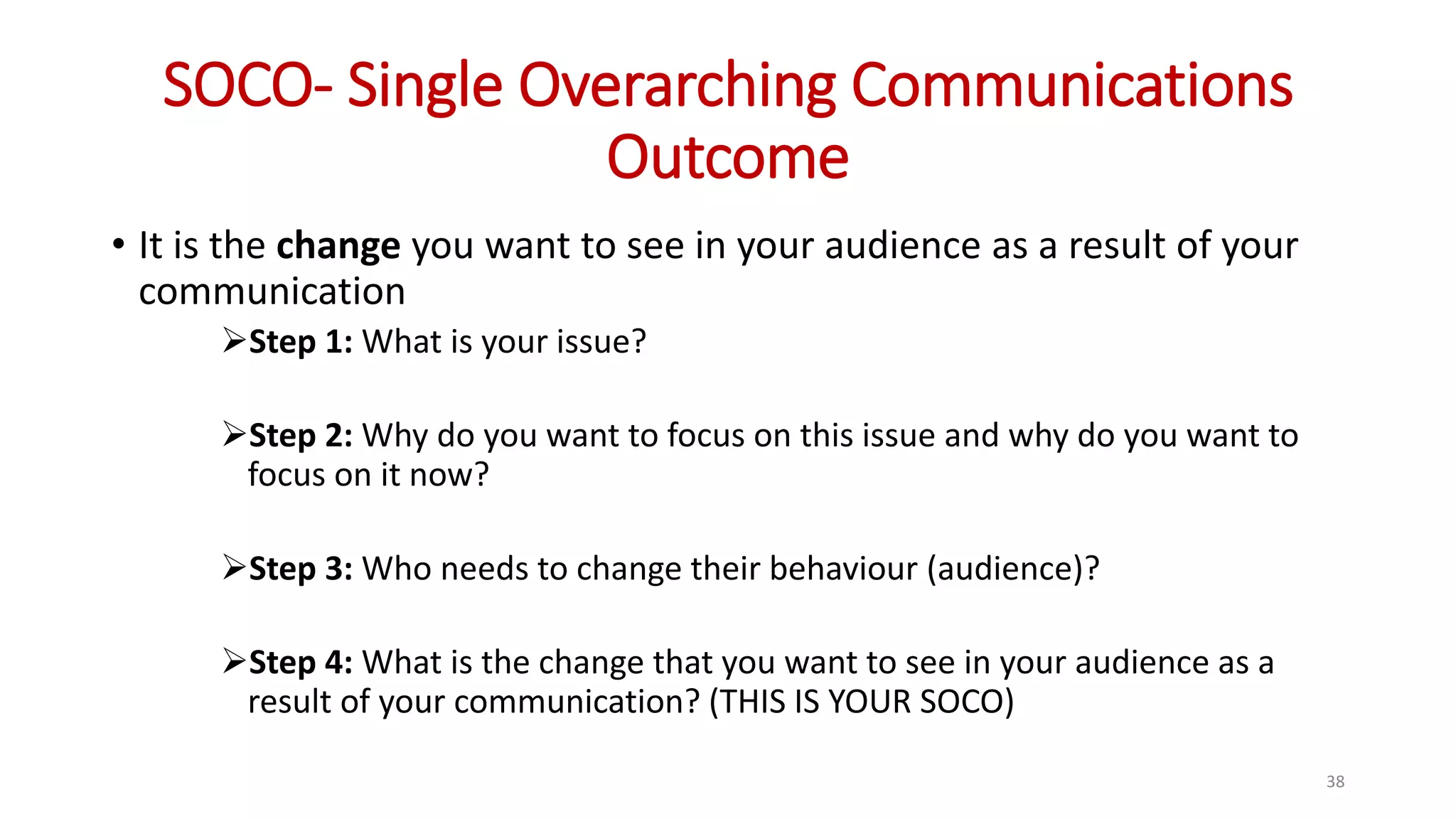
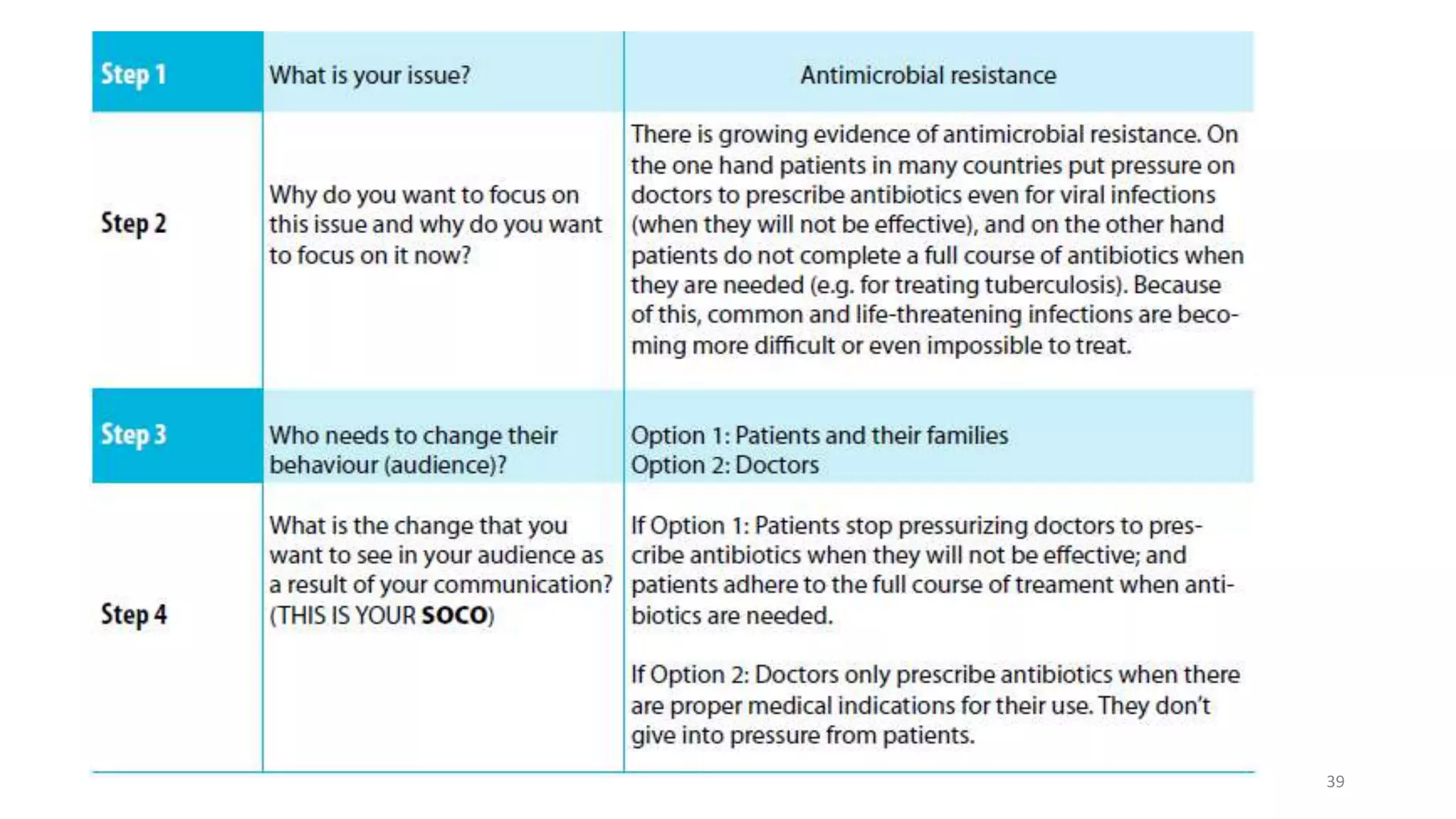
SOCO- Single Overarching Communications
Outcome
• It is the change you want to see in your audience as a result of your
communication
Step 1: What is your issue?
Step 2: Why do you want to focus on this issue and why do you want to
focus on it now?
Step 3: Who needs to change their behaviour (audience)?
Step 4: What is the change that you want to see in your audience as a
result of your communication? (THIS IS YOUR SOCO)
38
39
POINT
40
THE AUDIENCE
41
42
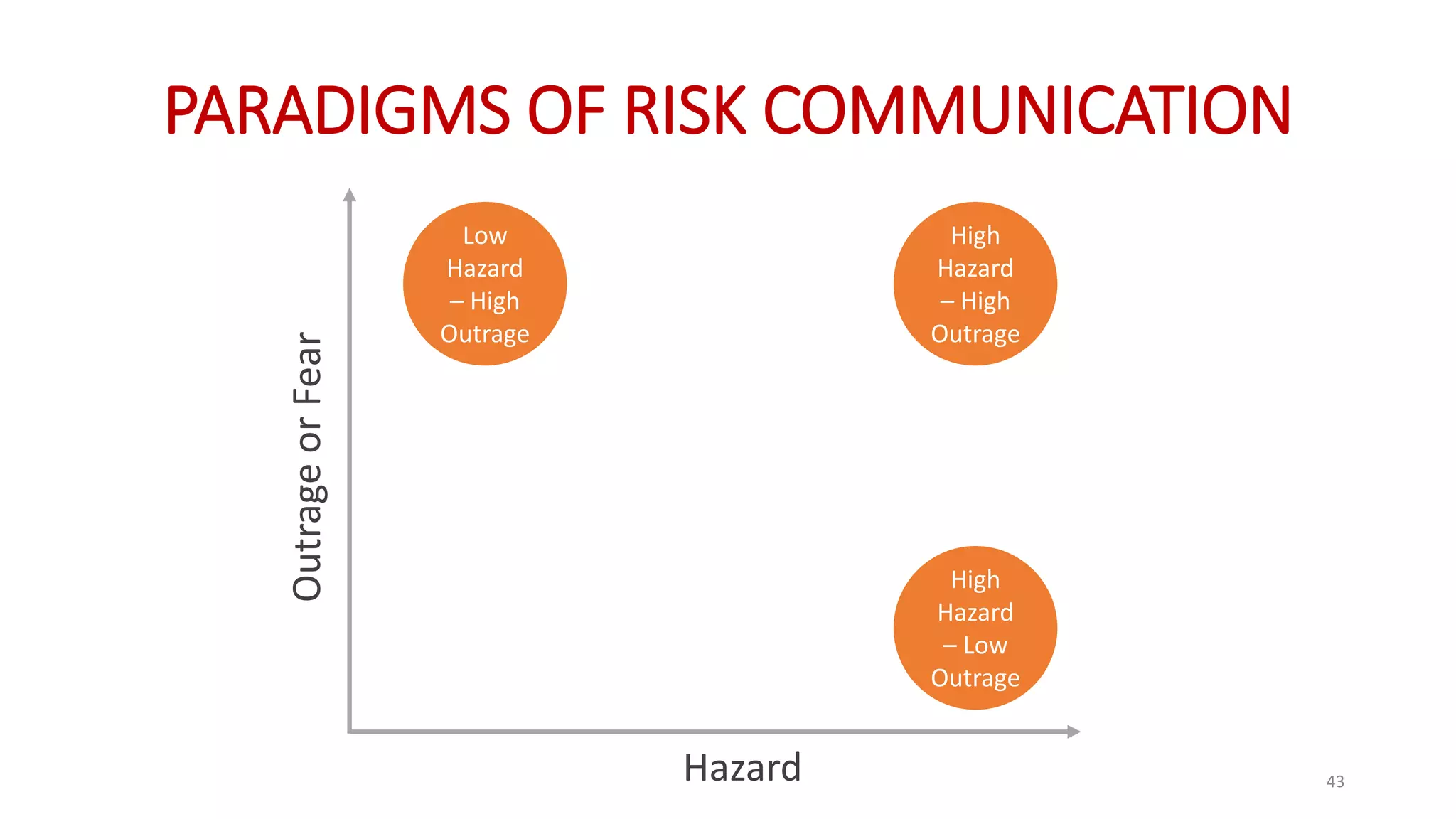
PARADIGMS OF RISK COMMUNICATION
High
Hazard
– Low
Outrage
High
Hazard
– High
Outrage
Low
Hazard
– High
Outrage
OutrageorFear
Hazard 43
Barriers Audience inattention; audience size; media
resistance; need to package everything into short
sound bites; policy implications of trying to provoke
outrage
High hazard low outrage
Precaution
Advocacy
OutrageorFear
Hazard
Audiences Apathetic and inattentive, uninterested in
talking back
Task provoking more outrage without scaring people
Medium Monologue via the mass media
Silver lining There is little need to listen, or to address
audience concerns, reservations, or objections; this
audience has few if any
44
Low hazard high outrage
OutrageorFear
Hazard
Audiences Outraged, largely at you
Task To reduce audience outrage by listening,
acknowledging, apologizing, sharing control and credit,
etc
Medium In-person dialogue ... in which the "audience"
does most of the talking.
Barriers The audience's outrage at you; your own
outrage at the audience; coming to grips with the need
to focus on outrage when you'd really rather talk about
substance
Silver lining At least you have their attention, though it
is hostile attention
Outrage
Manage
ment
45
High hazard high outrage
OutrageorFear
Hazard
Audiences Huge and very upset. In a crisis, the outrage is mostly fear
and misery rather than anger; if either is unbearable, it may flip into
denial or escalate into terror or depression
Task To help the audience bear its fear and misery. Key strategies
include avoiding over-reassurance, sharing dilemmas, being human
and empathic, providing things to do, and acknowledging uncertainty
Medium Monologue via the mass media, and dialogue in person to
the extent possible. There is no "public" in a crisis; everyone's a
stakeholder
Barriers The stress of the crisis itself
Silver lining Though outrage is very high, it is not directed at you. Any
anger at you is put aside until the crisis is past
Crisis
Commu
nication
“We’ll get through
this together”
46
OutrageorFear
Hazard
• Monitor communications surveillance to identify and address
outrage early (before the situation moves to outrage
management)
• Disseminate general information, which is usually sufficient, but
watch out for problems early
47
Risk Communication:
Need to consider
• Message (information)
• Communicator (origination point of message)
• Channel (path)
• Receiver (termination point)
48
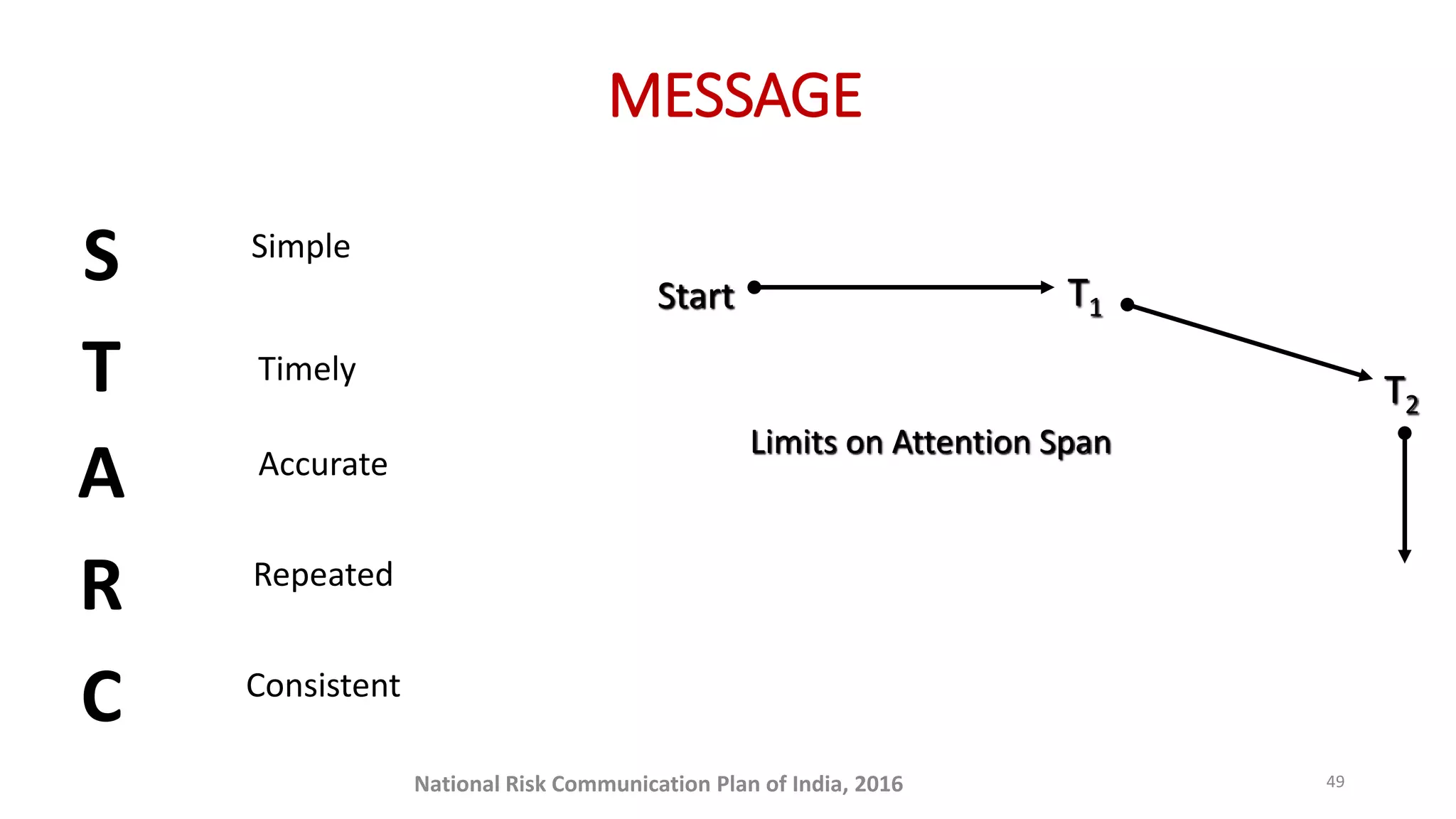
MESSAGE
S
T
A
R
C
Simple
Timely
Accurate
Repeated
Consistent
T1
T2
Limits on Attention Span
Start
49National Risk Communication Plan of India, 2016
50
51
52
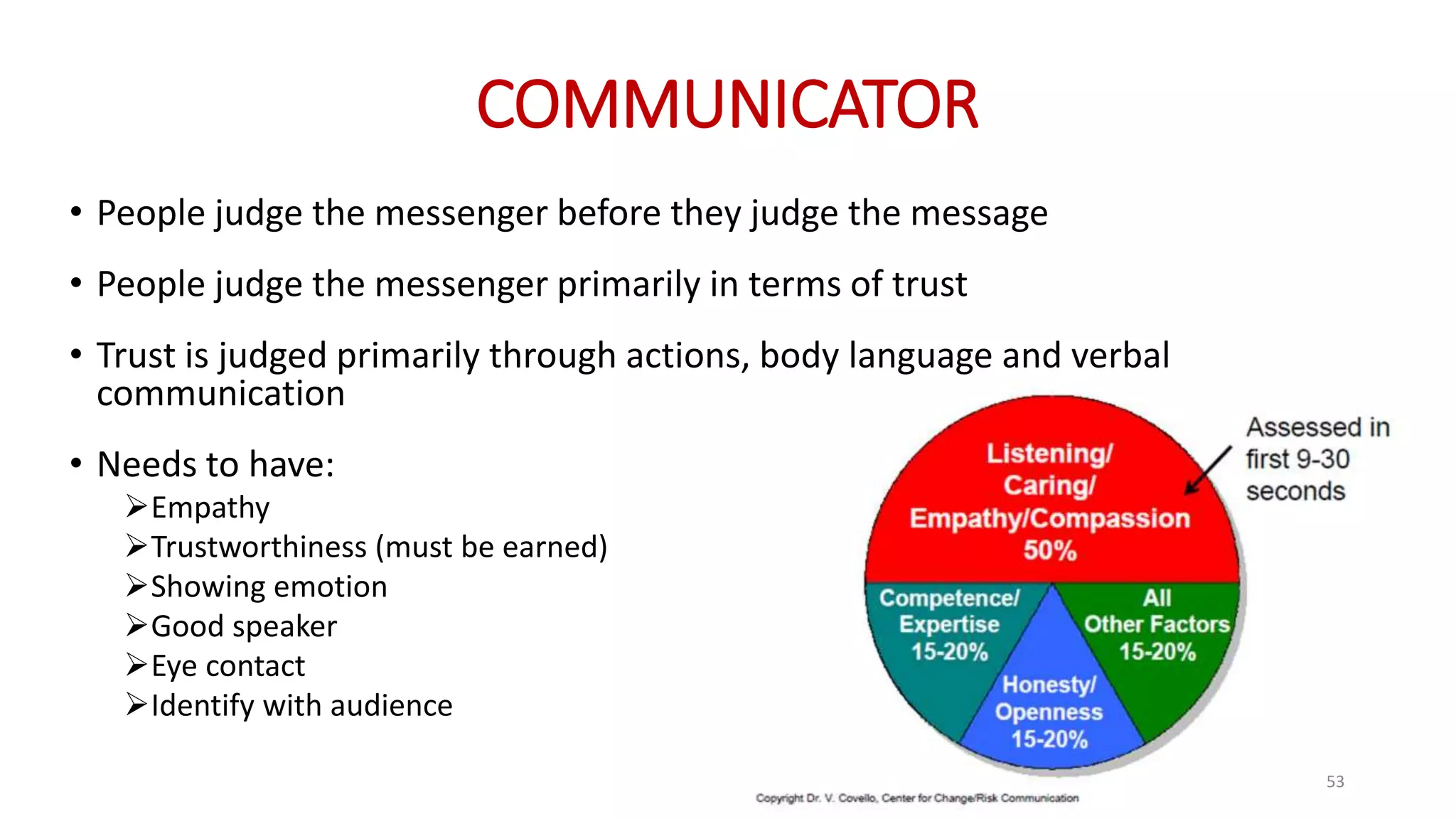
• People judge the messenger before they judge the message
• People judge the messenger primarily in terms of trust
• Trust is judged primarily through actions, body language and verbal
communication
• Needs to have:
Empathy
Trustworthiness (must be earned)
Showing emotion
Good speaker
Eye contact
Identify with audience
COMMUNICATOR
53
CHANNEL OR MEDIUM
• Know your audiences' characteristics and practices to determine what
platform to use
PUBLIC COMMUNICATION CHANNELS-
• Quickest way for reaching wide audiences within the shortest time,
in a cost-effective way – to get information out and to listen to
concerns
• If used appropriately, communication can help maintain trust
• It is important to provide updates as quickly as possible so that
people can make informed decisions
• Respond to people’s concerns and fears
54
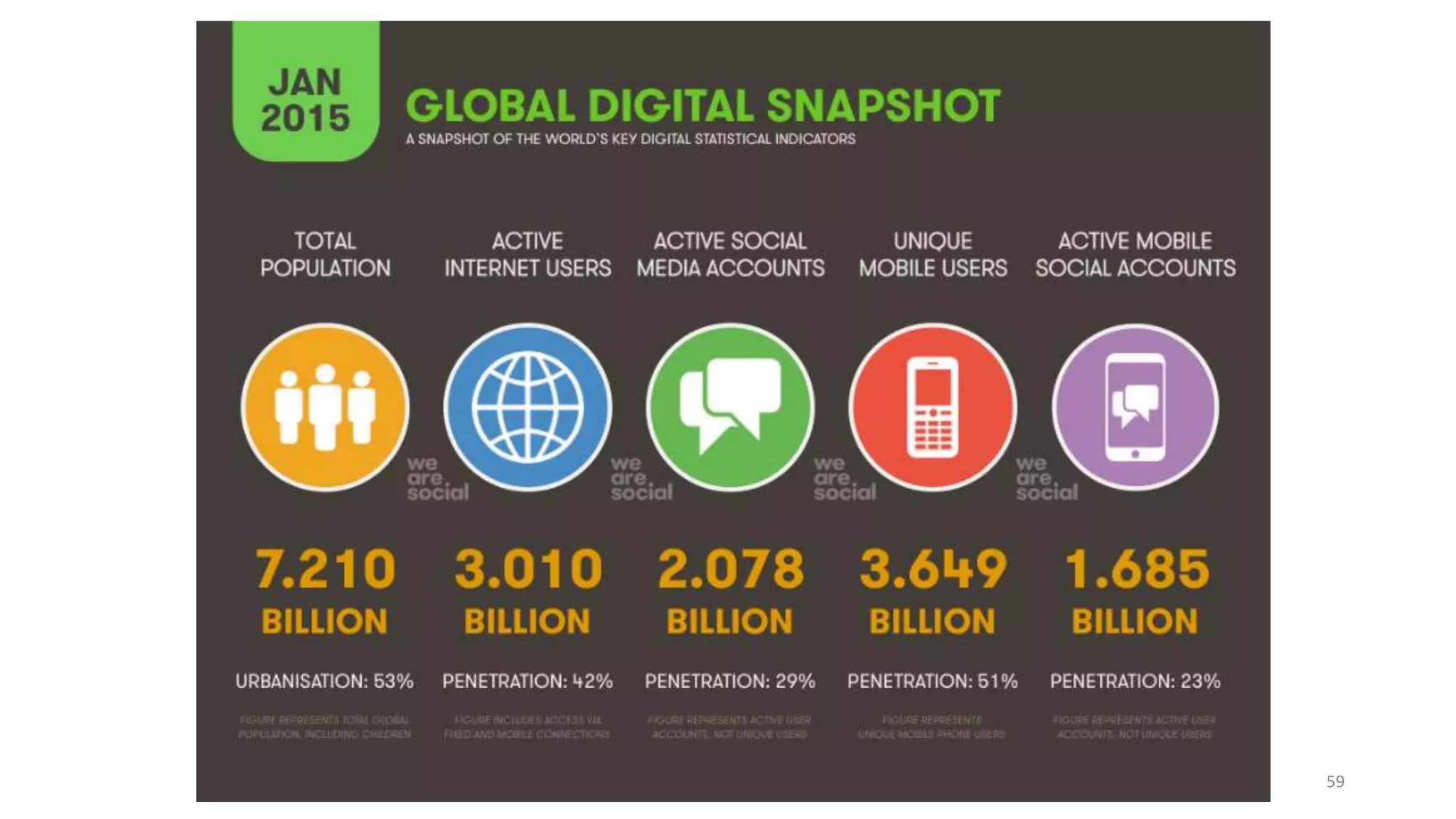
Social media can connect millions of people within a short
period of time
55
56
Social mobilization is a process that
engages and motivates a wide range of
partners and allies at national and local
levels to raise awareness of and demand
for a particular development objective
through dialogue
- UNICEF
57
58
59
RECEIVERS PERSPECTIVE
When you consider the communication needs of your audience, bear in mind the
following characteristics
• Education
• Income level
• Current subject knowledge and experience
• Age
• Languages spoken and read
• Cultural background norms and values
• Geographic location
• Religious beliefs
60
How People Learn
0
10
20
30
40
50
60
%
16-24 25-34 35-44 45-54 55+
Age groups
oral
visual
written
EPA, 2004, Evaluation of Mercury Risk
Communication Messages.
61
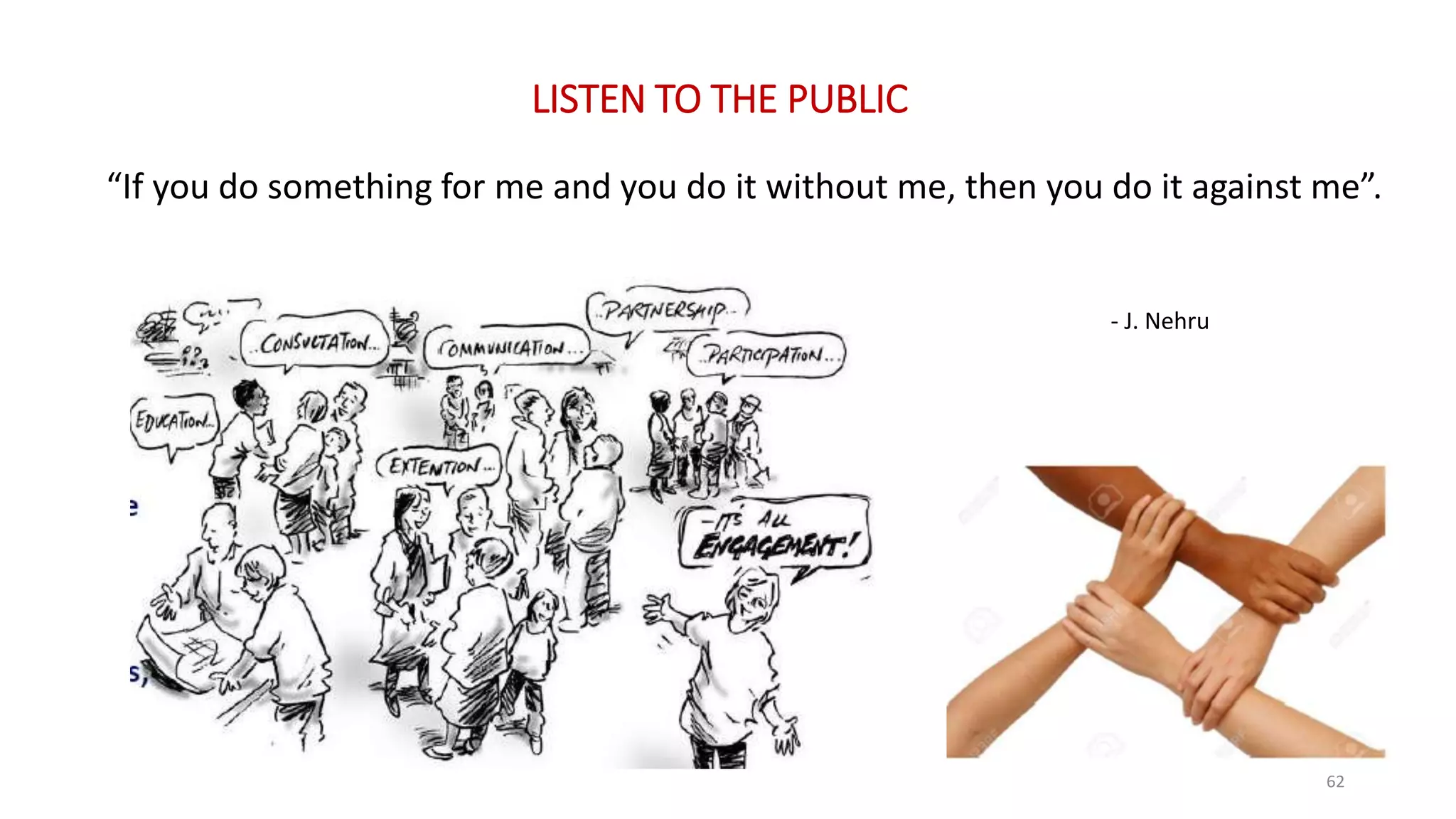
LISTEN TO THE PUBLIC
“If you do something for me and you do it without me, then you do it against me”.
- J. Nehru
62
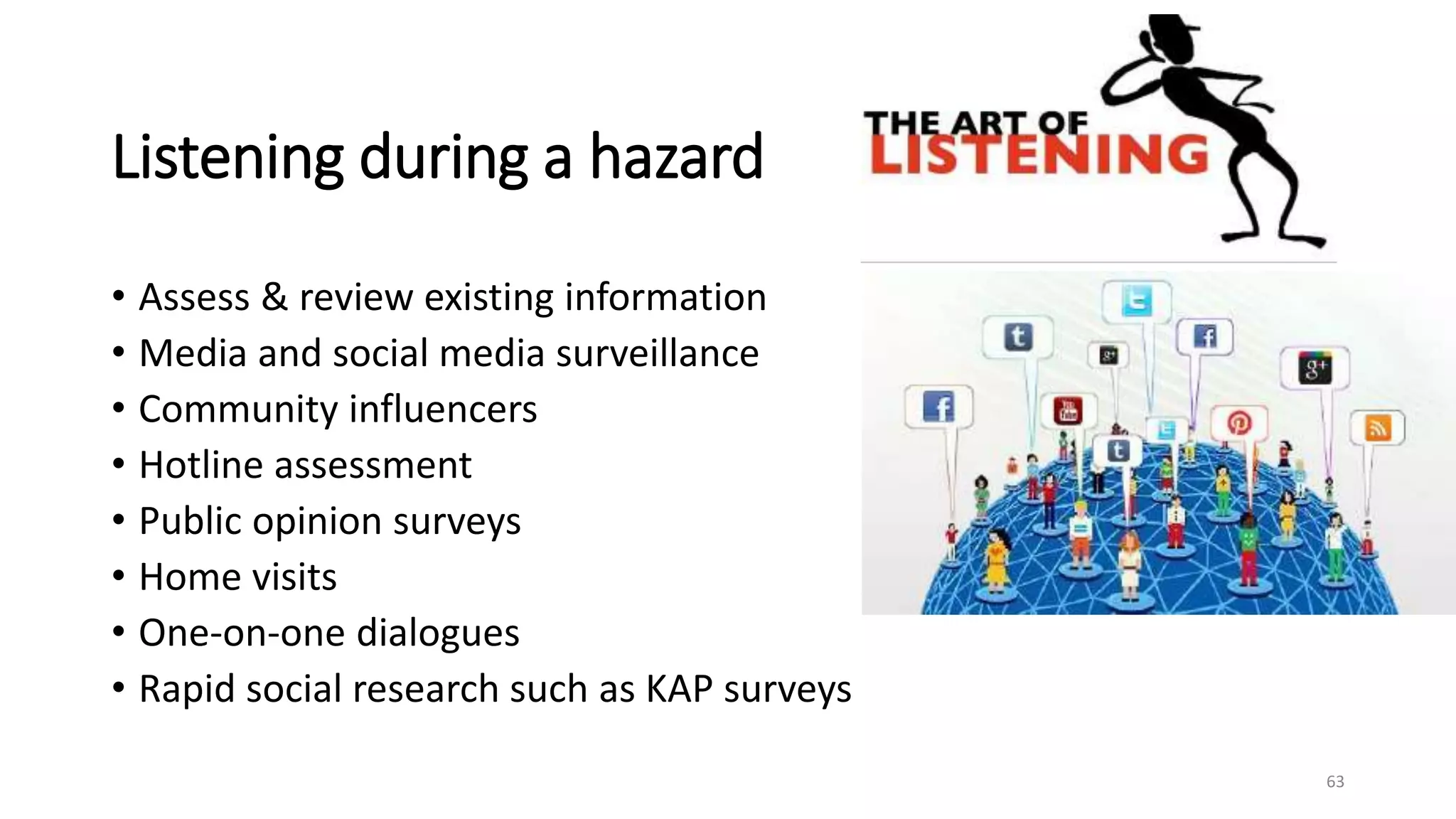
Listening during a hazard
• Assess & review existing information
• Media and social media surveillance
• Community influencers
• Hotline assessment
• Public opinion surveys
• Home visits
• One-on-one dialogues
• Rapid social research such as KAP surveys
63
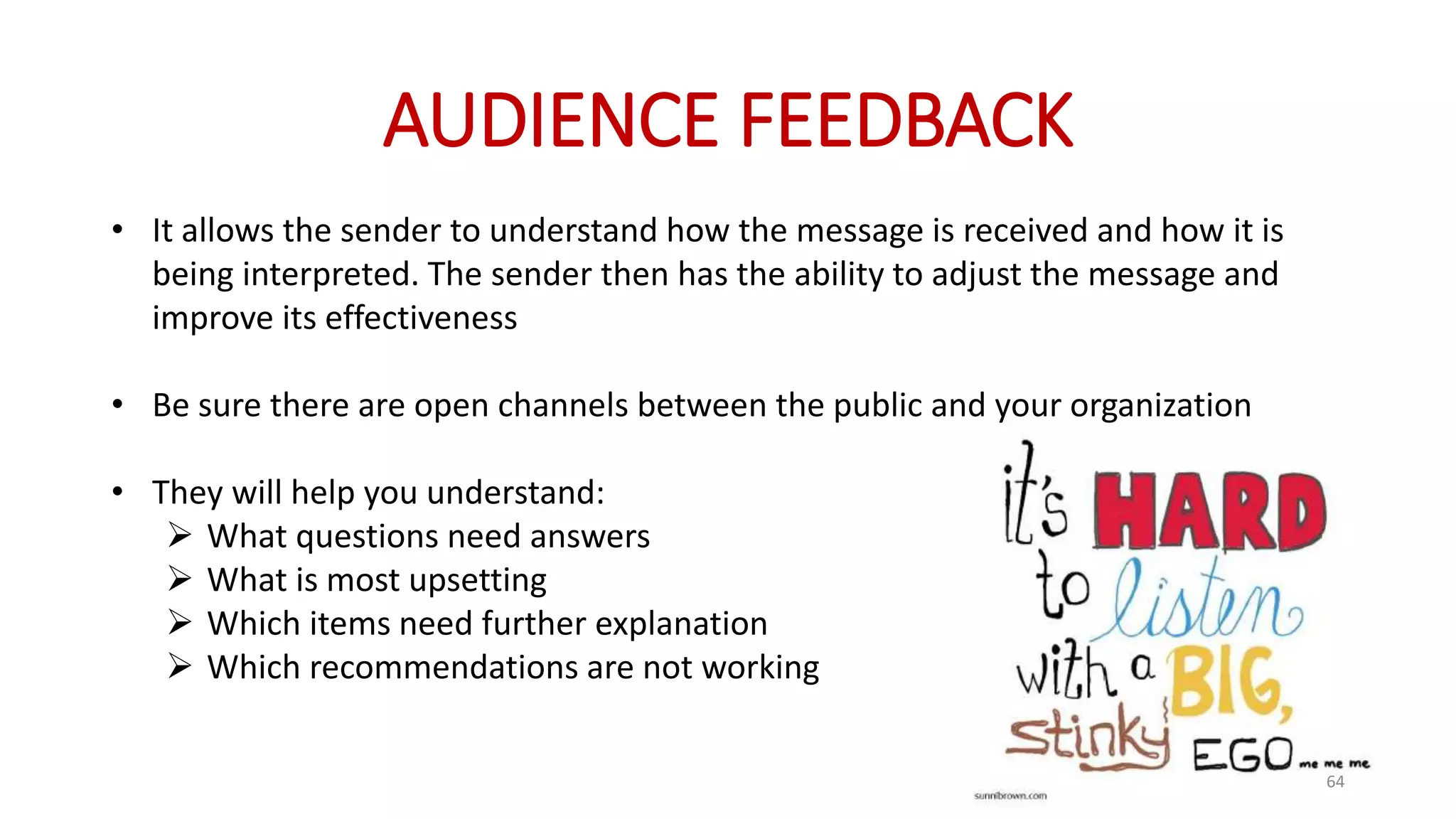
AUDIENCE FEEDBACK
• It allows the sender to understand how the message is received and how it is
being interpreted. The sender then has the ability to adjust the message and
improve its effectiveness
• Be sure there are open channels between the public and your organization
• They will help you understand:
 What questions need answers
 What is most upsetting
 Which items need further explanation
 Which recommendations are not working
64
The two factors that influence a
rumour are its importance to the
listener and its ambiguity.
Rumours travel when events are
important for individuals, and when the
news received about the rumours is
either lacking information or is
ambiguous. The ambiguity may arise
from the fact that the news is not clearly
reported, or from the fact that
conflicting versions of the news have
reached the individual, or from the
person's lack of understanding.
65
Helio Fred Gracia, Management and Communication,
New York University
ADDRESSING RUMOURS: ENGAGEMENT
• Rumours fly in the absence of credible and frequent
information.
• Therefore, we must give people the most accurate
possible information, promptly and completely.
– Communicate and engage early
– Be transparent
– Listen to their concerns
– Show empathy
– Provide information on what is being done
– Let the community know that they are part of the
solution
Target the Source66
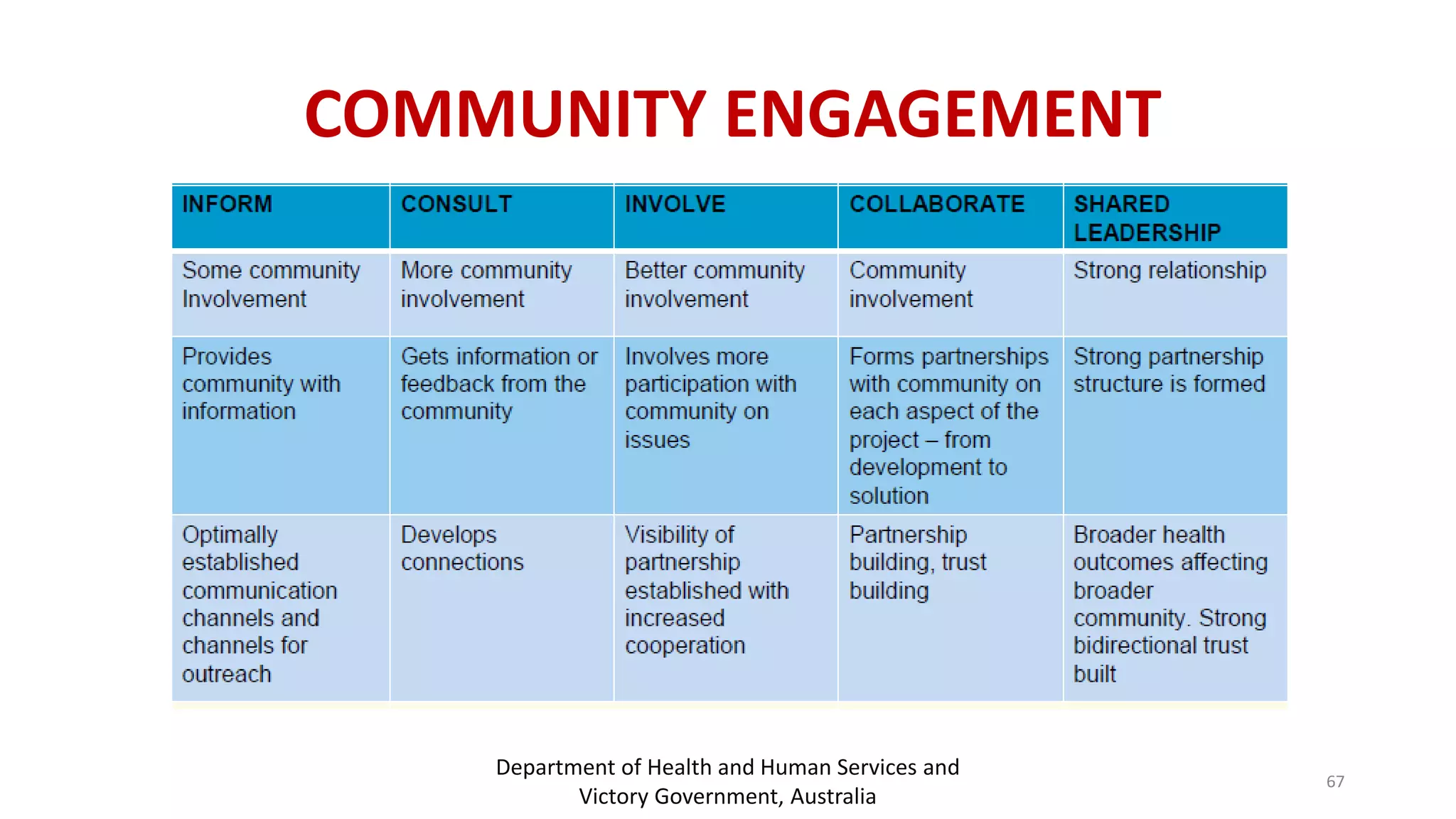
COMMUNITY ENGAGEMENT
67
Department of Health and Human Services and
Victory Government, Australia
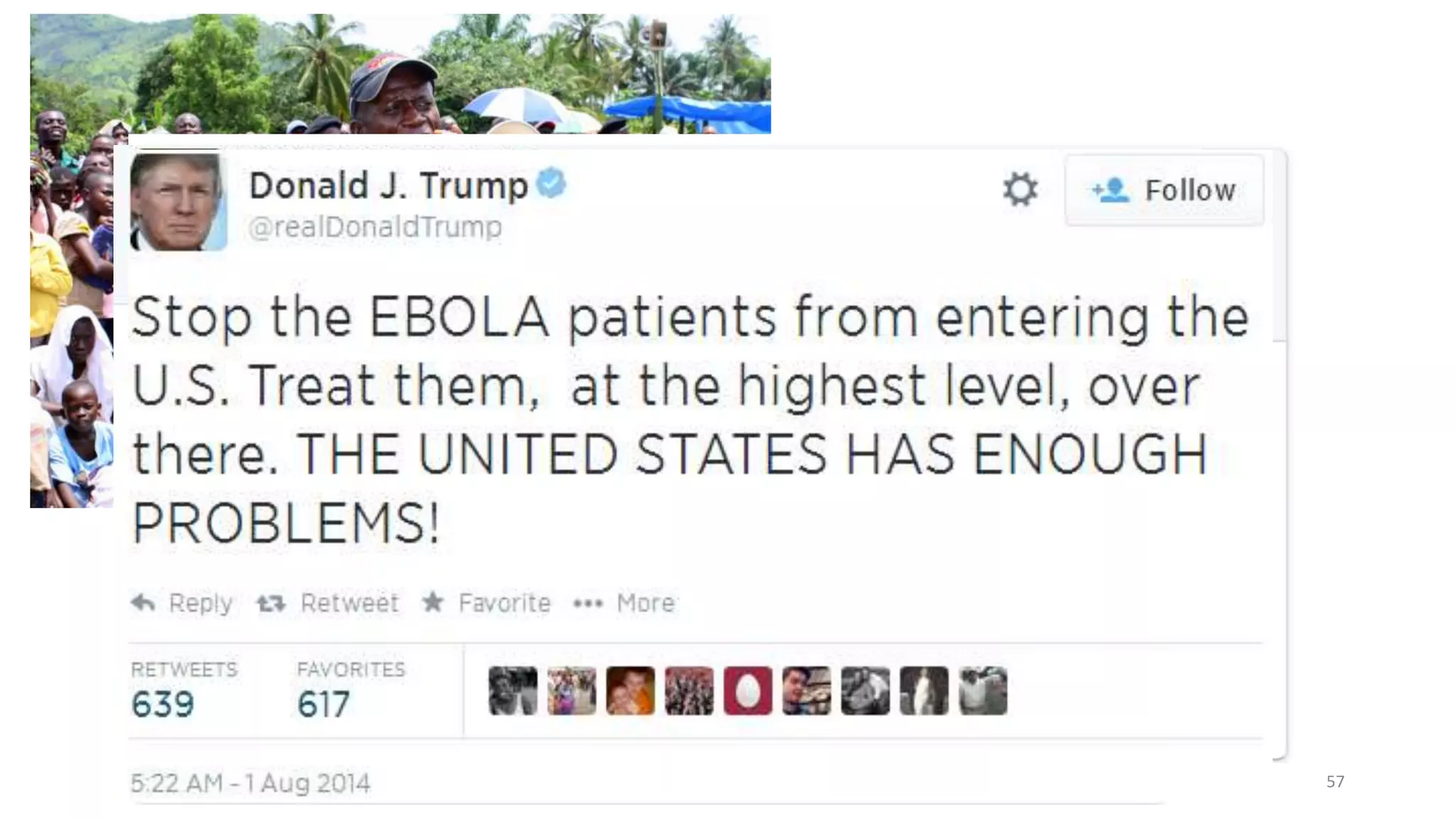
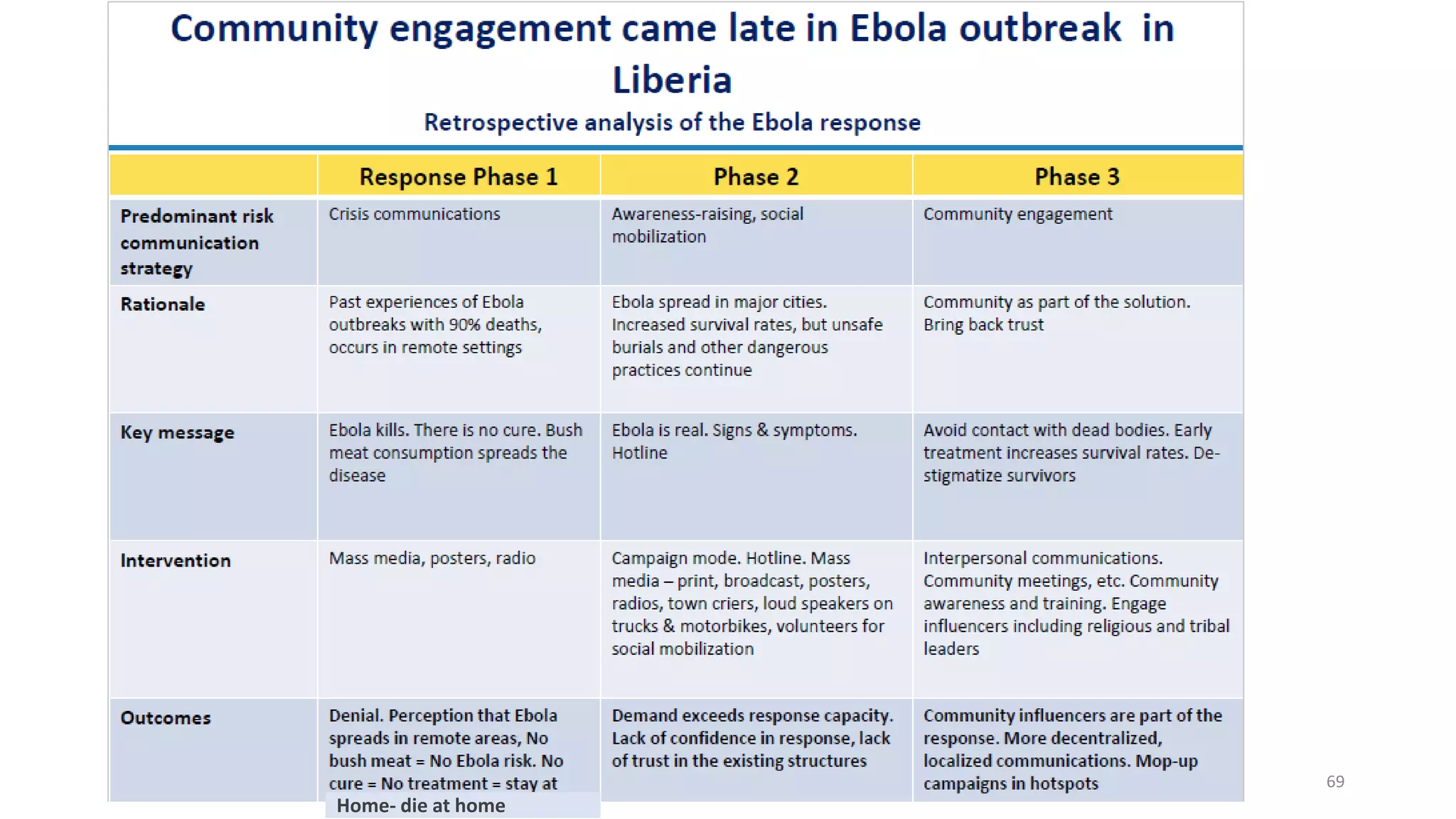
THE PERCEPTION TRAP - 2014 EBOLA IN WEST
AFRICA
• Trap 1- Fear: Ebola = death
Everybody who has Ebola will die
Ebola is a curse
• Trap 2- Disbelief due to distrust
The authorities can't handle
the situation
The foreigners are here to extract
organs for scientific experiments
• Trap 3- Dismissal
Don't want to know
Don't want to believe
Don't want to accept
68
Home- die at home
69
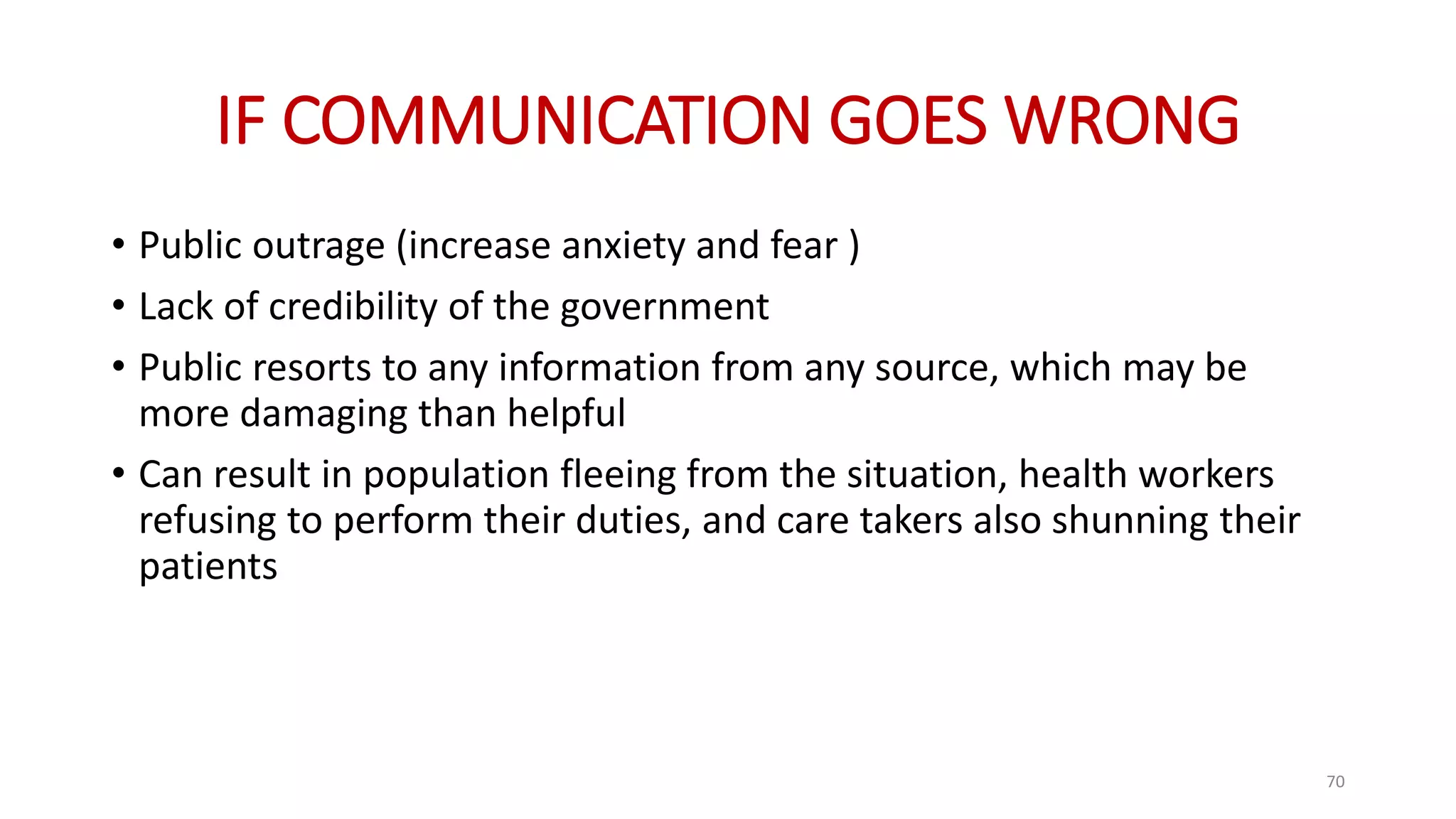
IF COMMUNICATION GOES WRONG
• Public outrage (increase anxiety and fear )
• Lack of credibility of the government
• Public resorts to any information from any source, which may be
more damaging than helpful
• Can result in population fleeing from the situation, health workers
refusing to perform their duties, and care takers also shunning their
patients
70
71
THANKYOU
72

Risk assessment and communication

  • 1.
  • 2.
    Hazard Analysis Risk Assessment RiskControl & communication HAZARD IDENTIFICATION AND RISK ASSESSMENT (HIRA) 2
  • 3.
    Hazard-The inherent capabilityof a natural or man-made agent or process to adversely affect human life, health, property, or activity, with the potential to cause a disease, epidemic, accident, or disaster1 Hazard assessment is the identification of a hazard (or number of potential hazards) causing the event and the associated adverse effects. 1. Asante-Duah K. Public Health Risk Assessment for Human Exposure to Chemicals. Dordrecht: Kluwer; 2002. 3
  • 4.
    SCOPE OF HIRA •Industries/Occupational Health • Food safety • Natural disasters • Environment 4
  • 5.
    • Occupational Healthand Safety Assessment Series (OHSAS) Project Group are regarded as the basic documents available on the subject published in 1999 • The series consisted of two specifications viz. OHSAS 18001 and OHSAS 18002 The OHSAS 18001 provide requirements for an OHS management systems and OHSAS 18002 gave implementation guidelines • As of 2005, around 16,000 organizations in more than 80 countries are using the OHSAS 18001 specification • BSI Group adopted OHSAS 18001 and OHSAS 18002 as a British Standard and published as BS OHSAS 18001 and BS OHSAS 18002 in 2008 HAZARD IDENTIFICATION AND RISK ASSESSMENT (HIRA) 5
  • 6.
    • OHSAS 18001has been designed to be compatible with ISO 14001:2004 (Environmental) management strategy. • ISO 14001 focuses on managing an organization’s impact on the external environment, to reduce pollution and comply with regulations • OHSAS 18001 focuses on managing an organization’s internal environment to ensure a safe and healthy workplace. • A new Health and Safety Management System standard called ISO 45001 is expected to be published – this will then supersede OHSAS 18001 6
  • 7.
  • 8.
  • 9.
    RISK ASSESSMENT INFOOD SAFETY • Codex Alimentarius (Latin for "Food Code") is a collection of internationally recognized standards, codes of practice, guidelines, and other recommendations relating to foods, food production, and food safety. • These are developed and maintained by the Codex Alimentarius Commission, a body that was established in 1961 by the Food and Agriculture Organization of the United Nations (FAO), was joined by the World Health Organization (WHO) in 1962 9
  • 10.
  • 11.
    HIRA in INDIA •Amendment of the Indian Factories Act (1948) in 1987, incorporated the Section 41A, the risk assessment study has become necessary for all hazardous process industries • The Manufacture, Storage, and Import of Hazardous Chemicals Rules, 1989, framed under the Environment (Protection) Act--- identify the hazards and carry out a risk assessment by using suitable techniques. • Bureau of Indian Standards -with the same number as of OHSAS i.e.18001:2007. The Indian Standard, IS 18001 (2007) is pertaining to Occupational Health and Safety Management Systems Requirements with Guidance for Use. 11
  • 12.
    RISK ASSESSMENT It isthe process of evaluating the risk arising from hazard Risk Probability Severity 12
  • 13.
    RISK MATRIX 3 x3 Matrix Model 5 x 5 Matrix Model 6 x 6 Matrix Model 7 x 4 Matrix Model and so on…… 13
  • 14.
  • 15.
    Health and safetyexecutive ,UK 15
  • 16.
    Severity Probability R = Px S = K1 R = K2 > K1 R = K3 > K2 Iso-risk Contours Risk Plane 16
  • 17.
    Severity Probability R = Px S = K1 R = K2 > K1 R = K3 > K2 Risk rejection Risk control Risk acceptance Risk Plane 17
  • 18.
  • 19.
  • 20.
  • 21.
    RISK COMMUNICATION • Itrefers the real-time exchange of information, advice and opinions between experts or officials and people who face a hazard to their survival, health or economic or social well-being. Its ultimate purpose is that everyone at risk is able to take informed decisions to mitigate the effects of the threat (hazard) and take protective and preventive action Information and Engagement Decision Mitigation 21 Working definition derived from the IHR working group on risk communication. WHO, 2009
  • 22.
    • Risk communicationis the act of conveying or transmitting information between interested parties about levels of health or environmental risks the significance or meaning of health or environmental risks decisions, action, or policies aimed at controlling health or environmental risks 22Cavello, 1987
  • 23.
    Information and education Behaviourchange and protective action Disaster warnings and emergency information Joint problem solving and conflict resolution • Risk communication can be broken into four areas: 23Cavello, 1988.
  • 24.
    There are SEVENkey aspects to consider in Risk Communication: (1) Credibility (2) Context (3) Content (4) Clarity (5) Continuity and consistency (6) Channels (7) Capability of audience National Risk Communication India Plan, 2016.
  • 25.
    Principles of RiskCommunication • Timing • Transparent • Trust • Empathy • Accurate • Invalidate rumors • Media monitoring Evidence based Information Values Expression of care Credibility 25
  • 26.
    Accuracy of information + Speed ofrelease Empathy + Openness Credibility Trust Successful communication 26
  • 27.
    Benefits of RiskCommunication: • Promote informed decision making among public • Improves behavior for preventive actions, promotes transparency and accountability • Builds trust with individuals, community leaders, health workers and policy makers 27
  • 28.
    “People are disturbed,not by things, but by the view they take of them.” -Epictetus Risk communication comprises two facets: “scaring people” and “calming people down” . Risk communication tries to create a level of “outrage ” appropriate to the level of hazard. 28
  • 29.
    Real Risk Isit the same? Perceived Risk 29
  • 30.
    RISK PERCEPTION People’s understandingand response to the risk in terms of change in behavior for tackling the situation, which may or may not be appropriate to the risk they are exposed to. National Risk Communication Plan 2016 30
  • 31.
    Real Risk Isit the same? Perceived Risk Probability x Severity Hazard + Outrage 31
  • 32.
    • “Outrage” refersto the level of public anger and anxiety about an environmental risk issue • Outrage can have a greater influence on citizens' reactions to a hazard than the scientifically calculated risk • When people become outraged, they may overreact • If people are not outraged, they may under-react OUTRAGE 32
  • 33.
  • 34.
    PERCEPTIONS (OUTRAGE FACTORS) Lower PerceivedRisk • Not memorable • Chronic • Random / scattered • Low media coverage • Effects reversible • Understood science • Familiar • Controllable • Voluntary • Natural origin • Not dreaded • Certainty • Children not victims Higher Perceived Risk • Memorable • Acute • Catastrophic • High media coverage • Effects irreversible • Misunderstood science • Unfamiliar / exotic • Uncontrollable • Involuntary/coerced • Human origin / man made • Dreaded • Uncertainty • Children as victims 34
  • 35.
    Sandman (1993) drawsseven conclusions about hazard and outrage: • The public responds more to outrage than to hazard • Activists and media may amplify the outrage but they do not create it • Outraged people do not pay much attention to hazard data • Outrage is not just a distraction from considering the real hazard - both are legitimate and must be addressed • When the hazard is high, risk communicators try to induce more outrage • Conversely, when the hazard is low, risk communicators try to reduce the outrage • Companies and agencies cannot do much about outrage until their own organizations are changed. 35
  • 36.
  • 37.
    FRAMING RISK COMMUNICATION •Assess the risk • Gauge risk perception of those at risk or affected • SOCO and POINT • Audience • Communicating Risk- SELECT one  Precautionary Advocacy  Crisis Communication  Outrage management  Communication Surveillance 37Risk Communication Strategies. WHO
  • 38.
    SOCO- Single OverarchingCommunications Outcome • It is the change you want to see in your audience as a result of your communication Step 1: What is your issue? Step 2: Why do you want to focus on this issue and why do you want to focus on it now? Step 3: Who needs to change their behaviour (audience)? Step 4: What is the change that you want to see in your audience as a result of your communication? (THIS IS YOUR SOCO) 38
  • 39.
  • 40.
  • 41.
  • 42.
  • 43.
    PARADIGMS OF RISKCOMMUNICATION High Hazard – Low Outrage High Hazard – High Outrage Low Hazard – High Outrage OutrageorFear Hazard 43
  • 44.
    Barriers Audience inattention;audience size; media resistance; need to package everything into short sound bites; policy implications of trying to provoke outrage High hazard low outrage Precaution Advocacy OutrageorFear Hazard Audiences Apathetic and inattentive, uninterested in talking back Task provoking more outrage without scaring people Medium Monologue via the mass media Silver lining There is little need to listen, or to address audience concerns, reservations, or objections; this audience has few if any 44
  • 45.
    Low hazard highoutrage OutrageorFear Hazard Audiences Outraged, largely at you Task To reduce audience outrage by listening, acknowledging, apologizing, sharing control and credit, etc Medium In-person dialogue ... in which the "audience" does most of the talking. Barriers The audience's outrage at you; your own outrage at the audience; coming to grips with the need to focus on outrage when you'd really rather talk about substance Silver lining At least you have their attention, though it is hostile attention Outrage Manage ment 45
  • 46.
    High hazard highoutrage OutrageorFear Hazard Audiences Huge and very upset. In a crisis, the outrage is mostly fear and misery rather than anger; if either is unbearable, it may flip into denial or escalate into terror or depression Task To help the audience bear its fear and misery. Key strategies include avoiding over-reassurance, sharing dilemmas, being human and empathic, providing things to do, and acknowledging uncertainty Medium Monologue via the mass media, and dialogue in person to the extent possible. There is no "public" in a crisis; everyone's a stakeholder Barriers The stress of the crisis itself Silver lining Though outrage is very high, it is not directed at you. Any anger at you is put aside until the crisis is past Crisis Commu nication “We’ll get through this together” 46
  • 47.
    OutrageorFear Hazard • Monitor communicationssurveillance to identify and address outrage early (before the situation moves to outrage management) • Disseminate general information, which is usually sufficient, but watch out for problems early 47
  • 48.
    Risk Communication: Need toconsider • Message (information) • Communicator (origination point of message) • Channel (path) • Receiver (termination point) 48
  • 49.
    MESSAGE S T A R C Simple Timely Accurate Repeated Consistent T1 T2 Limits on AttentionSpan Start 49National Risk Communication Plan of India, 2016
  • 50.
  • 51.
  • 52.
  • 53.
    • People judgethe messenger before they judge the message • People judge the messenger primarily in terms of trust • Trust is judged primarily through actions, body language and verbal communication • Needs to have: Empathy Trustworthiness (must be earned) Showing emotion Good speaker Eye contact Identify with audience COMMUNICATOR 53
  • 54.
    CHANNEL OR MEDIUM •Know your audiences' characteristics and practices to determine what platform to use PUBLIC COMMUNICATION CHANNELS- • Quickest way for reaching wide audiences within the shortest time, in a cost-effective way – to get information out and to listen to concerns • If used appropriately, communication can help maintain trust • It is important to provide updates as quickly as possible so that people can make informed decisions • Respond to people’s concerns and fears 54
  • 55.
    Social media canconnect millions of people within a short period of time 55
  • 56.
  • 57.
    Social mobilization isa process that engages and motivates a wide range of partners and allies at national and local levels to raise awareness of and demand for a particular development objective through dialogue - UNICEF 57
  • 58.
  • 59.
  • 60.
    RECEIVERS PERSPECTIVE When youconsider the communication needs of your audience, bear in mind the following characteristics • Education • Income level • Current subject knowledge and experience • Age • Languages spoken and read • Cultural background norms and values • Geographic location • Religious beliefs 60
  • 61.
    How People Learn 0 10 20 30 40 50 60 % 16-2425-34 35-44 45-54 55+ Age groups oral visual written EPA, 2004, Evaluation of Mercury Risk Communication Messages. 61
  • 62.
    LISTEN TO THEPUBLIC “If you do something for me and you do it without me, then you do it against me”. - J. Nehru 62
  • 63.
    Listening during ahazard • Assess & review existing information • Media and social media surveillance • Community influencers • Hotline assessment • Public opinion surveys • Home visits • One-on-one dialogues • Rapid social research such as KAP surveys 63
  • 64.
    AUDIENCE FEEDBACK • Itallows the sender to understand how the message is received and how it is being interpreted. The sender then has the ability to adjust the message and improve its effectiveness • Be sure there are open channels between the public and your organization • They will help you understand:  What questions need answers  What is most upsetting  Which items need further explanation  Which recommendations are not working 64
  • 65.
    The two factorsthat influence a rumour are its importance to the listener and its ambiguity. Rumours travel when events are important for individuals, and when the news received about the rumours is either lacking information or is ambiguous. The ambiguity may arise from the fact that the news is not clearly reported, or from the fact that conflicting versions of the news have reached the individual, or from the person's lack of understanding. 65 Helio Fred Gracia, Management and Communication, New York University
  • 66.
    ADDRESSING RUMOURS: ENGAGEMENT •Rumours fly in the absence of credible and frequent information. • Therefore, we must give people the most accurate possible information, promptly and completely. – Communicate and engage early – Be transparent – Listen to their concerns – Show empathy – Provide information on what is being done – Let the community know that they are part of the solution Target the Source66
  • 67.
    COMMUNITY ENGAGEMENT 67 Department ofHealth and Human Services and Victory Government, Australia
  • 68.
    THE PERCEPTION TRAP- 2014 EBOLA IN WEST AFRICA • Trap 1- Fear: Ebola = death Everybody who has Ebola will die Ebola is a curse • Trap 2- Disbelief due to distrust The authorities can't handle the situation The foreigners are here to extract organs for scientific experiments • Trap 3- Dismissal Don't want to know Don't want to believe Don't want to accept 68
  • 69.
    Home- die athome 69
  • 70.
    IF COMMUNICATION GOESWRONG • Public outrage (increase anxiety and fear ) • Lack of credibility of the government • Public resorts to any information from any source, which may be more damaging than helpful • Can result in population fleeing from the situation, health workers refusing to perform their duties, and care takers also shunning their patients 70
  • 71.
  • 72.