RISK ASSESSMENT
Presented By: Zainab Arshad
BS Hons, Environmental Sciences
University Of Gujrat, Pakistan
1
 Risk - a measure of
the probability that a
harmful event (death,
injury or loss) arising
from exposure to a
chemical or physical
agent may occur
under specific
conditions of
manufacture, use or
disposal
2
 Acceptability of risk may differ for different
people;
 the worker in industry may be prepared to
accept certain risks as part of their job;
 the home user may wish as low a risk as
possible, especially where children are
concerned
 Risks to wild organisms in the natural
environment, especially plants and bacteria,
may be accepted by people because they
cannot see the consequences for their own
health
3
 Risk assessment – identification and
quantification of risk resulting from a
specific use or occurrence of a chemical
or physical agent
4
 Risk assessment is concerned with determining
those factors which are especially dangerous
and determining the likelihood of unacceptable
toxic exposure.
 A risk assessment involves evaluating existing
physical and environmental controls, and
assessing their adequacy relative to the
potential threats of the organization.
5
6
Risk assessments are very important as they
form an integral part of a good occupational
health and safety management plan.
Help to:
 Create awareness of hazards and risks.
 Identify who may be at risk (employees,
cleaners, visitors, contractors, the public,
etc.).
 Determine if existing control measures are
adequate or if more should be done.
 Prevent injuries or illnesses when done at the
design or planning stage.
7
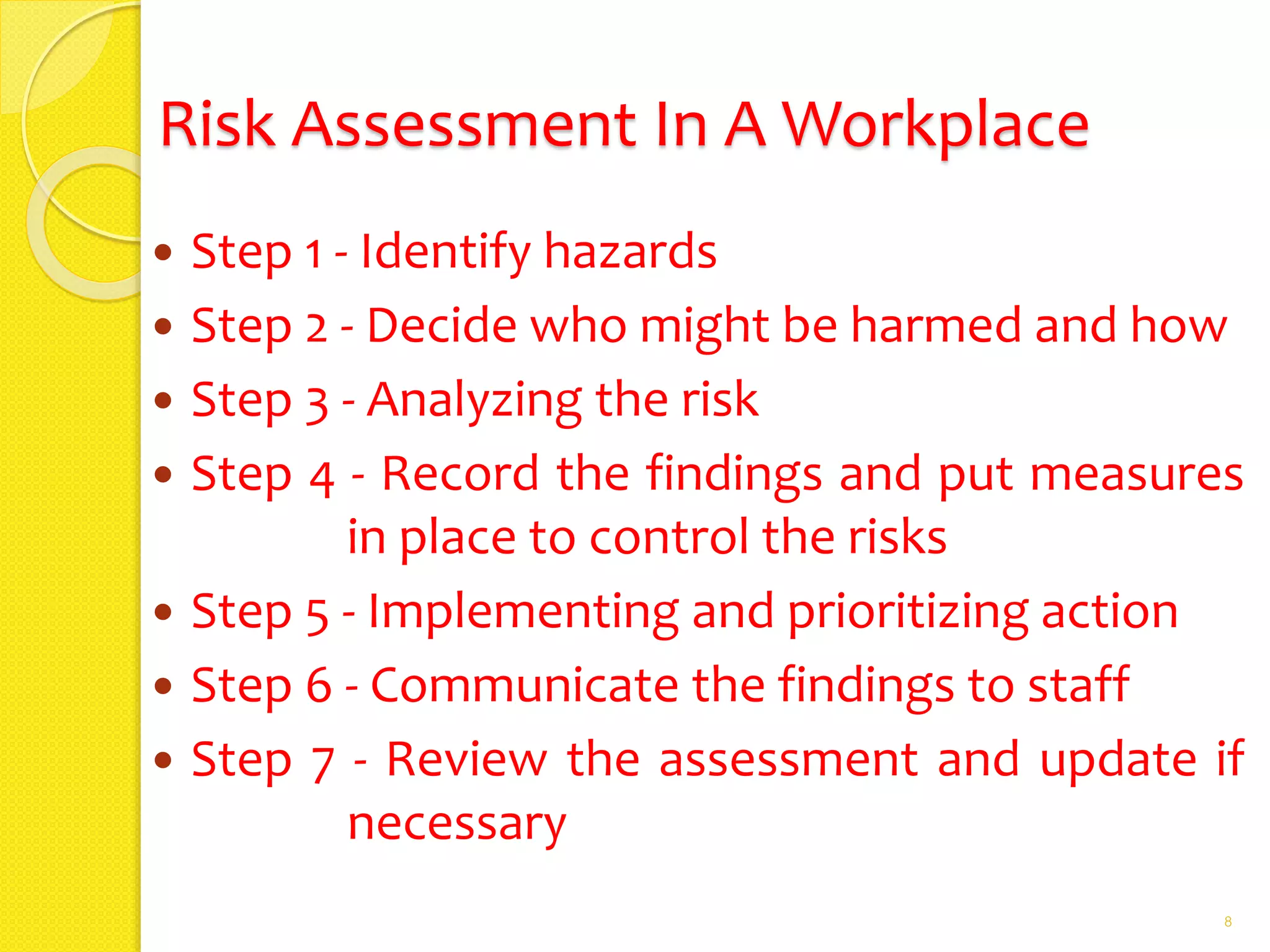
Risk Assessment In A Workplace
 Step 1 - Identify hazards
 Step 2 - Decide who might be harmed and how
 Step 3 - Analyzing the risk
 Step 4 - Record the findings and put measures
in place to control the risks
 Step 5 - Implementing and prioritizing action
 Step 6 - Communicate the findings to staff
 Step 7 - Review the assessment and update if
necessary
8
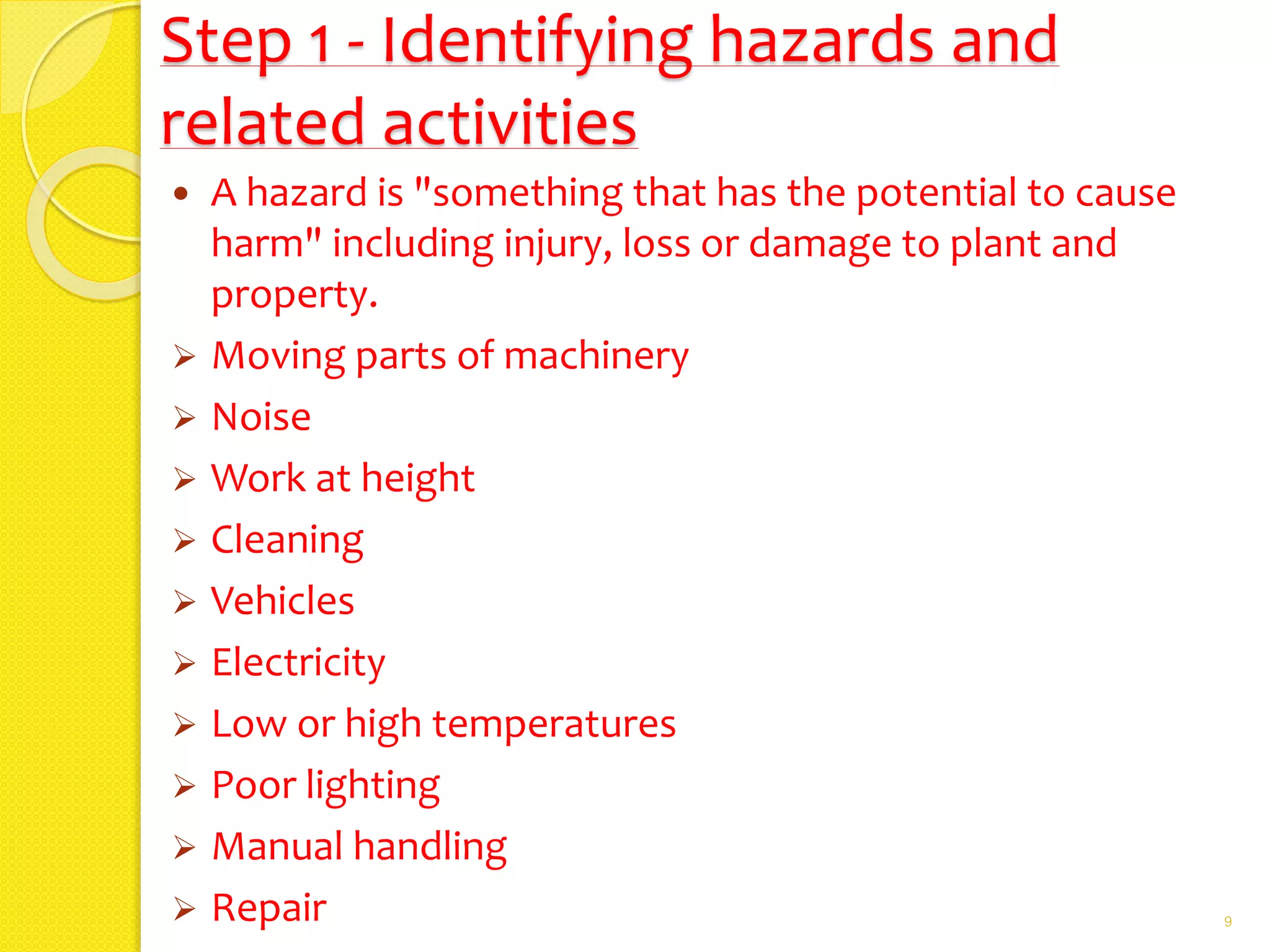
Step 1 - Identifying hazards and
related activities
 A hazard is "something that has the potential to cause
harm" including injury, loss or damage to plant and
property.
 Moving parts of machinery
 Noise
 Work at height
 Cleaning
 Vehicles
 Electricity
 Low or high temperatures
 Poor lighting
 Manual handling
 Repair 9
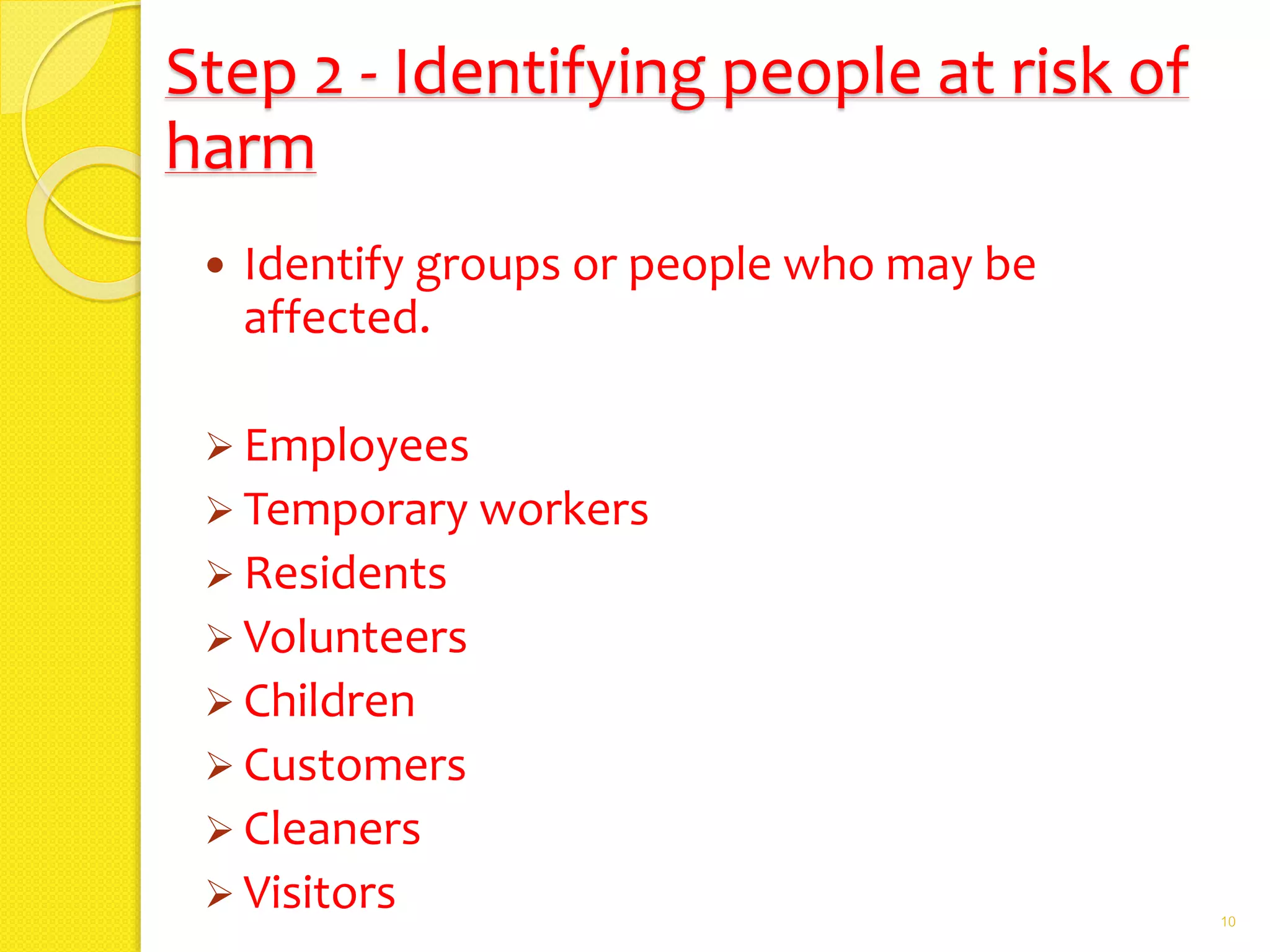
Step 2 - Identifying people at risk of
harm
 Identify groups or people who may be
affected.
 Employees
 Temporary workers
 Residents
 Volunteers
 Children
 Customers
 Cleaners
 Visitors 10
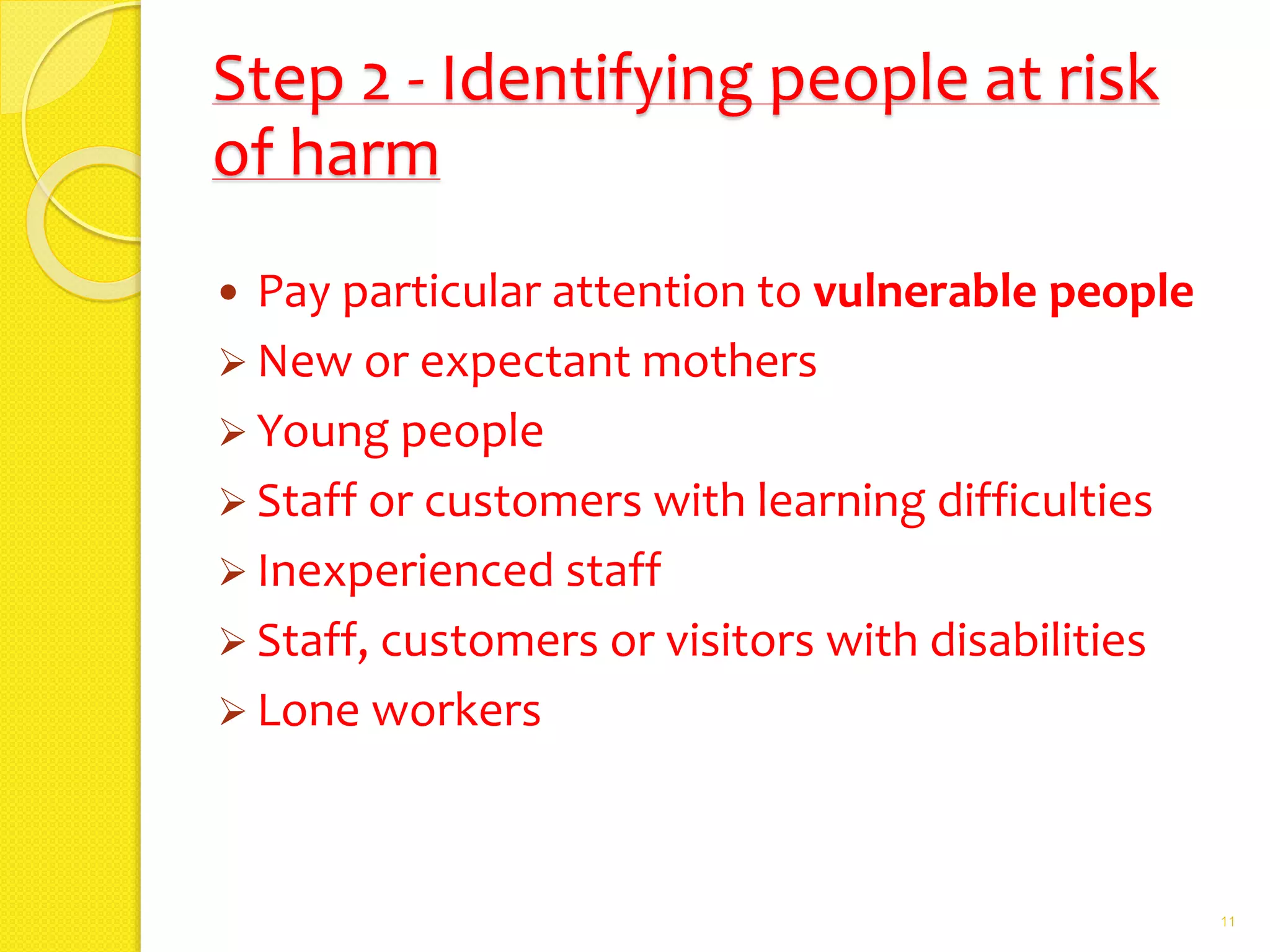
Step 2 - Identifying people at risk
of harm
 Pay particular attention to vulnerable people
 New or expectant mothers
 Young people
 Staff or customers with learning difficulties
 Inexperienced staff
 Staff, customers or visitors with disabilities
 Lone workers
11
Step 2 - Identifying people at risk
of harm
Possible outcomes
 Cuts and abrasions
 Broken or dislocated bones
 Twists
 Unconsciousness
 Noise injuries
 Electrocution
 Spinal injuries
 Burns
 Drowning
 Flying or falling objects
12
Step 3 - Analyzing the risk
 To analyze the risk, a matrix scoring system can
be used.
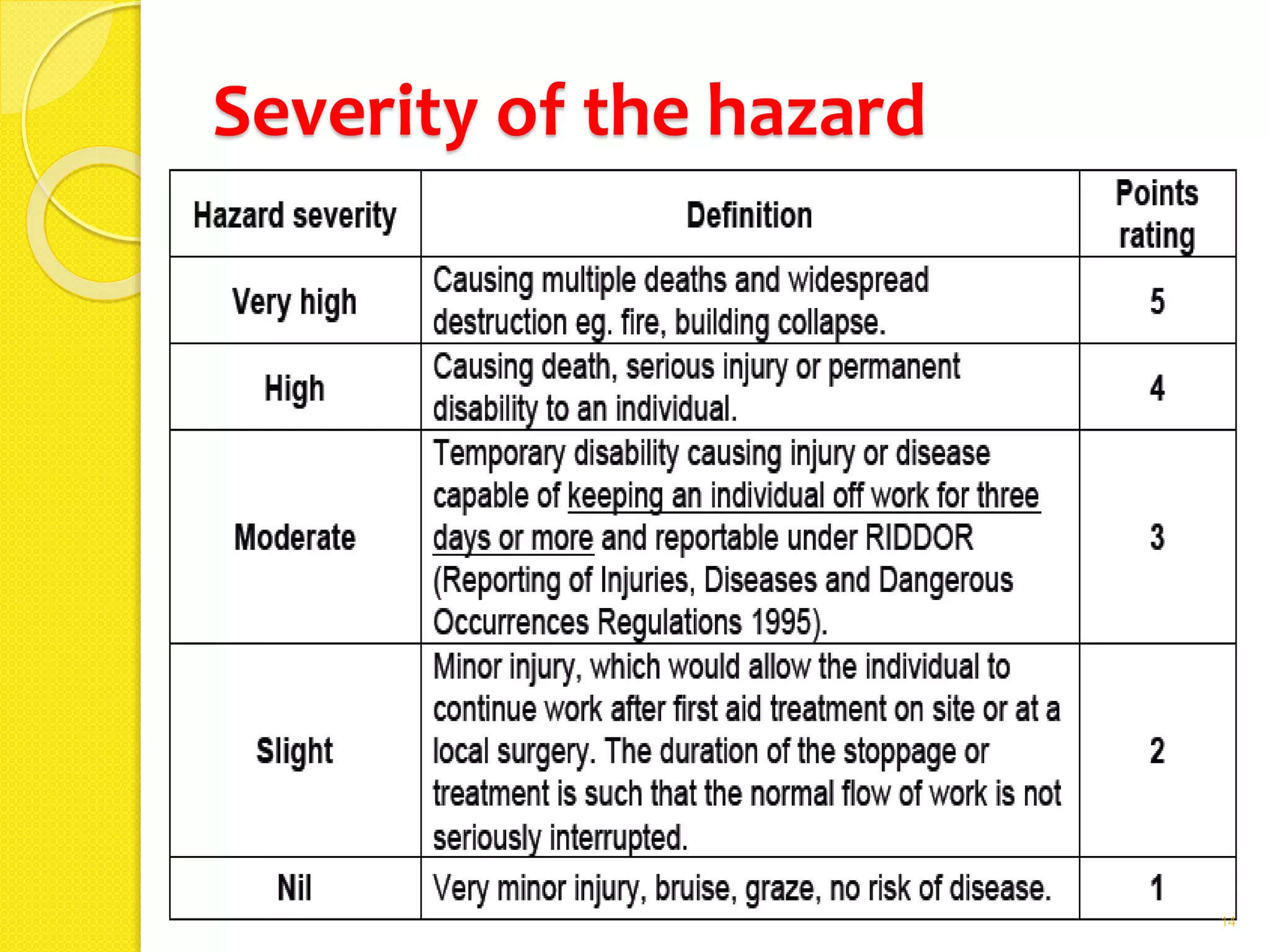
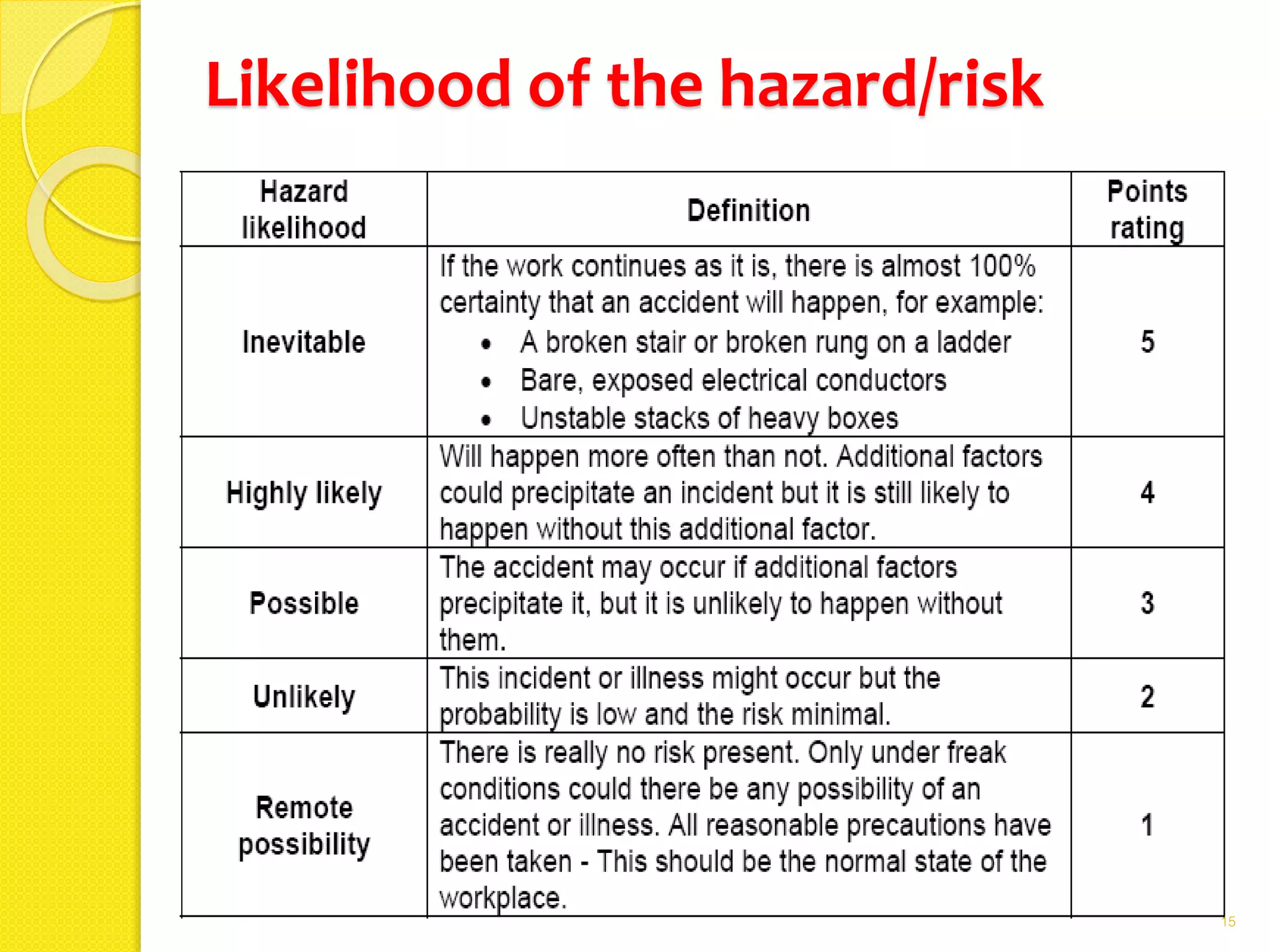
 Numerical scores are given to the severity and
likelihood of risks and these scores are
multiplied to get a rating for the risk.
 This means the risk rating is a measure of the
likelihood of harm that occur from a particular
hazard, taking into account the possible severity
of such an occurrence.
 Risk = Severity x Likelihood
13
Severity of the hazard
14
Likelihood of the hazard/risk
15
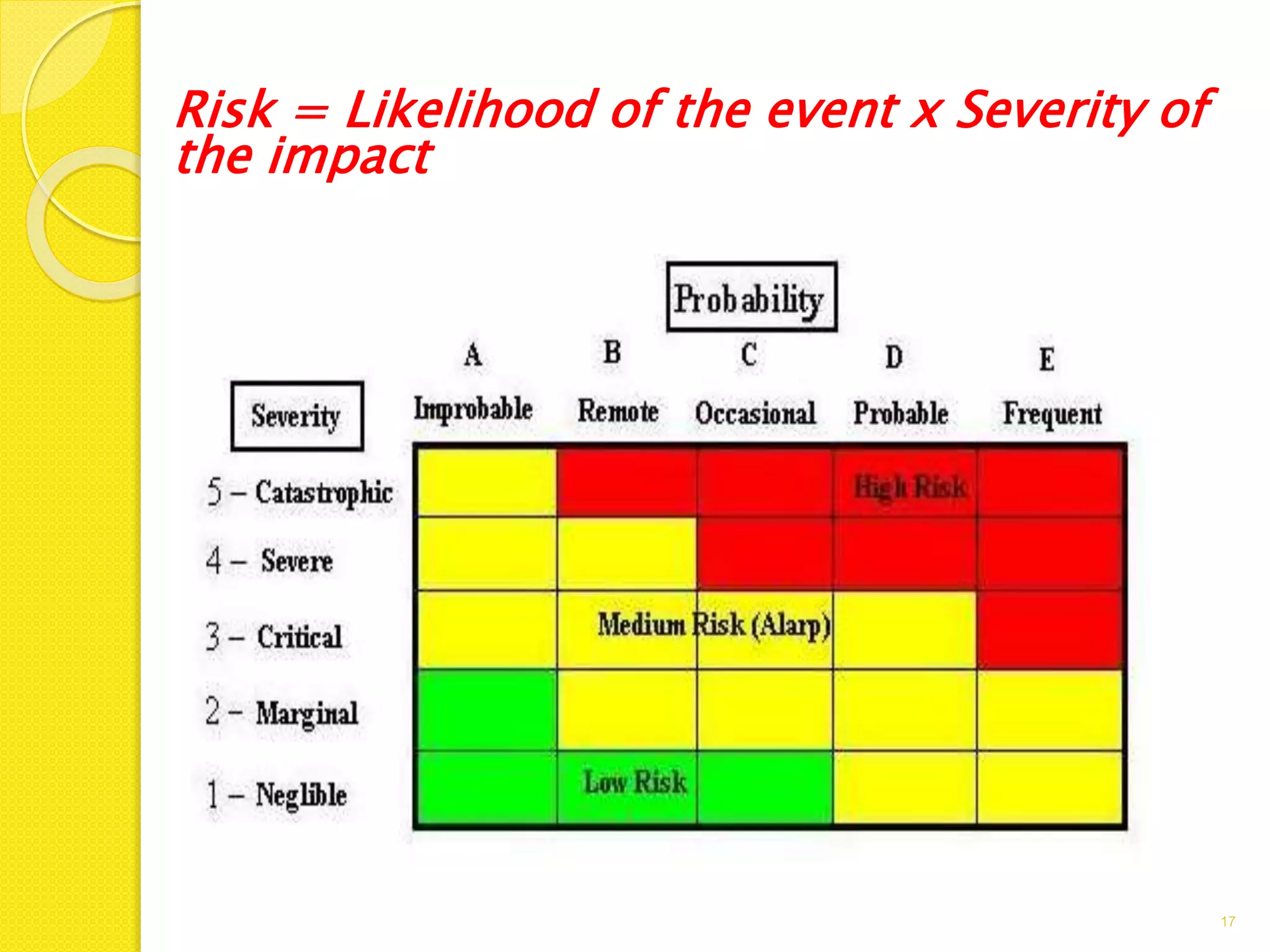
 Risk rating
 By multiplying the scores for the
severity and likelihood, the risk is given
a rating ranging from 1 to 25.
16
Risk = Likelihood of the event x Severity of
the impact
17
Step 4 - Preventative control measures
Elimination - is it possible to avoid the risk
altogether?
 Substitution - change the way you do the work,
but take care not to introduce new risks (e.g.
using a safer chemical).
 Isolation - combat risks at the source and
prevent access to the hazard (e.g. guarding
machinery).
 Reduction - reduce the number of employees at
risk or reduce the duration of exposure.
18
 Use information (written procedures, safe
systems of work), instruction, training and
supervision - ensure employees understand
what they must do and when, how they must
do it and what activities are prohibited.
 Use personal protective equipment, but only
as the last resort and only after all other
measures have been implemented.
19
 Step 5 - Implementing and
prioritizing action
 Once any control measures have been
identified, management must decide the
actions to take based on the recommendations.
 For high risk activities, this would include a
decision about whether the work should
actually take place.
20
 Step 6 - Communicating the
findings
 Information on risks and control measures
identified by the risk assessment should be
communicated to employees and others as
appropriate.
 Make copies of risk assessments available to all
the employees concerned.
 The completed risk assessment should provide
clear information about hazards, risks and
control measures to the employees carrying
out the work.
21
 Step 7 - Review the assessment
and update if necessary
 It is important to know if our risk assessment
was complete and accurate.
 It is essential to be sure that changes in the
workplace have not introduced new hazards or
changed hazards that were once ranked as
lower priority to a higher priority.
 It is good practice to review our assessment on
a regular basis to be sure that nothing has
changed and that our control methods are
effective.
22
Triggers for a review can also include:
 The start of a new project.
 A change in the work process.
 Introduction of new chemicals.
 A change or addition to tools, equipment,
machinery (including locations or the way they
are used).
 New employees.
 Moving to a new building or work area.
23
24

Risk assessment

  • 1.
    RISK ASSESSMENT Presented By:Zainab Arshad BS Hons, Environmental Sciences University Of Gujrat, Pakistan 1
  • 2.
     Risk -a measure of the probability that a harmful event (death, injury or loss) arising from exposure to a chemical or physical agent may occur under specific conditions of manufacture, use or disposal 2
  • 3.
     Acceptability ofrisk may differ for different people;  the worker in industry may be prepared to accept certain risks as part of their job;  the home user may wish as low a risk as possible, especially where children are concerned  Risks to wild organisms in the natural environment, especially plants and bacteria, may be accepted by people because they cannot see the consequences for their own health 3
  • 4.
     Risk assessment– identification and quantification of risk resulting from a specific use or occurrence of a chemical or physical agent 4
  • 5.
     Risk assessmentis concerned with determining those factors which are especially dangerous and determining the likelihood of unacceptable toxic exposure.  A risk assessment involves evaluating existing physical and environmental controls, and assessing their adequacy relative to the potential threats of the organization. 5
  • 6.
  • 7.
    Risk assessments arevery important as they form an integral part of a good occupational health and safety management plan. Help to:  Create awareness of hazards and risks.  Identify who may be at risk (employees, cleaners, visitors, contractors, the public, etc.).  Determine if existing control measures are adequate or if more should be done.  Prevent injuries or illnesses when done at the design or planning stage. 7
  • 8.
    Risk Assessment InA Workplace  Step 1 - Identify hazards  Step 2 - Decide who might be harmed and how  Step 3 - Analyzing the risk  Step 4 - Record the findings and put measures in place to control the risks  Step 5 - Implementing and prioritizing action  Step 6 - Communicate the findings to staff  Step 7 - Review the assessment and update if necessary 8
  • 9.
    Step 1 -Identifying hazards and related activities  A hazard is "something that has the potential to cause harm" including injury, loss or damage to plant and property.  Moving parts of machinery  Noise  Work at height  Cleaning  Vehicles  Electricity  Low or high temperatures  Poor lighting  Manual handling  Repair 9
  • 10.
    Step 2 -Identifying people at risk of harm  Identify groups or people who may be affected.  Employees  Temporary workers  Residents  Volunteers  Children  Customers  Cleaners  Visitors 10
  • 11.
    Step 2 -Identifying people at risk of harm  Pay particular attention to vulnerable people  New or expectant mothers  Young people  Staff or customers with learning difficulties  Inexperienced staff  Staff, customers or visitors with disabilities  Lone workers 11
  • 12.
    Step 2 -Identifying people at risk of harm Possible outcomes  Cuts and abrasions  Broken or dislocated bones  Twists  Unconsciousness  Noise injuries  Electrocution  Spinal injuries  Burns  Drowning  Flying or falling objects 12
  • 13.
    Step 3 -Analyzing the risk  To analyze the risk, a matrix scoring system can be used.  Numerical scores are given to the severity and likelihood of risks and these scores are multiplied to get a rating for the risk.  This means the risk rating is a measure of the likelihood of harm that occur from a particular hazard, taking into account the possible severity of such an occurrence.  Risk = Severity x Likelihood 13
  • 14.
    Severity of thehazard 14
  • 15.
    Likelihood of thehazard/risk 15
  • 16.
     Risk rating By multiplying the scores for the severity and likelihood, the risk is given a rating ranging from 1 to 25. 16
  • 17.
    Risk = Likelihoodof the event x Severity of the impact 17
  • 18.
    Step 4 -Preventative control measures Elimination - is it possible to avoid the risk altogether?  Substitution - change the way you do the work, but take care not to introduce new risks (e.g. using a safer chemical).  Isolation - combat risks at the source and prevent access to the hazard (e.g. guarding machinery).  Reduction - reduce the number of employees at risk or reduce the duration of exposure. 18
  • 19.
     Use information(written procedures, safe systems of work), instruction, training and supervision - ensure employees understand what they must do and when, how they must do it and what activities are prohibited.  Use personal protective equipment, but only as the last resort and only after all other measures have been implemented. 19
  • 20.
     Step 5- Implementing and prioritizing action  Once any control measures have been identified, management must decide the actions to take based on the recommendations.  For high risk activities, this would include a decision about whether the work should actually take place. 20
  • 21.
     Step 6- Communicating the findings  Information on risks and control measures identified by the risk assessment should be communicated to employees and others as appropriate.  Make copies of risk assessments available to all the employees concerned.  The completed risk assessment should provide clear information about hazards, risks and control measures to the employees carrying out the work. 21
  • 22.
     Step 7- Review the assessment and update if necessary  It is important to know if our risk assessment was complete and accurate.  It is essential to be sure that changes in the workplace have not introduced new hazards or changed hazards that were once ranked as lower priority to a higher priority.  It is good practice to review our assessment on a regular basis to be sure that nothing has changed and that our control methods are effective. 22
  • 23.
    Triggers for areview can also include:  The start of a new project.  A change in the work process.  Introduction of new chemicals.  A change or addition to tools, equipment, machinery (including locations or the way they are used).  New employees.  Moving to a new building or work area. 23
  • 24.