

Richard Unwin
Backbone IT
May 2014
D14 Digital Summit
INTERNATIONAL E-COMMERCE:
FOCUS OF CHINA
Chinese economic growth
and a fast-maturing
ecommerce sector has
created opportunity for
Western retailers.
Chinese consumers now
have the will and means
to buy Western goods
online in significant
numbers.
May 2014
D14 Digital Summit
INTERNATIONAL E-COMMERCE:
FOCUS OF CHINA
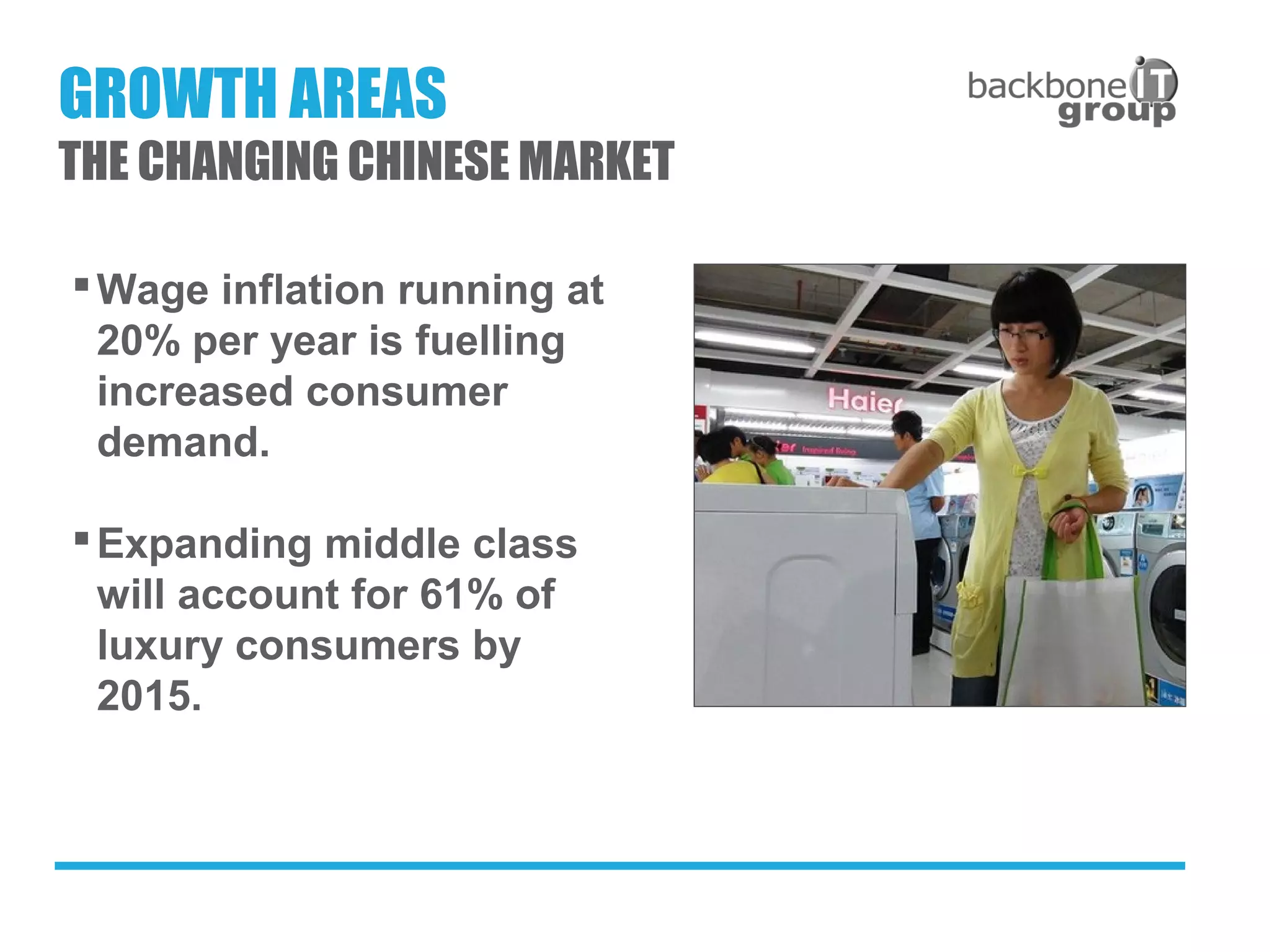
Wage inflation running at
20% per year is fuelling
increased consumer
demand.
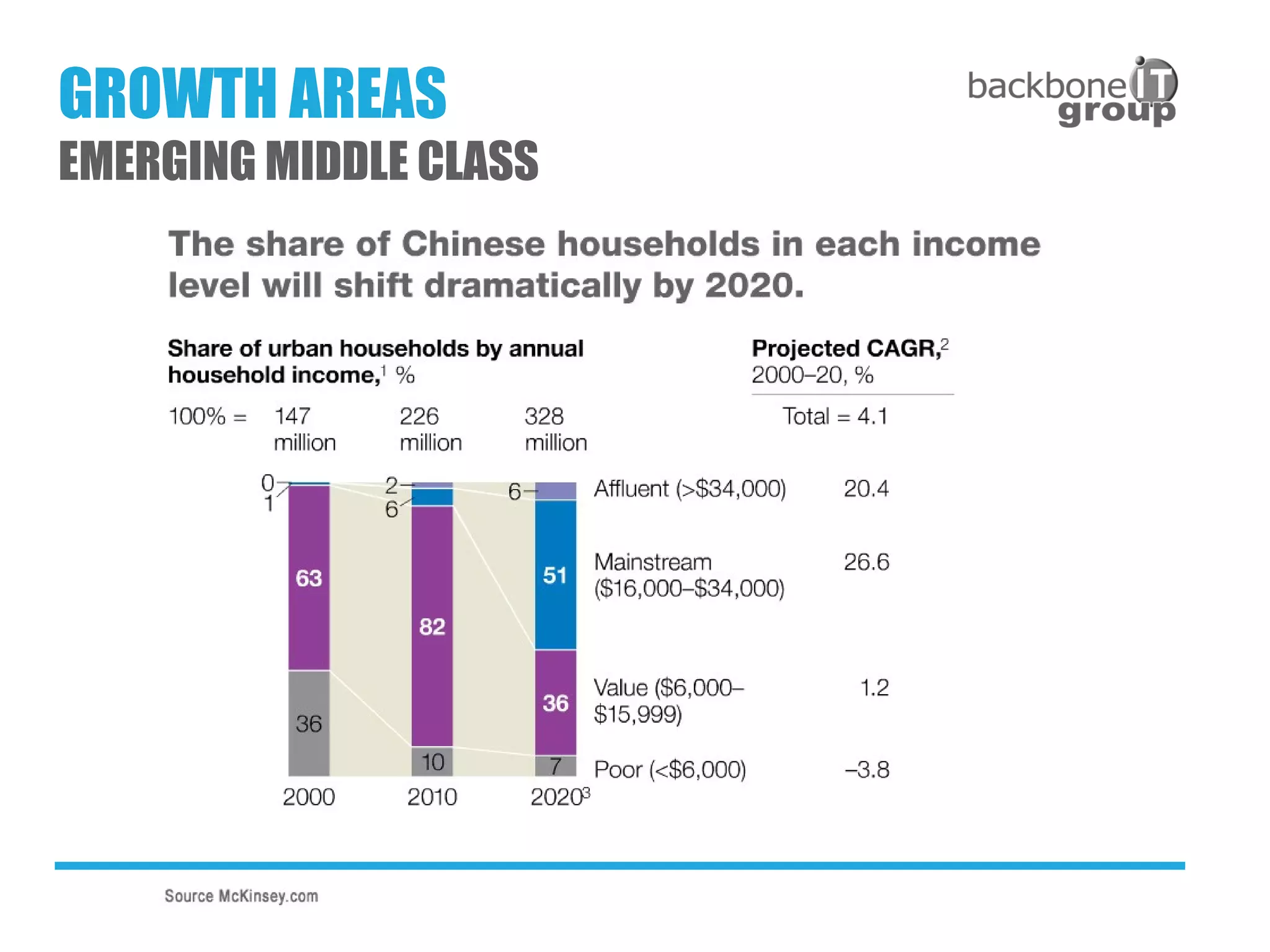
Expanding middle class
will account for 61% of
luxury consumers by
2015.
GROWTH AREAS
THE CHANGING CHINESE MARKET
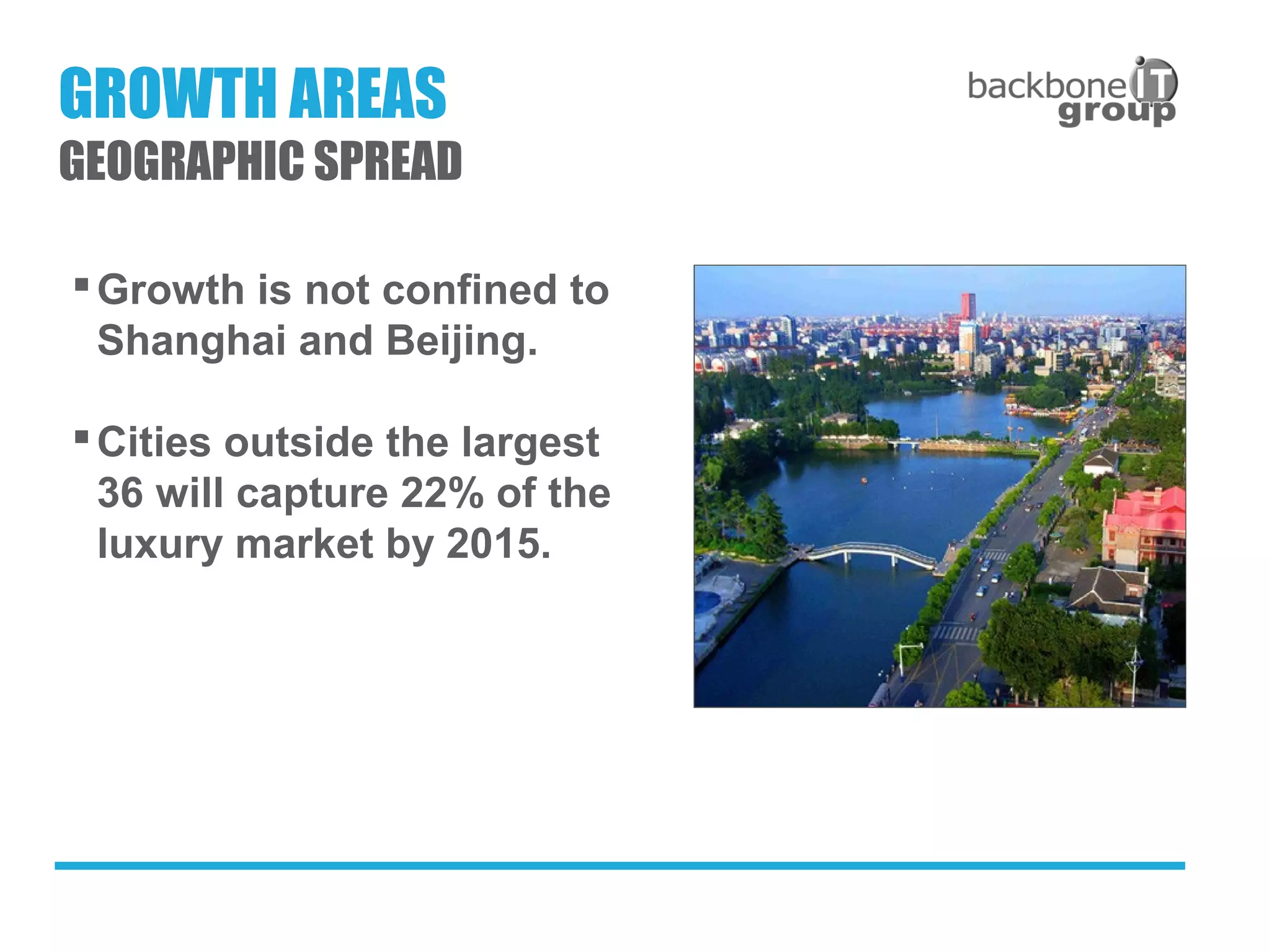
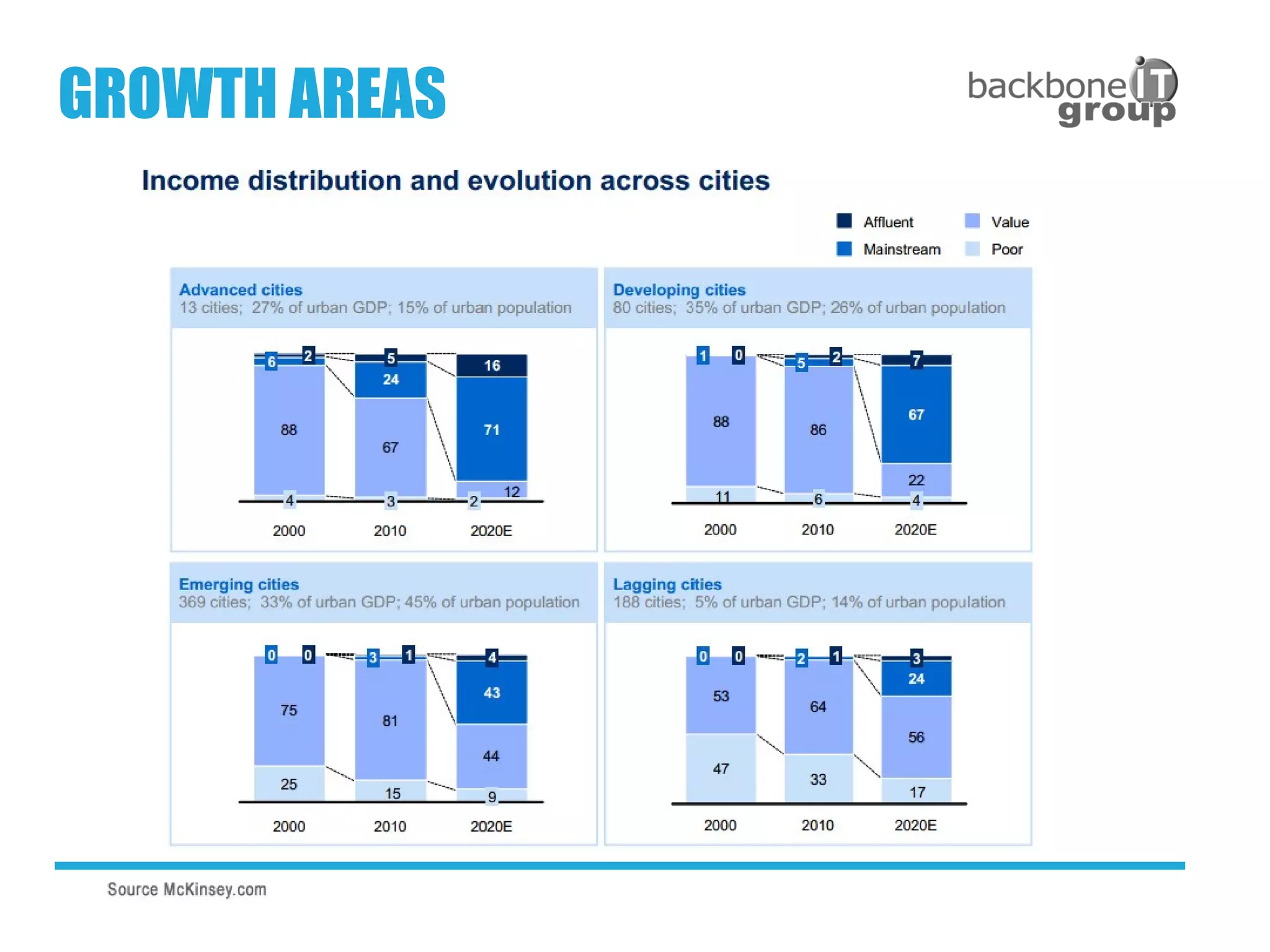
Growth is not confined to
Shanghai and Beijing.
Cities outside the largest
36 will capture 22% of the
luxury market by 2015.
GROWTH AREAS
GEOGRAPHIC SPREAD
GROWTH AREAS
EMERGING MIDDLE CLASS
GROWTH AREAS
[There are] certain misperceptions and false
assumptions in the Western world regarding Chinese
Internet usage.
For example, people in the United States and Europe
assume that going online involves using search engines,
checking email and purchasing items online. This is not
the case in China.
There is a general false assumption that the whole world
uses the Internet in the same way.
“
”
KAI-FU LEE
FOUNDING PRESIDENT OF GOOGLE CHINA
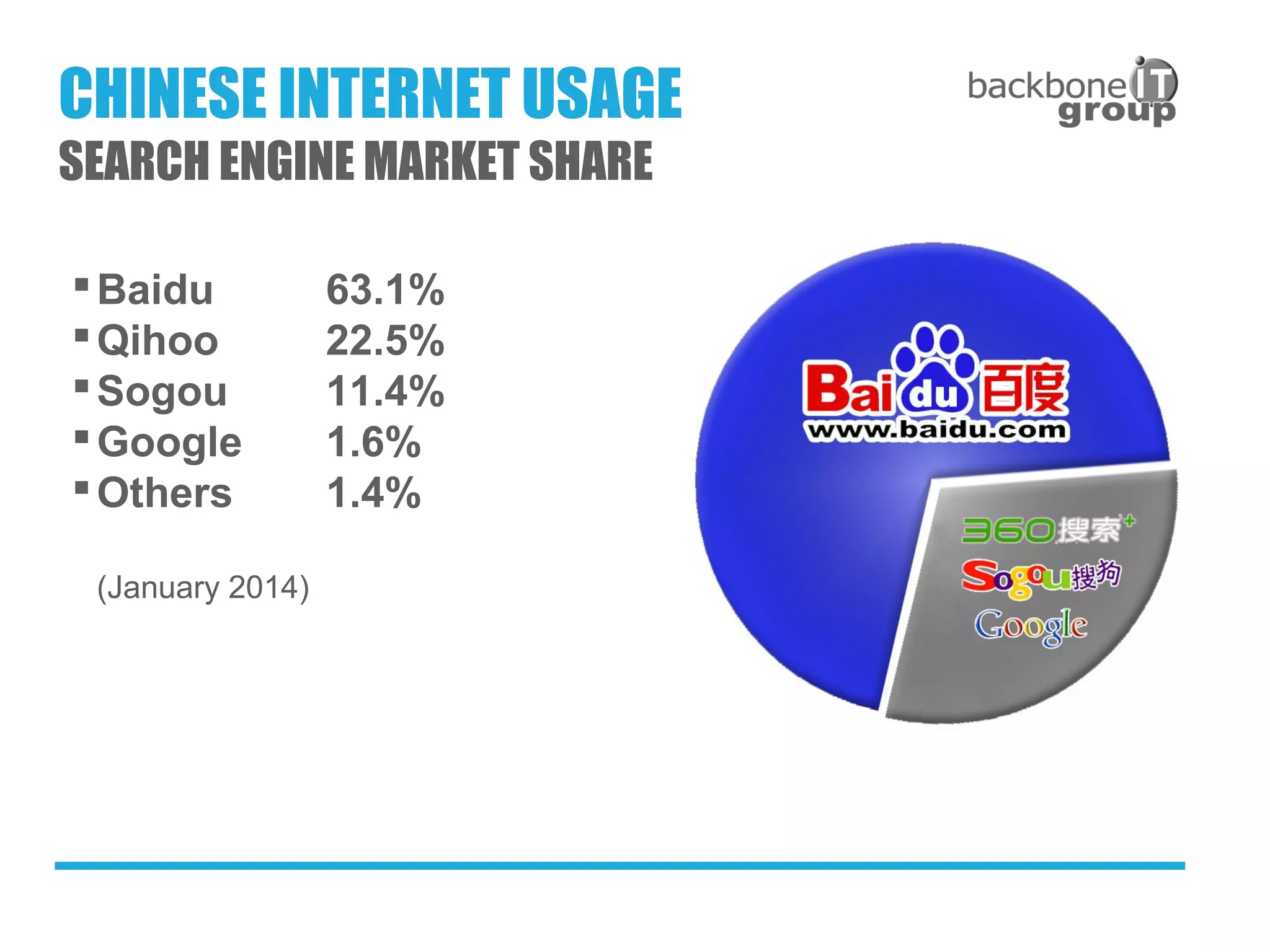
Baidu 63.1%
Qihoo 22.5%
Sogou 11.4%
Google 1.6%
Others 1.4%
(January 2014)
CHINESE INTERNET USAGE
SEARCH ENGINE MARKET SHARE
CHINESE INTERNET USAGE
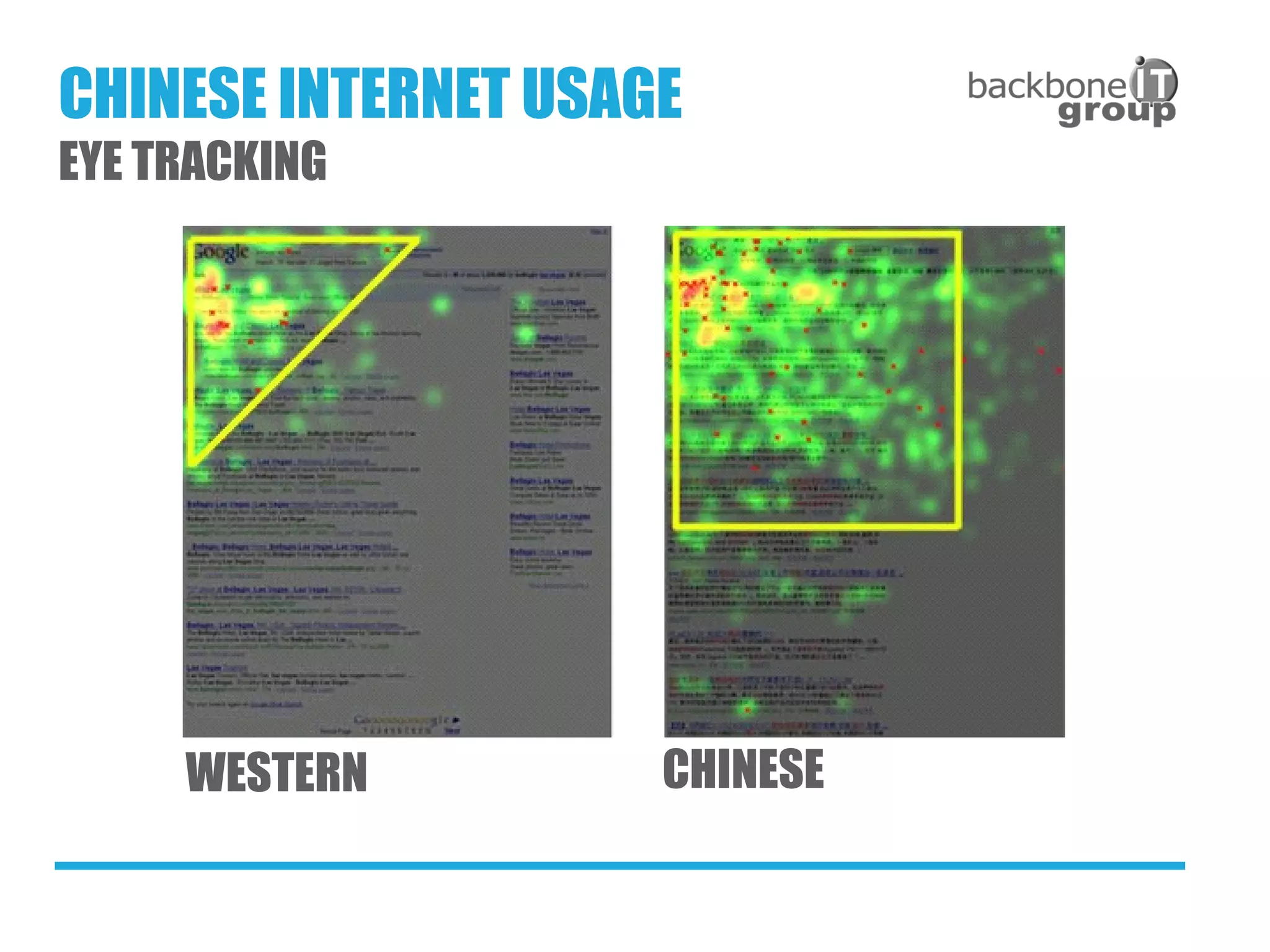
EYE TRACKING
WESTERN CHINESE
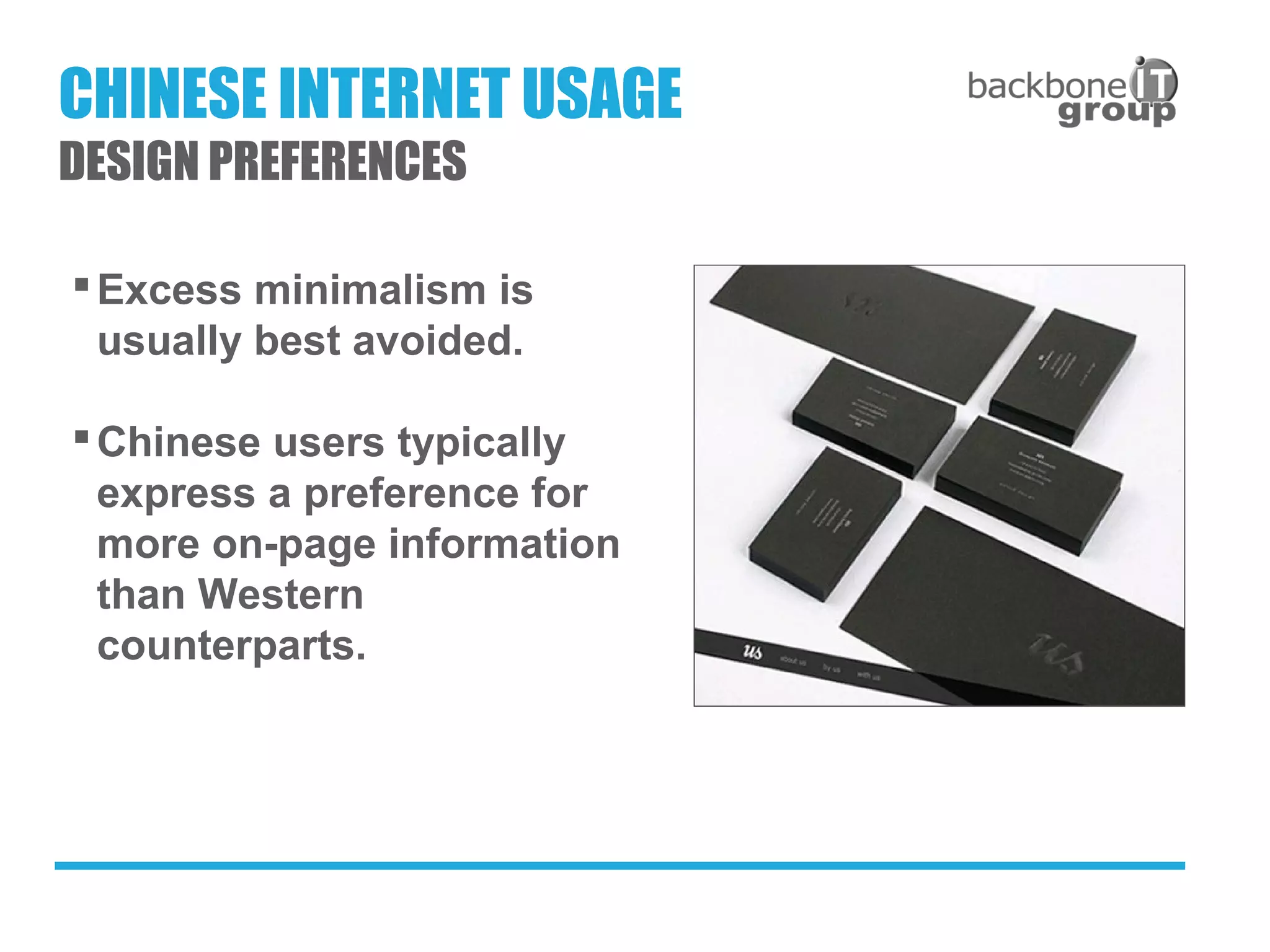
Excess minimalism is
usually best avoided.
Chinese users typically
express a preference for
more on-page information
than Western
counterparts.
CHINESE INTERNET USAGE
DESIGN PREFERENCES
Face remains important in
Chinese culture.
Online trust factors are
key to success.
After care is highly prized
in China – consider
covering it prominently
on your site.
CHINESE INTERNET USAGE
ECOMMERCE - CONSUMER TRUST
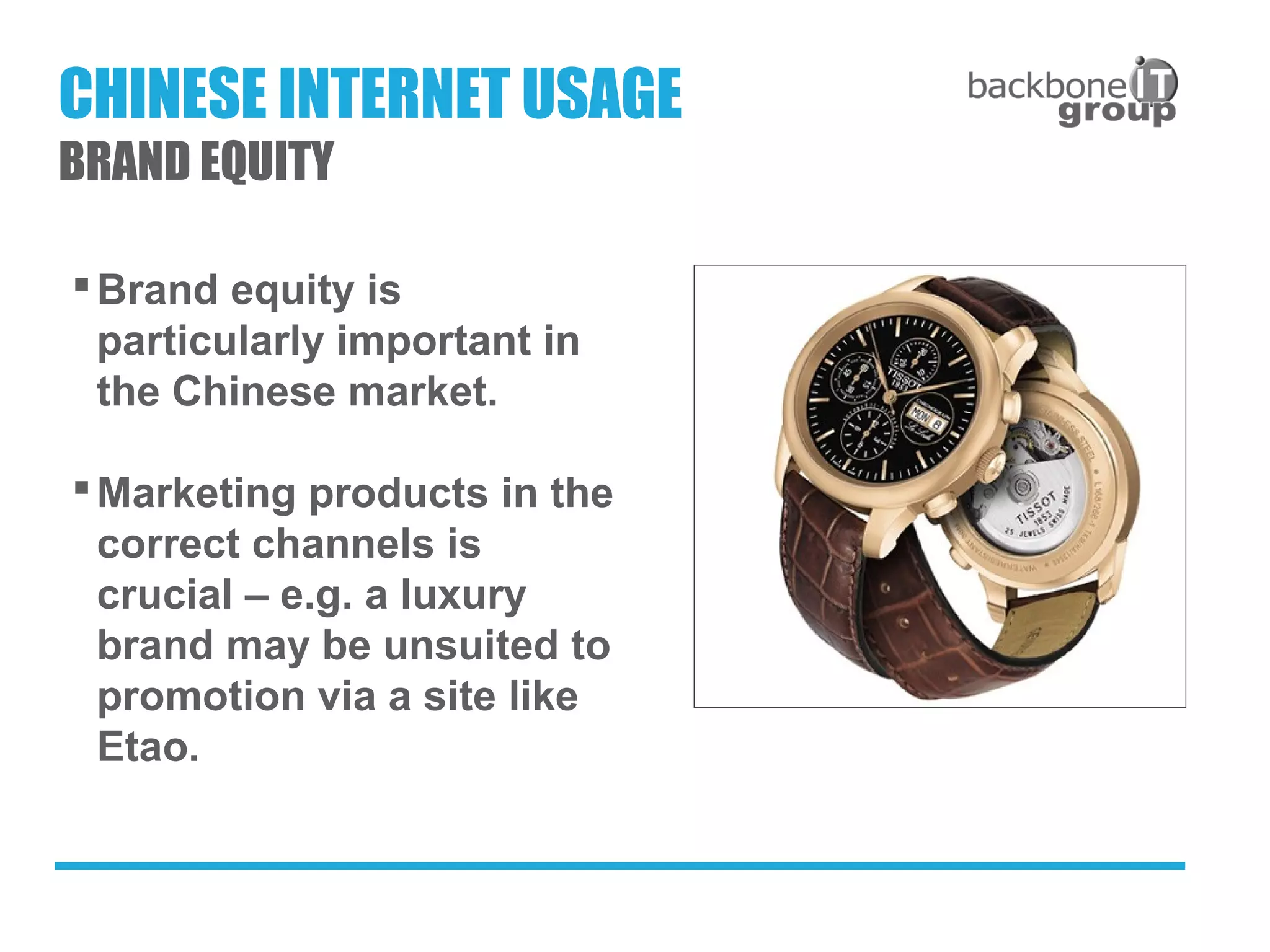
Brand equity is
particularly important in
the Chinese market.
Marketing products in the
correct channels is
crucial – e.g. a luxury
brand may be unsuited to
promotion via a site like
Etao.
CHINESE INTERNET USAGE
BRAND EQUITY
Consider repatriation of
funds and Chinese
character compatibility.
Local shopping portals
tend to be more trusted
by consumers.
Trust, marketing and
logistics are the biggest
challenges.
CHINESE INTERNET USAGE
ECOMMERCE - CHALLENGES
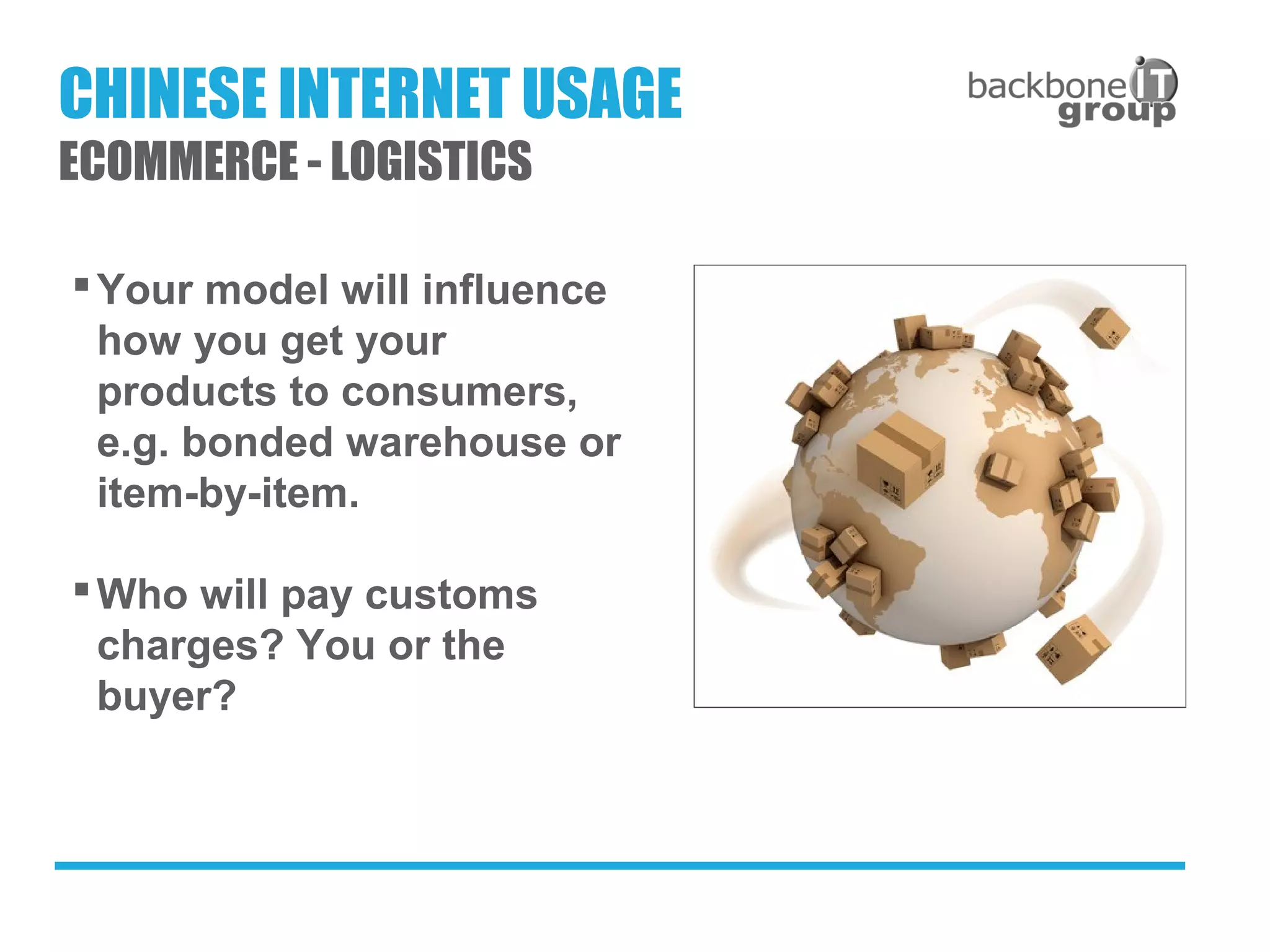
Your model will influence
how you get your
products to consumers,
e.g. bonded warehouse or
item-by-item.
Who will pay customs
charges? You or the
buyer?
CHINESE INTERNET USAGE
ECOMMERCE - LOGISTICS
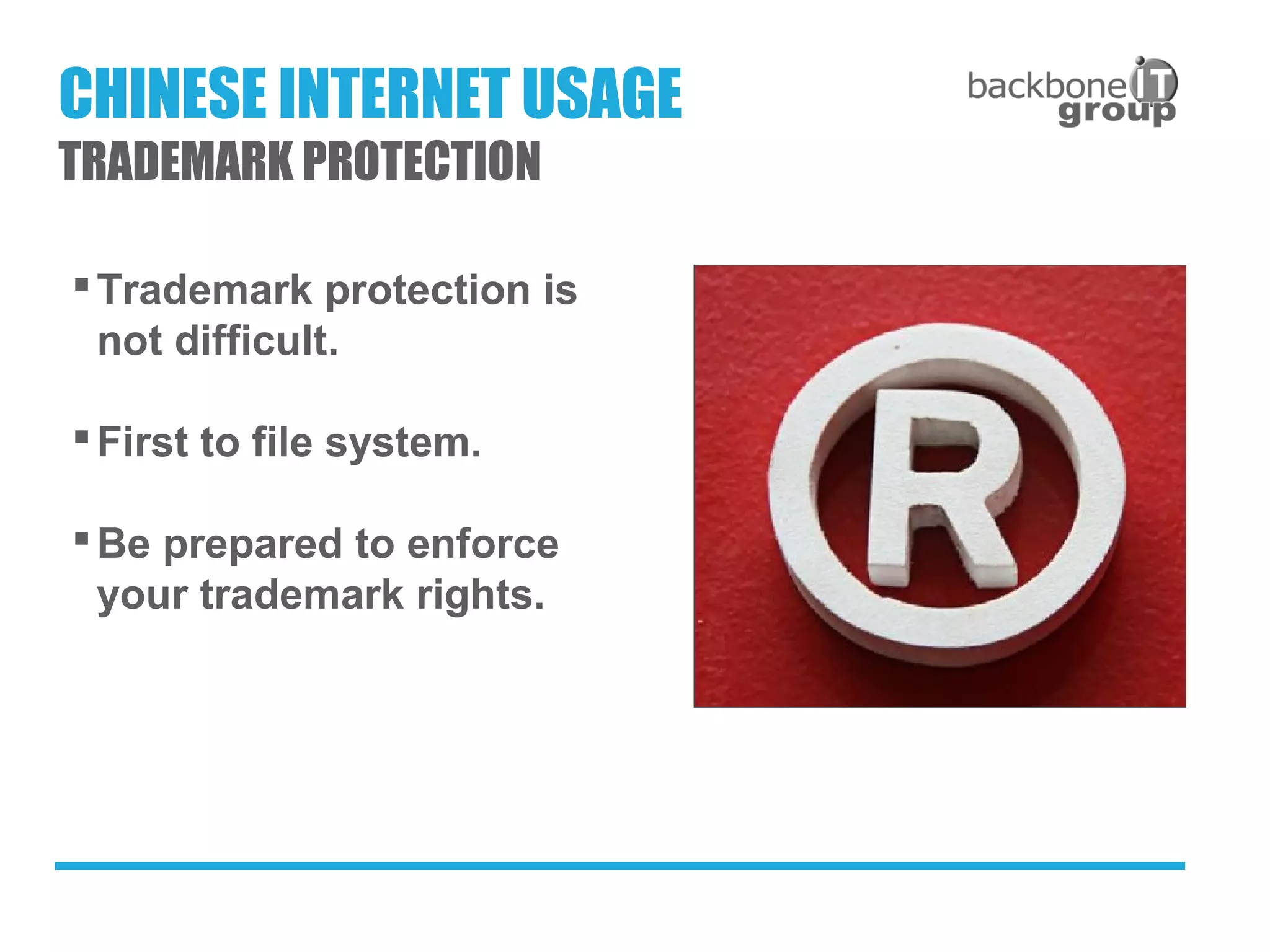
Trademark protection is
not difficult.
First to file system.
Be prepared to enforce
your trademark rights.
CHINESE INTERNET USAGE
TRADEMARK PROTECTION
Internationally-known branding and superior
craftsmanship are now among the top three
luxury buying factors.
RESEARCH
McKINSEY INSIGHTS CHINA 2011
“
”
21% said a luxury brand
should be niche.
40% said a brand needs
to be well-known to be
considered successful.
64% would be prepared to
pay more money for a
brand’s products if the
brand were popular.
RESEARCH
KPMG CONSUMER STUDY
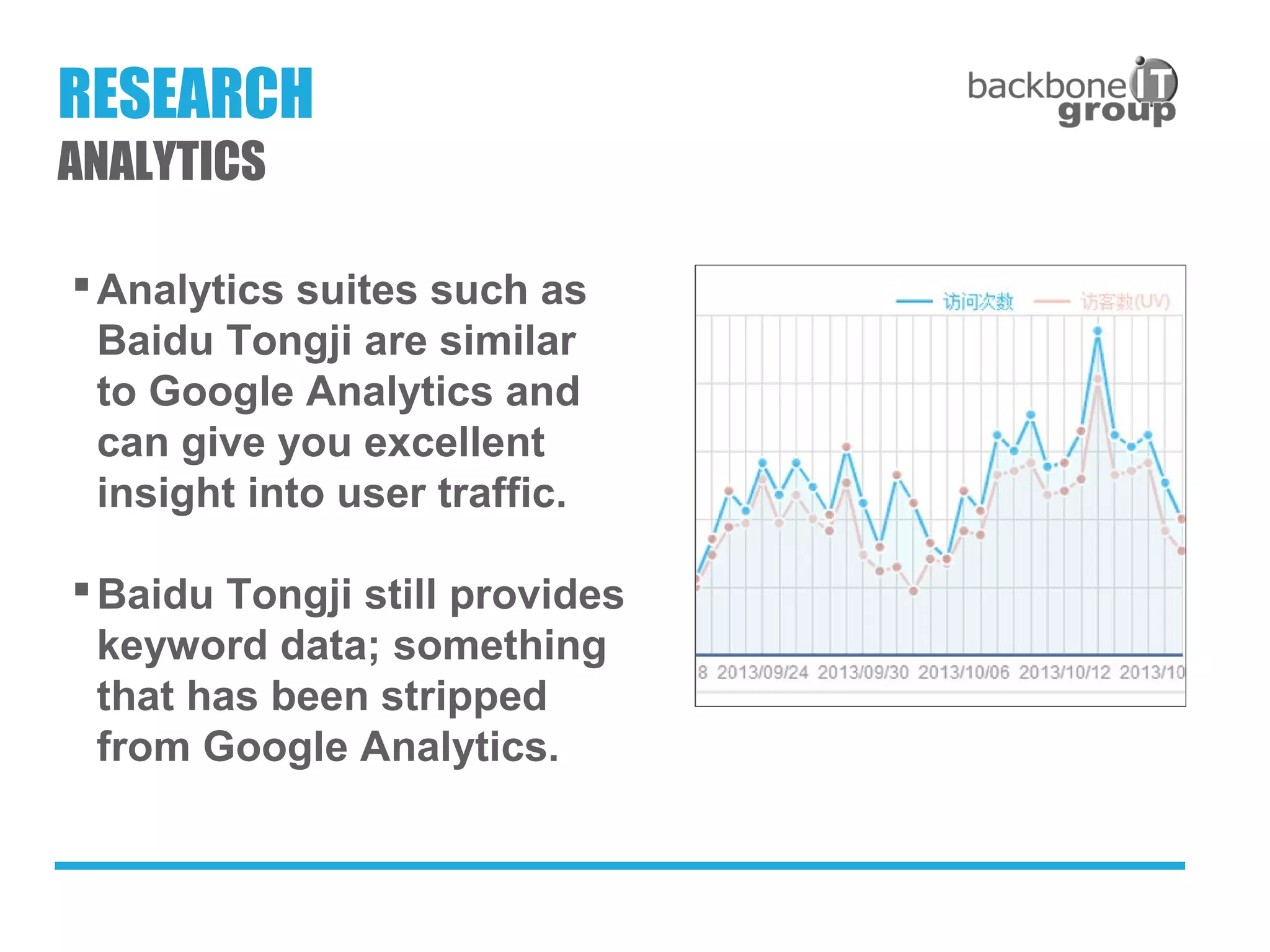
Analytics suites such as
Baidu Tongji are similar
to Google Analytics and
can give you excellent
insight into user traffic.
Baidu Tongji still provides
keyword data; something
that has been stripped
from Google Analytics.
RESEARCH
ANALYTICS
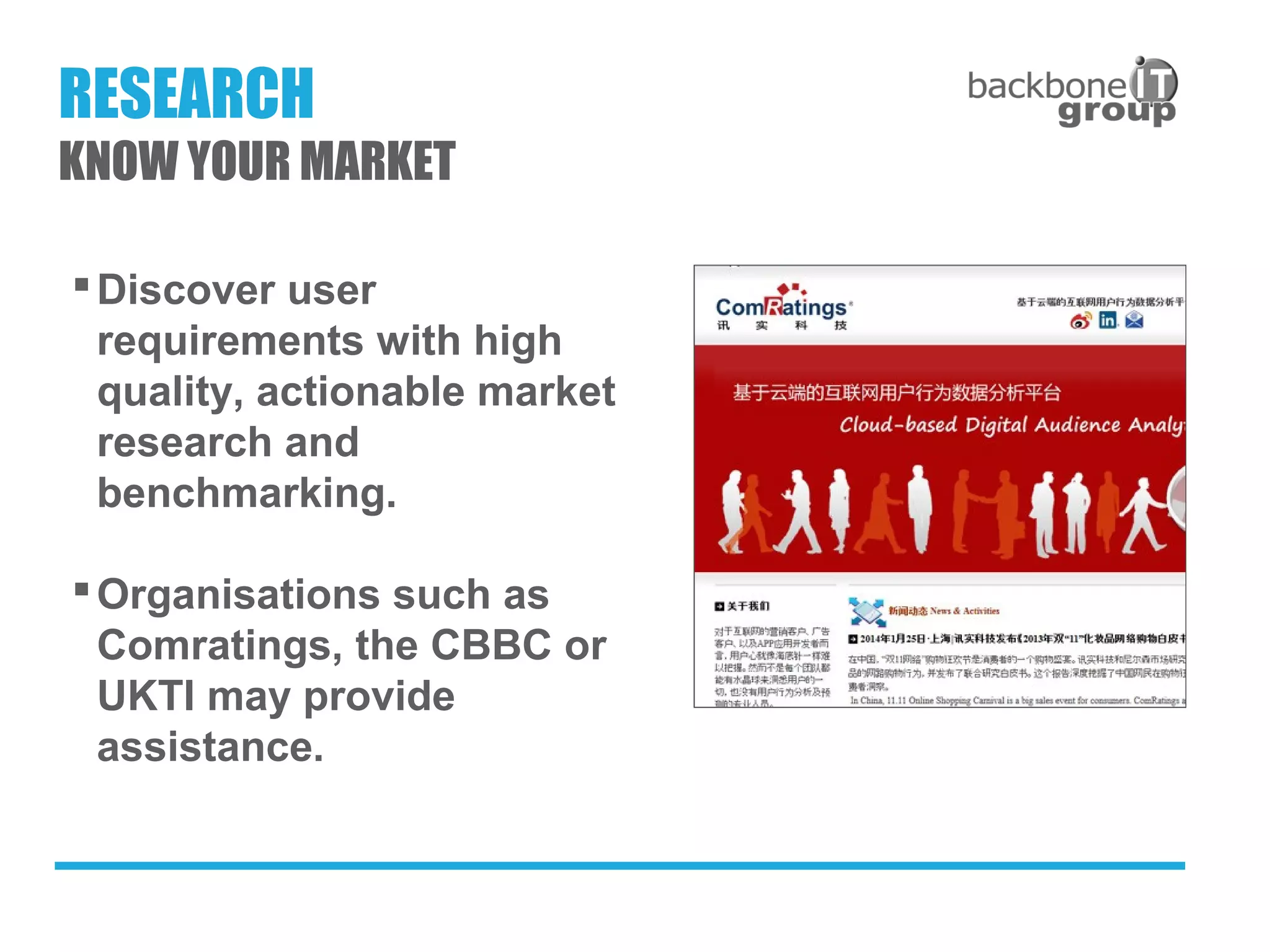
Discover user
requirements with high
quality, actionable market
research and
benchmarking.
Organisations such as
Comratings, the CBBC or
UKTI may provide
assistance.
RESEARCH
KNOW YOUR MARKET
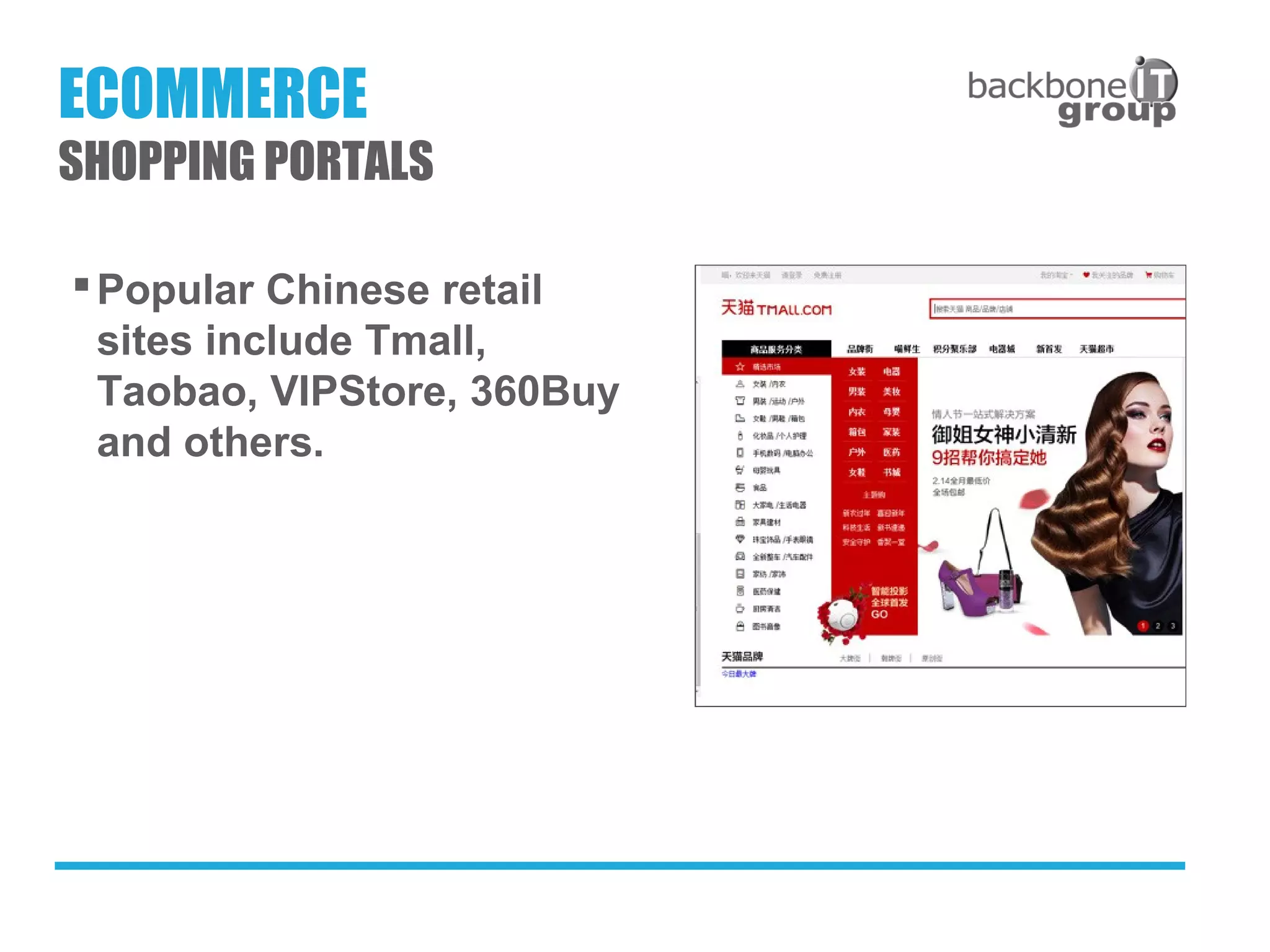
Popular Chinese retail
sites include Tmall,
Taobao, VIPStore, 360Buy
and others.
ECOMMERCE
SHOPPING PORTALS
Most of the popular retail
sites offer optimisation
tools and services,
allowing users to reach
more customers, more
effectively.
ECOMMERCE
SHOPPING PORTALS
Decision-making process
is the same in China.
Direct engagement,
generation and sharing of
content (funny /
interesting / useful) that
has value.
SOCIAL MEDIA
PLATFORMS AND STRATEGY
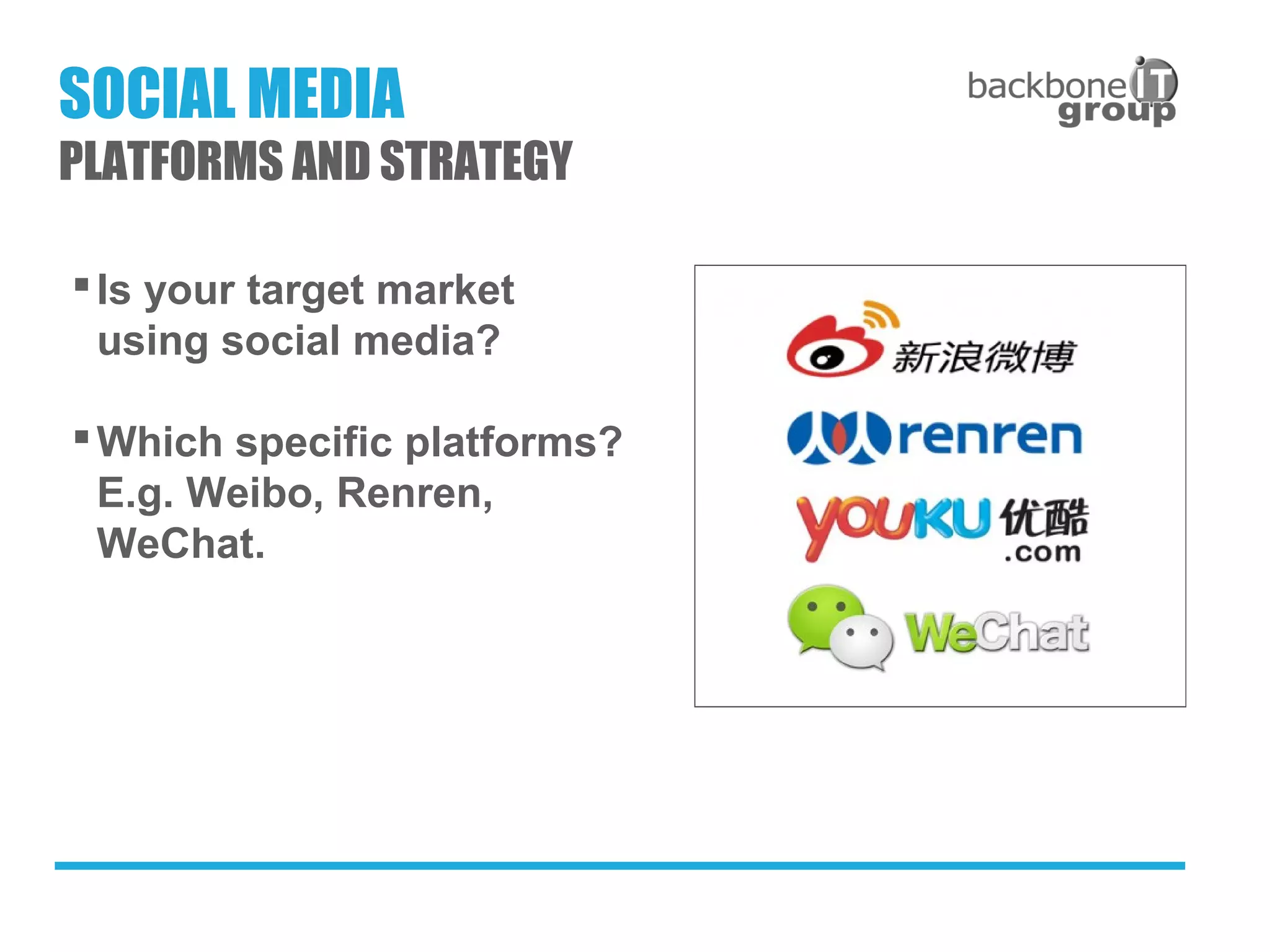
Is your target market
using social media?
Which specific platforms?
E.g. Weibo, Renren,
WeChat.
SOCIAL MEDIA
PLATFORMS AND STRATEGY
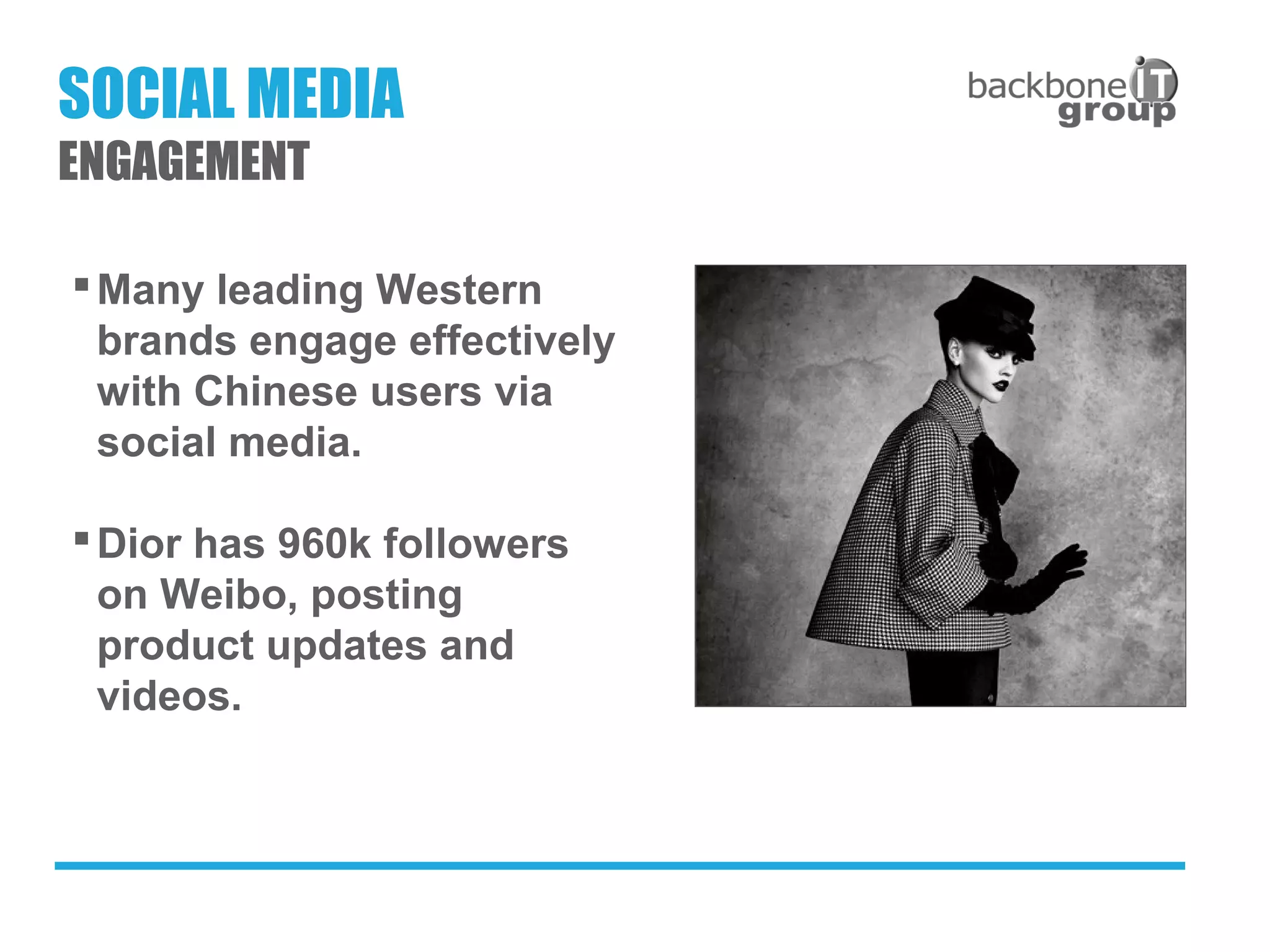
Many leading Western
brands engage effectively
with Chinese users via
social media.
Dior has 960k followers
on Weibo, posting
product updates and
videos.
SOCIAL MEDIA
ENGAGEMENT
The most popular social
activities for brands in
China are:
• Polling / voting
• Coupons / discount
codes
• Brand discussion /
sharing
SOCIAL MEDIA
ENGAGEMENT
Have a clear strategy –
know the goals of your
campaign and how they
will be achieved before
starting.
RESEARCH
KNOW YOUR MARKET
Specialists in Chinese
market consultancy, web
development, eCommerce
and digital marketing.
Richard Unwin (Director)
richard@backboneitgroup.com
Tel: +44 (0)1524 65533
Twitter: @BackboneIT
BACKBONE IT GROUP
ABOUT

Richard Unwin, Backbone IT

  • 1.
  • 2.
    May 2014 D14 DigitalSummit INTERNATIONAL E-COMMERCE: FOCUS OF CHINA
  • 3.
    Chinese economic growth anda fast-maturing ecommerce sector has created opportunity for Western retailers. Chinese consumers now have the will and means to buy Western goods online in significant numbers. May 2014 D14 Digital Summit INTERNATIONAL E-COMMERCE: FOCUS OF CHINA
  • 4.
    Wage inflation runningat 20% per year is fuelling increased consumer demand. Expanding middle class will account for 61% of luxury consumers by 2015. GROWTH AREAS THE CHANGING CHINESE MARKET
  • 5.
    Growth is notconfined to Shanghai and Beijing. Cities outside the largest 36 will capture 22% of the luxury market by 2015. GROWTH AREAS GEOGRAPHIC SPREAD
  • 6.
  • 7.
  • 8.
    [There are] certainmisperceptions and false assumptions in the Western world regarding Chinese Internet usage. For example, people in the United States and Europe assume that going online involves using search engines, checking email and purchasing items online. This is not the case in China. There is a general false assumption that the whole world uses the Internet in the same way. “ ” KAI-FU LEE FOUNDING PRESIDENT OF GOOGLE CHINA
  • 9.
    Baidu 63.1% Qihoo 22.5% Sogou11.4% Google 1.6% Others 1.4% (January 2014) CHINESE INTERNET USAGE SEARCH ENGINE MARKET SHARE
  • 10.
    CHINESE INTERNET USAGE EYETRACKING WESTERN CHINESE
  • 11.
    Excess minimalism is usuallybest avoided. Chinese users typically express a preference for more on-page information than Western counterparts. CHINESE INTERNET USAGE DESIGN PREFERENCES
  • 12.
    Face remains importantin Chinese culture. Online trust factors are key to success. After care is highly prized in China – consider covering it prominently on your site. CHINESE INTERNET USAGE ECOMMERCE - CONSUMER TRUST
  • 13.
    Brand equity is particularlyimportant in the Chinese market. Marketing products in the correct channels is crucial – e.g. a luxury brand may be unsuited to promotion via a site like Etao. CHINESE INTERNET USAGE BRAND EQUITY
  • 14.
    Consider repatriation of fundsand Chinese character compatibility. Local shopping portals tend to be more trusted by consumers. Trust, marketing and logistics are the biggest challenges. CHINESE INTERNET USAGE ECOMMERCE - CHALLENGES
  • 15.
    Your model willinfluence how you get your products to consumers, e.g. bonded warehouse or item-by-item. Who will pay customs charges? You or the buyer? CHINESE INTERNET USAGE ECOMMERCE - LOGISTICS
  • 16.
    Trademark protection is notdifficult. First to file system. Be prepared to enforce your trademark rights. CHINESE INTERNET USAGE TRADEMARK PROTECTION
  • 17.
    Internationally-known branding andsuperior craftsmanship are now among the top three luxury buying factors. RESEARCH McKINSEY INSIGHTS CHINA 2011 “ ”
  • 18.
    21% said aluxury brand should be niche. 40% said a brand needs to be well-known to be considered successful. 64% would be prepared to pay more money for a brand’s products if the brand were popular. RESEARCH KPMG CONSUMER STUDY
  • 19.
    Analytics suites suchas Baidu Tongji are similar to Google Analytics and can give you excellent insight into user traffic. Baidu Tongji still provides keyword data; something that has been stripped from Google Analytics. RESEARCH ANALYTICS
  • 20.
    Discover user requirements withhigh quality, actionable market research and benchmarking. Organisations such as Comratings, the CBBC or UKTI may provide assistance. RESEARCH KNOW YOUR MARKET
  • 21.
    Popular Chinese retail sitesinclude Tmall, Taobao, VIPStore, 360Buy and others. ECOMMERCE SHOPPING PORTALS
  • 22.
    Most of thepopular retail sites offer optimisation tools and services, allowing users to reach more customers, more effectively. ECOMMERCE SHOPPING PORTALS
  • 23.
    Decision-making process is thesame in China. Direct engagement, generation and sharing of content (funny / interesting / useful) that has value. SOCIAL MEDIA PLATFORMS AND STRATEGY
  • 24.
    Is your targetmarket using social media? Which specific platforms? E.g. Weibo, Renren, WeChat. SOCIAL MEDIA PLATFORMS AND STRATEGY
  • 25.
    Many leading Western brandsengage effectively with Chinese users via social media. Dior has 960k followers on Weibo, posting product updates and videos. SOCIAL MEDIA ENGAGEMENT
  • 26.
    The most popularsocial activities for brands in China are: • Polling / voting • Coupons / discount codes • Brand discussion / sharing SOCIAL MEDIA ENGAGEMENT
  • 27.
    Have a clearstrategy – know the goals of your campaign and how they will be achieved before starting. RESEARCH KNOW YOUR MARKET
  • 28.
    Specialists in Chinese marketconsultancy, web development, eCommerce and digital marketing. Richard Unwin (Director) richard@backboneitgroup.com Tel: +44 (0)1524 65533 Twitter: @BackboneIT BACKBONE IT GROUP ABOUT

Editor's Notes