Rhinosinusitis
O ve r vi e w , d i a g n o s i s a n d
m a n a g e m e n t
Introduction
• Rhinosinusitis (RS) is defined as inflammation
of the sinuses and nasal cavity
• Rhinosinusitis may be classified based on
duration
• The term, “rhinosinusitis” is preferred over
“sinusitis” because inflammation of the sinus
cavities is almost always accompanied by
inflammation of the nasal cavities
• RS is one of the most commonly diagnosed
diseases in the world and is believed to affect
more than 12% of the US population
RS impacts quality of life
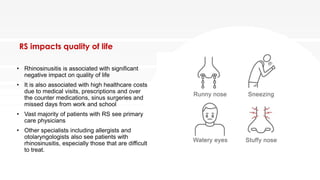
• Rhinosinusitis is associated with significant
negative impact on quality of life
• It is also associated with high healthcare costs
due to medical visits, prescriptions and over
the counter medications, sinus surgeries and
missed days from work and school
• Vast majority of patients with RS see primary
care physicians
• Other specialists including allergists and
otolaryngologists also see patients with
rhinosinusitis, especially those that are difficult
to treat.
Classification: duration of symptoms and
inflammation
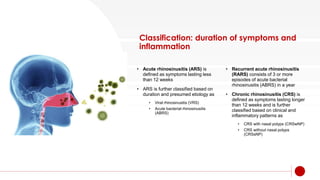
• Acute rhinosinusitis (ARS) is
defined as symptoms lasting less
than 12 weeks
• ARS is further classified based on
duration and presumed etiology as
• Viral rhinosinusitis (VRS)
• Acute bacterial rhinosinusitis
(ABRS)
• Recurrent acute rhinosinusitis
(RARS) consists of 3 or more
episodes of acute bacterial
rhinosinusitis (ABRS) in a year
• Chronic rhinosinusitis (CRS) is
defined as symptoms lasting longer
than 12 weeks and is further
classified based on clinical and
inflammatory patterns as
• CRS with nasal polyps (CRSwNP)
• CRS without nasal polyps
(CRSsNP)
Acute rhinosinusitis (ARS) and
recurrent acute rhinosinusitis
(RARS)
• Most ARS are viral in origin and improve on
their own
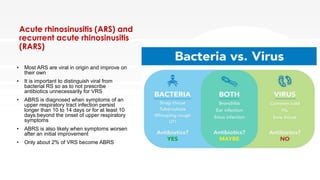
• It is important to distinguish viral from
bacterial RS so as to not prescribe
antibiotics unnecessarily for VRS
• ABRS is diagnosed when symptoms of an
upper respiratory tract infection persist
longer than 10 to 14 days or for at least 10
days beyond the onset of upper respiratory
symptoms
• ABRS is also likely when symptoms worsen
after an initial improvement
• Only about 2% of VRS become ABRS
ABRS: bacteriology and diagnosis
• Most common bacteria responsible for ABRS
are Streptococcus pneumoniae, Hemophilus
influenzae, and Moraxella catarrhalis.
• Staphylococcus aureus is also isolated in adults
with ABRS
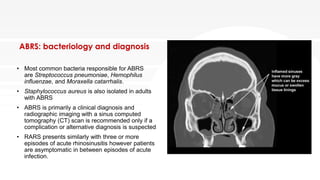
• ABRS is primarily a clinical diagnosis and
radiographic imaging with a sinus computed
tomography (CT) scan is recommended only if a
complication or alternative diagnosis is suspected
• RARS presents similarly with three or more
episodes of acute rhinosinusitis however patients
are asymptomatic in between episodes of acute
infection.
ARS: Symptoms & PE
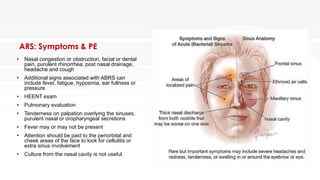
• Nasal congestion or obstruction, facial or dental
pain, purulent rhinorrhea, post nasal drainage,
headache and cough
• Additional signs associated with ABRS can
include fever, fatigue, hyposmia, ear fullness or
pressure
• HEENT exam
• Pulmonary evaluation
• Tenderness on palpation overlying the sinuses,
purulent nasal or oropharyngeal secretions
• Fever may or may not be present
• Attention should be paid to the periorbital and
cheek areas of the face to look for cellulitis or
extra sinus involvement
• Culture from the nasal cavity is not useful.
Therapy
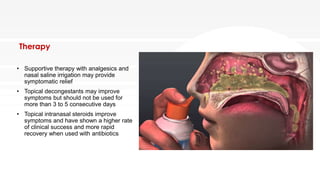
• Supportive therapy with analgesics and
nasal saline irrigation may provide
symptomatic relief
• Topical decongestants may improve
symptoms but should not be used for
more than 3 to 5 consecutive days
• Topical intranasal steroids improve
symptoms and have shown a higher rate
of clinical success and more rapid
recovery when used with antibiotics
Antibiotic recommendations
• Antibiotics are recommended if symptoms of
rhinosinusitis last longer than 10 days
• If patients don’t improve by 7 days after
ABRS diagnosis or worsen after initial
improvement
• Antibiotics should be used earlier if there is
evidence of complications such as periorbital
swelling or redness
• Most guidelines recommend 10-14 days of
therapy with antibiotics.
• Endoscopic surgical intervention is required
when there is a risk of intracranial
complication or in a patient with periorbital or
intraorbital abscess
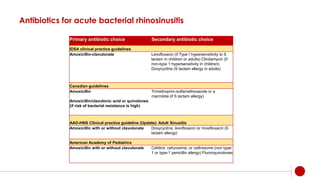
Antibiotics for acute bacterial rhinosinusitis
Primary antibiotic choice Secondary antibiotic choice
IDSA clinical practice guidelines
Amoxicillin-clavulonate Levofloxacin (if Type I hypersensitivity to ß
lactam in children or adults) Clindamycin (if
non-type 1 hypersensitivity in children)
Doxycycline (ß lactam allergy in adults)
Canadian guidelines
Amoxicillin
Amoxicillin/clavulonic acid or quinolones
(if risk of bacterial resistance is high)
Trimethoprim-sulfamethoxazole or a
macrolide (if ß lactam allergy)
AAO-HNS Clinical practice guideline (Update): Adult Sinusitis
Amoxicillin with or without clavulonate Doxycycline, levofloxacin or moxifloxacin (ß
lactam allergy)
American Academy of Pediatrics
Amoxicillin with or without clavulonate Cefdinir, cefuroxime, or ceftriaxone (non type-
1 or type-1 penicillin allergy) Fluoroquinolones
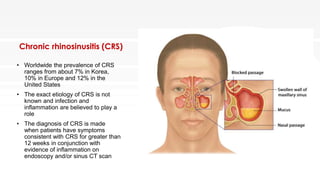
Chronic rhinosinusitis (CRS)
• Worldwide the prevalence of CRS
ranges from about 7% in Korea,
10% in Europe and 12% in the
United States
• The exact etiology of CRS is not
known and infection and
inflammation are believed to play a
role
• The diagnosis of CRS is made
when patients have symptoms
consistent with CRS for greater than
12 weeks in conjunction with
evidence of inflammation on
endoscopy and/or sinus CT scan
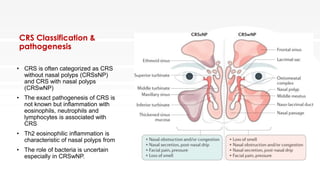
CRS Classification &
pathogenesis
• CRS is often categorized as CRS
without nasal polyps (CRSsNP)
and CRS with nasal polyps
(CRSwNP)
• The exact pathogenesis of CRS is
not known but inflammation with
eosinophils, neutrophils and
lymphocytes is associated with
CRS
• Th2 eosinophilic inflammation is
characteristic of nasal polyps from
• The role of bacteria is uncertain
especially in CRSwNP.
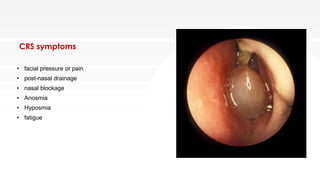
CRS symptoms
• facial pressure or pain
• post-nasal drainage
• nasal blockage
• Anosmia
• Hyposmia
• fatigue
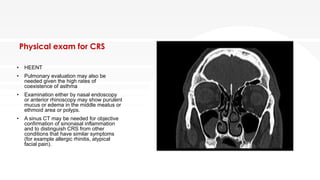
Physical exam for CRS
• HEENT
• Pulmonary evaluation may also be
needed given the high rates of
coexistence of asthma
• Examination either by nasal endoscopy
or anterior rhinoscopy may show purulent
mucus or edema in the middle meatus or
ethmoid area or polyps.
• A sinus CT may be needed for objective
confirmation of sinonasal inflammation
and to distinguish CRS from other
conditions that have similar symptoms
(for example allergic rhinitis, atypical
facial pain).
Therapy
• Topical intranasal corticosteroids are recommended to decrease inflammation and are beneficial in
both CRSwNP and CRSsNP
• Short-term oral corticosteroids (for CRSwNP) help shrink nasal polyps and reduce inflammation
• Saline nasal irrigation is recommended for CRS and has shown to improve symptoms and quality of
life
• Antibiotics are used for acute exacerbations of CRS
• Aspirin desensitization, is a potential therapeutic option for patients with AERD. This procedure
consists of administration of incremental oral doses of aspirin over 1-2 days until a dose of 650mg
of aspirin can be taken
• Biologic therapies with monoclonal antibodies such as omalizumab (anti IgE)
• Functional endoscopic sinus surgery may be considered in patients who fail medical therapy.
Common modifying factors associated with rhinosinusitis
Asthma
Granulomatosis with polyangiitis (Wegner’s granulomatosis)
Eosinophilic granulomatosis with polyangiitis (Churg-Strauss syndrome)
Immunodeficiencies: common variable immune deficiency, IgA deficiency, specific
antibody deficiency, acquired immunodeficiency syndrome (AIDS)
Genetic abnormalities: cystic fibrosis, ciliary dyskinesia, Young’s syndrome
Gastroesophageal reflux disease
Sleep apnea
Sarcoidosis
Allergic rhinitis
THANK YOU!

Rhinosinusitis

  • 1.
    Rhinosinusitis O ve rvi e w , d i a g n o s i s a n d m a n a g e m e n t
  • 2.
    Introduction • Rhinosinusitis (RS)is defined as inflammation of the sinuses and nasal cavity • Rhinosinusitis may be classified based on duration • The term, “rhinosinusitis” is preferred over “sinusitis” because inflammation of the sinus cavities is almost always accompanied by inflammation of the nasal cavities • RS is one of the most commonly diagnosed diseases in the world and is believed to affect more than 12% of the US population
  • 3.
    RS impacts qualityof life • Rhinosinusitis is associated with significant negative impact on quality of life • It is also associated with high healthcare costs due to medical visits, prescriptions and over the counter medications, sinus surgeries and missed days from work and school • Vast majority of patients with RS see primary care physicians • Other specialists including allergists and otolaryngologists also see patients with rhinosinusitis, especially those that are difficult to treat.
  • 4.
    Classification: duration ofsymptoms and inflammation • Acute rhinosinusitis (ARS) is defined as symptoms lasting less than 12 weeks • ARS is further classified based on duration and presumed etiology as • Viral rhinosinusitis (VRS) • Acute bacterial rhinosinusitis (ABRS) • Recurrent acute rhinosinusitis (RARS) consists of 3 or more episodes of acute bacterial rhinosinusitis (ABRS) in a year • Chronic rhinosinusitis (CRS) is defined as symptoms lasting longer than 12 weeks and is further classified based on clinical and inflammatory patterns as • CRS with nasal polyps (CRSwNP) • CRS without nasal polyps (CRSsNP)
  • 5.
    Acute rhinosinusitis (ARS)and recurrent acute rhinosinusitis (RARS) • Most ARS are viral in origin and improve on their own • It is important to distinguish viral from bacterial RS so as to not prescribe antibiotics unnecessarily for VRS • ABRS is diagnosed when symptoms of an upper respiratory tract infection persist longer than 10 to 14 days or for at least 10 days beyond the onset of upper respiratory symptoms • ABRS is also likely when symptoms worsen after an initial improvement • Only about 2% of VRS become ABRS
  • 6.
    ABRS: bacteriology anddiagnosis • Most common bacteria responsible for ABRS are Streptococcus pneumoniae, Hemophilus influenzae, and Moraxella catarrhalis. • Staphylococcus aureus is also isolated in adults with ABRS • ABRS is primarily a clinical diagnosis and radiographic imaging with a sinus computed tomography (CT) scan is recommended only if a complication or alternative diagnosis is suspected • RARS presents similarly with three or more episodes of acute rhinosinusitis however patients are asymptomatic in between episodes of acute infection.
  • 7.
    ARS: Symptoms &PE • Nasal congestion or obstruction, facial or dental pain, purulent rhinorrhea, post nasal drainage, headache and cough • Additional signs associated with ABRS can include fever, fatigue, hyposmia, ear fullness or pressure • HEENT exam • Pulmonary evaluation • Tenderness on palpation overlying the sinuses, purulent nasal or oropharyngeal secretions • Fever may or may not be present • Attention should be paid to the periorbital and cheek areas of the face to look for cellulitis or extra sinus involvement • Culture from the nasal cavity is not useful.
  • 8.
    Therapy • Supportive therapywith analgesics and nasal saline irrigation may provide symptomatic relief • Topical decongestants may improve symptoms but should not be used for more than 3 to 5 consecutive days • Topical intranasal steroids improve symptoms and have shown a higher rate of clinical success and more rapid recovery when used with antibiotics
  • 9.
    Antibiotic recommendations • Antibioticsare recommended if symptoms of rhinosinusitis last longer than 10 days • If patients don’t improve by 7 days after ABRS diagnosis or worsen after initial improvement • Antibiotics should be used earlier if there is evidence of complications such as periorbital swelling or redness • Most guidelines recommend 10-14 days of therapy with antibiotics. • Endoscopic surgical intervention is required when there is a risk of intracranial complication or in a patient with periorbital or intraorbital abscess
  • 10.
    Antibiotics for acutebacterial rhinosinusitis Primary antibiotic choice Secondary antibiotic choice IDSA clinical practice guidelines Amoxicillin-clavulonate Levofloxacin (if Type I hypersensitivity to ß lactam in children or adults) Clindamycin (if non-type 1 hypersensitivity in children) Doxycycline (ß lactam allergy in adults) Canadian guidelines Amoxicillin Amoxicillin/clavulonic acid or quinolones (if risk of bacterial resistance is high) Trimethoprim-sulfamethoxazole or a macrolide (if ß lactam allergy) AAO-HNS Clinical practice guideline (Update): Adult Sinusitis Amoxicillin with or without clavulonate Doxycycline, levofloxacin or moxifloxacin (ß lactam allergy) American Academy of Pediatrics Amoxicillin with or without clavulonate Cefdinir, cefuroxime, or ceftriaxone (non type- 1 or type-1 penicillin allergy) Fluoroquinolones
  • 11.
    Chronic rhinosinusitis (CRS) •Worldwide the prevalence of CRS ranges from about 7% in Korea, 10% in Europe and 12% in the United States • The exact etiology of CRS is not known and infection and inflammation are believed to play a role • The diagnosis of CRS is made when patients have symptoms consistent with CRS for greater than 12 weeks in conjunction with evidence of inflammation on endoscopy and/or sinus CT scan
  • 12.
    CRS Classification & pathogenesis •CRS is often categorized as CRS without nasal polyps (CRSsNP) and CRS with nasal polyps (CRSwNP) • The exact pathogenesis of CRS is not known but inflammation with eosinophils, neutrophils and lymphocytes is associated with CRS • Th2 eosinophilic inflammation is characteristic of nasal polyps from • The role of bacteria is uncertain especially in CRSwNP.
  • 13.
    CRS symptoms • facialpressure or pain • post-nasal drainage • nasal blockage • Anosmia • Hyposmia • fatigue
  • 14.
    Physical exam forCRS • HEENT • Pulmonary evaluation may also be needed given the high rates of coexistence of asthma • Examination either by nasal endoscopy or anterior rhinoscopy may show purulent mucus or edema in the middle meatus or ethmoid area or polyps. • A sinus CT may be needed for objective confirmation of sinonasal inflammation and to distinguish CRS from other conditions that have similar symptoms (for example allergic rhinitis, atypical facial pain).
  • 15.
    Therapy • Topical intranasalcorticosteroids are recommended to decrease inflammation and are beneficial in both CRSwNP and CRSsNP • Short-term oral corticosteroids (for CRSwNP) help shrink nasal polyps and reduce inflammation • Saline nasal irrigation is recommended for CRS and has shown to improve symptoms and quality of life • Antibiotics are used for acute exacerbations of CRS • Aspirin desensitization, is a potential therapeutic option for patients with AERD. This procedure consists of administration of incremental oral doses of aspirin over 1-2 days until a dose of 650mg of aspirin can be taken • Biologic therapies with monoclonal antibodies such as omalizumab (anti IgE) • Functional endoscopic sinus surgery may be considered in patients who fail medical therapy.
  • 16.
    Common modifying factorsassociated with rhinosinusitis Asthma Granulomatosis with polyangiitis (Wegner’s granulomatosis) Eosinophilic granulomatosis with polyangiitis (Churg-Strauss syndrome) Immunodeficiencies: common variable immune deficiency, IgA deficiency, specific antibody deficiency, acquired immunodeficiency syndrome (AIDS) Genetic abnormalities: cystic fibrosis, ciliary dyskinesia, Young’s syndrome Gastroesophageal reflux disease Sleep apnea Sarcoidosis Allergic rhinitis
  • 17.