
Andrea R S
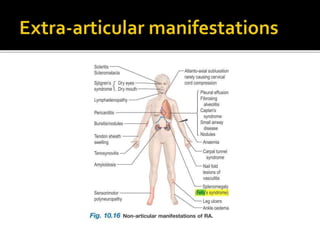
 CUTANEOUS ANDVASCULAR
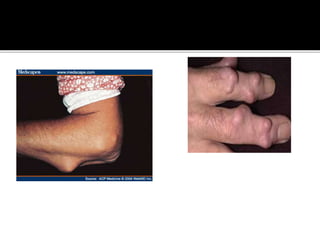
 Rheumatoid nodules-
 Occur usually in seropositive patients at sites
of frictions like extensor surface of forearm,
sacrum, achiles tendon and toes.
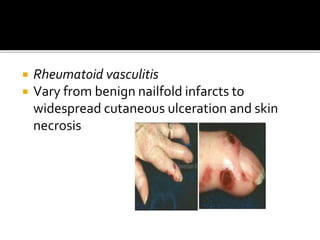
 Rheumatoid vasculitis
 Vary from benign nailfold infarcts to
widespread cutaneous ulceration and skin
necrosis
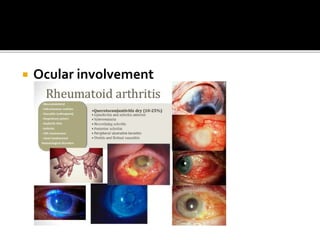
 Ocular involvement
 Cardiac and pulmonary
 Granulomatous lesions can cause heart block,
cardiomyopathy, coronary artery occulusion.
 Serositis is commonly assymptomatic but
may present as pleurisy or breathlessness.
 Pulmonary fibrosis can cause dyspnea
 Neurological involvement
 Rheumatoid arthritis tends to spare CNS but
vasculitis can cause peripheral neuropathy
 Peripheral entrapment neuropathy
 Cervical cord compression
 Hematological
 Anemia,thrombocytopenia
 Musculoskeletal
 Muscle wasting,osteoporosis,bursitis
 Amyloidosis-presents as nephrotic syndrome
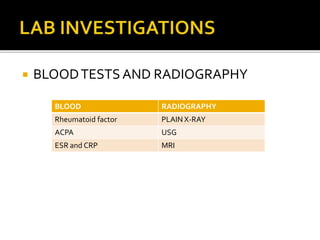
 BLOODTESTS AND RADIOGRAPHY
BLOOD RADIOGRAPHY
Rheumatoid factor PLAIN X-RAY
ACPA USG
ESR and CRP MRI
 RHEUMATOID FACTOR
 Not specific for RA as its found in 5% of
healthy people
 Can be of prognostic value as people with
high titres tend to have more severe and
progressive disease with non articular
manifestation
 ACPA-Anti citrullinated peptide antibodies
 As better specificity than RF
 Presence of ACPA is most common in persons
with aggressive disease with tendency to
develop bone erosions
 Useful to confirm the diagnosis
 RADIOGRAPHY
 Plain x-ray of hands,wrist and feet
 Ultrasound and MRI-not routinely done
 Main value is in patients with symptom
suggestive of inflammatory arthritis
 DAS28
 Count number of tender joints
 Count number of swollen joints
 Measure ESR
 Ask patient to rate global activities of arthritis
during the past week from 0(no symptom) to
100(very severe)
 Enter data into an online calculator or work
out using formula
 To establish diagnosis-
 Clinical criteria
 ESR and CRP
 Rheumatoid factor and ACPA
 USG and MRI
 To monitor disease activity and drug efficacy
 Pain
 Early morning stiffness
 Joint tenderness
 Joint swelling
 DAS28
 USG
 ESR and CRP
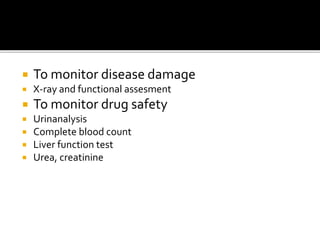
 To monitor disease damage
 X-ray and functional assesment
 To monitor drug safety
 Urinanalysis
 Complete blood count
 Liver function test
 Urea, creatinine
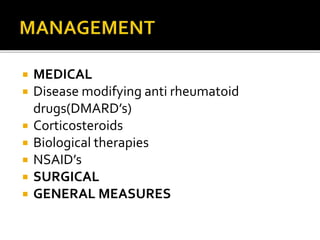
 MEDICAL
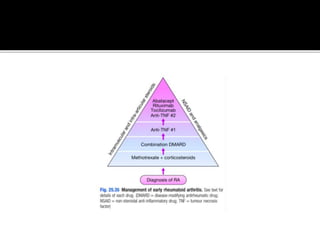
 Disease modifying anti rheumatoid
drugs(DMARD’s)
 Corticosteroids
 Biological therapies
 NSAID’s
 SURGICAL
 GENERAL MEASURES
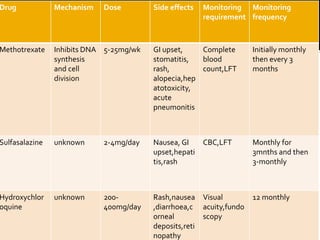
Drug Mechanism Dose Side effects Monitoring
requirement
Monitoring
frequency
Methotrexate Inhibits DNA
synthesis
and cell
division
5-25mg/wk GI upset,
stomatitis,
rash,
alopecia,hep
atotoxicity,
acute
pneumonitis
Complete
blood
count,LFT
Initially monthly
then every 3
months
Sulfasalazine unknown 2-4mg/day Nausea, GI
upset,hepati
tis,rash
CBC,LFT Monthly for
3mnths and then
3-monthly
Hydroxychlor
oquine
unknown 200-
400mg/day
Rash,nausea
,diarrhoea,c
orneal
deposits,reti
nopathy
Visual
acuity,fundo
scopy
12 monthly
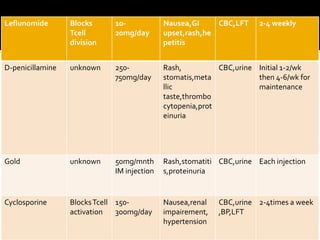
Leflunomide Blocks
Tcell
division
10-
20mg/day
Nausea,GI
upset,rash,he
petitis
CBC,LFT 2-4 weekly
D-penicillamine unknown 250-
750mg/day
Rash,
stomatis,meta
llic
taste,thrombo
cytopenia,prot
einuria
CBC,urine Initial 1-2/wk
then 4-6/wk for
maintenance
Gold unknown 50mg/mnth
IM injection
Rash,stomatiti
s,proteinuria
CBC,urine Each injection
Cyclosporine BlocksTcell
activation
150-
300mg/day
Nausea,renal
impairement,
hypertension
CBC,urine
,BP,LFT
2-4times a week
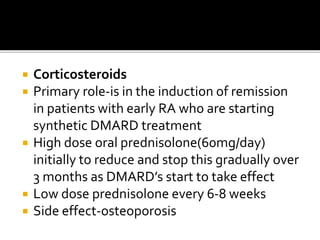
 Corticosteroids
 Primary role-is in the induction of remission
in patients with early RA who are starting
synthetic DMARD treatment
 High dose oral prednisolone(60mg/day)
initially to reduce and stop this gradually over
3 months as DMARD’s start to take effect
 Low dose prednisolone every 6-8 weeks
 Side effect-osteoporosis
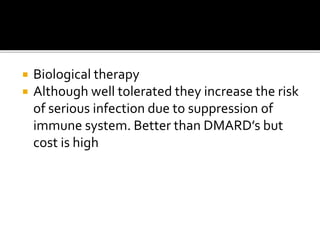
 Biological therapy
 Although well tolerated they increase the risk
of serious infection due to suppression of
immune system. Better than DMARD’s but
cost is high
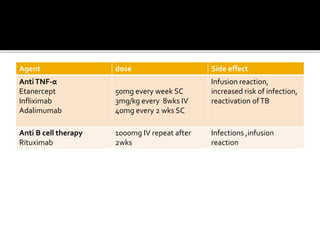
Agent dose Side effect
AntiTNF-α
Etanercept
Infliximab
Adalimumab
50mg every week SC
3mg/kg every 8wks IV
40mg every 2 wks SC
Infusion reaction,
increased risk of infection,
reactivation ofTB
Anti B cell therapy
Rituximab
1000mg IV repeat after
2wks
Infections ,infusion
reaction
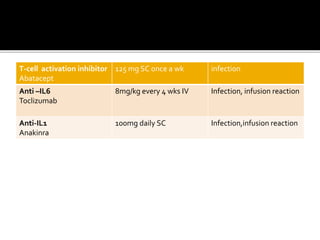
T-cell activation inhibitor
Abatacept
125 mg SC once a wk infection
Anti –IL6
Toclizumab
8mg/kg every 4 wks IV Infection, infusion reaction
Anti-IL1
Anakinra
100mg daily SC Infection,infusion reaction
 Surgery-synovectomy of wrist or finger
tendon sheath
 Later stage when joint damage has occurred
arthroplasty is done
 General measures-physical
rest,analgesics,NSAID’s,passive exercise
THANKYOU

Rheumatoid arthritis

  • 1.
  • 3.
     CUTANEOUS ANDVASCULAR Rheumatoid nodules-  Occur usually in seropositive patients at sites of frictions like extensor surface of forearm, sacrum, achiles tendon and toes.
  • 5.
     Rheumatoid vasculitis Vary from benign nailfold infarcts to widespread cutaneous ulceration and skin necrosis
  • 6.
  • 7.
     Cardiac andpulmonary  Granulomatous lesions can cause heart block, cardiomyopathy, coronary artery occulusion.  Serositis is commonly assymptomatic but may present as pleurisy or breathlessness.  Pulmonary fibrosis can cause dyspnea
  • 8.
     Neurological involvement Rheumatoid arthritis tends to spare CNS but vasculitis can cause peripheral neuropathy  Peripheral entrapment neuropathy  Cervical cord compression
  • 9.
     Hematological  Anemia,thrombocytopenia Musculoskeletal  Muscle wasting,osteoporosis,bursitis  Amyloidosis-presents as nephrotic syndrome
  • 11.
     BLOODTESTS ANDRADIOGRAPHY BLOOD RADIOGRAPHY Rheumatoid factor PLAIN X-RAY ACPA USG ESR and CRP MRI
  • 12.
     RHEUMATOID FACTOR Not specific for RA as its found in 5% of healthy people  Can be of prognostic value as people with high titres tend to have more severe and progressive disease with non articular manifestation
  • 13.
     ACPA-Anti citrullinatedpeptide antibodies  As better specificity than RF  Presence of ACPA is most common in persons with aggressive disease with tendency to develop bone erosions  Useful to confirm the diagnosis
  • 14.
     RADIOGRAPHY  Plainx-ray of hands,wrist and feet  Ultrasound and MRI-not routinely done  Main value is in patients with symptom suggestive of inflammatory arthritis
  • 15.
     DAS28  Countnumber of tender joints  Count number of swollen joints  Measure ESR  Ask patient to rate global activities of arthritis during the past week from 0(no symptom) to 100(very severe)  Enter data into an online calculator or work out using formula
  • 16.
     To establishdiagnosis-  Clinical criteria  ESR and CRP  Rheumatoid factor and ACPA  USG and MRI  To monitor disease activity and drug efficacy  Pain  Early morning stiffness  Joint tenderness  Joint swelling  DAS28  USG  ESR and CRP
  • 17.
     To monitordisease damage  X-ray and functional assesment  To monitor drug safety  Urinanalysis  Complete blood count  Liver function test  Urea, creatinine
  • 18.
     MEDICAL  Diseasemodifying anti rheumatoid drugs(DMARD’s)  Corticosteroids  Biological therapies  NSAID’s  SURGICAL  GENERAL MEASURES
  • 19.
    Drug Mechanism DoseSide effects Monitoring requirement Monitoring frequency Methotrexate Inhibits DNA synthesis and cell division 5-25mg/wk GI upset, stomatitis, rash, alopecia,hep atotoxicity, acute pneumonitis Complete blood count,LFT Initially monthly then every 3 months Sulfasalazine unknown 2-4mg/day Nausea, GI upset,hepati tis,rash CBC,LFT Monthly for 3mnths and then 3-monthly Hydroxychlor oquine unknown 200- 400mg/day Rash,nausea ,diarrhoea,c orneal deposits,reti nopathy Visual acuity,fundo scopy 12 monthly
  • 20.
    Leflunomide Blocks Tcell division 10- 20mg/day Nausea,GI upset,rash,he petitis CBC,LFT 2-4weekly D-penicillamine unknown 250- 750mg/day Rash, stomatis,meta llic taste,thrombo cytopenia,prot einuria CBC,urine Initial 1-2/wk then 4-6/wk for maintenance Gold unknown 50mg/mnth IM injection Rash,stomatiti s,proteinuria CBC,urine Each injection Cyclosporine BlocksTcell activation 150- 300mg/day Nausea,renal impairement, hypertension CBC,urine ,BP,LFT 2-4times a week
  • 21.
     Corticosteroids  Primaryrole-is in the induction of remission in patients with early RA who are starting synthetic DMARD treatment  High dose oral prednisolone(60mg/day) initially to reduce and stop this gradually over 3 months as DMARD’s start to take effect  Low dose prednisolone every 6-8 weeks  Side effect-osteoporosis
  • 22.
     Biological therapy Although well tolerated they increase the risk of serious infection due to suppression of immune system. Better than DMARD’s but cost is high
  • 23.
    Agent dose Sideeffect AntiTNF-α Etanercept Infliximab Adalimumab 50mg every week SC 3mg/kg every 8wks IV 40mg every 2 wks SC Infusion reaction, increased risk of infection, reactivation ofTB Anti B cell therapy Rituximab 1000mg IV repeat after 2wks Infections ,infusion reaction
  • 24.
    T-cell activation inhibitor Abatacept 125mg SC once a wk infection Anti –IL6 Toclizumab 8mg/kg every 4 wks IV Infection, infusion reaction Anti-IL1 Anakinra 100mg daily SC Infection,infusion reaction
  • 25.
     Surgery-synovectomy ofwrist or finger tendon sheath  Later stage when joint damage has occurred arthroplasty is done  General measures-physical rest,analgesics,NSAID’s,passive exercise
  • 27.