Rheumatoid arthritis
Chronic inflammatory
B/L symmetrical polyarthritis,
involving small joints of hands & feet
RA
 Common in middle-aged, females
 Epidemiological association with EBV & HHV-6
 Chronic- x >6 weeks
 Inflammatory- pain, swelling, morning stiffness
 Joints involved- B/L symmetrical PIP, MCP, MTP,
wrist; DIP spared
 Spine- C1-C2 joint involved, rest rarely;
atlanto-axial dislocation can cause quadriparesis
 Long-standing disease causes joint deformities
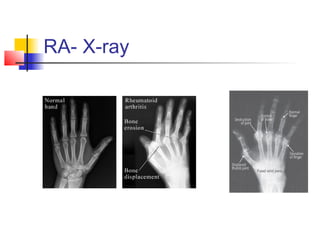
RA- X-ray
Extra-articular manifestation
 Rheumatoid nodules- firm, non-tender, subcutaneous
nodules on extensor surface of forearms
 Small vessel vasculitis- digital infarct,
livedo reticularis, mononeuritis multiplex
 Pericarditis
 Accelerated atherosclerosis
 Lung- pleural effusion, rheumatoid nodules, interstitial
fibrosis
 Nerve entrapment syndromes
 Felty syndrome- RA, splenomegaly, neutropenia
Investigation
 Anemia-normocytic, normochromic
 Raised ESR- helpful in follow-up
 X-ray of hands- juxta-articular osteopenia,
reduced joint space, bony erosions,
 Rheumatoid factor- autoAb against Fc portion
of IgG- +ve in ~50-70%
 Anti-CCP Ab- +ve in ~70%, more specific
 Synovial fluid- inflammatory
Differential diagnosis
 Actually none
 Ankylosing spondylitis- males, axial joints affected
 Psoriatic arthritis- skin lesions, nail changes,
DIP joint involvement
 Gout- large joints involved, asymmetricalsymmetrical
 Osteoarthritis- weight bearing joints, DIP
joints involved, X-ray suggestive
 SLE- other system involved, ds-DNA Ab +ve
 Acute rheumatic fever- asymmetric, migratory, large joints
involved, e/o antecedent streptococcal infection
Treatment
 No cure, except SCT
 Goals of treatment-
 Alleviate symptoms- steroids as bridge therapy
 Prevent future joint destruction & deformity- DMARDs
 Sequence of DMARDs-
 Methotrexate
 + HCQS
 + any biological TNF antagonist/Sulfasalazine
 Rituximab
DMARDs- start early
 Non-biological-
 Methotrexate- 5-25 mg/week; monitor CBC, LFT, RFT
 Hydroxychloroquine- 200-400 mg/day; retinal toxicity
 Sulfasalazine- 1-3 gm/day; monitor WBC
 Leflunomide- 10-20 mg/day; watch for diarrhea, monitor LFT
 Biological- costly
 Etanercept- recombinant TNF receptor, given SC
 Infliximab- chimeric monoclonal Ab against TNF, given IV
 Adalimumab- human monoclonal Ab against TNF, given SC
 Rituximab- chimeric Ab against CD20 on B-cells, given IV
Prognosis
 Disability-
 After 5 years- ~1/3rd
won’t be working
 After 10 years- ~half
 Poor prognostic factors
 Early erosive disease
 Rheumatoid nodules
 +ve RF/anti-CCP Ab
 Increased clinical severity
 Mortality- lifespan reduced by ~5-10 yrs.
Prognosis
 Disability-
 After 5 years- ~1/3rd
won’t be working
 After 10 years- ~half
 Poor prognostic factors
 Early erosive disease
 Rheumatoid nodules
 +ve RF/anti-CCP Ab
 Increased clinical severity
 Mortality- lifespan reduced by ~5-10 yrs.

Rheumatoid arthritis

  • 1.
    Rheumatoid arthritis Chronic inflammatory B/Lsymmetrical polyarthritis, involving small joints of hands & feet
  • 2.
    RA  Common inmiddle-aged, females  Epidemiological association with EBV & HHV-6  Chronic- x >6 weeks  Inflammatory- pain, swelling, morning stiffness  Joints involved- B/L symmetrical PIP, MCP, MTP, wrist; DIP spared  Spine- C1-C2 joint involved, rest rarely; atlanto-axial dislocation can cause quadriparesis  Long-standing disease causes joint deformities
  • 3.
  • 4.
    Extra-articular manifestation  Rheumatoidnodules- firm, non-tender, subcutaneous nodules on extensor surface of forearms  Small vessel vasculitis- digital infarct, livedo reticularis, mononeuritis multiplex  Pericarditis  Accelerated atherosclerosis  Lung- pleural effusion, rheumatoid nodules, interstitial fibrosis  Nerve entrapment syndromes  Felty syndrome- RA, splenomegaly, neutropenia
  • 5.
    Investigation  Anemia-normocytic, normochromic Raised ESR- helpful in follow-up  X-ray of hands- juxta-articular osteopenia, reduced joint space, bony erosions,  Rheumatoid factor- autoAb against Fc portion of IgG- +ve in ~50-70%  Anti-CCP Ab- +ve in ~70%, more specific  Synovial fluid- inflammatory
  • 6.
    Differential diagnosis  Actuallynone  Ankylosing spondylitis- males, axial joints affected  Psoriatic arthritis- skin lesions, nail changes, DIP joint involvement  Gout- large joints involved, asymmetricalsymmetrical  Osteoarthritis- weight bearing joints, DIP joints involved, X-ray suggestive  SLE- other system involved, ds-DNA Ab +ve  Acute rheumatic fever- asymmetric, migratory, large joints involved, e/o antecedent streptococcal infection
  • 7.
    Treatment  No cure,except SCT  Goals of treatment-  Alleviate symptoms- steroids as bridge therapy  Prevent future joint destruction & deformity- DMARDs  Sequence of DMARDs-  Methotrexate  + HCQS  + any biological TNF antagonist/Sulfasalazine  Rituximab
  • 8.
    DMARDs- start early Non-biological-  Methotrexate- 5-25 mg/week; monitor CBC, LFT, RFT  Hydroxychloroquine- 200-400 mg/day; retinal toxicity  Sulfasalazine- 1-3 gm/day; monitor WBC  Leflunomide- 10-20 mg/day; watch for diarrhea, monitor LFT  Biological- costly  Etanercept- recombinant TNF receptor, given SC  Infliximab- chimeric monoclonal Ab against TNF, given IV  Adalimumab- human monoclonal Ab against TNF, given SC  Rituximab- chimeric Ab against CD20 on B-cells, given IV
  • 9.
    Prognosis  Disability-  After5 years- ~1/3rd won’t be working  After 10 years- ~half  Poor prognostic factors  Early erosive disease  Rheumatoid nodules  +ve RF/anti-CCP Ab  Increased clinical severity  Mortality- lifespan reduced by ~5-10 yrs.
  • 10.
    Prognosis  Disability-  After5 years- ~1/3rd won’t be working  After 10 years- ~half  Poor prognostic factors  Early erosive disease  Rheumatoid nodules  +ve RF/anti-CCP Ab  Increased clinical severity  Mortality- lifespan reduced by ~5-10 yrs.