PERIPHERAL ARTERIAL
DISEASES
Shambhavi Sharma
MS,2nd year resident
PAHS
Moderator
Dr Erena
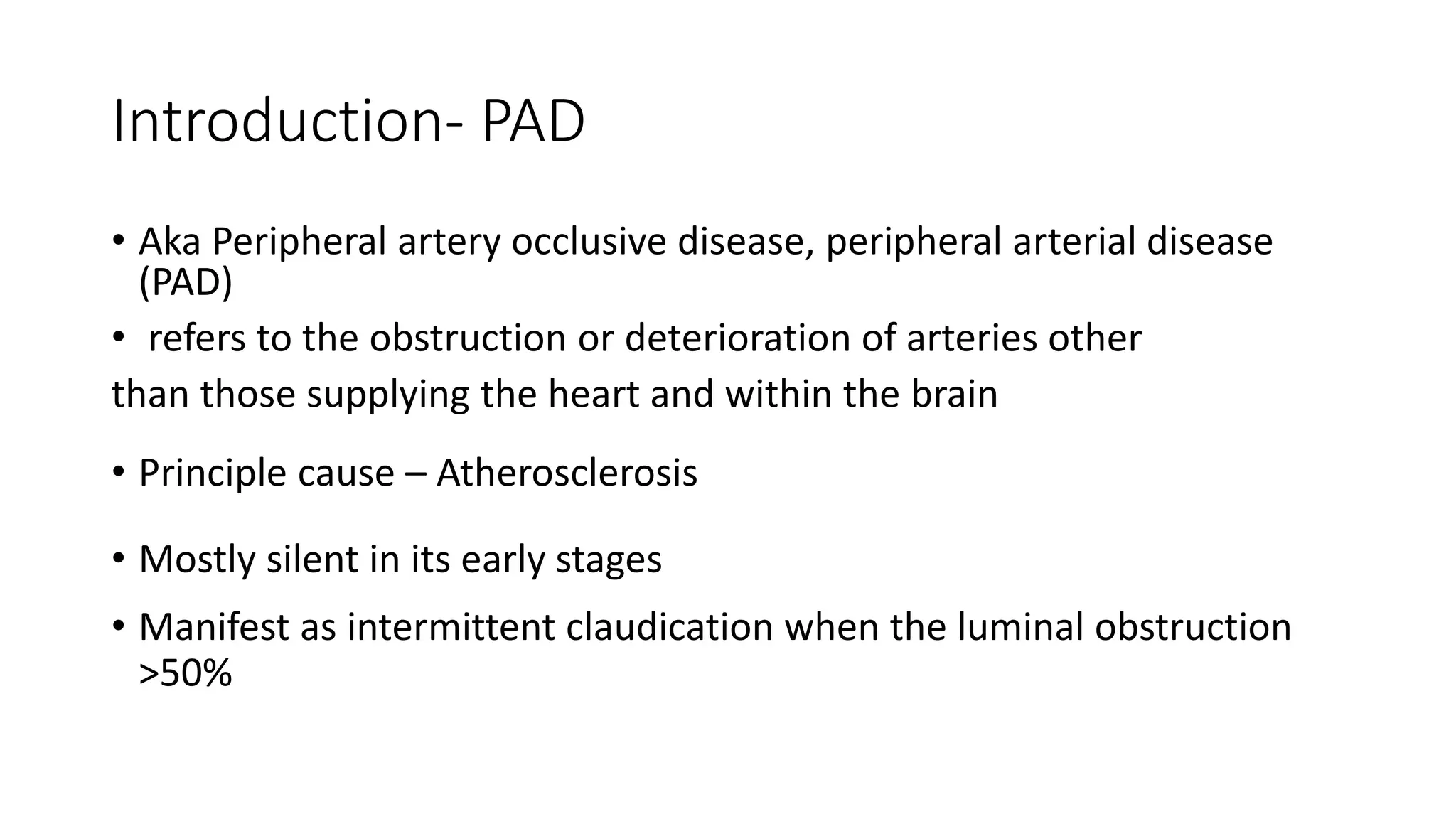
Introduction- PAD
• Aka Peripheral artery occlusive disease, peripheral arterial disease
(PAD)
• refers to the obstruction or deterioration of arteries other
than those supplying the heart and within the brain
• Principle cause – Atherosclerosis
• Mostly silent in its early stages
• Manifest as intermittent claudication when the luminal obstruction
>50%
Clinical presentation
Two broad presentations
• Chronic arterial insufficiency
• Acute arterial occlusion
Acute arterial insufficiency
• Quickly developing or sudden decrease in limb perfusion producing
new or worsening symptoms or signs and often threatening limb
viability
• Acute
– sudden decrease in limb perfusion presenting within two weeks of the inciting
events
• Etiologies
• Native arterial thrombosis – rupture of atherosclerotic plaque
• Acute thrombosis of aneurysm
• Dissection
• Traumatic or iatrogenic injury
• Arterial embolism
• Vasospasm – non occlusive ischemia
Acute Limb Ischemia - Presentations
• Pain
• Usually located distally, gradually increases in severity and progresses
proximally
• Skin perfusion
• Typically cool and pale with delayed capillary filling and atrophy of skin and
hair loss
• Pulse
• Severely reduced pulses or absent
• If contralateral palpable- embolus
• Paresthesia
2017 ESC Guidelines on the Diagnosis and Treatment of Peripheral Arterial Diseases
Management – Acute Limb Ischemia
• Initial goal – to prevent thrombus propagation and worsening
ischemia
• Immediate anticoagulation
• Start unfractionated heparin
• Loading dose 75-100 units/kg
• Followed infusion heparin 18 units/kg
• Pain management
Management - Endovascular procedures
• Pharmacologic thrombolysis
• Less invasive than catheter based approach
• Advantage – Reduced risk of endothelial trauma and clot lysis in smaller
branches too small for embolectomy
• Limitations: Distal embolism, fluid overloading due to continuous rinsing and
finally hemolysis, hemoglobinuria
• Streptokinase, urokinase, alteplase , plasminogen activator
(rtPA)(Recommended)
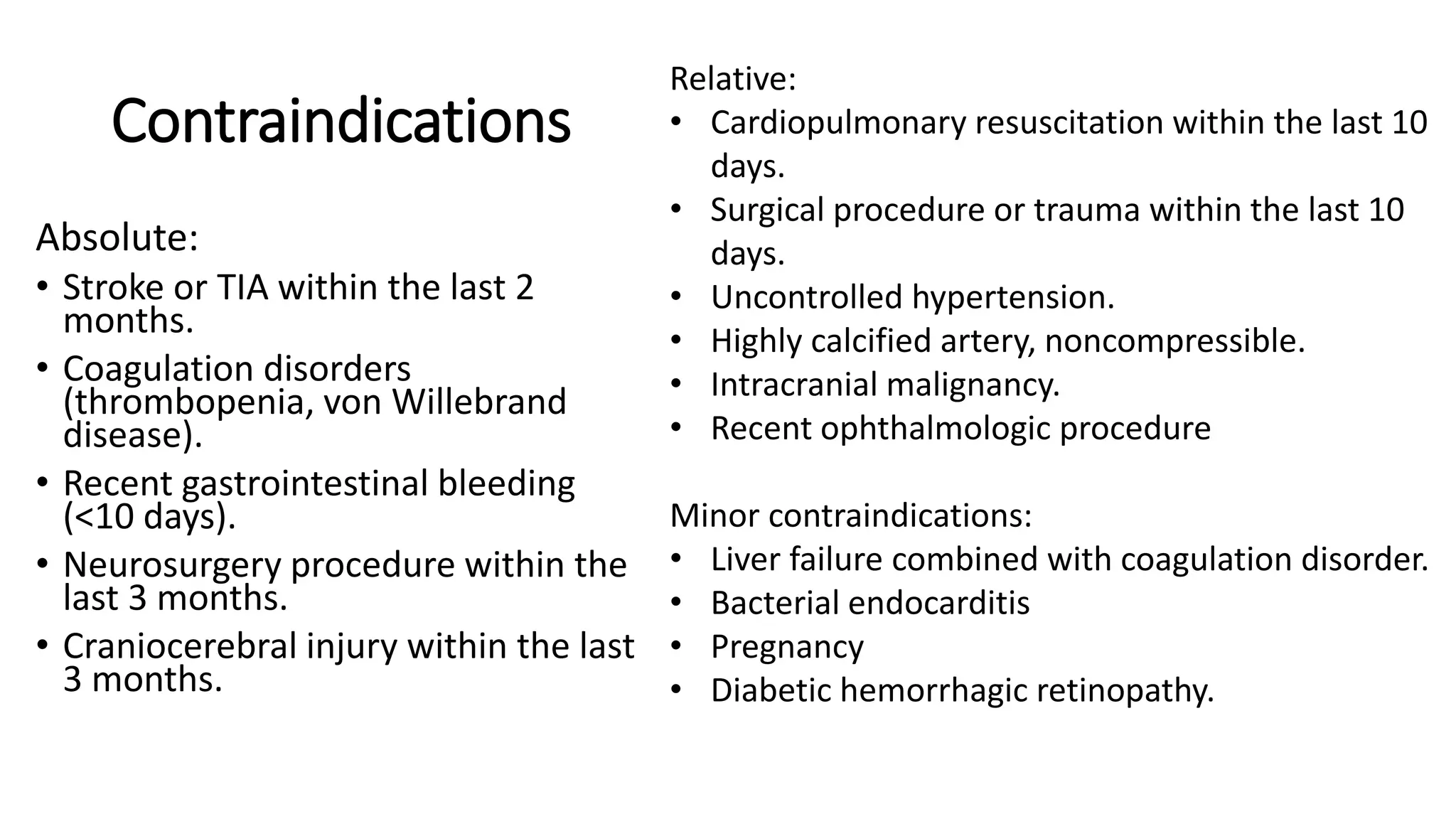
Contraindications
Absolute:
• Stroke or TIA within the last 2
months.
• Coagulation disorders
(thrombopenia, von Willebrand
disease).
• Recent gastrointestinal bleeding
(<10 days).
• Neurosurgery procedure within the
last 3 months.
• Craniocerebral injury within the last
3 months.
Relative:
• Cardiopulmonary resuscitation within the last 10
days.
• Surgical procedure or trauma within the last 10
days.
• Uncontrolled hypertension.
• Highly calcified artery, noncompressible.
• Intracranial malignancy.
• Recent ophthalmologic procedure
Minor contraindications:
• Liver failure combined with coagulation disorder.
• Bacterial endocarditis
• Pregnancy
• Diabetic hemorrhagic retinopathy.
Procedure
1. Vascular access:
2. Catheterization process:
3. Wire and catheter promotion
4. Thrombolytic agent infusion :
i) Bolus infusion through a catheter within the thrombus, followed by continuous
infusion of a low dosage of thrombolytic agent through a pump
Dosing : tPA (dose: 0.5–1 mg/h)
Thrombolysis duration:
• When the angiographic result is optimal, discontinuation.
• Usually 12–48 h, maximum 48–72 h
(ii) 25–50 cc/hour of a 10 mg/500cc N/S solution.
(iii) reference fibrinogen, activated partial thromboplastin time (aPTT) ,fibrin degradation
product (FDP).
(iv) Repeat every 12 h and every 24 h thereafter.
(v) Expected: fall of fibrinogen, rise of FDP levels, prolonged aPTT by 50% (active
thrombolysis).
Fibrinogen <150: 4 times higher bleeding risk.
FDP >400: 2.5 times higher bleeding risk.
(vii) If no progress in recanalization of the lesion, dosage increased by 1 mg/h.
concomitant infusion of heparin (200–500 units/h; target aPTT 1.25-1.5 times the baseline)
Management – Surgery
• Embolectomy – Thrombus extracted Fogarty balloon embolectomy
catheter
Procedure
• Percutaneous aspiration thrombectomy
• Uses thin wall large lumen catheter and suction with syringe to remove
embolus/thrombus from vessels
• PROCEDURE:
• Percutaneous mechanical thrombectomy
• PROCEDURE :
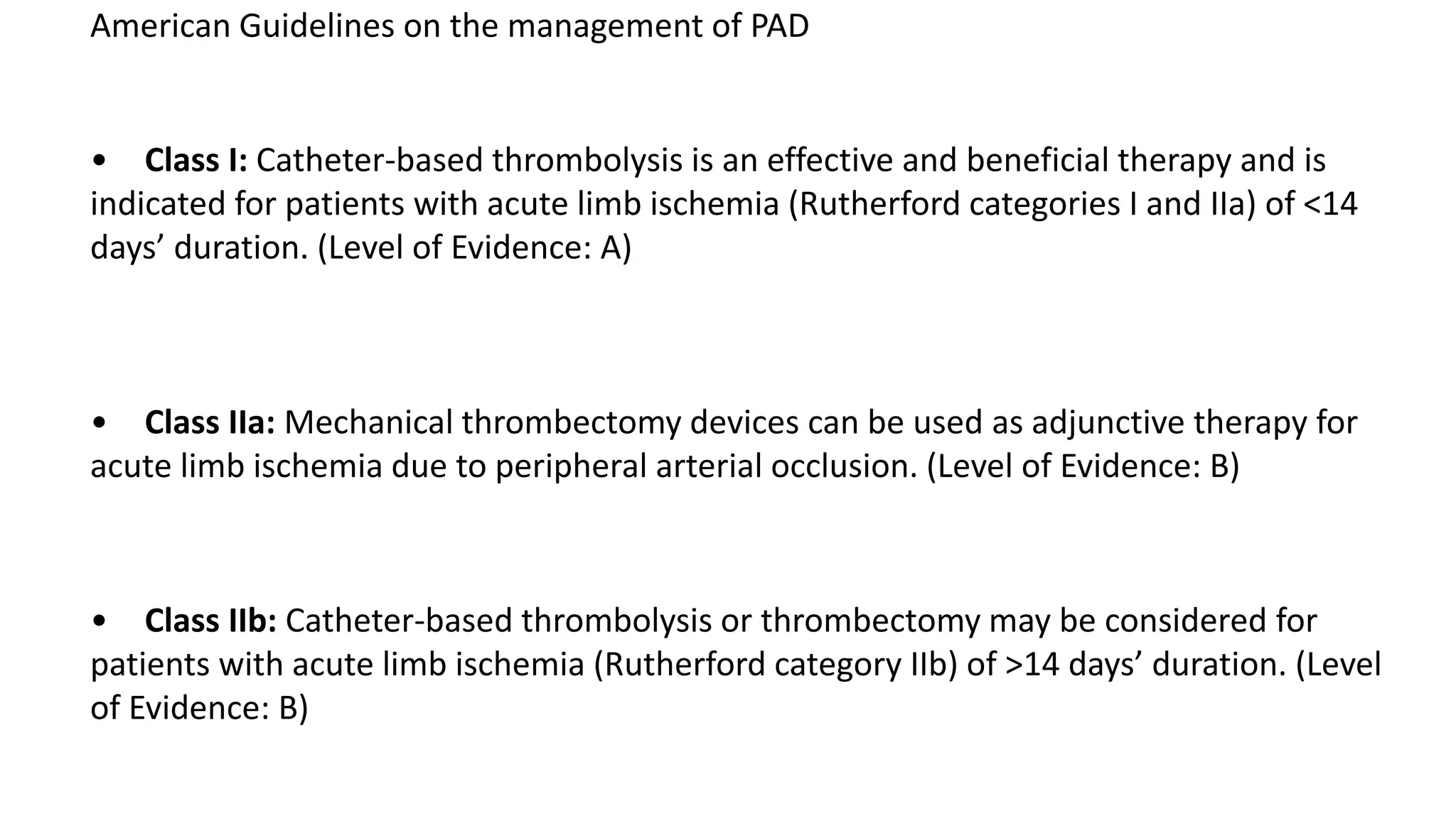
American Guidelines on the management of PAD
• Class I: Catheter-based thrombolysis is an effective and beneficial therapy and is
indicated for patients with acute limb ischemia (Rutherford categories I and IIa) of <14
days’ duration. (Level of Evidence: A)
• Class IIa: Mechanical thrombectomy devices can be used as adjunctive therapy for
acute limb ischemia due to peripheral arterial occlusion. (Level of Evidence: B)
• Class IIb: Catheter-based thrombolysis or thrombectomy may be considered for
patients with acute limb ischemia (Rutherford category IIb) of >14 days’ duration. (Level
of Evidence: B)
Management – Post operative care
• Monitor distal pulses
• Keep foot elevated
• Continue Heparin 18 units/kg infusion per hour
• Start warfarin when surgical bleeding in not a concern
• Monitor for reperfusion effects
Chronic limb ischaemia
Occurs when arterial blood flow insufficient to meet the metabolic
requirements of resting muscle
presenting after 2 weeks of arterial insufficiency
Clinical presentation
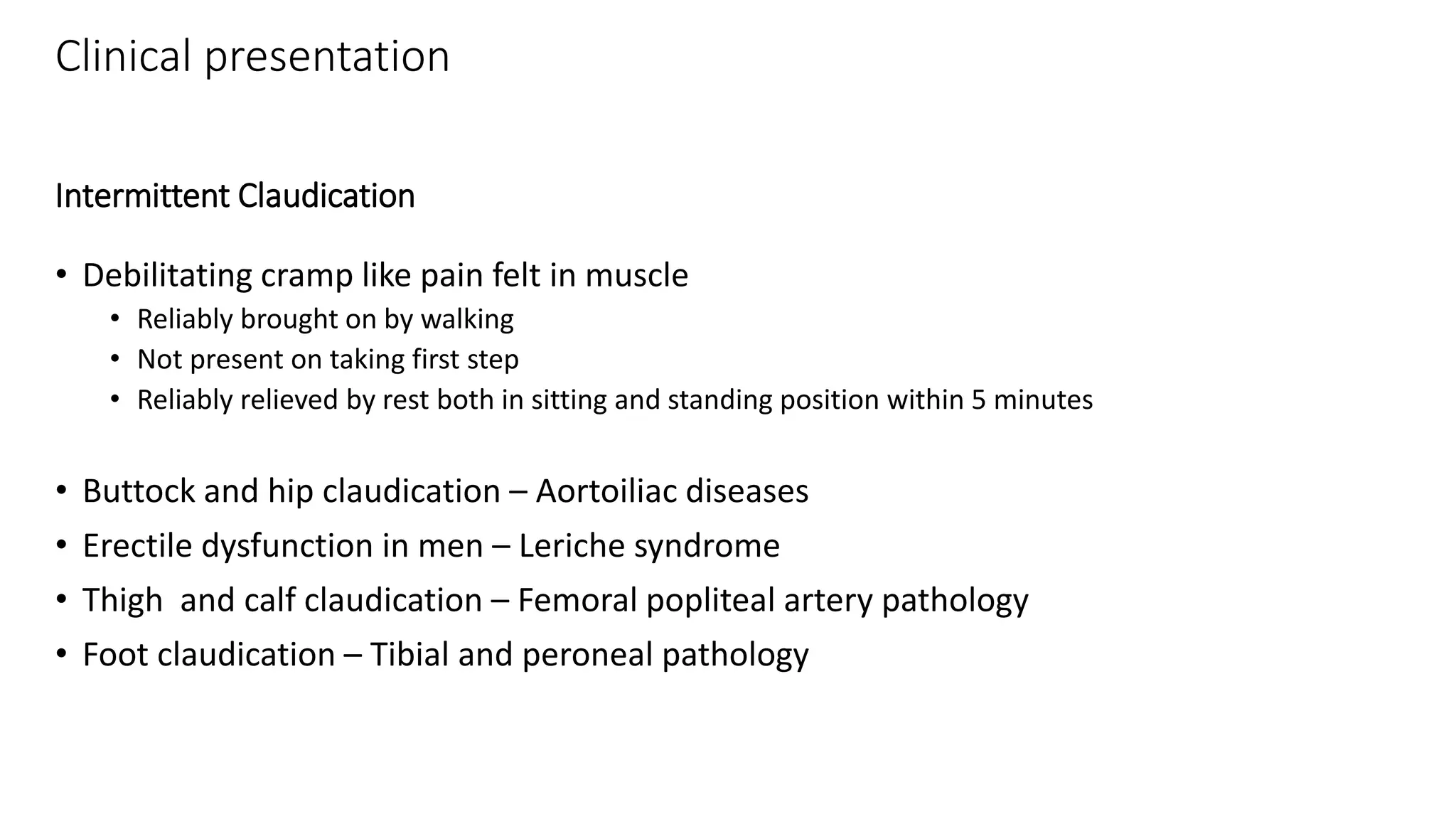
Intermittent Claudication
• Debilitating cramp like pain felt in muscle
• Reliably brought on by walking
• Not present on taking first step
• Reliably relieved by rest both in sitting and standing position within 5 minutes
• Buttock and hip claudication – Aortoiliac diseases
• Erectile dysfunction in men – Leriche syndrome
• Thigh and calf claudication – Femoral popliteal artery pathology
• Foot claudication – Tibial and peroneal pathology
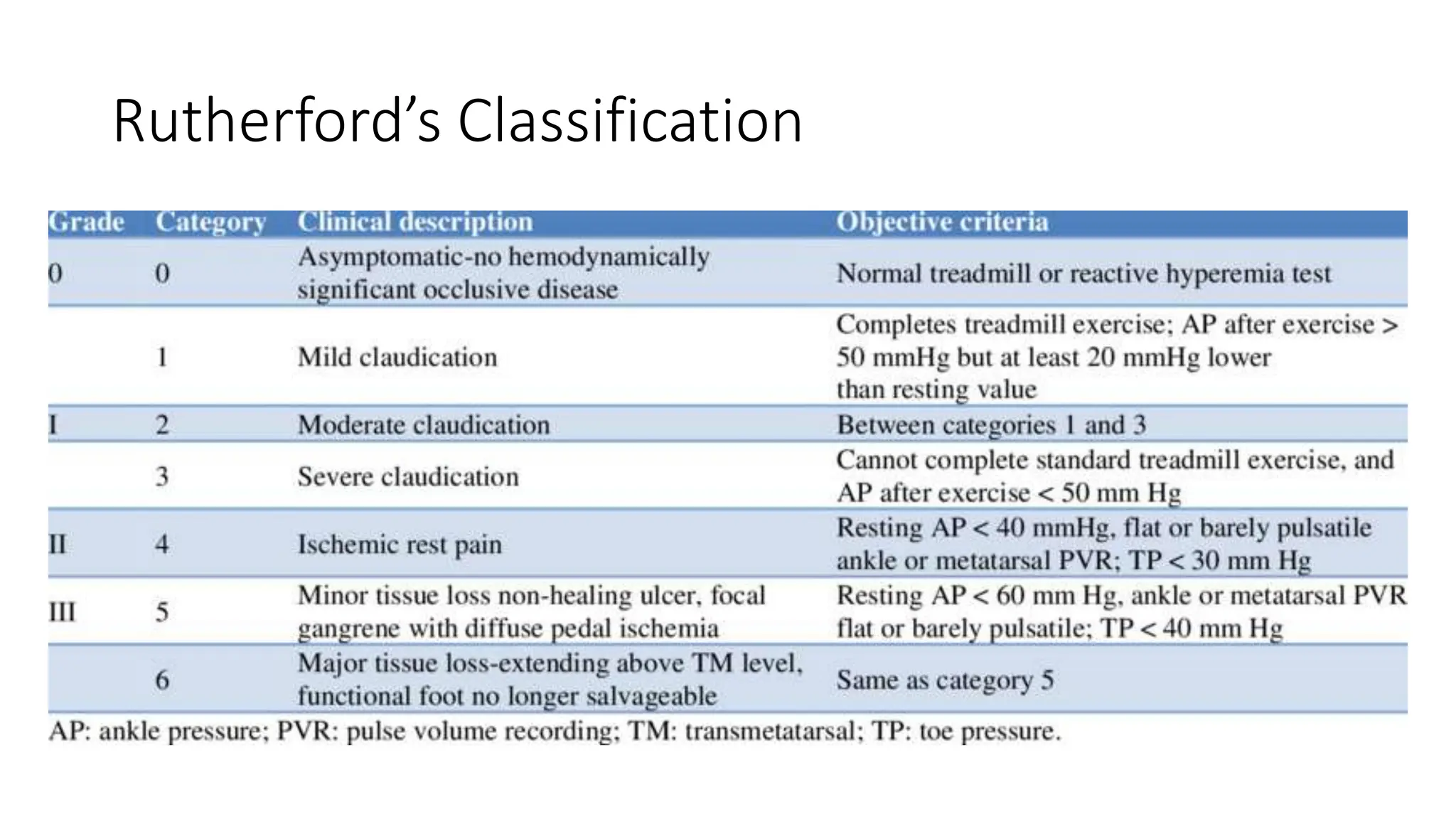
Rutherford’s Classification
Workup
• Complete blood counts
• Renal function test
• Blood sugar level including glycosylated hemoglobin
• Lipid profile
• ECG and echocardiography
• Investigation for hypercoagulable state
• Protein C and S/ Antithrombin III/ Factor V
Workup- Ankle-Brachial Pressure Index
• Interpretations
• Normal ABPI - >0.9 to 1.3
• ABPI > 1.3 suggest calcified vessels – needs additional vascular studies
• ABPI < 0.9 diagnostic of occlusive arterial diseases
Workup – Toe Brachial Index
• More reliable indicator of limb perfusion in patients with diabetes
• Normal toe-brachial index – 0.7 - 0.8
Workup – Exercise testing
• Commonly performed to confirm lower extremity peripheral artery
disease in patients with symptoms of claudication and normal resting
ABIs
• Normal response to exercise
• Slight increase or no change in the ABI compared with baseline
• Abnormal response
• Fall in ankle systolic pressure by more than 20 percent from its baseline value
• Fall below an absolute pressure of 60 mmHg that requires >3 minutes to
recover
Workup - Transcutaneous oxygen
measurement
• Used to assess the healing potential of lower extremity ulcers or
amputation sites
• Normal value
• At the foot – 60 mmHg
• Normal chest/foot ratio – 0.9
• Generally if oxygen tension >40 mm Hg wounds likely to heal
• Values <20 mmHg
• Means severely ischemic
• Likely need revascularization for wound healing
Workup – Duplex Ultrasound
• Normal arterial Doppler velocity
waveform – Triphasic
Workup – Duplex Ultrasound
• Biphasic flow
• No flow below baseline
• Seen in single level arterial
occlusion
• Monophasic flow
• Slow upstroke and down stroke
• Seen in multiple level occlusion
Workup – Advanced Imaging
• CT Angiography
• Commonly applied in evaluation PAD
• Contrast-enhanced imaging used for evaluating the lower limb vasculature
• MR angiography
Imaging comparisons for lower extremity
arterial disease
• Contrast-enhanced (CE) MR angiography (14 studies)
• Highest diagnostic accuracy
• Sensitivities ranging from 92 to 99.5 % and specificities from 64 to 99 % for
the detection of whole leg arterial stenosis >50 %
• CT angiography (seven studies)
• Appeared slightly inferior to CE MR angiography
• Sensitivities of 89 to 99 % and specificities of 83 to 97 %
• Duplex ultrasound (28 studies)
• Sensitivities of 80 to 98 % and specificities of 89 to 99 %
Collins et al Health Technol Assess. 2007 May
Management – Risk factor modification
• Smoking cessation
• Reduces cardiovascular diseases and PVD mortality
• Associated with improved walking distance
• Improved compliance with Bupropion and nicotine replacements
• Weight reduction
Management – Risk factor modification
• Hyperlipidemia
• Dietary modifications
• Target levels
• LDL < 100 md/dl
• LDL <70 mg/dl if history of vascular diseases
• Symptomatic PAD – Statins – primary agents
• Use of statin associated with 17% decrease in adverse events
• Fibrates and/or niacin – To raise HDL and lower cholesterol level
• Additional benefit of Evolocumab over statins alone
Management – Risk factor modification
• Hypertension
• Dietary modifications – salt intake less than 5 gm/day
• ACE inhibitors or ARBs – preferred agents in cases with PAD
• Target
• BP <140/90, diastolic except with diabetes for whom diastolic <85mm
Hg
• Beta blockers – can be used in PAD with concomitant CAD
Management – Risk factor modification
• Diabetes
• Dietary modifications
• Weight reduction and regular exercise
• Control with oral hypoglycemic agents
• If uncontrolled blood glucose level –start insulin
• Target
• If possible maintain at normal level <6%
• Otherwise aim for <7%
Management – Antiplatelet agents
• Long term antiplatelet therapy reduces risk for cardiovascular events
• Aspirin – 75 to 100mg single dose
• Recent trial (COMPASS)
• Low dose rivaroxaban (2.5 mg OD) plus aspirin – better outcome
• But risk of bleeding more in dual group ( 3 % to 2%)
Eikelboom et al. Rivaroxaban with or without Aspirin in Stable Cardiovascular Disease
Management – Intermittent Claudication
• Exercise therapy
• Improves symptoms and QoL and increases maximal WD
• New collateral formations alteration in muscle metabolism and mass and
improved endothelial function
• Does not improve ABI
• Supervised Vs Unsupervised
• At least three months with minimum of 3 hours/week with walking to
maximal distance
• Alternatives – Cycling and strength training
Management – Intermittent Claudication
• Pharmacotherapy
• Anti hypertensive drugs
• Antiplatelet agents Some favorable effects on walking distance
• Prostaglandin
• Drugs with evidence of clinical utility
• Cilostazol
• Naftidrofuryl
• Drugs with insufficient clinical utility
• Pentoxifylline
Cilostazol
• Inhibit platelet aggregation
• Inhibits type III phosphodiesterase activity in platelets and inhibit TAX2
causing inhibition of platelet aggregation
• Vasodilator
• Blocking release of calcium ions from intracellular storage granules within the
smooth muscle cells thus inhibiting the contractile proteins
• Dose – 100 mg BD for 3 to 6 months
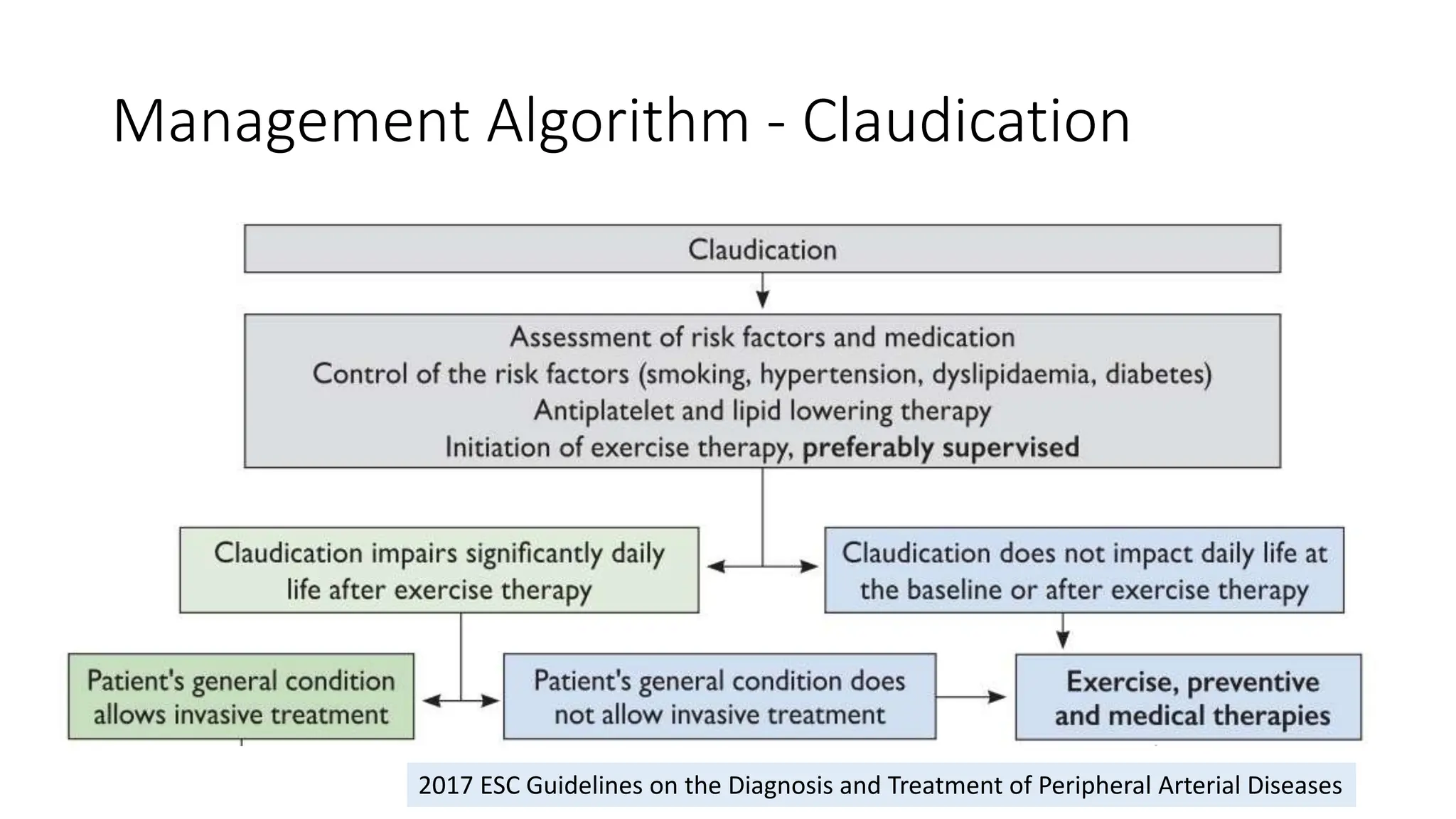
Management Algorithm - Claudication
2017 ESC Guidelines on the Diagnosis and Treatment of Peripheral Arterial Diseases
Management – Chronic Limb Ischemia
2017 ESC Guidelines on the Diagnosis and Treatment of Peripheral Arterial Diseases
Take home messages
• PAD – asymptomatic presentation to critical limb ischemia
• Elderly patients in presence of known risk factors must be screened
for PAD even without symptoms
• ABPI – diagnostic modality for PAD
• Treatment options may varies according to clinical presentation
• Medical management and risk modification for claudication
• Endovascular or open surgery for limb ischemia
• Limb salvage
References
• Schwartz Principle of Surgery Tenth Edition
• Bailey and Love 26th edition
• Norgren et al.Inter-Society Consensus for the Management of
Peripheral Arterial Disease (TASC II)
• Victor Aboyans et al. 2017 ESC Guidelines on the Diagnosis and
Treatment of Peripheral Arterial Diseases, in collaboration with the
European Society for Vascular Surgery (ESVS)
Ther Adv Cardiovasc Dis. 2017 Apr; 11(4): 125–132.

Peripheral Vascular Diseases.final(1).pptx

  • 1.
    PERIPHERAL ARTERIAL DISEASES Shambhavi Sharma MS,2ndyear resident PAHS Moderator Dr Erena
  • 2.
    Introduction- PAD • AkaPeripheral artery occlusive disease, peripheral arterial disease (PAD) • refers to the obstruction or deterioration of arteries other than those supplying the heart and within the brain • Principle cause – Atherosclerosis • Mostly silent in its early stages • Manifest as intermittent claudication when the luminal obstruction >50%
  • 6.
    Clinical presentation Two broadpresentations • Chronic arterial insufficiency • Acute arterial occlusion
  • 7.
    Acute arterial insufficiency •Quickly developing or sudden decrease in limb perfusion producing new or worsening symptoms or signs and often threatening limb viability • Acute – sudden decrease in limb perfusion presenting within two weeks of the inciting events
  • 8.
    • Etiologies • Nativearterial thrombosis – rupture of atherosclerotic plaque • Acute thrombosis of aneurysm • Dissection • Traumatic or iatrogenic injury • Arterial embolism • Vasospasm – non occlusive ischemia
  • 9.
    Acute Limb Ischemia- Presentations • Pain • Usually located distally, gradually increases in severity and progresses proximally • Skin perfusion • Typically cool and pale with delayed capillary filling and atrophy of skin and hair loss • Pulse • Severely reduced pulses or absent • If contralateral palpable- embolus • Paresthesia
  • 11.
    2017 ESC Guidelineson the Diagnosis and Treatment of Peripheral Arterial Diseases
  • 12.
    Management – AcuteLimb Ischemia • Initial goal – to prevent thrombus propagation and worsening ischemia • Immediate anticoagulation • Start unfractionated heparin • Loading dose 75-100 units/kg • Followed infusion heparin 18 units/kg • Pain management
  • 13.
    Management - Endovascularprocedures • Pharmacologic thrombolysis • Less invasive than catheter based approach • Advantage – Reduced risk of endothelial trauma and clot lysis in smaller branches too small for embolectomy • Limitations: Distal embolism, fluid overloading due to continuous rinsing and finally hemolysis, hemoglobinuria • Streptokinase, urokinase, alteplase , plasminogen activator (rtPA)(Recommended)
  • 14.
    Contraindications Absolute: • Stroke orTIA within the last 2 months. • Coagulation disorders (thrombopenia, von Willebrand disease). • Recent gastrointestinal bleeding (<10 days). • Neurosurgery procedure within the last 3 months. • Craniocerebral injury within the last 3 months. Relative: • Cardiopulmonary resuscitation within the last 10 days. • Surgical procedure or trauma within the last 10 days. • Uncontrolled hypertension. • Highly calcified artery, noncompressible. • Intracranial malignancy. • Recent ophthalmologic procedure Minor contraindications: • Liver failure combined with coagulation disorder. • Bacterial endocarditis • Pregnancy • Diabetic hemorrhagic retinopathy.
  • 15.
    Procedure 1. Vascular access: 2.Catheterization process: 3. Wire and catheter promotion 4. Thrombolytic agent infusion : i) Bolus infusion through a catheter within the thrombus, followed by continuous infusion of a low dosage of thrombolytic agent through a pump Dosing : tPA (dose: 0.5–1 mg/h) Thrombolysis duration: • When the angiographic result is optimal, discontinuation. • Usually 12–48 h, maximum 48–72 h
  • 16.
    (ii) 25–50 cc/hourof a 10 mg/500cc N/S solution. (iii) reference fibrinogen, activated partial thromboplastin time (aPTT) ,fibrin degradation product (FDP). (iv) Repeat every 12 h and every 24 h thereafter. (v) Expected: fall of fibrinogen, rise of FDP levels, prolonged aPTT by 50% (active thrombolysis). Fibrinogen <150: 4 times higher bleeding risk. FDP >400: 2.5 times higher bleeding risk. (vii) If no progress in recanalization of the lesion, dosage increased by 1 mg/h. concomitant infusion of heparin (200–500 units/h; target aPTT 1.25-1.5 times the baseline)
  • 17.
    Management – Surgery •Embolectomy – Thrombus extracted Fogarty balloon embolectomy catheter
  • 18.
  • 19.
    • Percutaneous aspirationthrombectomy • Uses thin wall large lumen catheter and suction with syringe to remove embolus/thrombus from vessels • PROCEDURE: • Percutaneous mechanical thrombectomy • PROCEDURE :
  • 20.
    American Guidelines onthe management of PAD • Class I: Catheter-based thrombolysis is an effective and beneficial therapy and is indicated for patients with acute limb ischemia (Rutherford categories I and IIa) of <14 days’ duration. (Level of Evidence: A) • Class IIa: Mechanical thrombectomy devices can be used as adjunctive therapy for acute limb ischemia due to peripheral arterial occlusion. (Level of Evidence: B) • Class IIb: Catheter-based thrombolysis or thrombectomy may be considered for patients with acute limb ischemia (Rutherford category IIb) of >14 days’ duration. (Level of Evidence: B)
  • 21.
    Management – Postoperative care • Monitor distal pulses • Keep foot elevated • Continue Heparin 18 units/kg infusion per hour • Start warfarin when surgical bleeding in not a concern • Monitor for reperfusion effects
  • 22.
    Chronic limb ischaemia Occurswhen arterial blood flow insufficient to meet the metabolic requirements of resting muscle presenting after 2 weeks of arterial insufficiency
  • 23.
    Clinical presentation Intermittent Claudication •Debilitating cramp like pain felt in muscle • Reliably brought on by walking • Not present on taking first step • Reliably relieved by rest both in sitting and standing position within 5 minutes • Buttock and hip claudication – Aortoiliac diseases • Erectile dysfunction in men – Leriche syndrome • Thigh and calf claudication – Femoral popliteal artery pathology • Foot claudication – Tibial and peroneal pathology
  • 24.
  • 25.
    Workup • Complete bloodcounts • Renal function test • Blood sugar level including glycosylated hemoglobin • Lipid profile • ECG and echocardiography • Investigation for hypercoagulable state • Protein C and S/ Antithrombin III/ Factor V
  • 26.
    Workup- Ankle-Brachial PressureIndex • Interpretations • Normal ABPI - >0.9 to 1.3 • ABPI > 1.3 suggest calcified vessels – needs additional vascular studies • ABPI < 0.9 diagnostic of occlusive arterial diseases
  • 28.
    Workup – ToeBrachial Index • More reliable indicator of limb perfusion in patients with diabetes • Normal toe-brachial index – 0.7 - 0.8
  • 29.
    Workup – Exercisetesting • Commonly performed to confirm lower extremity peripheral artery disease in patients with symptoms of claudication and normal resting ABIs • Normal response to exercise • Slight increase or no change in the ABI compared with baseline • Abnormal response • Fall in ankle systolic pressure by more than 20 percent from its baseline value • Fall below an absolute pressure of 60 mmHg that requires >3 minutes to recover
  • 30.
    Workup - Transcutaneousoxygen measurement • Used to assess the healing potential of lower extremity ulcers or amputation sites • Normal value • At the foot – 60 mmHg • Normal chest/foot ratio – 0.9 • Generally if oxygen tension >40 mm Hg wounds likely to heal • Values <20 mmHg • Means severely ischemic • Likely need revascularization for wound healing
  • 31.
    Workup – DuplexUltrasound • Normal arterial Doppler velocity waveform – Triphasic
  • 32.
    Workup – DuplexUltrasound • Biphasic flow • No flow below baseline • Seen in single level arterial occlusion • Monophasic flow • Slow upstroke and down stroke • Seen in multiple level occlusion
  • 33.
    Workup – AdvancedImaging • CT Angiography • Commonly applied in evaluation PAD • Contrast-enhanced imaging used for evaluating the lower limb vasculature • MR angiography
  • 34.
    Imaging comparisons forlower extremity arterial disease • Contrast-enhanced (CE) MR angiography (14 studies) • Highest diagnostic accuracy • Sensitivities ranging from 92 to 99.5 % and specificities from 64 to 99 % for the detection of whole leg arterial stenosis >50 % • CT angiography (seven studies) • Appeared slightly inferior to CE MR angiography • Sensitivities of 89 to 99 % and specificities of 83 to 97 % • Duplex ultrasound (28 studies) • Sensitivities of 80 to 98 % and specificities of 89 to 99 % Collins et al Health Technol Assess. 2007 May
  • 35.
    Management – Riskfactor modification • Smoking cessation • Reduces cardiovascular diseases and PVD mortality • Associated with improved walking distance • Improved compliance with Bupropion and nicotine replacements • Weight reduction
  • 36.
    Management – Riskfactor modification • Hyperlipidemia • Dietary modifications • Target levels • LDL < 100 md/dl • LDL <70 mg/dl if history of vascular diseases • Symptomatic PAD – Statins – primary agents • Use of statin associated with 17% decrease in adverse events • Fibrates and/or niacin – To raise HDL and lower cholesterol level • Additional benefit of Evolocumab over statins alone
  • 37.
    Management – Riskfactor modification • Hypertension • Dietary modifications – salt intake less than 5 gm/day • ACE inhibitors or ARBs – preferred agents in cases with PAD • Target • BP <140/90, diastolic except with diabetes for whom diastolic <85mm Hg • Beta blockers – can be used in PAD with concomitant CAD
  • 38.
    Management – Riskfactor modification • Diabetes • Dietary modifications • Weight reduction and regular exercise • Control with oral hypoglycemic agents • If uncontrolled blood glucose level –start insulin • Target • If possible maintain at normal level <6% • Otherwise aim for <7%
  • 39.
    Management – Antiplateletagents • Long term antiplatelet therapy reduces risk for cardiovascular events • Aspirin – 75 to 100mg single dose • Recent trial (COMPASS) • Low dose rivaroxaban (2.5 mg OD) plus aspirin – better outcome • But risk of bleeding more in dual group ( 3 % to 2%) Eikelboom et al. Rivaroxaban with or without Aspirin in Stable Cardiovascular Disease
  • 40.
    Management – IntermittentClaudication • Exercise therapy • Improves symptoms and QoL and increases maximal WD • New collateral formations alteration in muscle metabolism and mass and improved endothelial function • Does not improve ABI • Supervised Vs Unsupervised • At least three months with minimum of 3 hours/week with walking to maximal distance • Alternatives – Cycling and strength training
  • 41.
    Management – IntermittentClaudication • Pharmacotherapy • Anti hypertensive drugs • Antiplatelet agents Some favorable effects on walking distance • Prostaglandin • Drugs with evidence of clinical utility • Cilostazol • Naftidrofuryl • Drugs with insufficient clinical utility • Pentoxifylline
  • 42.
    Cilostazol • Inhibit plateletaggregation • Inhibits type III phosphodiesterase activity in platelets and inhibit TAX2 causing inhibition of platelet aggregation • Vasodilator • Blocking release of calcium ions from intracellular storage granules within the smooth muscle cells thus inhibiting the contractile proteins • Dose – 100 mg BD for 3 to 6 months
  • 43.
    Management Algorithm -Claudication 2017 ESC Guidelines on the Diagnosis and Treatment of Peripheral Arterial Diseases
  • 44.
    2017 ESC Guidelineson the Diagnosis and Treatment of Peripheral Arterial Diseases
  • 45.
    Management – ChronicLimb Ischemia 2017 ESC Guidelines on the Diagnosis and Treatment of Peripheral Arterial Diseases
  • 46.
    2017 ESC Guidelineson the Diagnosis and Treatment of Peripheral Arterial Diseases
  • 47.
    Take home messages •PAD – asymptomatic presentation to critical limb ischemia • Elderly patients in presence of known risk factors must be screened for PAD even without symptoms • ABPI – diagnostic modality for PAD • Treatment options may varies according to clinical presentation • Medical management and risk modification for claudication • Endovascular or open surgery for limb ischemia • Limb salvage
  • 48.
    References • Schwartz Principleof Surgery Tenth Edition • Bailey and Love 26th edition • Norgren et al.Inter-Society Consensus for the Management of Peripheral Arterial Disease (TASC II) • Victor Aboyans et al. 2017 ESC Guidelines on the Diagnosis and Treatment of Peripheral Arterial Diseases, in collaboration with the European Society for Vascular Surgery (ESVS) Ther Adv Cardiovasc Dis. 2017 Apr; 11(4): 125–132.

Editor's Notes

  • #16 Usually, the contralateral common femoral artery is punctured and through a crossover catheterization, the catheter is promoted to the level of the thrombosis. Rarely, the ipsilateral common femoral or popliteal artery could be punctured. An ultrasound device could offer a great help during vessel puncture. The quality of vessels, the patency as well as body mass index play a very important role in decision making. Avoid sites distally from the lesion. Avoid sites where bleeding is associated with high morbidity, such as axillary artery or translumbar approach. When the lesion is located distally to the superficial femoral artery (SFA), a promixal ipsilateral and anterograde puncture is performed. When the lesion is located proximally to the SFA or within the SFA, contralateral puncture of the common femoral artery and crossover approach are performed. After fixation of the sheath, a high-quality angiography is performed, in order to visualize the extent and the type of the lesion. Outflow and run-off vessels. Inflow.