Rh- incompatibility
Anjana Thomas
 The Rhesus factor gets its name from
experiments conducted in 1937 by scientists
Karl Landsteiner and Alexander S Weiner.
 Their experiments involved rabbits which, when
injected with the Rhesus monkey’s red blood
cells, produced an antigen that is present in the
red blood cells of many humans.
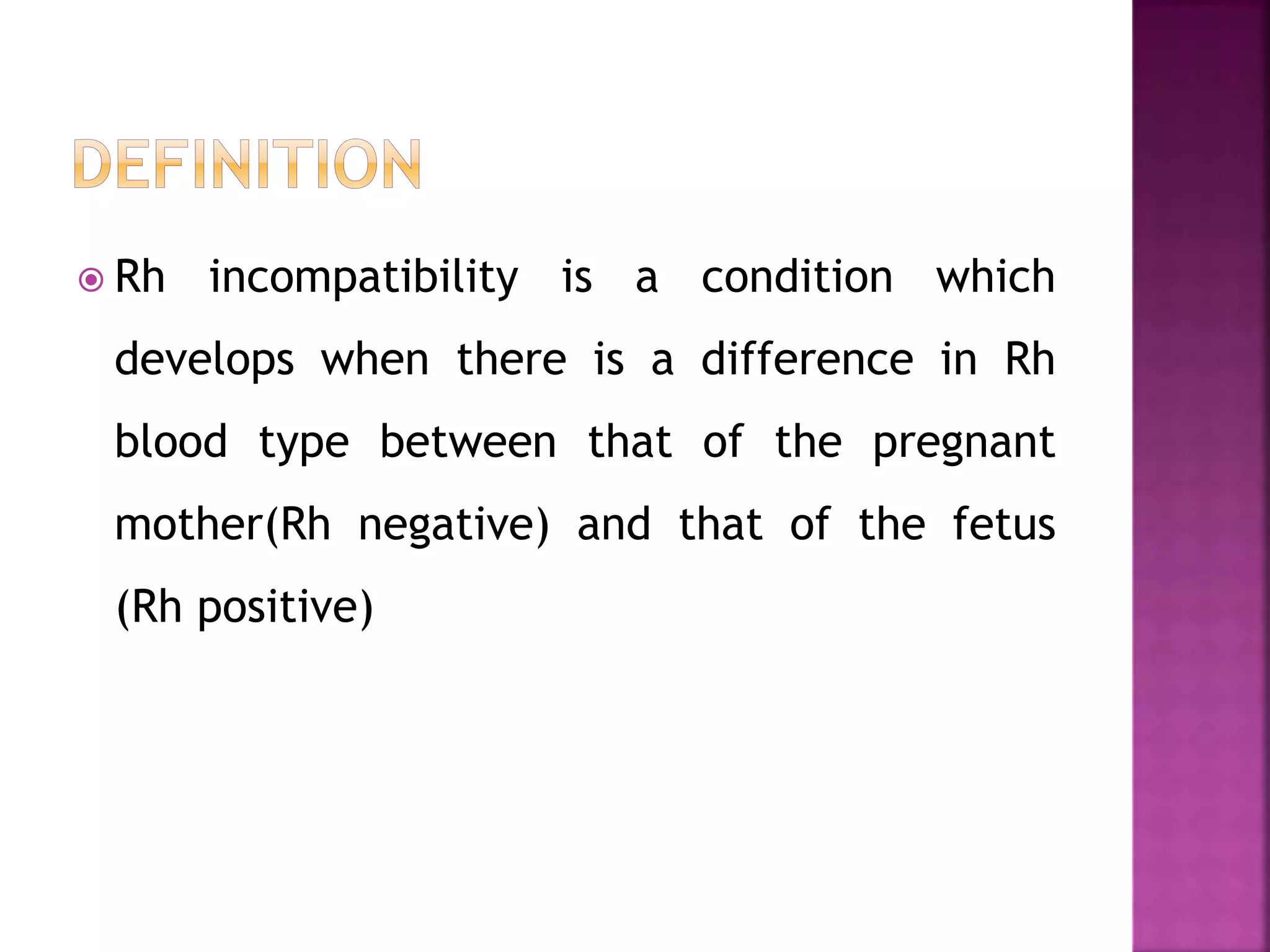
 Rh incompatibility is a condition which
develops when there is a difference in Rh
blood type between that of the pregnant
mother(Rh negative) and that of the fetus
(Rh positive)
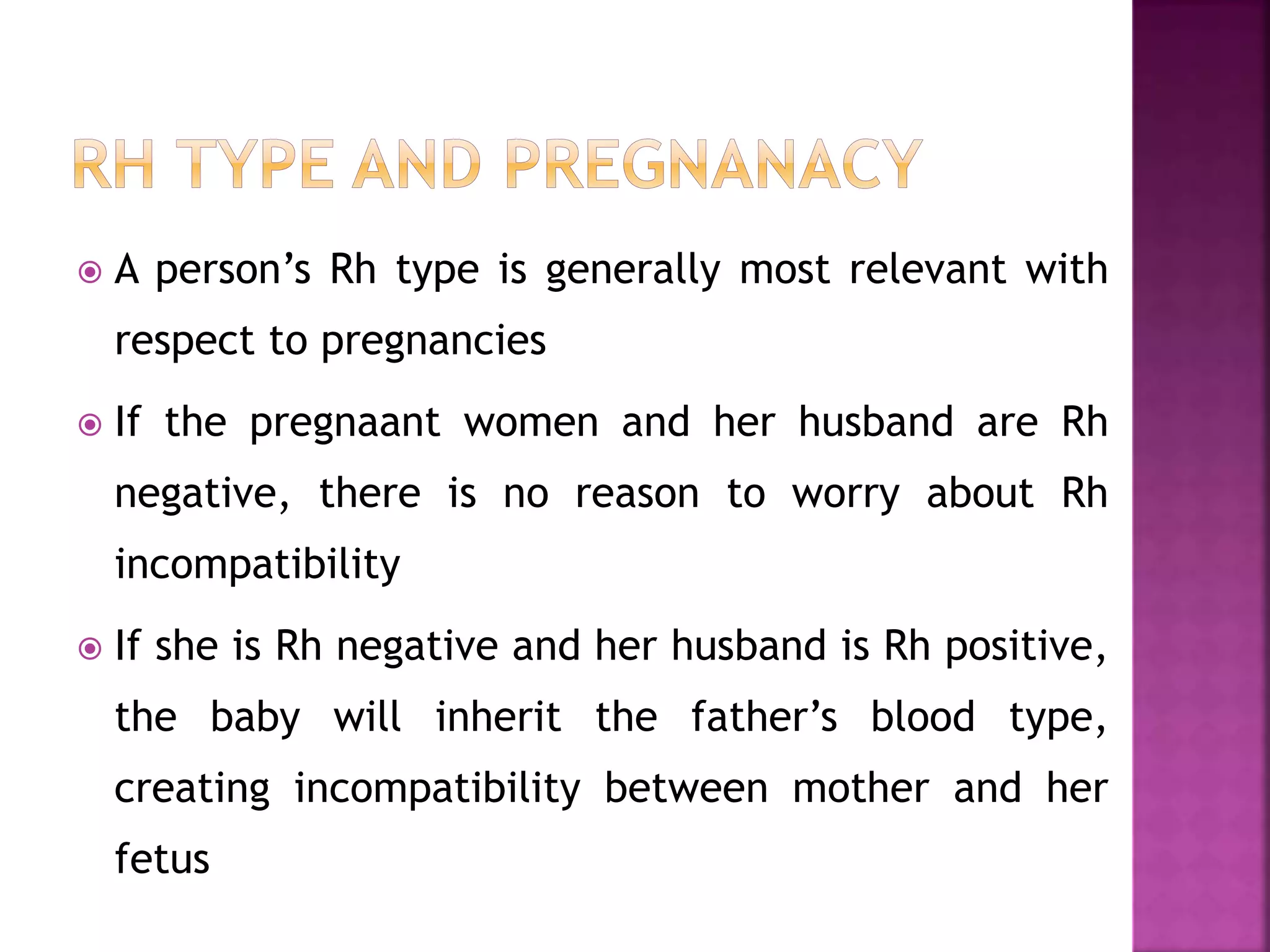
 A person’s Rh type is generally most relevant with
respect to pregnancies
 If the pregnaant women and her husband are Rh
negative, there is no reason to worry about Rh
incompatibility
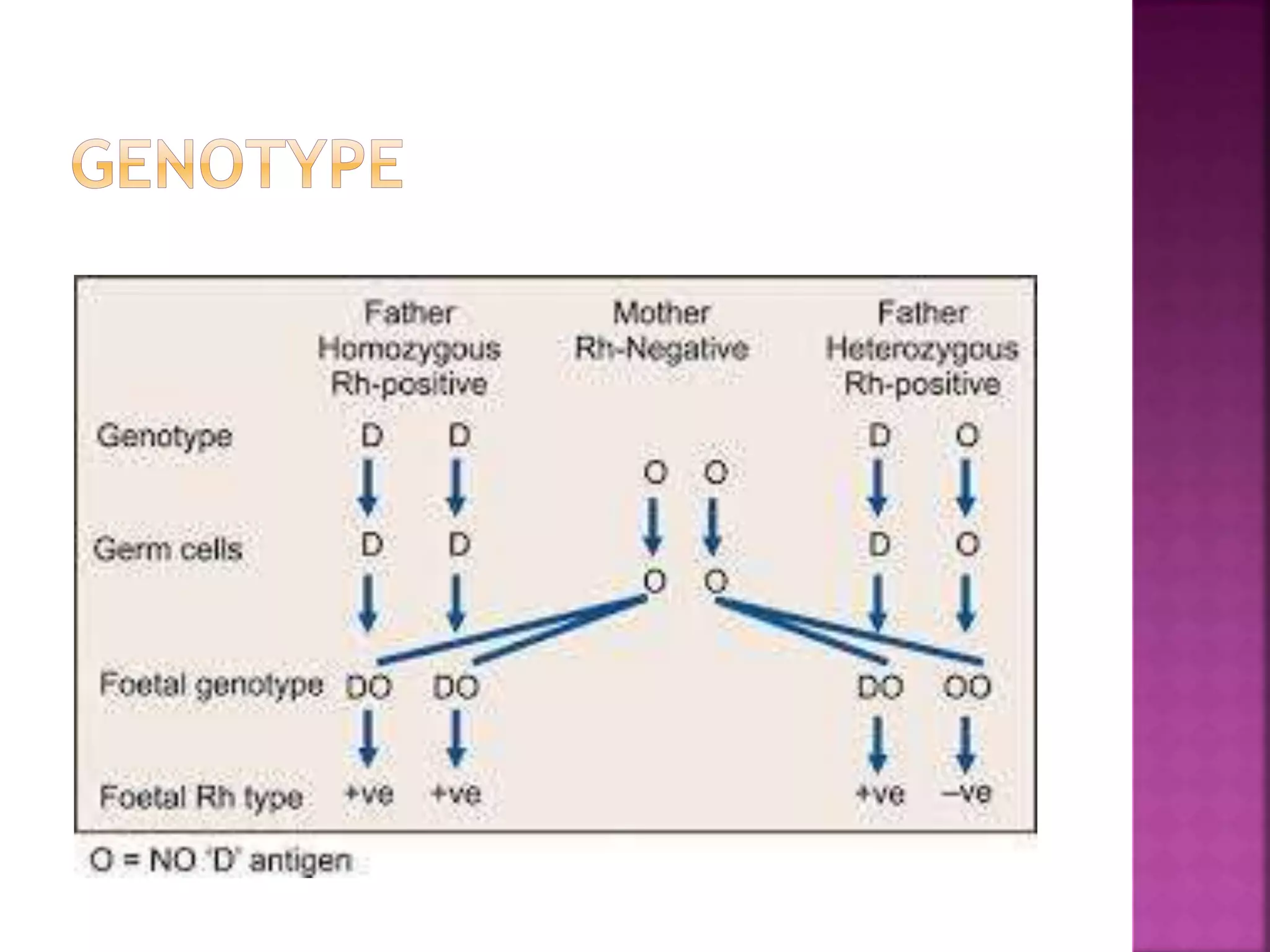
 If she is Rh negative and her husband is Rh positive,
the baby will inherit the father’s blood type,
creating incompatibility between mother and her
fetus
 If some of the fetal blood gets into mother’s
blood stream, her body will produce
antibodies.
 These antibodies could pass back through the
placenta and harm the developing baby’s red
blood cells.
 Usually placenta acts as barrier to fetal
blood entering maternal circulation.
However, sometimes during pregnancy or
birth, fetomaternal haemorrhage can occur.
The women’s immune system reacts by
producing anti D antibodies that causes
sensitization.
 A difference in blood type between a
pregnant woman and her baby causes Rh
incompatibility. The condition occurs if a
woman is Rh negative and her baby is Rh
positive.
 An earlier pregnancy
 An ectopic pregnancy, a miscarriage or an
induced abortion.
 A mismatched blood transfusion or blood and
marrow stem cell transplant.
 An injection or puncture with a needle or
other object containing Rh positive blood
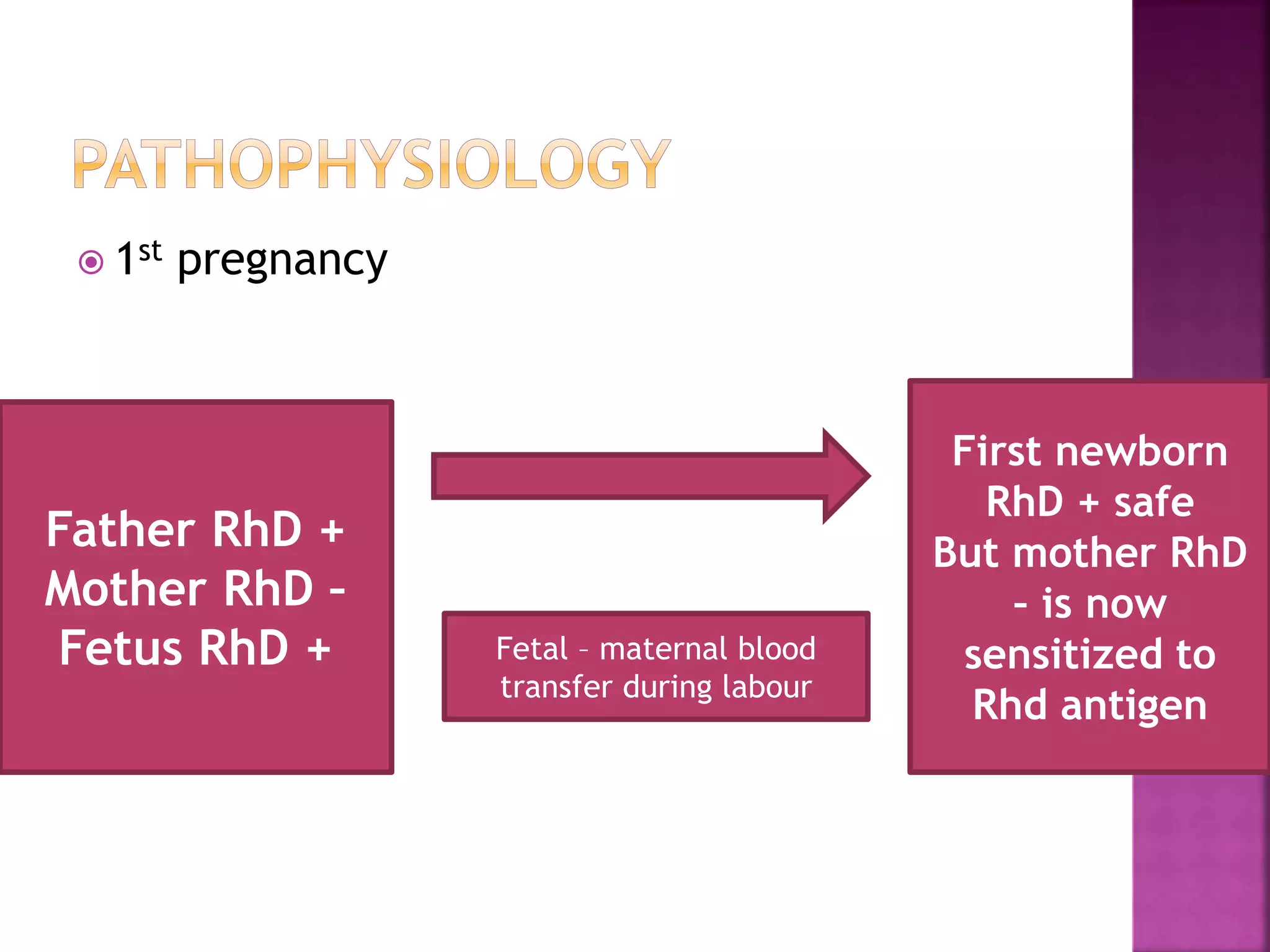
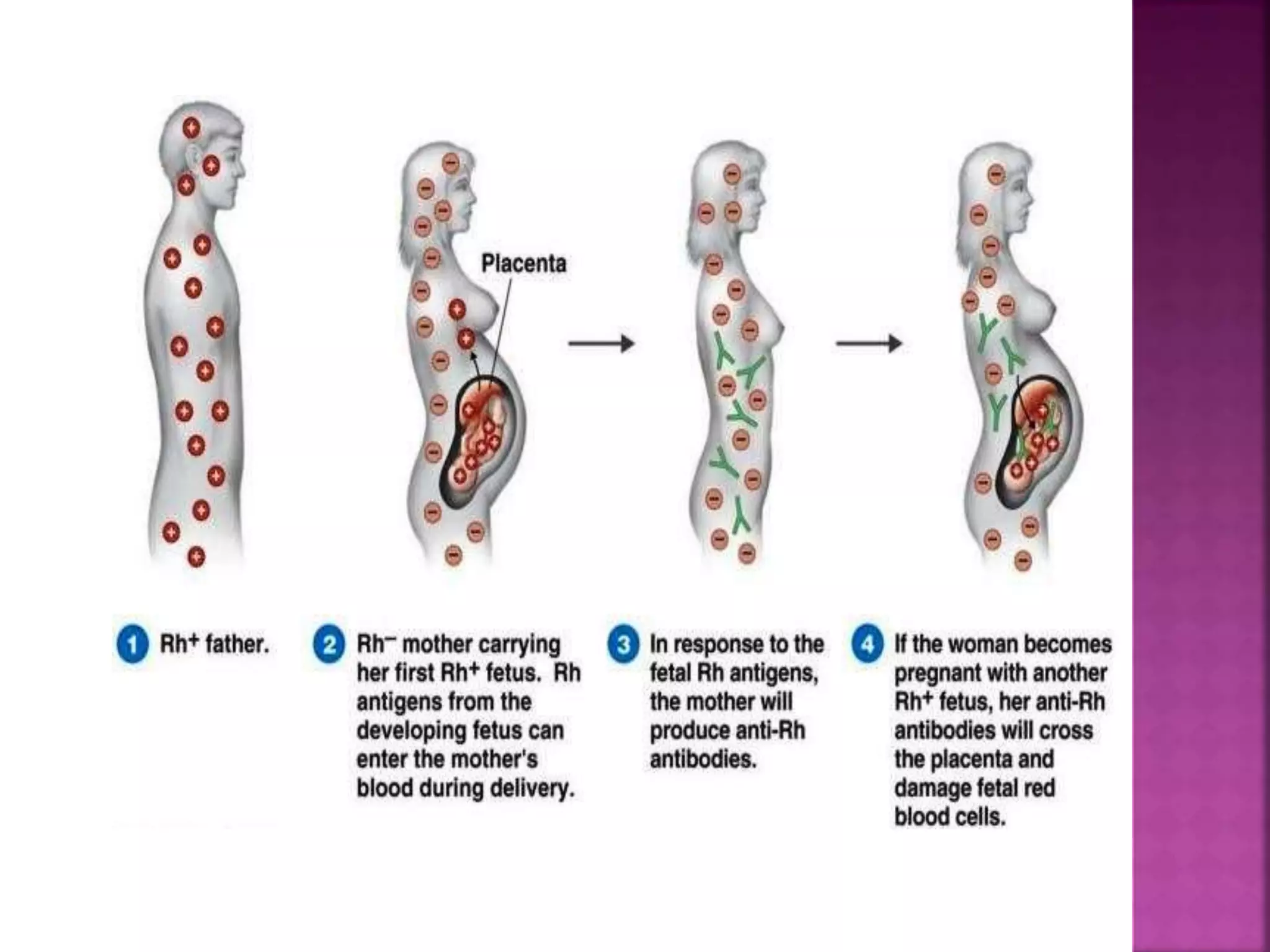
 1st pregnancy
Father RhD +
Mother RhD –
Fetus RhD + Fetal – maternal blood
transfer during labour
First newborn
RhD + safe
But mother RhD
– is now
sensitized to
Rhd antigen
 Second pregnancy
Rapid
production
of IgG anti
D by
mother
Maternal
IgG anti D
crosses
placenta
IgG anti D
attaches to
fetal BBC &
marks them
for
destruction
Fetal or
newborn
hemolytic
anemia
Increased
billirubin,
CNS
damage(ker
nicterus),d
eath
Repeat
encounter
with
Fetal
RhD
antigen
 The klehauer- betke test or flow cytometry
 Indirect coomb test
 The direct coomb test
 Blood count
 Billirubin – direct & indirect
 Mildest form
 Hemolysis
 Jaundice
 Total body swelling
 Respiratory distress
 Circulatory collapse
 Kernicterus
 It occur several days after delivery – poor
feeding, decreased activity
 Hydrops fetalis
 Icterus gravis neonatrum
 Congenital anemia of newborn
 This is a most serious from of Rh haemolytic
disease. Excessive destruction of the fetal
red cells leads to severe anaemia, tissue
anoxaemia and metabolic acidosis.
 This clinical entity is the effect of lesser
form of fetal haemolysis. The baby is born
alive without evidence of jaundice but soon
develops it within 24 hours.
 Mildest form of diseases where the
haemolysis is going on slowly. Although
anemia develops slowly with in first few
weeks
 Rh incompatibility is treated with a medicine
called Rh immunoglobulin. Treatment for the
baby who has hemolytic anemia will vary based
on the severity of the condition
 If Rh incompatibility is diagnosed during
pregnancy, mother will receive Rh
immunoglobulin in seventh month of pregnancy
and again with in 72 hours of delivery.
 Mother also may receive Rh immunoglobulin
if the risk of blood transfer between mother
and the baby is high (for example, a
miscarriage, ectopic pregnancy, or bleeding
during pregnancy)
 Immunization with Rh immunoglobulin
 Prevent or minimize feto maternal bleed
 Avoid mismatched transfusion
 Amniocentesis should be done after
sonographic localization of placenta
Rh incompatibility

Rh incompatibility

  • 1.
  • 2.
     The Rhesusfactor gets its name from experiments conducted in 1937 by scientists Karl Landsteiner and Alexander S Weiner.  Their experiments involved rabbits which, when injected with the Rhesus monkey’s red blood cells, produced an antigen that is present in the red blood cells of many humans.
  • 4.
     Rh incompatibilityis a condition which develops when there is a difference in Rh blood type between that of the pregnant mother(Rh negative) and that of the fetus (Rh positive)
  • 5.
     A person’sRh type is generally most relevant with respect to pregnancies  If the pregnaant women and her husband are Rh negative, there is no reason to worry about Rh incompatibility  If she is Rh negative and her husband is Rh positive, the baby will inherit the father’s blood type, creating incompatibility between mother and her fetus
  • 6.
     If someof the fetal blood gets into mother’s blood stream, her body will produce antibodies.  These antibodies could pass back through the placenta and harm the developing baby’s red blood cells.
  • 7.
     Usually placentaacts as barrier to fetal blood entering maternal circulation. However, sometimes during pregnancy or birth, fetomaternal haemorrhage can occur. The women’s immune system reacts by producing anti D antibodies that causes sensitization.
  • 8.
     A differencein blood type between a pregnant woman and her baby causes Rh incompatibility. The condition occurs if a woman is Rh negative and her baby is Rh positive.
  • 9.
     An earlierpregnancy  An ectopic pregnancy, a miscarriage or an induced abortion.  A mismatched blood transfusion or blood and marrow stem cell transplant.  An injection or puncture with a needle or other object containing Rh positive blood
  • 10.
     1st pregnancy FatherRhD + Mother RhD – Fetus RhD + Fetal – maternal blood transfer during labour First newborn RhD + safe But mother RhD – is now sensitized to Rhd antigen
  • 11.
     Second pregnancy Rapid production ofIgG anti D by mother Maternal IgG anti D crosses placenta IgG anti D attaches to fetal BBC & marks them for destruction Fetal or newborn hemolytic anemia Increased billirubin, CNS damage(ker nicterus),d eath Repeat encounter with Fetal RhD antigen
  • 13.
     The klehauer-betke test or flow cytometry  Indirect coomb test  The direct coomb test  Blood count  Billirubin – direct & indirect
  • 14.
     Mildest form Hemolysis  Jaundice  Total body swelling  Respiratory distress  Circulatory collapse  Kernicterus  It occur several days after delivery – poor feeding, decreased activity
  • 15.
     Hydrops fetalis Icterus gravis neonatrum  Congenital anemia of newborn
  • 16.
     This isa most serious from of Rh haemolytic disease. Excessive destruction of the fetal red cells leads to severe anaemia, tissue anoxaemia and metabolic acidosis.
  • 17.
     This clinicalentity is the effect of lesser form of fetal haemolysis. The baby is born alive without evidence of jaundice but soon develops it within 24 hours.
  • 18.
     Mildest formof diseases where the haemolysis is going on slowly. Although anemia develops slowly with in first few weeks
  • 19.
     Rh incompatibilityis treated with a medicine called Rh immunoglobulin. Treatment for the baby who has hemolytic anemia will vary based on the severity of the condition  If Rh incompatibility is diagnosed during pregnancy, mother will receive Rh immunoglobulin in seventh month of pregnancy and again with in 72 hours of delivery.
  • 20.
     Mother alsomay receive Rh immunoglobulin if the risk of blood transfer between mother and the baby is high (for example, a miscarriage, ectopic pregnancy, or bleeding during pregnancy)
  • 21.
     Immunization withRh immunoglobulin  Prevent or minimize feto maternal bleed  Avoid mismatched transfusion  Amniocentesis should be done after sonographic localization of placenta