HEMATOLOGICAL
DISORDERS IN PREGNANCY
Introduction
• Anemia is the most common hematological disorder in
pregnancy. It is a major public health concern in
developing countries.
• The majority of anemia in pregnancy is due to iron, folate
or vitamin B12 deficiency. Less community, it could be a
consequence of hemoglobinopathies such as thalassemia
and sickle cell anemia.
Incidence
• Incidence of anemia in pregnancy ranges widely from 40-
80 per cent in the tropics Compared to in the developed
countries. Anemia is responsible for 20 percent of
maternal deaths in the third world countries.
Classification
• Physiological anemia of pregnancy
• Pathological
Cont….
• Anemia associated with nutritional deficiency
• Iron deficiency
• Folic acid deficiency
• Vitamin B12 deficiency
• Combined deficiencies
• Protein deficiency
• Haemorrhagic
• Acute : Following bleeding in early months or APH
• Chronic : Hookworm infestation, bleeding piles etc
Cont…
• Anemia associated with decreased production of blood
cells
• Bone marrow disorders
• Bone marrow suppression
• Chronic renal disorders – low level of erythropoietin
• Hypothyroidism
• Anemia associated with increased red blood cell
destruction
• Inherited hemolytic anemia
• Sickle cell anemia
• Thalassemia major
• Hereditary spherocytosis
• Other hemoglobinopathies
Cont…
• Acquired hemolytic anemia
• Autoimmune hemolytic anemia
• Hemolytic anemia associated with thrombotic thrombocytopenic
purpura, hemolytic uremic syndrome, malaria.
• Anemia due to blood loss
• Heavy menstrual bleeding
• Gastrointestinal bleeding
• Obstetric hemorrhage
• Anemia of infection (malaria, tuberculosis)
• Chronic disease (renal) or neoplasm anemia and
hemorrhagic anemia
Definition
• Anemia is defined by the world health organization as
hemohlobin levels of <11g/dl or hematocrit of <33%. It can
also be defined as a value less than the fifth percentile of
the distribution of hemoglobin or hematocrit in a healthy
reference population based on the trimester of pregnancy.
The federation of obstetric and gynecological societies of
India has suggested a cutoff of 10g/dl for India.
Physiological anemia of pregnancy
• <11g/dl in the first trimester
• <10.5g/dl in the second trimester
• <11g/dl in the third trimester
• <11g/dl at 1 week postpartum
• <12g/dl at 8 week postpartum
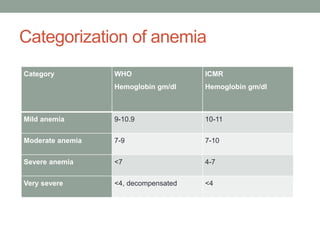
Categorization of anemia
Category WHO
Hemoglobin gm/dl
ICMR
Hemoglobin gm/dl
Mild anemia 9-10.9 10-11
Moderate anemia 7-9 7-10
Severe anemia <7 4-7
Very severe <4, decompensated <4
Concept of physiological anemia
• There is disproportionate increase in plasma volume,
RBC volume and haemoglobin mass during pregnancy. In
addition, there is marked demand of extra iron during
pregnancy specially in the second half. As a result, there
is not only a fall in hemoglobin concentration and
hematocrit value in the second half of pregnancy but there
is also associated low serum iron, increased iron binding
capacity and increased rate of iron absorption as found in
iron deficiency anemia.
Erythropoiesis
• In adults, erythropoiesis is confined to the bone marrow.
Red blood cells are formed through stages of
pronormoblasts -> normoblasts -> reticulocytes to mature
non-nucleated erythrocytes. The average life span of red
blood cells is about 120 days after which the RBC
degenerates and the hemoglobin is broken down into
hemosiderin and bile pigment.
Cont…
• Inadequate reserve or increased demand or deficient
supply of any of the constituents interferes with the
normal erythropoiesis.
• Minerals
• Vitamins
• Proteins
• Erythropoietin
Causes
Before pregnancy
Faulty dietetic habits
Faulty absorption mechanism
Iron loss
During pregnancy
Increased demand of iron
Diminished intake of iron
Diminished absorption
Disturbed metabolism
Pre pregnant health status
Excess demand
Iron deficiency anemia – clinical features
• Symptoms:
• Lassitude and a feeling of exhaustion or weakness may
be the earliest manifestations.
• The other features are anorexia and indigestion;
palpitation caused by ectopic beats, dyspnoea, giddiness
and swelling of the legs.
Cont…
• On examination:
• There is pallor of varying degrees; evidences of glossitis
and stomatitis
• Edema of the legs may be due to hypoproteinaemia or
associated pre-eclampsia
• A soft systolic murmur may be heard in the mitral area
due to physiological mitral incompetence
• Crepitations may be heard at the base of the lungs due to
congestion.
• Splenomegaly
• Spoon shaped nails
Investigation
• The patient having a hemoglobin level 9 gm% or less
should be subjected to a full haematological investigation.
The objectives of investigation are to ascertain:
• Degree of anemia
• Type of anemia
• Cause of anemia
• To know the degree of anemia
• This requires haematological examination which include
estimation of :
• Hemoglobin
• Total red cell count
• Determination of packed cell volume
To ascertain the type of anemia
• Peripheral blood smear
• Haematological indices : Calculation of MCHC, MCV and
MCH is based on the values of haemoglobin. A typical iron
deficiency anaemia shows the following blood values.
Hemoglobin- less than 10 gm%, Red blood cells-less than
4 million/mmns, PCV-less than 30%, MCHC-less than
30%, MCV- less than 75 u3 and MCH less than 25 pg.
• Other blood values of importance in iron deficiency anemia
are
• Serum iron is usually below 30 ug/100 ml
• Total iron binding capacity is elevated to beyond 400 ug/100 ml.
• Percentage saturation is 10% or less.
• Serum ferritin below 30 ug/1.
• Confirms iron deficiency anemia.
• Serum bilirubin is not raised.
To find out the cause of anemia
• Appropriate investigation should be undertaken as per the
history and clinical examination to find out the cause of
anemia.
• Examination of stool – to detect helminthic infestation
• The urine is examined for the presence of protein, sugar
and pus cells.
• Place of bone marrow study : this is not done as a routine
but indicated in:
• Cases not responding to therapy according to hematological typing
• To diagnose hypoplastic anemia
• To diagnose kala-azar by detecting L.D antibodies
Differential diagnosis
• All the causes of hypochromic anemia are to be
differentiated. Apart from iron deficiency, other causes
are:
• Infection
• Nephritis and pre eclampsia
• Hemoglobinopathies
Complication of anemia in pregnancy
• During pregnancy:
• The following complications are likely to increase:
• Pre-eclampsia may be related to malnutrition and
hypoproteinaemia
• Intercurrent infection-Not only does anaemia diminish
resistance to impairs erythropoiesis by bone marrow
depression
• Heart failure at 30-32 weeks of pregnancy
• Preterm labour.
• Poor tolerance to blood loss
• During labour:
• Uterine inertia is not a common associate; on the contrary
the labour is short because of a small baby and
multiparity
• Postpartum haemorrhage is a real threat. Patient tolerates
badly even a minimal amount of blood loss
• Cardiac failure may be due to accelerated cardiac output
which occurs during labour or immediately following
delivery. As the blood in the uterine circulation is
squeezed in the general circulation, it puts undue strain
on the weak heart already compromised by hypoxia
• Shock-Even a minor traumatic delivery without bleeding
may produce shock or a minor hypoxia during anesthesia
which may be lethal.
• Puerperium: There is increased chance of :
• Puerperal sepsis
• Subinvolution
• Poor lactation
• Puerperal venous thrombosis
• Pulmonary embolism.
• Risk periods: The risk periods when the patient may even
die suddenly are
• At about 30-32 weeks of pregnancy
• During labour
• Immediately following delivery
• Any time in puerperium specially 7-10 days following delivery due
to cardiac failure or pulmonary embolism.
• Effects on baby:
• Amount of iron transferred to the fetus is unaffected even
if the mother suffers from iron deficiency anemia. So the
neonate does not suffer from anemia at birth.
• There is increased incidence of low birth weight babies
with its incidental hazards
• Intrauterine death - due to severe maternal anoxaemia.
The sum effect is increased perinatal loss.
• Perinatal mortality
• Low birth weight baby
• Poor mental and psychomotor performance
Prognosis
• Maternal
• If detected early and proper treatment is instituted,
anemia improves promptly. At times, there is a tendency
for anemia to recur in subsequent pregnancy. In fact,
anemia either directly or indirectly contributes to about
20% of maternal deaths in the third world countries.
• Fetal
• If detected early and responsive to treatment, the fetal
prognosis is not too bad. In severe and neglected cases,
the fetal prognosis is adversely affected by prematurity
with its hazards.
Treatment
• The prophylaxis includes : Avoidance of frequent child-
births-a minimum interval between pregnancies, should
be at least two years, if not three, to replenish the lost iron
during child-birth process and lactation. This can be
achieved by proper family planning guidance.
• Supplementary iron therapy : Even with a well-balanced
diet, supplementary iron should be a routine patient
becomes free from nausea of pregnancy. Daily
administration of 200 mg of ferrous sulphate (containing
60 mg of elemental iron) along with 1 mg folic acid is a
quite effective prophylactic procedure. Tea should be
avoided 1 hour of taking iron tablet.
• Dietary prescription: A realistic balanced diet, rich in iron
and protein, should be prescribed which should be within
the reach of the patient and should be easily digestible.
The foods rich in iron are liver, meat, egg, green
vegetables, green peas, figs, beans, whole wheat and
green plantains, onion stalks, jiggery etc. Iron utensils
should preferably be used for cooking and the water used
in rice and vegetable cooking should not be discarded.
• Adequate treatment should be instituted to eradicate
hookworm infestation, dysentery, malaria, bleeding piles,
and urinary tract infection.
• Early detection of falling haemoglobin level is to be made.
Haemoglobin level should be estimated at the first
antenatal visit, at the 30th and finally at 36th week.
• Hospitalisation:
• Ideally all patients having haemoglobin level 9 gm/100 ml
or less should be admitted for investigation and treatment.
But due to high prevalence of anemia and inadequate
hospital beds, an arbitrary haemoglobin level of 7.5 gm/dl
may be considered, when the patient should be
hospitalized.
• Associated obstetrical-medical complication even with
moderate degree of anemia.
• General treatment
• Diet: A realistic balanced diet rich in proteins, iron and vitamins
and which is easily assimilable is prescribed.
• To improve the appetite and facilitate digestion, preparation
containing acid pepsin may be given thrice daily after meals.
• To eradicate even a minimal septic focus by appropriate
antibiotic therapy.
• Effective therapy to cure the disease contributing to the cause
of anaemia
• Specific therapy
• The principle is to raise the haemoglobin level as near to
normal as possible. Thereafter, an attempt is made to
restore the iron reserve at least in part, if possible, before
the patient goes in labour.
• Choice of therapy depends on
• Severity of anemia
• Duration of pregnancy (time available before delivery)
• Associated complicating factors.
Iron therapy
• Oral route
• The preparations available are ferrous gluconate, ferrous
fumarate or ferrous succinate. In spite of claims about the
superiority of one preparation over the other, ferrous
sulphate is widely used. Fersolate tablet contains 200 mg
ferrous sulphate which contains 60 mg of elemental iron,
trace of copper and manganese. The initial dose is one
tablet to be given thrice daily with or after meals. If larger
dose is necessary (maximum six tablets a day), it should be
stepped up gradually in three to four days. The treatment
should be continued till the blood picture becomes normal;
thereafter a maintenance dose of one tablet daily is to be
continued for at least 100 days following delivery to
replenish the iron stores
Drawback
• Intolerance
• Unpredictable absorption rate
• Response of therapy is evidenced by:
• Sense of wellbeing
• Increased appetite
• Improved outlook of the patient
• Haematological examination: Rise in haemoglobin level &
Haematocrit value returning to normal, Reticulocytosis
within 7-10 days.
• Rate of improvement : The improvement should be
evident within three weeks of the therapy. After a lapse of
few days, the haemoglobin concentration is expected to
rise at the rate of about 0.7 gm/100 ml per
• Causes of failure of improvement:
• Improper typing of anemia
• Defective absorption due to associated gastrointestinal disorders
• The patient fails to take iron
• Concurrent blood loss as in hookworm infestation or bleeding piles
• Inhibition of erythropoiesis by infection
• Co-existent folate deficiency
• Contraindications of oral therapy: The following are the
contraindications of oral therapy
• Intolerance to oral iron.
• Severe anemia in advanced pregnancy.
• Considering the unpredictable absorption and utilization
following oral therapy, parenteral therapy is the preferred
choice.
Parental therapy
• Intravenous route :
• Repeated injections
• Total dose infusion (TDI)
• Intramuscular route
• Indications of parenteral therapy
• Contraindications of oral therapy.
• Patient is not co-operative to take oral iron.
• Cases seen for the first time during the last 8-10 weeks with
severe anemia.
• The main advantage of parenteral therapy is the certainty of its
administration to correct the haemoglobin deficit and to fix up
the iron store. The expected rise in haemoglobin concentration
after parenteral therapy is 0.7 to 1 gm/100 ml per week.
• Intravenous route
• Total dose infusion (TDI) :
• The deficit of iron is first calculated and the total amount
of iron required to correct the deficit is administered by a
single sitting intravenous infusion. The compound used is
iron dextran compound, or iron (ferrous) sucrose. Iron
sucrose is safe, effective and has fewer side effects
(ACOG-2008).
• Advantages:
• It eliminates repeated and painful intramuscular injections.
• The treatment is completed in a day and the patient may
be discharged much earlier from the hospital.
• It is less costly compared to the repeated intramuscular
therapy.
• Limitations:
• As the maximum haemoglobin response does not appear
before four to nine weeks, the method is unsuitable if at
least four weeks time is not available, to raise the
haemoglobin to a safe level of l0 gm% before delivery.
Thus, it is mostly suitable during 30-36 weeks of
pregnancy where the patient 15 unwilling or unable to
complete the course of intramuscular injections
• Previous history of reaction to parenteral therapy is
contraindicated for its use.
•
• Estimation of the total requirement: The manufacturer’s
information is to follow for dose calculation. One such
formula for iron dextran is:
• 0.3xW (100-HIb%) mg of elemental iron. Where W= patient's
weight in pounds. Hb% = observed haemoglobin concentration in
percentage. Additional 50% is to be added for partial replenishment
of the body store iron.
• Example (iron dextran): The total elemental iron required in an
anaemic patient weighing 100 lb with haemoglobin 50% is
calculated as follows :0.3x 100 (100-50) =3/10X 100x 50 1500 mg.
Add 50% = 750 mg. Total elemental iron required
2250 mg.
• Iron (ferrous) Sucrose: Total iron dose (mg) = 2.3x WxD+500 [W =
Weight (kg) before pregnancy; D = Hb (Target Actual) gm/dL; 500
mg for body store]. It is given IV, 100 mg (at a time) in 100 ml
normal saline over 15 minutes.
• Pre-requisites:
• Correct diagnosis of true iron deficiency anemia
• Adequate supervision
• Facilities for management of anaphylactic reaction.
• Procedures:
• The patient is admitted in the morning for infusion
• The required iron is mixed with 500 ml of 0.9% saline.
Manufacturer's guidance in the drug information sheet is to be
followed as regard the total dose and duration of therapy.
• Precaution like those of blood transfusion are to be taken both
prior to and during the infusion process.
• The drip rate should be 10 drops per minute during the first 20
minutes and thereafter is increased to 40 drops per minute
• Any adverse reaction like rigor, chest pain or hypotension calls
for omission of the drip
• Intramuscular therapy:
• The compounds used are Iron-dextran (Imferon) Iron-
sorbitol-citric acid complex in dextrin (Iron sorbitol
complex Jectofer)
• Both the preparations contain 50 mg of elemental iron in
one millilitre. Total dose to be administered is calculated
as that previously mentioned in intravenous therapy. Total
dose of iron sorbitol complex is to be adjusted because of
its 30% excretion in urine. Oral iron should be suspended
at least 24 hours prior to therapy to avoid reaction.
• Procedure of injections:
• After an initial test dose of 1 ml, the injections are given
daily or on alternate days in doses of 2 ml intramuscularly.
To prevent dark staining of the skin over the injection sites
and to minimise pain, the injections are given with a two
inch needle deep into the upper outer quadrant of the
buttock using a 'Z' technique (pulling the skin and
subcutaneous tissues to one side before inserting the
needle). An additional precaution is to inject small quantity
of air or
saline down the needle before withdrawing it. These
procedures prevent even a slight drop of the solution to
come beneath the skin surface so as to stain it.
• Drawbacks:
• The injections are painful although less with Jectofer
• Chance of abscess formation and a discolouration of the
skin over the injection sites are real problems specially
with Imferon
• Reactions are far and few-pyrexia, lymphadenopathy,
headache, nausea, vomiting and allergic reactions are
infrequently met with.
• Place of blood transfusion:
• The indication of blood transfusion in anemia during
pregnancy is very much limited. The indications are:
• To correct anemia due to blood loss and to combat
postpartum haemorrhage.
• Patient with severe anemia seen in later months of
pregnancy (beyond 36 weeks)- to improve the anemic
state and oxygen carrying capacity of blood before the
patient goes into labour. The primary concern is not only
to correct anemia but also to make the patient fit to
withstand the strain of labour and blood loss following
delivery.
• Refractory anemia - Anemia not responding to either oral
or parenteral therapy in spite of correct typing.
• Associated infection
• The quality and quantity of blood: The blood to be
transfused should be relatively fresh, properly typed,
grouped and cross matched. Only packed cells are
transfused. The quantity should be between 80-100 ml at
a time. To allow time for circulatory readjustment,
transfusion should not be repeated within 24 hours.
• Advantages of blood transfusion
• Increases oxygen carrying capacity of the blood
• Haemoglobin from the haemolysed red cells may be
utilised for the formation of new red cells
• Stimulates erythropoiesis.
• Supplies the natural constituents of blood like proteins,
antibodies etc
• Improvement is expected after 3 days.
• Precautions
• Utmost precautions are to be taken to minimise reaction
and over loading of the heart.
• Antihistaminic (Phenargan 25 mg) is given intramuscularly
• Diuretics (Frusemide 20 mg) is given intramuscularly at
least two hours prior to transfusion to produce negative
fluid balance
• The drip rate should be about 10 drops per minute
• To observe carefully the pulse, respiration and crepitation
in the base of lungs.
• Drawbacks:
• Premature labour may start which is more related to blood
reaction
• There is increased chance of cardiac failure with
pulmonary edema because of overloading of the heart
• Features of transfusion reaction, if occur, are often
exaggerated.
• Exchange transfusion:
• The place of exchange transfusion is very much limited
except in desperate cases. Its indications are :
• Cardiac failure due to severe anemia
• Cases of severe anemia requiring surgery
• Severe anemia whatever may be the type (with packed
cell volume less than 13%) near term as a safer
alternative to simple transfusion. The method is well
tolerated and dramatic improvement of the patient's
outlook occurs within 30 minutes.
Management during labour
• First stage: The following are the special precautions that
are to be taken when an anaemic patient goes into labour.
• The patient should be in bed and should lie in a position
comfortable to her.
• Arrangements for oxygen inhalation are to be kept ready
to increase the oxygenation of the maternal blood and
thus diminish the risk of fetal hypoxia.
• Strict asepsis is to be maintained to minimise puerperal
infection.
• Second stage: Asepsis is maintained. Prophylactic low
forceps or vacuum delivery may be done to shorten the
duration of second stage. Intravenous methergin 0.2 mg
should be given following the delivery of anterior shoulder.
• Third stage: One should be very vigilant during the third
stage. Significant amount of blood loss should be
replenished by fresh packed cell transfusion after taking
the usual precautions mentioned earlier. The danger of
postpartum overloading of the heart should be avoided.
• Puerperium:
• Prophylactic antibiotics are given to prevent infection
• Predelivery antianemic therapy should be continued till
the patient restores her normal clinical and
haematological states. Even in an otherwise normal case,
iron therapy should be continued for at least 3 months
following delivery
• Patient should be warned of the danger of recurrence in
subsequent pregnancies.
Nursing care plan
• Nursing care plan for clients with anemia includes: assess
risk factors, decrease fatigue, maintenance of adequate
nutrition, maintenance of adequate tissue perfusion,
compliance with prescribed treatment regimen, and be
free from complications.
• Fatigue
• Deficient Knowledge
• Risk For Infection
• Risk For Bleeding
• Activity Intolerance
• Fatigue
• Nursing Diagnosis
• Fatigue
• May be related to
• Decreased hemoglobin and diminished oxygen-carrying
capacity of the blood.
• Possibly evidenced by
• Exertional discomfort or dyspnea.
• Inability to maintain usual level of physical activity.
• Increased rest requirements.
• Report of fatigue and lack of energy.
• Desired Outcomes
• Client will verbalize use of energy conservation principles.
• Client will verbalize reduction of fatigue, as evidenced by
reports of increased energy and ability to perform desired
activities.
• Nursing intervention
• Assess the specific cause of fatigue
• Assess the client’s ability to perform activities of daily
living and the demands of daily living
• Monitor hemoglobin hematocrit RBC count and
reticulocyte counts.
• Assist the client in planning and prioritizing activities of
daily living
• Assist the client in developing a schedule for daily activity
and rest. Stress the importance of frequent rest period
• Educate energy conservation techniques
• Instruct the client about medications that may stimulate
RBC production in the bone marrow
• Provide supplemental oxygen therapy
• Anticipate the need for the transfusion of packed RBC
• Deficient Knowledge
• Nursing Diagnosis
• Deficient Knowledge
• May be related to
• Complexity of treatment.
• Lack of recall.
• Lack of resources.
• New condition or treatment.
• Unfamiliarity with the disease condition.
• Possibly evidenced by
• Inaccurate follow-through of instructions.
• Questioning members of health care team.
• Verbalized inaccurate information.
• Desired Outcomes
• Client will verbalize understanding of own disease and
treatment plan
• Intervention
• Assess current knowledge of the diagnosis, disease
process and treatment
• Assess the clients and family’s understanding of the new
medical vocabulary
• Explain the importance of diagnostic procedure
• Instruct the client to avoid known risk factors
• Explain that blood transfusion from prospective marrow
donors should be avoided
• Explain that immunosuppressive therapy is the treatment
of choice in clients without HLA- matched donors and
older than 40years of age.
• Educate the client and family regarding food rich in iron ,
folic acid and vitamin B12
• Risk For Infection
• Nursing Diagnosis
• Risk for Infection
• Risk Factors
• Bone marrow malfunction.
• Marrow replacement with fat in aplastic anemia.
• Desired Outcomes
• Client will have a reduced risk of infection as evidenced
by an absence of fever, normal white blood cell count, and
implementation of preventive measures such as proper
hand washing.
• Client will have vital signs within the normal limit.
• Interventions
• Assess the local or systemic sign of infection, such as fever
chills, swelling, pain and body malaise
• Monitor WBC count
• Instruct the client to report signs and symptoms of infection
immediately.
• Anticipate the need for antibiotic, antiviral and antifungal
therapy
• Instruct the client to avoid contact with people with existing
infections
• Instruct the client to avoid raw fruits and vegetables and
uncooked meat
• Stress the importance of daily hygiene, mouth care and
perineal care
• Teach the client and visitors the proper hand washing
MEGALOBLASTIC ANEMIA
• In megaloblastic anemia, there is derangement in red cell
maturation with the production in the bone marrow of
abnormal precursors known as megaloblasts due to
impaired DNA synthesis.
Causes
• Strict vegetarian diet
• Gastritis
• Gastrectomy
• Bariatric surgery
• Ileal bypass
• Crohn's
• Drugs-Metformin, proton pump inhibitors
• Addisonian pernicious anaemia-rare in pregnancy
• Megaloblastic anaemia of malabsorption syndrome
Cont…
Addisonian pernicious anemia is caused by lack of
absorption of vitamin B12 due to lack of intrinsic factor. It is
an extremely rare autoimmune disease in pregnancy
because of:
• Rare occurrence during child bearing period (usually
manifests above 40 years)
• If occurs early, produces infertility
• For cobalamin absorption, the requirements are:
• Stomach acid pepsin
• Intrinsic factors secreted by gastric parietal cells
• Pancreatic proteases
• Intact ileum with mucosal receptors.
Causes of folic acid deficiency in pregnancy
• Inadequate intake due to:
• Nausea, vomiting and loss of appetite.
• Dietary insufficiency main sources of folic acid are green
leafy vegetables, cauliflower, spinach, liver, and kidney.
• Excessive cooking destroys much of the folate in food.
• Abnormal demand:
• Infection-Infection reduces the life span of the red cells
and hence increases the demand of folic acid to replenish
the red cells
• Haemorrhagic states such as peptic ulcer, hookworm
infestation, haemorrhoids and the haemolytic states such
as chronic malaria, sickle cell anemia or thalassaemia,
lead to increased erythropoiesis and exhaustion of the
available supply of folic acid resulting in megaloblastic
erythropoiesis.
• Failure of utilisation
• This is associated with anticonvulsant drugs used in
epilepsy or with presence of infection.
Diminished storage-
• This is associated with hepatic disorders and vitamin C
deficiency
• Increased demand due to:
• Increased maternal tissue including red cell volume
• Developing product of conception
• Multiple pregnancy. Daily requirement of folic acid in a
non-pregnant woman is 50-100 Hg/day and during
pregnancy is increased to 400 ug/day.
• Diminished absorption:
• Intestinal malabsorption syndrome is responsible for its
recurrence in subsequent pregnancies.
Signs and symptoms of B12 deficiency
• Smooth beefy red tongue with loss of papillae
• Gastro intestinal symptoms
• Burning or soreness of tongue
• Anorexia
• Nausea and vomiting
• Heartburn
• flatulence
• Neurological symptoms
• Paresthesias, Impaired memory, Personality changes
• Numbness, Weakness, Loss of dexterity
• Skeletal changes
• Osteoporosis
Diagnostic test
• Complete blood count
• Peripheral blood smear
• Macrocytic RBC
• Hypersegmented neutrophils
• Serum level
• Low vit B12 level
• High homocysteine level
Effect on pregnancy
• Association between folic acid/ vitamin B12 deficiency
anemia and preeclampsia- like syndrome, fetal growth
restriction and placental abruption has been reported but
not proven.
Treatment of vitamin B12 deficiency
• Intramuscular or deep subcutaneous cobalamin is
administered
• 1mg every day for 1 week
• Followed by 1 mg every week
Dimorphic anemia
• This is the most common type of anemia met with in the
tropics. It is related to dietary inadequacy or intestinal
malabsorption. As such, anemia results from deficiency of
both iron and folic acid or vitamin B12. While there is
polydeficiency state, the hematological findings or the
bone marrow picture usually show predominance of one
deficiency. The red cells become macrocytic or
normocytic and hypochromic or normochromic. Bone
marrow picture is predominantly megaloblastic as the folic
acid is required for the development of the number of red
cell precursoors. The treatment consists of prscribing both
the iron and folic acid in therapeutic doses.
Aplastic anemia
• It is rarely seen in pregnancy. There is marked decrease
in the marrow stem cells. Exact cause is unknown. It may
be immunologically medicated or may be an autosomal
recessive inheritance. In about 30% of cases, anemia
improves once pregnancy is terminated. The significant
complications in pregnancy are haemorrhage and
infection
• Diagnosis:
• Blood values - Anemia, leucopenia and thrombocytopenia.
• Bone marrow-markedly hypo cellular.
Management
• Repeated blood transfusions are given to
maintain haematocrit level above 20. Specific
therapy may be needed eg. Granulocyte
transfusion to combat infection and platelet
transfusion to control haemorrhage. Glucocrticoid
therapy may be helpful in some patients. In a
severe case of aplastic anemia, bone-marrow or
stem cell transplantation effective. Vaginal
delivery is always preferred.
Sickle cell hemoglobinopathies
• Sickle cell haemoglobinopathies are hereditary disorders. It
is caused by a point mutation in the ß- globin gene on
chromosome II. This causes substitution of valine for
glutamic acid at position 6 of the ß-chain of normal
haemoglobin. Gene mutation - when homozygous the
individual has sickle cell anemia (Hb SS). She has a small
quantity of fetal haemoglobin (HbF) but no HbA.
Heterozygous individual for sickle cell haemoglobin has
sickle cell trait (HbAS). Such an individual has about 55-
60% of HbA and 35-40% of HbS. The prevalence rate of
sickle cell haemoglobinopathies is highest in Africa and
ranges from 20-50%.
• Sickle cell-β thalassemia
• Is observed when one β chain gene carries the sickle cell
mutation and the other gene is deleted. Pregnancy
outcome is similar to sickle cell anemia.
• Sickle cell trait:
• Hb-S comprises 30-40% of the total haemoglobin, the rest
being Hb-A, Hb-A2 and Hb-F. If the husband is a carrier,
there is 25% chance that the infant will be homozygous
sickle cell disease and 50%o-sickle cell trait. As such,
preconceptional counseling should be done to know
whether the husband also carries the trait or not. There is
no special problem so far as reproductive performance is
concerned. The patient will require iron supplementation.
As the concentration of Hb-S is low, crisis is rare but can
Occur in extreme hypoxia. Haematuria and urinary
infection are quite common.
• Sickle cell disease:
• Homozygous sickle cell disease (Hb-SS) is transmitted
equally by males and females. Partner must be tested.
Termination of pregnancy is an option if a fetus is
diagnosed to have major haemoglobinopathy.
• Pathophysiology:
• Red cells with HbS in oxygenated state behave normally
but in the deoxygenated state it aggregates polymerizes
and distort the red cells to sickle. These sickle shaped
cells block the microcirculation due to their rigid structure.
This sickling phenomenon is precipitated by infection,
acidosis, dehydration, hypoxia and cooling. The cells
have got short life span and are more fragile. Increased
destruction leads to haemolysis, anemia and jaundice.
• Diagnosis:
• Refractory hypochromic anemia
• Identification by sickling test
• Persistent reticulocytosis (10-20%)
• High fasting serum iron level
• Identification of the type of haemoglobinopathies by
electrophoresis.
• Effect on pregnancy:
• There is increased incidence of abortion, prematurity,
IUGR and fetal loss. Perinatal mortality is high. Incidence
of pre-eclampsia, postpartum haemorrhage and infection
is increased. Increased maternal morbidity is due to
infection, cerebrovascular accident and sickle cell crisis.
Maternal death is increased up to 25% due to pulmonary
infarction, acute chest syndrome, congestive heart failure
and embolism.
• Effects on the disease:
• There is chance of sickle cell crisis which usually occurs
in the last trimester. Two types are met- haemolytic crisis
painful crisis.
• Haemolytic crisis: lt is due to haemolysis with rapidly
developing anemia along with jaundice. There is
associated leucocytosis and fever.
• Painful (vaso-occlusive) crisis : It is due to vascular
occlusion of the various organs by capillary thrombosis
resulting in infarction. Organs commonly affected due to
vaso-occlusion and infarction are: Bones (osteonecrosis),
Kidney (renal medulla), hepatosplenomegaly, Lung
infarction) and Heart (failure), Neurologic (seizures,
stroke) and super added infections are high.
Management
• Preconceptional counselling:
• Prenatal identification of homozygous state of the disorder
is an indication for early termination of the pregnancy, if
the parents desire. Management needs multidisciplinary
approach.
• During pregnancy:
• Careful antenatal supervision
• Air travelling in unpressurised aircraft is to be avoided
• Prophylactically folic acid 1 mg tablet should be given
daily
• Iron supplementation is reserved only in proven cases of
iron deficiency
• Prophylactic booster or exchange blood transfusion may
be given.
• Infection (pneumococcal) or appearance of unusual
symptoms necessitates hospitalization.
• Hydroxy urea is used as a disease modifying drug.
• Haemopoietic cell (bone marrow/cord blood stem cell)
transplantation has been used with success.
• During labour :
• The labour is to be conducted as outlined in anemia
• Continuous oxygen therapy by nasal cannula is useful, to
maintain PaO2. 94%.
• Anoxia is to be avoided during anesthesia. Epidural
anesthesia is preferred
• Adequate fluid infusion to avoid dehydration and acidosis
• Caesarean section is performed for obstetric indication
only
• Routine antibiotic is used in puerperium to prevent
infection
• Cord blood is sent for haemoglobinopathy screening.
• Contraception:
• Sterilisation should be considered even with low parity
because of the short life span of the patient
• Oral pill is contraindicated as it might aggravate risk of
thromboembolism
• Intrauterine device is contraindicated for fear of infection
• Barrier method of contraceptive is ideal.
Thalassemia syndrome
• The thalassemia syndromes are the commonly found
genetic disorders of the blood. The basic defect is a
reduced rate of globin chain synthesis. As a result, the red
cells being formed with inadequate haemoglobin content.
There is deficient erythropoiesis, haemolysis and
ultimately anemia. The major syndromes are of two
groups the alpha or beta thalassemia depending on
whether the alpha or the beta globin chain synthesis of
the adult haemoglobin is depressed.
• Depending upon the degree of deficient o-peptide chain
synthesis, four clinical types of syndromes have been
identified.
• Mutation of one gene-there is no clinical or laboratory
abnormalities. Subject remains as a silent carrier.
• Mutation in two of the four genes - α-thalassemia minor. It
often goes unrecognized and pregnancy is well tolerated.
• Mutation in three of the four genes- hemoglobin H
disease. The patient has some HbA and large percentage
of HbH and hemoglobin Bart (four gama chains). The
hemoglobin Bart present at birth, is gradually replaced by
hemoglobin H. These women suffer from hemolytic
anemia. During pregnancy, anaemia deteriorates further.
• Mutation in all four genes- α-thalassaemia major. There is
no a globin chain, hemoglobin Bart (four y chains) and
hemoglobin H (four B chains) are formed. The fetus dies
either in utero or soon after birth. This is an important
cause of non-immune fetal hydrops and perinatal death.
Treatment
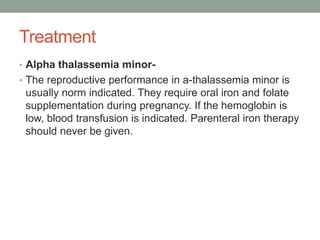
• Alpha thalassemia minor-
• The reproductive performance in a-thalassemia minor is
usually norm indicated. They require oral iron and folate
supplementation during pregnancy. If the hemoglobin is
low, blood transfusion is indicated. Parenteral iron therapy
should never be given.
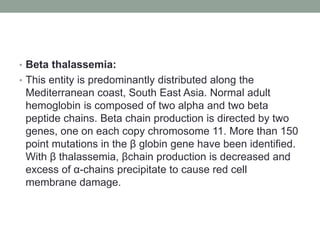
• Beta thalassemia:
• This entity is predominantly distributed along the
Mediterranean coast, South East Asia. Normal adult
hemoglobin is composed of two alpha and two beta
peptide chains. Beta chain production is directed by two
genes, one on each copy chromosome 11. More than 150
point mutations in the β globin gene have been identified.
With β thalassemia, βchain production is decreased and
excess of α-chains precipitate to cause red cell
membrane damage.
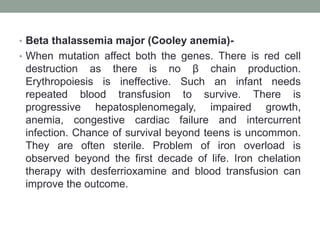
• Beta thalassemia major (Cooley anemia)-
• When mutation affect both the genes. There is red cell
destruction as there is no β chain production.
Erythropoiesis is ineffective. Such an infant needs
repeated blood transfusion to survive. There is
progressive hepatosplenomegaly, impaired growth,
anemia, congestive cardiac failure and intercurrent
infection. Chance of survival beyond teens is uncommon.
They are often sterile. Problem of iron overload is
observed beyond the first decade of life. Iron chelation
therapy with desferrioxamine and blood transfusion can
improve the outcome.
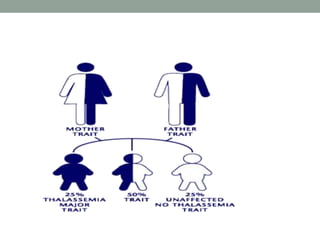
• Preconception counselling:
• Father of the fetus is advised for hemoglobin
electrophoresis (if MCV is low). When father has normal
hemoglobin-fetus has a 50% chance of B thalassemia
minor and 25% chance of normal hemoglobin. When
father is β thalassemia minor the risk of fetus being β-
thalassemia major is 50%. All forms of B-thalassemia can
be detected by CVS or aminocentesis. Preimplantation
blastomere biopsy and DNA study is possible to select
unaffected embryos during in vitro fertilisation.
• Beta thalassaemia minor-
• When there is mutation of one gene, B peptide chain
production is reduced by half. Excess α-chains combine
with δ-chains producing HbA2 (α2 δ2) or with γ chains
producing HbF. Sickle cell trait may co-exist with
thalassaemia minor.
Hematological findings in thalassemia
• There is low MCV and MCH but normal MCHC (c.f. -in
iron deficiency anemia where all are low).
• Serum iron and total iron binding capacity are normal or
elevated.
• Hemoglobin electrophoresis shows raised concentration
of HbA2 to more than 3.5% with normal or raised Hb-F
• Serum bilirubin may be raised to about 2-3 mg%.
• Usually anemia is mild. The diagnosis is often late when
the patient fails to respond to oral or parenteral iron
therapy to correct anemia. There is thus chance of hepatic
and cardiac hemosiderosis is from iron overload.
• Treatment:
• In thalassemia major oral and IV iron therapy is
contraindicated. These women need careful monitoring for
cardiac, liver, thyroid and parathyroid functions. These
organs are affected due to iron overload. Labour and
delivery management are usual. Patients with
thalassemia major are often small in stature, with small
pelvis. Caesarean delivery is often needed. Majority of the
women tolerate pregnancy well with good maternal and
fetal outcome. Oral folic acid supplementation is
continued. Oral iron therapy in thalassaenmia minor, is
given only when the laboratory diagnosis of iron
deficiency is established. Blood transfusion is rarely
indicated.
Platelet disorders
• Thrombocytopenia is considered when platelet count is
less than 1,50,000/mm' (ul). Platelet count of 97,000/ml to
1,50,000/ μl during pregnancy is not associated with any
increase in maternal or fetal morbidity. Thrombocytopenia
in pregnancy may be due to:
• Defective production (bone marrow pathology)
• Sequestration (enlarged spleen)
• Accelerated destruction which again may be due to non-
immunological :pre-eclampsia, HELLP syndrome,
abruptio placenta, DIC,
• Immunological: thrombocytopenic purpura, lupus
anticoagulant, SLE, antiphospholipid antibody. Others:
HIV, folic acid deficiency.
• Gestational thrombocytopenia: Is mainly the
physiological fall resulting from haemo dilution of normal
pregnancy
• Immune (idiopathic) thrombocytopenic purpura (1TP)
• Is due to accelerated destruction of antibody coated
platelets in the spleen and other reticuloendothelial
systems. Antibodies are of IgG, IgM and IgA types.
Patients may present with skin bruising. Generally
capillary bleeding or purpura occurs when the platelet
count falls below 50,000/ Asymptomatic patient with
count> 50,000/μl with normal bleeding time, generally
does not need any treatment.
• Fetus and the neonate may be affected due to
transplacental carriage of IgG antibodies.
Thrombocytopenia in the fetus when severe may cause
intracranial hemorrhage especially during labour.
• Management:
• Objective is to maintain platelet count more than
50,000/uL.
• During pregnancy:
• Administer methylprednisolone (1-1.5 mg/kg) or gamma
globulin (IVIG)-only if platelet count is <20,000/mm. This
will increase the platelet count.
• Platelet transfusion is indicated when there is clinically
significant bleeding.
• Splenectomy - as this may be the site of antibody
production or red cell sequestration
• In a patient with thrombotic thrombocytopenic purpura-
plasma exchange should be done.
• During labor:
• Vaginal route is the preferred method as severe
thrombocytopenia is rarely encountered.
Nursing diagnosis
• Risk For Maternal Injury
• Risk for Injury
• Risk factors
• Alteration of muscle tone/contractile pattern.
• Maternal fatigue.
• Mechanical obstruction to fetal descent.
• Desired Outcomes
• Patient will accomplish cervix dilation at least 1.2 cm/hr
for primipara, 1.5 cm/hr for multipara in active phase, with
fetal descent at least 1 cm/hr for primipara, 2 cm/hr for
multipara.
• Nursing intervention
• Review the history of labor, onset and duration
• Note timing / type of medication. Avoid administration of
narcotics or of epidural block anesthetics until the cervix is
4 cm dilated
• Note the condition of cervix. Monitor for signs of
amnionitis. Note elevated temperature or WBC; odor and
color of vaginal discharge
• Assess uterine contractile pattern manually or
electronically via external or internal monitor with internal
uterine pressure catheter.
• Evaluate the current level of fatigue, as well as activity
and rest prior to onset of labor
• Note effacement, fetal station and fetal presentation
• Evaluate degree of hydration. Note amount and type of
intake.
• Graph cervical dilation and fetal descent against time (
friedman curve)
• Encourage client to void every 1-2 hr. Assess for bladder
fullness over symphysis pubis.
• Place client in lateral recumbent position and encourage
bed rest or sitting position/ ambulation, as tolerated.
• Have emergency delivery kit available.
• Palpate the abdomen of thin client for the presence of
pathological retraction ring between uterine segment to
know about impending uterine rupture
• Risk For Fetal Injury
• Risk for Injury
• Risk Factors
• Abnormalities of the maternal pelvis.
• Cephalopelvic disproportion (CPD).
• Fetal malpresentation.
• Tissue hypoxia/acidosis.
• Prolonged labor.
• Desired Outcomes
• Patient will participate in interventions to improve labor
pattern and/or reduce identified risk factors.
• Patient will display FHR within normal limits, with
good variability, no late decelerations noted.
• Assess FHR manually or electronically. Note variability,
periodic changes, and baseline rate.
• Note frequency of uterine contractions. Notify physician if
the frequency is 2 min or less.
• Assess for malpositioning using Leopolds maneuvers and
findings on internal examination.
• Arrange transfer to acute care setting if malposition is
detected in client in a free standing birth center without
adequate surgical neonatal capabilities.
• Prepare client for the most expedient method of delivery if
fetus is in brow, face or chin presentation.
• Assess for deep transverse arrest of the fetal head.
• Observe for visible cord prolapse when membranes
rupture, and occult cord prolapse as indicated by variable
deceletation on monitor strip.
• Note odor and change in color of amniotic fluid with
prolonged rupture of membranes.
• Administer antibiotic to client as indicated
• Prepare for cesarean delivery of breech presentation if
fetus fail to descend, labor progress ceases or cpd is
identified.
Research
• Prospective study on prevalence of anemia of pregnant
women and its outcome: A community based study
• There was a significant overall improvement in the hemoglobin
levels of pregnant during the follow-up (10.3–10.72 gm%).
About 35.6% of the women had maternal or fetal morbidity.
Anemia was one of the main pregnancy-related complications
(62.3%), other complications include difficult labor (3%),
postpartum hemorrhage, and preeclampsia 1.6% each
abortions/stillbirths (3.5%). The fetal complications include low
birth weight (25.5%) followed by premature delivery (0.2%) and
birth asphyxia (0.5%).
• A high prevalence of anemia in pregnant women apparently
increases the maternal and fetal risks. To improve maternal
and fetal outcome, it is recommended that the primary health
care has to be strengthened, prevention, early diagnosis, and
treatment of anemia in pregnancy to be given priority.
• Anaemia in pregnancy and associated factors: a
cross sectional study of antenatal attendants at the
Sunyani Municipal Hospital, Ghana
• Out of the 316 participants, 129 (40.8%) were found to be
anaemic (Hb <11.0 g/dl) at the time of their first ANC visit
(mean Hb: 11.21 g/dl, range 6.8–15.1 g/dl). Seventy-nine
(61.2%) of them had mild anemia (Hb 9.0–10.9 g/dl), 48
(37.2%) had moderate anemia (Hb 7.0–8.9 g/dl) whilst 2
(1.6%) had severe anemia (Hb <7.0 g/dl). During their
most recent ANC visit, the prevalence of anaemia was
found to be similar to that of the first visit with 131 (41.5%)
of them being anaemic [mean Hb: 11.24 g/dl, range 8.10–
14.5 g/dl]. The haemoglobin levels however improved
significantly during the most recent visit compared to the
first with none of the women being severely anaemic (Hb
<7.0 g/dl).
References
• D. C Dutta text book of obstetrics, 7th edition, new central
book agency, page no – 260- 275
• SS Trivedi, management of high risk pregnancy, a
practical approach, Jaypee publications, page no 273-294
• Sharon smith murray, foundation of maternal newborn
nursing, 4th edition , Elsevier publication
• Lakshmi Seshadiri, essentials of obstetrics, page no 740-
755
• Myles, textbook of for midwives, 16th edition, Elsevier
publications
Thank you

Hematological disorders in pregnancy

  • 1.
  • 2.
    Introduction • Anemia isthe most common hematological disorder in pregnancy. It is a major public health concern in developing countries. • The majority of anemia in pregnancy is due to iron, folate or vitamin B12 deficiency. Less community, it could be a consequence of hemoglobinopathies such as thalassemia and sickle cell anemia.
  • 3.
    Incidence • Incidence ofanemia in pregnancy ranges widely from 40- 80 per cent in the tropics Compared to in the developed countries. Anemia is responsible for 20 percent of maternal deaths in the third world countries.
  • 4.
    Classification • Physiological anemiaof pregnancy • Pathological
  • 5.
    Cont…. • Anemia associatedwith nutritional deficiency • Iron deficiency • Folic acid deficiency • Vitamin B12 deficiency • Combined deficiencies • Protein deficiency • Haemorrhagic • Acute : Following bleeding in early months or APH • Chronic : Hookworm infestation, bleeding piles etc
  • 6.
    Cont… • Anemia associatedwith decreased production of blood cells • Bone marrow disorders • Bone marrow suppression • Chronic renal disorders – low level of erythropoietin • Hypothyroidism • Anemia associated with increased red blood cell destruction • Inherited hemolytic anemia • Sickle cell anemia • Thalassemia major • Hereditary spherocytosis • Other hemoglobinopathies
  • 7.
    Cont… • Acquired hemolyticanemia • Autoimmune hemolytic anemia • Hemolytic anemia associated with thrombotic thrombocytopenic purpura, hemolytic uremic syndrome, malaria. • Anemia due to blood loss • Heavy menstrual bleeding • Gastrointestinal bleeding • Obstetric hemorrhage • Anemia of infection (malaria, tuberculosis) • Chronic disease (renal) or neoplasm anemia and hemorrhagic anemia
  • 8.
    Definition • Anemia isdefined by the world health organization as hemohlobin levels of <11g/dl or hematocrit of <33%. It can also be defined as a value less than the fifth percentile of the distribution of hemoglobin or hematocrit in a healthy reference population based on the trimester of pregnancy. The federation of obstetric and gynecological societies of India has suggested a cutoff of 10g/dl for India.
  • 9.
    Physiological anemia ofpregnancy • <11g/dl in the first trimester • <10.5g/dl in the second trimester • <11g/dl in the third trimester • <11g/dl at 1 week postpartum • <12g/dl at 8 week postpartum
  • 10.
    Categorization of anemia CategoryWHO Hemoglobin gm/dl ICMR Hemoglobin gm/dl Mild anemia 9-10.9 10-11 Moderate anemia 7-9 7-10 Severe anemia <7 4-7 Very severe <4, decompensated <4
  • 11.
    Concept of physiologicalanemia • There is disproportionate increase in plasma volume, RBC volume and haemoglobin mass during pregnancy. In addition, there is marked demand of extra iron during pregnancy specially in the second half. As a result, there is not only a fall in hemoglobin concentration and hematocrit value in the second half of pregnancy but there is also associated low serum iron, increased iron binding capacity and increased rate of iron absorption as found in iron deficiency anemia.
  • 12.
    Erythropoiesis • In adults,erythropoiesis is confined to the bone marrow. Red blood cells are formed through stages of pronormoblasts -> normoblasts -> reticulocytes to mature non-nucleated erythrocytes. The average life span of red blood cells is about 120 days after which the RBC degenerates and the hemoglobin is broken down into hemosiderin and bile pigment.
  • 13.
    Cont… • Inadequate reserveor increased demand or deficient supply of any of the constituents interferes with the normal erythropoiesis. • Minerals • Vitamins • Proteins • Erythropoietin
  • 14.
    Causes Before pregnancy Faulty dietetichabits Faulty absorption mechanism Iron loss During pregnancy Increased demand of iron Diminished intake of iron Diminished absorption Disturbed metabolism Pre pregnant health status Excess demand
  • 15.
    Iron deficiency anemia– clinical features • Symptoms: • Lassitude and a feeling of exhaustion or weakness may be the earliest manifestations. • The other features are anorexia and indigestion; palpitation caused by ectopic beats, dyspnoea, giddiness and swelling of the legs.
  • 16.
    Cont… • On examination: •There is pallor of varying degrees; evidences of glossitis and stomatitis • Edema of the legs may be due to hypoproteinaemia or associated pre-eclampsia • A soft systolic murmur may be heard in the mitral area due to physiological mitral incompetence • Crepitations may be heard at the base of the lungs due to congestion. • Splenomegaly • Spoon shaped nails
  • 17.
    Investigation • The patienthaving a hemoglobin level 9 gm% or less should be subjected to a full haematological investigation. The objectives of investigation are to ascertain: • Degree of anemia • Type of anemia • Cause of anemia • To know the degree of anemia • This requires haematological examination which include estimation of : • Hemoglobin • Total red cell count • Determination of packed cell volume
  • 18.
    To ascertain thetype of anemia • Peripheral blood smear • Haematological indices : Calculation of MCHC, MCV and MCH is based on the values of haemoglobin. A typical iron deficiency anaemia shows the following blood values. Hemoglobin- less than 10 gm%, Red blood cells-less than 4 million/mmns, PCV-less than 30%, MCHC-less than 30%, MCV- less than 75 u3 and MCH less than 25 pg. • Other blood values of importance in iron deficiency anemia are • Serum iron is usually below 30 ug/100 ml • Total iron binding capacity is elevated to beyond 400 ug/100 ml. • Percentage saturation is 10% or less. • Serum ferritin below 30 ug/1. • Confirms iron deficiency anemia. • Serum bilirubin is not raised.
  • 19.
    To find outthe cause of anemia • Appropriate investigation should be undertaken as per the history and clinical examination to find out the cause of anemia. • Examination of stool – to detect helminthic infestation • The urine is examined for the presence of protein, sugar and pus cells. • Place of bone marrow study : this is not done as a routine but indicated in: • Cases not responding to therapy according to hematological typing • To diagnose hypoplastic anemia • To diagnose kala-azar by detecting L.D antibodies
  • 20.
    Differential diagnosis • Allthe causes of hypochromic anemia are to be differentiated. Apart from iron deficiency, other causes are: • Infection • Nephritis and pre eclampsia • Hemoglobinopathies
  • 21.
    Complication of anemiain pregnancy • During pregnancy: • The following complications are likely to increase: • Pre-eclampsia may be related to malnutrition and hypoproteinaemia • Intercurrent infection-Not only does anaemia diminish resistance to impairs erythropoiesis by bone marrow depression • Heart failure at 30-32 weeks of pregnancy • Preterm labour. • Poor tolerance to blood loss
  • 22.
    • During labour: •Uterine inertia is not a common associate; on the contrary the labour is short because of a small baby and multiparity • Postpartum haemorrhage is a real threat. Patient tolerates badly even a minimal amount of blood loss • Cardiac failure may be due to accelerated cardiac output which occurs during labour or immediately following delivery. As the blood in the uterine circulation is squeezed in the general circulation, it puts undue strain on the weak heart already compromised by hypoxia • Shock-Even a minor traumatic delivery without bleeding may produce shock or a minor hypoxia during anesthesia which may be lethal.
  • 23.
    • Puerperium: Thereis increased chance of : • Puerperal sepsis • Subinvolution • Poor lactation • Puerperal venous thrombosis • Pulmonary embolism. • Risk periods: The risk periods when the patient may even die suddenly are • At about 30-32 weeks of pregnancy • During labour • Immediately following delivery • Any time in puerperium specially 7-10 days following delivery due to cardiac failure or pulmonary embolism.
  • 24.
    • Effects onbaby: • Amount of iron transferred to the fetus is unaffected even if the mother suffers from iron deficiency anemia. So the neonate does not suffer from anemia at birth. • There is increased incidence of low birth weight babies with its incidental hazards • Intrauterine death - due to severe maternal anoxaemia. The sum effect is increased perinatal loss. • Perinatal mortality • Low birth weight baby • Poor mental and psychomotor performance
  • 25.
    Prognosis • Maternal • Ifdetected early and proper treatment is instituted, anemia improves promptly. At times, there is a tendency for anemia to recur in subsequent pregnancy. In fact, anemia either directly or indirectly contributes to about 20% of maternal deaths in the third world countries. • Fetal • If detected early and responsive to treatment, the fetal prognosis is not too bad. In severe and neglected cases, the fetal prognosis is adversely affected by prematurity with its hazards.
  • 26.
    Treatment • The prophylaxisincludes : Avoidance of frequent child- births-a minimum interval between pregnancies, should be at least two years, if not three, to replenish the lost iron during child-birth process and lactation. This can be achieved by proper family planning guidance.
  • 27.
    • Supplementary irontherapy : Even with a well-balanced diet, supplementary iron should be a routine patient becomes free from nausea of pregnancy. Daily administration of 200 mg of ferrous sulphate (containing 60 mg of elemental iron) along with 1 mg folic acid is a quite effective prophylactic procedure. Tea should be avoided 1 hour of taking iron tablet.
  • 28.
    • Dietary prescription:A realistic balanced diet, rich in iron and protein, should be prescribed which should be within the reach of the patient and should be easily digestible. The foods rich in iron are liver, meat, egg, green vegetables, green peas, figs, beans, whole wheat and green plantains, onion stalks, jiggery etc. Iron utensils should preferably be used for cooking and the water used in rice and vegetable cooking should not be discarded.
  • 29.
    • Adequate treatmentshould be instituted to eradicate hookworm infestation, dysentery, malaria, bleeding piles, and urinary tract infection. • Early detection of falling haemoglobin level is to be made. Haemoglobin level should be estimated at the first antenatal visit, at the 30th and finally at 36th week.
  • 30.
    • Hospitalisation: • Ideallyall patients having haemoglobin level 9 gm/100 ml or less should be admitted for investigation and treatment. But due to high prevalence of anemia and inadequate hospital beds, an arbitrary haemoglobin level of 7.5 gm/dl may be considered, when the patient should be hospitalized. • Associated obstetrical-medical complication even with moderate degree of anemia.
  • 31.
    • General treatment •Diet: A realistic balanced diet rich in proteins, iron and vitamins and which is easily assimilable is prescribed. • To improve the appetite and facilitate digestion, preparation containing acid pepsin may be given thrice daily after meals. • To eradicate even a minimal septic focus by appropriate antibiotic therapy. • Effective therapy to cure the disease contributing to the cause of anaemia
  • 32.
    • Specific therapy •The principle is to raise the haemoglobin level as near to normal as possible. Thereafter, an attempt is made to restore the iron reserve at least in part, if possible, before the patient goes in labour. • Choice of therapy depends on • Severity of anemia • Duration of pregnancy (time available before delivery) • Associated complicating factors.
  • 33.
    Iron therapy • Oralroute • The preparations available are ferrous gluconate, ferrous fumarate or ferrous succinate. In spite of claims about the superiority of one preparation over the other, ferrous sulphate is widely used. Fersolate tablet contains 200 mg ferrous sulphate which contains 60 mg of elemental iron, trace of copper and manganese. The initial dose is one tablet to be given thrice daily with or after meals. If larger dose is necessary (maximum six tablets a day), it should be stepped up gradually in three to four days. The treatment should be continued till the blood picture becomes normal; thereafter a maintenance dose of one tablet daily is to be continued for at least 100 days following delivery to replenish the iron stores
  • 34.
    Drawback • Intolerance • Unpredictableabsorption rate • Response of therapy is evidenced by: • Sense of wellbeing • Increased appetite • Improved outlook of the patient • Haematological examination: Rise in haemoglobin level & Haematocrit value returning to normal, Reticulocytosis within 7-10 days.
  • 35.
    • Rate ofimprovement : The improvement should be evident within three weeks of the therapy. After a lapse of few days, the haemoglobin concentration is expected to rise at the rate of about 0.7 gm/100 ml per • Causes of failure of improvement: • Improper typing of anemia • Defective absorption due to associated gastrointestinal disorders • The patient fails to take iron • Concurrent blood loss as in hookworm infestation or bleeding piles • Inhibition of erythropoiesis by infection • Co-existent folate deficiency
  • 36.
    • Contraindications oforal therapy: The following are the contraindications of oral therapy • Intolerance to oral iron. • Severe anemia in advanced pregnancy. • Considering the unpredictable absorption and utilization following oral therapy, parenteral therapy is the preferred choice.
  • 37.
    Parental therapy • Intravenousroute : • Repeated injections • Total dose infusion (TDI) • Intramuscular route
  • 38.
    • Indications ofparenteral therapy • Contraindications of oral therapy. • Patient is not co-operative to take oral iron. • Cases seen for the first time during the last 8-10 weeks with severe anemia. • The main advantage of parenteral therapy is the certainty of its administration to correct the haemoglobin deficit and to fix up the iron store. The expected rise in haemoglobin concentration after parenteral therapy is 0.7 to 1 gm/100 ml per week.
  • 39.
    • Intravenous route •Total dose infusion (TDI) : • The deficit of iron is first calculated and the total amount of iron required to correct the deficit is administered by a single sitting intravenous infusion. The compound used is iron dextran compound, or iron (ferrous) sucrose. Iron sucrose is safe, effective and has fewer side effects (ACOG-2008).
  • 40.
    • Advantages: • Iteliminates repeated and painful intramuscular injections. • The treatment is completed in a day and the patient may be discharged much earlier from the hospital. • It is less costly compared to the repeated intramuscular therapy.
  • 41.
    • Limitations: • Asthe maximum haemoglobin response does not appear before four to nine weeks, the method is unsuitable if at least four weeks time is not available, to raise the haemoglobin to a safe level of l0 gm% before delivery. Thus, it is mostly suitable during 30-36 weeks of pregnancy where the patient 15 unwilling or unable to complete the course of intramuscular injections • Previous history of reaction to parenteral therapy is contraindicated for its use. •
  • 42.
    • Estimation ofthe total requirement: The manufacturer’s information is to follow for dose calculation. One such formula for iron dextran is: • 0.3xW (100-HIb%) mg of elemental iron. Where W= patient's weight in pounds. Hb% = observed haemoglobin concentration in percentage. Additional 50% is to be added for partial replenishment of the body store iron. • Example (iron dextran): The total elemental iron required in an anaemic patient weighing 100 lb with haemoglobin 50% is calculated as follows :0.3x 100 (100-50) =3/10X 100x 50 1500 mg. Add 50% = 750 mg. Total elemental iron required 2250 mg. • Iron (ferrous) Sucrose: Total iron dose (mg) = 2.3x WxD+500 [W = Weight (kg) before pregnancy; D = Hb (Target Actual) gm/dL; 500 mg for body store]. It is given IV, 100 mg (at a time) in 100 ml normal saline over 15 minutes.
  • 43.
    • Pre-requisites: • Correctdiagnosis of true iron deficiency anemia • Adequate supervision • Facilities for management of anaphylactic reaction. • Procedures: • The patient is admitted in the morning for infusion • The required iron is mixed with 500 ml of 0.9% saline. Manufacturer's guidance in the drug information sheet is to be followed as regard the total dose and duration of therapy. • Precaution like those of blood transfusion are to be taken both prior to and during the infusion process. • The drip rate should be 10 drops per minute during the first 20 minutes and thereafter is increased to 40 drops per minute • Any adverse reaction like rigor, chest pain or hypotension calls for omission of the drip
  • 44.
    • Intramuscular therapy: •The compounds used are Iron-dextran (Imferon) Iron- sorbitol-citric acid complex in dextrin (Iron sorbitol complex Jectofer) • Both the preparations contain 50 mg of elemental iron in one millilitre. Total dose to be administered is calculated as that previously mentioned in intravenous therapy. Total dose of iron sorbitol complex is to be adjusted because of its 30% excretion in urine. Oral iron should be suspended at least 24 hours prior to therapy to avoid reaction.
  • 45.
    • Procedure ofinjections: • After an initial test dose of 1 ml, the injections are given daily or on alternate days in doses of 2 ml intramuscularly. To prevent dark staining of the skin over the injection sites and to minimise pain, the injections are given with a two inch needle deep into the upper outer quadrant of the buttock using a 'Z' technique (pulling the skin and subcutaneous tissues to one side before inserting the needle). An additional precaution is to inject small quantity of air or saline down the needle before withdrawing it. These procedures prevent even a slight drop of the solution to come beneath the skin surface so as to stain it.
  • 46.
    • Drawbacks: • Theinjections are painful although less with Jectofer • Chance of abscess formation and a discolouration of the skin over the injection sites are real problems specially with Imferon • Reactions are far and few-pyrexia, lymphadenopathy, headache, nausea, vomiting and allergic reactions are infrequently met with.
  • 47.
    • Place ofblood transfusion: • The indication of blood transfusion in anemia during pregnancy is very much limited. The indications are: • To correct anemia due to blood loss and to combat postpartum haemorrhage. • Patient with severe anemia seen in later months of pregnancy (beyond 36 weeks)- to improve the anemic state and oxygen carrying capacity of blood before the patient goes into labour. The primary concern is not only to correct anemia but also to make the patient fit to withstand the strain of labour and blood loss following delivery. • Refractory anemia - Anemia not responding to either oral or parenteral therapy in spite of correct typing. • Associated infection
  • 48.
    • The qualityand quantity of blood: The blood to be transfused should be relatively fresh, properly typed, grouped and cross matched. Only packed cells are transfused. The quantity should be between 80-100 ml at a time. To allow time for circulatory readjustment, transfusion should not be repeated within 24 hours.
  • 49.
    • Advantages ofblood transfusion • Increases oxygen carrying capacity of the blood • Haemoglobin from the haemolysed red cells may be utilised for the formation of new red cells • Stimulates erythropoiesis. • Supplies the natural constituents of blood like proteins, antibodies etc • Improvement is expected after 3 days.
  • 50.
    • Precautions • Utmostprecautions are to be taken to minimise reaction and over loading of the heart. • Antihistaminic (Phenargan 25 mg) is given intramuscularly • Diuretics (Frusemide 20 mg) is given intramuscularly at least two hours prior to transfusion to produce negative fluid balance • The drip rate should be about 10 drops per minute • To observe carefully the pulse, respiration and crepitation in the base of lungs.
  • 51.
    • Drawbacks: • Prematurelabour may start which is more related to blood reaction • There is increased chance of cardiac failure with pulmonary edema because of overloading of the heart • Features of transfusion reaction, if occur, are often exaggerated.
  • 52.
    • Exchange transfusion: •The place of exchange transfusion is very much limited except in desperate cases. Its indications are : • Cardiac failure due to severe anemia • Cases of severe anemia requiring surgery • Severe anemia whatever may be the type (with packed cell volume less than 13%) near term as a safer alternative to simple transfusion. The method is well tolerated and dramatic improvement of the patient's outlook occurs within 30 minutes.
  • 53.
    Management during labour •First stage: The following are the special precautions that are to be taken when an anaemic patient goes into labour. • The patient should be in bed and should lie in a position comfortable to her. • Arrangements for oxygen inhalation are to be kept ready to increase the oxygenation of the maternal blood and thus diminish the risk of fetal hypoxia. • Strict asepsis is to be maintained to minimise puerperal infection.
  • 54.
    • Second stage:Asepsis is maintained. Prophylactic low forceps or vacuum delivery may be done to shorten the duration of second stage. Intravenous methergin 0.2 mg should be given following the delivery of anterior shoulder. • Third stage: One should be very vigilant during the third stage. Significant amount of blood loss should be replenished by fresh packed cell transfusion after taking the usual precautions mentioned earlier. The danger of postpartum overloading of the heart should be avoided.
  • 55.
    • Puerperium: • Prophylacticantibiotics are given to prevent infection • Predelivery antianemic therapy should be continued till the patient restores her normal clinical and haematological states. Even in an otherwise normal case, iron therapy should be continued for at least 3 months following delivery • Patient should be warned of the danger of recurrence in subsequent pregnancies.
  • 56.
    Nursing care plan •Nursing care plan for clients with anemia includes: assess risk factors, decrease fatigue, maintenance of adequate nutrition, maintenance of adequate tissue perfusion, compliance with prescribed treatment regimen, and be free from complications. • Fatigue • Deficient Knowledge • Risk For Infection • Risk For Bleeding • Activity Intolerance
  • 57.
    • Fatigue • NursingDiagnosis • Fatigue • May be related to • Decreased hemoglobin and diminished oxygen-carrying capacity of the blood. • Possibly evidenced by • Exertional discomfort or dyspnea. • Inability to maintain usual level of physical activity. • Increased rest requirements. • Report of fatigue and lack of energy. • Desired Outcomes • Client will verbalize use of energy conservation principles. • Client will verbalize reduction of fatigue, as evidenced by reports of increased energy and ability to perform desired activities.
  • 58.
    • Nursing intervention •Assess the specific cause of fatigue • Assess the client’s ability to perform activities of daily living and the demands of daily living • Monitor hemoglobin hematocrit RBC count and reticulocyte counts. • Assist the client in planning and prioritizing activities of daily living • Assist the client in developing a schedule for daily activity and rest. Stress the importance of frequent rest period • Educate energy conservation techniques • Instruct the client about medications that may stimulate RBC production in the bone marrow • Provide supplemental oxygen therapy • Anticipate the need for the transfusion of packed RBC
  • 59.
    • Deficient Knowledge •Nursing Diagnosis • Deficient Knowledge • May be related to • Complexity of treatment. • Lack of recall. • Lack of resources. • New condition or treatment. • Unfamiliarity with the disease condition. • Possibly evidenced by • Inaccurate follow-through of instructions. • Questioning members of health care team. • Verbalized inaccurate information. • Desired Outcomes • Client will verbalize understanding of own disease and treatment plan
  • 60.
    • Intervention • Assesscurrent knowledge of the diagnosis, disease process and treatment • Assess the clients and family’s understanding of the new medical vocabulary • Explain the importance of diagnostic procedure • Instruct the client to avoid known risk factors • Explain that blood transfusion from prospective marrow donors should be avoided • Explain that immunosuppressive therapy is the treatment of choice in clients without HLA- matched donors and older than 40years of age. • Educate the client and family regarding food rich in iron , folic acid and vitamin B12
  • 61.
    • Risk ForInfection • Nursing Diagnosis • Risk for Infection • Risk Factors • Bone marrow malfunction. • Marrow replacement with fat in aplastic anemia. • Desired Outcomes • Client will have a reduced risk of infection as evidenced by an absence of fever, normal white blood cell count, and implementation of preventive measures such as proper hand washing. • Client will have vital signs within the normal limit.
  • 62.
    • Interventions • Assessthe local or systemic sign of infection, such as fever chills, swelling, pain and body malaise • Monitor WBC count • Instruct the client to report signs and symptoms of infection immediately. • Anticipate the need for antibiotic, antiviral and antifungal therapy • Instruct the client to avoid contact with people with existing infections • Instruct the client to avoid raw fruits and vegetables and uncooked meat • Stress the importance of daily hygiene, mouth care and perineal care • Teach the client and visitors the proper hand washing
  • 63.
    MEGALOBLASTIC ANEMIA • Inmegaloblastic anemia, there is derangement in red cell maturation with the production in the bone marrow of abnormal precursors known as megaloblasts due to impaired DNA synthesis.
  • 64.
    Causes • Strict vegetariandiet • Gastritis • Gastrectomy • Bariatric surgery • Ileal bypass • Crohn's • Drugs-Metformin, proton pump inhibitors • Addisonian pernicious anaemia-rare in pregnancy • Megaloblastic anaemia of malabsorption syndrome
  • 65.
    Cont… Addisonian pernicious anemiais caused by lack of absorption of vitamin B12 due to lack of intrinsic factor. It is an extremely rare autoimmune disease in pregnancy because of: • Rare occurrence during child bearing period (usually manifests above 40 years) • If occurs early, produces infertility • For cobalamin absorption, the requirements are: • Stomach acid pepsin • Intrinsic factors secreted by gastric parietal cells • Pancreatic proteases • Intact ileum with mucosal receptors.
  • 66.
    Causes of folicacid deficiency in pregnancy • Inadequate intake due to: • Nausea, vomiting and loss of appetite. • Dietary insufficiency main sources of folic acid are green leafy vegetables, cauliflower, spinach, liver, and kidney. • Excessive cooking destroys much of the folate in food.
  • 67.
    • Abnormal demand: •Infection-Infection reduces the life span of the red cells and hence increases the demand of folic acid to replenish the red cells • Haemorrhagic states such as peptic ulcer, hookworm infestation, haemorrhoids and the haemolytic states such as chronic malaria, sickle cell anemia or thalassaemia, lead to increased erythropoiesis and exhaustion of the available supply of folic acid resulting in megaloblastic erythropoiesis.
  • 68.
    • Failure ofutilisation • This is associated with anticonvulsant drugs used in epilepsy or with presence of infection. Diminished storage- • This is associated with hepatic disorders and vitamin C deficiency
  • 69.
    • Increased demanddue to: • Increased maternal tissue including red cell volume • Developing product of conception • Multiple pregnancy. Daily requirement of folic acid in a non-pregnant woman is 50-100 Hg/day and during pregnancy is increased to 400 ug/day. • Diminished absorption: • Intestinal malabsorption syndrome is responsible for its recurrence in subsequent pregnancies.
  • 70.
    Signs and symptomsof B12 deficiency • Smooth beefy red tongue with loss of papillae • Gastro intestinal symptoms • Burning or soreness of tongue • Anorexia • Nausea and vomiting • Heartburn • flatulence • Neurological symptoms • Paresthesias, Impaired memory, Personality changes • Numbness, Weakness, Loss of dexterity • Skeletal changes • Osteoporosis
  • 71.
    Diagnostic test • Completeblood count • Peripheral blood smear • Macrocytic RBC • Hypersegmented neutrophils • Serum level • Low vit B12 level • High homocysteine level
  • 72.
    Effect on pregnancy •Association between folic acid/ vitamin B12 deficiency anemia and preeclampsia- like syndrome, fetal growth restriction and placental abruption has been reported but not proven.
  • 73.
    Treatment of vitaminB12 deficiency • Intramuscular or deep subcutaneous cobalamin is administered • 1mg every day for 1 week • Followed by 1 mg every week
  • 74.
    Dimorphic anemia • Thisis the most common type of anemia met with in the tropics. It is related to dietary inadequacy or intestinal malabsorption. As such, anemia results from deficiency of both iron and folic acid or vitamin B12. While there is polydeficiency state, the hematological findings or the bone marrow picture usually show predominance of one deficiency. The red cells become macrocytic or normocytic and hypochromic or normochromic. Bone marrow picture is predominantly megaloblastic as the folic acid is required for the development of the number of red cell precursoors. The treatment consists of prscribing both the iron and folic acid in therapeutic doses.
  • 75.
    Aplastic anemia • Itis rarely seen in pregnancy. There is marked decrease in the marrow stem cells. Exact cause is unknown. It may be immunologically medicated or may be an autosomal recessive inheritance. In about 30% of cases, anemia improves once pregnancy is terminated. The significant complications in pregnancy are haemorrhage and infection
  • 76.
    • Diagnosis: • Bloodvalues - Anemia, leucopenia and thrombocytopenia. • Bone marrow-markedly hypo cellular.
  • 77.
    Management • Repeated bloodtransfusions are given to maintain haematocrit level above 20. Specific therapy may be needed eg. Granulocyte transfusion to combat infection and platelet transfusion to control haemorrhage. Glucocrticoid therapy may be helpful in some patients. In a severe case of aplastic anemia, bone-marrow or stem cell transplantation effective. Vaginal delivery is always preferred.
  • 78.
    Sickle cell hemoglobinopathies •Sickle cell haemoglobinopathies are hereditary disorders. It is caused by a point mutation in the ß- globin gene on chromosome II. This causes substitution of valine for glutamic acid at position 6 of the ß-chain of normal haemoglobin. Gene mutation - when homozygous the individual has sickle cell anemia (Hb SS). She has a small quantity of fetal haemoglobin (HbF) but no HbA. Heterozygous individual for sickle cell haemoglobin has sickle cell trait (HbAS). Such an individual has about 55- 60% of HbA and 35-40% of HbS. The prevalence rate of sickle cell haemoglobinopathies is highest in Africa and ranges from 20-50%.
  • 79.
    • Sickle cell-βthalassemia • Is observed when one β chain gene carries the sickle cell mutation and the other gene is deleted. Pregnancy outcome is similar to sickle cell anemia.
  • 80.
    • Sickle celltrait: • Hb-S comprises 30-40% of the total haemoglobin, the rest being Hb-A, Hb-A2 and Hb-F. If the husband is a carrier, there is 25% chance that the infant will be homozygous sickle cell disease and 50%o-sickle cell trait. As such, preconceptional counseling should be done to know whether the husband also carries the trait or not. There is no special problem so far as reproductive performance is concerned. The patient will require iron supplementation. As the concentration of Hb-S is low, crisis is rare but can Occur in extreme hypoxia. Haematuria and urinary infection are quite common.
  • 81.
    • Sickle celldisease: • Homozygous sickle cell disease (Hb-SS) is transmitted equally by males and females. Partner must be tested. Termination of pregnancy is an option if a fetus is diagnosed to have major haemoglobinopathy.
  • 82.
    • Pathophysiology: • Redcells with HbS in oxygenated state behave normally but in the deoxygenated state it aggregates polymerizes and distort the red cells to sickle. These sickle shaped cells block the microcirculation due to their rigid structure. This sickling phenomenon is precipitated by infection, acidosis, dehydration, hypoxia and cooling. The cells have got short life span and are more fragile. Increased destruction leads to haemolysis, anemia and jaundice.
  • 83.
    • Diagnosis: • Refractoryhypochromic anemia • Identification by sickling test • Persistent reticulocytosis (10-20%) • High fasting serum iron level • Identification of the type of haemoglobinopathies by electrophoresis.
  • 84.
    • Effect onpregnancy: • There is increased incidence of abortion, prematurity, IUGR and fetal loss. Perinatal mortality is high. Incidence of pre-eclampsia, postpartum haemorrhage and infection is increased. Increased maternal morbidity is due to infection, cerebrovascular accident and sickle cell crisis. Maternal death is increased up to 25% due to pulmonary infarction, acute chest syndrome, congestive heart failure and embolism.
  • 85.
    • Effects onthe disease: • There is chance of sickle cell crisis which usually occurs in the last trimester. Two types are met- haemolytic crisis painful crisis. • Haemolytic crisis: lt is due to haemolysis with rapidly developing anemia along with jaundice. There is associated leucocytosis and fever.
  • 86.
    • Painful (vaso-occlusive)crisis : It is due to vascular occlusion of the various organs by capillary thrombosis resulting in infarction. Organs commonly affected due to vaso-occlusion and infarction are: Bones (osteonecrosis), Kidney (renal medulla), hepatosplenomegaly, Lung infarction) and Heart (failure), Neurologic (seizures, stroke) and super added infections are high.
  • 87.
    Management • Preconceptional counselling: •Prenatal identification of homozygous state of the disorder is an indication for early termination of the pregnancy, if the parents desire. Management needs multidisciplinary approach.
  • 88.
    • During pregnancy: •Careful antenatal supervision • Air travelling in unpressurised aircraft is to be avoided • Prophylactically folic acid 1 mg tablet should be given daily • Iron supplementation is reserved only in proven cases of iron deficiency • Prophylactic booster or exchange blood transfusion may be given. • Infection (pneumococcal) or appearance of unusual symptoms necessitates hospitalization. • Hydroxy urea is used as a disease modifying drug. • Haemopoietic cell (bone marrow/cord blood stem cell) transplantation has been used with success.
  • 89.
    • During labour: • The labour is to be conducted as outlined in anemia • Continuous oxygen therapy by nasal cannula is useful, to maintain PaO2. 94%. • Anoxia is to be avoided during anesthesia. Epidural anesthesia is preferred • Adequate fluid infusion to avoid dehydration and acidosis • Caesarean section is performed for obstetric indication only • Routine antibiotic is used in puerperium to prevent infection • Cord blood is sent for haemoglobinopathy screening.
  • 90.
    • Contraception: • Sterilisationshould be considered even with low parity because of the short life span of the patient • Oral pill is contraindicated as it might aggravate risk of thromboembolism • Intrauterine device is contraindicated for fear of infection • Barrier method of contraceptive is ideal.
  • 91.
    Thalassemia syndrome • Thethalassemia syndromes are the commonly found genetic disorders of the blood. The basic defect is a reduced rate of globin chain synthesis. As a result, the red cells being formed with inadequate haemoglobin content. There is deficient erythropoiesis, haemolysis and ultimately anemia. The major syndromes are of two groups the alpha or beta thalassemia depending on whether the alpha or the beta globin chain synthesis of the adult haemoglobin is depressed.
  • 92.
    • Depending uponthe degree of deficient o-peptide chain synthesis, four clinical types of syndromes have been identified. • Mutation of one gene-there is no clinical or laboratory abnormalities. Subject remains as a silent carrier. • Mutation in two of the four genes - α-thalassemia minor. It often goes unrecognized and pregnancy is well tolerated.
  • 93.
    • Mutation inthree of the four genes- hemoglobin H disease. The patient has some HbA and large percentage of HbH and hemoglobin Bart (four gama chains). The hemoglobin Bart present at birth, is gradually replaced by hemoglobin H. These women suffer from hemolytic anemia. During pregnancy, anaemia deteriorates further.
  • 94.
    • Mutation inall four genes- α-thalassaemia major. There is no a globin chain, hemoglobin Bart (four y chains) and hemoglobin H (four B chains) are formed. The fetus dies either in utero or soon after birth. This is an important cause of non-immune fetal hydrops and perinatal death.
  • 96.
    Treatment • Alpha thalassemiaminor- • The reproductive performance in a-thalassemia minor is usually norm indicated. They require oral iron and folate supplementation during pregnancy. If the hemoglobin is low, blood transfusion is indicated. Parenteral iron therapy should never be given.
  • 97.
    • Beta thalassemia: •This entity is predominantly distributed along the Mediterranean coast, South East Asia. Normal adult hemoglobin is composed of two alpha and two beta peptide chains. Beta chain production is directed by two genes, one on each copy chromosome 11. More than 150 point mutations in the β globin gene have been identified. With β thalassemia, βchain production is decreased and excess of α-chains precipitate to cause red cell membrane damage.
  • 98.
    • Beta thalassemiamajor (Cooley anemia)- • When mutation affect both the genes. There is red cell destruction as there is no β chain production. Erythropoiesis is ineffective. Such an infant needs repeated blood transfusion to survive. There is progressive hepatosplenomegaly, impaired growth, anemia, congestive cardiac failure and intercurrent infection. Chance of survival beyond teens is uncommon. They are often sterile. Problem of iron overload is observed beyond the first decade of life. Iron chelation therapy with desferrioxamine and blood transfusion can improve the outcome.
  • 99.
    • Preconception counselling: •Father of the fetus is advised for hemoglobin electrophoresis (if MCV is low). When father has normal hemoglobin-fetus has a 50% chance of B thalassemia minor and 25% chance of normal hemoglobin. When father is β thalassemia minor the risk of fetus being β- thalassemia major is 50%. All forms of B-thalassemia can be detected by CVS or aminocentesis. Preimplantation blastomere biopsy and DNA study is possible to select unaffected embryos during in vitro fertilisation.
  • 100.
    • Beta thalassaemiaminor- • When there is mutation of one gene, B peptide chain production is reduced by half. Excess α-chains combine with δ-chains producing HbA2 (α2 δ2) or with γ chains producing HbF. Sickle cell trait may co-exist with thalassaemia minor.
  • 101.
    Hematological findings inthalassemia • There is low MCV and MCH but normal MCHC (c.f. -in iron deficiency anemia where all are low). • Serum iron and total iron binding capacity are normal or elevated. • Hemoglobin electrophoresis shows raised concentration of HbA2 to more than 3.5% with normal or raised Hb-F • Serum bilirubin may be raised to about 2-3 mg%. • Usually anemia is mild. The diagnosis is often late when the patient fails to respond to oral or parenteral iron therapy to correct anemia. There is thus chance of hepatic and cardiac hemosiderosis is from iron overload.
  • 102.
    • Treatment: • Inthalassemia major oral and IV iron therapy is contraindicated. These women need careful monitoring for cardiac, liver, thyroid and parathyroid functions. These organs are affected due to iron overload. Labour and delivery management are usual. Patients with thalassemia major are often small in stature, with small pelvis. Caesarean delivery is often needed. Majority of the women tolerate pregnancy well with good maternal and fetal outcome. Oral folic acid supplementation is continued. Oral iron therapy in thalassaenmia minor, is given only when the laboratory diagnosis of iron deficiency is established. Blood transfusion is rarely indicated.
  • 103.
    Platelet disorders • Thrombocytopeniais considered when platelet count is less than 1,50,000/mm' (ul). Platelet count of 97,000/ml to 1,50,000/ μl during pregnancy is not associated with any increase in maternal or fetal morbidity. Thrombocytopenia in pregnancy may be due to: • Defective production (bone marrow pathology) • Sequestration (enlarged spleen) • Accelerated destruction which again may be due to non- immunological :pre-eclampsia, HELLP syndrome, abruptio placenta, DIC, • Immunological: thrombocytopenic purpura, lupus anticoagulant, SLE, antiphospholipid antibody. Others: HIV, folic acid deficiency.
  • 104.
    • Gestational thrombocytopenia:Is mainly the physiological fall resulting from haemo dilution of normal pregnancy
  • 105.
    • Immune (idiopathic)thrombocytopenic purpura (1TP) • Is due to accelerated destruction of antibody coated platelets in the spleen and other reticuloendothelial systems. Antibodies are of IgG, IgM and IgA types. Patients may present with skin bruising. Generally capillary bleeding or purpura occurs when the platelet count falls below 50,000/ Asymptomatic patient with count> 50,000/μl with normal bleeding time, generally does not need any treatment. • Fetus and the neonate may be affected due to transplacental carriage of IgG antibodies. Thrombocytopenia in the fetus when severe may cause intracranial hemorrhage especially during labour.
  • 106.
    • Management: • Objectiveis to maintain platelet count more than 50,000/uL.
  • 107.
    • During pregnancy: •Administer methylprednisolone (1-1.5 mg/kg) or gamma globulin (IVIG)-only if platelet count is <20,000/mm. This will increase the platelet count. • Platelet transfusion is indicated when there is clinically significant bleeding. • Splenectomy - as this may be the site of antibody production or red cell sequestration • In a patient with thrombotic thrombocytopenic purpura- plasma exchange should be done.
  • 108.
    • During labor: •Vaginal route is the preferred method as severe thrombocytopenia is rarely encountered.
  • 109.
  • 110.
    • Risk ForMaternal Injury • Risk for Injury • Risk factors • Alteration of muscle tone/contractile pattern. • Maternal fatigue. • Mechanical obstruction to fetal descent. • Desired Outcomes • Patient will accomplish cervix dilation at least 1.2 cm/hr for primipara, 1.5 cm/hr for multipara in active phase, with fetal descent at least 1 cm/hr for primipara, 2 cm/hr for multipara.
  • 111.
    • Nursing intervention •Review the history of labor, onset and duration • Note timing / type of medication. Avoid administration of narcotics or of epidural block anesthetics until the cervix is 4 cm dilated • Note the condition of cervix. Monitor for signs of amnionitis. Note elevated temperature or WBC; odor and color of vaginal discharge • Assess uterine contractile pattern manually or electronically via external or internal monitor with internal uterine pressure catheter. • Evaluate the current level of fatigue, as well as activity and rest prior to onset of labor
  • 112.
    • Note effacement,fetal station and fetal presentation • Evaluate degree of hydration. Note amount and type of intake. • Graph cervical dilation and fetal descent against time ( friedman curve) • Encourage client to void every 1-2 hr. Assess for bladder fullness over symphysis pubis. • Place client in lateral recumbent position and encourage bed rest or sitting position/ ambulation, as tolerated. • Have emergency delivery kit available. • Palpate the abdomen of thin client for the presence of pathological retraction ring between uterine segment to know about impending uterine rupture
  • 113.
    • Risk ForFetal Injury • Risk for Injury • Risk Factors • Abnormalities of the maternal pelvis. • Cephalopelvic disproportion (CPD). • Fetal malpresentation. • Tissue hypoxia/acidosis. • Prolonged labor. • Desired Outcomes • Patient will participate in interventions to improve labor pattern and/or reduce identified risk factors. • Patient will display FHR within normal limits, with good variability, no late decelerations noted.
  • 114.
    • Assess FHRmanually or electronically. Note variability, periodic changes, and baseline rate. • Note frequency of uterine contractions. Notify physician if the frequency is 2 min or less. • Assess for malpositioning using Leopolds maneuvers and findings on internal examination. • Arrange transfer to acute care setting if malposition is detected in client in a free standing birth center without adequate surgical neonatal capabilities. • Prepare client for the most expedient method of delivery if fetus is in brow, face or chin presentation. • Assess for deep transverse arrest of the fetal head.
  • 115.
    • Observe forvisible cord prolapse when membranes rupture, and occult cord prolapse as indicated by variable deceletation on monitor strip. • Note odor and change in color of amniotic fluid with prolonged rupture of membranes. • Administer antibiotic to client as indicated • Prepare for cesarean delivery of breech presentation if fetus fail to descend, labor progress ceases or cpd is identified.
  • 116.
    Research • Prospective studyon prevalence of anemia of pregnant women and its outcome: A community based study • There was a significant overall improvement in the hemoglobin levels of pregnant during the follow-up (10.3–10.72 gm%). About 35.6% of the women had maternal or fetal morbidity. Anemia was one of the main pregnancy-related complications (62.3%), other complications include difficult labor (3%), postpartum hemorrhage, and preeclampsia 1.6% each abortions/stillbirths (3.5%). The fetal complications include low birth weight (25.5%) followed by premature delivery (0.2%) and birth asphyxia (0.5%). • A high prevalence of anemia in pregnant women apparently increases the maternal and fetal risks. To improve maternal and fetal outcome, it is recommended that the primary health care has to be strengthened, prevention, early diagnosis, and treatment of anemia in pregnancy to be given priority.
  • 117.
    • Anaemia inpregnancy and associated factors: a cross sectional study of antenatal attendants at the Sunyani Municipal Hospital, Ghana • Out of the 316 participants, 129 (40.8%) were found to be anaemic (Hb <11.0 g/dl) at the time of their first ANC visit (mean Hb: 11.21 g/dl, range 6.8–15.1 g/dl). Seventy-nine (61.2%) of them had mild anemia (Hb 9.0–10.9 g/dl), 48 (37.2%) had moderate anemia (Hb 7.0–8.9 g/dl) whilst 2 (1.6%) had severe anemia (Hb <7.0 g/dl). During their most recent ANC visit, the prevalence of anaemia was found to be similar to that of the first visit with 131 (41.5%) of them being anaemic [mean Hb: 11.24 g/dl, range 8.10– 14.5 g/dl]. The haemoglobin levels however improved significantly during the most recent visit compared to the first with none of the women being severely anaemic (Hb <7.0 g/dl).
  • 118.
    References • D. CDutta text book of obstetrics, 7th edition, new central book agency, page no – 260- 275 • SS Trivedi, management of high risk pregnancy, a practical approach, Jaypee publications, page no 273-294 • Sharon smith murray, foundation of maternal newborn nursing, 4th edition , Elsevier publication • Lakshmi Seshadiri, essentials of obstetrics, page no 740- 755 • Myles, textbook of for midwives, 16th edition, Elsevier publications
  • 119.