



CLINICAL TEACHING
ERGOT DERIVATIVES - METHERGIN
CLOMIPHENE CITRATE
WHAT IS METHERGIN
 Methergine (methylergonovine) is an ergot
alkaloid that affects the smooth muscle of a
woman's uterus, improving the muscle tone
as well as the strength and timing of uterine
contractions. Methergine is administered in
the postpartum period to help deliver the
placenta and to help control bleeding and
other uterine problems after childbirth.
CHEMICAL AND PHYSICAL DATA
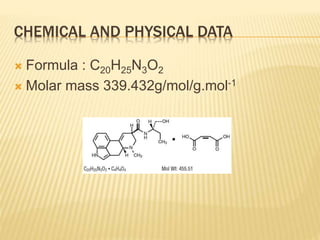
 Formula : C20H25N3O2
 Molar mass 339.432g/mol/g.mol-1
ACTION
 Ergot alkaloid that induces rapid, sustained
tetanic uterine contraction that shortens third
stage of labor and reduces blood loss.
Therapeutic Effects
 Administered after delivery of the placenta. It
minimizes the risk of postpartal hemorrhage.
COMPOSITION
 Ergometrine :- Ampoule 0.25-0.5 mg
Tablet 0.5-1 mg
 Methergin :- Ampoule 0.125-0.250 mg
Tablet 0.125-0.5 mg
 Syntometrine:- Ampoule 0.5mg ergometrine
+ 5 unit syntocinon
PHARMACOKINETICS
 Absorption: Readily absorbed from GI tract.
 Onset: 5–15 min PO; 2–5 min IM; immediate
IV.
 Duration: 3 or more h PO; 3 h IM; 45 min IV.
 Distribution: Distributed into breast milk.
 Metabolism: Slowly metabolized in liver.
 Elimination: Excreted mainly in feces, small
amount in urine.
 Half-Life: 0.5–2 h.
USES
 Routine management after delivery of
placenta and for postpartum atony,
subinvolution, and hemorrhage. With full
obstetric supervision, may be used during
second stage of labor.
 Active management of third stage of labour
as prophylaxis to excess bleeding following
delivery.
CONTRAINDICATIONS- PROPHYLACTIC
 Suspected pleural pregnancy
 Organic cardiac diseases
 Severe pre eclampsia and eclampsia
 Rh- negative mother
CONTRAINDICATION- THERAPEUTIC
 Hypersensitivity to ergot preparations
 to induce labor
 use prior to delivery of placenta
 threatened spontaneous abortion
 uterine sepsis
 Hypertension
 Toxemia
 lactation.
SIDE EFFECT
 Nausea,
 Vomiting,
 Stomach pain,
 Diarrhea,
 Leg cramps,
 Increased sweating,
 Skin rash,
 Headache,
 Dizziness,
 Ringing in your ears,
 Stuffy nose
 Unpleasant taste in your mouth.
NURSING IMPLICATIONS
 Assessment & Drug Effects
 Monitor vital signs (particularly BP) and
uterine response during and after parenteral
administration of methylergonovine until
partum period is stabilized (about 1–2 h).
 Notify physician if BP suddenly increases or
if there are frequent periods of uterine
relaxation.
 Patient & Family Education
 Report severe cramping for increased
bleeding.
 Report any of the following: Cold or numb
fingers or toes, nausea or vomiting, chest or
muscle pain.
 Do not breast feed while taking this drug.
CLOMIPHENE CITRATE
 Clomid , Milophene, Serophene
 Classifications: Hormones and synthetic
Substitutes; ovulation
stimulant; antiestrogenic
ACTION
 Oral nonsteroidal estrogen agonist or
antagonist. Induces ovulation in selected
anovulatory women. Lacks androgenic,
antiandrogenic, or progestational effects and
does not appear to effect pituitary-adrenal or
pituitary-thyroid functions. May act by binding
to hypothalamic estrogen receptors,
decreasing their numbers, and by inhibiting
receptor replenishment.
THERAPEUTIC EFFECTS
 Inhibition of receptor replenishment results in
a false hypoestrogenic state which stimulates
pituitary release of luteinizing hormone (LH),
follicle-stimulating hormone (FSH), and
gonadotropins, leading to ovarian
stimulation. Normal ovulatory function does
not usually resume after treatment or after
pregnancy.
USES
 Infertility in appropriately selected women
desiring pregnancy whose partners are fertile
and potent.
 Ovulation induction
UNLABELED USES
 Male infertility
 Menstrual abnormalities
 Gynecomastia
 Fibrocystic breast disease
 Regulation of cycles in patients using rhythm
method of contraception
 Endometrial hyperplasia
 Persistent lactation.
CONTRAINDICATION
 Pregnancy (category X)
 Lactation
 Neoplastic lesions
 Ovarian cyst
 Hepatic disease or dysfunction
 Abnormal uterine bleeding
 Visual abnormalities
 Mental depression
 Thrombophlebitis.
CAUTIOUS USE
 Polycystic ovarian enlargement
 Pelvic discomfort
 Sensitivity to pituitary gonadotropins
ROUTE AND DOSAGE
 Infertility
PO First course: 50 mg/d for 5 d; start on 5th
day of cycle following start of spontaneous or
induced bleeding (with progestin) or at any time
in the patient who has had no recent uterine
bleeding
 Second course if ovulation: repeat first course
until conception or for 3 cycles
 Second course if no ovulation: 100 mg/d for
5 d as above (max: 100 mg/d)
ADMINISTRATION
 Pretreatment with estrogen is indicated for
the patient who has been hypoestrogenic for
a long time. Estrogen therapy is stopped
immediately before clomiphene therapy
begins.
 Each course of therapy should start on or
about the 5th cycle day once ovulation has
been established.
 Store at 15°–30° C (59°–86° F) in tightly
capped, light-resistant container.
ADVERSE EFFECT
 Body as a Whole: Vasomotor
flushes, breast discomfort, abdominal pain,
heavy menses, exacerbation of
endometriosis; mental depression,
headache, fatigue, insomnia, dizziness,
vertigo.
 GI: Nausea, vomiting, increased appetite
with weight gain, constipation, bloating.
 Endocrine: Spontaneous abortion, multiple
ovulations, ovarian failure, ovarian
hyperstimulation syndrome, enlarged ovaries
with multiple follicular cysts.
 Special Senses: Transient blurring,
diplopia, scotomas, photophobia, floaters,
prolonged after-images.
 Urogenital: Urinary frequency, polyuria.
DIAGNOSTIC TEST INTERFERENCE
 Clomiphene may increase BSP
retention; plasma
transcortin, thyroxine and sex hormone
binding globulin levels. Also
increases follicle-stimulating and luteinizing
hormone secretion in most patients.
PHARMACOKINETICS
 Absorption: Readily absorbed from GI
tract.
 Metabolism: Metabolized in liver.
 Elimination: Excreted primarily in feces in 5
d; the remainder is excreted slowly from
enterohepatic pool or is stored in body fat for
later release.
 Half-Life: 5 d.
NURSING IMPLICATIONS
 Assessment & Drug Effects
 Monitor for abnormal bleeding. If it occurs, full
diagnostic measures are crucial. Report it
immediately.
 Monitor for visual disturbances. Their occurrence
indicates the need for a complete ophthalmologic
evaluation. Drug will be stopped until symptoms
subside.
 If clomiphene is continued more than 1 y, patient
should have an ophthalmologic examination at
regular intervals.
 Pelvic pain indicates the need for immediate pelvic
examination for diagnostic purposes.
PATIENT &FAMILY EDUCATION
 Take the medicine at same time every day to
maintain drug levels and prevent forgetting a
dose.
 Missed dose: Take drug as soon as possible. If
not remembered until time for next dose, double
the dose, then resume regular dosing schedule.
If more than one dose is missed, check with
physician.
 Incidence of multiple births during clomiphene
use is reportedly increased to 6 times normal
and appears to increase with dose increases.
 Patient who is going to respond usually ovulates
4–10 d after last day of treatment.
 Report these symptoms: hot flushes resembling
those associated with menopause; nausea,
vomiting, headache. Appropriate drug therapy
may be prescribed. Symptoms disappear after
clomiphene is discontinued.
 Reported promptly yellowing of eyes, light-
colored stools, yellow, itchy skin, and fever
symptomatic of jaundice.
 Stop taking clomiphene if pregnancy is
suspected. Contact physician for a confirmatory
examination.
 Because of the possibility of light-
headedness, dizziness, and visual
disturbances, do not perform hazardous
tasks requiring skill and coordination in an
environment with variable lighting.
 Report promptly excessive weight gain, signs
of edema, bloating, decreased urinary
output.
 Do not breast feed while taking this drug.
 Thank you……

methergin and clomiphene citrate

  • 1.
    CLINICAL TEACHING ERGOT DERIVATIVES- METHERGIN CLOMIPHENE CITRATE
  • 2.
    WHAT IS METHERGIN Methergine (methylergonovine) is an ergot alkaloid that affects the smooth muscle of a woman's uterus, improving the muscle tone as well as the strength and timing of uterine contractions. Methergine is administered in the postpartum period to help deliver the placenta and to help control bleeding and other uterine problems after childbirth.
  • 3.
    CHEMICAL AND PHYSICALDATA  Formula : C20H25N3O2  Molar mass 339.432g/mol/g.mol-1
  • 4.
    ACTION  Ergot alkaloidthat induces rapid, sustained tetanic uterine contraction that shortens third stage of labor and reduces blood loss. Therapeutic Effects  Administered after delivery of the placenta. It minimizes the risk of postpartal hemorrhage.
  • 5.
    COMPOSITION  Ergometrine :-Ampoule 0.25-0.5 mg Tablet 0.5-1 mg  Methergin :- Ampoule 0.125-0.250 mg Tablet 0.125-0.5 mg  Syntometrine:- Ampoule 0.5mg ergometrine + 5 unit syntocinon
  • 6.
    PHARMACOKINETICS  Absorption: Readilyabsorbed from GI tract.  Onset: 5–15 min PO; 2–5 min IM; immediate IV.  Duration: 3 or more h PO; 3 h IM; 45 min IV.  Distribution: Distributed into breast milk.  Metabolism: Slowly metabolized in liver.  Elimination: Excreted mainly in feces, small amount in urine.  Half-Life: 0.5–2 h.
  • 7.
    USES  Routine managementafter delivery of placenta and for postpartum atony, subinvolution, and hemorrhage. With full obstetric supervision, may be used during second stage of labor.  Active management of third stage of labour as prophylaxis to excess bleeding following delivery.
  • 8.
    CONTRAINDICATIONS- PROPHYLACTIC  Suspectedpleural pregnancy  Organic cardiac diseases  Severe pre eclampsia and eclampsia  Rh- negative mother
  • 9.
    CONTRAINDICATION- THERAPEUTIC  Hypersensitivityto ergot preparations  to induce labor  use prior to delivery of placenta  threatened spontaneous abortion  uterine sepsis  Hypertension  Toxemia  lactation.
  • 10.
    SIDE EFFECT  Nausea, Vomiting,  Stomach pain,  Diarrhea,  Leg cramps,  Increased sweating,  Skin rash,  Headache,  Dizziness,  Ringing in your ears,  Stuffy nose  Unpleasant taste in your mouth.
  • 11.
    NURSING IMPLICATIONS  Assessment& Drug Effects  Monitor vital signs (particularly BP) and uterine response during and after parenteral administration of methylergonovine until partum period is stabilized (about 1–2 h).  Notify physician if BP suddenly increases or if there are frequent periods of uterine relaxation.
  • 12.
     Patient &Family Education  Report severe cramping for increased bleeding.  Report any of the following: Cold or numb fingers or toes, nausea or vomiting, chest or muscle pain.  Do not breast feed while taking this drug.
  • 13.
    CLOMIPHENE CITRATE  Clomid, Milophene, Serophene  Classifications: Hormones and synthetic Substitutes; ovulation stimulant; antiestrogenic
  • 14.
    ACTION  Oral nonsteroidalestrogen agonist or antagonist. Induces ovulation in selected anovulatory women. Lacks androgenic, antiandrogenic, or progestational effects and does not appear to effect pituitary-adrenal or pituitary-thyroid functions. May act by binding to hypothalamic estrogen receptors, decreasing their numbers, and by inhibiting receptor replenishment.
  • 15.
    THERAPEUTIC EFFECTS  Inhibitionof receptor replenishment results in a false hypoestrogenic state which stimulates pituitary release of luteinizing hormone (LH), follicle-stimulating hormone (FSH), and gonadotropins, leading to ovarian stimulation. Normal ovulatory function does not usually resume after treatment or after pregnancy.
  • 16.
    USES  Infertility inappropriately selected women desiring pregnancy whose partners are fertile and potent.  Ovulation induction
  • 17.
    UNLABELED USES  Maleinfertility  Menstrual abnormalities  Gynecomastia  Fibrocystic breast disease  Regulation of cycles in patients using rhythm method of contraception  Endometrial hyperplasia  Persistent lactation.
  • 18.
    CONTRAINDICATION  Pregnancy (categoryX)  Lactation  Neoplastic lesions  Ovarian cyst  Hepatic disease or dysfunction  Abnormal uterine bleeding  Visual abnormalities  Mental depression  Thrombophlebitis.
  • 19.
    CAUTIOUS USE  Polycysticovarian enlargement  Pelvic discomfort  Sensitivity to pituitary gonadotropins
  • 20.
    ROUTE AND DOSAGE Infertility PO First course: 50 mg/d for 5 d; start on 5th day of cycle following start of spontaneous or induced bleeding (with progestin) or at any time in the patient who has had no recent uterine bleeding  Second course if ovulation: repeat first course until conception or for 3 cycles  Second course if no ovulation: 100 mg/d for 5 d as above (max: 100 mg/d)
  • 21.
    ADMINISTRATION  Pretreatment withestrogen is indicated for the patient who has been hypoestrogenic for a long time. Estrogen therapy is stopped immediately before clomiphene therapy begins.  Each course of therapy should start on or about the 5th cycle day once ovulation has been established.  Store at 15°–30° C (59°–86° F) in tightly capped, light-resistant container.
  • 22.
    ADVERSE EFFECT  Bodyas a Whole: Vasomotor flushes, breast discomfort, abdominal pain, heavy menses, exacerbation of endometriosis; mental depression, headache, fatigue, insomnia, dizziness, vertigo.  GI: Nausea, vomiting, increased appetite with weight gain, constipation, bloating.
  • 23.
     Endocrine: Spontaneousabortion, multiple ovulations, ovarian failure, ovarian hyperstimulation syndrome, enlarged ovaries with multiple follicular cysts.  Special Senses: Transient blurring, diplopia, scotomas, photophobia, floaters, prolonged after-images.  Urogenital: Urinary frequency, polyuria.
  • 24.
    DIAGNOSTIC TEST INTERFERENCE Clomiphene may increase BSP retention; plasma transcortin, thyroxine and sex hormone binding globulin levels. Also increases follicle-stimulating and luteinizing hormone secretion in most patients.
  • 25.
    PHARMACOKINETICS  Absorption: Readilyabsorbed from GI tract.  Metabolism: Metabolized in liver.  Elimination: Excreted primarily in feces in 5 d; the remainder is excreted slowly from enterohepatic pool or is stored in body fat for later release.  Half-Life: 5 d.
  • 26.
    NURSING IMPLICATIONS  Assessment& Drug Effects  Monitor for abnormal bleeding. If it occurs, full diagnostic measures are crucial. Report it immediately.  Monitor for visual disturbances. Their occurrence indicates the need for a complete ophthalmologic evaluation. Drug will be stopped until symptoms subside.  If clomiphene is continued more than 1 y, patient should have an ophthalmologic examination at regular intervals.  Pelvic pain indicates the need for immediate pelvic examination for diagnostic purposes.
  • 27.
    PATIENT &FAMILY EDUCATION Take the medicine at same time every day to maintain drug levels and prevent forgetting a dose.  Missed dose: Take drug as soon as possible. If not remembered until time for next dose, double the dose, then resume regular dosing schedule. If more than one dose is missed, check with physician.  Incidence of multiple births during clomiphene use is reportedly increased to 6 times normal and appears to increase with dose increases.  Patient who is going to respond usually ovulates 4–10 d after last day of treatment.
  • 28.
     Report thesesymptoms: hot flushes resembling those associated with menopause; nausea, vomiting, headache. Appropriate drug therapy may be prescribed. Symptoms disappear after clomiphene is discontinued.  Reported promptly yellowing of eyes, light- colored stools, yellow, itchy skin, and fever symptomatic of jaundice.  Stop taking clomiphene if pregnancy is suspected. Contact physician for a confirmatory examination.
  • 29.
     Because ofthe possibility of light- headedness, dizziness, and visual disturbances, do not perform hazardous tasks requiring skill and coordination in an environment with variable lighting.  Report promptly excessive weight gain, signs of edema, bloating, decreased urinary output.  Do not breast feed while taking this drug.
  • 30.