RFID: Technology and
Applications
MOUMITA SADHUKHAN (067)
KOUSTABH SENGUPTA (073)
ARPAN MANDAL (093)
ANKITA CHAKRAWARTI (095)
ANAL MANDAL (101)
1
Outline
 Overview of RFID
 RFID
 ADC
 System Overview
 RFID Tag
 RFID Reader
 RFID Technology
Applications
 RFID Advantage
 Summary 19-05-2020
2
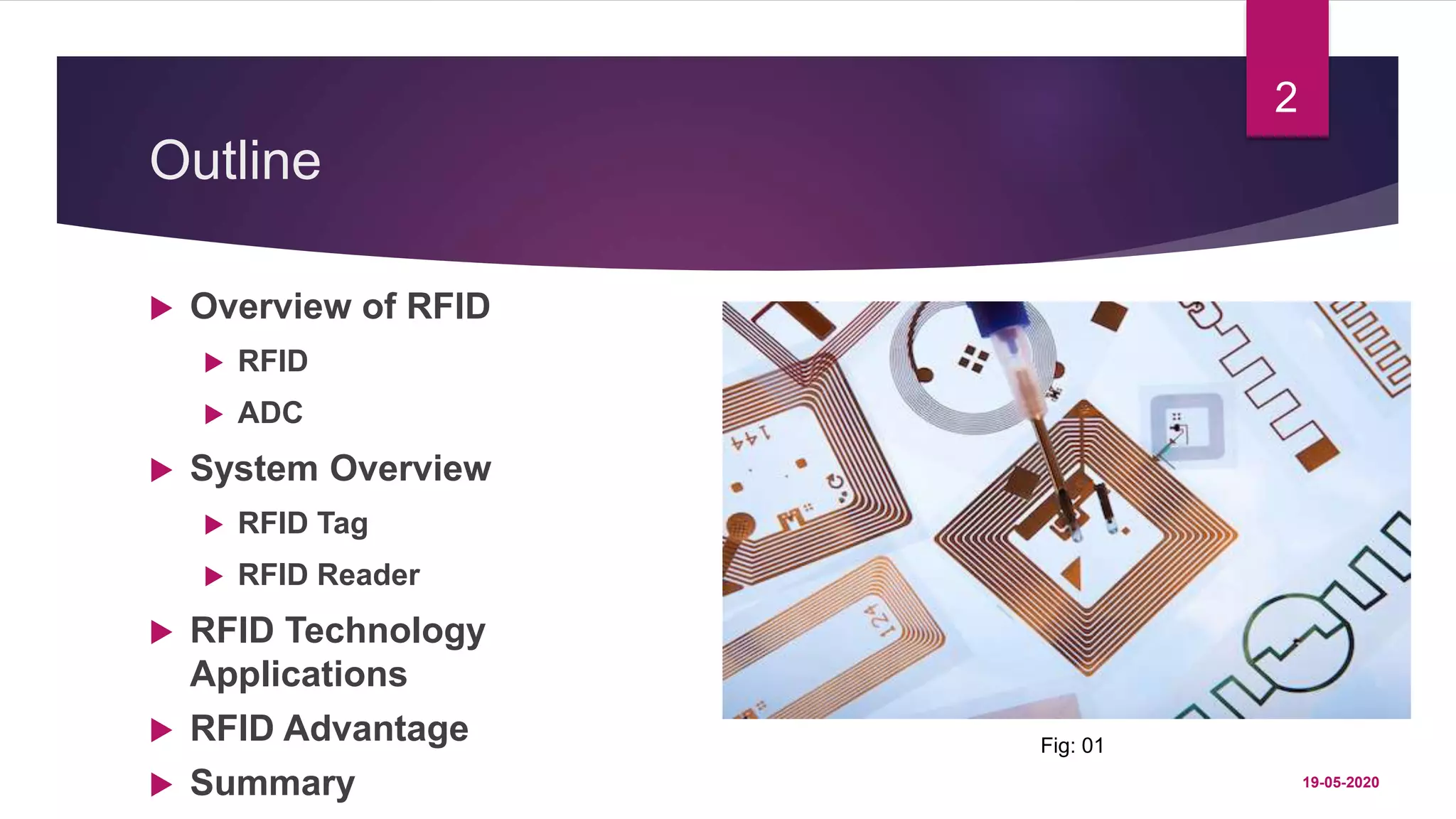
Fig: 01
What is RFID?
 RFID = Radio Frequency IDentification.
 An ADC (Automated Data Collection) technology
that:
 Uses radio-frequency
 Does not require physical sight or contact
 Provide unique identification
 Other ADC technologies: Bar codes, OCR.
19-05-2020
3
Fig: 02
RFID system components
Ethernet
RFID
Reader
RFID Tag RF Antenna Network Workstation
4
19-05-2020Block Diag: 01
RFID tags: Smart labels
19-05-2020
5
A paper label
with RFID inside
an antenna,
printed, etched
or stamped
on a substrate
e.g. a plastic
foil
a chip
attached to it
Source: www.rfidprivacy.org
Fig: 03
RFID tags
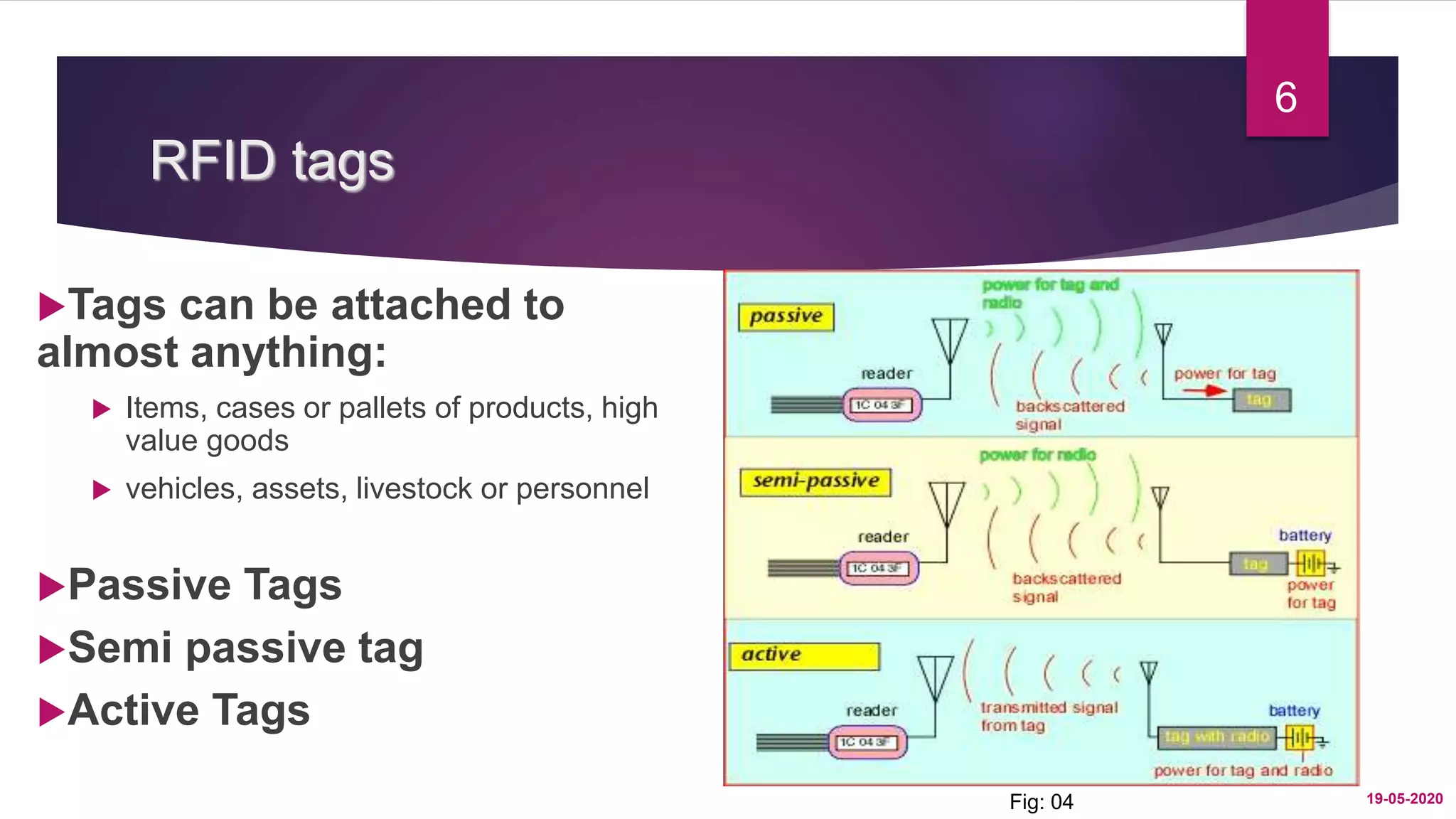
Tags can be attached to
almost anything:
 Items, cases or pallets of products, high
value goods
 vehicles, assets, livestock or personnel
Passive Tags
Semi passive tag
Active Tags
19-05-2020
6
Fig: 04
Tag block diagram
19-05-2020
7
Antenna
Power Supply
Tx Modulator
Rx Demodulator
Control Logic
(Finite State
machine)
Memory
Cells
Tag Integrated Circuit (IC)
Block Diag: 02
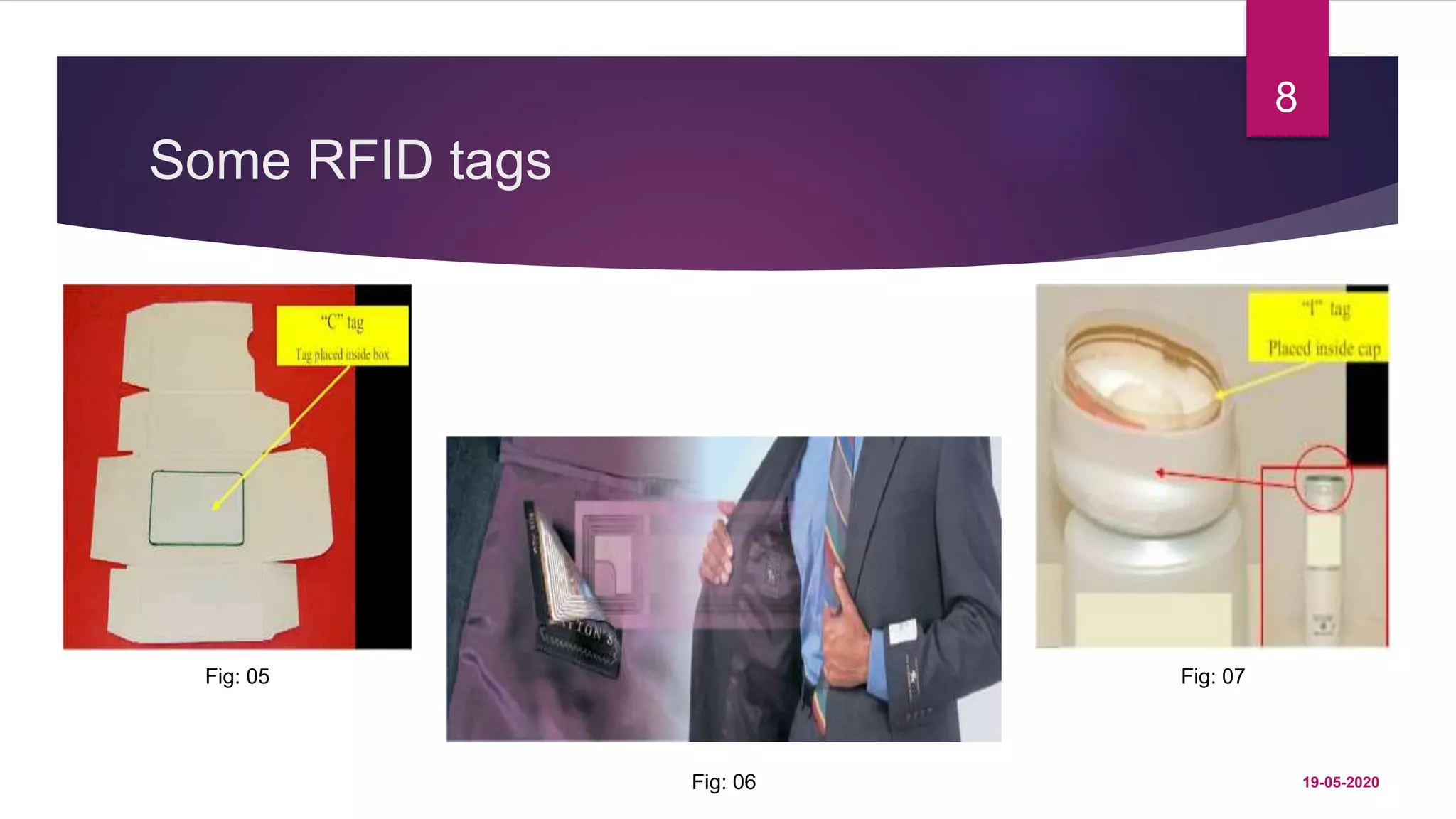
Some RFID tags
19-05-2020
8
Fig: 07
Fig: 06
Fig: 05
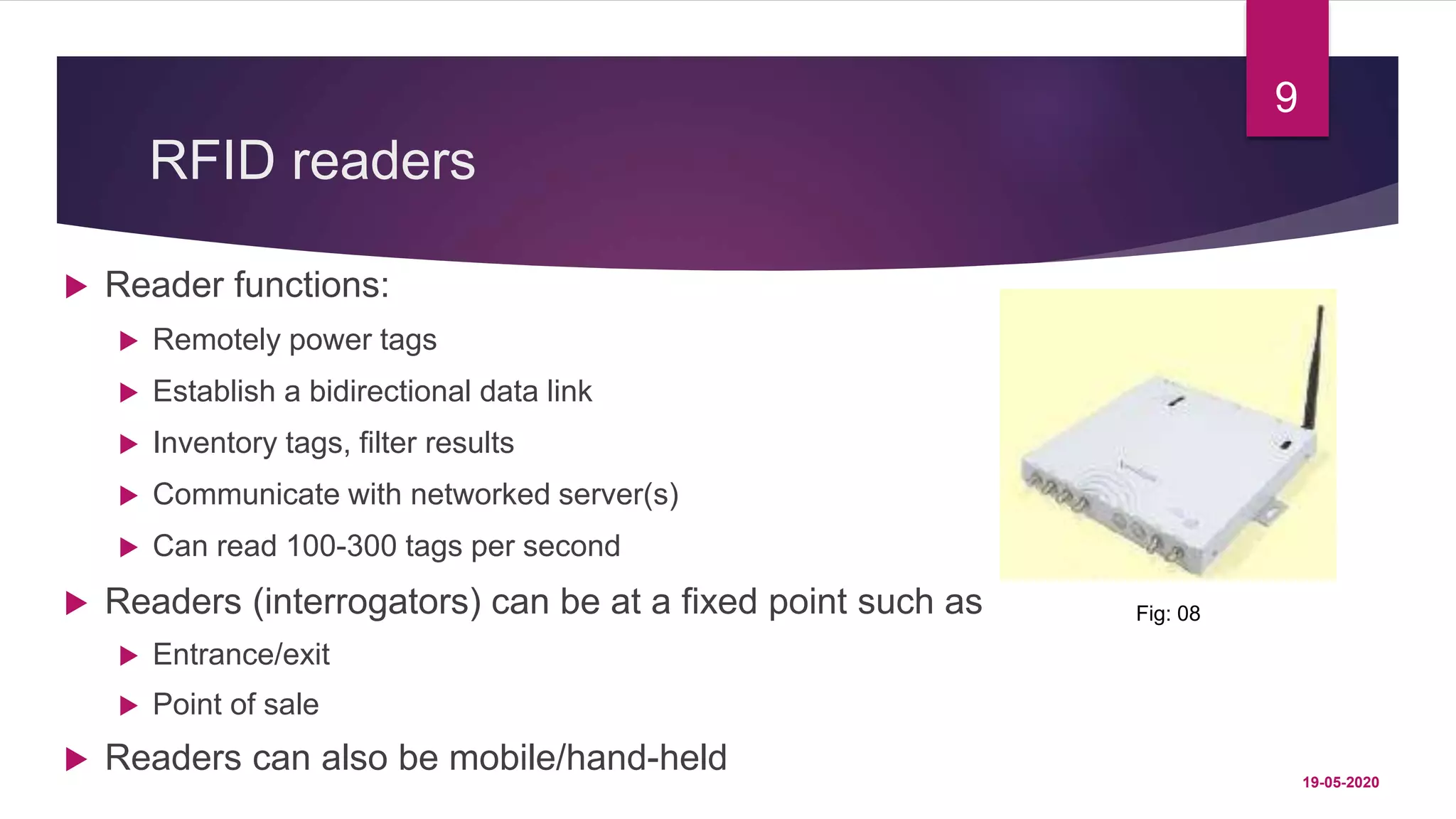
RFID readers
 Reader functions:
 Remotely power tags
 Establish a bidirectional data link
 Inventory tags, filter results
 Communicate with networked server(s)
 Can read 100-300 tags per second
 Readers (interrogators) can be at a fixed point such as
 Entrance/exit
 Point of sale
 Readers can also be mobile/hand-held 19-05-2020
9
Fig: 08
Reader anatomy
19-05-2020
10
915MHz
Radio
Network
Processor
Digital Signal
Processor
(DSP)
13.56MHz
Radio
Power
Supply
Fig: 09
Some RFID readers
19-05-2020
11
Source: www.buyrfid.org
Fig: 10
Fig: 11
Fig: 12
Fig: 13
Fig: 14
RFID application points
19-05-2020
12
 Assembly Line
Wireless
Bill of Lading
Material Tracking
 Handheld Applications
 Shipping Portals
Fig: 17
Fig: 16
Fig: 15
RFID advantages over bar-codes
 No line of sight required for reading
 Multiple items can be read with a single
scan
 Each tag can carry a lot of data
(read/write)
 Individual items identified and not just the
category
 Passive tags have a virtually unlimited
lifetime
 Active tags can be read from great
distances
 Can be combined with barcode
technology
19-05-2020
13
RFID Summary
19-05-2020
14
Strengths
 Advanced technology
 Easy to use
 High memory capacity
 Small size
Weaknesses
 High cost per unit and high RFID system
integration costs
 Weak market understanding of the benefits
of RFID technology
Opportunities
 Could replace the bar code
 Huge market potential in many businesses
Threats
 Ethical threats concerning privacy life
 Highly fragmented competitive environment
References : Some Links
 http://www.epcglobalinc.com/
 http://www.rfidjournal.com/
 http://rfidprivacy.com/
 http://www.rfidinc.com/
 http://www.buyrfid.com/
Thank You
19-05-2020
15

Rfid ppt 123

  • 1.
    RFID: Technology and Applications MOUMITASADHUKHAN (067) KOUSTABH SENGUPTA (073) ARPAN MANDAL (093) ANKITA CHAKRAWARTI (095) ANAL MANDAL (101) 1
  • 2.
    Outline  Overview ofRFID  RFID  ADC  System Overview  RFID Tag  RFID Reader  RFID Technology Applications  RFID Advantage  Summary 19-05-2020 2 Fig: 01
  • 3.
    What is RFID? RFID = Radio Frequency IDentification.  An ADC (Automated Data Collection) technology that:  Uses radio-frequency  Does not require physical sight or contact  Provide unique identification  Other ADC technologies: Bar codes, OCR. 19-05-2020 3 Fig: 02
  • 4.
    RFID system components Ethernet RFID Reader RFIDTag RF Antenna Network Workstation 4 19-05-2020Block Diag: 01
  • 5.
    RFID tags: Smartlabels 19-05-2020 5 A paper label with RFID inside an antenna, printed, etched or stamped on a substrate e.g. a plastic foil a chip attached to it Source: www.rfidprivacy.org Fig: 03
  • 6.
    RFID tags Tags canbe attached to almost anything:  Items, cases or pallets of products, high value goods  vehicles, assets, livestock or personnel Passive Tags Semi passive tag Active Tags 19-05-2020 6 Fig: 04
  • 7.
    Tag block diagram 19-05-2020 7 Antenna PowerSupply Tx Modulator Rx Demodulator Control Logic (Finite State machine) Memory Cells Tag Integrated Circuit (IC) Block Diag: 02
  • 8.
  • 9.
    RFID readers  Readerfunctions:  Remotely power tags  Establish a bidirectional data link  Inventory tags, filter results  Communicate with networked server(s)  Can read 100-300 tags per second  Readers (interrogators) can be at a fixed point such as  Entrance/exit  Point of sale  Readers can also be mobile/hand-held 19-05-2020 9 Fig: 08
  • 10.
  • 11.
    Some RFID readers 19-05-2020 11 Source:www.buyrfid.org Fig: 10 Fig: 11 Fig: 12 Fig: 13 Fig: 14
  • 12.
    RFID application points 19-05-2020 12 Assembly Line Wireless Bill of Lading Material Tracking  Handheld Applications  Shipping Portals Fig: 17 Fig: 16 Fig: 15
  • 13.
    RFID advantages overbar-codes  No line of sight required for reading  Multiple items can be read with a single scan  Each tag can carry a lot of data (read/write)  Individual items identified and not just the category  Passive tags have a virtually unlimited lifetime  Active tags can be read from great distances  Can be combined with barcode technology 19-05-2020 13
  • 14.
    RFID Summary 19-05-2020 14 Strengths  Advancedtechnology  Easy to use  High memory capacity  Small size Weaknesses  High cost per unit and high RFID system integration costs  Weak market understanding of the benefits of RFID technology Opportunities  Could replace the bar code  Huge market potential in many businesses Threats  Ethical threats concerning privacy life  Highly fragmented competitive environment
  • 15.
    References : SomeLinks  http://www.epcglobalinc.com/  http://www.rfidjournal.com/  http://rfidprivacy.com/  http://www.rfidinc.com/  http://www.buyrfid.com/ Thank You 19-05-2020 15