DEPARTMENT OF ELECTRONICS AND COMMUNICATION ENGINEERING
PRESENTED BY:
NITESH KUMAR MISHRA
REGN NO: 1201287366
8/1/2015
GUIDED BY:
PROF. SUBHA RANJAN DAS
GANDHI INSTITUTE FOR TECHNOLOGICAL ADVANCEMENT, BHUBANESWAR
OVERVIEW
1. INTRODUCTION
2. LITERATURE REVIEW
3. WIRELESS TECHNOLOGY
4. MAJOR COMPONENTS
5. RFID
6. USES OF RFID
7. GSM
8. LCD
9. BLOCK DIAGRAM
10.METHODOLOGY
11.APPLICATIONS
12.CONCLUSION
13.REFERENCE
•The innovation in technology today has made our
lifestyle much easier and fun.
•Traffic management safety and security are first
priority.
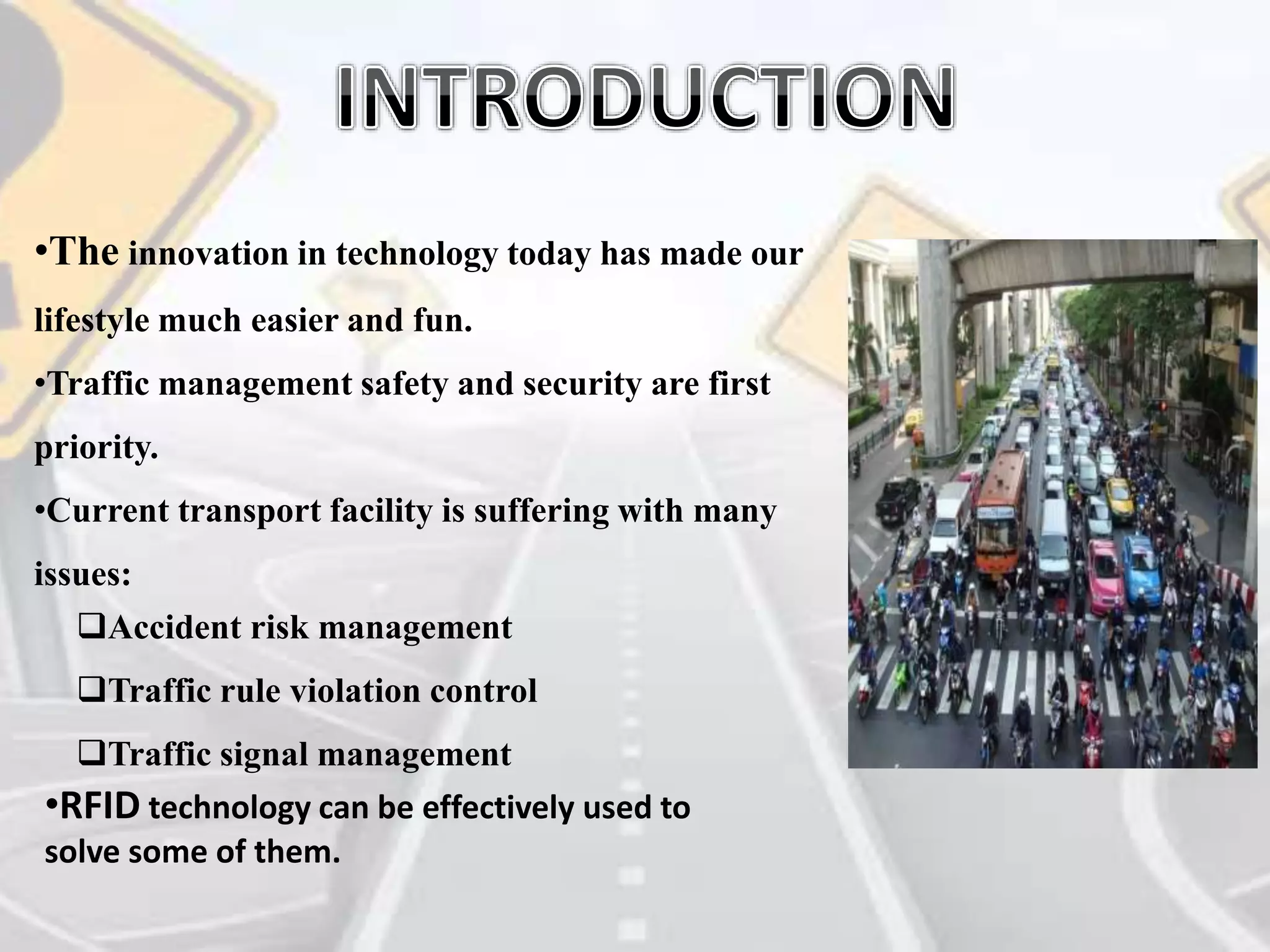
•Current transport facility is suffering with many
issues:
Accident risk management
Traffic rule violation control
Traffic signal management
•RFID technology can be effectively used to
solve some of them.
LITERATURE REVIEW
•Non availability of prior information about the buses arrival.
•Travel time depends on several external parameters.
•Present scenario is of fixed schedules and not intelligent
systems
•Results in costly errors ,stress, dissatisfaction and
inconvenience
WIRELESS TECHNOLOGY
•Wireless communication technology
•RF is an alternating current which, if supplied to an antenna, will give
rise to an electromagnetic field that propagates through space.
•Electromagnetic induction short range communication and power.
•Cheap and widely used
•Wide range of applications
•Cordless and cellular telephones, radio and television broadcast
stations, wireless bar-code readers, wireless keyboards , wireless security
systems, consumer electronic remote control, etc.
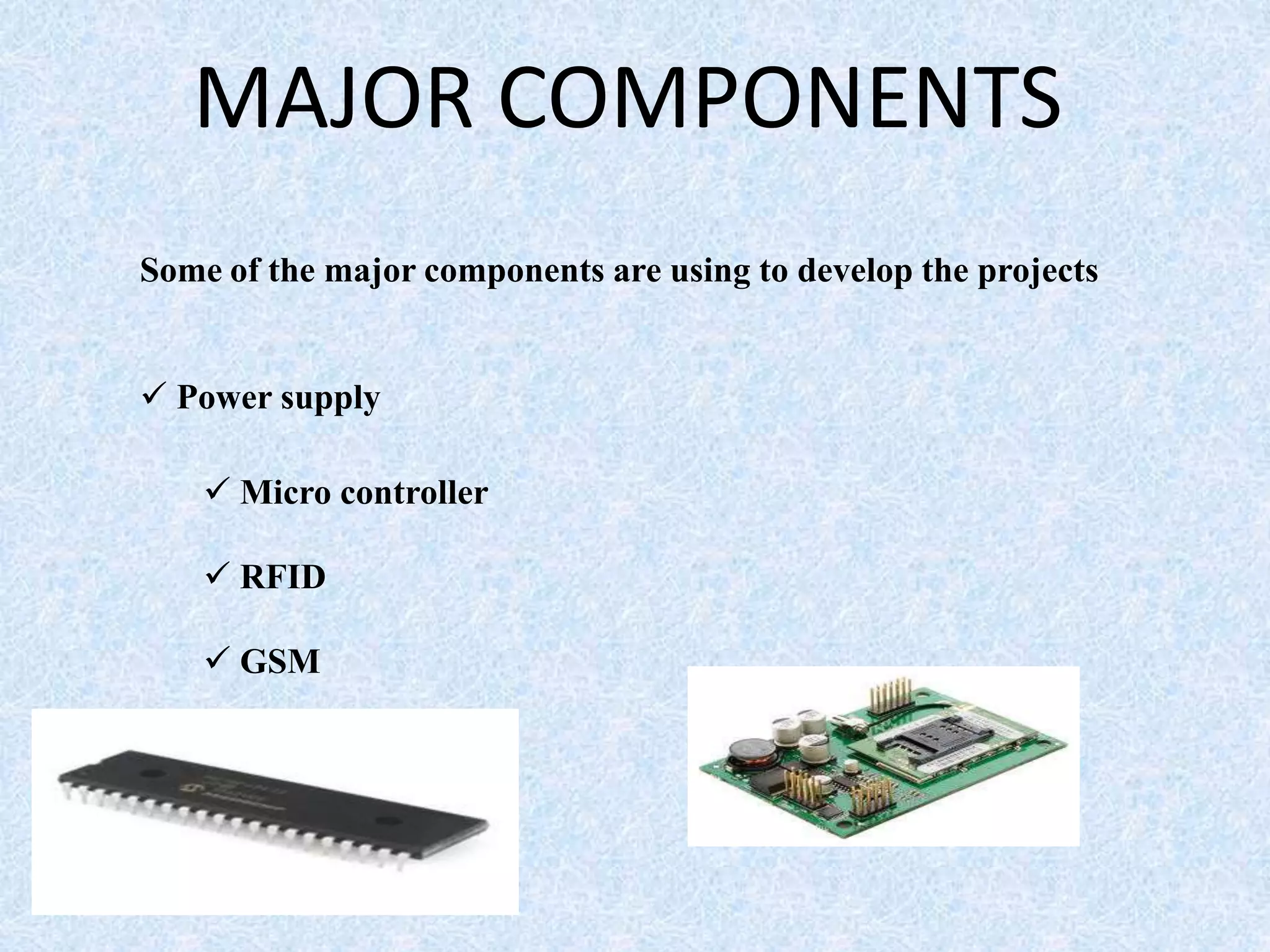
MAJOR COMPONENTS
Some of the major components are using to develop the projects
 Power supply
 Micro controller
 RFID
 GSM
RFID
•Radio frequency identification(RFID) is an automatic identification
method.
•Emerged during World War 2.
•The RFID system consist of three components:
Coil or antenna
Rf tags or transponder
Rf reader
•Commonly used RFID kits are :
 low frequency(30kHz to 500kHz)
Mid frequency (900kHz to 1500mHz)
High frequency (2.4GHz to 2.5GHz)
•RFID systems can be classified by the type of tag and reader : Active and passive
•Radio-frequency identification (RFID) is the wireless use
of electromagnetic fields to transfer data.
APPLICATIONS of RFID
•Wal-Mart now requires its suppliers to use RFID tags on
shipping crates and pallets to improve inventory management
in the supply chain.
•Fed Ex bought RFID-enabled aircraft from Airbus to reduce
maintenance time and costs.
•Cattle and farm animals are being tagged to improve
tracking and monitoring of health.
GSM
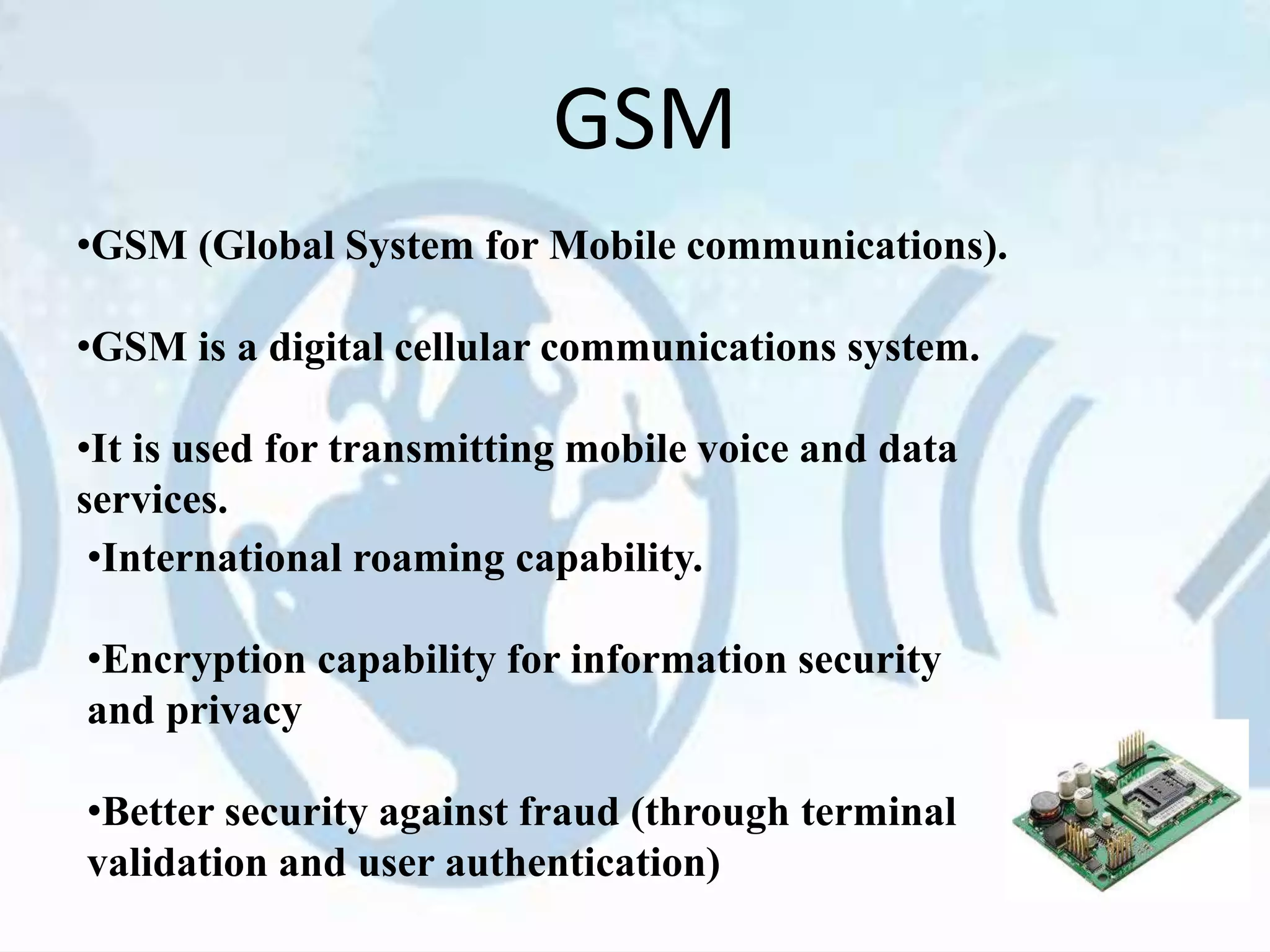
•GSM (Global System for Mobile communications).
•GSM is a digital cellular communications system.
•It is used for transmitting mobile voice and data
services.
•International roaming capability.
•Encryption capability for information security
and privacy
•Better security against fraud (through terminal
validation and user authentication)
LCD stands for Liquid Crystal
Display.
LCD display is selected as it can
display 16 characters at a time.
It is also easy to interface with the
microcontroller without any decoder.
LCD
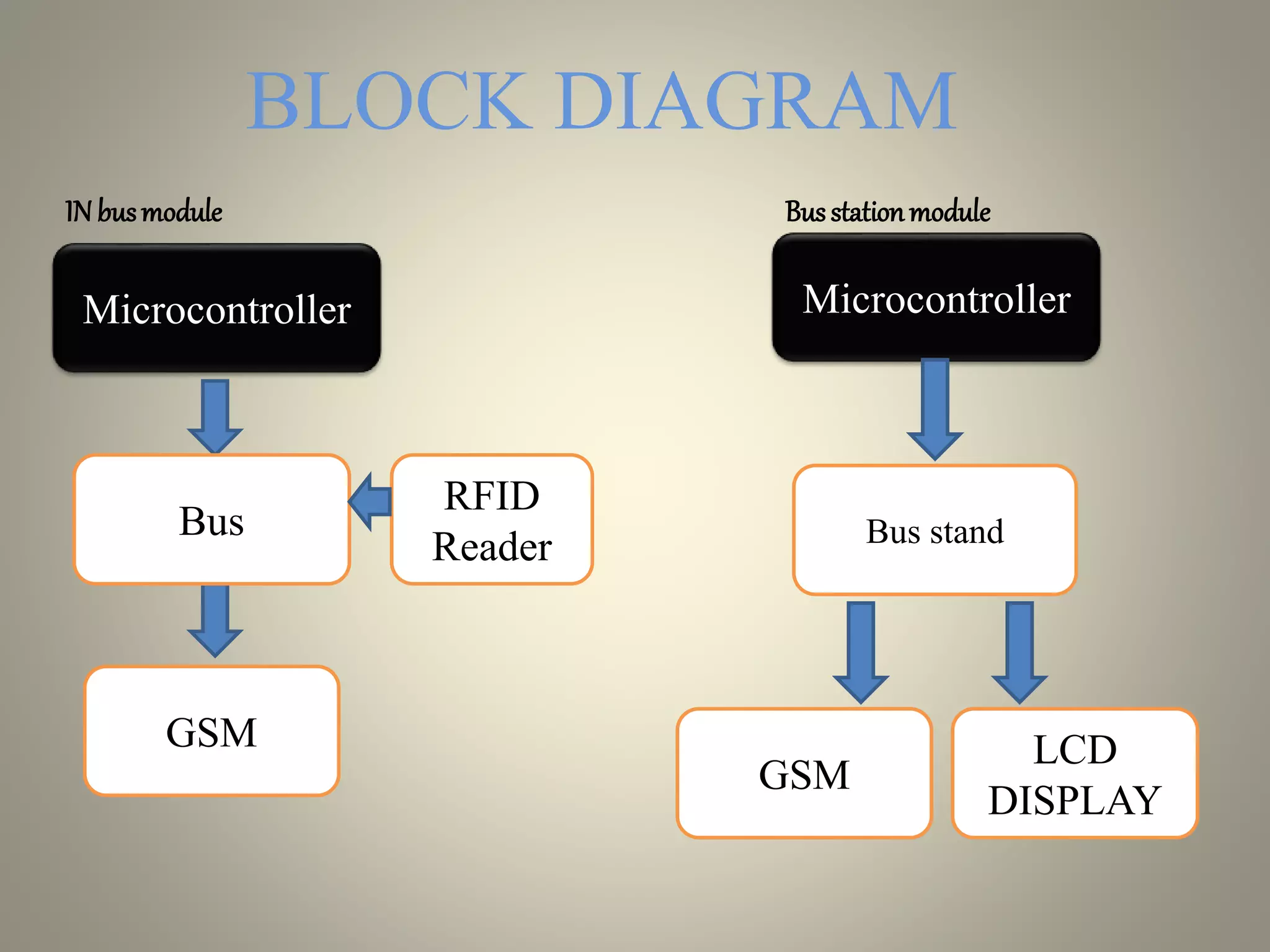
Microcontroller Microcontroller
RFID
Reader
Bus
GSM LCD
DISPLAY
Bus stand
GSM
BLOCK DIAGRAM
IN busmodule Busstationmodule
APPLICATIONS
•This system also can be interfaced with school bus
monitoring.
•Library management system
•Attendance system in offices and institutions.
•Automotive and transport vehicles.
FUTURE WORK
•An automatic route guider display can be installed
in buses
•There are different advanced wireless
technologies that can be used such as Bluetooth
and ZigBee .
•Fare collecting system can also be automated.
CONCLUSION
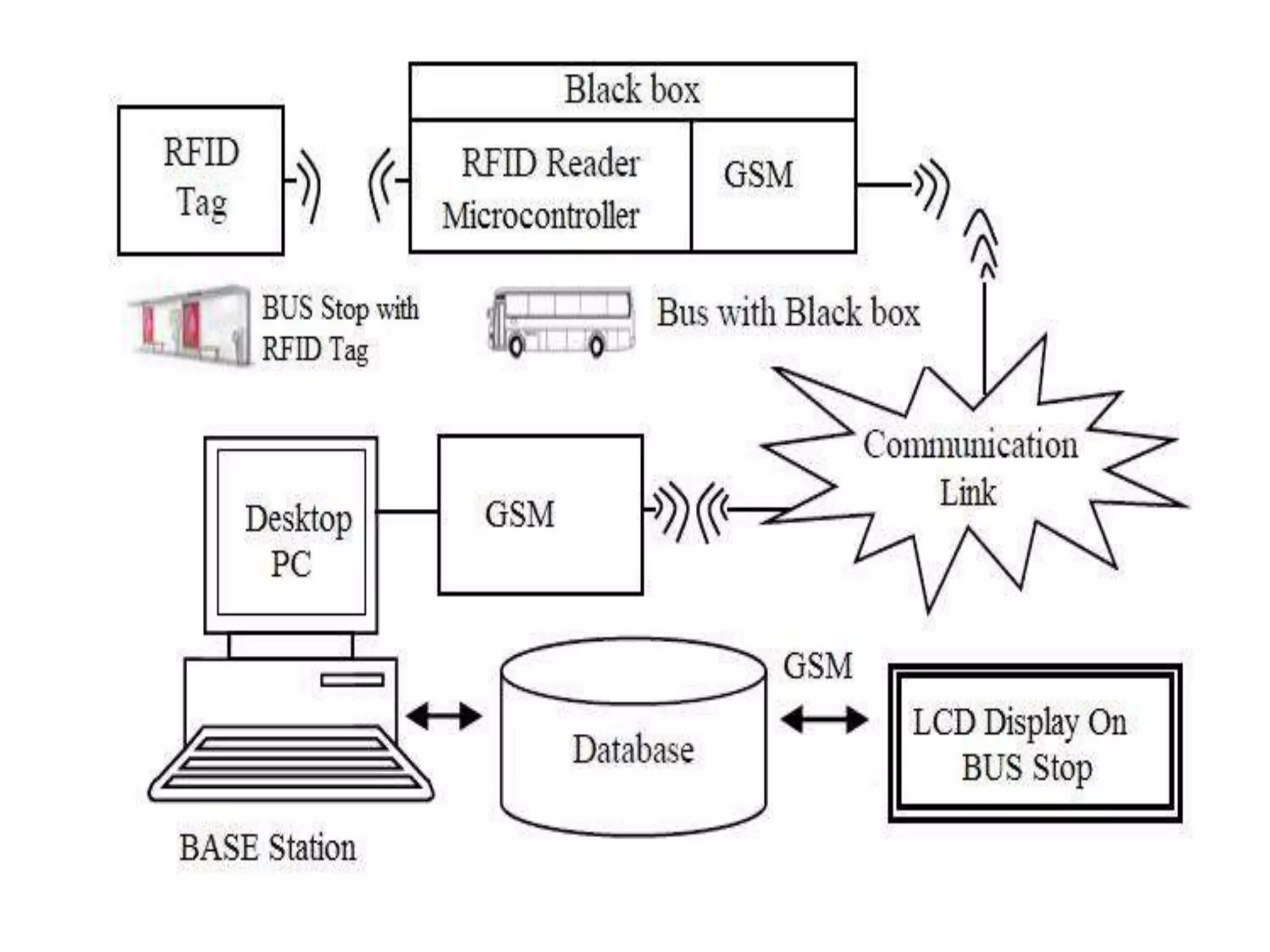
 Thus we proposed the design and development of a low cost
transportation management system based on integration of RFID
and GSM.
 User is provided with the service, which gives them the current
location information of desired buses .
 The service therefore vanishes the need of waiting at the bus
stop and hence it saves lot of time.
 The system is also efficient and beneficial in handling an error
and the emergency situations
public transport system using RFID and GSM

public transport system using RFID and GSM

  • 1.
    DEPARTMENT OF ELECTRONICSAND COMMUNICATION ENGINEERING PRESENTED BY: NITESH KUMAR MISHRA REGN NO: 1201287366 8/1/2015 GUIDED BY: PROF. SUBHA RANJAN DAS GANDHI INSTITUTE FOR TECHNOLOGICAL ADVANCEMENT, BHUBANESWAR
  • 2.
    OVERVIEW 1. INTRODUCTION 2. LITERATUREREVIEW 3. WIRELESS TECHNOLOGY 4. MAJOR COMPONENTS 5. RFID 6. USES OF RFID 7. GSM 8. LCD 9. BLOCK DIAGRAM 10.METHODOLOGY 11.APPLICATIONS 12.CONCLUSION 13.REFERENCE
  • 3.
    •The innovation intechnology today has made our lifestyle much easier and fun. •Traffic management safety and security are first priority. •Current transport facility is suffering with many issues: Accident risk management Traffic rule violation control Traffic signal management •RFID technology can be effectively used to solve some of them.
  • 4.
    LITERATURE REVIEW •Non availabilityof prior information about the buses arrival. •Travel time depends on several external parameters. •Present scenario is of fixed schedules and not intelligent systems •Results in costly errors ,stress, dissatisfaction and inconvenience
  • 5.
    WIRELESS TECHNOLOGY •Wireless communicationtechnology •RF is an alternating current which, if supplied to an antenna, will give rise to an electromagnetic field that propagates through space. •Electromagnetic induction short range communication and power. •Cheap and widely used •Wide range of applications •Cordless and cellular telephones, radio and television broadcast stations, wireless bar-code readers, wireless keyboards , wireless security systems, consumer electronic remote control, etc.
  • 6.
    MAJOR COMPONENTS Some ofthe major components are using to develop the projects  Power supply  Micro controller  RFID  GSM
  • 7.
    RFID •Radio frequency identification(RFID)is an automatic identification method. •Emerged during World War 2. •The RFID system consist of three components: Coil or antenna Rf tags or transponder Rf reader •Commonly used RFID kits are :  low frequency(30kHz to 500kHz) Mid frequency (900kHz to 1500mHz) High frequency (2.4GHz to 2.5GHz) •RFID systems can be classified by the type of tag and reader : Active and passive •Radio-frequency identification (RFID) is the wireless use of electromagnetic fields to transfer data.
  • 8.
    APPLICATIONS of RFID •Wal-Martnow requires its suppliers to use RFID tags on shipping crates and pallets to improve inventory management in the supply chain. •Fed Ex bought RFID-enabled aircraft from Airbus to reduce maintenance time and costs. •Cattle and farm animals are being tagged to improve tracking and monitoring of health.
  • 9.
    GSM •GSM (Global Systemfor Mobile communications). •GSM is a digital cellular communications system. •It is used for transmitting mobile voice and data services. •International roaming capability. •Encryption capability for information security and privacy •Better security against fraud (through terminal validation and user authentication)
  • 10.
    LCD stands forLiquid Crystal Display. LCD display is selected as it can display 16 characters at a time. It is also easy to interface with the microcontroller without any decoder. LCD
  • 11.
    Microcontroller Microcontroller RFID Reader Bus GSM LCD DISPLAY Busstand GSM BLOCK DIAGRAM IN busmodule Busstationmodule
  • 13.
    APPLICATIONS •This system alsocan be interfaced with school bus monitoring. •Library management system •Attendance system in offices and institutions. •Automotive and transport vehicles.
  • 14.
    FUTURE WORK •An automaticroute guider display can be installed in buses •There are different advanced wireless technologies that can be used such as Bluetooth and ZigBee . •Fare collecting system can also be automated.
  • 15.
    CONCLUSION  Thus weproposed the design and development of a low cost transportation management system based on integration of RFID and GSM.  User is provided with the service, which gives them the current location information of desired buses .  The service therefore vanishes the need of waiting at the bus stop and hence it saves lot of time.  The system is also efficient and beneficial in handling an error and the emergency situations